
2026 Hilux: What changes, what doesn’t
/The covers have come off Toyota’s one-tonner. There’s ‘new’ new and ‘new’ that’s ‘not so much’.
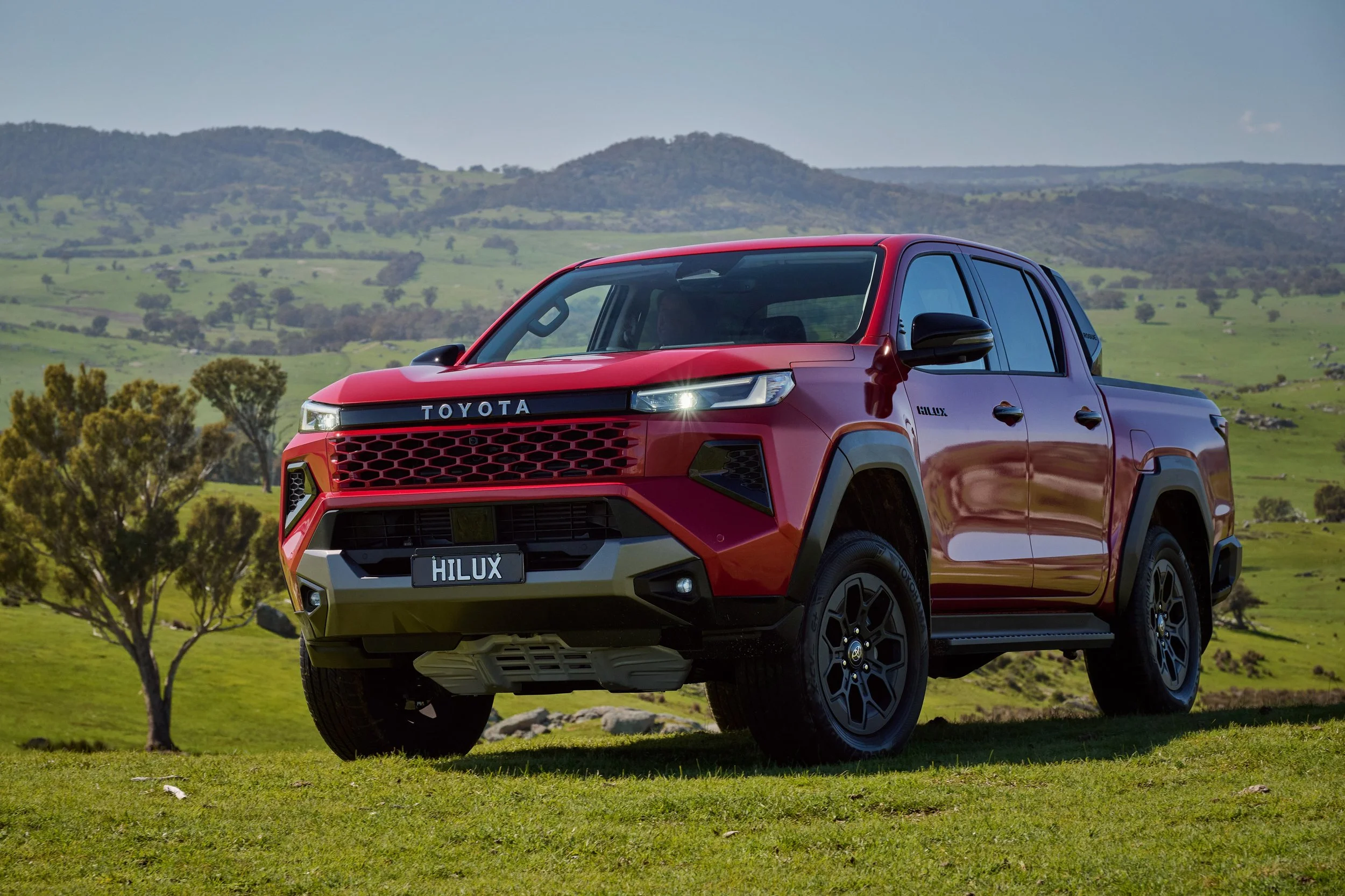
OBVIOUSLY fresh, but just as obviously familiar; more a case of ‘heavily revised’ than ‘new.’
The ‘Cyber Sumo’ look is a direction change, but the 2026 Hilux, the ninth generation of this nameplate, as it going to initially launch here is based on the same platform, has the same turbodiesel with 48 volt assist and unchanged outputs and the same six-speed auto as the current showroom offer, set to retire after 10 years of service.
It delivers identical towing, tray size and capacity. The suspension design carries over, though its retuned.
So yeah, as a reminder when Toyota does ‘new’, it doesn’t mean from the ground up. So why not get more intensive with the Hilux? The model’s reputation demands careful handling, the brand says.
Internationally unveiled fully today, the Hilux is set to land here ahead of in 2026 - the nameplate’s 50th year here. But exactly when? No-one is saying.
Toyota New Zealand chief executive officer Tatsuya Ishikawa reckons it’s set to continue to build on an iconic story and be fan-adored.
“For generations, Kiwis have trusted Hilux to deliver strength, reliability, and near-unbreakable performance through the toughest conditions this country can throw at it,” he said in supplied comment tonight.

“The new-generation proudly carries that legacy forward as we approach a milestone.
“This evolution is more than a celebration of heritage; it’s a statement of Toyota’s vision for the future, with a multi-pathway approach.”
Still built in Thailand, still funded by Japan, but this time heavily influenced by Australia.
A lot of development was undertaken across the ditch and the design also spawned from there, being the world of the studio to brand keeps at Altona, near Melbourne.
Developing what they are calling … sorry Barry Crump …. “the most Australian Hilux ever” has been a 10 year project, they say.
If Aussies tastes are also accepted here, then be prepared for a powerful shock: The first fully electric Hilux (below) – so far just called the Hilux BEV – will arrive there in the first half of next year, mainly aimed at the mining industry, for obvious reason.
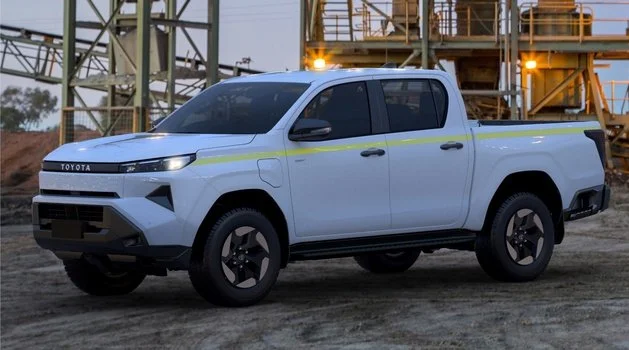
As for NZ? there’s no hard and fast commitment yet.
The details are scant for now, but there’s talk of SR and SR5 trims, both four-wheel drive thanks to an electric motor at each axle. And those future pathways will also take it toward biofuel involvement. And they also have a hydrogen fuel cell Hilux on the go, set to hit the road in 2028.
For us, though, the main focus is simply that 2.8-litre four-cylinder turbodiesel. This means an unchanged 150kW of power and 500Nm of torque (420Nm with manual), across cab chassis, pick up, four by two and four by four.
The new look is mainly around the front and rear. The nose delivers a clear separation between the upper and lower parts of the front grille.
Toyota Australia's design chief, Nick Hogios, says this is a design theme called 'Cyber Sumo', and is intended to "move the needle to a future rather than a current lens”. It was controversial, difficult to execute and the subject of "huge discussion”, he told media there.
"The idea of not having the upper grille clearly delineated by colour and line was a huge discussion point around the world. There were definitely some challenges in order to make this theme work," Hogios notes.
Also new is the step into the tray – an idea perhaps borrowed from the competition – with the integrated step now appearing on both sides of the Hilux tray (which has carryover dimensions), as well as new slimline headlights.

The middle of the vehicle is less new. The same door skins as the outgoing Hilux hang onto this new model.
One blow. the widetrack look that has captured Kiwis via the GR Sport and SR Cruiser grades will not be available at launch.
TNZ says while these models are not part of the initial launch, “Toyota is exploring opportunities to make them available in the future.”
Inside? Significant change. All grades get a new digital instrument cluster (a 7.0-inch screen at base, a 12.3-inch screen on SR5 and above) and a new 12.3-inch central touchscreen with Apple CarPlay and Android Auto, wireless as well as wired.
There are also new seats front and rear, a new dash design to improve visibility, and a new centre console configuration, which is now taller and – the brand says – more comfortable.
Hilux retains physical buttons with a climate control panel, and multimedia, audio and driver assistance zones on the steering wheel.
New safety features within the Toyota Safety Sense package include a Pre-Collision System with motorcycle detection and an intersection collision avoidance support.
Emergency driver stop system is added for the SR5 (in automatic) and above.
Additional enhancements to safety include addition of a front centre airbag, a tyre pressure warning system (exempted from the single cab chassis) and parking support brake for all automatic well-side variants. The Down Hill Assist function has been retuned to operate at a lower speed.