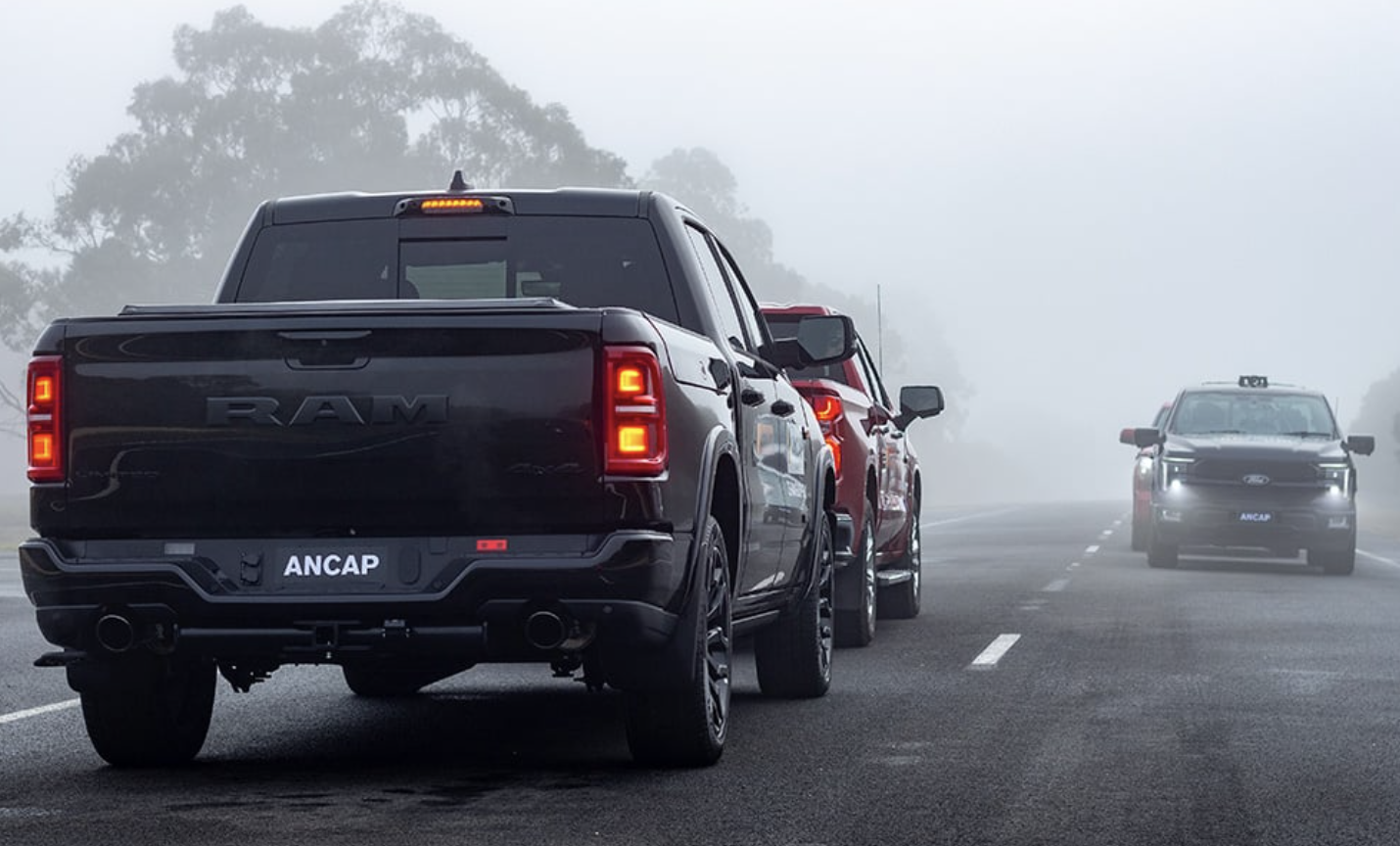

Mean or a menace? ANCAP’s big rig bash results out
/Our crash test safety auditor has given those giant American pickups a good going over. The results might surprise.
SO maybe you’re within that small group who have bought buy into a giant pick-up out of America because having a XXL-steel surrounding seems safer and mroe secure?
Or maybe you’re among the greater count of motorists who might feel that the thing they fear most is a tangle with a brazen Yank tank?
Each camp thinks they are right about the pros and cons of going to those huge rigs.
Isn’t it time we had some locally relevant data to at least deliver some hard and fast stats to support either logic?
Step forward our regional independent crash test auditor. Melbourne-based and NZ part-funded Australasian New Car Assessment Programme.
ANCAP has just delivered some findings that might be relevant to those for and those against.
Spoiler for those who might wish the findings might trigger likes of RAM’s 1500 and 2500, the Chevrolet Silverado being butt kicked from our road scape. That ain’t going to happen.
In fact, the safety body says all large pickups have “proven themselves”.
In saying that, it also acknowledges those big rigs do pose a “bigger threat” to road users.
“Larger vehicles pose a bigger threat to other road users than passenger cars,” ANCAP chief executive officer Carla Hoorweg said in a statement.
“The best way to reduce the potential risk of fatalities and serious injuries from large vehicles is to make sure they do the best possible job at avoiding a crash.”
But if you did meet one of those giants? Hmmm … ANCAP also believes the best of the lot is one not sold here. Confused by that, when the trials focused on product availed across the Tasman - most also comes here?
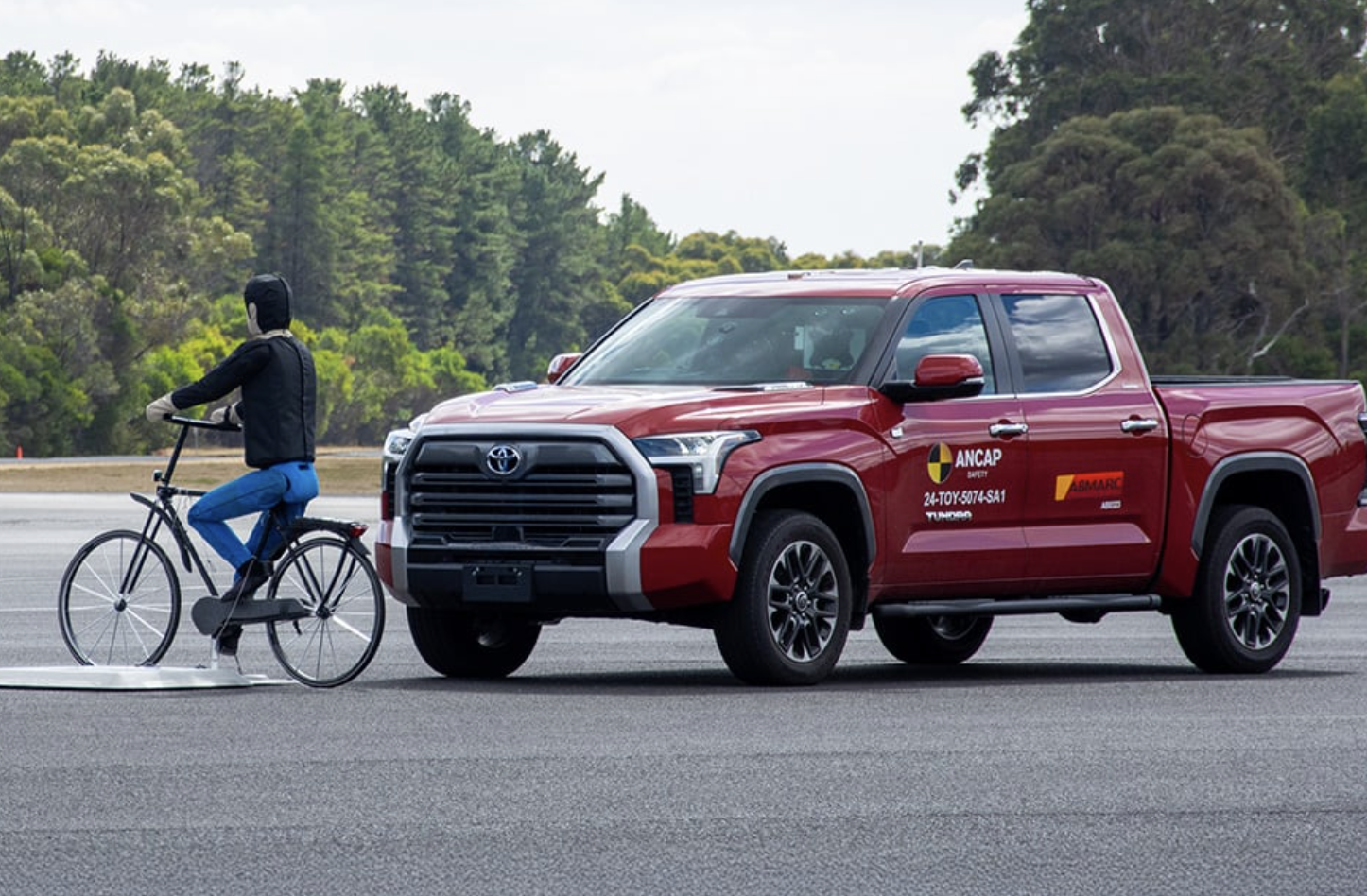
That’s the thing. Most. But not all. The exceptions are the Ford F-150 which topped the score sheet. And the Toyota Tundra.
ANCAP put the American pickups up against the LandCruiser 70 Series, which maintains a following here and at the neighbours (though their vole way exceeds our) in its inaugural Large Utilities ADAS (Advanced Driver Assist Systems) Safety Comparison’.
No physical crash-testing was involved. Indeed, the American pickups still have never been crash-tested by ANCAP, while the 70 Series was last tested in single-cab/chassis guise in 2016.
ANCAP tested the American pickups due to their growing popularity, pointing to around 22,500 full-size pickups being sold annually in Australia.
Sales of the F-150, Tundra, Silverado and Ram 1500 there have increased 270 percent since 2019. Data for the NZ scene is still being sought.
Hoorweg says ANCAP applied international best practice in safety testing to this segment “to make sure there is an incentive for manufacturers to improve crash avoidance technology.”
ANCAP said in the report: “Learnings from these early comparisons will inform the development of a framework for future testing and assessment, with physical crash protection and driver vision under consideration.”
ANCAP included the LandCruiser 70 Series due to its gross vehicle mass (GVM) being increased to more than 3500kg in 2024.
Despite its advanced age, the Toyota managed to beat the newer Chevrolet Silverado despite having a less comprehensive suite of active safety equipment.
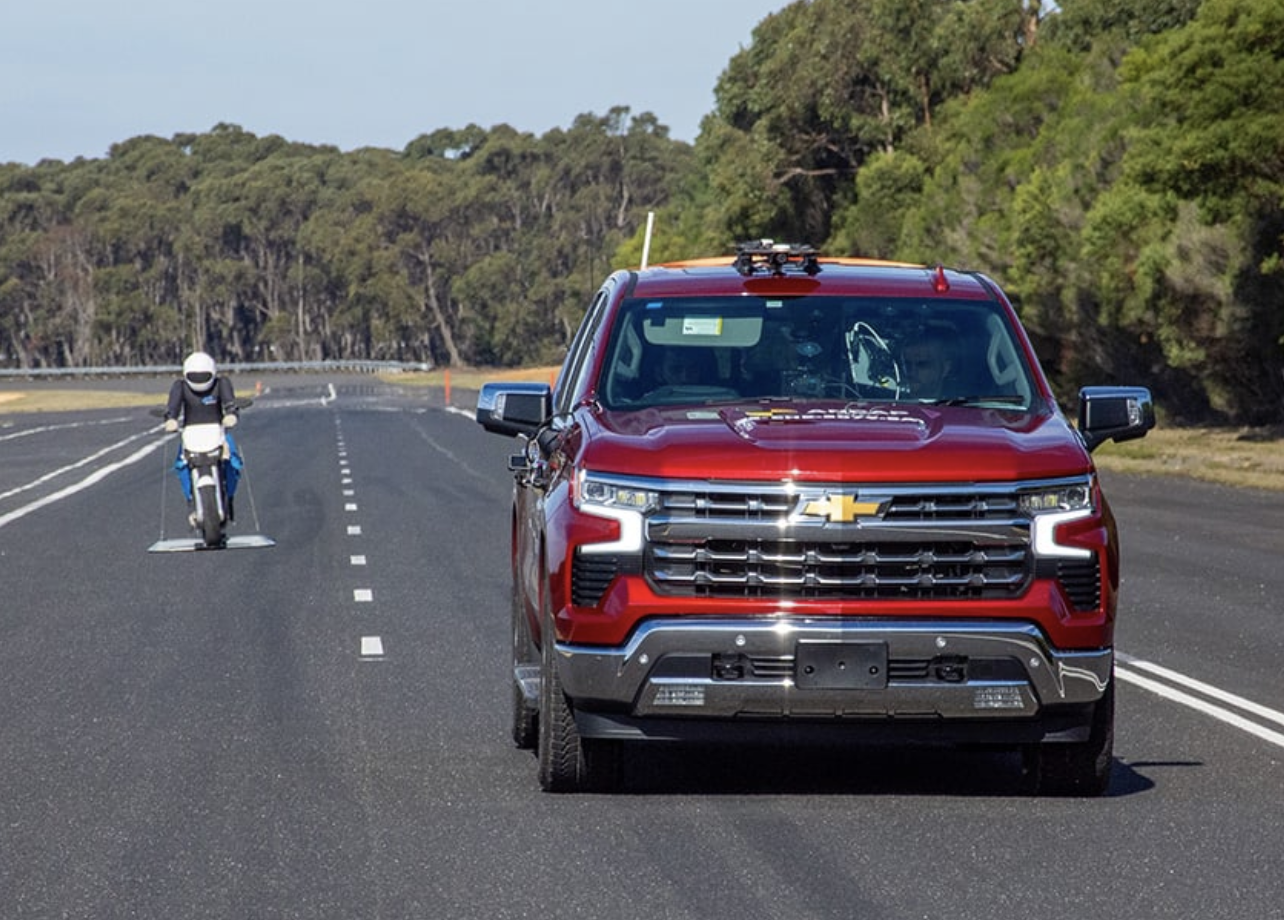
Carried out at the Australian Automotive Advanced Research Centre near Anglesea, Victoria, each vehicle evaluated saw 48 different situations testing various ADAS systems’ effectiveness.
Systems tested include autonomous emergency braking (AEB), lane support systems and features such as speed limit reminders and driver fatigue monitoring.
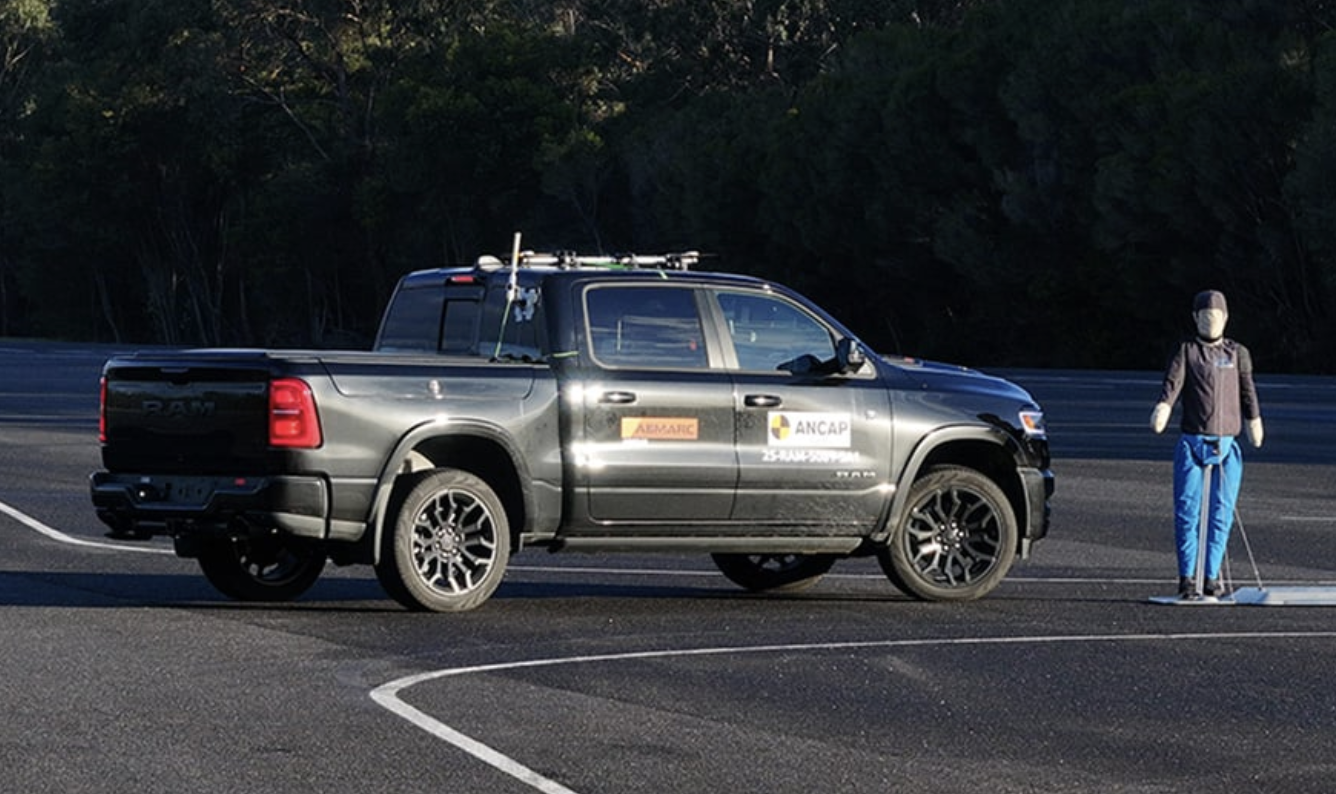
The scenarios included a car at an intersection; a pedestrian crossing a road; avoiding a child while reversing; cyclists; approaching a vehicle from behind; and an oncoming motorcycle.
The results saw an overall safety grading of Platinum (80-100 percent), Gold (60-79 percent), Silver (40-59 percent), Bronze (20-39 percent), or Not Recommended (0-19 percent) for each vehicle.
The F-150 Platinum SWB scored best overall and was the only vehicle to achieve, appropriately enough, a Platinum rating with 81 percent overall.
ANCAP praised the F-150 for its superior ability during testing when it came to AEB, avoiding rear-end collisions when approaching vehicles from in front or behind.
It also performed best for car-to-cyclist performance, while the Ford also proved the most effective at avoiding collisions with motorcyclists.
The Ram 1500 was marginally behind, with a Gold rating, with the Toyota Tundra and LandCruiser 70 Series rated Silver – with the 70 Series criticised for its lack of active lane support.
The Chevrolet Silverado 1500 LTZ performed the worst with its Bronze rating seemingly optimistic given its 27 percent score.
The Silverado, fitted with camera-only AEB, was rated zero out of six for AEB car-to-cyclist effectiveness, and weak – with 0.5 out of three – for speed assistance systems.
ANCAP praised the Silverado’s “foundational car-to-car” autonomous braking but was critical of its effectiveness in negotiating vulnerable road users.
The ratings won’t fuel pub argument forever as they are only valid until the end of 2026.