
ES drivetrain details release
/NZ secures strongest electric choice, weaker of two hybrids.
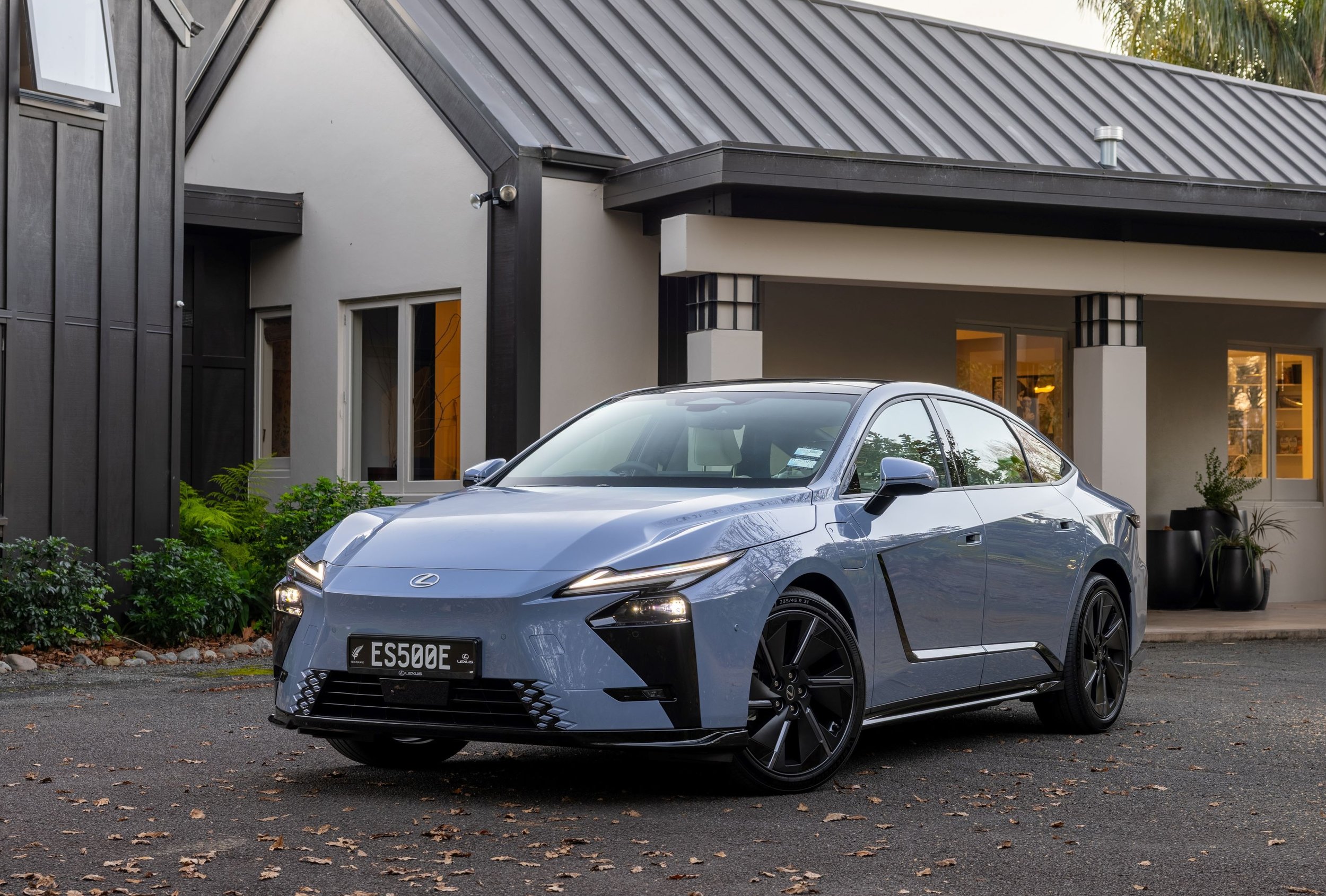
TECHNICAL detail about the drivetrains for the subordinate sedan to the most expensive Lexus here has finally been shared, timing with the car at last going on sale.
Eighteen months after it was first revealed and almost four months on from confirming that the five-seater will avail to Kiwis for the first time in fully electric form - but just as a flagship model, with two cheaper editions continue with a petrol hybrid - the premium arm of Toyota New Zealand has begun to clarify outputs for the two drivetrains on offer.
As anticipated, the top-tier ES 500e Dynamic (pictured today) has been provisioned with E-Four all-wheel drive, a 74.69kWh lithium-ion battery and total system output of 252kW.
It has an estimated WLTP driving range of 465km, so less than some similarly specced rivals from China, and can accelerate from 0–100kmh in 5.5 seconds.
For hybrid customers, there are front-drive ES 300h models in $96,900 Premium and $104,900 Limited trims that use a sixth-generation hybrid system, combining a 2.5-litre petrol engine with an E-CVT and lithium-ion battery for total system output of 144kW.
Had Lexus achieved the hybrid in an all wheel drive format sold in other markets, they would have secured the powertrain in a 182kW tune.
Also ignored is an electric model that delivers in a front-driven version, badged ES 350e, that makes 165kW.
This ES is larger than the predecessor product, noticeably being 165mm longer, to measure 5.14 metres overall, and obviously the styling is all new.
Chassis improvements include increased rigidity, optimised suspension-arm bush characteristics, and rear-wheel steering for the first time in an ES.
The electric edition of this striking design differentiates in the main from having a closed-off front bumper. The hybrid version takes a slim version of the signature spindle grille.
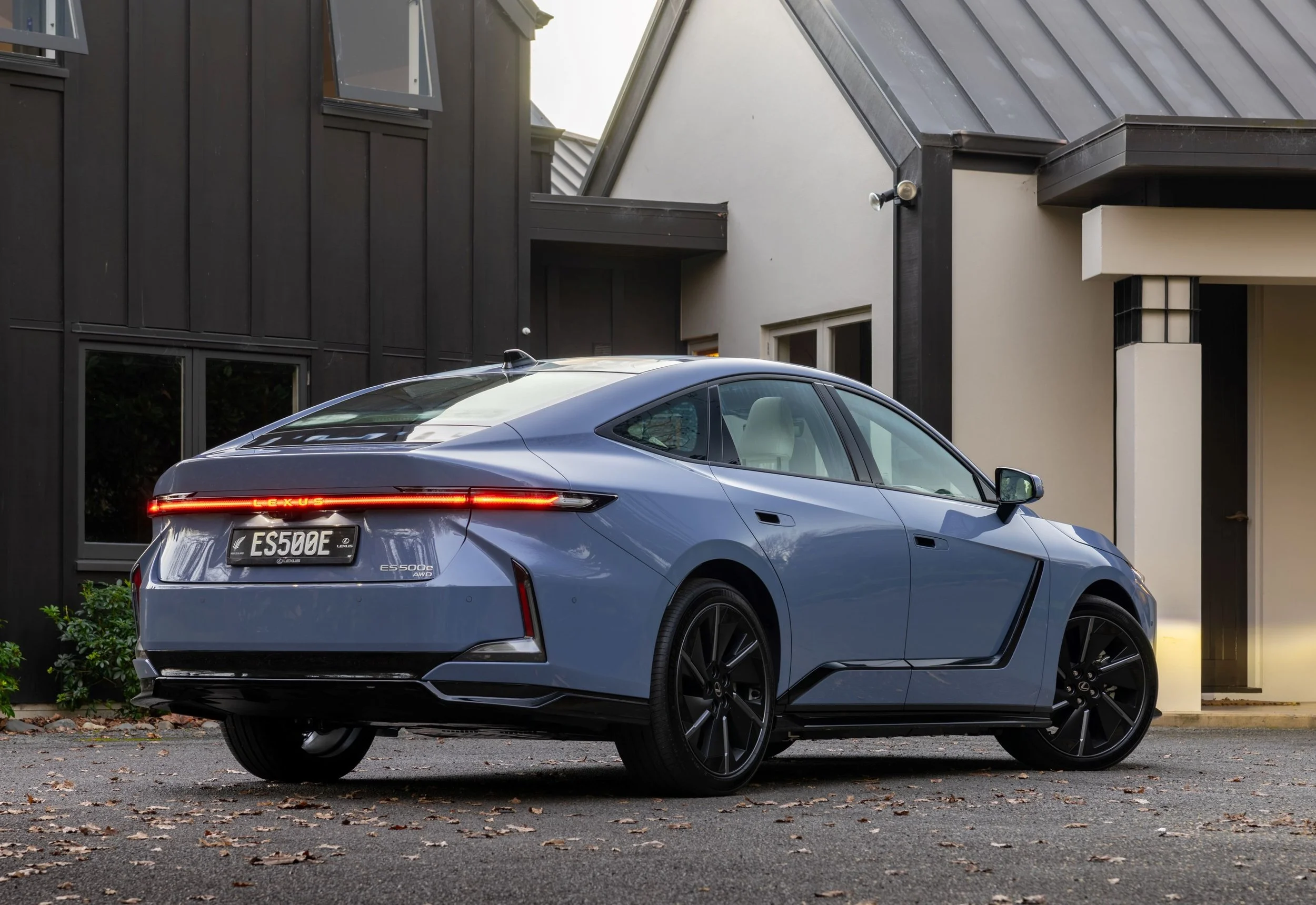
Other new design elements include flush exterior door handles, "L-Signature" headlights and tail-lights, and rear light strip with an illuminated Lexus logo, along with a ‘low centre-of-gravity’ stance.
The ES 500e Dynamic is further distinguished visually by 21-inch grey metallic alloys with matte black aero wheel covers and a aero package incorporating a front spoiler, side skirts and lower bumper.
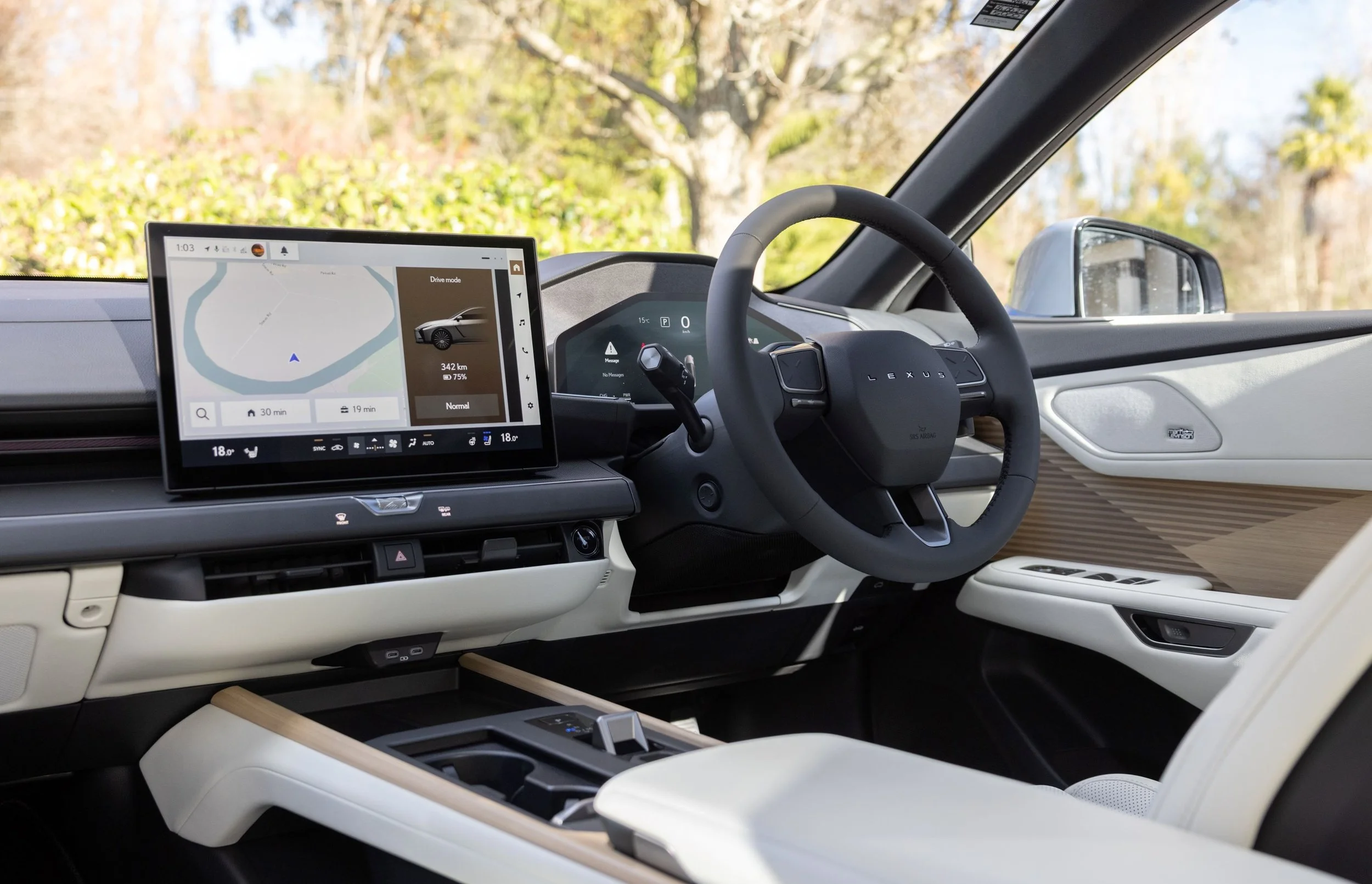
Inside, semi-aniline leather-accented seats, bamboo layering ornamentation and dynamic multi-colour surface illumination differentiate the flagship model.
ES is the first Lexus to have connected services capability, with app-based vehicle functions.
Specific connected features include remote lock and unlock capability, vehicle status updates, cloud-based navigation, SOS emergency call functionality, automatic collision notification in the event of an accident and stolen vehicle tracking.
The 500e also has an interactive manual drive, with which the eight-speed virtual gear set-up can be paddle shifted. Adaptive Variable Suspension is also standard.
The ES also gets the latest generation of Lexus Safety System plus, including smart headlights, front cost traffic altert, an updated lane trace assist and a bolder pre-collision programming. Driver monitoring uses a camera to recognise signs of driver inattention and fatigue.
Andrew Davis, Lexus New Zealand vice president, says another ingredient is the large and spacious cabin, which Lexus has defined as being tailored to be considered a second living room – a place where all occupants can feel totally relaxed.
Davis says the brand came up with a concept called ‘Time is Luxury’ that prioritises making sure that time spent in the car is pleasant and perceived as luxurious time by the individual.
“We spend a lot of time in our cars in New Zealand, whether that’s commuting, travelling between cities or heading away for the weekend. So, luxury isn’t just about what you can see or touch. It’s also about how you feel after you’ve spent an hour or two in the car,” he contends.
“That’s where the thinking behind this ES really comes through. It’s quiet and spacious, but there are also small details like the lighting, seating and the way the technology sits within the cabin that make it an enjoyable place to spend time.”
Lexus argument that the new model has a much stronger presence on the road than the seven previous generations might be useful, as sedans are certainly no longer big sellers now, being victims of the swing toward sports utility and crossover cars; in the premium section the leaders remain German cars.
However, Lexus here persists in suggesting the ES deserves consideration and says the previous car has built a loyal following from “customers seeking a more traditional luxury sedan experience.”
In some markets, the car has installed as a stand-in for the full-sized LS limo, but here it has a subordinate role to that car, which still positions as a $250,200 choice in 500h Limited guise.