Drive to defeat Covid-19

Carmakers are thinking hard about how to turn cabins into safe spots.
Sanitation5.JPG

WORRIED that even big doses of disinfectant mightn’t keep coronavirus out of your vehicle?

So, it seems, are car makers. Which is why they are looking to employ other, sometimes more extreme methods.

How long, then, before the vehicle in your driveway can maintain bug-free status through using ultraviolet light, really high-tech air filtration or even just as a result of turning up the heat really high?

These are the methodologies coming to the fore. Latest to hit headlines is Ford’s hot shot approach. 

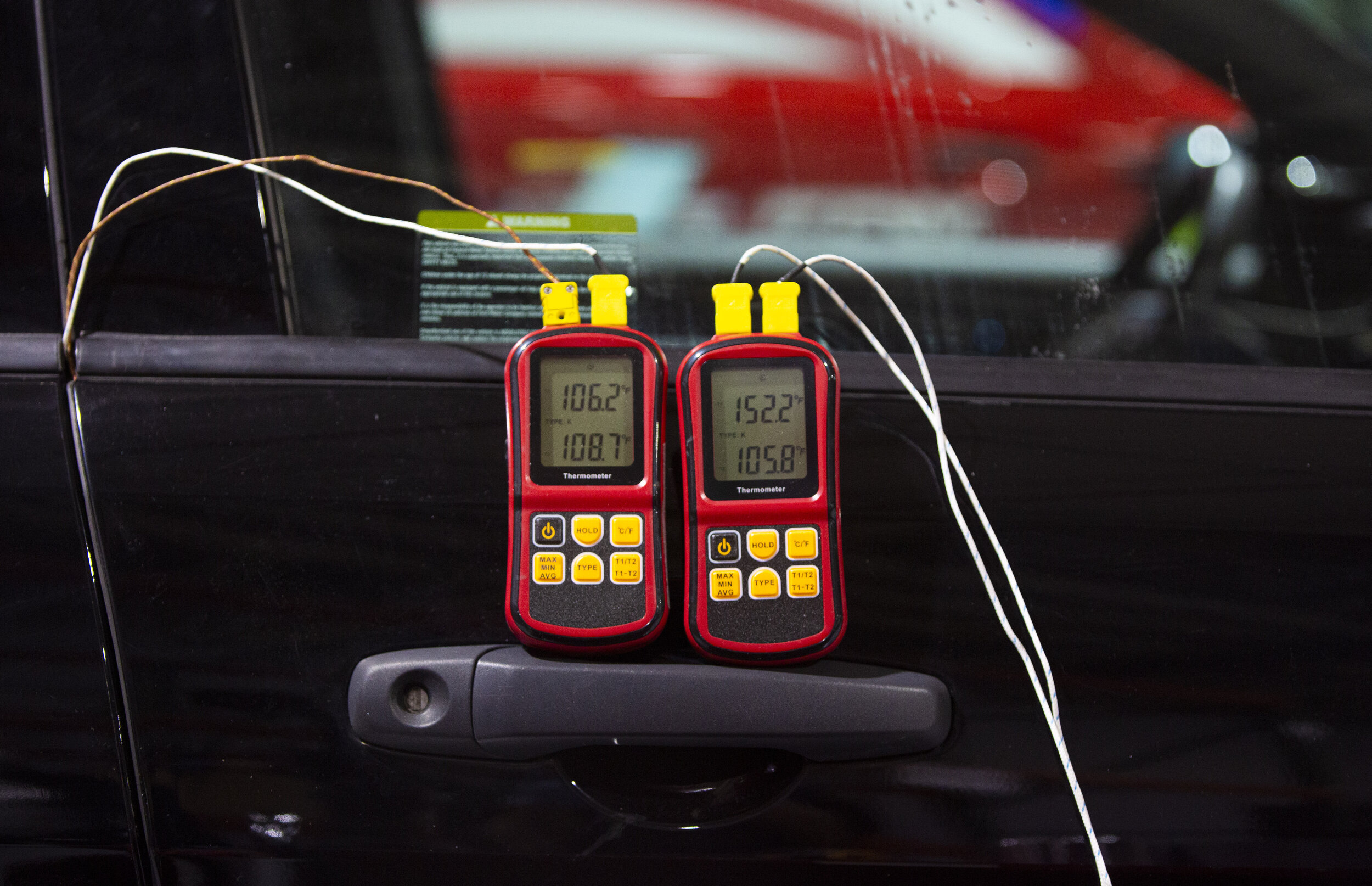
As the images today show, the “heated software enhancement” system is literally a matter of turning up the heat.

We’re talking hot. As in generally ‘beyond Sahara in summer’ hot. Fifty-six degrees Celsius is generally well above the maximum settings that your vehicle’s own system is usually designed to achieve and within a range considered risky for prolonged safe human tolerance.

However, it’s what the doctor – or at least researchers at Ford Motor Company in Detroit and Ohio State University – have ordered as being effective in terminating any viral elements that might be lingering in a vehicle’s cabin.

Sanitation10.JPG

The research has hit the front line, in that it has fitted the Police Interceptor Utility vehicle it builds for law enforcement use in North America with a new cabin heating feature designed to “inactivate” any virus particles.

The New York City Police Department, Los Angeles Police Department and Michigan State Police have participated in field-testing the system, which works by baking the car’s interior at 56C or higher for 15 minutes.  

The software purposely increases the engine temperature and raises the climate control and fan settings to these new maximum settings then enables a subsequent cooldown protocol at the end of the cycle. 

To ensure officers know when the system is operational, a series of pre-set flash sequences are carried out by the hazard and tail-lights with a separate sequence displayed at the end of the cycle during cooldown.

And yes, there are precautions against inadvertent use. In latest cars it only triggers by pressing cruise control buttons in a certain order, while earlier models require an external tool that connects via the OBD port.

Ford chief product development and purchasing officer Hau Thai-Tang said first responders were in dire need of protective measures given they were on the front line protecting everybody else.

“We looked at what’s in our arsenal and how we could step up to help,” he said.

“In this case, we’ve turned the vehicle’s powertrain and heat control systems into a virus neutraliser.”

Sanitation4.JPG

According to Ohio State University department of microbiology laboratory supervisors Jeff Jahnes and Jesse Kwiek, “exposing coronaviruses to temperatures of 56C (or 132.8 degrees Fahrenheit) for 15 minutes reduces the viral concentration by greater than 99 percent on interior surfaces”.

Ford meanwhile says that the system adds an extra level of thoroughness to the sanitisation guidelines approved by Centres for Disease Control and Prevention given that heat can “seep into crevices and hard-to-reach areas, helping reduce the impact of human error in applying chemical disinfectants”. 

Ford police brand marketing manager Stephen Tyler described Covid-19 as an “invisible enemy” and said he was proud Ford was able to provide a solution. 

So, keen to get your Fiesta, Ranger or Mustang all toasty? Sorry, it’s a no-go.

The make has made clear a system designed to be used in conjunction with proper cleaning methods is not, for reasons of safety (and, dare we say it, common sense – you could imagine the lawsuits from inappropriate use), going to transfer into civilian vehicles.

So that’s one approach. What is coming to the boil? In general, car makers are looking at employing more antimicrobial materials and easier-cleanable surfaces. They are also assessing the quality of air filtration systems. Geely, the parent company of Volvo, reckons the set-up for its new Icon electric car will achieve the N95-certification meted medical masks.

Hyundai is well advanced its bid to use ultraviolet light sterilisation technology that would be installed like a dome light in its vehicles. This could be taking a cue from the grenlite (pronounced ‘greenlight’) device shown off by a Michigan-based tech firm, GHSP, at CES this year. This sterilises a vehicle when sensors detect there are no occupants, automatically scheduling new cleansing cycles when needed — and is already in use in emergency vehicles in three US states.

Another specialist in cleaning, Faurecia, is also looking at foggers that would spray a disinfectant such as hydrogen peroxide. Vehicle assembler Magna is evaluating “an ozone-generating system.”

Not so keen on any of these measures? You’re in a minority. When car owners were surveyed in five countries, 80 percent said they'd pay extra for technology that could sterilize a vehicle. Another survey just out has found a third of vehicle shoppers thinking about "air quality features" in a future car purchase.

Sanitation1.JPG


Focus ST: Automatic for the people

It’s been COVID-19 delayed and is $500 dearer than initially signalled but the fourth generation Ford Focus ST hot-hatch has launched.

Ford focus st 3.jpg

THE new Ford Focus ST is more powerful and roomier than its predecessor and delivers a significant increase in technology.

And it also gains a new status as the sharpest Focus variant among gen-four following recent confirmation that development has been halted on a successor to the all-wheel-drive RS rocket ship.

Originally scheduled for a first-quarter introduction, the made-in-Germany Ford Focus ST has weathered the COVID-19 delays to join the Fiesta ST, Mustang models and the Ranger Raptor under the Ford Performance banner.

Pricing is $59,490 (back in September a $58,990 price-tag had been advised) and the Focus hot-hatch recipe combines five-door functionality with a high output 2.3-litre four-cylinder turbo engine, front-wheel-drive and a new seven-speed sports automatic transmission with paddle shift.

Ford New Zealand sees automatic transmission as the overwhelming customer preference in this market. There is a six-speed manual with rev-matching function available in most markets including Australia.

It’s the first time a Focus hot-hatch has been offered with only two pedals – a move that widens its reach in the market to deliver something that Honda Civic Type-R and Hyundai i30 N rivals can’t and positions the Focus ST as a Volkswagen Golf GTI competitor.

The previous Focus ST had a 2.0-litre turbo engine. The fourth generation features the all-aluminium 2.3-litre unit derived from the previous RS model with twin-scroll turbocharging, an electronic wastegate and anti-lag system. It develops 206kW at 5500rpm (an increase of 22kW) accompanied by a substantial jump in torque to 420Nm (up from 360Nm) available between 3000-4000rpm.

The sharpening of the Focus also applies to the chassis tuning with 19-inch alloy wheels shod with bespoke 235/35 Michelin Pilot Sport 4S tyres and suspension that lowers ride height by 10mm compared to standard Focus models.

Ford Focus ST.jpg

A torsion beam axle is standard on mainstream Focus models but the higher riding Focus Active and the ST model have an independent rear suspension and the ST debuts a new Continuously Controlled Damping (CCD) system.

The CCD system monitors suspension, steering and braking inputs at 2 milli-second frequency to adjust damping responses. 

A Borg Warner electronically controlled Limited Slip Differential (eLSD) plays a key role in applying 420Nm of torque to the road. The system can pre-emptively adjust torque distribution using inputs from powertrain and vehicle dynamics sensors.

Ford says the electric power-assisted steering (EPAS) system is 15 per cent quicker than the standard Focus with just two turns lock-to-lock. And there is ST-specific steering knuckle geometry for sharper responses.

New software titled Steering Torque Disturbance Reduction has the target of reducing torque steer when applying 206kW and 420Nm to the tarmac.

Upgraded brake hardware includes larger 330mm front and 302mm rear ventilated discs with red painted callipers and Ford has developed a new electronic brake booster to provide more consistent pedal feel.

The Selectable Drive Modes offer Slippery, Normal, Sport and Track settings that adjust the eLSD, CCD, EPAS, throttle mapping, automatic transmission shift scheduling along with electronic stability control (ESC) and electronic sound enhancement (ESE) settings. In Track Mode the eLSD delivers maximum traction and the intervention of the ESC system is delayed.

A dedicated Sport button on the steering wheel allows direct access to Sport mode while the Mode button allows drivers to scroll through the Drive Mode options.

Exterior detailing includes a wide honeycomb grille, ST specific bumpers and side skirts, a rear spoiler, LED adaptive headlights, daytime running lights and tail lights.

Colour choices are Ford Performance Blue, Frozen White, Magnetic (grey), Race Red and Agate Black. Ford NZ had originally signalled a $500 premium for the searing Orange Fury seen here but has decided not to charge a premium for prestige paint.

Cabin highlights include heated Recaro sports seats with leather and suede trim and ST logos. The flat-bottom and heated ST steering wheel is trimmed with perforated leather.

Ford Performance instrumentation is standard including shift lights for when the paddles are being used. With the arrival of an automatic transmission the ST adopts the rotary e-shifter and an electronic park brake.

Standard equipment includes keyless entry and push-button start, LED ambient lighting, dual-zone climate control, rear privacy glass and heated power-folding exterior mirrors with puddle lamps. 

Interestingly Australian customers get a premium Bang and Olufsen audio as standard but Ford NZ has opted for a six-speaker system.

The Focus ST is equipped with the SYNC 3 infotainment and communications platform with 8.0-inch touchscreen, Apple CarPlay and Android Auto compatibility while Siri and voice-activated text messaging can be accessed via steering wheel controls. Satellite navigation, a 180-degree rear-view camera and wireless smartphone charger are standard.

Along with a five-star ANCAP (2019) rating the Focus ST safety and driver assist roster includes Autonomous Emergency Braking (AEB) with Cyclist and Pedestrian Detection, Blind Spot Information System (BLIS) with Cross Traffic Alert, Lane Departure Warning and Lane Keep Assist and Hill Launch Assist.

Because the automatic model has been selected for the New Zealand market Adaptive Cruise Control (ACC) with Stop & Go function is standard.

Ford Focus ST 2.jpg


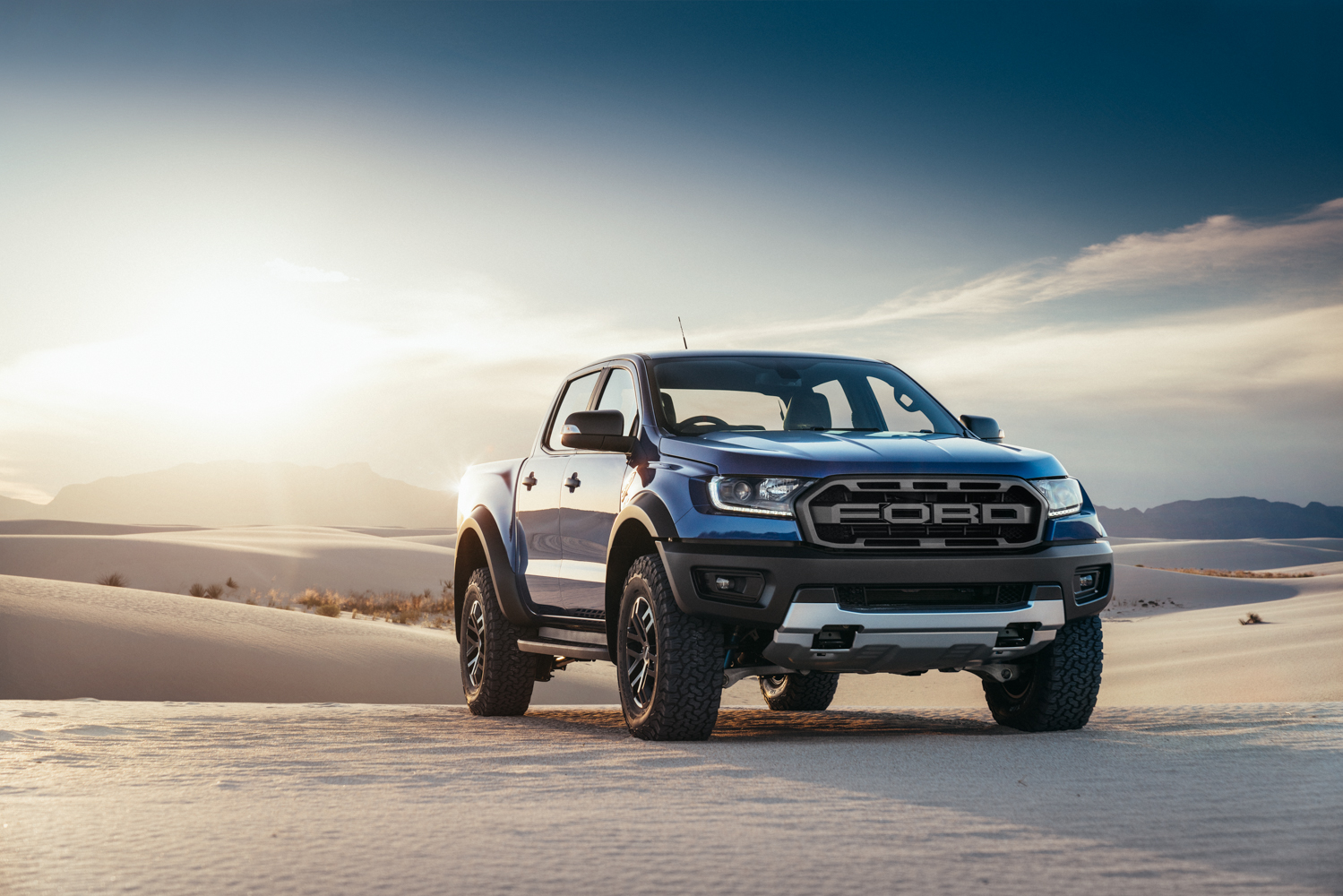
Ute outlook Pt 3: The big Blue

Our national obsession for utilities, especially family-minded dual-cabs, knows no bounds. The market is booming at the moment, and filled with plenty of strong options. Yet surely you’re also keen to know something about what’s coming up next, when and from whom? Here’s the final section of our three-part analysis.

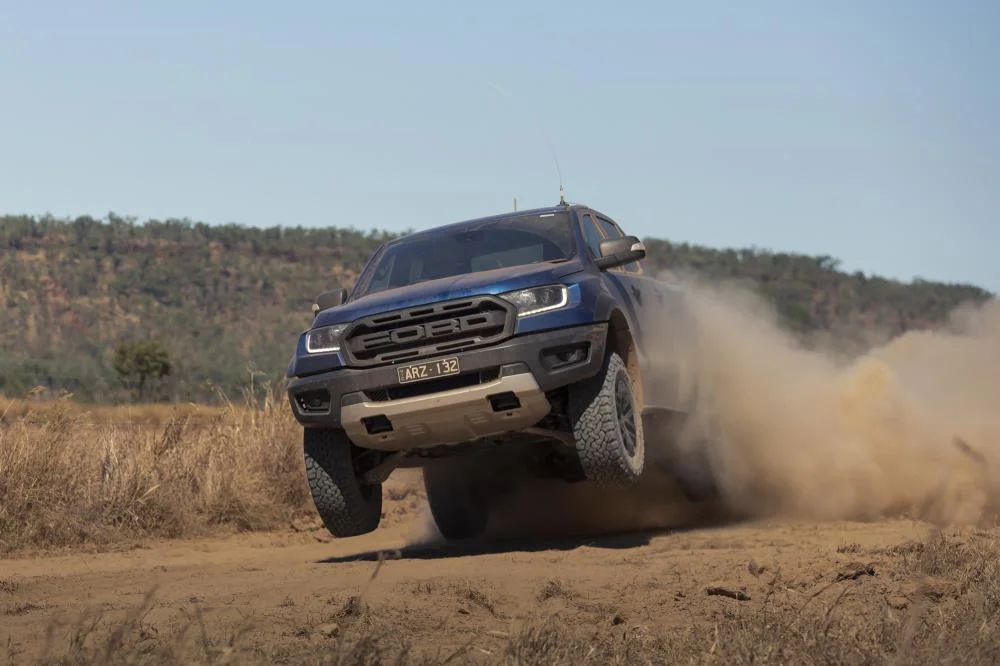
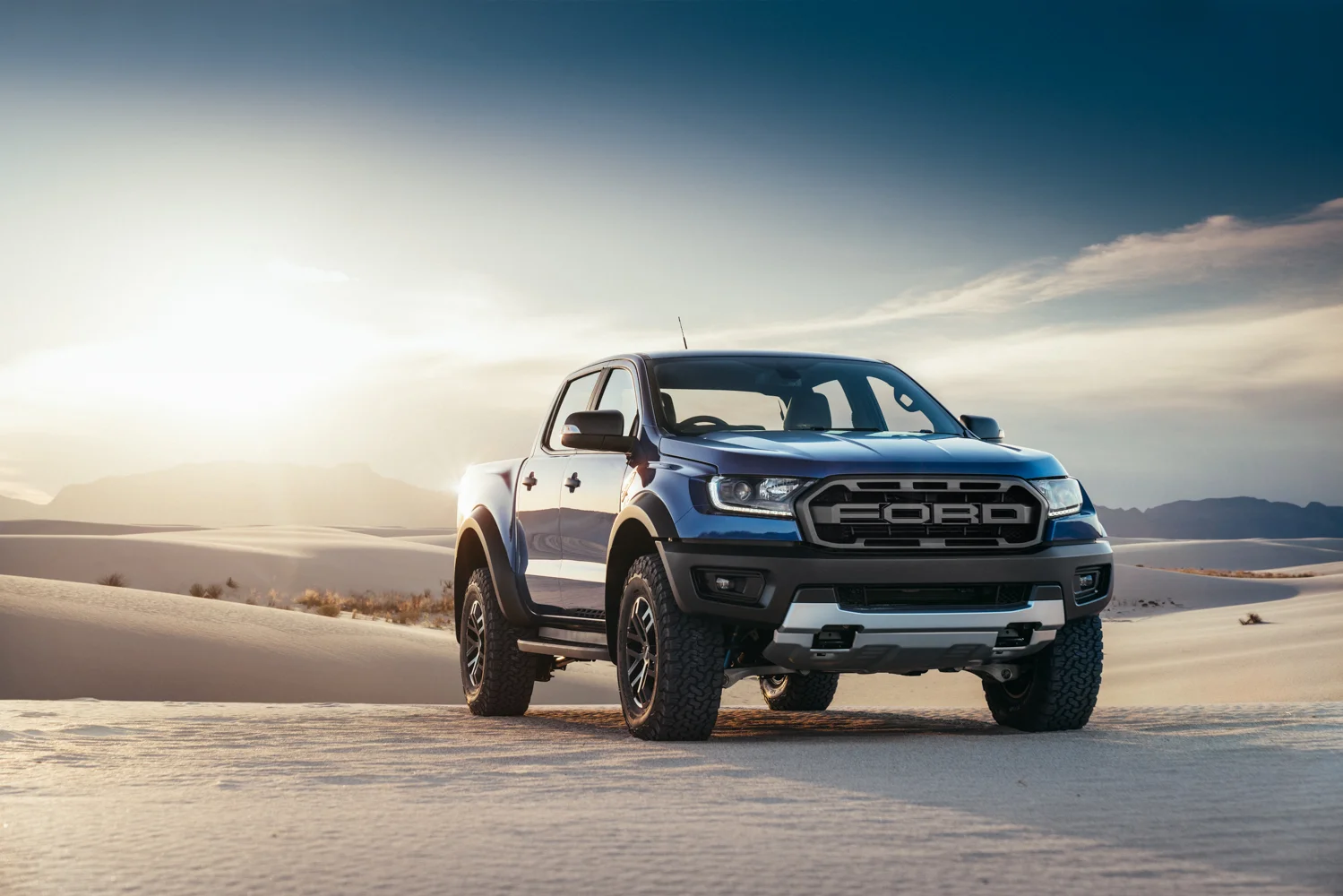
will there be a new Raptor? It’s still unknown.

will there be a new Raptor? It’s still unknown.

My, how the motoring world goes around.

Back in 2011 when Ford Australia unveiled the T6 Ranger ute that it had designed and engineered all by itself, it flew journalists to some God-forsaken place in South Australia’s Flinders Range for the big reveal.

In among the Rangers at the launch event was a Volkswagen Amarok. The Ford people explained that the VW was there because during the Ranger’s development they had benchmarked their new ute against it.

High praise indeed for the Argentine-built ute produced by Germany’s Volkswagen Group. And the benchmarking worked, too – Ranger immediately became one of the world’s most popular one-tonne utes.

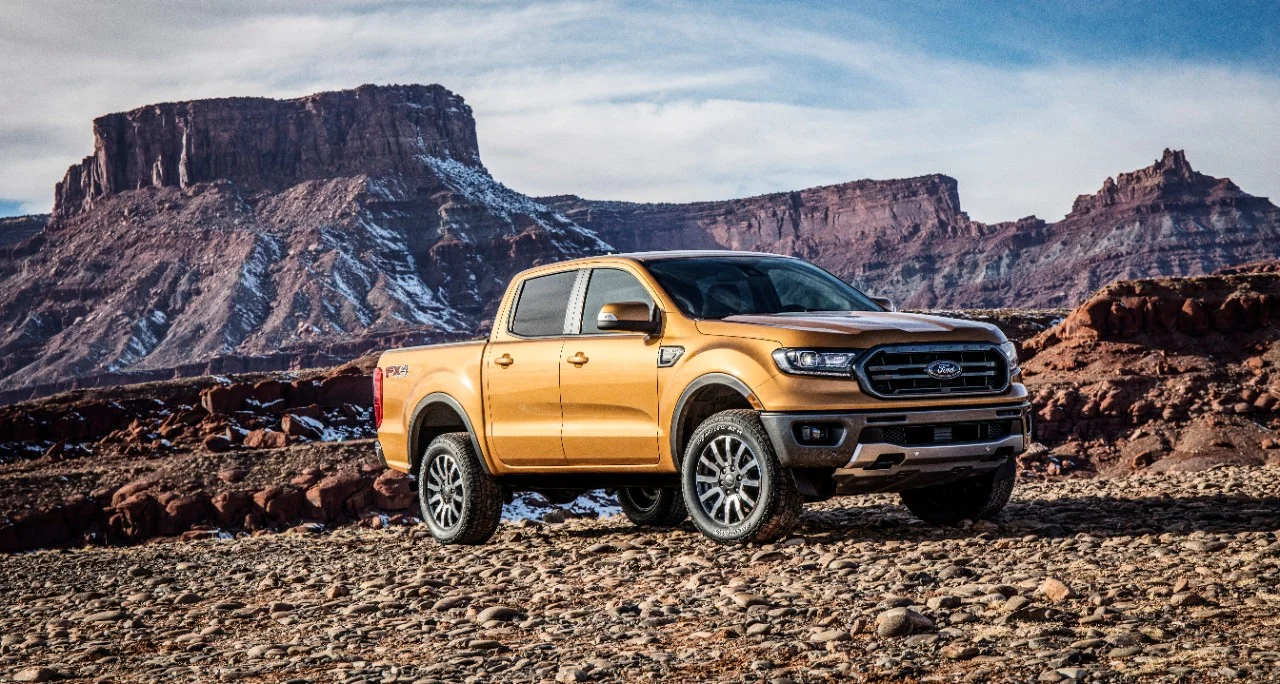
In New Zealand it is the topselling ute, consistently edging out its arch-rival Toyota Hilux. In fact it is the top selling new vehicle full-stop – last year there were 9485 of them registered, well ahead of Hilux’ 7126 sales and way ahead of the most popular passenger vehicle, the Toyota Corolla with its 6804 sales.

And Amarok? The hard truth is that the Volkswagen has struggled. It account for just 1 per cent of the Kiwi commercial market last year, with 653 sales. And that figure was less than 1 per cent of the Amarok’s global sales of 72,500 last year, which in itself was very modest when compared to the hundreds of thousands of sales recorded annually by the likes of Hilux and Ranger.

Given the very high costs of development of any new-generation vehicle, it made sense then that Volkswagen Group would look to forge an alliance with another manufacturer to share development of the next Amarok.

That’s what has happened. Last year the group signed a contract with Ford Motor Company to develop new light commercial vehicles.

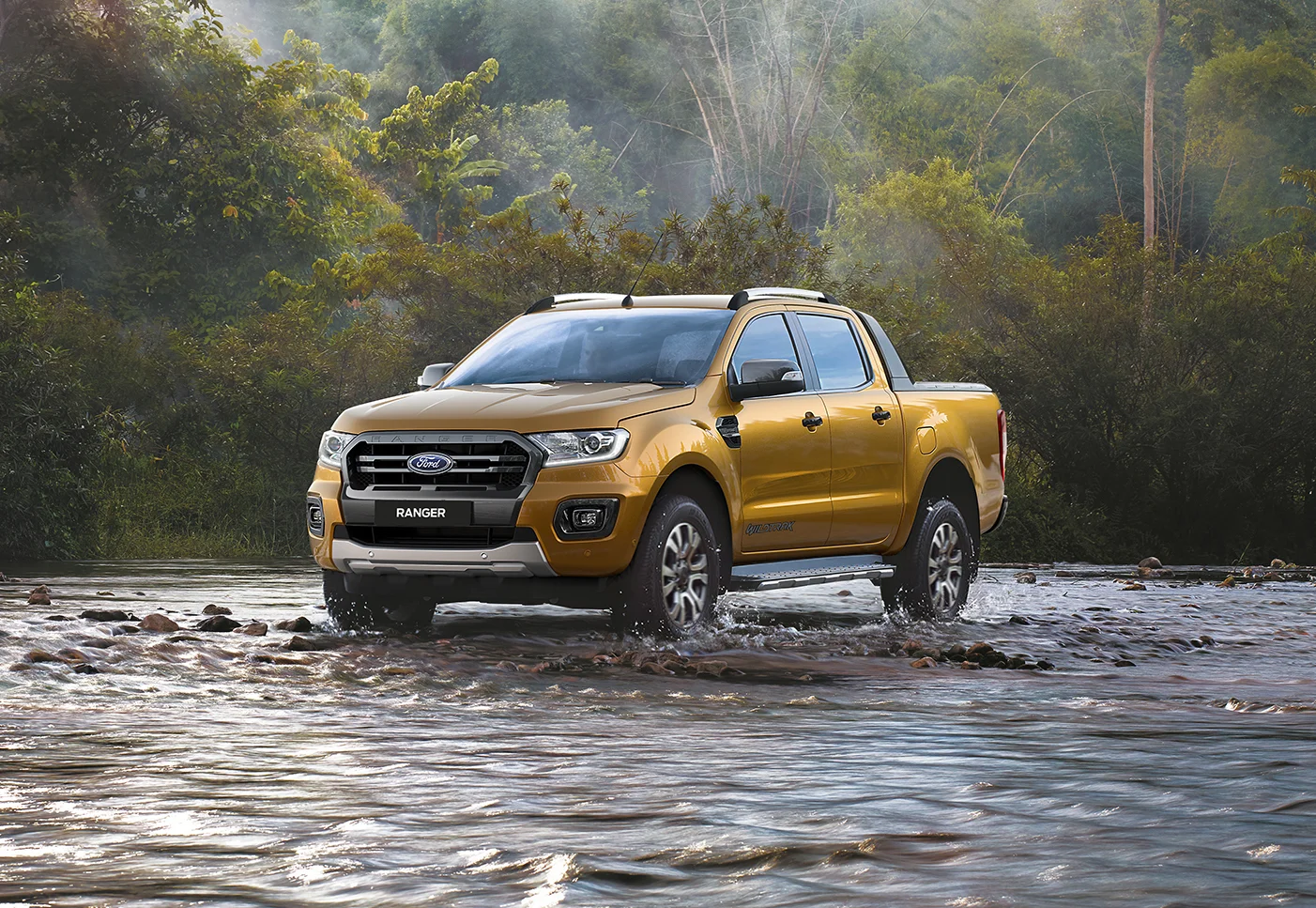
current ranger has been vital for ford nz

current ranger has been vital for ford nz

In other words, instead of Ford using the Amarok as a benchmark during development of a brand-new T7 Ranger, it is now developing the next-generation Volkswagen ute.

Under the terms of the new alliance, Ford is responsible for creating the two ute models, while Volkswagen Group is responsible for development of both brands’ next-generation vans.

The ute project is being led by Ford’s Australia-based Asia-Pacific Product Development Centre, and it is already well advanced. Unofficial word is that the new Ranger will be launched late next year, and the Amarok slated to arrive in 2022.

Although both companies – Volkswagen particularly – are currently spending a fortune electrifying their future vehicles, this isn’t going to apply to the utes. Instead, Ford is concentrating on developing a range of suitable petrol and diesel engines for Ranger and Amarok.

Media reports out of Australia suggest that instead of being powered by the current 3.2-litre five cylinder diesel, which won’t meet latest emissions regulations, the new Ranger will feature a 3.0-litre single turbocharged Power Stroke diesel V6.

The latest version of this lightweight engine is under the bonnet of the F-150 pick-up in USA, and in that application it offers 186 kilowatts of power and 597 Newton metres of torque.

There’s also talk the Ranger will also get a 2.7-litre twin-turbocharged ‘Nano’ EcoBoost petrol V6 that debuted in 2018 aboard the F-150 in the US, and it develops 242kW and 542kW. But at this stage it seems unlikely this petrol Ranger will become available for New Zealand.

 There’s no word yet as to whether the new Amarok will feature the same powertrains as the Ranger.

Parts 1 and 2 of this series can be found in the news section.

amarok has been a solid performer and the v6 is admired. will it continue?

amarok has been a solid performer and the v6 is admired. will it continue?

Vale Mustang’s real father

His sketch was chosen by Lee Iacocca. The rest is history.

galeatmuseum.jpg

You might not know the name – you will know the car. Because EVERYONE knows the car.

Gale Halderman, the last surviving designer of the original 1965 – well, 64-and-a-half if you’re a true fan – Mustang, has passed away. He was 87.

Halderman is known as the man behind the scenes of the Mustang, having penned the original shape of a model that made its world debut at the New York Worlds Fair of 1964. A car would be produced continuously across six-generations and for more than five decades 

While it was Lee Iacocca who was known as the father of the Mustang, Halderman is its creator. The Mustang went on to sell more than 8 million units.

Appointed family spokesperson and author of Mustang by Design: Gale Halderman and the Creation of Ford’s Iconic Pony Car, Jimmy Dinsmore, said: “To have lived 87 years and to have designed something that is part of pop culture and automotive history, he had such an impact. 

“He did it in such a humble way that has touched the heart of every Mustang enthusiast out there. As great of a designer as he was, he was an even better human being.”

1964-NY-Worlds-Fair-Mustang.jpg

Dinsmore says the most striking thing about Halderman, a 40-year Ford employee, was his humility. For many years, Halderman did not receive much attention for being the Mustang’s original designer, preferring to let others take the credit.

“When he went back to their Christmas dinners and such, he would be seated at the table with Mr. Ford,” Dinsmore added.

Born in 1933, Halderman completed a Bachelor of Arts degree from the University of Dayton and a further Industrial Design degree from the Dayton Art Institute. He went on to serve positions as the director and executive director of the Ford Design Studio, Advanced Design Studio, Interior Design Studio, and Lincoln-Mercury Design Studio.

Ultimately, the designer of the Mustang was to lose a brief battle with liver cancer. He is survived by three daughters, and his life’s collection of drawings, designs, sketches, and Mustang memorabilia, much of which can be viewed at the Halderman Barn Museum, a private venture open by appointment only on his family estate in Tipp City, Ohio. 

Halderman is a member of the Mustang Hall of Fame.

1964-Worlds-Fair-Ford-Mustang-introduction.jpg


Hotshot RS has gone but Focus ST will still burn

Ford NZ has reacted to news the fabulous Focus RS won’t continue with suggestion the ST is hot enough to fill in.

Focus ST 1.jpg

Will an underdog be accepted as king of the kennel?

More specifically, can a 206kW front-drive hot hatch fill the boots of a far more hyperactive four-wheel-drive big brother that, in the final tuning of its previous format presented to New Zealand, generated 257kW and smashed 0-100kmh in 4.7 seconds?

As hard as it might be for some revheads to accept the Focus ST incoming to New Zealand in June, price and final specification still undisclosed (and Covid-19 notwithstanding), having the cojones to satisfy RS-level expectations, that’s exactly what is going to happen, with news that the latter Focus has been killed off.

Ford New Zealand is pulling on its brave pants in responding to thought that, with the RS gone, it might lose a fanbase and struggle with ST to maintain the traction RS gained as an ultimate Euro-flavoured Blue Oval bad boy.

Corporate communications manager Tom Clancy believes the ST has enough flavour to win at least a look from the RS fanbase.
“The initial reviews from Europe of the … ST have been highly positive so we will see some RS customers and hot hatch enthusiasts in general checking out the new Focus ST.”

Ford has left those hardcore addicts no choice, with news that a famous badge with lineage going back to early Escorts now ends with $76,990 RS Limited Edition that came here in September of 2018.

Focus ST 3.jpg

The idea of developing a fourth generation RS hinged on it working with what’s turned out to be a developmental dead-end – a high-output hybrid turbo four-cylinder engine and an emissions-reducing 48V mild-hybrid system to meet tighter CO2 targets while retaining ballistic capability.

A company statement reads: “As a result of pan-European emissions standards, increased CO2 taxation and the high cost of developing an RS with some form of electrification for a relatively low volume of vehicles, we are not planning another RS version of the Focus.”

This doesn’t necessarily mean the RS will not re-emerge in the future – the statement is careful to apply specifically to this generation Focus – yet it does mean that for the time being the onus of being the ultimate family funster falls on a variant that, until now, has always been a stepping stone between the mainstream and the fully malevolent formats.

The new ST is certainly set to be a faster, more honed car than its predecessor. Notably, it comes equipped with a 206kW/420Nm 2.3-litre four-pot turbo – up by 22kW and 60Nm over the old model.

That means it is offering just 20Nm less than the last RS in its hottest factory format, though the power output is also 49kW shy.

It is also surely set to win a wider audience than the previous ST, or any RS, as they were manual gearbox models, whereas the next transfers to a seven-speed direct shift transmission.

Says Clancy: “The RS was more suited to enthusiasts as was the previous Focus ST.  

Orange_Fury_ST_068.jpg

“Where we anticipate the largest customer interest/movement is from the fact that this is the first time we’ve offered a 7-speed automatic transmission with paddle shift in a Focus ST.

“We anticipate many new customers and customers coming from competitors who have had autos before the Focus ST.”

However, the ST is patently not on the same level as the last RS in respect to drivetrain tech, which stands to reason.

In production and on sale in its primary markets for almost a year, ST was developed at a time when Ford was committed to doing as it has previously done: Continuing it as a fun, but lower-tier, excitement than the RS which was – back then – was a definite starter. 

Which is why the RS alone had the full-out race-spec tech and aimed at utterly bonkers high-end specialist all-wheel-drive Euro fare – the likes of the Audi RS3 and Mercedes A35 and A45 - whereas the ST was designed more as a foil to front-drive hotties, most notably the Renault Megane RS and the VW Golf GTI.

The RS will certainly be remembered as a marvel of chassis technology and sheer aggression.

As other have noted, it’s been no stranger to variety. The first-generation car relied on turbocharged, 2.0-litre power sending drive to the front axle; the second also put power through the steering set and switched to a five-cylinder unit. The previous Focus RS returned to four-cylinder power, but adopted an all-wheel-drive system and lifted the game all the more. 

Orange_Fury_ST_097.jpg

 Huge grunt from a 2.3-litre turbo engine (with 1.8bar or 26PSI of turbo boost) channelled via a six-speed manual gearbox and, in most-prized Limited form, a Quaife mechanical (meaning real, not a pretend electronic approximation) limited-slip differential at the front and it had a RS Performance Wheel Pack with 19-inch rims and Michelin Pilot Sport Cup rubber. All this, and a fun-tastic Drift Mode that unleashed it for impressively Hoonigan-style big skids (track use only, of course). 

That clever stuff showed in the price, of course. At $76,990, that last blast RS added $4000 to the sticker attached to the standard model and left it around $25k above the ST. 
So much for so little? As much as the RS sticker seemed to put it beyond the faint-hearted, it sold fast anyway.

And though, of course, the RS car park was always smaller than the ST’s, which in itself held something of a niche presence, it proved how strongly street cred can ‘sell’ a car, being utterly untroubled being noticed by those in the know.