Manley’s record run keeps rolling on


Covid-19 is preventing a leading New Zealand motor industry executive from retiring.

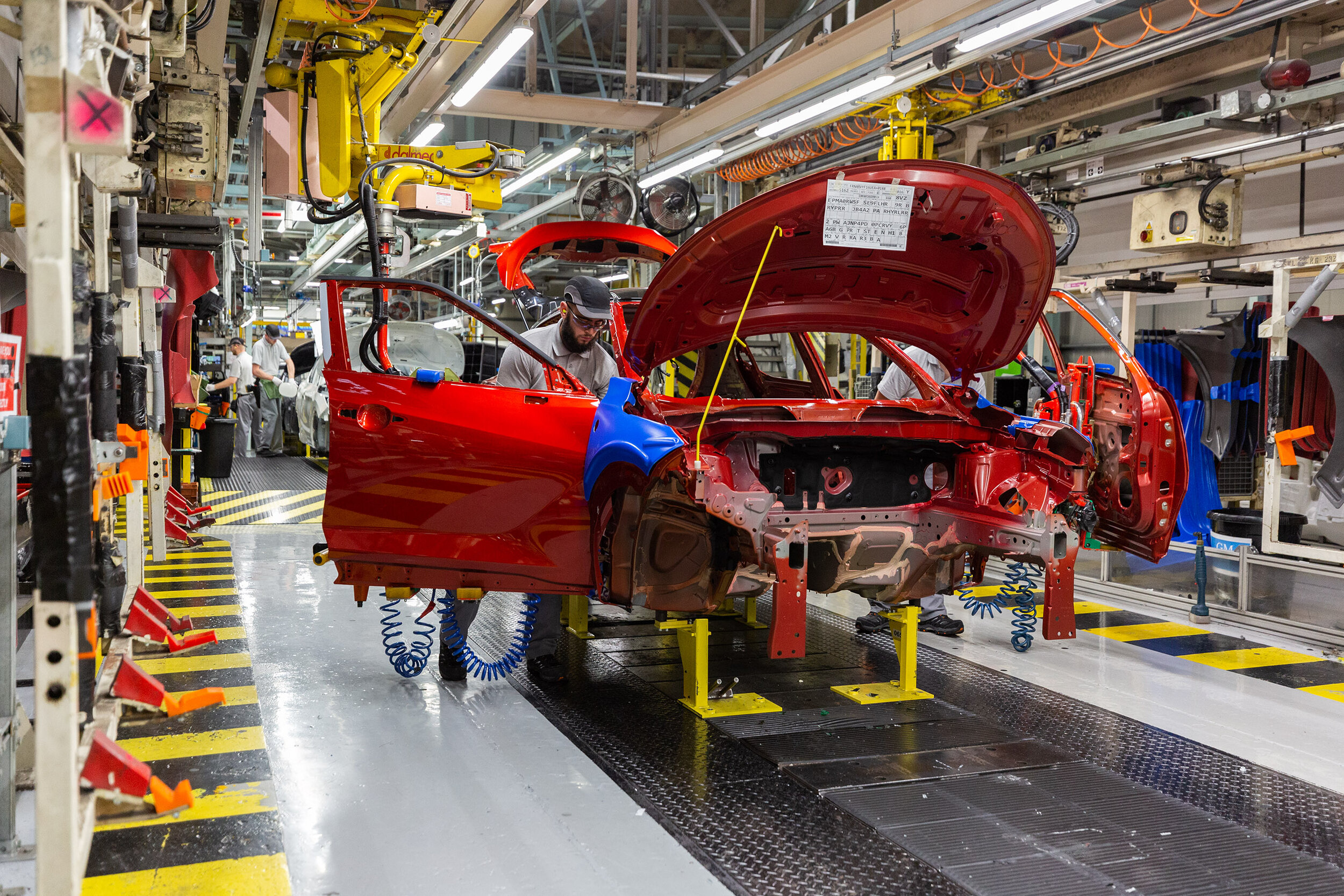
manley took over when the nz vehicle assembly industry was in a state of flux. closing the line at wiri was an early job.

manley took over when the nz vehicle assembly industry was in a state of flux. closing the line at wiri was an early job.

HE’S the world’s longest-serving Nissan managing director and wants to retire – but the Covid-19 pandemic is preventing it.

John Manley runs Nissan New Zealand. He was supposed to retire at the end of April after 39 years working for the Japanese brand – 20 of them in his present position.

The plan was for his role to be taken over by Ben Hamilton, on transfer to New Zealand from Nissan Australia. But then the pandemic hit, and both New Zealand and Australia went into lockdown – which meant the Australian couldn’t get across the ditch to take up his new job.

Not that it mattered – because Manley couldn’t do what he planned to do anyway.

“We were supposed to head off on a trip to Canada,” he explains.

“But then in what seemed the blink of an eye I was unable to retire, my wife Helen was made redundant as a flight attendant, our daughter was also made redundant, and we ended up stuck at home.

“It’s amazing how quickly things changed. Everything looked tickedy-boo – and then the whole world closed down.”

john manley - world’s longest-seving Nissan ceo

john manley - world’s longest-seving Nissan ceo

The plan now is for Manley to continue with Nissan New Zealand until his replacement can get across the ditch to his new job.

“It’s not a hassle at all,” says Manley. “All our plans went pear-shaped anyway, so I’m more than happy to help out.”

When John Manley does retire, he will finish as New Zealand’s longest-serving motor industry executive. He’s also considered to be the world’s longest-serving Nissan managing director.

His motor industry career began 39 years ago when he started work as a new vehicle salesperson at Newmarket Nissan in Auckland. Prior to that he was a bricklayer.

“I was sitting on a job one day, it was absolutely pissing down with rain and I thought ‘there’s gotta be more to life than this’.

“I flicked through a newspaper and saw this job advertised by the local dealer offering a car and the promise of pretty good money so I thought ‘that’s me.’ And that’s how it started.”

At that time the dealership was a factory shop, Nissan NZ’s head office was in Lovegrove Crescent in Otara, and the brand’s assembly plant and national parts warehouse was at Wiri.

 He progressed up the corporate ladder, becoming sales manager and fleet sales manager before being appointed dealer principal at Takapuna Nissan. Then in 1997 he moved to Nissan NZ as national sales manager, and was promoted to managing director three years later.

Manley took over the big job at a time when New Zealand’s motor vehicle assembly was in a state of flux.

The Government’s plan had been to gradually decrease import duty on vehicles over a period of years to allow the importation of fully-built up product. But in the 1998 Budget it instead made the sudden announcement to drop all import duties several years ahead of schedule.

This had an immediate effect of making motor vehicle assembly un-viable in New Zealand, and Manley – like the heads of every other brand involved in CKD assembly in the country – had to begin the process of shutting down assembly operations.

At that stage Nissan NZ had about 400 employees building 40 vehicles a day at Wiri. But thanks to their high levels of training, the vast majority were able to be re-employed in other industries by the time the plant closed down a few months after the Budget announcement.

“It created some immediate difficulties, but it was the correct decision and a better option than a slow wind-down,” Manley recalls.

“And from that point on we at Nissan NZ had access to a wider range of Japanese domestic product that had a greater specification level.”

From a business perspective the halt of CKD assembly, and move to a fully CBU regime, represented dramatic change. In one fell swoop Nissan NZ went from manufacturing to becoming an operation focussed more on sales and marketing.

overseeing the release of the latest juke should be manley’s last big gig.

overseeing the release of the latest juke should be manley’s last big gig.

Adding to complications at that time was the fact that Nissan Motor Company had entered into a strategic partnership with French manufacturer Renault to form what was known as the Nissan Alliance. Manley says this in itself caused a quantum shift in focus and priorities – all of which had a major impact on operations. But the impact was positive, he adds.

One such impact has been the ability to source product from all over the world. For example, today New Zealand sources a selection of vehicles from Japan, Thailand, USA, and United Kingdom that best suit the Kiwi motoring environment.

And the benefits of that wide international choice are best illustrated by what vehicles John Manley will take with him when he is finally able to retire. He’s going to have a Thailand-sourced Navara ute, while his wife Helen will have a United States-built Pathfinder SUV.

“That will cover every eventuality,” he quips.

And what does John Manley see of the future of the motor industry in New Zealand?

“I see the industry constantly evolving to meet the requirements of consumers,” he says.

“The current pandemic will provide further opportunity for revision, but basically we are a people industry – an industry building vehicles that fulfil consumer needs and aspirations. The personal interaction with the customer is the highlight,” he says.

And insofar as his career goes? Lots of memories, no regrets, plenty of quiet pride.

“Not a bad effort for a brickie, I’d say.”


JLR defiance as market toughens

 In the face of black clouds … is one brand channelling the Black Knight?

updated f-type will be at forefront of JLR’s local effort this year.

updated f-type will be at forefront of JLR’s local effort this year.

PRODUCTION lines halted, factories closed, new models delayed, registrations at the lowest since … well, forever in some countries. 

Certainly, it seems fair to suggest the global coronavirus crisis has caused no small amount of pain to the car industry and probability of more discomfort ahead seems unavoidable.

The New Zealand forecast of 2020 delivering around 40-45 percent fewer new car sales compared with 2019’s national tally is actually optimistic compared with others being expressed elsewhere around the world.

In face of all this, what brand would dare demonstrate a degree of stiff upper lip against-whatever-odds’ defiance?

Step forward SVO, the performance division of Jaguar Land Rover.

Primarily taking this moment to celebrate how well it is done in the past 12 months – both globally and in New Zealand – it is also expressing a touch of confidence about the future being … well, if not outright bright, then perhaps ‘less bleak. 

Admittedly, even that level of quiet confidence will jar with how others see it.

rrsportsvr18mydetailtianmenroad13031823.jpg

And, assuredly, there’s still so much uncertainty about the market condition that what might for now seem to be a reflection of the spirit that kept Britain chipper after Dunkirk might yet equate to the outright nutsy ballsiness of the famous Black Knight of Monty Python and the Holy Grail movie fame who, you might recall, was so staunch in his refusal to give up that, even when reduced to a limbless torso, he wanted to fight on claiming those injuries were but a flesh wound.

Still, SVO having achieved record worldwide sales for the most recent fiscal year reminds that the Brit battler is making good gains in a sector where Mercedes-AMG and BMW’s M Division in particular have long held the high ground.

That success has been particularly felt on New Zealand soil, where the Kiwi pick of the very fast, very powerful, very loud and quite expensive versions of Jaguar Land Rover road cars and sports utilities has been a model that has impacted significantly everywhere, the F-Pace SVR.

Jaguar NZ general manager Steve Kenchington can be rightly proud that the $157,900 supercharged V8 flagship has nabbed 35 percent of local F-Pace volume, a rate that puts up well above the global average. 

Of course, as impressive as the local effort’s cited 175 percent year-on-year climb in volume sounds, it pays to bear in mind that the total count of SVO product sold here comes to a modest count. 

That just 157 units across the Land Rover and Jaguar portfolios in total came from the SVO operation reminds how exclusive this option is. Also, how expensive.

roaring f-pace svr has been a stalwart in this market.

roaring f-pace svr has been a stalwart in this market.

What imprint the hottest F-Pace can present in the future is less certain. The car’s 404kW/680Nm 5.0-litre eight-cylinder is set to soon be discontinued, with Jaguar switching to an alternate engine from BMW. 

Perhaps what’s especially plucky, all the same, is brand sentiment that, once we put this coronavirus issue behind us, Kiwi enthusiasts will again be keen to rev up their buy-in these understandably expensive products.

According to a local spokesman: “The demand (for SVO) is such that when we enter a more normalised world post Covid-19, we will be keen to restart SV specific drive days for our customers.”

There’ll be a new hero to try on those occasions, in the form of the updated and extensively re-engineered F-Type.

Meantime, Kenchington reckons the strong sales in the New Zealand market reflect Kiwi’s love for SV products “and their more sophisticated buying habits when it comes to performance vehicles.”

“While the SV product range has assisted Jaguar Land Rover New Zealand’s total sales growth over the last 12 months, the introduction of new technologies in electrification have meant that we are also able to offer the likes of World Car of the Year Jaguar I-Pace.

“Being able to deliver such strong innovation in quite different parts of the market is a testament to the incredibly hard work and innovation that is taking place at our factories,.”

rang rover svr product has also resonated

rang rover svr product has also resonated

The F-Pace aside, SVO has identified the Range Rover SVAutobiography as another particular winner that helped towards total sales of over 9500 cars.

But about that I-Pace. SVO ‘s overall boss, Michael van der Sande, has confirmed that his division is set to launch its first all-electric car within a few years.

However, in spite of SVO developing and running the I-Pace in the e-Tophy race series that supports Formula E, the battery crossover will not be the first electric car to receive an SVO makeover.

Speaking to Britain’s Auto Express magazine, van der Sande said: "We will be developing electrified versions of our cars, be that fully electrified or plug-in hybrids.

“I-Pace is not on that path, but there are various other things we are working on which we can’t talk about, but we’re very interested in electrification. That’s why we get involved in the eTrophy. 

“The technology transfer, the learning applies to that car and other cars but we’re not planning an SVR I-Pace at the moment.”

Part of that reason could be because the I-Pace sits on its own unique all-electric platform that won’t be used for any other JLR product.

The new XJ luxury sedan, to be unveiled later this year, will be the first car to make use of JLR’s new MLA architecture that’s set to be used across the entire large Jaguar and Land Rover product line-up in the coming years.

SVO’s boss has suggested it makes more sense for his division to work on that platform, making an XJ SVR a possibility, with the high-performance technology then rolling on to other all-electric models.

Another all-electric, full-size Jaguar J-Pace SUV and an as-yet unnamed Land Rover crossover are also ikely to use the MLA electric car platform.


Leclerc keeps Rendez-Vous with history

The Grand Prix was canned, but a Ferrari was still caned around Monaco by a top works driver today.

F5D_3856-Custom-1140x570.jpg

‘SOME appointments in the calendar cannot be forgotten.’

So says Ferrari in explaining its part in a just-conducted short film shoot.

Today should have been the Monaco Grand Prix. Coronavirus put a stop to that, yet local boy Charles Leclerc still ensured a Ferrari was hurtling around its streets.

With full factory support, Leclerc got behind the wheel of Ferrari’s SF90 Stradale early on race morning to assist director Claude Lelouch with the shooting of a short film reprising the theme of another, very famous flick.

“Le Grand Rendez-Vous” is inspired by LeLouch’s famous ‘C’etait un Rendez-Vous” filmed in 1976 and subsequently lauded as a pretty nifty homage to fast cars.

The original was an eight-minute drive through Paris during the early hours of a Sunday morning in August (when much of Paris is on summer vacation), accompanied by sounds of a high-revving engine, gear changes and squealing tyres. LeLouch, and Ferrari, insist the epochal movie was made with a Ferrari 275 GTB, but dark rumours still persist that the actual film car was a Mercedes 450 SE 6.9L, with the Fezza’s soundtrack dubbed in.

No matter. This time there’s no doubting. The Ferrari SF90 Stradale, the Prancing Horse’s first series production hybrid model, and the Monegasque talent, are very mich front and centre in what is promised to be a breathtaking drive through the Principality’s winding streets and roads.

SF90_Stradale_@Ferrari_SpA_2.jpg

We’’d like to show you the footage, but it won’t be released until June 13. In the meantime, Ferrari has furnished some stills. And, as a treat, we’ve included the 1976 original. See below.

The promise is that the film evokes both the atmosphere of the beloved Grand Prix and Lelouch’s original.

Leclerc certainly let his enthusiasm run wild, the car reaching speeds of up to 240kmh on the closed roads.

Ferrari knew it would do the job, saying before the action began: “On the city circuit the SF90 Stradale will measure its unmatched performance for a Ferrari production car: 736kW (1000bhp), a weight-to-power ratio of 1.57 kg/bhp, and 390kg of downforce at 250kmh.

“The car’s name, a reference to the 90th anniversary of Scuderia Ferrari celebrated last year, exemplifies the symbiosis of transferred technology between Ferrari road and track cars, of which this recent model is the maximum expression.”

The brand cited what it is calling the first post lockdown French shoot as a symbolic restart of a gradual return to the ‘new normal’ after the pandemic and the restart for the film industry, impacted significantly by recent restrictions.

Ferrari said welcomed partnership in the film as a way of demonstrating support for its tifosi, clients and supporters as an expression of  hope that the world will gradually be able to absorb the painful and complex health crisis which has affected everyone, allowing us to begin to look positively towards the future, also in anticipation of the expected restart of the F1 season in July. 

Leclerc was joined at the film shoot - but presumably not in the car - by Prince Albert II of Monaco and Ferrari Chairman John Elkann

Volvo slowdown hasn’t revved up customers

Safety-first Swede’s speed restriction is worth talking about, right? Erm….

Volvo’s current  speed kings, the just-landed S60 and V60 T88s, are hit hardest by the reduction

Volvo’s current speed kings, the just-landed S60 and V60 T88s, are hit hardest by the reduction

 IN the 48 hours since the parent brand announced intent to speed limit its cars to 180kmh, Volvo’s local distributor has been inundated with inquiry about how to secure faster fare still in stock.

Actually, that’s a fib.

A run on the quicker cars hasn’t happened and care to guess how owners have reacted?

Answer: So far … with silence.

Admits Volvo Cars New Zealand boss Coby Duggan: “We haven’t received any customer feedback in relation to the speed cap as yet.” 

Does this surprise? Not entirely. The Volvo owner persona isn’t so performance-fixated these days.

“I’m yet to come across a Volvo customer who had ‘top speed’ on their list of key purchasing criteria.”

Even though it was first signalled a year ago, and regardless that Volvo has an especially high status for being safety aware, the impact of Gothenburg having now implemented a determination for all new Volvo cars to be pulled back to a peak 180kmh and be tweaked to further restrict their top speeds using a programmable key, an initiative called Key Care is bold.

coby duggan: if you want a faster Volvo, call him soon.

coby duggan: if you want a faster Volvo, call him soon.

The new top speed is about 50-70kmh slower than the same cars can achieve now.

Sweden has acknowledged that a world-first statement no other car maker has dared make has proven “controversial”, but it is standing by its attitude that this is a core element of its plans to work toward its vision of a future with zero traffic fatalities and serious injuries in all new Volvo cars globally.

“We believe that a car maker has a responsibility to help improve traffic safety,” said Malin Ekholm, head of the Volvo Cars Safety Centre, during this week’s announcement. Volvo had “an obligation to continue its tradition of being a pioneer in the discussion around the rights and obligations of car makers to take action that can ultimately save lives.” 

"The speed cap and Care Key help people reflect and realise that speeding is dangerous.” 

All Volvos sold here carry the highest (five star) crash test scores given by Australasian New Car Assessment Programme (ANCAP), the only independent tester recognised by the New Zealand Government, which art-funds the Melbourne-based testing organisation.

Currently, the most recent models to be introduced locally, the S60 sedan and its sister V60 wagon in T8 plug-in hybrid format, stand as the brand’s fastest cars in production, with a top speed of 250kmh.

Volvo cites that the speed cap will implement across all cars for ‘Model Year 2021’, but as that period actually begins in 2020 basically it means local customers should assume any new car ordered from the factory from now onwards will potentially have the limit.

last of the fast: the V60 T8

last of the fast: the V60 T8

Says Duggan: “While there have been some COVID-related delays to the model year change, we expect to land the first of these in September and October. 

While the S60 and V60 T8 “are among our most recent arrivals, the intention was always for the speed cap to be applied across the range at the same time rather than in a more staggered manner, hence the MY21 roll-out.”

 The implementation isn’t retrospective, and chances are some cars here already will be available for sale beyond the point when speed-limited equivalents arrive.

“We’re in pretty good shape in terms of stock (without the speed cap) – both quantity and model mix – to carry us through to the arrival (of cars with the speed cap).

“While forecasting retail run rates is a tricky proposition in the current environment – for everyone - I don’t expect the speed cap in itself to have any impact on demand.”

There’s also expected to be strong interest in Care Key, an alternate physical car key which allows owners to set their own speed limits, "before lending their car to other family members or to younger and inexperienced drivers," Volvo has explained.

The cars will recognise when it is being unlocked by the Care Key and automatically implement a limited top speed of the owner's choosing. 

The Auckland-domiciled distributor has already considered what might happen were any future owners to conspire to over-ride the factory’s speed-restriction measures.

“We don’t believe the speed cap can be overridden and even if it was technically possible to do so it’s certainly not a service Volvo NZ or our authorised network would offer,” said Duggan.

He offered no response on whether tampering would impact on a car’s warranty, though generally implementation of any performance-altering software on new cars often does void the factory cover.


Juke’s NZ spec, prices revealed

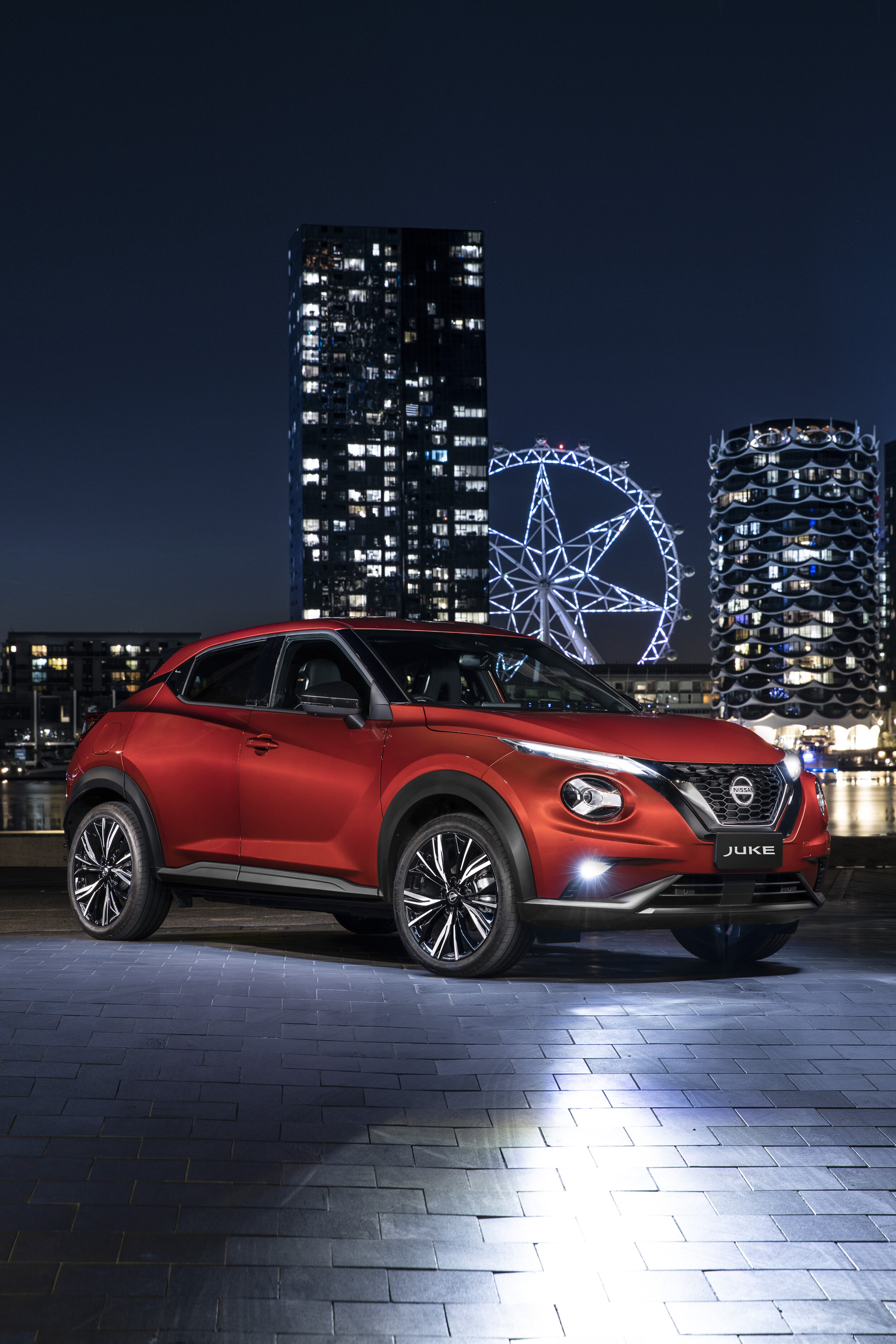
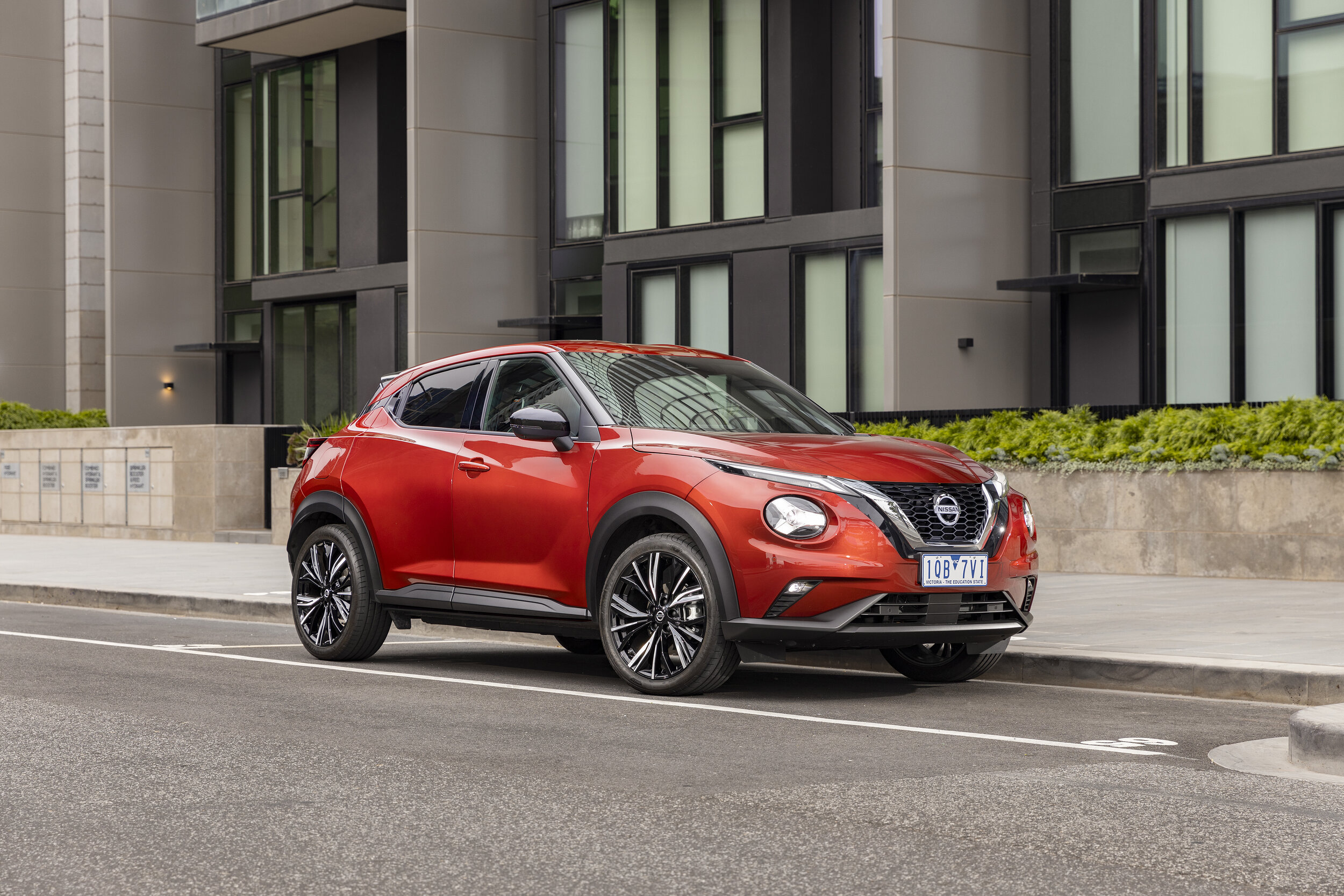
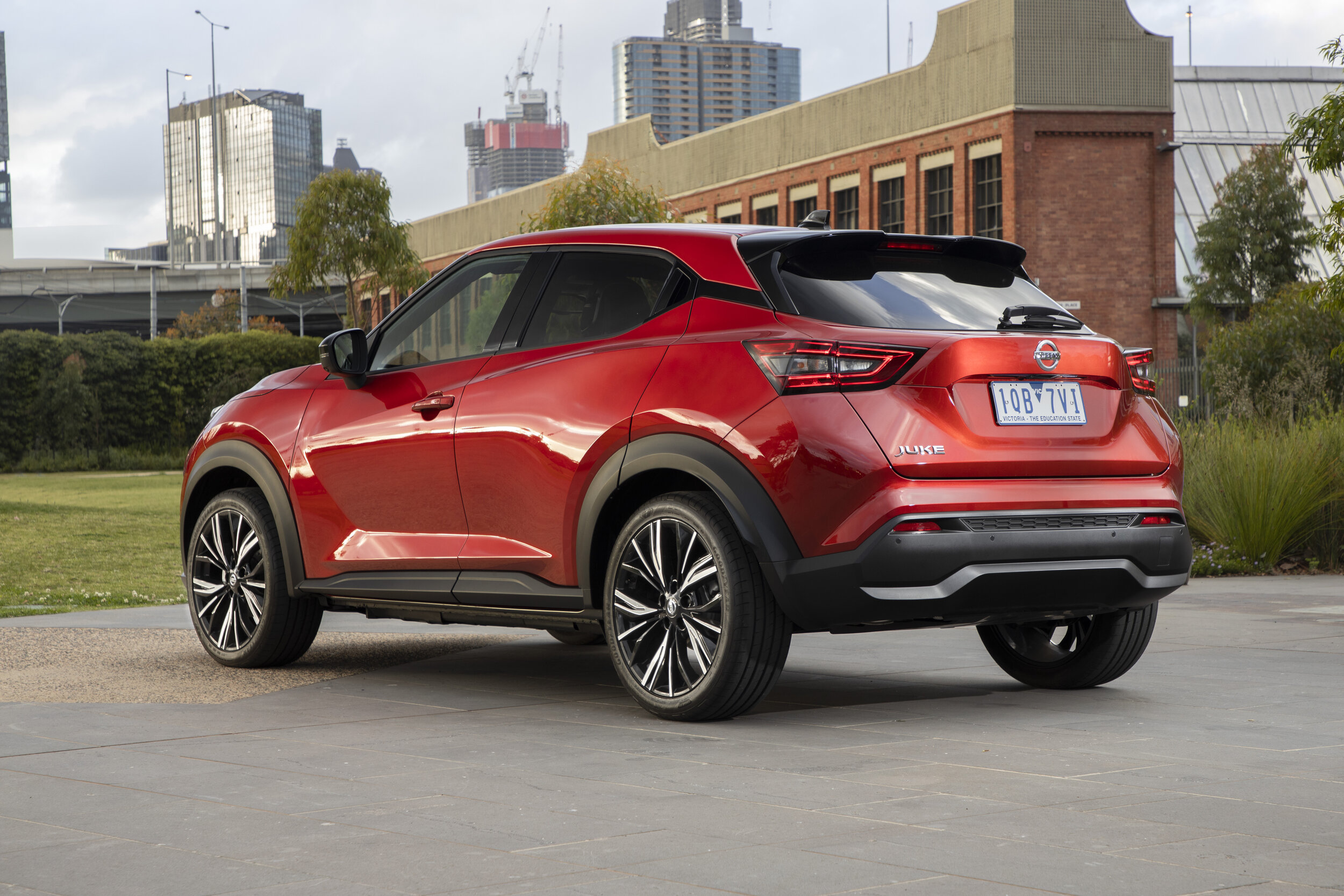
The new Juke represents as a new start in familiar territory.

JUKE 2020 Group (2).jpg


THREE versions of the Juke will hold Nissan’s corner in the compact crossover class.

Pricing and specifications of the model have been announced ahead of launch in June, a process the New Zealand distributor has already admitted will be affected by supply constraints resulting from the plant in Sunderland, England, being closed by coronavirus https://www.motoringnz.com/news/2020/5/6/shutdown-jolts-jukes-nz-arrival.

Nissan NZ has indicated it had a shipment already en route when the factory shuttered, but has not divulged how many cars are coming on that first boat or if every variant is represented from the June 1 release date. There’s no additional comment on when reinforcements will arrive.

The models it will foot this time are an entry ST at $32,990, a mid-grade ST-L for $5000 more and a flagship Ti, retailing for $44,390 – or just $100 short of a Qashqai Ti. The previous Juke Ti was finally selling at $31,990.

This is just the second generation of Juke, replacing a car that ran in the market for 10 years – around two-to-three years longer than most rival makes keep their cars in circulation. However, it’s pretty much entirely fresh in every major facet.

There’s big change under the bonnet. Whereas the previous car presented with a choice of 1.6-litre aspirated and turbocharged petrols, generating between 85kW/190Nm and 140kW/240Nm, this time the entire family runs a 1.0-litre turbo-petrol three-cylinder unit producing 84kW/180Nm.

The constantly variable transmission has gone. Now there’s a seven-speed dual-clutch automatic transmission with paddle shifters, the three-cylinder engine drives the front wheels exclusively and comes with an official combined fuel consumption figure of 5.8 litres per 100km.

The platform is also fresh, being an underpinning developed with Renault, and is said to be stiffer by 13 percent stiffer and six percent lighter. It maintains MacPherson-strut front and torsion-beam rear suspension.

The switch allows for an increase in all major dimensions. In measuring 4210mm long, 1800mm wide and 1595mm tall, it is 75mm longer, 35mm wider and 30mm taller than the outgoing car. This of course allows a roomier cabin and also improves luggage capacity, which increases from 354 litres to 422 litres with the seats in place, expanding to 1305L with the 60:40 split-fold fully utilised.

The Juke being well-provisioned on the safety front has seen it land with a strong ANCAP score. Standard kit includes autonomous emergency braking with pedestrian and cyclist detection, lane departure warning with intervention function, rear cross-traffic alert, forward collision warning, blind spot warning, traffic sign recognition, intelligent driver alert, active speed limiter hill start assist, intelligent trace and ride control, rear parking sensors and a reversing camera.

The ST grade has a rear spoiler, 17-inch alloy wheels, daytime running lights, auto- LED headlights with high-beam assist and power-folding and heated door mirrors.

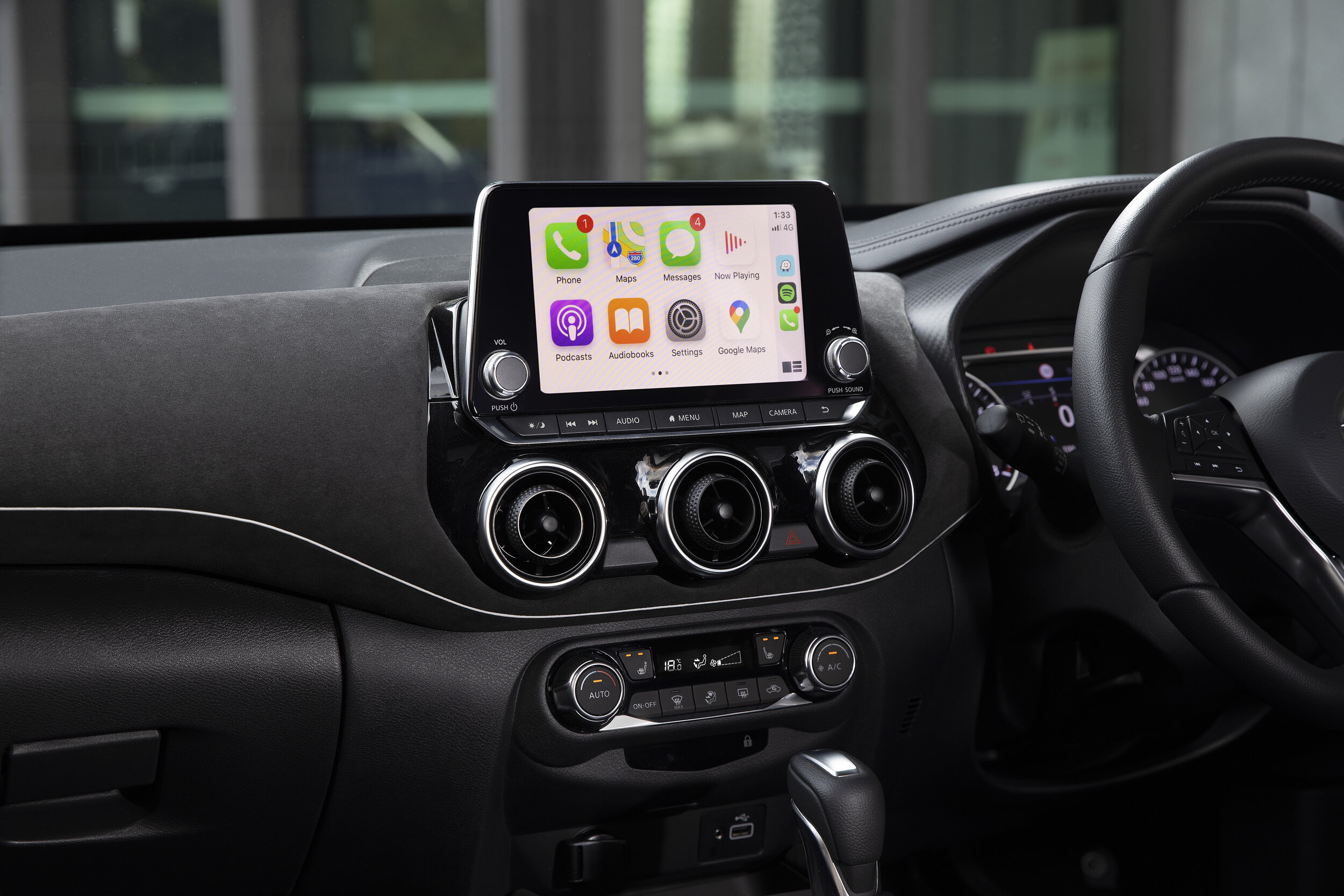
It takes an 8.0-inch touchscreen infotainment system with voice recognition, and Apple CarPlay and Android Auto compatibility, a 4.2-inch instrument cluster display and cloth seats with six-way driver and four-way passenger manual seat adjustment. 

The ST-L builds on the ST’s spec and adds LED foglights, satellite navigation, heated front seats and front parking sensors. 

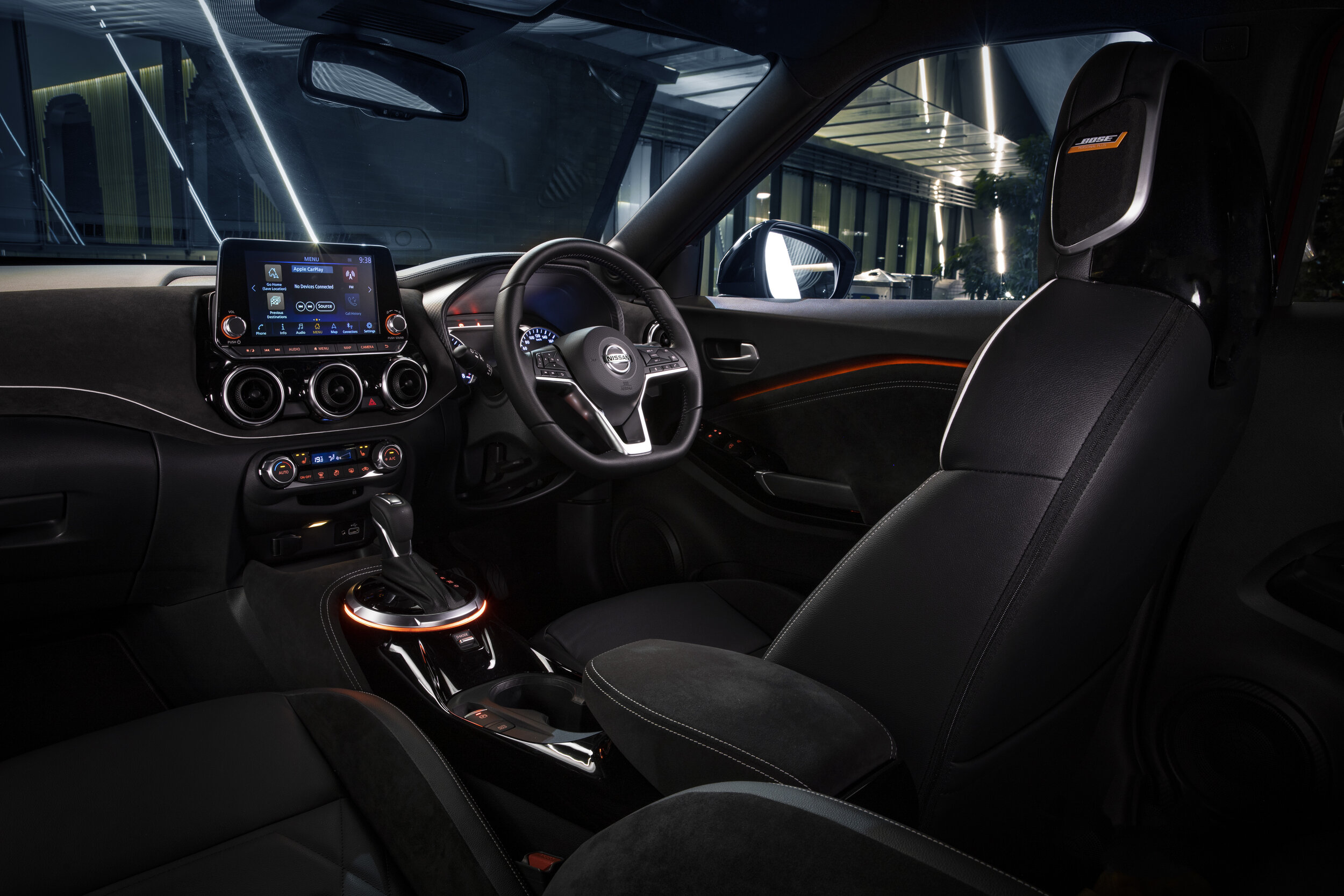
The ST-L grade lifts up to 19-inch alloys, 7.0-inch instrument cluster display, six-speaker audio, electric parking brake, leather-accented steering wheel and shift knob, cloth/leather trim, rear USB port, three-level drive mode selector, ambient interior lighting, and new safety kit including moving object detection, adaptive cruise control and a surround-view monitor.

The flagship includes adaptive headlights, sticks to 19-inch alloys in Akari style, illuminated sill plates, quilted leather/Alcantara seat trim, Alcantara dashboard, knee pad and door panels, shark-fin antenna, eight-speaker Bose audio system and tyre pressure monitoring. 

Nissan NZ managing director John Manley has expressed confidence the car will set the bar for small SUVs, recalling also that its predecessor was a successful sector disruptor in its early days.

In addition to giving out information about Juke, the Auckland-domiciled brand has also identified intent to sell its special edition Navara, the N-Trek Warrior, for $74,990.


Hard times to bring budget utes to fore?

The country still needs utes … if they’re cheap and tailored foremost for real work, a distributor says.

IMG_5489.jpeg

POLITICAL push to get the country moving again with toil-intensive job creation schemes will give ute sales an old-fashioned stir-up.

Providing, that is, they are models created to the ‘old-school’ formula that puts worksite punishment ahead of weekend play.

That’s the view of an advisor for a distributor which has good reason to hope budget back-to-basics models will rise to the fore over the next 18 months proves accurate. 

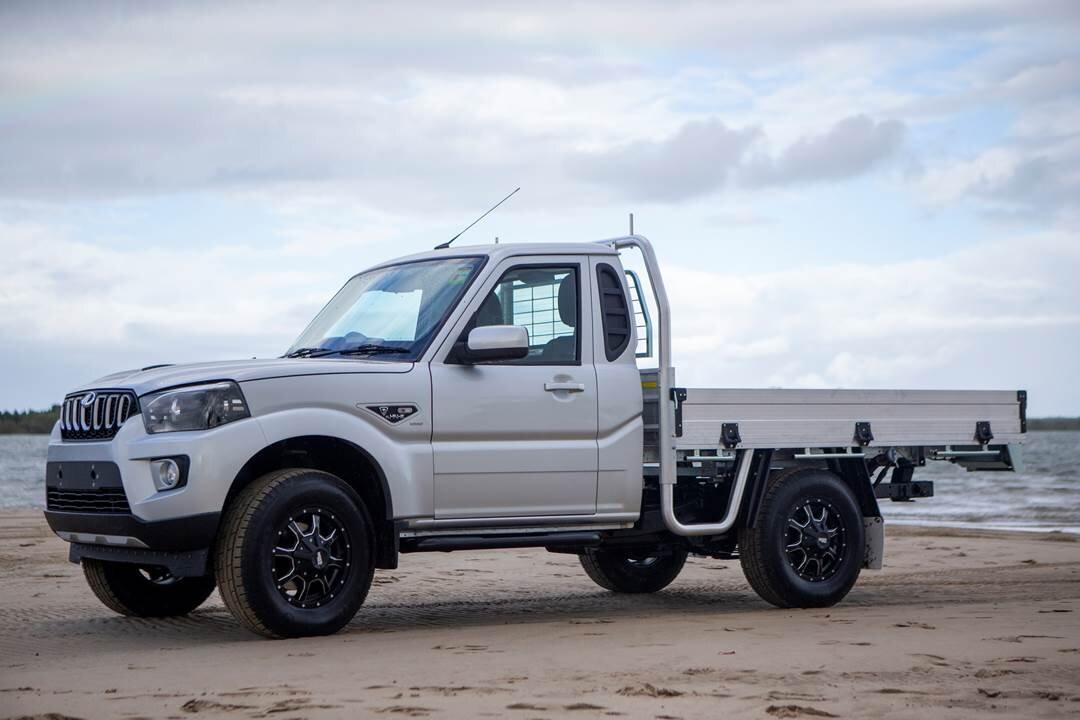
Russell Burling speaks for Dealer Direct Wholesale Limited, the national distributor for India’s Mahindra and Mahindra, whose smallest traydeck, the Pik-Up, has just under a major refresh, which beyond the easily-recognised restyling also runs to a major re-engineering for improved refinement.

With pricing starting at $24,990 and spanning to $34,990, P:ikUp stands as the cheapest load-up choice in the New Zealand market with clear terrain now that a Chinese competitor no longer has a rival model here.

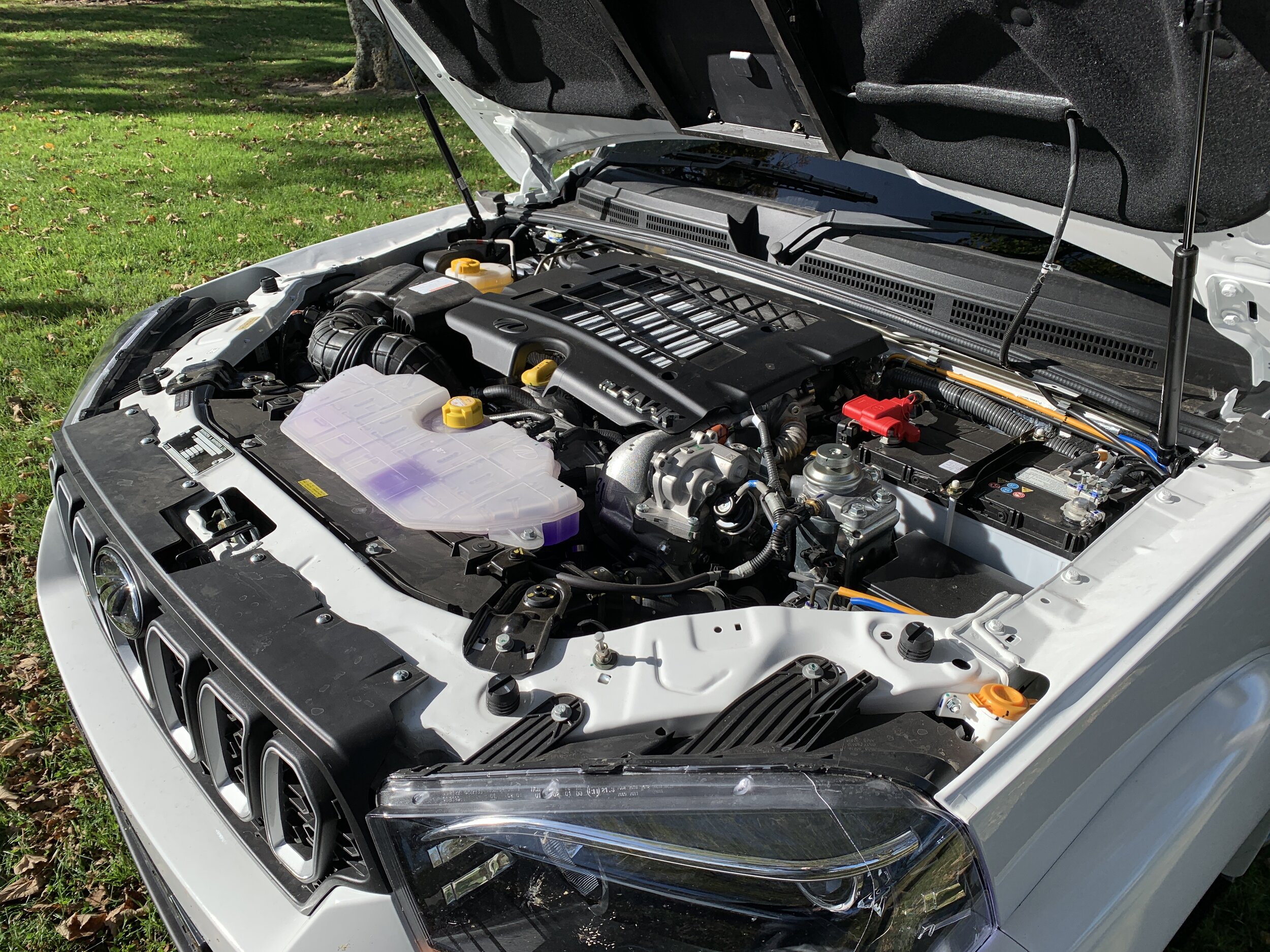
Meantime, the PikUp line has doubled in count, with addition of four rear-drive single and double cab with choice of tub and cab chassis. All run a 103kE/320Nm 2.2-litre turbodiesel and with six-speed manual, though an auto will arrive later.

Range enhancement for a vehicle that has been here for seven years already might attune sweetly with perception that massive changes to our economy from the coronavirus that will unavoidably impact deeply on employment and spending habits.

russell burling

russell burling

The models were signed off for NZ consignment before coronavirus was known about, but the effect of lockdown and restrictions set to maintain in the aftermath leaves Burling thinking “we’ve made a really good call.”

Government’s intent to keep the economy on the boil is a positive and he sees ongoing opportunity from its preparedness to fund big dollar shovel-ready public projects as those efforts will require new equipment.

However, he contends those at worksite level will be more choosey and won’t be spending large.

That’s an opportunity for Mahindra to promote the reliability, functionality and value aspect of its budget-minded products, which beyond PikUp also span other off-road configured models plus passenger vehicles.

But it’s also a sign that those other makes that have concentrated effort serving up big expensive doublecabs will be caught out. 

This new world demands tools, not pleasure craft. “A lot of those (expensive utes) are not required and not needed. We need tools now and that’s what we offer.”

Does that mean an end to the market condition of the past five years, when new passenger sales have been so skewed toward utes that the Ford Ranger has been the country’s top selling vehicle for several years? 

“It’s hard to exactly say it’s finished, but certainly the demand will be less. Everybody in business is going to take some pain through this (coronavirus).

“You need utes, but you need utes that do jobs. Do you need all the high-end stuff going forward? Probably not as much.”

Sales data from as far back as late last year seems to support thought the glory days are waning for ego-polisher models that can cost more than $90,000, with the likes of the dominant Ford Ranger maintaining market share but with smaller volumes.

IMG_5493.jpeg

Quite possibly anxiety with the big players will have grown since, not only because of emergent prediction of new vehicle sales halving this year but also with cancellation of Field Days. 

Promotions around the mid-July Mystery Creek event historically spike annual registrations counts and major players will have stocked up large, with consignments built and shipped before the virus closed down their plants in Thailand. If demand has cooled, do they have too many vehicles? That’s surely why Holden has more Colorado variants than anything else in its pre-closure stock clearance.

Potentially, then, there might be some sweet deals ahead, but perhaps the glam models won’t turn the heads of those set to engage in the public works programmes set to unroll. 

“They need work utes,” contends Burling. “If you’re going into back country on pest control, you need hose out floors and rubber mats, not high-end carpets.” 

Though Burling sees the new rear-drive PikUps as being valuable to volume, it’s likely the singlecab 4x4 will remain as the type’s biggest seller. 

“It’s ideal for possum hunters, farmers, those in construction … it’s a really  good product. A sharp tool for that market.”

This interview also gave opportunity to briefly drive the entry PikUp, the singlecab chassis that is new for 2020. This level comes in the S6 trim, which provisions for ‘function and value” rather than the S10 fitout, that lifts to what the maker describes as a more SUV-like spec.

Even so, the budget layout is not as rudimentary as previously. The interior benefits from ergonomic improvements, better plastics and a more dedicated approach to fit and finish than was apparent in the preceding line. The S6 also now takes better equipment: Cruise control, Bluetooth phone connect, upgraded seats with arm rests and, on the driver’s side, height adjust. You need by S10 to achieve sat nav and a reversing camera, both running through a touch screen not availed in the cheaper choice.

image001.jpg

Option packs to suit rural, trade and fleet buyers can be created from an options list that’s now more comprehensive. A which compatible steel bull bar with bash plate, brush rails, snorkel, tow bar, canvas seat covers and so on. All in tune with a work-first ethic that also reflects in it being tailored to tote a payload of up to 1065kgs with a 2.5-tonne braked towing capacity. 

The demonstrator also had a light-weight but sturdy alloy deck, sourced from Australia, as an option to a steel type, and was trialling a wheel and tyre pack yet to be signed off.

The driving experience does not disguise that this is a working ute and performance is adequate, nothing more, though the engine seems perkier in the low and mid-range. However, the effort to reduce mechanical and road noise is obvious, even if the engine remains a dominant background voice during phone discussions at 100kmh. 

Notwithstanding that Mahindra’s plants are also currently closed by the virus, expect to see more activity from Mahindra going forward, as PikUp stands as the only existing model not due complete replacement.

The new Thar, a Jeep Wrangler lookalike (to the point where the grille design had to be replaced to appease the Americans), is coming and so too the Scorpio sports utility.

Mahindra also stands to benefit from having a major shareholding in SsangYong, with all the latter’s engineering and technology development having effecting shifted out of South Korea to India.

The Ssangyong brand itself, however, seems in parlous state – having failed to make profit for years, its future seems to hang in the balance from Mahindra having in April curtailed plans to invest a further US$423 million in a bid to make the Korean brand profitable by 2022.

It’s direction to SsangYong to seek “alternate sources of funding” has not yielded anything useful and conjecture now is that the South Korean government might yet direct Hyundai to subsume the SUV specialist marque, to thus avoid the embarrassment of it seeing it fail.

Mahindra’s involvement with SsangYong does not reflect locally, with the Korean marque operating with a separate distributorship.

IMG_5478.jpeg


Subaru e-boxer a balancing act

Subaru acknowledges a toughening economic condition has affected prepping a sales expedition for its first electric-assisted cars.

Forester e-BOXER_high-004-22567.jpg

 EVER imagined entertaining a hybrid car that perfectly conforms to New Zealand conditions and expectation?

Subaru New Zealand stakes this ability within argument for why the long-awaited e-boxer editions of the XV and Forester will resonate well with Kiwi buyers. Hence a ‘made for our environment’ catchphrase standing tall in the marketing pitch that also encourages this as a better way of keeping New Zealand beautiful.

The Auckland-domiciled distributor also cites high customer excitement since last week’s announcement of the national selection ($42,490 XV Sport, and Forester Sport and Premium, respectively at $47,490 and $54,990). 

Seems hundreds of interested car buffs have been contacting the distributor directly, or via dealers, to signal strong enthusiasm to acquaint with Subaru’s first foray in electric driving. 

For their part, Subaru NZ is keen to enforce cars taking the 12kW electric motor (and 118V battery) paired to the existing 110kW/196Nm 2.0-litre flat four, which combine to drive all four wheels via a slighty recalibrated version of the range-wide constantly variable transmission are not getting a soft serve, in sense that these editions are true to Subaru tradition.

Maintaining all core strengths our market associates with the brand was critical, the brand says. It asserts they will be capable of achieving everything any other Subaru does. In short, there’s no dilution of that famous DNA and this is the start of a new journey for the brand, the first step toward a more sustainable future.

And while accepting that the hybrid system the cars carry is a walk on the mild side when it comes to considering what else is becoming available from a global car market pushing ever more into electrification, it nonetheless assures the ‘self-regenerative’ set up (translation: It’s old school and cannot quality for electric car status because there’s no facility for external recharging) will achieve tangible and easily-attained improvements in economy and emissions.

Wallis Dumper and daile stephens (below)

Wallis Dumper and daile stephens (below)

SubaruNZ_Daile Stephens_headshot.jpg

Still, many questions remain. Is Subaru already behind the times with a drivetrain that others in the car-making game are treating as a sunset tech, why hasn’t the Outback also achieved this option and, gosh, when supply is set to be limited, how easy will it be to secure these models? 

Here’s the outcome of a sit down with Subaru NZ managing director Wallis Dumper and marketing manager Daile Stephens.

MotoringNZ: Let’s start by exploring the sales expectation. You’ve already indicated the hybrid are in limited supply - just 20 examples a month and the first full shipment not coming until September – and also signal allocation is being managed through head office. What can customers expect from all this?

Dumper: Covid-19 created some operational disruption and yes, we needed to change the business model a little bit for this car. Our dealers only ever run on a months’ stock; we’re not like other brands. Hybrid supply is tight and, based on our research, we know we can sell every one. The last thing we want is having one or two dealers buying them all, so we have gone to an allocation system to ensure we can spread them fairly.

Stephens: Our dealers still buy the cars from us. The phase we are going through now is a pre-launch: The dealers have demonstration cars (from June 1). It’s about trying to be a responsible distributor and maintaining careful management of our inventory.

MNZ: You’ve gone on an economy drive before with diesel and that proved short-lived (2013 to 2017);. What makes this hybrid pitch any different?

Dumper: I don’t think it’s about thrift, it’s about capability and satisfying an emergent need. It’s a mild hybrid, we’re not pretending it’s anything more, but this is about evolution of the brand and we have to go that way.

Stephens: Diesel was a lot different. This (hybrid) is a clearer pathway to a more sustainable future. We were late to the diesel party anyway, it was over-priced and it was always going to be a tough ask, to be honest. 

:With diesel we weren’t really set up for success where with this (hybrid) we feel we are. We feel we are priced thereabouts with many, though acknowledging that one is particularly sharp, and the return from our focus group suggests we have it right with the $5000 premium we’ve set for hybrid. We’ve had hundreds and hundreds of registrations over the last week which suggests there is a desire and hunger for hybrid. We didn’t see that around diesel. There’s a completely different feeling around this (hybrid) product that wasn’t there with diesel. 

MNZ: Your Outback is a key model here and yet there’s no word on when, or if, it will go hybrid. Any news on that and how much urgency is there for that car to adopt this system? 

Dumper: There’s not a lot of urgency. From what we can see the smaller style of cars are more popular as hybrid and EV types.

Stephens: Given that Outback has been one of our most commercially successful vehicles it would be awesome to have one (a hybrid variant) if that was an option. As far as we know, there’s nothing on the horizon. But something might be going on, but is being kept secret. It might go to full electric for all we know.

MNZ: The motoring world is moving fast toward electrification and, in the overall scheme of things, going hybrid is a small-scale adoption. Really, too, Subaru could be seen as a slow mover; others have had hybrid for years. So how long before it engages at a higher level?

Stephens: We (Subaru Japan) announced in February that by 2030 at least 40 percent of the models that will be available globally will be electric or hybrid. By the mid 2030s there’s another goal of applying electrification technologies to all all Subarus sold worldwide. There’s a clear pathway.

Dumper: Within a couple of years we might be able to challenge that. As for being a late adopter? Yes, we’re late at adopting part of it but we also know there are still a lot of brands that do not have what we have. Some of them are much bigger brands than ours.

MNZ: Given that this is an adoption of Toyota technology, are the brand’s fortunes in this regard tied to Toyota’s own programmes?

Dumper: It’s not Toyota technology. Our engineers in Japan are adamant that it is our own. The manufacturer also makes product for Toyota and, yes, Toyota has shareholding in Subaru and, yes, there is product sharing. And they are both self-generating. But ours is quite different. Look at what they do with Lexus, it’s not the same.

Hybrid XV Forester LR-6816.jpg

MNZ: For all their strengths, your drivetrains have been easy targets for criticism in respect to economy and emissions. The boxer engines tend not to be top performers for output and economy and being paired with a CVT gearbox and symmetrical all-wheel-drive system also has a consequence. Is that why the economy gains claimed for your cars (14 percent for the XV in urban, seven percent overall, and nine percent combined and 19 percent urban for Forester – when comparing to the 2.5 – but according just to in-house and Australian ADR81/02 standard as it has not yet been certified under the WLTP regime) are less extreme that those cited for, for instance, those Toyotas that avail in hybrid and none-hybrid forms?

Stephens: We do loads of fuel economy comparisons and, more often than not, we are in the top few against our competitors. Pre-2008 yes, we could be criticised on fuel economy, but not since then, not with the technology we have now. Unfortunately, there is a hangover of perception versus reality. But we believe we are up there with everybody else 

Dumper: We want to be all-wheel-drive, that’s part of our DNA. Likewise with our boxer engines. We have the pricing where it needs to be and we can hold the pricing. We’re only a little bit above one of the world’s largest manufacturers (of hybrids) and a lot of other brands that have this technology are dearer than us. Our story is sustainable.

MNZ: What do you say to those people who might wonder if this is just an exercise of developing a Green vibe that might be challenging to prove. Overseas’ testing of these models has indicated that it is not entirely easy to achieve the cited economy improvements. Plus of course, even if the targets are hit, it will likely take years of ownership to recoup the $5000 purchase premium through pure fuel savings?

Stephens: It’s a package. We are not claiming to be the best from an economical perspective at all; we’re quite up front that it is a mild hybrid. But we are also positioning that it is 100 percent Subaru and we say there are benefits from it being hybrid. The customer will decide what is best for them. It is more economical than a (purely) petrol Subaru. You might find that there is a competitor with hybrid that offers better economy. But against that you have to trade off the benefits of what we offer with all-wheel-drive, all the safety features and other things, and in doing so perhaps you are only going to be saving an extra $100 over six months. We’ve done our research and we are comfortable. We’re not trying to pull the wool over anyone’s eyes in respect to how economical it is. We’ve never said this is the nest of the best; it is the beginning of our journey.

MNZ: Subaru Japan said on Monday it might well produce 150,000 fewer cars this year. What does this potentially mean for NZ?

Dumper: It will impact us. But when we went into (Covid-19) lockdown we knew would have to change our forecasts. We have chosen not to order some cars. The last thing we want is to have too many cars.

Hybrid XV rear waterfront.jpg

MNZ: The Motor Industry Association has suggested the new car market will be down by at least 40 percent this year – what’s your view?

Dumper: I think it could even be 50 percent; the third and fourth quarter of this year will be tough with the Government telling us there will be 10 percent unemployment. And I think next year is going to be really tough. The worst is yet to come. 

MNZ: Your 2019 sales were ahead 2.8 percent year-on-year versus 2018 and allowed an all-time record number of Subaru SUV sales. Do you expect to maintain the same market share that was achieved in 2019?

Dumper: If the market halves, we’d like to hold our market share. The market is sure to change and it will get a big messy.

Stephens: We believe there are pockets of people out there who still want a new Subaru. Some might have come through this (coronavirus) and think, well, ‘we’ve got through this let’s buy ourselves the car we’ve always wanted.’ There might be people who might have used public transport and now are thinking they don’t feel so safe doing that before. We know of a dad who handed down his Forester to a child and he went off to the dealership to buy himself a new one. But it is a crystal ball question.

MNZ: Does Subaru have any strengths that might give it a better chance of in NZ than some other brands; is it tough enough to weather this challenging economic condition? 

Stephens: Our brand position is in between the Europeans and the mainstream brands; we’ve the one you step into on the way to going to the Europeans like an Audi. Likewise, when times are tough, people might trade in a Euro for a Subaru.

Subarus are seen as a vehicle for someone who wants to be a bit different and we believe we have a high ground based on technology and safety. There is quite a lot of desirably out there in respect to our product, we achieve strong consideration and strong conversion. So, we think that we can weather the storm – perhaps with less sales, but enough to maintain our market share.

Dumper: We run our business very lean and tight and we have done this very successfully for a long time. We outperform glamour brands with our return on sales and have for decades. We have more than doubled our business in the last decade and had to employ just four or five more people.


Focus ST: Automatic for the people

It’s been COVID-19 delayed and is $500 dearer than initially signalled but the fourth generation Ford Focus ST hot-hatch has launched.

Ford focus st 3.jpg

THE new Ford Focus ST is more powerful and roomier than its predecessor and delivers a significant increase in technology.

And it also gains a new status as the sharpest Focus variant among gen-four following recent confirmation that development has been halted on a successor to the all-wheel-drive RS rocket ship.

Originally scheduled for a first-quarter introduction, the made-in-Germany Ford Focus ST has weathered the COVID-19 delays to join the Fiesta ST, Mustang models and the Ranger Raptor under the Ford Performance banner.

Pricing is $59,490 (back in September a $58,990 price-tag had been advised) and the Focus hot-hatch recipe combines five-door functionality with a high output 2.3-litre four-cylinder turbo engine, front-wheel-drive and a new seven-speed sports automatic transmission with paddle shift.

Ford New Zealand sees automatic transmission as the overwhelming customer preference in this market. There is a six-speed manual with rev-matching function available in most markets including Australia.

It’s the first time a Focus hot-hatch has been offered with only two pedals – a move that widens its reach in the market to deliver something that Honda Civic Type-R and Hyundai i30 N rivals can’t and positions the Focus ST as a Volkswagen Golf GTI competitor.

The previous Focus ST had a 2.0-litre turbo engine. The fourth generation features the all-aluminium 2.3-litre unit derived from the previous RS model with twin-scroll turbocharging, an electronic wastegate and anti-lag system. It develops 206kW at 5500rpm (an increase of 22kW) accompanied by a substantial jump in torque to 420Nm (up from 360Nm) available between 3000-4000rpm.

The sharpening of the Focus also applies to the chassis tuning with 19-inch alloy wheels shod with bespoke 235/35 Michelin Pilot Sport 4S tyres and suspension that lowers ride height by 10mm compared to standard Focus models.

Ford Focus ST.jpg

A torsion beam axle is standard on mainstream Focus models but the higher riding Focus Active and the ST model have an independent rear suspension and the ST debuts a new Continuously Controlled Damping (CCD) system.

The CCD system monitors suspension, steering and braking inputs at 2 milli-second frequency to adjust damping responses. 

A Borg Warner electronically controlled Limited Slip Differential (eLSD) plays a key role in applying 420Nm of torque to the road. The system can pre-emptively adjust torque distribution using inputs from powertrain and vehicle dynamics sensors.

Ford says the electric power-assisted steering (EPAS) system is 15 per cent quicker than the standard Focus with just two turns lock-to-lock. And there is ST-specific steering knuckle geometry for sharper responses.

New software titled Steering Torque Disturbance Reduction has the target of reducing torque steer when applying 206kW and 420Nm to the tarmac.

Upgraded brake hardware includes larger 330mm front and 302mm rear ventilated discs with red painted callipers and Ford has developed a new electronic brake booster to provide more consistent pedal feel.

The Selectable Drive Modes offer Slippery, Normal, Sport and Track settings that adjust the eLSD, CCD, EPAS, throttle mapping, automatic transmission shift scheduling along with electronic stability control (ESC) and electronic sound enhancement (ESE) settings. In Track Mode the eLSD delivers maximum traction and the intervention of the ESC system is delayed.

A dedicated Sport button on the steering wheel allows direct access to Sport mode while the Mode button allows drivers to scroll through the Drive Mode options.

Exterior detailing includes a wide honeycomb grille, ST specific bumpers and side skirts, a rear spoiler, LED adaptive headlights, daytime running lights and tail lights.

Colour choices are Ford Performance Blue, Frozen White, Magnetic (grey), Race Red and Agate Black. Ford NZ had originally signalled a $500 premium for the searing Orange Fury seen here but has decided not to charge a premium for prestige paint.

Cabin highlights include heated Recaro sports seats with leather and suede trim and ST logos. The flat-bottom and heated ST steering wheel is trimmed with perforated leather.

Ford Performance instrumentation is standard including shift lights for when the paddles are being used. With the arrival of an automatic transmission the ST adopts the rotary e-shifter and an electronic park brake.

Standard equipment includes keyless entry and push-button start, LED ambient lighting, dual-zone climate control, rear privacy glass and heated power-folding exterior mirrors with puddle lamps. 

Interestingly Australian customers get a premium Bang and Olufsen audio as standard but Ford NZ has opted for a six-speaker system.

The Focus ST is equipped with the SYNC 3 infotainment and communications platform with 8.0-inch touchscreen, Apple CarPlay and Android Auto compatibility while Siri and voice-activated text messaging can be accessed via steering wheel controls. Satellite navigation, a 180-degree rear-view camera and wireless smartphone charger are standard.

Along with a five-star ANCAP (2019) rating the Focus ST safety and driver assist roster includes Autonomous Emergency Braking (AEB) with Cyclist and Pedestrian Detection, Blind Spot Information System (BLIS) with Cross Traffic Alert, Lane Departure Warning and Lane Keep Assist and Hill Launch Assist.

Because the automatic model has been selected for the New Zealand market Adaptive Cruise Control (ACC) with Stop & Go function is standard.

Ford Focus ST 2.jpg


Tesla, Dyson fuel EV conjecture


Recent reports remind that the electric car batteries we have now are just an intermediary.

is the China-market model 3 set to debut a breaktrhough battery?

is the China-market model 3 set to debut a breaktrhough battery?

WITH electric cars, it all comes down to the battery – and with batteries, it all comes down to what’s next.

In which case, intriguing news from two quarters. First and most recently, there’s James Dyson. In opening up more fully about the promise about the Dyson car we’ll never see, the British magnate leaves impression that while it was doomed on cost, the cancelled seven-seater known only by its codename, N526, was at least showing huge potential in respect to operability. The promise of offering double the range of a Tesla Model X reminds of the potential from solid state battery technology that the car world is aiming to implement.

Speaking of those ‘T’ cars … the other figure of the moment is, of course, Mr Loony Tunes himself.

Accepting that it’s becoming increasingly obvious that not everything Elon Musk says can be trusted as fact, there’s still good reason to take genuine interest what he seems set to have to say on occasion of the ‘Battery Day’ that was supposed to occur today but has now been deferred to some time in June, and might now be staged over several days … and in Texas, rather than California. Welcome to Elon’s world, right?

Much like the “Autonomy Day” that happened last year, Tesla is planning to give presentations to investors, which are livestreamed, about its latest development in powertrain and battery technology. 

What’s getting pundits excited is the realisation of something Musk has long teased rivals and investors about – a low-cost, long-life battery.

Such a device is now said to be developed to the point where it is intended to insert into Tesla’s staple Model 3 sedan, albeit initially just in the cars coming out of the brand’s new plant near Shanghai whose function is to purely build stock for sale in China.

There is emergent evidence to suggest the new battery might be the breakthrough to bringing the cost of EVs in line with petrol cars, and allow EV batteries to have second and third lives in the electric power grid.

Tesla has made clear in the past of its desire to deliver batteries designed to achieve outcomes well beyond the capabilities of today’s types. That conceivably would easily outlast the usable life of a car then, having done so, enter a second-life as a powerwall home installation or integrated into a larger commercial undertaking, to fulfil Tesla's goal to achieve the status of a power company.

Recent reports say this has been jointly developed with China’s Contemporary Amperex Technology and deploys technology developed by Tesla in collaboration with a team of academic battery experts recruited by Musk. 

The batteries differ to today’s types by relying on innovations such as low-cobalt and cobalt-free battery chemistries, and the use of chemical additives, materials and coatings that will reduce internal stress and enable batteries to store more energy for longer periods.

According to reports, Tesla also plans to implement new high-speed, heavily automated battery manufacturing processes designed to reduce labour costs and increase production in massive “terafactories” about 30 times the size of the company’s sprawling Nevada “gigafactory” — a strategy telegraphed in late April to analysts by Musk.

Tesla is working on recycling and recovery of such expensive metals as nickel, cobalt and lithium, through its Redwood Materials affiliate, as well as new “second life” applications of EV batteries in grid storage systems, such as the one Tesla built in South Australia in 2017.

Reuters news agency reported exclusively in February that Tesla was in advanced talks to use CATL’s lithium iron phosphate batteries, which use no cobalt, the most expensive metal in EV batteries and also the most controversial ingredient, due to the associations with child labour being used in cobalt mining in the Congo, a primary source.

CATL also has developed a simpler and less expensive way of packaging battery cells, called cell-to-pack, that eliminates the middle step of bundling cells. Tesla is expected to use the technology to help reduce battery weight and cost.

the model 3 is already positioned as tesla’s core volume model.

the model 3 is already positioned as tesla’s core volume model.

Reports say CATL also plans to supply Tesla in China next year with an improved long-life nickel-manganese-cobalt battery whose cathode is 50 percent nickel and only 20 percent cobalt.

Tesla now jointly produces nickel-cobalt-aluminum batteries with Panasonic at a “gigafactory” in Nevada, and buys NMC batteries from LG Chem in China. Panasonic has declined to comment.

Taken together, the advances in battery technology, the strategy of expanding the ways in which EV batteries can be used and the manufacturing automation on a huge scale all aim at the same target: Reworking the financial arithmetic that until now has made buying an electric car more expensive for most consumers than sticking with carbon-emitting internal combustion vehicles. 

The cost of CATL's cobalt-free lithium iron phosphate battery packs has fallen below $US80 per kilowatt-hour, with the cost of the battery cells dropping below $US60/kWh, the sources said. CATL’s low-cobalt NMC battery packs are close to $US100/kWh.

The car industry cites that $100/kWh for battery packs is the level at which electric vehicles reach rough parity with internal combustion competitors. 

It was an inability to achieve anything like this that caused Dyson to axe his project. Indeed, in an interview with Britain’s ‘The Times’ newspaper, he was pretty frank about how the only figures that looked good for his car related to performance and range –  the same sort of get-up-and-go of a performance combustion engine SUV of similar size and almost 1000kms on a single charge.

Sounds tasty? Perhaps not so much given the car would have cost well over $300,000, Dyson has admitted. Hence why, after putting around $150 million into the gig – which he could afford (all this information comes from an interview he gave on occasion of topping Britain’s rich list, with an estimated value of $NZ3.2 billion) – he pulled the plug last October, by which stage they’d reached the point of having a running prototype – still unseen - plus styling concepts of the finished interior and Range Rover-ish exterior, both of which were shown off to media.

The whole point of the Dyson car was, of course, to show the potential of the proprietary solid state battery tech that is core to the inventor’s homeware products. The challenge of transferring this to an automotive product was huge, but the tests had been promising.

That range was a huge wow. Website Autoblog says that, assuming that the ultimate figure was based on Europe’s WLTP standards, it would have been an impressive jump from Tesla’s Model S’ 610km and almost doubling the long-range Model X’s 510 km (the latter also a seven-seater). 

There’s more. Current lithium ion batteries lose oomph more quickly when stressed  - which is what high speed driving does – and also operate most effectively in a narrow ambient temperature band; range drops off especially when it get icey outside.

Comment from Dyson suggests his car wasn’t so affected. He told ’The Times’ the model sustained great performance “even on a freezing February night, on the naughty side of 70mph (110kmh) on the motorway, with the heater on and the radio at full blast.”

Even though his batteries are more compact than current lithium ion cells, the weight issue wasn’t resolved: The car had an alloy body, yet still weighed 2.6 tons. Yet it could clock 0-100kmh in 4.8 seconds (about half a second more than the long-range Model X), with its top speed apparently reaching 200kmh (50kmh shy of the Model X’s). This is all coming from the twin 200kW electric motors rated with 400kW and 650Nm of torque.

Even though the Dyson car is no more, its spirit lives on. The founder said the 500-strong team are already working on various other projects, and that he is open to the idea of letting car makers tap into his company’s batteries, He’s not adverse to taking a second look at making cars again some day. But only if it becomes commercially viable. 

The Times ran this image of james dyson and his stillborn electric car

The Times ran this image of james dyson and his stillborn electric car

Special K entering the EV-sphere?

Kia building a Porsche Taycan competitor? Imagine.

1-AC5I3492.jpg

SHOCK news for anyone imagining Kia’s electric vehicle aspiration settles where it presently plugs, with the compact Niro.

 Latest from the Hyundai sub-brand is that while it still stick true to running the battery assault primarily with crossovers, the future fare will be much more adventurous – in shape and technology.

 Particularly exciting is talk about a product coming out next year; a high-riding luxury crossover with a sedan-esque shell that it is specifically targeting high-performance electric cars.

 While yet unseen in production form – indeed, it doesn’t even have a name at present (the in-house designation is simply ‘Kia CV’) – the shape of the newcomer model mightn’t seem wholly unknown, as the brand has let slip that it will draw strongly off the concept seen here.

This is the Imagine, a styling study that made quite an impression on its global unveiling at the 2019 Geneva motor show.

The car that will emerge is described as Kia’s first dedicated electric vehicle – to draw distinction from Niro and Hyundai’s Kona EV being very close in terms of engineering make-up, no matter that Kia uses a different battery to enable range superiority.

Even so, it’s not a 100 percent Kia in that it is going to base off Hyundai’s E-GMP platform which will underpin the parent’s own electric SUV, labelled the ‘45’. 

1-AC5I3366.jpg

Indeed. being scalable, the new platform will be the launchpad for a whole host of electric Hyundai and Kia models. The latter said last week it is planning to have 11 EVs on sale in the next five years. Hyundai has indicated similar aspiration, though it has yet to cite an exact target number. 

What’s also hugely interesting about the Imagine’s showroom equivalent is that it will be set up to use an ultra-fast 800-volt battery system that could bring 15 minute EV pit stops to the masses.

To date, the only production EV with that capability is the Porsche Taycan, which with a peak charge of 270 kiloWatts can achieve a charge of five percent to 80 percent in about 20 minutes. That’s with the right kind of charging network in place, of course; you’re talking about 300kW charging stations.

Kia is talking about its car will have a range of just over 300kms, which is hardly going to impress Tesla-rati and in fact isn’t a lot more than a Niro. But, then, it could be sitting in the replenishment phase for much less time. And it will also be ludicrously quick, with 0-100kmh in under three seconds vowed for the hottest version. That’s comparable to the Taycan and the fastest Teslas and, obviously, a lot faster than any other car Kia has ever created.

There’s one small disappointment about the project in that the identity behind the concept is no longer with the company. Luc Donkerwolke has just resigned as chief design officer of Hyundai Group, citing personal reasons.

When Imagine was unveiled, the 54-year-old was then Kia’s head designer and, when questioned a year ago about the feasibility of Imagine hitting the street, he was quite confident it could do so with minimal change.

“I don’t see anything that’s really not feasible. There are some cost-related issues that have to be validated, but it hasn’t been done by designers who don’t understand how to build a car for production.”

Donkerwolke was lured to South Korea in 2016, having been with Volkswagen Group for 22 years. He was lured to Seoul with the promise of a free reign to set the design pathways for Hyundai and Genesis; he achieved this with radical effect, not least after achieving in 2018 the role he now leaves, a job that pulled Kia into his portfolio, succeeding Peter Schreyer.

1-AC5I3438.jpg


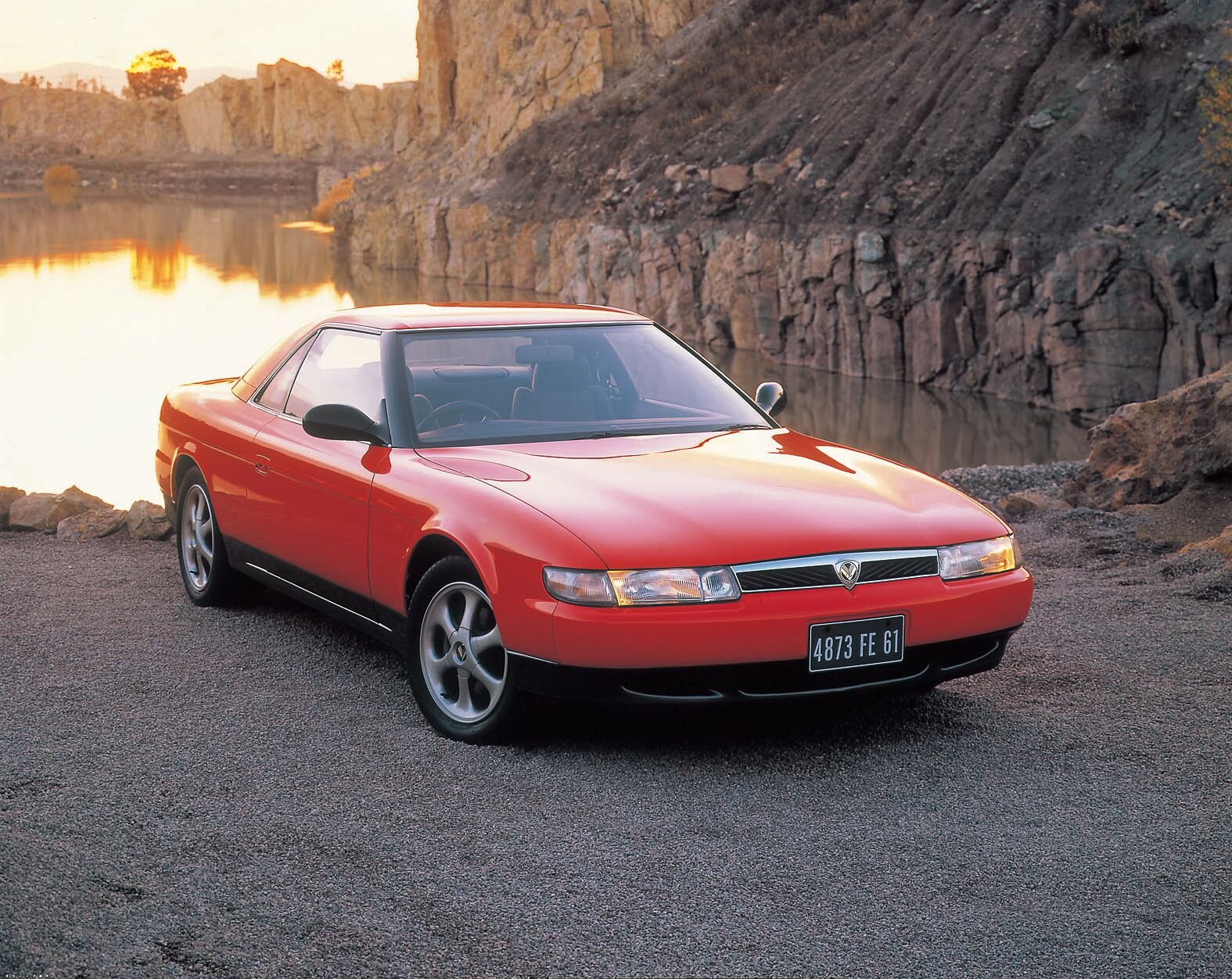
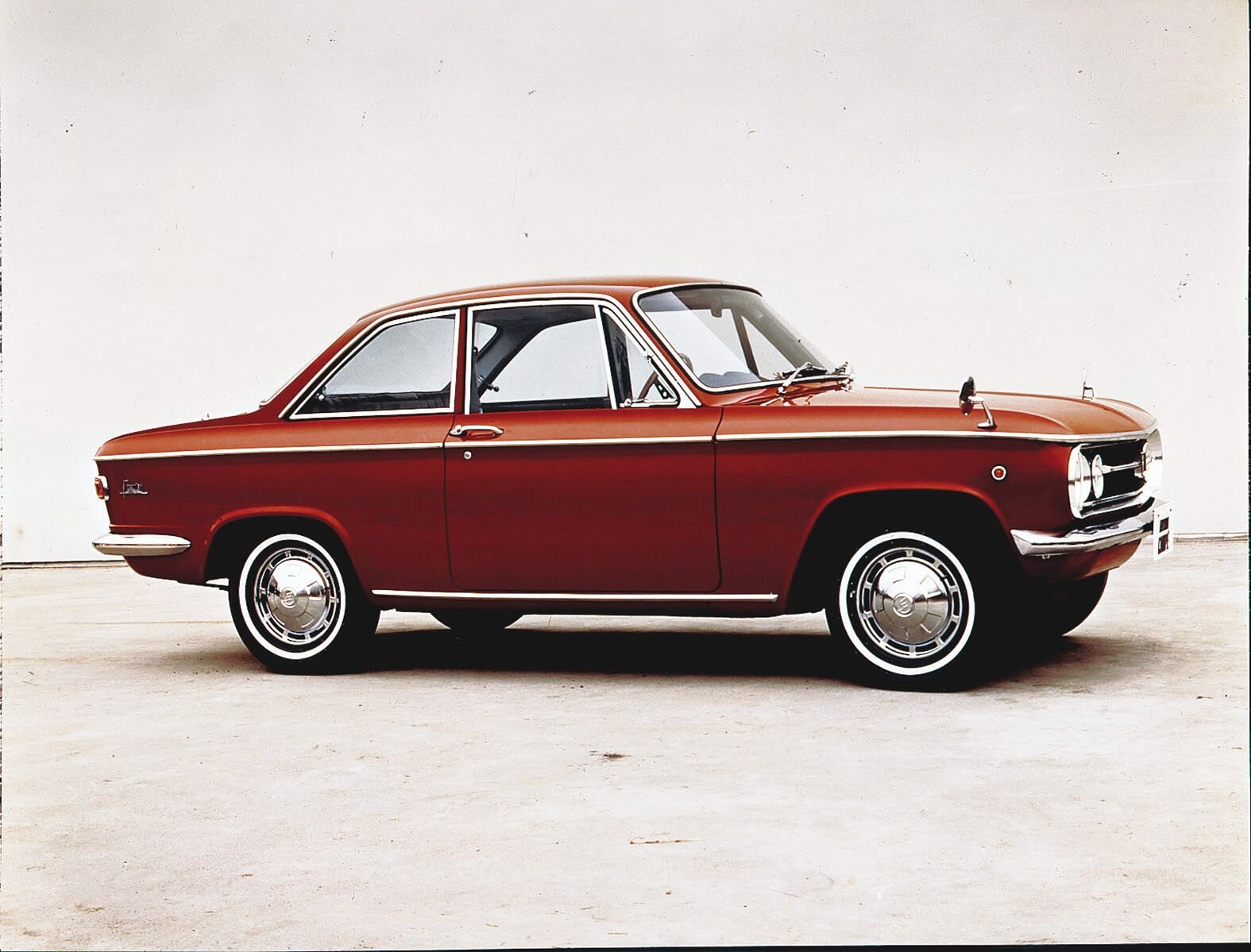
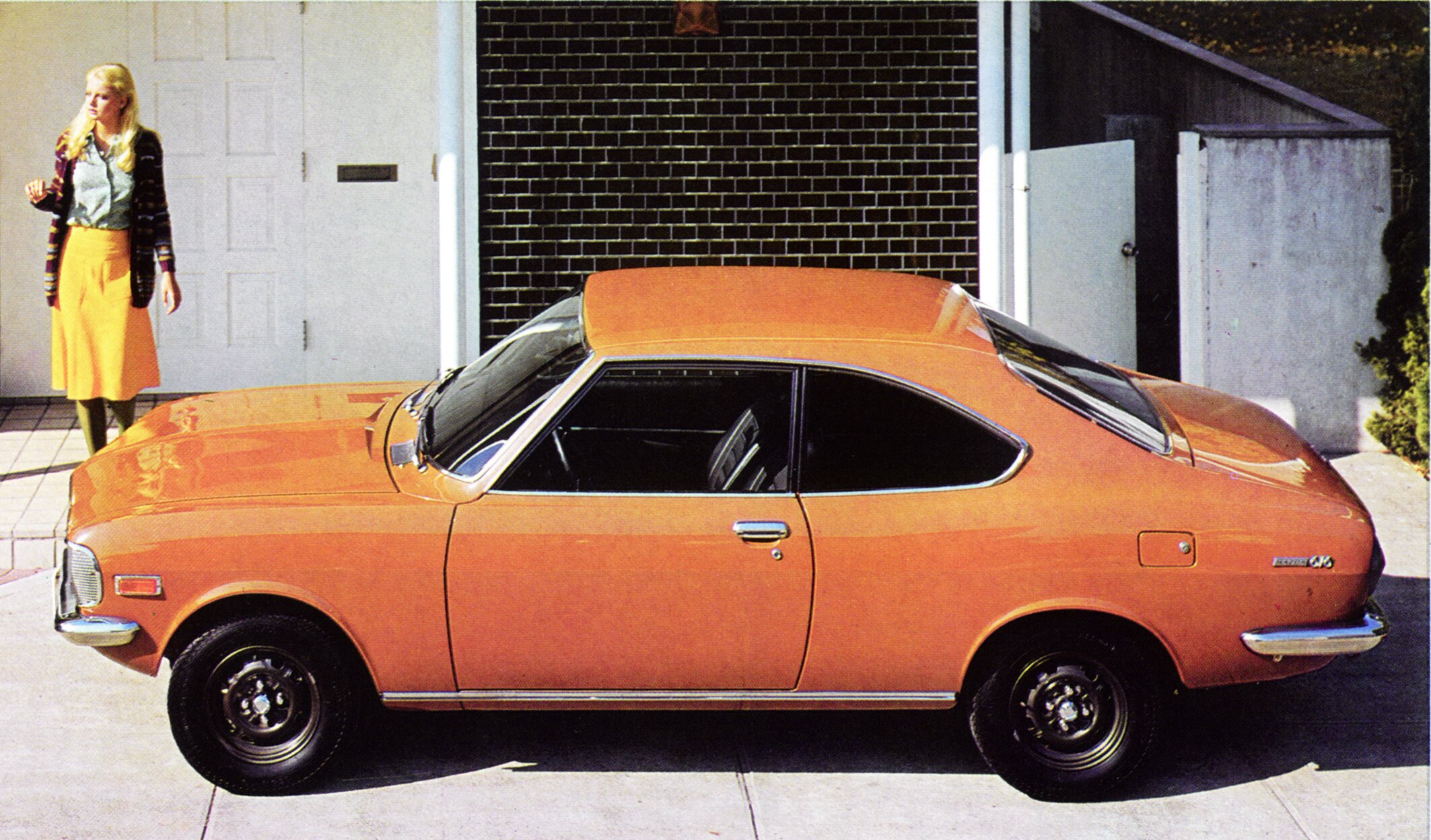
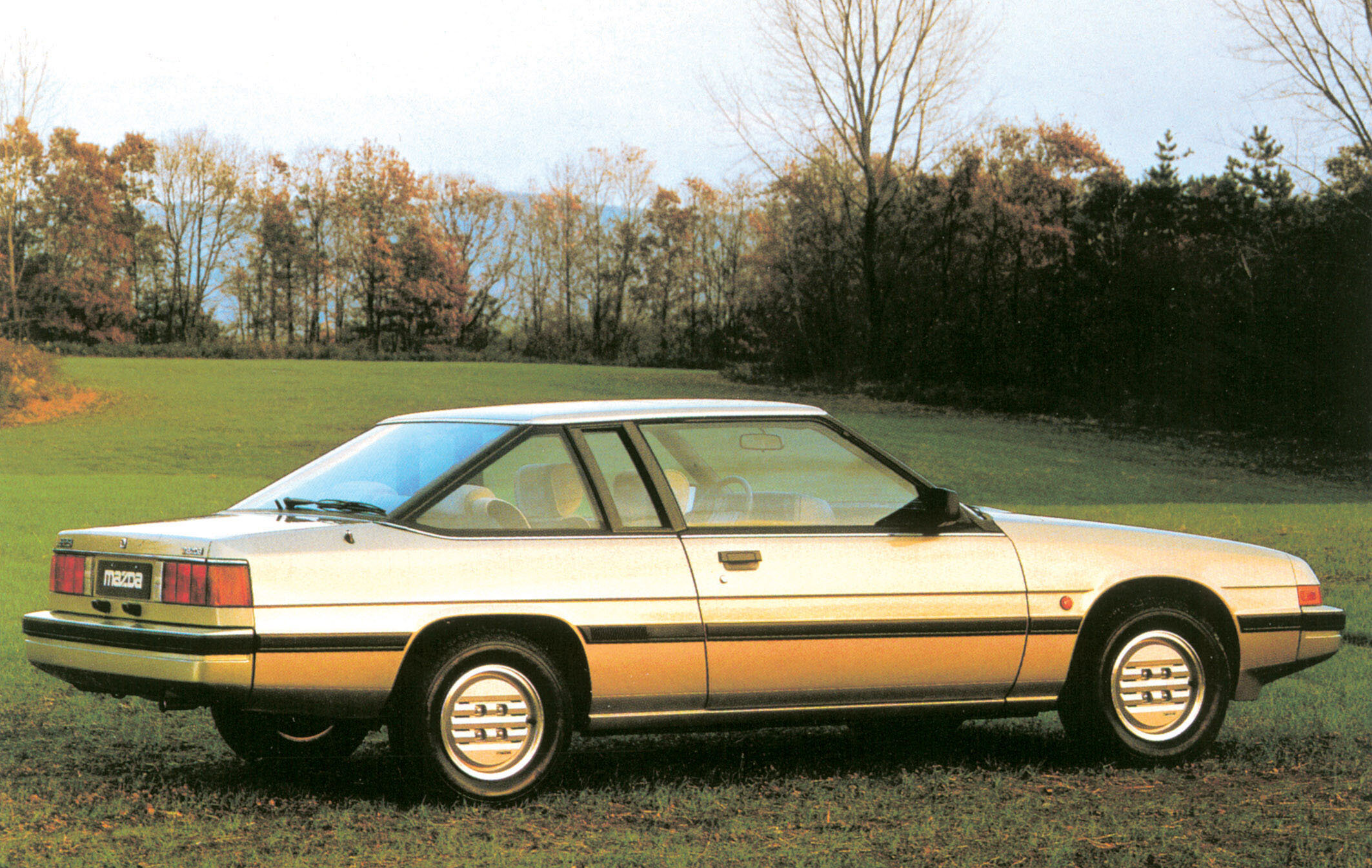
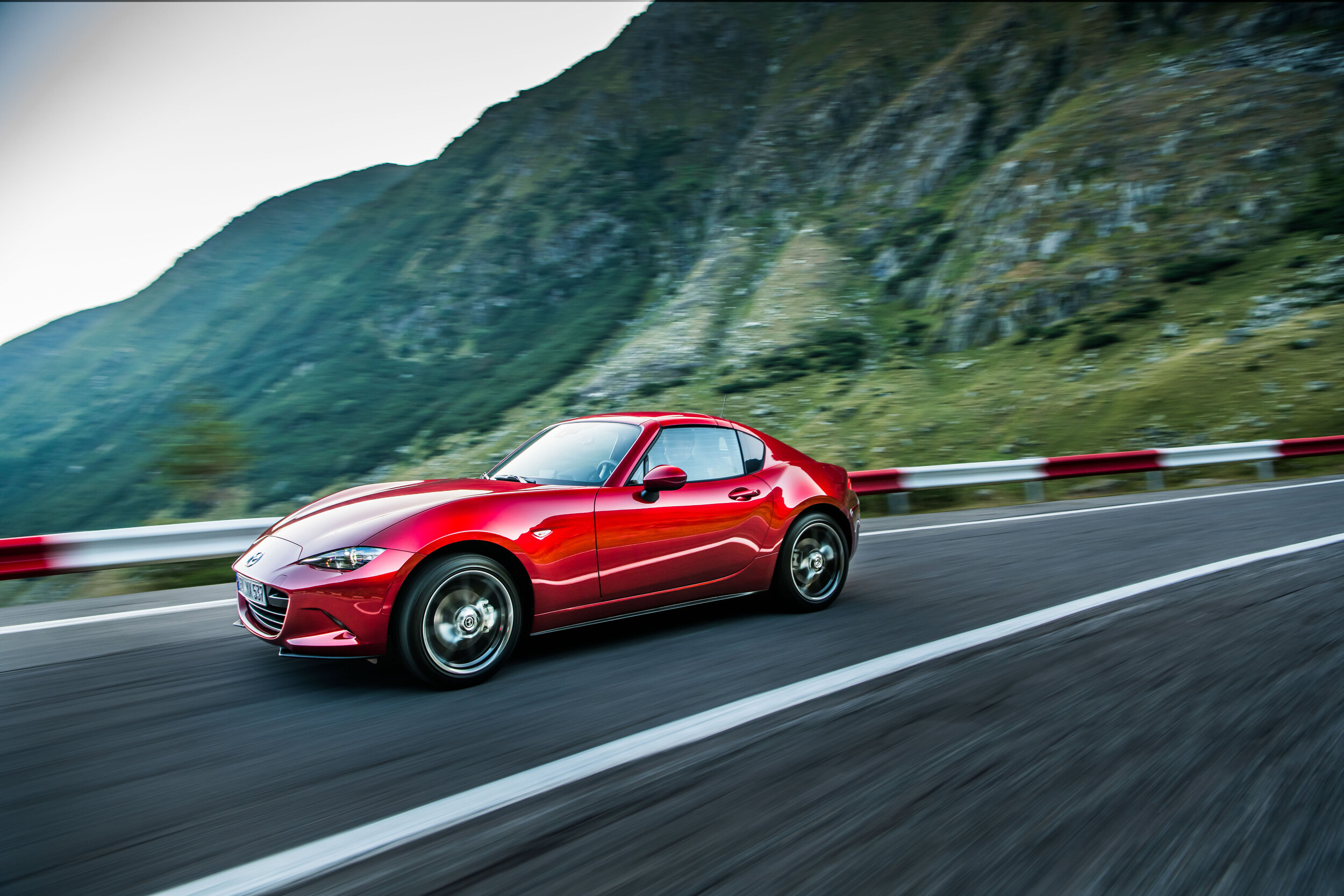
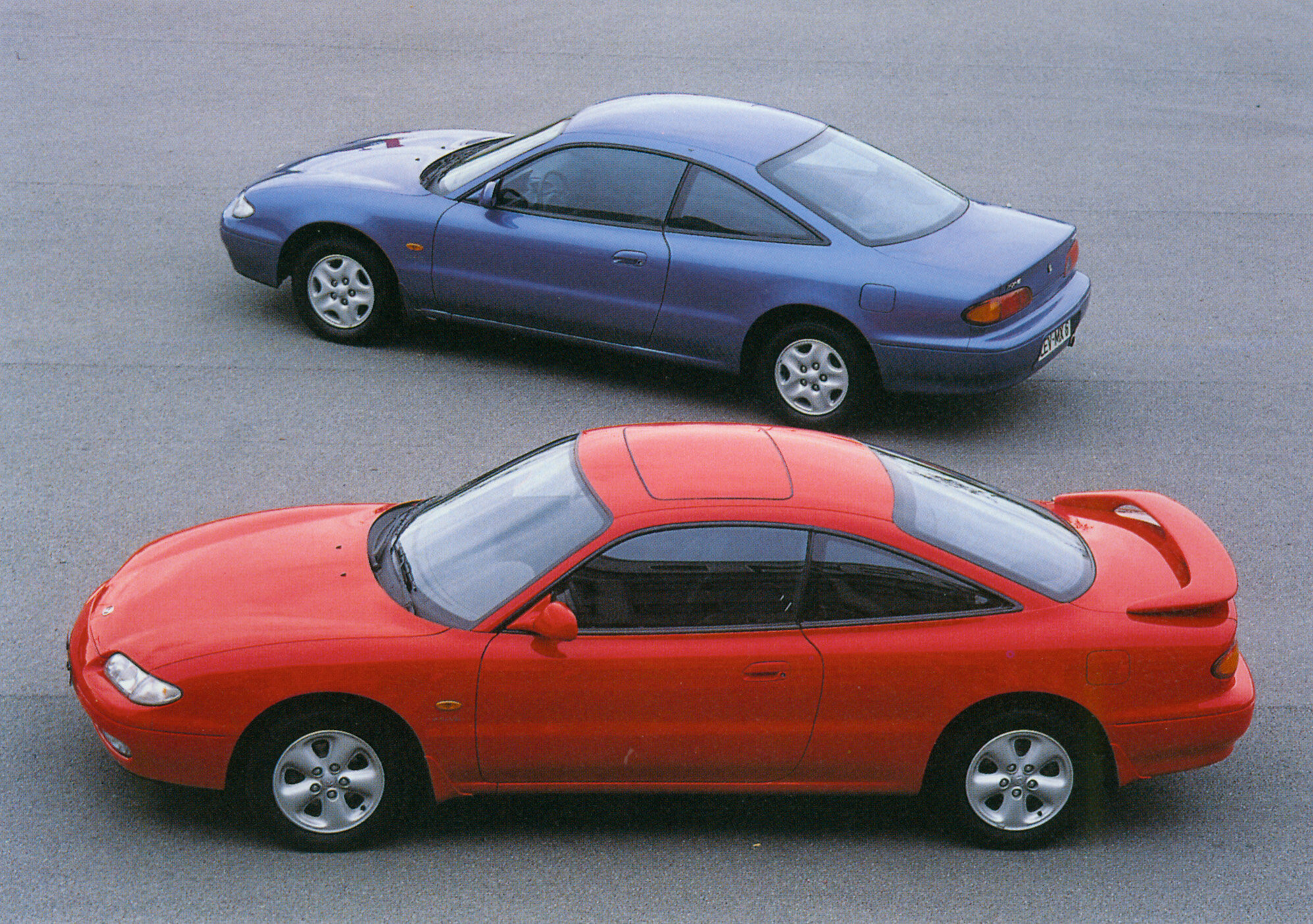
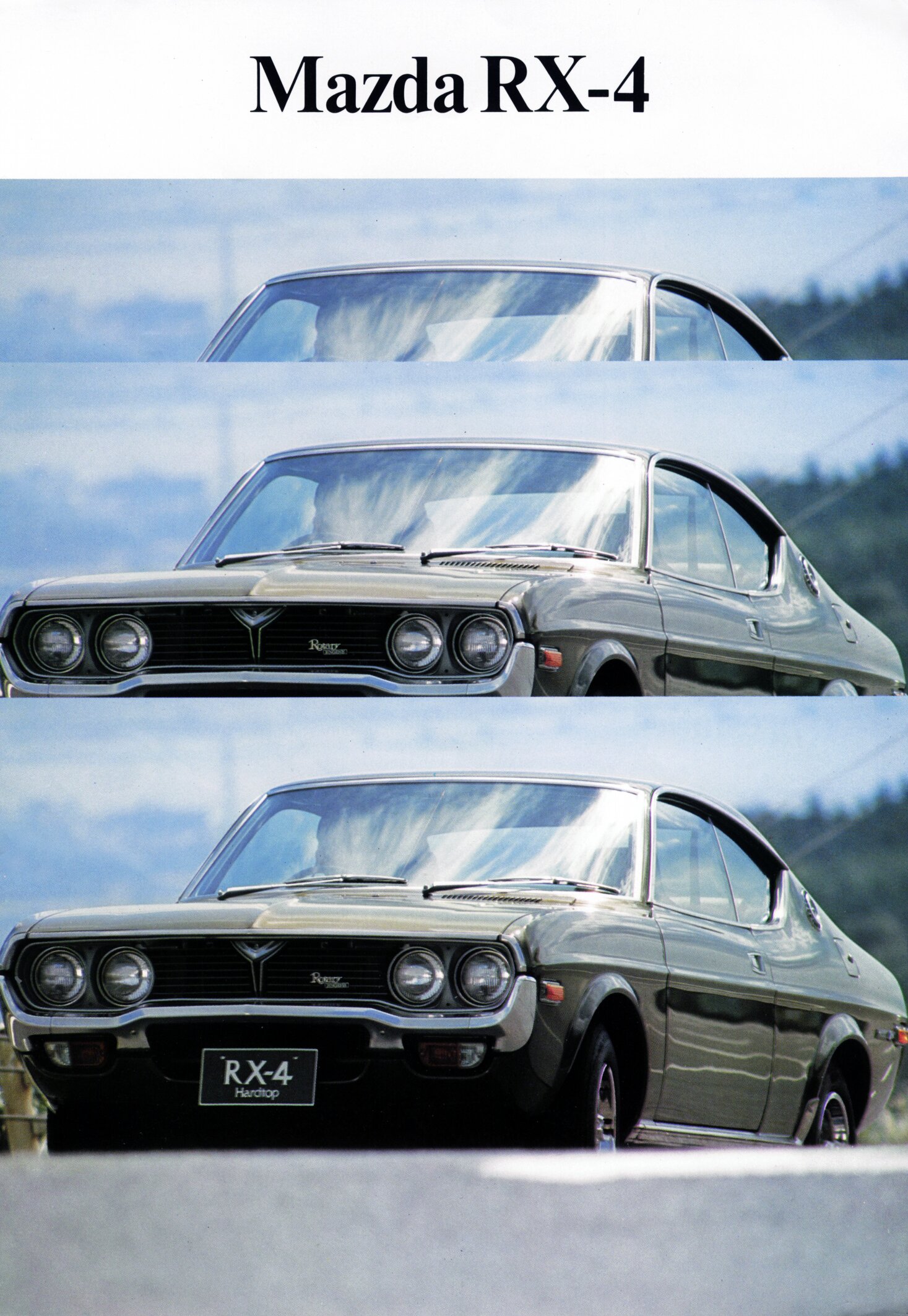
MX family spans well beyond roadster

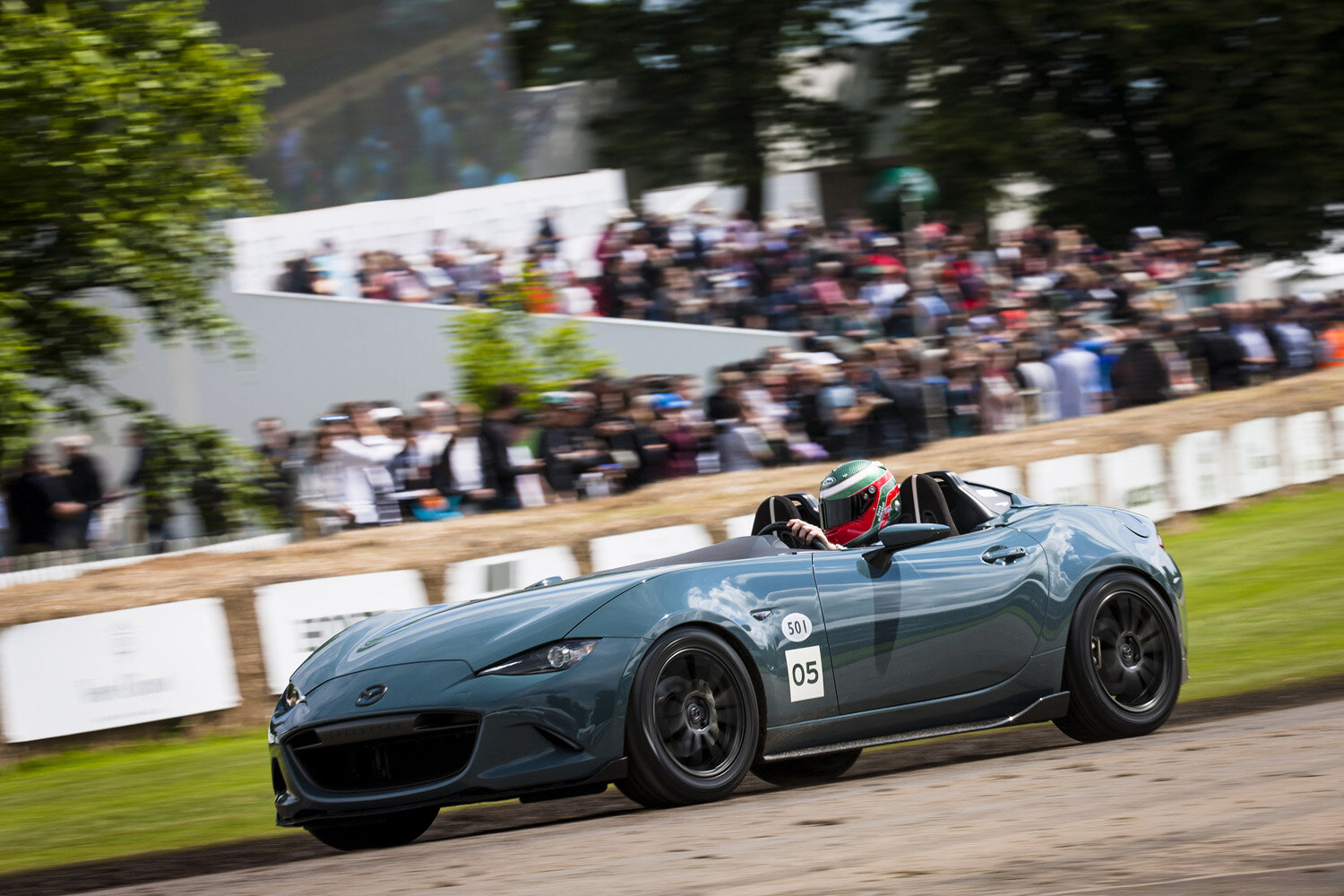
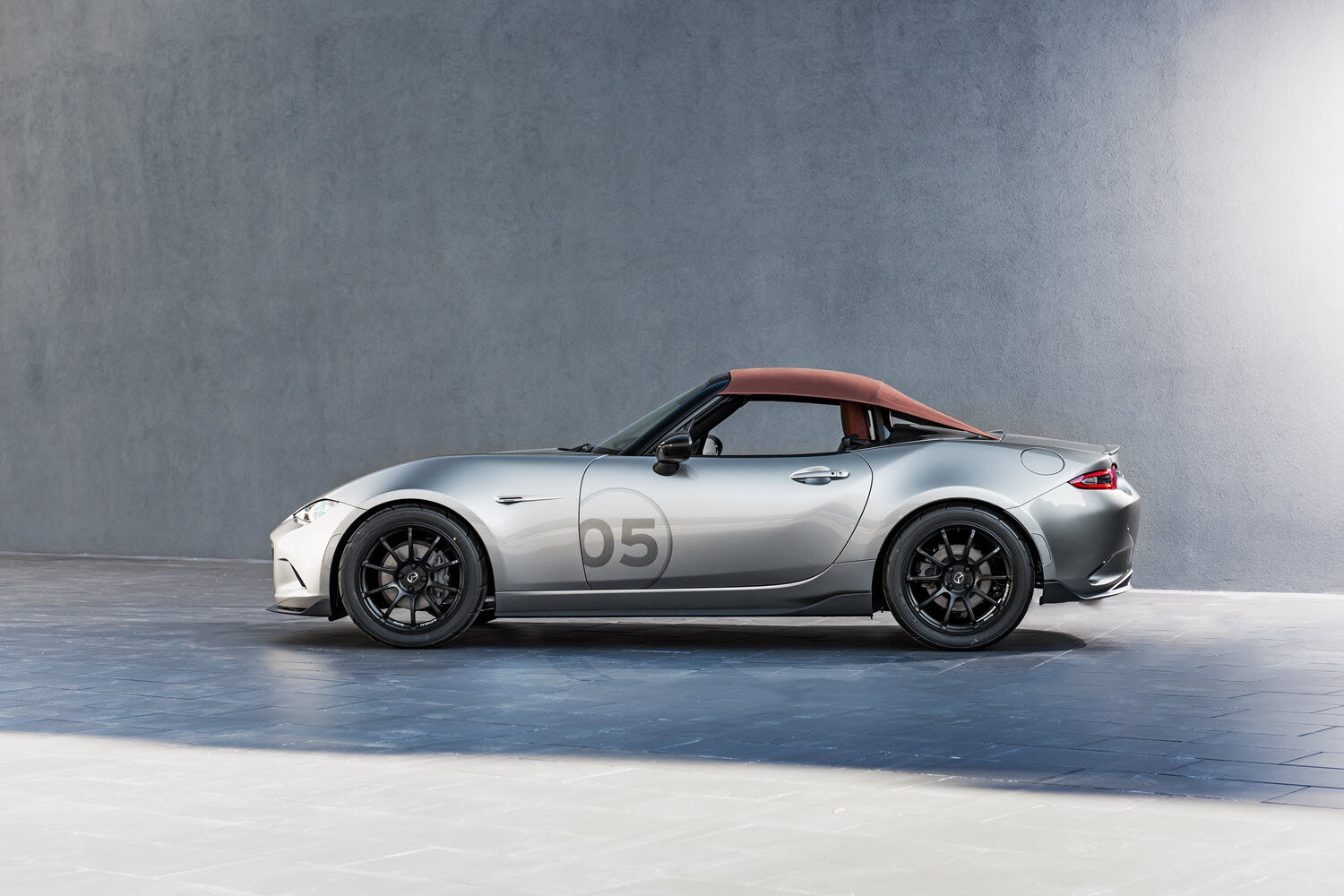
A history of Mazda’s MX models reminds that this monicker has attached to more than just the world’s best-selling roadster.

These are the MX models we know best … but the entire family is much, much larger

These are the MX models we know best … but the entire family is much, much larger

IN a year that sees Mazda celebrate its centenary, the Japanese firm is also looking to the future with the debut of its first all-electric production vehicle – the Mazda MX-30.

With customer deliveries expected to begin in early 2021, the MX-30 is a unique, stylish and versatile crossover EV; a stand-out addition to the Mazda line-up.

Yet why does it wear the MX moniker? This piece supplied by Mazda takes up the story:

A badge made most famous by the MX-5. Well, a look back through Mazda’s history highlights that the MX name pre-dates the world’s best-selling roadster and in fact has been used more than a dozen times across a broad spread of production, concept and racing Mazdas.

Mazda explains that the MX prefix is given to a car that takes on a challenge to create and deliver new values without being confined by convention regardless of vehicle type.

When it was revealed in 1989 the Mazda MX-5 was exactly this kind of car, as the automotive industry as a whole moved away from the affordable sports car, Mazda defied convention to create a perfect modern reinterpretation of the classic rear-wheel drive roadster.

More than three decades later the MX-5 needs no introduction, but the first car to wear the MX badge is less famous, however there’s no forgetting it once you’ve seen it.

Revealed in 1981, the Mazda MX-81 Aria concept car was created by Italian styling house Bertone, who using Mazda 323 running gear created a futuristic wedge-shaped hatchback.

With its gold paint, huge glasshouse and pop-up lights it stood out at the Tokyo Motor Show, but with its recessed square steering wheel, TV screen cockpit and side swinging front seats, it was arguably the interior that was the most radical. A one-off concept that certainly met the defy convention ethos of MX models, it led to a future relationship with Bertone, while things like the high-mounted taillights and pop-up headlamps appeared in future Mazda production cars later in the eighties.

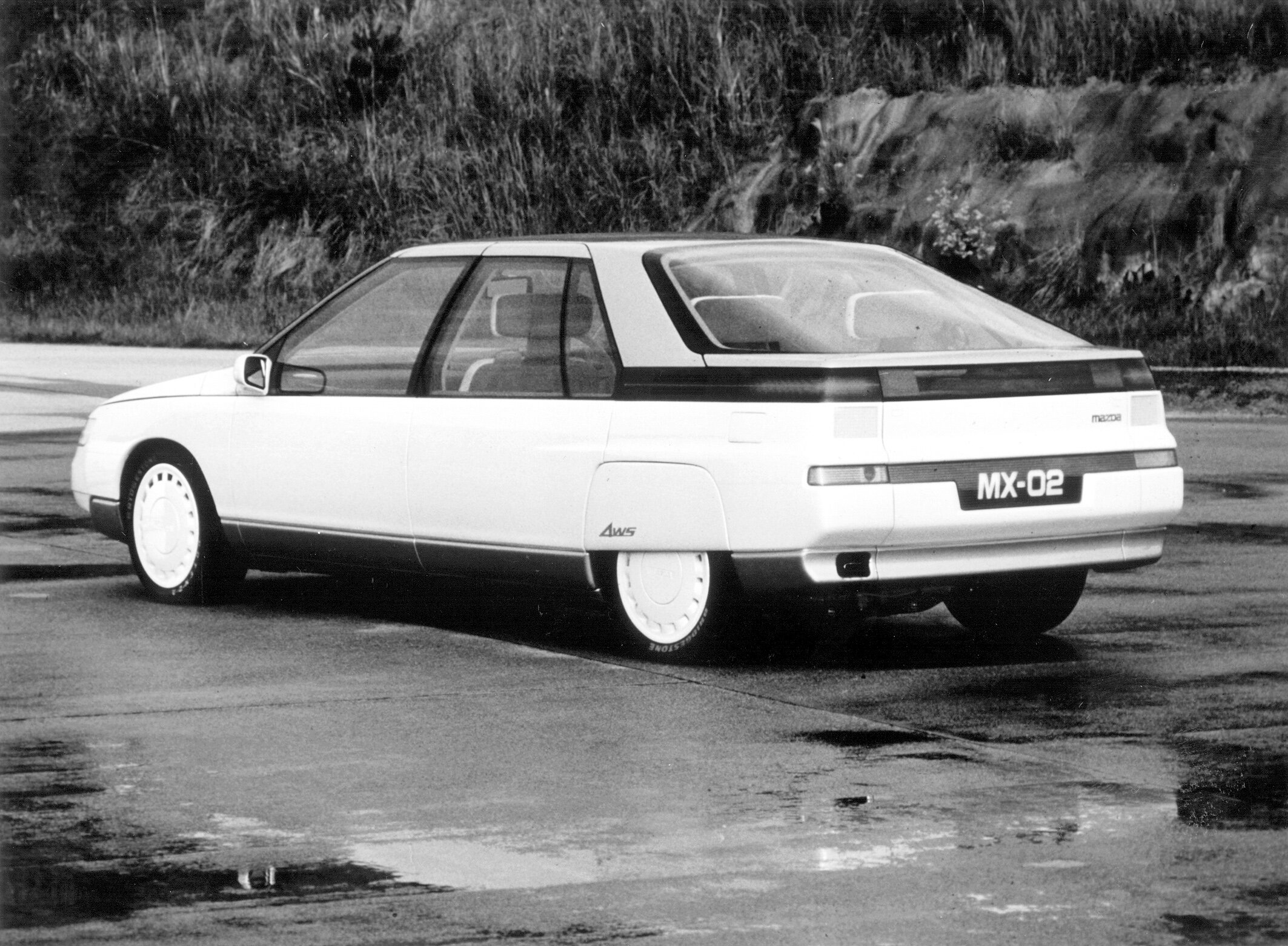
Next in the MX lineage was the 1983 MX-02 concept car, a big flat sided five-door hatch with large windows, aerodynamic rear wheel covers and flared in door mirrors. Unique features included rear wheel steering and a windscreen head-up display.

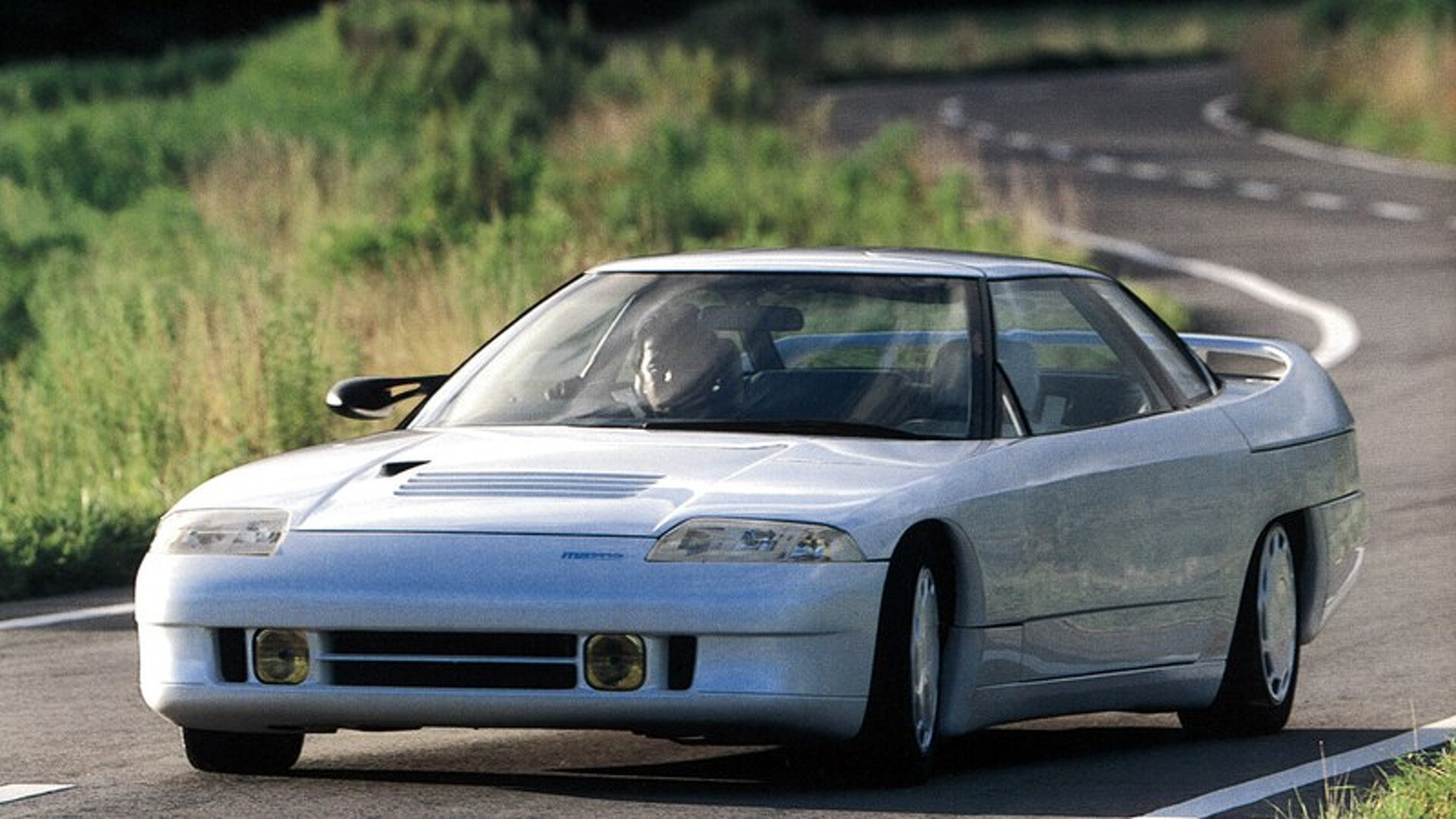
The one-off theme continued with the 1985 Mazda MX-03, which again was a radical looking concept car, but this time it was a defy convention sports car that was powered by a triple rotor 315ps engine. Conceived purely as a concept, this low-slung coupe, was pure futuristic exuberance, with a cabin that featured an aircraft style yoke rather than a wheel, plus digital displays and a head-up display, its technology tally also including four-wheel steering and all-wheel drive, while the long low body delivered an aerodynamic Cd figure of just 0.25.

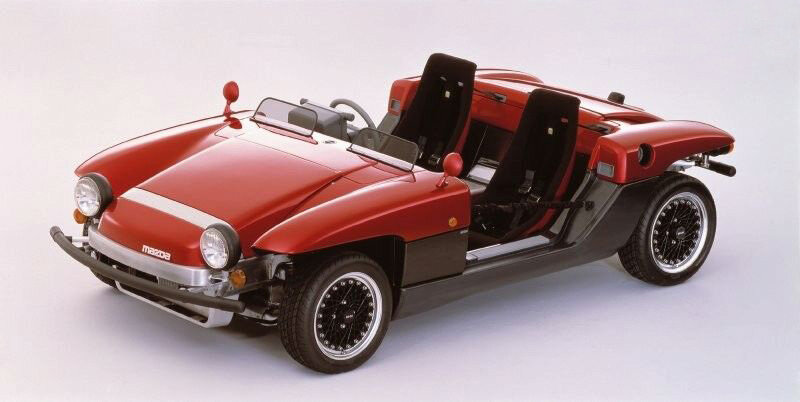
While the MX-02 and MX-03 shared some of the same futuristic design cues, the MX-04 was completely different. Revealed at the 1987 Tokyo Motor Show, the MX-04 was a front-engine rear-wheel drive sports car chassis that had removable fibreglass panels, but not just one, but two different sets, allowing the car to switch from a glass dome roofed coupe to a beach buggy style open sided roadster. 

Powered by a rotary engine this barmy shape-shifting sports car was never a serious contender for production, but little did outsiders know that Mazda was already developing the MX-5, and just two-years later, the most famous car to wear a MX badge arrived.

And the next cars to wear the MX badge were also production models, both cars built on the MX-5’s success and offered very different coupe styles.

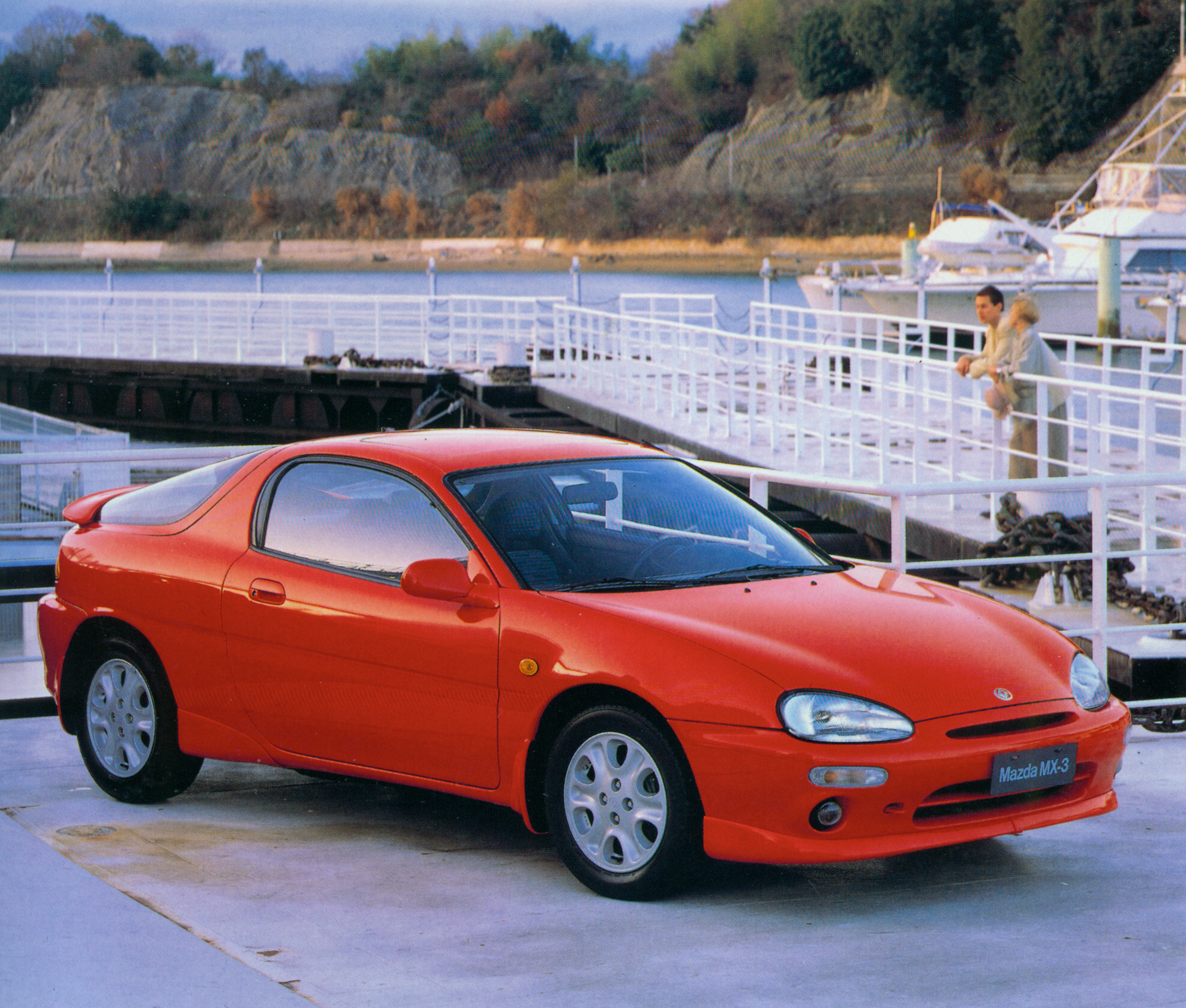
Sold from 1992 to 1993, the Mazda MX-3 was a four-seat coupe hatchback that disregarded the convention for normal hatchbacks to offer buyers something far more stylish and sportier, while it further earnt its MX badge by being available with the world’s smallest mass-produced V6 engine. The larger MX-6 coupe conveyed big premium coupe style for family saloon money, but in the 1990s arguably the most radical car to wear the MX badge was the Mazda MXR-01.

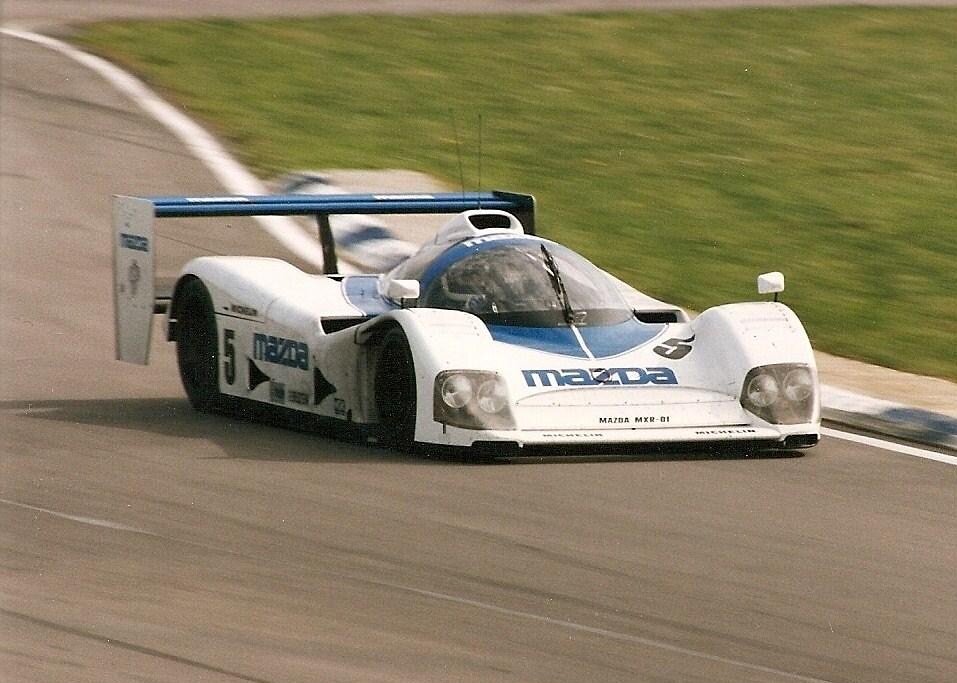
After the rotary powered Mazda 787B took victory in the 1991 Le Mans 24 Hours, the FIA promptly banned rotary powered cars, leaving Mazda looking for a new car for the 1992 World Sportscar Championship at very short notice.

A solution arrived in the shape of the incredible Mazda MXR-01 prototype race car. Based on the previous seasons Jaguar XJR-14, the British firms’ withdrawal from sportscar racing, allowed Mazda to adapt this radical Ross Brawn designed prototype and fit a Mazda badged V10 Judd engine. Famed for its incredible grip and downforce, just five examples where built, but sadly the collapse of the World Sportscar Championship at the end of 1992 spelt the end of Mazda’s world level motorsport programme and denied the MXR-01 the chance of success.

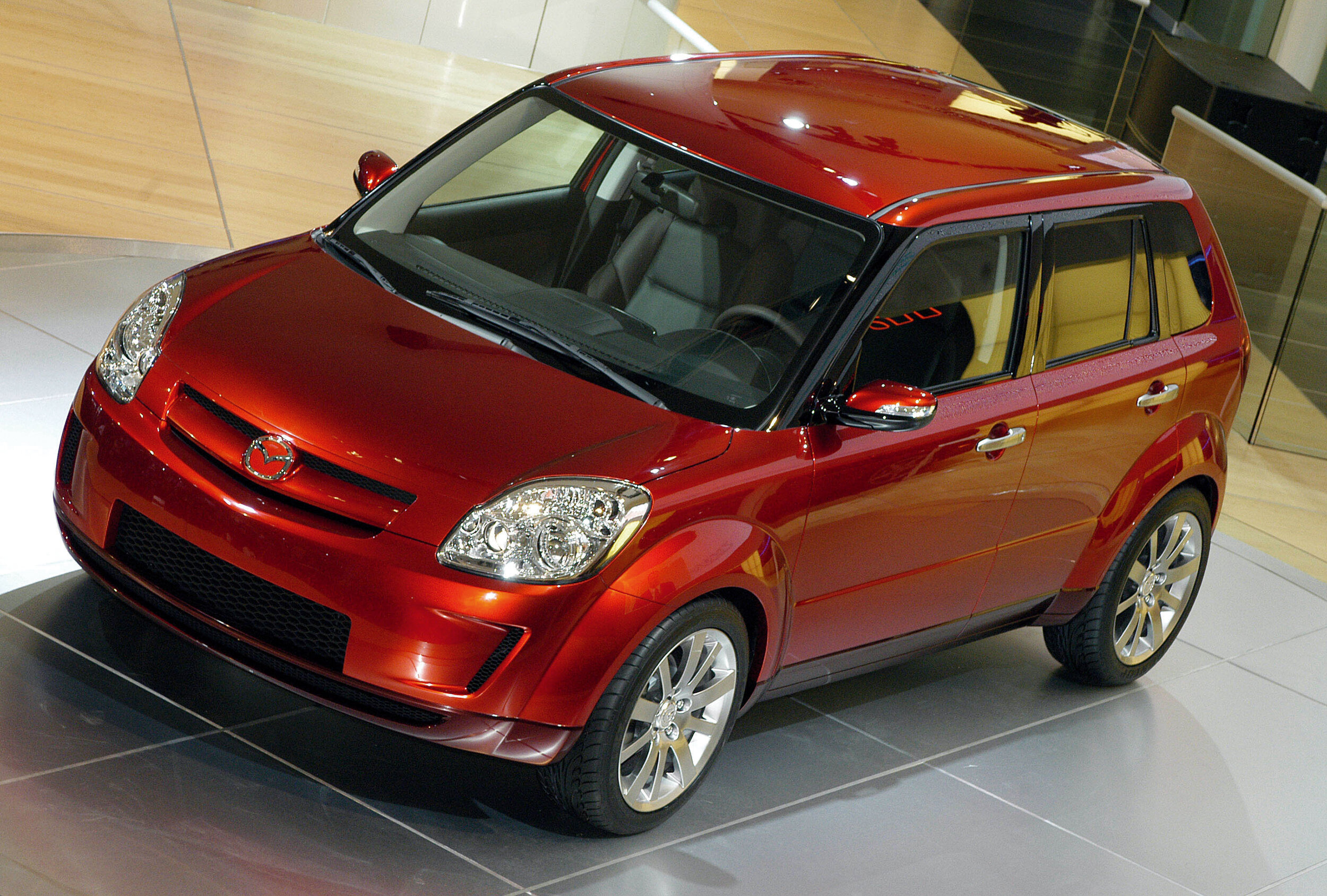
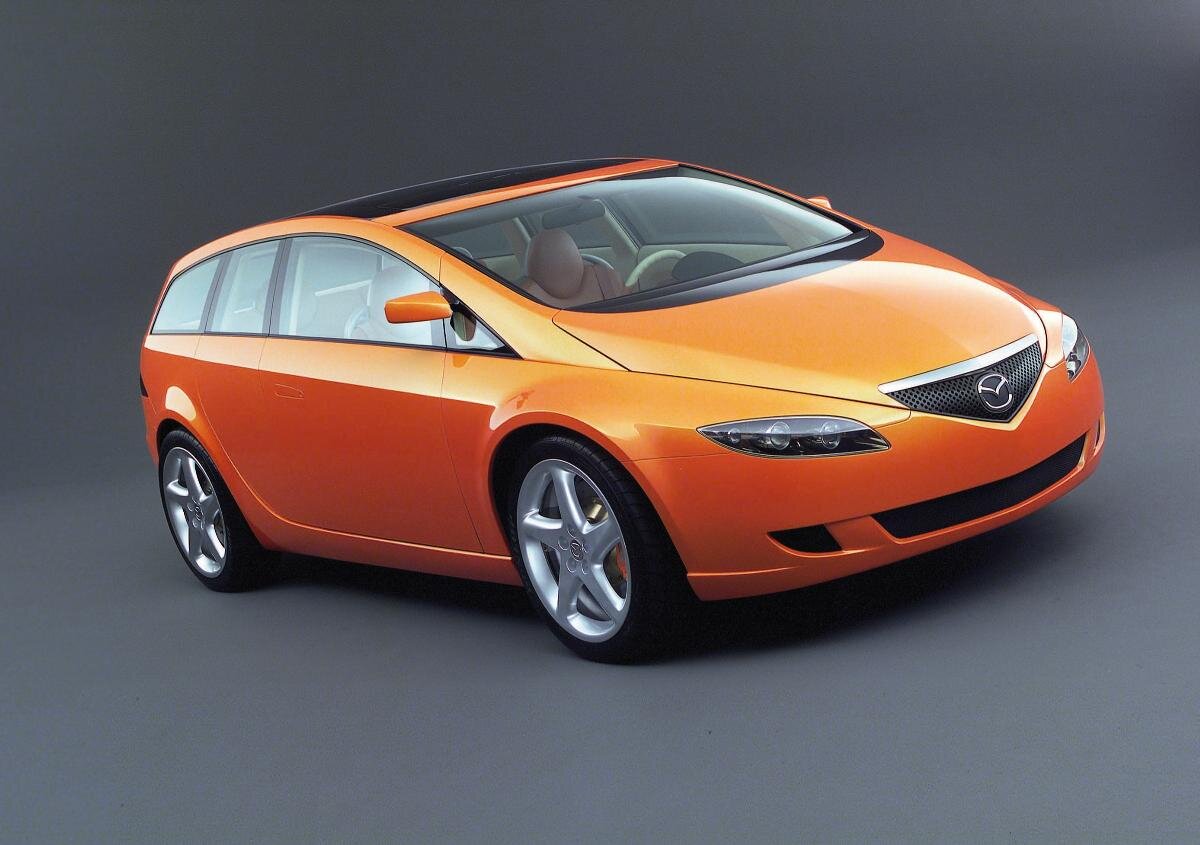
Into the 21st century the MX moniker returned to adorn concept cars, all of which stayed true to the MX ethos of delivering something new by challenging convention: the 2001 MX-Sport Tourer concept was a radical MPV concept with freestyle doors and sweeping body design, that highlighted the fact an MPVs did not have to be boxy or dull, something the resulting Mazda5 proved. In fact, the 2004 Mazda MX-Flexa was a concept that was even closer to the final ground-breaking Mazda5 production car, sharing its popular sliding rear doors.

The 2002 MX-Sport Runabout concept previewed the modern look of the second-generation Mazda2, while the 2003 MX-Sportif was the concept that previewed the first generation Mazda3, which was a big step forward from the outgoing Mazda 323.

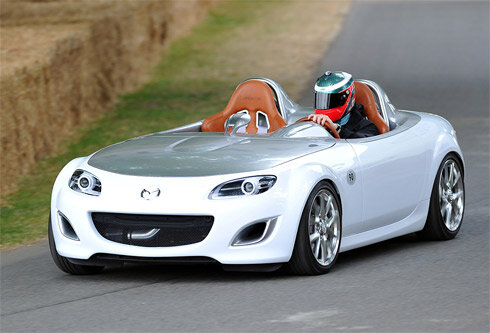
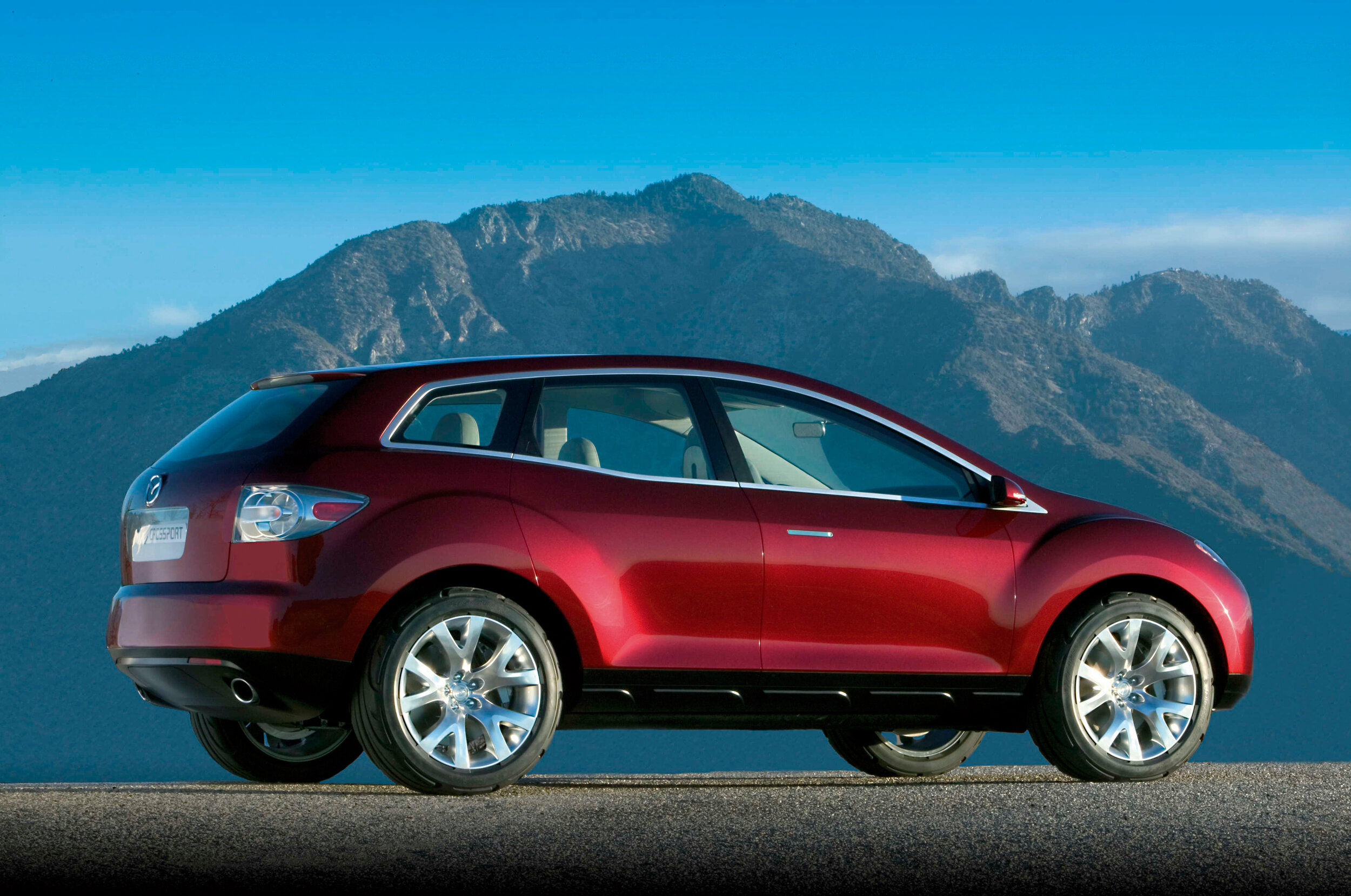
The MX-MicroSport was a US focused hatchback concept, revealed at the 2004 Detroit Motor Show, but the nineties MX concept that really started Mazda on the road to another success story that set it apart from other brands, was the 2005 MX-Crossport.

Inspired by the Mazda RX-8 sportscar this was a sporty looking SUV concept with sculpted wheel arches, slender headlamps and bold shoulder lines that previewed the Mazda CX-7 - a pivotal car that established the fact that Mazda could build a stylish, sporty SUV with car like dynamics to rival the best SUVs from premium brands. A car that established a lineage of award-winning SUVs that leads to today’s CX-5 and CX-30 - the MX-Crossport sat at the start of this SUV success story.

And now with the arrival of the ground-breaking MX-30, it’s appropriate that the MX name returns to a production model – as Mazda’s first production EV, the MX-30 is a car that represents a new chapter in Mazda’s history.

2021 MX-30 - MAZDA’S ENTRY INTO THE ELECTRIC SCENE

2021 MX-30 - MAZDA’S ENTRY INTO THE ELECTRIC SCENE


MIA welcomes wage subsidy, trades training

The Budget brings good news for the auto industry, a core involver contends.

David Profile Pic.jpg

NEW Zealand’s troubled new vehicle industry is pleased with the contents of today’s Budget.

The country’s level 4 lockdown during the Covid-19 pandemic has proved disastrous for the industry, with sales down 90 percent during April and little likelihood of things being much better this month.

Motor Industry Association chief executive officer David Crawford said that for the new vehicle market to flourish, the New Zealand economy needs to be strong – and that is going to be a challenge in the current environment.

“A Budget that focuses on jobs while supporting businesses was what I was looking for,” he said.

In that regard the MIA was pleased to see in the budget a $4 billion business support package that included a $3.2b extension of the wage subsidy scheme, and a $1.6b free trades training package.

The wage subsidy scheme has been extended for another 12 weeks from mid-June, and Crawford said this extension will benefit those companies where revenue remains low.

The MIA also strongly supported the trades training package, which aims to open up opportunities for those who have lost their jobs or need to up-skill for a new career.

“We are delighted to see these two initiatives in the Budget,” said Crawford.


Holden NZ signals stock going fast


With Level Two allowing a return to car dealerships, how long have you got to buy a new Holden and what’s left?

commodore has taken a public pounding - yet stocks are low now

commodore has taken a public pounding - yet stocks are low now

 RESUMING the business of getting out of … well, the business … marks Holden New Zealand out from all other car distributors that today resumed some semblance of trading normality.

Transition today into Level Two of the Government’s coronavirus crisis restrictions regime has allowed General Motors’ Australian maker to join most other major marques in welcoming the public back into showrooms.

Where Holden stands out is that it is a brand with no future, owner General Motors having announced its demise in February, so that buying time is limited.

For all that, Holden NZ is still guarded in detailing how much longer it has to go and exactly how much stock there remains to be moved.

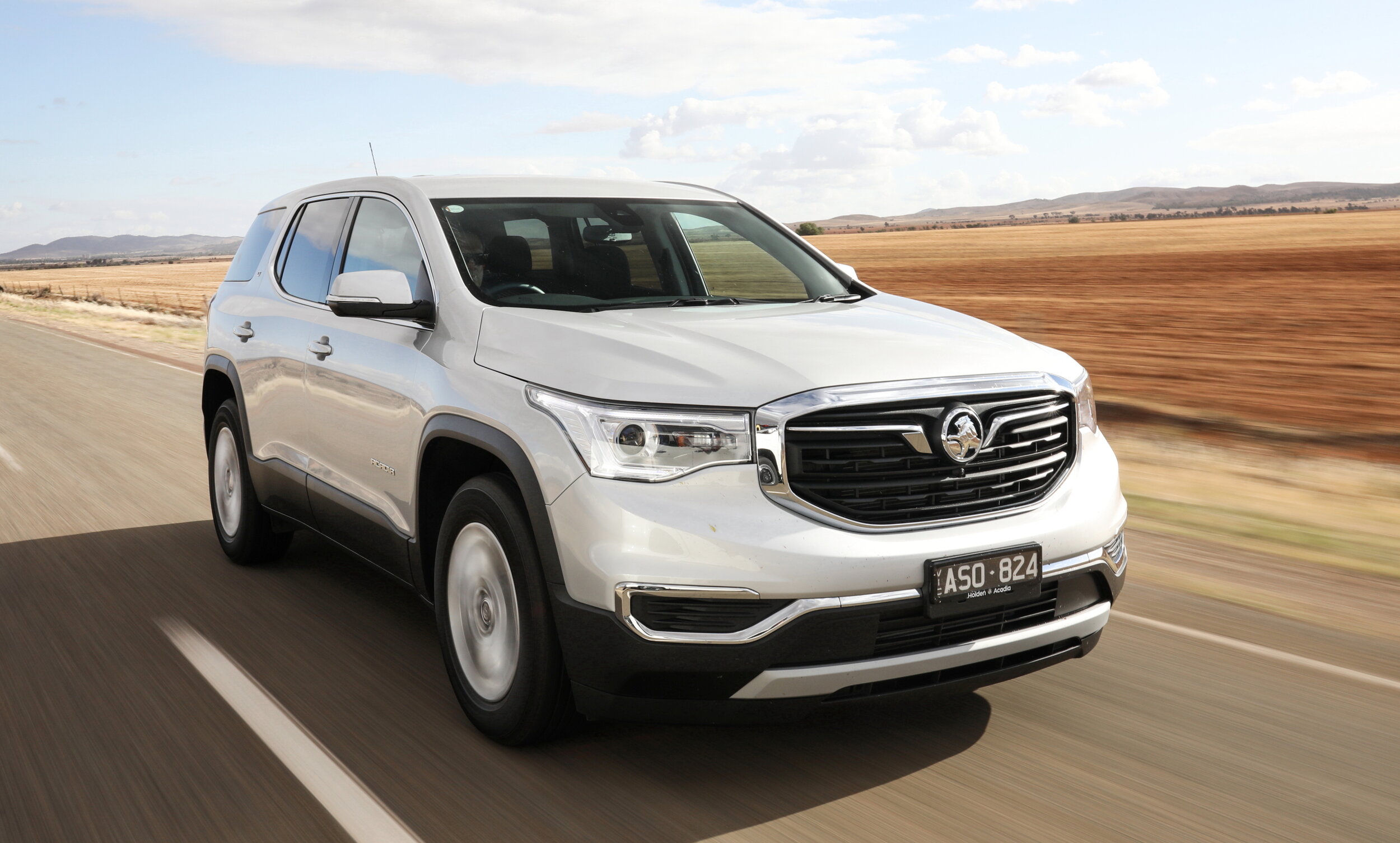
Trax (above) and Acadia have also been a popular runout product

Trax (above) and Acadia have also been a popular runout product

Holden_Acadia.jpeg

The Auckland distributor is only prepared to identify that its inventory is declining quickly.

It also cites that only the Colorado utility remains in reasonable availability, whereas crossovers and sports utilities were shifting faster and just a modest count of Astra and Commodore cars remain.

“We have a reasonable supply of new Colorado, both 4x2 and 4x4, as we head into the annual Fieldays sales campaign which usually takes place in June,” said corporate affairs manager Edward Finn.  

“There are some Commodore and Astra variants remaining, but for those customers who would like a new Holden SUV, Trax is almost sold out, a small selection of Equinox remain and there are limited numbers of Acadia.” 

Actual counts in respect to specific models and any thoughts about how long before these will be gone for good is not being shared, however.

When GM announced on February 17 that Holden was a goner, the inference was that full wind-down would still take until 2021.

However, it could be a quicker death. For instance, just a handful of Holden New Zealand’s staff at the East Mangere, Auckland, office will escape a mass redundancy that hits at the end of June. Those staying beyond then are involved in parts distribution and warranty care. Holden has to maintain parts supply and support for years yet.

colorado stockpile was built up for the now-abandoned fieldays

colorado stockpile was built up for the now-abandoned fieldays

Conceivably, it might not be too much longer before Holden dealerships start either mothballing showroom space or finding other brands to fill it. A sobering situation in a market condition that, thanks to the virus, is predicted to drop 40-45 percent on the 2019 volume.

It is probable all shipments of Holden product to New Zealand have finished. So, what’s here now and still unregistered is all there will be.

The Covid-19 lockdown that virtually stopped all car sales for the month of Level Four and still had restrictive impact during the fortnight of Level Three that followed had cruel impact on Holden.

The brand had just begun the major run-out programme to clear its inventory when coronavirus struck. 

Obviously, few new cars were moved in April, when the shutdown allowed just three trading days: The April tally was 90 percent down on the same period of 2019. To give an idea of what that means, bear in mind that Colorado achieved as the second strongest selling ute for April … on the back of 38 registrations.

So what’s left and how long have prospective buyers got? Finn was apologetic:

“The best advice is for people who are considering the purchase of a new Holden is to contact their nearest authorised dealer and find out exactly what is on offer.”


Kamiq Scoutline adds tough edge

The baby Skoda crossover now hitting NZ has a new sibling with enhanced outdoorsy attitude.

kamiq-scoutline-6-1920x1280.jpg

NO sooner has Skoda settled its new Kamiq into local showroom life than the parent has announced another variant that the local distributor agrees would conceivably be tasty to Kiwis.

The baby Kamiq crossover is a fitting choice to debut a new brand initiative of a tough-looking Scoutline trim level.

It’s a different recipe to the Scout trim that is becoming more familiar to New Zealand buyers.

Whereas Scout models – and for us, that’s been the Octavia for several years and a just-introduced Superb – get all-wheel-drive for a degree of off-seal ability, the Scoutline is all about dirt-treading imagery.

Changes are therefore entirely to do with enhancing the styling without touching engineering.

Accordingly, Kamiq Scoutline retains the same front-drive layout and drivetrain choices that install in the 85kW 1.0-litre $30,990 Ambition, and 110kW 1.5-litre $36,990 Amibition Plus and $42,990 Monte Carlo models that have just landed here. Europe also sees a diesel and a manual gearbox as alternate to the direct shift transmissions NZ sees.

To make the Kamiq look more like an off-roader, Skoda has given the Scoutline matte black wheel arch surrounds, a new front spoiler and a rear diffuser designed to look like underbody protection, plus extra silver flashes. There are also LED tail-lights and tinted rear windows. It rides on 17-inch wheels as standard, but 18-inch versions are on the options list.

The Scoutline model also has exclusive interior trim decoration. In Europe ash wood effect is standard, with a darker shade available as an alternative. The front seats come with a new upholstery choice made of breathable fabric and microfibre suede and stamped with a Scoutline badge. Other touchpoints like the steering wheel and gear lever are leather-trimmed, while the interior also gets three-colour ambient lighting and LED reading lights.

The spec appears to be around the same level that affords with Monte Carlo, with reversing sensors, LED headlights, a 9.2-inch touchscreen, smartphone connectivity and cruise control. 

Production begins in two months, while conceivably means that the Sportline could be available to right hand drive markets by early 2021.

With the compact crossover sector having been a hot spot – at least prior to coronavirus lockdown – and consumers showing no concern about buying into product that, regardless of what the look suggests, is suited far more to the street than sludge, it would seem a car that Skoda NZ might give serious consideration to.

So how keen is it? Well, it’s not off the table, says brand boss Rodney Gillard.

“We can see the merit. At this stage we are sticking with the three variants we have but it’s a possibility.”
Skoda’s rapid rise in New Zealand has put us in Skoda HQ’s good books and, Gillard says, is a factor as to why it gets priority over most other right-hand-drive markets, including Australia and South Africa.

“So, while at this stage that (Scoutline) is not available to us, when and if it does become available we will absolutely give it consideration.”
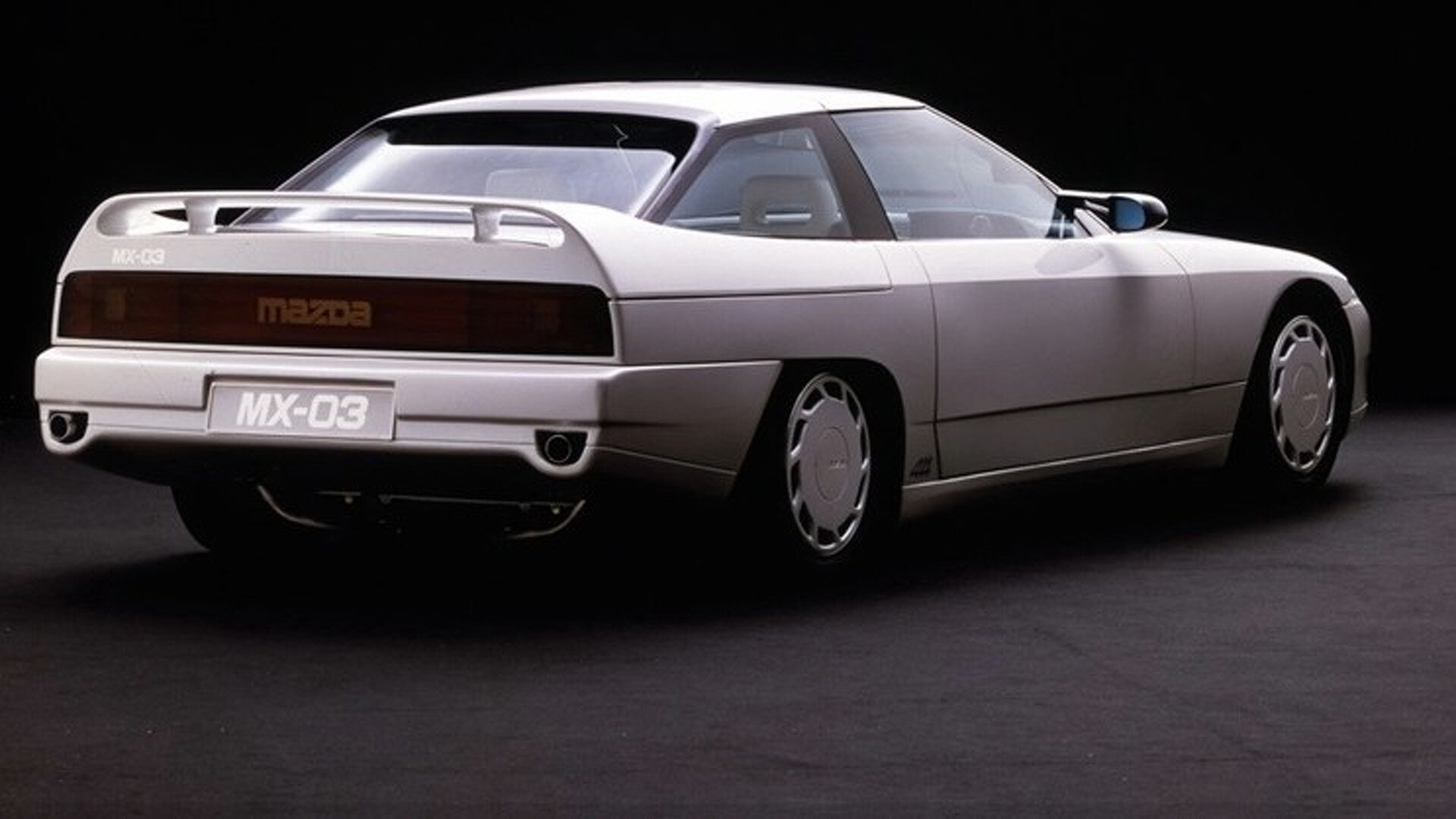
Meantime, he anticipates good demand for the Kamiq variants already here and says early interest reminds that the one of the car’s attributes is being  a particularly good poster child for the current Skoda look.

“It really demonstrates the strength of our styling.”
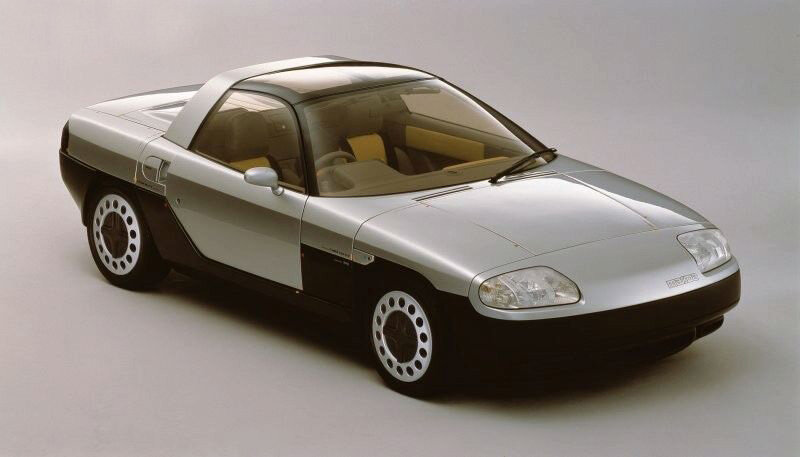
kamiq-scoutline-14-1920x1280.jpg


GR Corolla? Toyota NZ’s revved

The big sleep might be ending, with talk about Toyota reviving an old-school favourite. What’s the local distributor’s reaction?

2018_SEMA_SUPER_STREET_COROLLA_01_D2B2B7E04D5C834A9948D9825F753EABE399AA21-600x424.jpg

SPECULATION about Toyota Japan prepping a Gazoo Racing version of the Corolla sounds sweet to a local brand boss.

When asked for his thoughts about the potential of any such programme, Toyota New Zealand chief operating officer Neeraj Lala was unequivocal: Bring it on.

 Talk about the potential of a GR Corolla that would be a direct heir to the celebrated 4AGE 1.6-twin cam AE86 and GT Corollas of the 1980s has re-emerged on strength of a tweet sent out by Toyota America to media.

A message relating that the NZ-confirmed baby GR Yaris hot hatch is not a starter Stateside, the American operation raised flags – and hopes – by adding “it’s time the U.S. got a hot hatch to call its own.” 

Commentators saw that as a green light for Corolla, purely on strength that the brand’s top seller is the only other conventional hatchback in the Toyota line-up.

Sounds thin? Well, then consider what might be construed from this sole comment from Lala: “We are working hard on confirming this model, and would love to have it here in NZ.”

2018_SEMA_SUPER_STREET_COROLLA_05_848D017C86407298C5239034F701290320B268C5-600x424.jpg

Interesting choice of words, right? Does ‘confirming’ mean there’s definitely something going on? Or is this just mischief?

Let’s not forget Toyota America’s interest in the concept of a hot Corolla has already been delivered in exactly that form. The highly-modified one-off special pictured here was a one-off created for the 2018 SEMA show in Las Vegas. 

Certainly, Lala and other TNZ high-ups are huge fanboys for Akio Toyoda’s aggressive expansion plan for its GR (Gazoo Racing) high-performance road cars.

NZ was amongst the first export customers for the GR Supra that has revived the brand’s most famous sports car and is also in the queue for the upcoming GR Yaris, a quasi-homologation homage to its World Rally Championship car 

If and when a GR Corolla does arrive, then don’t be surprised if it borrowed heavily from the GR Yaris, including using the blitzer baby’s 200kW/370Nm turbocharged 1.5-litre three-cylinder engine and all-wheel drive system.

In addition to Supra and Yaris, the GR clan will also include the next-generation 86 sports coupe – with the GR 86 nameplate – by the end of 2021 and also the GR Super Sport, a road-going version of the race car Toyota is creating to run in the Le Mans hypercar category expected to start in the 2021/22 season, though the category is looking precarious after Aston Martin froze its programme.


TNZ confirms Highlander in hybrid only

The V6 has served its purpose, but from now on petrol-electric efficiency makes more sense, distributor says.

KL-34RR-HV-20hr.jpg

EVERYTHING hinges on hybrid – that’s from Toyota New Zealand, in confirming today that the just-revealed next-generation Highlander will divest its V6 here and devote to petrol-electric purity.

Total commitment from TNZ to a new-to-type drivetrain that bumps a petrol V6 that continues in other markets and has been a mainstay here in the current and previous models is a safe call at the right time, local chief operating officer Neeraj Lala says. 

Pointing out that hybrids now account for one in three sales of new Toyota cars here, he said: “The introduction of another hybrid to our line-up further complements our focus on moving towards a low emission economy, while delivering our customers with a fuel-efficient large SUV.”

And that’s the whole point of the exercise. While the V6 models have been popular for their impressive power output, the engine has been increasingly tested to come up to speed in respect to economy.

That the current car has maintained healthy volume here has been increasingly due to its popularity as a rental car – where the seven-seat configuration lends favourability.

KL-34FR-HV-20hr.jpg

At same token, it has slipped in status with private buyers, to the point where Toyota and its fleet customers have found moving ex-rental stock into the used car forum a challenging exercise. All the more so, perhaps, now that the coronavirus crisis has destroyed tourism and thus forced operators into selling off stock.

“Toyota has now sold more than 15 million hybrid vehicles globally, including in excess of 17,000 in New Zealand,” Lala said.

"The all-new hybrid Highlander is the beneficiary of Toyota's global hybrid leadership, extensive experience in SUVs, and unrivalled reputation for quality, durability and reliability,"

On arrival in early 2021 the model will achieve immediate status as the first seven-seater hybrid SUV has had here with a Toyota badge – a distinction that separates it from the brand’s Lexus RX, which added a third row two years ago.
Married to a 2.5-litre petrol engine, it is of course a mild system – plug-in recharging has yet to enter the Toyota lexicon – and the cited total hybrid system power output is expected to be 179kW (whereas the new V6 has 218kW).  

The hybrid drivetrain marries to an intelligent AWD system that incorporates front and rear electric motors. The hybrid battery is located under the second-row seats.

The fourth-generation Highlander sits on the Toyota New Global Architecture GA-K platform, providing multiple benefits for dynamics, safety and styling, Lala says.

KL-TOP-SHOT-HV-3-SEATS-UP-20hr.jpg

“The new Highlander is brand new from the ground up; a new platform for improved stability and handling, a new engine with class leading efficiency, new levels of safety and with a dynamic styling package.”

He says it will appeal as being “a significant improvement on the outgoing model, with improved efficiency and flexibility for families.”
Toyota says this has enabled engineers to develop a lightweight and highly rigid bodyshell with a low centre of gravity - features that provide the new SUV with nimble handling and comfortable driving around town and on the highway.

The new generation has advanced Toyota Safety Sense active safety technologies designed to help prevent or mitigate collisions across a wide range of traffic situations.

The new platform has also allowed designers to craft a longer, more distinctive body that delivers a more flexible interior with expanded cargo space and a more tailored ambience.

Toyota has sold more than 15 million hybrid vehicles globally.


Special Kei provided an enduring taste

Mazda’s first car was a cheeky little coupe. It’s never broken the two-door hardtop habit.

the enduringly awesome cosmo

the enduringly awesome cosmo

MORE reminder of Mazda’s determination to never bend to car design and engineering conformity has come with reminder of how many two-door cars it has knocked out over the years.

The tenor of an in-house history of the company’s coupes, released as part of this being the brand’s 100th year, is a fascinating insight into its enduring commitment to this design style. 

Whereas many other Japanese makes committed more deeply to mainstream sedan shapes that were far more likely to win greater volume returns (that’s how Toyota, Mitsubishi and Nissan did it), Mazda always played beyond conservative tastes.

 That a conviction formed right at the start about how coupes best reflecting core brand philosophies remains adhered to now is a tribute to the make’s independent spirit. It hasn’t been a smooth road, but what a trip!

Agreed, that first offer, the R360 microcar designed for the domestic ‘kei’ category, is an utterly humble thing in comparison with the far more sporting products that have ultimately followed, but it nonetheless speaks clearly to Mazda’s intent to make cars that were attractive and visionary.

Of course, there was more. Mazda also identified that the best coupes around when it kicked into car-making in 1960 (having been involved in other industry, and starting out as cork supplier in the 1930s) were those that delivered performance-enhancing structures like rigidity, aerodynamics and weight reduction. These have also remained central elements of the brands product philosophy, wrapped up in the ‘fun to drive’ ethos that even the R360 was able to cheekily demonstrate, albeit less by virtue of its outright performance than the happy fact of it being the lightest in class.

Anyway, that made it an immediate bestseller, capturing 65 percent of Japan’s burgeoning microcar segment and 15 percent of the domestic market in 1960, the year of its launch.

Here’s the how the history unfolded from thereon, in the maker’s own words:

“The Mazda Carol P360 coupe, which had a longer wheelbase and a four-cylinder engine, joined the line-up in 1962 with comparable success.

Mazda’s first performance car was also a coupe, unveiled at the 1964 Tokyo Motor Show, the Mazda Cosmo Sport 110S would arrive on the market in 1967 as the world’s first production model with a twin-rotor engine. With space-age looks matched by the powertrain’s turbine-like sound, it was the beginning of an illustrious age of unconventional rotary sports coupes at Mazda. The Cosmo Sport also launched the brand’s international motorsport career.

However, the big international sales breakthrough would come with the Familia/R100 and Capella/616/RX-2 series – the respective forerunners to the Mazda3 and Mazda6 – along with the Grand Familia/818/RX-3. Mazda took its rotary engine global with these models starting in 1968, and their Italo-design inspired looks electrified buyers, quickly driving overseas unit sales into six-figures.

Even more stunning was the Mazda Luce R130 coupe introduced in 1969. Designed at Bertone by Giorgetto Giugiaro (who had also styled the first Familia), it was Mazda’s only front wheel-driven rotary model and is now a sought-after collector’s item. Slotted above the RX-2 and RX-3, the Luce R130 would make way in 1972 for the Mazda RX-4. Marketed as luxurious and sporty, the hardtop coupe version was available with an “AP” (anti-pollution) rotary that improved emissions and fuel economy. The engine would also see service on the RX-3 and Mazda Cosmo/RX-5 launched in 1975 in coupe and fastback format. Performance of the 110-135PS rotary RX coupes, with kerb weights in the 900-1,100kg range, was very respectable for the time.

The Hiroshima carmaker took this recipe for driving fun up a level in 1978 with the Mazda RX-7, whose unique wedge-shaped design featured a wraparound glass rear window. Under the bonnet of Mazda’s first truly mass-market sports car was a completely redesigned rotary engine. Propelling a lightweight structure with near-perfect weight distribution, it was exceptional to drive. Successful on the racetrack and rally stage, the RX-7 developed over three model generations into a high-performance twin-turbocharged super-coupé on par with the best the competition had to offer. With some 811,000 produced, the RX-7 remains the most popular rotary powered car in history.

Less well known is the Eunos Cosmo, a Japan-only luxury sports coupe built from 1990 until 1995. It was the only production model with a three-rotor engine; the 300PS twin-turbo “20B-REW” was also the largest-ever production rotary. The Cosmo introduced many new cutting-edge technologies, like the first built-in GPS navigation system and a touchscreen display.

Another domestic market model, the Autozam AZ-1, was remarkable in its own way. Weighing only 720kg, the exciting mid-engined kei coupe developed under Toshihiko Hira, MX-5 programme manager, had gullwing doors and a 9,000rpm redline – in a segment personified by utilitarian “boxes on wheels”.

This was typical Mazda, always seeking new ways of making its coupes look and feel special. The Mazda 929 coupe (1982-86), with its lowerable opera windows in the B-pillar, is yet another example. The stylish Mazda MX-6 (1987-97), meanwhile, had optional four-wheel steering. And the compact Mazda MX-3 (1992-98) was available with the 1.8-litre K8 engine, the world’s smallest mass-production V6.

Even back in those days, Mazda dabbled in crossover designs, widely considered a 21st-century phenomena. The Mazda 323F (1989-98) made a family friendly five-seater out of a wedge-shaped sports coupe with pop-up headlights, while the Mazda Xedos 6 (1992-99) walked the line between luxury coupe and mid-sized saloon. And the Mazda RX-8 (2003-12), a two-row “quad coupé” with freestyle doors yet, again demonstrated the company’s sophistication when it came to refreshing coupe design.

Today Mazda continues to push design convention with models like the Mazda MX-5 RF (“Retractable Fastback”). As with the previous generation MX-5 Roadster Coupe, the RF’s one-of-a-kind power hardtop gives the world’s most popular roadster the comfort of an enclosed cabin, while concept cars like the Mazda RX-Vision and Vision Coupe demonstrate how stunning coupe design influences the Kodo: Soul of Motion design philosophy that delivers the award-winning styling you find across the whole Mazda range, something demonstrated by the 2020 World Car Design of the Year winning Mazda3.”


Skoda shows off big Greenie

The electric Skoda destined for New Zealand has been unleashed in an appropriately green land.

skoda-enyaq-covered-drive-4.jpg

THE covers - well, camo - are still on, but a lot of details have nonetheless come out about Skoda’s first electric vehicle for international markets, the Enyaq iV.

Even though the car is still under disguise, a media preview effort that involved taking it to Ireland - because, in addition to the ‘E’ also referencing ‘electric’ and the ‘q’ conforming to an in-house naming practice, Enyaq derives from the Gaelic girl’s name Enya (which means ‘fire’ and ‘kernel’), plus green is Skoda’s colour and Ireland is the Emerald Isle – to release video, images and a ton of spec information – there’s been little holding back on detail.

For instance, Skoda has confirmed a car earmarked for sale here within two years will come with the options of three battery sizes, five power variants and a driving range of up to 500 kilometres. It also provisions in rear-drive in entry form and four-wheel-drive further up the range and a performance all-paw RS edition with 225kW is on the cards.

The car, of course, bases off the common underpinnings and drive units developed by Volkswagen for the ID.3 hatch and ID.4 crossover and also heading to SEAT, for the el-Born: Also already cited as a local starter.

Where it prices is anyone’s guess, but in size Skoda’s EV slots between the Karoq and the Kodiaq, being 4648mm long, 1877mm wide and 1618mm tall, on a 2765mm wheelbase.  

It is also classed as an SUV, though realistically that’s just a convenience. The message from commentators who got to see and drive it is that, because of the massive battery pack within the floor, there isn't a great deal of ground clearance so don't expect to go very far off-road in it.

However, it is designed to tow (if only up to 1200kg) and will is as roomy as the Kodiaq, with a big cabin – made all the more spacious by the lack of a transmission tunnel – and a 585-litre boot. Unlike some other electric SUVs, there isn't a storage area under the bonnet.

If Skoda NZ entertains taking the full range, then conceivably Enyaq would provision in more variants than virtually any model it presently sells here.

The line starts with the 109kW Enyaq iV 50, driven by a rear-mounted electric motor (so, rear-wheel drive) with a 55kWh battery pack and a maximum driving range of 340 kilometres.

skoda-enyaq-covered-drive-13-2.jpg

Above this is the Enyaq iV 60, also rear-wheel drive but with a 62kWh battery and a 390km driving range, then the Enyaq iV 80, the highest choice in the rear-motored set. It has an 82kWh battery offering 150kW and up to 500 kilometres’ range.

Beyond this are dual-motor all-wheel-drive 80X and RS variants, also with the 82kWh battery pack, but with a second electric motor driving the front wheels. In this form the 80X has 195kW and the RS another 30kW more. The extra grunt comes at expense of range, but not greatly, with 460km claimed. The RS is the only variant that Skoda has announced a 0-100kmh time for; claiming it’ll smash that in 6.2 seconds. That’s 0.8s better than the fastest current Kodiaq, the RS. 

Fast charging is also promised with an 80 percent 'fill' possible from 40 minutes at a 125kW DC-powered station … provoding, that is, you’re talking about the 82kWh models. The onboard 11kW charging unit will enable users with a suitable domestic wallbox to replenish the battery charge in six to nine hours, depending on battery size.

Skoda wouldn’t allow photos of the interior, but media noted it doesn’t have the usual Skoda instrument displays, but instead takes a small digital display ahead of a two-spoke steering wheel plus an augmented head-up display that projects onto the windscreen, as in the Volkswagen ID.3. A centrally mounted freestanding touchscreen sits atop the dashboard, and this will come in two sizes, 10- or 13-inch, depending on model.

Skoda’s bent for practicality reveals with decent interior storage, including a generous console between the front seats. It gets a large wireless charging pad that can charge two phones simultaneously. Oh yes, and it has the trad umbrella. 

skoda-enyaq-covered-drive-31-2.jpg

Skoda has a wide variety of specification grades, starting with Studio, available in the Enyaq 50 alone. Additional Loft, Lodge, Suite and Eco Suite trim levels will be available on the 60 and 80 models, and Eco Suite features more sustainably sourced materials. The 60 and 80 versions will gain the largest touchscreen display, a 13-incher. 

The car taken to Ireland was an Enyaq 80 and even with four adults on board, it was determined to have plenty of performance to offer with the typical instantaneous pick-up that is associated with electric motors.

What stood out for invitees was the smoothness of the ride over secondary road surfaces. Said one Irish publication: “It impressively soaked up larger bumps and the damping effect was equally polished, despite the lack of air suspension. How much that will differ in cars fitted with the largest 21-inch wheels remains to be seen, but running on 19-inch rims (also wearing winter tyres), it left a positive impression.”

skoda-enyaq-covered-drive-34-2.jpg


RS rush kicking in from August

Coronavirus has slowed but not stymied intent to deliver the updated RS4 and RS5.

the rs5 updates start at the front

the rs5 updates start at the front

THIRD and fourth quarter arrival scheduling has been confirmed respectively two RS models especially popular with Kiwis.

The timings for the RS5 Sportback and RS4 Avant wagon has been shared along with a novel invitation to media. 

The liftback will be here for public consumption from August – though a solitary press car comes next month - while the load-all is even later.

Those timings also come with suggestion the $157,900 Sportback could be in more limited supply, at least initially, than the $153,500 wagon, whose production availability is described in a communique as being “much better. 

A spokeswoman later communicated that RS5 supply will be down to “a handful” on first arrival, but with steady stock later.

Supply constraints are hardly unusual with the RS models but, of course, the situation has become massively exacerbated by the global coronavirus pandemic, which caused car plants in Europe to close as early as March. However, Audi has since slowly resumed production from mid-April.

If not for that, the cars could conceivably have been coming out around now. NZ’s status as a high-level and easily-pleased RS fanbase usually ensures we get to the top of the list for right-hand-drive production, which appears to have just begun when the Covid-19 crisis hit.

the rs4 has been notified as a Q4 arrival

the rs4 has been notified as a Q4 arrival

Audi NZ has listed the RS4 for some weeks but only provisioned the RS Sportback specification sheet yesterday with an invitation for NZ media to participate in a media question and answer session running from an RS skunkworks in Germany tomorrow morning.

The programme requires an early start – it’s at 4am, our time – but live attendance has been excused, with participants being allowed to submit up to three questions via a provisioned URL.

It sounds like fun, as it involves racing driver Frank Stippler and Rolf Michl, head of sales and marketing for Audi Sport GmbH, and is tagged as being an interactive test drive from the Nurburgring racing circuit, where the Audi Driving Experience Centre bases and cars are tested.

Provision of the RS5’s local market detail comes three months after Audi Germany released the images of the refreshed RS5 seen today. It comes with confirmation that focus will restrict simply on the five-door shape, with Audi NZ saying is has no intentions for the two-door Coupe.

This will also be a busy week for RS information sharing, with the local operation saying it will have more to share about the RS6 and RS7 later this week.

The RS5 Sportback in the image showcases the most expensive of the 20-inch alloy wheel styles; those matt bronze hoops are $4000 a set, as opposed to $1000 to three other styles in alloy. In its standard form, the new RS5s ride on 19-inch wheels wrapped in 265/35 rubber.

cabins come in for some revision

cabins come in for some revision

The flash rims a trifling splurge compared to some other options, all the same. The most expensive enhancements are carbon ceramic brakes, at $16000, and a carbon styling pack, valued at $13k.

The incoming editions are mechanically unchanged, for the most part, from the pre-facelift models that have been here since 2017 and 2018.

So, the same 2.9-litre biturbo V6 is pressed into service, the maximum power's still 331kW and the torque still peaks at 600Nm, from 1900 to 5000rpm, and it’s all driving all four wheels through quattro four-wheel drive with a rear-axle 'Sport' differential and an eight-speed Tiptronic automatic gearbox.

Yet that transmission has been recalibrated to improve shift times, while the quattro system is also given a bit of a rework, though it continues to favour a 40:60 front-to-rear-torque split, sending as much as 85 percent of torque to the back axle when required. Zero to 100kmh times range from 3.9 to 4.1 seconds.

What’s obviously changed is some of the styling. The refresh delivers a revised front end, which features reshaped air intakes and an enlarged grille for a more aggressive look. Audi says that the three implied air vents above the grille are inspired by the 1984 Audi UR Quattro. There are new lighting signatures at both ends and altered bumpers, too.

The dynamic handling system picks up two driver customisable modes (RS1 and RS2) in addition to the comfort, auto, and dynamic modes. 

engine outputs don’t alter

engine outputs don’t alter

Nappa leather seats, a head-up display, and a even sportier suspension package with hydraulic roll and pitch stabilisation are on the menu.

The 12.3-inch 'Virtual Cockpit' dashboard has been refreshed, as have the graphics on the 10.1-inch infotainment touchscreen.

This RS4 is 45kg lighter than pre-facelift car, supposedly through a reduction in sound-deadening. The adaptively damped suspension has been reworked, too, to enhance ride comfort.

If the standard RS concoct doesn’t seem fiery enough, then perhaps ABT Sportsline, a motor racing and auto tuning company that mainly deals with Audi and the related primary Volkswagen Group brands, can help.

Abt Power S has delivered a rework package for the  2.9-litre biturbo V6 that bumps up the power to 395kW and torque to 680Nm. 

A kit that is cited as being specific to the RS4 – though surely it would work for the RS5 as well - liberates this sort of punch through an Abt Engine Control (ABT) high-tech unit, an additional water-cooler package and a revised air intake cover. You can even go further by adding an optional Abt intercooler to the mix, though it’s potentially more for well-being as Abt says it won’t change the wallop.

Abt doesn't say what this sort of hike in power does for 0-100kmh times, but pundits reckon it is reasonable to expect it to be as fast, or maybe even faster, than its larger RS6 sibling, which'll run 0-100kmh in a claimed 3.6s.

Want to know more about the Abt partnership and the work undertaken with the RS4? Watch this video.


Hybrid XV, Forester running lean

Those long-promised thrift-minded hybrid Subarus are finally here …just not in strength.

Hybrid XV Forester LR-6816.jpg

CONFIRMATION that the first Subaru cars with a hybrid drivetrain have finally arrived has come with caveat of limited supply.

The national allocation of e-Boxer versions of the XV small crossover and Forester medium sports utility editions is a trickle; just 10-20 units a month.

 Also confirmed is pricing, with the XV Sport at $42,490 and Forester Sport and Premium respectively at $47,490 and $54,990 – all therefore $5000 more expensive than respective existing petrol versions in equivalent specification and trim.

As per non-hybrid editions, the new models are all-wheel-drive and have a continuously variable automatic transmission. 

The limited availability excludes demonstrators, with dealerships from June 1. IT’s highly probable those cars might be sought by customers, as first stock for general sale won’t come until September at the earliest.

Subaru Japan’s inability to supply the models to this market until now has been a massive issue for the national distributor.

Hybrid XV rear waterfront.jpg

The addition of an electric motor and lithium-ion battery to abet the car’s classic Subaru 2.0-litre petrol engine was seen by Subaru New Zealand as the perfect tool to ease lingering consumer perception that the marque’s trademark horizontally-opposed engines fall short as economy or emissions champs.

 Subaru NZ began spruiking the technology three years ago and initially thought it would have it in early 2019. It then reset that timeframe, with thought NZ might piggyback on the introduction to Australia, which occurred last December.

The reduced count might not be a factory inability to provision more.

It could also be that, with the car market expected to be down by around 40 percent year-on-year as result of the initial and ongoing impact of the coronavirus, Subaru NZ has chosen to keep the national allocation under closer control.

Certainly, it has broken from convention in deciding that it will take direct control of e-Boxer allocation. General inquiries and sales arrangements are directed through a bespoke website, www.subaru.co.nz/eboxer, and customer-bound cars will apparently allocate from its Auckland head office.

Even so, it definitely wants to stir up interest. It has also come up with a finance deal that secures the models for $99 per week (over an unspecified period) through Subaru’s Accelerator Programme via Heartland Bank. Additional information will be available about this offer and will be emailed to those that have registered to find out more on June 1. 

Hybrid Forester urban.jpg

The models use the same e-Boxer powertrain, a 2.0-litre horizontally opposed four-cylinder engine developing 110kW at 6000rpm and 196Nm at 4000rpm (5kW shy of its petrol counterpart in the XV) mated to a synchronous electric motor good for 12kW/66Nm.

Subaru has cited that the XV Hybrid has potential to deliver a 14 percent improvement in fuel efficiency over the equivalent petrol model on the urban cycle and a seven percent improvement on the combined cycle. The Forester Hybrid will offer improvements of 19 and nine percent respectively compared to 2.5-litre petrol variants. 

The hybrid tech comes from Toyota, which has shareholding in Subaru and is a technology partner in Fuji’s electric drive programme that positions the hybrids as a stepping stone to plug-in electric fare.

Only with PHEV – or full electric – can Subaru achieve status as an electric car maker. The hybrids don’t qualify for that status. As in Toyota hybrids, the aim isn’t about allow any particular electric-only urge.

While three driving modes are available - Motor Assist EV, Motor Assist electric plus petrol engine and petrol engine only – and the system has capability of swapping between configurations depending on driving conditions, it will only enable pure electric at under 40kmh and range is limited to several kilometres. 

Subaru NZ managing director Wallis Dumper has enforced that the derivatives have the same DNA as all the NZ-new Subarus launched before them - with no compromise in their performance or their capability.

“Forester and XV have both been huge successes in our range and we know there is pent-up demand for hybrid variants among our Subaru owners, who are some of the most loyal customers in the industry.

“We are not letting COVID-19 get in the way of letting them access these new models - we just need to do things differently.”

“We believe the e-Boxer Hybrids are worth the wait as they are perfect for New Zealand. Sure, global demand and production constraints have tested our patience, however it’s more relevant than ever to have a hybrid in our model line-up.”
Subaru Hybrid XV and Forester range shot beach 1.jpg


.