EV6 teased, no NZ call yet

Kia's equivalent of the Hyundai Ioniq 5 has been teased ahead of a global unveil later this month.

01_KiaEV6_Teaser_Side.jpg

WITH Hyundai’s Ioniq 5 out in the open, it’s now Kia’s turn to give an idea about what it plans to do with the same underpinning.

Today the subordinate has revealed some teaser images of its first dedicated electric car, the EV6, with promise to reveal the car properly later this month. 

The images are prescient as, in all probability, the only aspect about the EV6 that can be kept in the dark is the look.

 It’s no secret the model is on the same E-GMP (for electric- global mobility platform) architecture as the Ioniq 5 and will likely run common drivetrain elements.

Hyundai New Zealand has announced intent to have Ioniq 5 on sale here in the second half of 2021 but Kia NZ has yet to share its thoughts about EV6’s local sale potential.

It’s highly the models would ever be confused if caught together at the kerbside. 

In a media statement, Kia designer Karim Habib said the Kia EV6 “is the embodiment of ... our new design philosophy.”

02_KiaEV6_Teaser_Front.jpg

The car makes something of a statement; whereas Hyundai has gone for a sharp-edged, squared look for Ioniq 5, mainly through having used its original export car, the unremarkable Pony hatch, as a muse, Kia has taken an utterly modern approach.

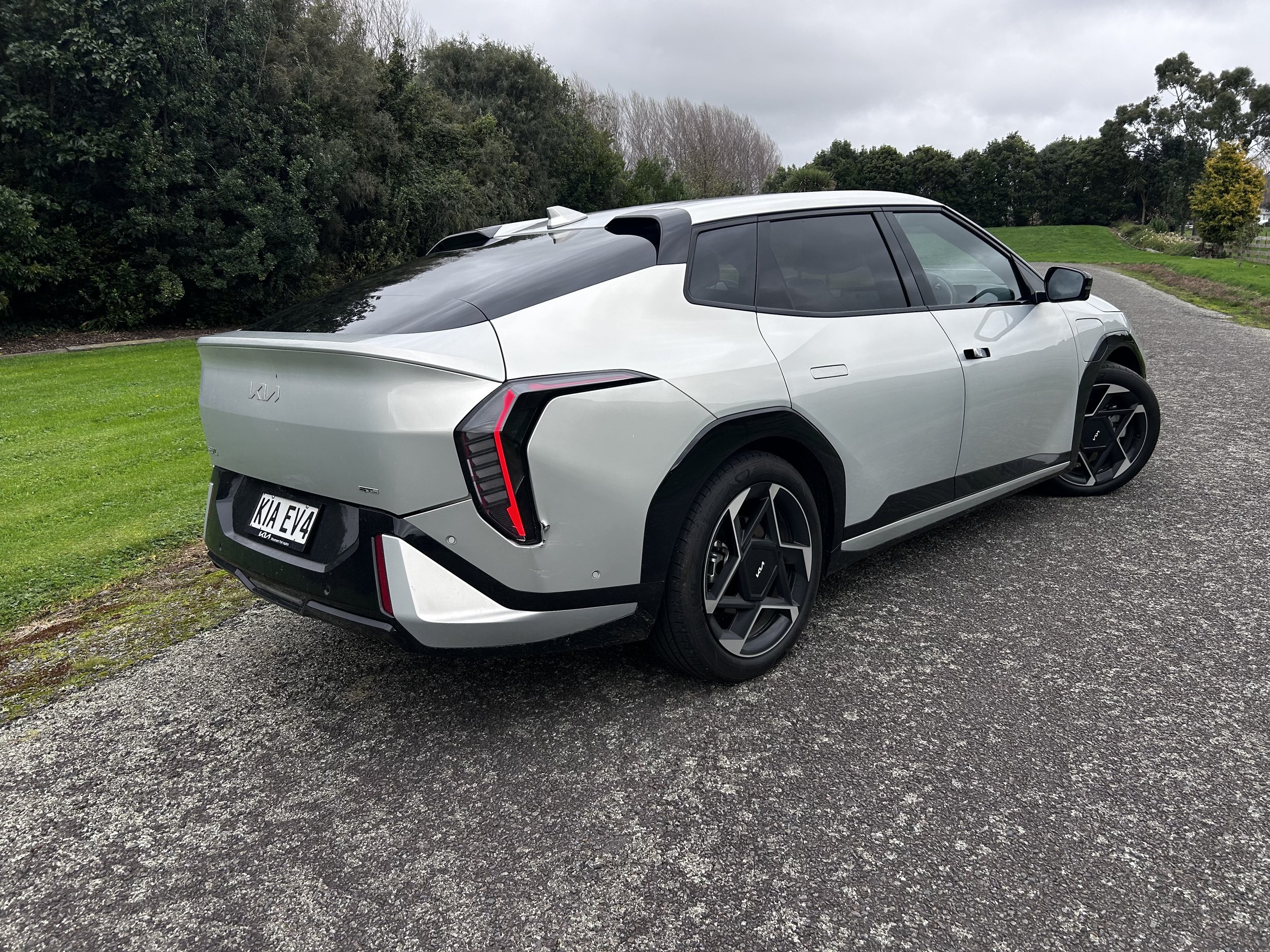
The EV6 appears to have a sleek, coupelike roofline with an integrated rear spoiler at the top of the raked hatch, and a slight ducktail as well. The front end is low with a seemingly short overhang, and the slim headlights have a segmented LED pattern. There's no bit grille, but a thin black panel above which sites the new Kia logo. There’s speculation the car will have some large air intakes in the lower bumper.

One of the images suggests the taillights extend all the way to the rear wheel arch with a light bar running across the hatch. 

The base EV6 will likely have a single motor and rear-wheel drive, while a dual-motor, all-wheel-drive setup will come to the higher-end variants, as per the Ioniq.

Outputs? There’s speculation Kia might be ultimately allowed to release EV6 in a performance tune, with around 447kW, top speed of 260kmh and a 0-100kmh time as low as 3.5 seconds.

It seems just as possible, surely, that it will also nonetheless initially provision as Ioniq does, with either one or two electric motors, for two- or four-wheel drive.

03_KiaEV6_Teaser_Rear.jpg

In Hyundai form, the single motor version uses a 126kW rear-mounted motor. The all-paw’s combined power output is 227kW and 605Nm of torque. In latter form, the Ioniq 5 will accelerate from 0-100kmh in just 5.5 seconds.

Range depends on the battery. With the parent brand, there’s a choice of two - a 58kWh unit or a 72.6kWh unit. Hyundai hasn't indicated the range for the smaller, but the bigger one, with a single electric motor, lends 480km on the WLTP test.

It seems likely EV6 will also mirror the parent’s car with 800-volt charging capability. The Ioniq 5 can gain 100km range in just five minutes of charging and go from 10 percent to 80 percent charge in 18 minutes with 350-kW DC fast-charging. 

BTW, Kia says all its future electric vehicles will get the “EV” prefix, to streamline naming conventions and distinguish zero-emissions models. EV6 leaves lots of room for a lineup of models at both ends, with the number corresponding to the model's position in the lineup.

04_KiaEV6_Teaser_Rearlampdetail.jpg


Landmark ladies of motoring

These women helped shape automotive history.

Beatrice Shilling’s story is one of two wheels and wings.

Beatrice Shilling’s story is one of two wheels and wings.

MOTORING has felt like a man’s world for as long as many of us can remember, with men dominating roles across the industry.

By latest estimate, just 0.04 percent of mechanics in the were females, just six women have got behind the wheel for a Formula One Grand Prix weekend, and a mere two of taxi drivers are women.

To acknowledge March 8 being World Women’s Day, today’s story highlights the achievements of pioneering female figures in motoring. (This material was provided by insurers Hegarty’s and USwitch).

Beatrice Shilling

An engineering genius, motorbike racer and World War II hero … Shilling’s story is one of two wheels and wings.

In 1932, when she graduated from the University of Manchester with an honours degree in engineering, she was listed as ‘Mr’ on her student record card, female titles were not yet a recognised option.

In 1934, she became the second woman to be awarded a Brooklands Gold Star when she recorded two laps at over 101mph, and later became the circuit’s fastest female racer ever with a lap speed of 106mph.

When World War II broke, Shilling was working for the Royal Aircraft Establishment.

Her invention of a restrictor valve that prevented RAF Spitfires and Hurricanes from stalling and falling from the sky during steep dives, saved the lives of many pilots, and arguably helped win the Battle of Britain.

Odette Siko established Le Mans records that remain unbeaten.

Odette Siko established Le Mans records that remain unbeaten.

Odette Siko
This Frenchwoman made motorsport history as the first woman to race the Le Mans 24 Hours on the 21st June 1930.

Competing alongside Marguerite Mareuse in a Bugatti T40, they made it home in seventh position – a result that’s yet to be beaten by an all-female team.

In 1932 Siko claimed fourth spot overall and class win aboard an Alfa Romeo 6C 1750 with Louis Charaval – another record finish for a woman that still stands today.

Minnie Palmer

In 1897, Minnie Palmer became her own chauffeur.

Distinguishing herself as the first woman in England to drive and own her own car, the American-born actress took delivery of a French-made Rougemont automobile.

It was 31 years before women achieved the same voting rights as men, but Palmer’s move proved that the sexes could be equals behind the wheel – a significant milestone on the road to the social and political emancipation of women.

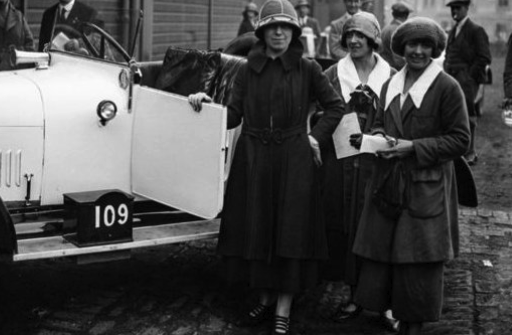
Dorothee Pullinger, at far left, with the Galloway, a car designed for women.

Dorothee Pullinger, at far left, with the Galloway, a car designed for women.

Dorothée Pullinger

An  engineer and entrepreneur, who designed a car for women, built by women.

She’d been refused entry to the Institution of Automobile Engineers on the grounds that “the word person means a man and not a woman” – a decision that was later reversed.

By the early 1920s Pullinger was manager of Galloway Motors, a car factory run by a female workforce that adopted the colours of the suffragettes. An on-site engineering college offered women apprenticeships that lasted three years, rather than the usual five for men, because it was believed women were faster learners. Pullinger designed and developed the Galloway – the world’s first car specifically for women.

Gear levers were placed inside rather than outside the car so that they were easier to reach, the seat was raised, storage space was added, the dashboard was lowered, and the steering wheel was smaller. It was also one of the first automobiles to introduce a rear-view mirror as standard.

Dorothy Elizabeth Levitt

The first British female racing driver who set records and taught royals how to drive, Londoner Levitt was described as “the fastest girl on earth” when she set a new world speed record for women of 91mph.

She did it in a six-cylinder Napier during a speed trial at Blackpool in 1906. Three years earlier she had been garlanded with the title of Britain’s first female motor racing driver, and also set the world’s first water speed record when she achieved 19.3mph in a 40-foot steel-hulled, Napier-engine speedboat.

In 1905, she set another record, for the “longest drive achieved by a lady driver” for a return journey to Liverpool from Britain’s capital.

Her accomplishments made her a media sensation. In her 1909 book, The Woman and the Car: a Chatty Little Handbook for All Women who Motor or Want to Motor she advised women to carry gloves, chocolate, and a revolver in the drawer under the driver’s seat.

Margaret Wilcox
For early adopters of the motorcar, driving was open-air enjoyment in its purest, and for some months of the year, frostiest, form.

On November 28, 1893, Wilcox patented a solution: the world’s first in-car heating system.  

It took decades for car makers to warm to her idea, which was considered a luxurious optional extra even when fully enclosed bodywork and glass windows became more widespread, but finally, in 1929, the Ford Model A became the first vehicle to offer in-car heating at the point of manufacture.

For Wilcox, the design also represented a turning point in her career as an inventor; it was the first to be patented in her own name rather than her husband’s, a practice which had been law in the United States until 1809.

Mary Anderson never profited from her invention … the windscreen wiper.

Mary Anderson never profited from her invention … the windscreen wiper.

Mary Anderson
You can see clearly now because inventor Mary Anderson spotted a problem that needed solving, to clear ice from the windscreen a driver had to open the window, chilling the cabin in the process.

Anderson’s solution was a spring-loaded arm with a rubber blade that would move back and forth across the glass to wipe it away. The design patented in 1903 but her invention wasn’t an instant hit with car companies, who believed it would distract drivers. She never profited from her invention.

Bertha Benz, the original road tripper.

Bertha Benz, the original road tripper.

 Bertha Benz

Early one August morning in 1888 Bertha Benz set off in her husband’s car, without permission, spare fuel, or a map, to make the 106km journey from Mannheim to Pforzheim in Germany.

Her husband was Karl Benz, and the car was the world’s first. Karl was convinced his invention wasn't ready for the open road, but Bertha believed it was ready for the world, and that the world was ready to see a woman setting its new course.

 When she ran out of fuel, she purchased ligroin (a petroleum-based solvent) from a pharmacy in Wiesloch – now considered the first petrol station in history.

When the engine overheated, she used water from ditches and streams to cool it. When a fuel line became blocked, she cleaned it with her hat pin. She even used her garter as insulation material and paid a cobbler to cover the brake shoes in leather and in doing so invented the world’s first brake lining.  

Pat Moss, left, had the utmost respect of her brother, Sir Stirling Moss.

Pat Moss, left, had the utmost respect of her brother, Sir Stirling Moss.

Pat Moss
"What she managed to do was amazing, actually," said Sir Stirling Moss, when asked about his younger sister.

High praise from a man who was not noted for his championing of women in motorsport.

Moss built her formidable reputation on outright wins and podium finishes at international rallies throughout the 1950s and ‘60s.  

Her maiden event took place in 1953, when she competed in her Morris Minor convertible at the age of 18.

She went on to be crowned five-times European Ladies Rally Championship winner and the Coupe des Dames on the Monte Carlo Rally eight times, she also won the gruelling 1960 Liege-Rome-Liege Rally in a fearsome Austin Healey 100/6 and went on to finish second at the Coupe des Alpes.

Her biggest achievement was winning the Tulip Rally in 1962 in the newly introduced Mini Cooper.

 Vera Hedges Butler
In 1900 Vera Hedges Butler was the first British woman to pass a driver’s test, but she had to go to Paris to do it. Assessed on her ability to pull away, steer and stop, she also had to demonstrate her knowledge of what to do in the event of a breakdown.

In Britain, compulsory testing wasn’t brought in until June 1, 1935.

Alice Ramsey

An expert driver with an unrivalled passion, she founded, and became the President, of the First Women’s Motoring Club in the United States.

Building her profile, her enthusiasm resulted in an offer from motoring company, Maxwell to drive from New York to San Francisco.

Always one to say yes to a challenge, Ramsey accepted and became the first woman to navigate the country at a time when roads weren't developed properly. Throughout her drive she had to maintain the car, so managed to fix broken brake pedals and clean spark plugs, amongst other things. 

Florence Lawrence

The ‘first movie star’, Lawrence not only had a love for acting, but also a fondness for motoring.

Growing increasingly frustrated with the number of accidents that were caused by not knowing if the car in front was just slowing down, or turning left or right, she created two iconic elements; auto-signalling arms which were essentially flags which were operated from inside the vehicle, and a stop sign that flipped up at the back of the car when the brake pedal was depressed.

Both creations led to the development of electric indicators and brake lights that are a legal requirement nowadays. 

WILMA Russey, New York’s first taxi driver, knew how to attraction attention.

WILMA Russey, New York’s first taxi driver, knew how to attraction attention.

Wilma K Russey

The first woman to be licensed as a New York taxi driver, Russey became quite the local celebrity when she took on the position. Never one to disappoint or shy away from the limelight, she is said to have received a tip from her first customer due to her leopard skin hat.

Charlotte Bridgewater

Charlotte Bridgewater built on Mary Anderson’s invention and created the electronic wiper. Although they didn’t work well at the time, they are obviously now common on vehicles.

Hedy Lamarr … Hollywood actress, also a founder of GPS.

Hedy Lamarr … Hollywood actress, also a founder of GPS.

Hedy Lamarr

An actress first, Lamarr worked alongside George Antheil during the Second World War to develop a non-jamable radio guidance system that allowed ships to guide their torpedoes effectively.

Despite not being widely recognised at the time, this technology is the founding of Wi-Fi, GPS and Bluetooth.

Dr Gladys West

This mathematician came to prominence after she was part of an award-winning study that proved the regularity of Pluto's motion relative to Neptune. But it was what she did next that landed her in the automotive history books. 

Dr West began working with satellites and programmed an IBM computer to deliver precise calculations to model the shape of the Earth. Using complex algorithms which accounted for variations in gravitational, tidal, and other forces that distort Earth's shape, her data became the basis for the GPS we still use today.

Michelle Christensen

It wasn’t until 2005 that the industry hired a female exterior designer.

Hired by Honda nearly 20 years ago, she was surrounded by cars from a young age and developed an interest, which resulted in her designing a number of prominent cars, including the second-generation Honda NSX.

Danica Patrick is the most successful woman in US motorsport.

Danica Patrick is the most successful woman in US motorsport.

Danica Sue Patrick

One of the few high-profile female racing drivers, Danica is the most successful woman in the history of American open-wheel racing to date.

She began driving professionally in the late 1990s and has taken part in hundreds of races in the NASCAR and IndyCar series.

Mary Barra runs General Motors.

Mary Barra runs General Motors.

Mary T Barra

The first female Chief Executive Officer of a major automotive company, Barra has been at the helm of General Motors for more than seven years and became the chairman of the board of directors in 2016.

Her appointment as the CEO brought her to the forefront of the industry and as such, she’s now one of the most recognisable names – not only in motoring, but in business, with Forbes and Fortune Magazine including her on their lists of powerful women.

Alexandra Hirschi

Also known as Supercar Blondie, Hirschi is an award-winning Australian presenter and social media personality. Best known for her automobile videos, she has over 45 million followers worldwide, and regularly works with luxury brands to promote their new releases.

 # More information: https://www.uswitch.com/car-insurance/guides/female-driving-confidence-iconic-women-in-motoring/

GM’s gender equality push


‘Greater inclusiveness can only lead to better outcomes’

Jodie Lennon and Joanne Stogiannis.

Jodie Lennon and Joanne Stogiannis.

IN recognition of today being International Women’s Day, General Motors Special Vehicles’ has highlighted that three women are front and centre in their organisation.

“It is common knowledge that the auto industry is skewed heavily towards male representation, so it’s incredibly heartening we’re making gains in changing this balance, albeit as part of a relatively small team,” says Joanne Stogiannis, the director of GMSV, which represents in New Zealand with the Chevrolet Silverado and will also likely have the Corvette here before year’s end.

“This is demonstrated as part of the leadership team, where myself as head of GMSV and my colleagues Jodie Lennon and Dahlia Shnider work hand in hand on this new and exciting business,” she comments in a media release from GMSV, continued verbatim from this point.

“At GMSV, females account for 45 percent of all personnel in the team.  This diversity is incredibly important as studies have shown that company performance can be enhanced through greater gender balance.  Greater inclusiveness can only lead to better outcomes.”  

Stogiannis has been part of General Motors for almost 25-years, working through a variety of ever-increasingly senior roles including her present position of director of the recently established GMSV business.

“Since starting in the automotive industry, I’ve seen a shift from being one of the only women in the room to a place where we have greater diversity and balance," she says.

“Pleasingly, GM encourages and supports women on our journey through the business and affords the same opportunities to everyone as part of the corporation’s aspiration to be the most inclusive company in the world.”

GM is led by Mary Barra, the first female chief executive of a major automotive company, who has held the position since 2014.  

“Mary Barra is an inspiration to women all around the world, not just for those of us employed at GM,” said Stogiannis.

“She is an example of what can be achieved and is evidence that, when it comes to getting a job done, gender is no barrier to success.”

For 2021, the theme of the International Women’s Day is ‘Choose to Challenge.’

“While female representation in automotive is improving, there is still plenty of scope to challenge the status quo,” said Stogiannis.

“To use an auto analogy and something close to our Corvette hearts - as females in the auto-industry, we’re only just now moving through first and second gear and are yet to hit top speed.  

“There’s plenty more left in the tank when it comes to gender equality, we’re not stopping yet.”


Kia prices hybrid models, what’s Hyundai’s move?

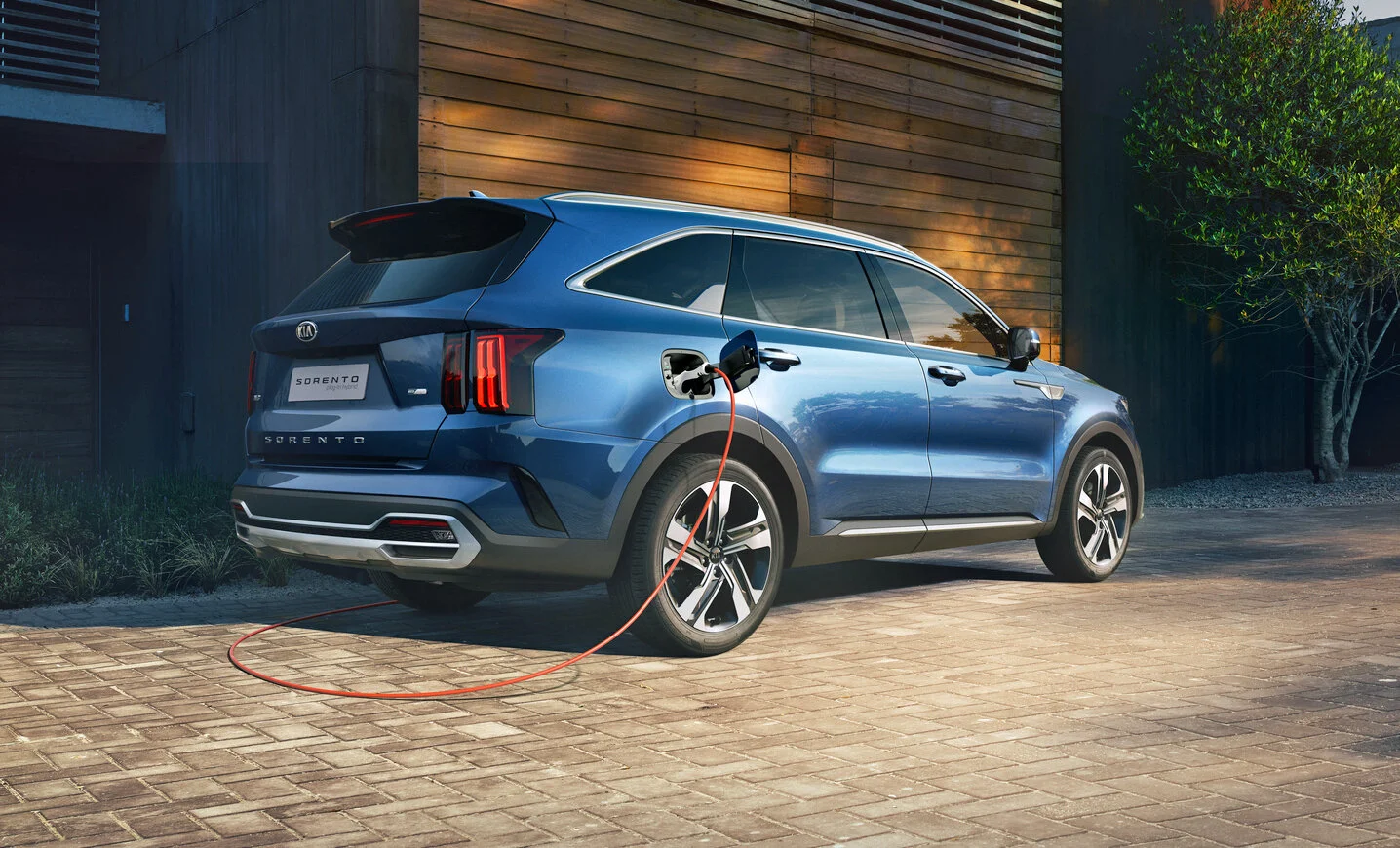
The Sorento has beaten its sister ship, the Santa Fe, in arriving with petrol-electric powertrains.

The all-new Kia Sorento Plug-in Hybrid.jpg

 HOW long before Hyundai here catches up with its subordinate in offering a seven-seater sports utility with electric assistance has yet to be answered – whether the parent’s ultimate equivalent will also slip under the $100,000 mark is also not yet known.

The New Zealand distributor for Kia has stolen a march on Hyundai New Zealand in releasing the Sorento in two petrol hybrid versions, one with plug-in recharging and the other mild.

The New Zealand agent for Hyundai did not respond to questions today about when its Santa Fe, the Kia’s sister ship, will arrive with the same technology, which was developed by Hyundai then shared with the sibling brand.

However, Hyundai NZ has always indicated it will also provision the Santa Fe with the very same hybrid drivetrains.

As expected, the battery-assisted editions are more expensive than the other Sorento variants Kia has here.

At $89,990, the PHEV is the most expensive Sorento ever sold here, while the hybrid also raises the stakes in its $80,990 front-drive and $82,990 all-wheel-drive formats. 

All three are in the highest-level trim Kia offers with the model, according to a brand announcement shared by media today. 

To date, the most expensive Sorento here has been a turbodiesel, also in the Premium trim, that costs $76,990. 

KIASorentoPHEV_021.jpg

Kia’s pricing strategy appears to reflect that there is an unavoidable costing factor with the hybrid tech, which allies to a four-cylinder petrol engine in either of its formats.

It also raises another question: How much more the Hyundai models might cost? 

There is already pricing inequality between the diesel sister ships, most obviously when the best-kitted versions are compared.

Though the specifications are identical, and they have the same powertrains,  the Sorento Premium costs a whopping $13,000 less than the Santa Fe Limited – whose RRP is lineball with the Sorento Premium PHEV’s sticker. 

Both hybrids run a turbocharged 1.6-litre four producing 132kW/265Nm, but the electric motors and their feeder batteries are different.

As previously reported, the Sorento (and Santa Fe) PHEV runs a 13.8kWh lithium-ion battery that delivers an optimal electric-only range of 57km per charge. The PHEV’s electric motor creates 67kW and 304Nm,

The hybrid (again, in both models) has a 44kW electric motor. It also has a smaller battery, rated at 1.5kWh.

Overall claimed outputs are 195kW/350Nm for the PHEV and 169kW/350Nm for the hybrid. The diesel creates 148kW and 440Nm.

KIASorentoPHEV_044.jpg

Kia claims a combined fuel economy of 1.6L/100km and cites a CO2 count of 36 grams per kilometre from the PHEV. The figures for the mild hybrid have yet to be shared, but economy could well likely be closer to the diesel’s 6.1L/100km, if not the oiler’s 159g/km optimal.

Kia’s Premium grade ticks off leather upholstery, a heads-up display, wireless phone charging, Bose audio and a comprehensive passive and active safety suite.

KIASorentoprintUK_006.jpg


VW’s EV push gets another zap

Volkswagen is ramping up its electrification plans, with boss Ralf Brandstatter pledging that more than 70 percent of its cars sold in Europe in 2030 will be fully electric. But what’s the likelihood of NZ reaping this reward?

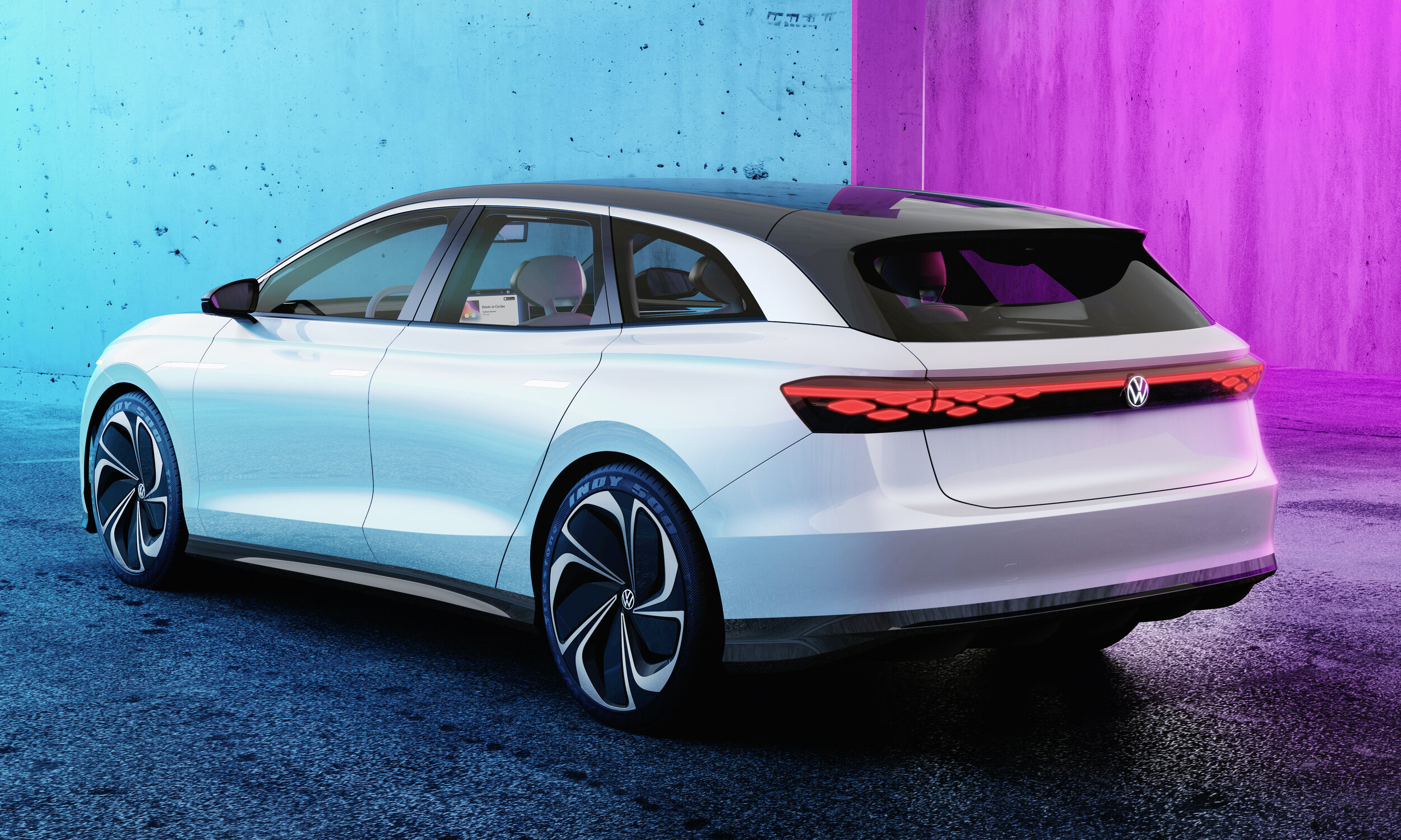
This is the only image VW has shared of Trinity, the advanced electric sedan arriving in 2026.

This is the only image VW has shared of Trinity, the advanced electric sedan arriving in 2026.

THEY’RE calling it ‘Accelerate’ – but perhaps Volkswagen Group’s latest business strategy raises potential for New Zealand to be left even further behind as a benefactor of this giant maker’s electric vehicle provision to the mass market.

Views expressed by the Europe market giant at a weekend seminar at which new products – including a high-tech sedan, known as Trinity – were also announced are globally exciting.

Emboldened by the reception for its first bespoke electric, the ID.3, Europe’s largest car making cabal has decided to reach further, with a flagship battery-dedicated sedan arriving in 2026 that will “set new standards” for charging times, battery range and other technology.  

VW released a sketch of the Trinity, showing a sweeping roofline that resembles that of the Audi A7. It says the car will deliver a “Level 2 plus” autonomous system and “be technically ready for Level 4.”

There is no formal definition of Level 2 plus, but if the sedan is equipped with the right hardware, upgrading it to a Level 4 system could be done with over-the-air updates.  

Level 4 is just one step below optimal autonomy and defined ability to operate without human input or oversight but only under select conditions defined by factors such as road type or geographic area.

In additional news, VW says it will shelve plans to a small city-based EV, the so-called ID.1, until probably 2025 but will put its ID.Buzz minivan, which draws styling inspiration from the original VW Kombi van, into  production in 2022. 

It has also unrolled plans to develop a “neural network” of its vehicles, pooling their data to assist with future autonomous driving features.

The ID.4 that is still at least a year away from NZ introduction is set to play a big role in VW’s ‘neural network’ programme.

The ID.4 that is still at least a year away from NZ introduction is set to play a big role in VW’s ‘neural network’ programme.

The ID.3 hatchback and ID.4 five door crossover be the first cars to contribute to this, with around half a million examples expected to be on the road within the next two years. But the process will really kick in from 2026, as VW introduces new versions of key conventionally powered vehicles that can also supply data to its cloud system.

“They will communicate and exchange data, on traffic and obstacles,” says VW boss Ralf Brandstatter. “It will be a self-learning system of millions of cars.”

Great news if you’re in a market that VW believes is worthy of achieving priority for these implementations.

Unfortunately, that’s not likely to be New Zealand; we’re well down a list that is topped by Europe, the United States and China.

With exception of product behind the premium Audi and Porsche badges that has been relatively easy to secure, the Group’s electric car availability to our market is already slower than what has been forecast, over recent years, by various CEOs for all the relevant brands that are held by a common distribution rights’ holder, the Giltrap Group’s European Motor Distributors’ operation.

While it’s been great to see the Porsche Taycan and Audi’s e-Tron models, the cars that are really crucial to lifting VW Group’s presence in the EV-sphere are the growing count of relatively affordable models based on the Group’s MEB platform.

It’s these models that are proving much harder to achieve.

Having now lost the electric Golf that gave it credibility with battery car fans, VW NZ is already facing up to not seeing its next EV, the ID.4, until the end of 2022. That’s more than a year later than it originally hoped.

A sister car in the same crossover format from Skoda, the Enyaq, has also been delayed – apparently to a similar timeframe. Timelines for the SEAT E-Born and Q4 e-tron, which are also MEB models, also seem to have become more fluid.

VW boss Ralf Brandstatter speaking at the weekend’s conference.

VW boss Ralf Brandstatter speaking at the weekend’s conference.

The only MEB car is the ID.3 that the NZ distributor does not want, arriving through a channel it does not support – and perhaps wishes did not exist.

However, grey importers who buy stock from other right-hand-drive markets for resale here are finding the ID.3 to be a drawcard. The lack of factory support doesn’t seem to be inhibiting consumer interest.

So why the hold-up for official, brand-backed sale? It’s not for lack of desire. But unavoidable realities do temper the situation.

We’ve outlined previously how Covid-19 has disrupted car making and that VW Group has had to prioritise selling electrics in the European Union, to avoid being penalised for failing to reach mandated CO2 targets.

Yet it’s also worth pointing out that potentially local and regional politics and policies aren’t helpful, either.

VW Group is among makers who have decided their electric models deserve to go, foremost, to markets with supportive policy signals for the sale of low or zero-emission vehicles.

Is that New Zealand? Sort of.

 It’s obvious the Government is getting serious about tackling climate change is a positive. Last year, we saw the declaration of a climate change emergency, including a commitment for a carbon-neutral public service, including transitioning the fleet to EVs. In January, Government unrolled the Clean Car Import Standard and signalled an incentive for electric vehicles is coming soon.

The latter is the most crucial element to gaining access to VW’s products. The parent brand is among car makers that believes that initiatives to help make next-gen vehicles more accessible to buyers - notably any measures that lower the relatively high initial cost of an electric vehicle – are vital. 

That view seems to have pushed the local distributor into sounding out similar thought. Last month EMD made a collective statement on behalf of its VW, SEAT, Skoda, Porsche and Audi networks saluting the Government’s plans to lower emissions by switching up local vehicle regulations but also suggesting that the timeline was ‘steep’ and that more incentives were needed to make it work.

Also included in the statement, according to the outlet that received and reported on it: “From an importer standpoint, we need to see strong incentives in the form of a feebate to help create demand for these vehicles.”

The ID.6 is designed to lead VW’s ambition in China.

The ID.6 is designed to lead VW’s ambition in China.

One other dark cloud hangs over all brands hoping to sell NZ-new EVs here. It’s in the shape of Australia.

Production planning for all new passenger vehicles coming here often includes the co-operation of our neighbour. NZ is a tiny new car market – we take just 0.02 percent of the world’s annual car production. Australia is a much bigger player. If we accept the same cars they do, as a combined order, then the factory is far more likely to oblige.

But there’s a catch: Australia itself. It lags embarrassingly far behind the rest of the world on the inevitable shift to zero-emissions transport, mainly because of the intransigence of the federal government. Scott Morrison’s administration has not only shown disinterest – some say it is actively discouraging their update. It  has been given an F for “fail” for its policy efforts to support the uptake, even as data shows that more than half of our neighbour’s driving population is actively considering an EV for their next car.

Meantime, VW Group is raising the pace of change toward an electric future.

At the weekend it said it now expects that 70 percent of its sales in Europe will be pure electric vehicles by 2030. That means it will have to deliver more than one million EVs a year in Europe alone by then to reach that goal. VW also sees EV sales surging to more than 50 percent of sales in China and the US in the same time frame.

 This does not mean it will divest fossil fuelled product by then. However, Brandstatter has revealed that several “core” models – the Golf hatchback, Passat sedan and wagon and Tiguan and T-Roc sports utilities - will all get successors to their current generations, each featuring at least mild-hybrid powertrains and some offering plug-in hybrids with up to 100kk of pure-electric range.

The only electric that is creating vexation is ID.1, based on an adapted platform called MEB Entry. In a statement, VW said, “Plans for an electric car under the ID.3 - with an entry-level price starting at 20,000 Euros - are pushed up by two years to 2025.”

No reason for the delay was given, but VW is said to have been struggling with battery chemistry and achieving a sensible profit margin on the vehicle.

In respect to that, several publications have reported that VW plans to post an operating profit margin of at least six percent as of 2023, despite the higher costs of making battery-powered cars. VW has also said it plans to invest about 16 billion euros in electrification and digital services up to 2025, further cutting into margins.

Market reception to ID product is good. UBS analyst Patrick Hummel recently described the ID.3 as “the most credible EV effort by any legacy auto company so far.” UBS also believes VW's EVs are competitive with Tesla models on key metrics including cost, energy density and efficiency.

The ID.4 is already on sale in Europe, with China and US deliveries beginning later this month. The sleeker ID.5 crossover will follow in the second half of the year. And a seven-seat ID.6 X will go on sale in China soon as well.

It's possible that EV sales for VW Group could top Tesla sales in 2021.


Science favours Ferrari, study says

Analysis using an ancient formula is used to determine the most beautiful car in the world.

This is the most beautiful car in the world. Apparently.

This is the most beautiful car in the world. Apparently.

THAT old saying about beauty being in the eye of the beholder?

 A load of tosh, apparently. In reality, beauty is defined by scientific analysis, using an ancient mathematical calculation.

At least, that’s the argument proposed by a British car buying website, Carwow, when nailing down the most beautiful performance car of the past 70 years. 

The winner? According to science, it’s potentially not the most obvious choice. But, for the record, the 2019 Ferrari Monza SP1 takes this one.

Really? Well, the site says it analysed 197 of the world's most popular performance cars over the last 70 years to discover how close they were to the ‘golden ratio’.

Don’t know it? That’s an ancient (like, dating back 2500 years) algebraic equation that has been observed in nature, and copied in art and design, that is thought to help contribute to the most visually attractive shapes.

Michelangelo was a big fan; he used the ratio when painting The Creation of Adam on the ceiling of the Sistine Chapel.  Anyway, it uses a literal ratio of 1:1.618 (or Phi). In short this implies that the most pleasing form to the human eye is that of a rectangle. But anyway. 

The research was done by measuring and comparing the distance between different set points on the cars.  

In number two … the 1964 Ford GT40.

In number two … the 1964 Ford GT40.

“In total, we plotted 14 different points on each front-on view of the cars, for example, the headlights, the wing mirrors and the corners of the windscreen,” says Carwow.  

“Using that data, we then computed and compared the distance ratios between these points, to reveal how closely their design followed the proportions of the golden ratio.”

So, anyway, after the Monza SP1, which achieved a 61.75 percent alignment to the golden ratio, the ratings put the 1964 Ford GT40 in second, (61.64 percent) the 1967 Ferrari 330 GTC Speciale  (61.15 percent) as the bronze winner and the 1974 Lotus Elite as the best of the rest outside the medals table, with a 60.07 percent alignment.

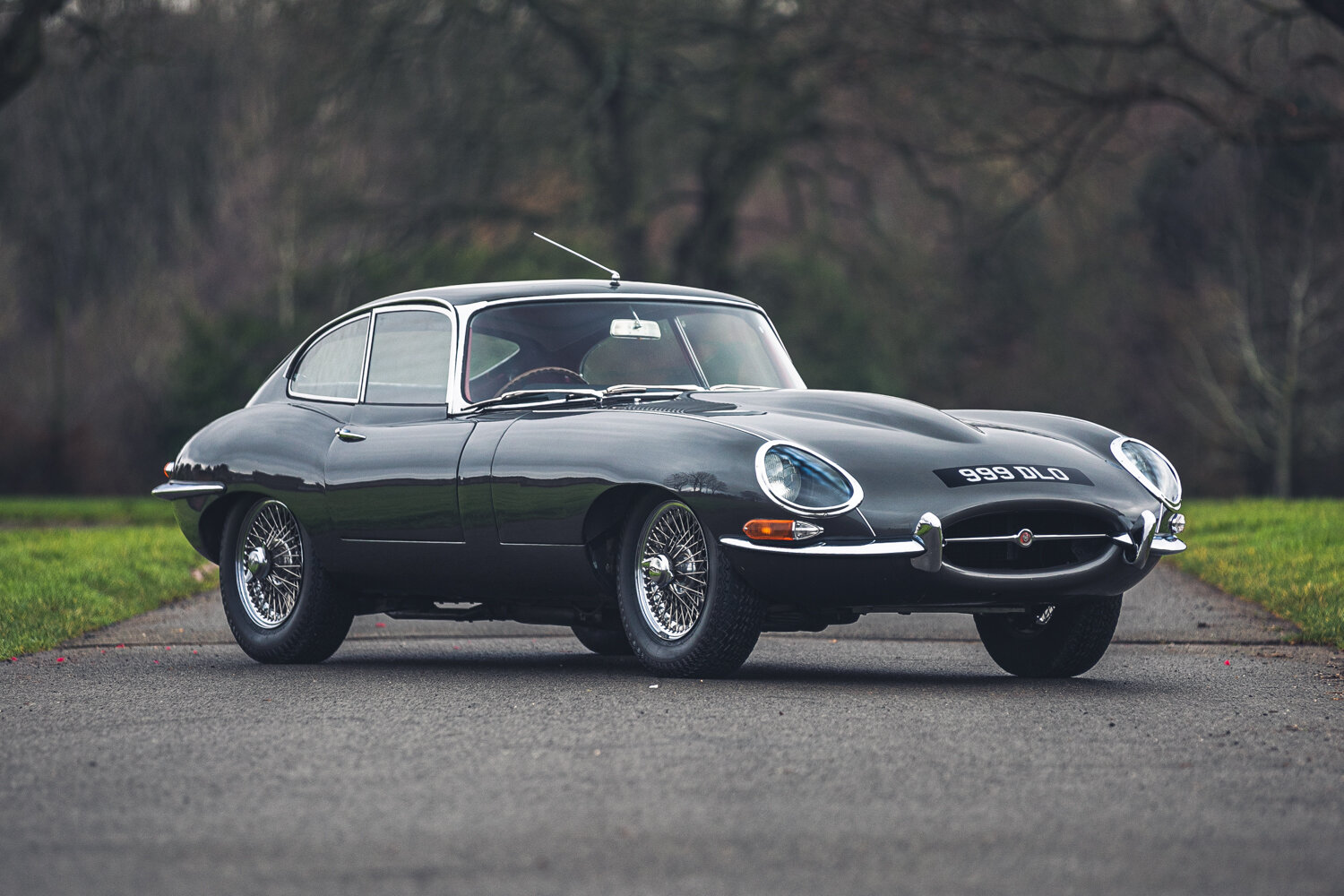
As for the Jaguar E-type, famously called immediately after its launch the most beautiful car in the world by Enzo Ferrari? The man clearly didn’t know a thing. Fifteenth here.

Also lucking out of top trumps status was Aston Martin, which claims all of its cars are “designed to reflect the golden ratio”. The 1962 Ferrari 250 GTO, the 1963 Chevrolet Corvette C2 (Stingray), the 1967 Ferrari 330 P4, the 1974 Alfa Romeo Alfetta, the 1966 Lamborghini Miura and the 1969 Maserati Indy filled out the top 10. The highest-ranked Aston was the 1963 DB5, in 25th.

The top 100 was dominated by Ferrari, with 16 cars. Lamborghini had 10 and Porsche seven for second and third respectively, and the remaining positions were taken by Aston Martin, McLaren, Maserati, Lotus, Alfa Romeo, Jaguar and Ford.

The E-Type? Enzo Ferrari liked this classic Jaguar … the study? Not so much.

The E-Type? Enzo Ferrari liked this classic Jaguar … the study? Not so much.


Ioniq 5 taking off – other EVs recall status pending

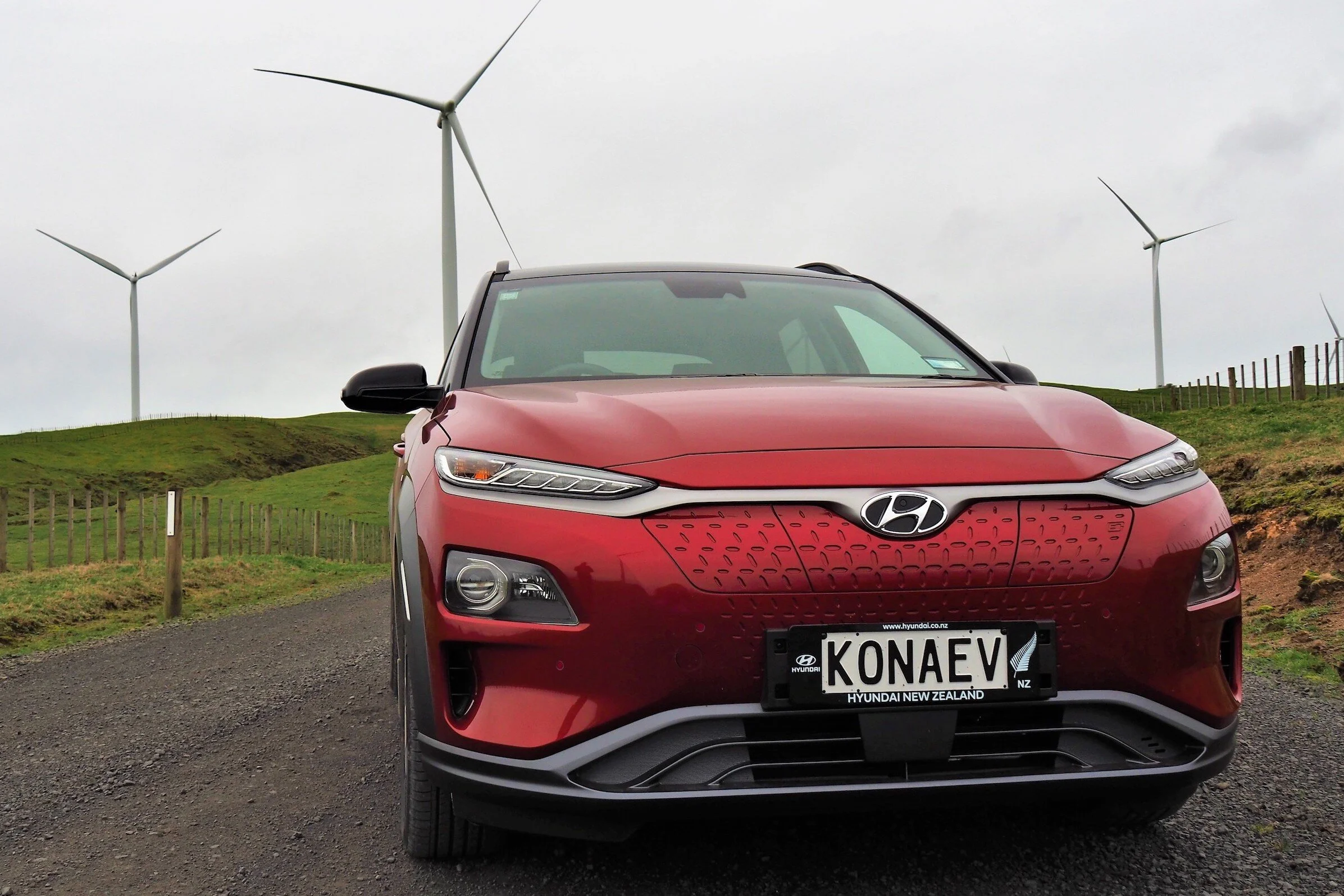
Hyundai New Zealand is focusing on the positives of its battery charge; but where does that leave Kona and Ioniq EV owners?

NZ interest in the Ioniq 5 coming in the second part of 2021 has been immediate.

NZ interest in the Ioniq 5 coming in the second part of 2021 has been immediate.

 KIWI interest in the latest Hyundai electric car since its reveal a week ago is being celebrated by the brand’s distributor – however, it has still to reconcile an issue tied to two battery-dedicated models already here.

In respect to the Ioniq Five, which made its global reveal on February 23 the first product from the Korean giant’s new electric sub-brand, Hyundai New Zealand says pre-orders have opened for a futuristic model set to land in the second part of the year and that the count has reached double figures.

Spokesman woman Kimberley Waters later clarified this to “20 pre-orders” since a specific webpage went live two days ago. Many more EV enthusiasts have sought information.

HNZ asks for a $500 deposit with each pre-order, but says that will be fully refundable if the intending buyer has a change of mind.

No price has been established for the five-seater medium crossover, the first model built on Hyundai Motor Group’s new dedicated architecture for battery electric vehicles, called Electric Global Modular Platform (E-GMP), and the New Zealand market specification is not yet clear. The car’s drawcard elements include eco-friendly materials of its interior design, to ultra-fast charging and vehicle-to-load function.

“We are really pleased by the initial interest in the IONIQ 5. Our team and dealer network are really excited about bringing this EV into New Zealand, and it seems many other EV enthusiasts are too,” says Andy Sinclair, Hyundai NZ’s general manager.

“In a matter (of) days we’ve had a large volume of people register their interest to hear more about this vehicle, as well as pre-orders.”

Ioniq Five’s roll out has timed with a big challenge for Hyundai and its sales agencies – the need to recall electric Kona SUV and Ioniq hatchback cars built since 2018 to replace their battery packs and battery management systems.

This requirement is triggered by fears of a potential fire risk.

 Many countries have already initiated a recall. Waters says HNZ has yet to receive an official notification from Seoul.

“We have still not received official notification from Hyundai Motor Company, so until we have full details regarding the recall campaign we are unable to fully initiate our recall process here in New Zealand.

“One of the first steps in the recall process is to notify/inform Waka Kotahi NZ Transport Agency and the CEO of the Motor Industry Association, and then begin communicating with customers with affected vehicles.

“When that happens, the recall will appear on the Waka Kotahi New Zealand Transport Agency recall website.“

Hyundai NZ says it is still awaiting official notification of need to recall the Kona EV and Ioniq EV hatch.

Hyundai NZ says it is still awaiting official notification of need to recall the Kona EV and Ioniq EV hatch.

Remedial action that Hyundai Motors has said is required is a massive and expensive job; 82,000 electric vehicles are drawen in – the majority being Kona EVs, but the fully-electric version of the Ioniq hatch (sold here) is also involved, as are some buses (not sold here). 

The remedy is a complete replacement of the lithium-ion battery that feeds the cars’ electric propulsion. The total to Hyundai Motor is estimated to be at least $NZ1.2 billion, making it the most expensive EV recall ever.  

According to the Korea Herald newspaper, Hyundai will begin the replacement process at the end of this month March in the domestic market and from April in overseas markets.

It proposes a major logistical issue for the brand’s  overseas’ agencies as the batteries will have to be shipped by sea and then fitted locally, once the subject cars have been divested of the original items, which will also require safe disposal. New Zealand does not have facility for disassembly of such batteries.

It said the battery system subject to the replacement was manufactured by South Korea’s No.1 battery maker LG Energy Solutions, between November 2017 and March 2020. LG Energy is a key affiliate of the country’s leading chemical firm LG Chem Ltd, it said.

Another Korean news outlet, Business Korea, reported recently that since its launch in 2018, the Kona EV has suffered a total of 15 fires — 11 in South Korea and four overseas. Fires have also been reported in Ioniqs, and on February 15, in a Hyundai electric bus. No fires have been reported in New Zealand.

Three previous recall for the Kona are listed on the NZTA website, one specific to the EV, issued in October. This was an issue with the battery system that might also lead to a fire. The recall proposed a software update as a primary measure to address the issue. In at least one case, a NZ-new car required a complete battery change.

The owner of that car, which returned to the road last month after 68 days in an accredited workshop, has spoken with MotoringNZ. He is unsure if the replacement is of the same kind that requires replacement or if it has an improved battery.

 Hyundai gives its full EVs an eight warranty on the battery; conceivably that would refresh with a replacement.


Pooch-preferred Porsche revealed

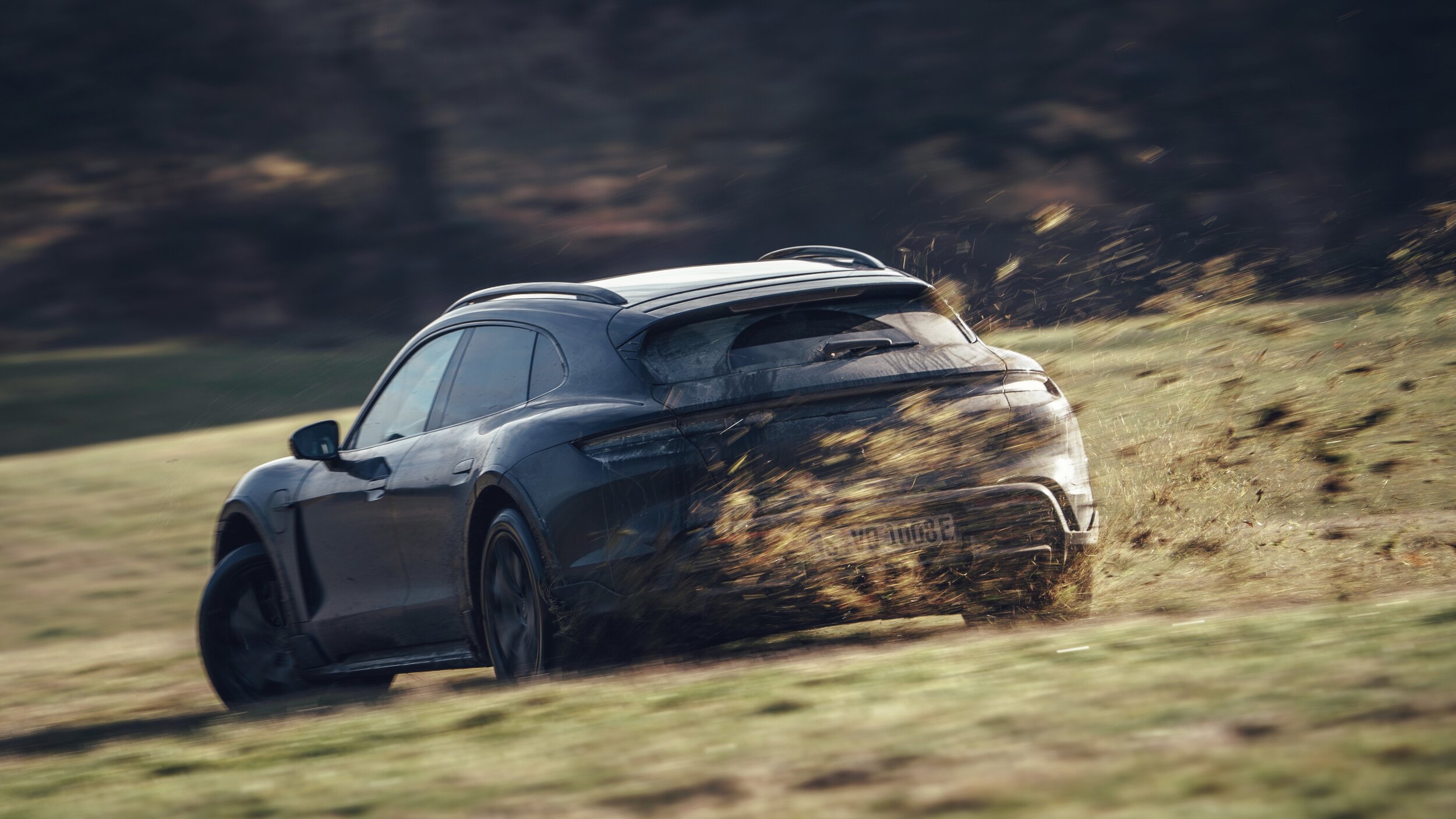
Not quite the most practical choice for that Saturday morning run to Bunnings, but still the Taycan more suited to slightly adventurous lifestylers.

taycan_turbo_s_cross_turismo_2021_porsche_ag.jpeg

IN Porsche-speak, ‘it’s a cross utility vehicle’ – in the language of the street, it’s a four-wheel-drive soft-roading version of the make’s fully electric car with body cladding.

The Porsche Taycan Cross Turismo finally fully revealed overnight (the video’s here to see) could also be called a schmantzy lifted station wagon, given it also delivered to same design definition that dictates the look of your everyday family hauler.

It’s not quite a full-blown alternate to the large Cayenne sports utility that saved the brand’s bacon back in the day, but will probably become attractive to those among that car’s supporter base who are savvy enough to recognise that this is an excellent time to abandon that hugely proliferate, big drinking dinosaur for something much more on trend. 

Basically, if you’re looking for a Porsche that offers some level of practicality, is better-shaped for carting pooches, has some degree of off-seal ability (that’s the ‘Cross’ part) but will also assuage environmental sensitivities, then here it is.

 Well, not quite ‘here’ as in ‘here in New Zealand.’ The make’s New Zealand distributor expects arrival in the fourth quarter, with three derivatives represented. Though full pricing detail has yet to be shared, the car will start at $194,900, marketing manager Stefanie McCallum said today.

The cheapest Taycan here at the moment is the entry rear-drive, which costs $173,900 but has no direct equivalent in the Cross Touring line (and those models are all AWD), and the most expensive, the Turbo S, is a $366,900 hit.

Porsche has developed the Cross Turismo in Taycan 4, 4S, Turbo and Turbo S variants. McCallum indicated today that the 4 Cross, 4S Cross and Turbo Cross are incoming.

All versions are fitted with the make’s 93.4kWh Performance Battery Plus.

The car is based on the same J1 platform as the sedan, but bolstering its off-road credentials and all-round versatility, the Cross Turismo is only available with four-wheel drive.

They also achieve Porsche Active Suspension Management with three-chamber adaptive air suspension. With an optional Off-Road Package, the car’s ride height can be raised by a further 10mm for a total of 30mm of extra ground clearance compared with the Taycan sedan.

taycan_turbo_s_cross_turismo_2021_porsche_ag (1).jpeg

There’s also a Gravel driving mode for Porsche’s latest EV, which alters the chassis, stability control and throttle calibration for use on loose surfaces, boosting ability off-road.

Off-road design elements include new wheel arch trims, different lower aprons at the front and rear, and side sills.

The higher roofline delivers 47mm more headroom in the back than a regular Taycan offers. The big hatchback reveals up to 446 litres of boot space with the seats up, and a maximum of 1212 litres with them folded down.

The design draws heavily from the Mission E Cross Turismo Concept of 2018 with the design brief being to “offer a little bit more space, a little more flexibility and versatility” than a regular Taycan, according to model line chief Stefan Weckbach. He reckons it is a “a car that is perfect for both an urban environment and the countryside.”

Fair dues to Porsche. While a whole heap more time was spent at the Nurburgring and Hockenheim racetracks as well as the Nardo test track, it was also thrown into some seriously testing off-seal conditions.

Which means, in respect to off-road aptitude? “The Cross Turismo has to be capable of high performance on the race track and must also be able to handle scree, mud and gravel,” Weckbach said.

prototype_of_the_taycan_cross_turismo_testing_in_great_britain_2021_porsche_ag.jpeg

“The Cross Turismo is not a hardcore off-road vehicle, but specialises in unpaved and dirt roads. It’s like a type of Swiss army knife on up to 21-inch wheels.”

From the front it has the same quad light signature, thin wide lower grille and narrow front fascia as a road-bound Taycan but clearly stands taller. In silhouette, the design path heads in a different dsirection; theroofline and silhouette are more strongly reminiscent of the Panamera Sport Turismo, albeit with chunkier rear haunches.

The Taycan 4 Cross Turismo offers around 280kW, with overboost of 350kW during launch control starts for a 0-100kmh time of 5.1 seconds. Official range stands at 455km, according to Porsche.

Going to the Taycan 4S Cross Turismo sees power climb to 360kW, with up to 420kW available on overboost to shave one full second from the base model’s 0-100kmh time.

The Taycan Turbo Cross Turismo’s performance takes another significant leap on, with up to 500kW on overboost for a 0-100kmh time of 3.3 seconds and up to 482km of range possible. Most of the time Turbo produces 460kW.

The top-spec Taycan Turbo S Cross Turismo boasts 560kW with overboost and launch control engaged. It means a 0-100kmh sprint time of just 2.9 seconds; it produces the same level of power as the standard Turbo otherwise, with an official range claim of up to 420km.

taycan_turbo_s_cross_turismo_taycan_4s_cross_turismo_2021_porsche_ag.jpeg


Record February belies continued shortages

Straight off the ship and into driveways – that’s the pattern showing in a big month of new vehicle registrations.

Toyota Hilux kicked dirt into Ford Ranger’s face in February

Toyota Hilux kicked dirt into Ford Ranger’s face in February

LAST MONTH’s record run of new vehicle sales isn’t a sign that New Zealand’s distributors are overcoming a severe shortage of stock to sell – it’s because every vehicle arriving here is being snapped up by waiting customers.

There are still big backlogs of customer orders, and as a result new vehicle stock reserves are still less than 50 percent of normal, says the Motor Industry Association.

“Essentially all new vehicle arrivals are going straight from the wharves to the distributors to the dealerships to the customers,” says MIA chief executive officer David Crawford.

“February’s new vehicle sales figure of 12,488 registrations was the strongest for the month of February ever, but it could have been even better - New Zealand is still facing a cocktail of supply constraints.”

These include some factories remaining on go-slow due to issues surrounding the Covid-19 pandemic, shortages of various vehicle parts, and big delays in getting new vehicles shipped to New Zealand.

Despite those issues, February was still a very healthy month for new vehicle sales. They were 9.2 percent up on February last year, and year-to-date the market is up 7.6 percent or 1865 units on the opening two months of 2020.

If the trend continues, March and April will be a welcome change from the same months of last year when sales fell to almost nil thanks to the effects of Covid-19 – the national Level 4 lockdown here, and the lack of vehicle manufacturing internationally.

A feature of the MIA figures for February were some significant changes in what vehicles are the most popular.

Mitsubishi Motors New Zealand’s runout programme for Outlander seems to be going well.

Mitsubishi Motors New Zealand’s runout programme for Outlander seems to be going well.

The Toyota Hilux cleaned out arch-rival Ford Ranger to lead the commercial sales race, its 804 sales taking a commanding 21 percent market share, well ahead of Ranger’s 15 percent.

And in the SUV/passenger vehicle segment it was the Mitsubishi Outlander that grabbed top spot from the Mazda CX-5 with 595 registrations – helped along by 133 sales to a fast-recovering rental car industry.

Compact SUVs strengthened their lead over from medium SUVs as the most popular vehicle type. Led by such product as Kia Seltos and Sportage, Mitsubishi ASX and Toyota C-HR, the segment grabbed a 22 percent market share with 2778 registrations. Year-to-date the compact SUVs now hold a 24 percent share, well ahead of the 19 percent held by the medium SUVs.

Toyota remains the market leader for all new vehicle sales with a 16 percent share, but Mitsubishi has improved to 13 percent thanks largely to continued popularity of its Outlander and ASX models, and Triton ute. Ford and Kia share third spot with 8 percent market shares.

“The February market has benefitted from recent stock arrivals and a resilient local economy where New Zealanders continue to spend on new vehicles what might otherwise be spent on international travel,” says Crawford.

The top 10 sellers for February: Toyota Hilux, 804 registrations; Mitsubishi Outlander, 595; Ford Ranger, 549; Mitsubishi Triton, 474; Kia Sportage, 370; Kia Seltos, 364; Mazda CX-5, 360; Mitsubishi ASX, 319; Suzuki Swift, 311; Toyota RAV4, 284.


Mitsubishi Express slammed in crash test

Japanese make’s version of French model first to earn a ‘zero’ score from NZ-accredited ANCAP procedure.

Screen Shot 2021-03-03 at 8.17.31 PM.png

HAVING a swag of safety ingredients has not kept a Mitsubishi van selling here from achieving the poorest outcome ever from a crash test funded by New Zealand agencies.

The damning ‘zero star’ assessment of the Express has come from the Australasian New Car Assessment Programme.

The announcement from Melbourne-based ANCAP, whose funders on this side of the Tasman include Waka Kotahi New Zealand Transport Agency and New Zealand Automobile Association, has caused controversy in Australia.

Critics there have pointed out that the Renault Trafic that is identical to the Mitsubishi save for minor details that have no bearing on crash testing has a three star rating, issued by ANCAP’s European equivalent, NCAP, in 2015. 

ANCAP, in turn, has said the Express, a popular choice for commercial fleets and private tradespeople, was unable to qualify for a rating higher than zero due to the absence of active safety systems.  

“The Express also delivered marginal performance in physical crash tests and lacks basic safety features that consumers have come to expect in a newly released model.” 

Mitsubishi Motors NZ has offered no comment about the ANCAP rating and neither has the Motor Industry Association, which acts for new vehicle distributors.

When Express was announced last year there was clear confidence from within Porirua-based MMNZ that it would prove to be far more robust than the its forebear, the L300 discontinued in 2015.

The Mitsubishi-designed and built L300 had only basic safety features and that showed in its rating. 

The Express matches its Renault counterpart in having six airbags, roll over mitigation, stability and traction control, anti-lock braking system and electronic brakeforce distribution (EBD).

Both versions fall behind some category players in lacking automated emergency braking. Blind spot detection and driver fatigue monitoring are also absent.

Screen Shot 2021-03-03 at 8.18.01 PM.png

The Express would have only been eligible to share the Trafic’s NCAP rating had it introduced within two years of the original model.

Though the agencies are linked and work to common protocols, the testing process has toughened. Express was tested to 2020 ANCAP protocols, involving a series of crash tests against moving and fixed barriers – conducted in Australia from October 2020 to January 2021.

These showed the adult occupant protection offered by the Express had  ‘marginal’ protection for the driver’s chest and upper legs and ‘adequate’ protection for the lower legs. Protection was rated as ‘good’ for other critical body regions.

ANCAP noted ‘a high risk of neck injury was recorded for the driver in the whiplash test.’

 In a side impact pole test, chest protection for the driver was rated as ‘marginal’ and a penalty was applied because the latch on the cargo sliding door disengaged on impact. In another side impact test, the cargo sliding door deformed and created a large opening.

Screen Shot 2021-03-03 at 8.18.12 PM.png


Volvo fired up about dropping ICE


 Sweden’s ambition to produce only fully electric cars by 2030 conceivably puts a PHEV XC40 about to come on sale in NZ on a hit list. But it should achieve a full life, the brand reckons.

Volvo’s EV strategy announcement means the XC40 Recharge PHEV (above) just introducing to New Zealand now will be superseded by 2030 by a new line of full electric products, starting with the C40 Recharge (below) that is destined to on sale in NZ ne…

Volvo’s EV strategy announcement means the XC40 Recharge PHEV (above) just introducing to New Zealand now will be superseded by 2030 by a new line of full electric products, starting with the C40 Recharge (below) that is destined to on sale in NZ next year.

277640_Volvo_C40_Recharge.jpg

VOLVO announcing overnight its intent to sell only battery-driven cars within 10 years has highlighted the interim status of a just-arrived hybrid sports utility that the make’s New Zealand distributor is using to woo electric-favouring consumers. 

The decision out of Sweden comes with announcement of a new fully electric crossover, the C40 Recharge, that will likely be on sale here next year.

The pledge to phase out all car models with internal combustion engines by 2030 potentially means the new $84,900 XC40 Recharge nydrid that is being promoted as Volvo New Zealand’s sole electric choice of the moment might yet have a reasonably modest life span.

Is that going to be a turn-off? Volvo New Zealand boss Ben Montgomery does not believe the market will judge the PHEV car as any kind of temporary technology.

He stands by expectation, expressed in mid-February, that the Recharge PHEV will be a strong seller.

“It’s still an education process with electric, in terms of what’s available and what it does and what’s available to buy right now.

“I think the PHEV is that perfect halfway step, where you are getting the benefits of electric-only propulsion but at the same time you have not got those range queries. 

“So it’s the perfect stepping stone for us.

“We have still got seven years before the complete end of ICE (internal combustion engines) and in the meantime we are taking some really big steps locally. 

277625_Volvo_C40_Recharge.jpg

“From model year 2022 there will be no diesels and we are moving toward MHEV (mild hybrid) and PHEV in the 60 and 90 range. It will be incremental steps, but I don’t think it will put customers off.”

Volvo previously announced that by 2025, half of its sales would be fully electric, with the rest being hybrids. It is also committed to becoming climate neutral by 2040 and putting one million EVs on the roads within the next four years.

Montgomery says Kiwis can expect to see a rapid increase in the access of premium electrified and hybrid models available here. 

Plug-in hybrids now make up almost a third of Volvo sales in Europe, making Volvo the leading plug-in premium brand when measured by the share of its total sales volume.  

“The XC40 PHEV accounts for a significant part of this global growth and early local interest suggests this model will make up a solid proportion of our New Zealand EV/hybrid sales this year,” he says. 

The Recharge PHEV’s lab-tested fuel economy is 2.2 litres per 100km compared to the petrol-only XC40s range between 7.7 and 8.0L/100km. However, fuel consumption drops to zero when the electric motor is used alone - with a 44km range.

Customer deliveries are expected to commence from the second half of the year.

By the time the C40 Recharge hits NZ showrooms the XC40 will also be available in a fully electric format. 

The fully electric XC40 – also called a Recharge model - and the C40 appear destined to have a common drivetrain, according to detail so far released by Volvo.  

Both cars are cited to pack 300kW from two motors that will power all four wheels and have a 78kWh battery that can charge to 80 percent on a fast charger in 40 minutes. The fully electric XC40 is expected to deliver 350-400kms in the real world whereas the C40 is cited as being able to clock 420kms before need for replenishment.

277612_Volvo_C40_Recharge_Studio.jpg

Potential for the C40 and XC40 to clash for consumer consideration seems probable, given the new car’s styling direction. Montgomery reckons the C40 will build on the XC40’s popularity. He suggests it is aimed at a younger demographic but also notes it delivers “all the benefits of an SUV but with a lower and sleeker design.” 

The C40 is being called the first Volvo production car that has been wholly designed to take just an electric powertrain.

That claim ignores that a Volvo adjunct, Polestar, already has two electric cars in production. Polestar has so far focused on left hand drive markets, but its latest product will go into right-hand drive his year and Volvo NZ has indicated desire to sell that model here, again with 2022 being the likely launch timing.

Volvo says it is trying to capitalise on growing demand for electric cars, including in China, which is already one of its biggest markets. It also acknowledges that carmakers cannot ignore pressure from governments around the world to beef up their electric car plans.

New cars and vans powered wholly by petrol and diesel will not be sold in the UK from 2030, for example.

Volvo's chief technology officer, Henrik Green, said the company needed to switch focus: "There is no long-term future for cars with an internal combustion engine."

Bjorn Annwall, head of Europe for Volvo, says the plan fits with both Volvo's image and commercial interests.

“At Volvo our customers expect high levels of us when it comes to human safety and they are starting to expect exactly the same thing when it comes to planetary safety, we aim to live up to that, it's the right thing to do,” he told the BBC.

277630_Volvo_C40_Recharge.jpg

“The fully electric premium segment will be the fastest growing part of the automotive market, so it's very natural to focus on that.”

Volvo will not be investing in cars with hydrogen fuel cells, as it does not think there will be enough demand from customers. There is also a question mark over hydrogen's availability in comparison with charging points for electric cars, a spokesman said.

Last month, Volvo abandoned plans to merge with Chinese car giant Geely. But the two companies said that they would form a partnership instead to make components for electric cars that would be used by both firms.

Geely already has an electric car brand, Lynk and Co, whose product bases off Volvo underpinnings. So car Lynk and Co has restricted to left hand drive but it has not discounted re-engineering for right-hand drive markets to further enhance exports potentials, as other Chinese makes are now doing.

The XC40 Recharge PHEV has already travelled to Auckland dealerships. The remaining visits are to: Duncan and Ebbett, Tauranga on March 13-14; Duncan and Ebbett, Hamilton, March 20-21; Bayswater European, Napier. April 10-11; Armstrong’s Wellington, April 17-18; Archibald’s Christchurch, April 24-26 and Armstrong’s Dunedin, May 8-9.


Lexus NZ lining up loaners for Aussie owners

Transtasman visitors will be able to fly in and hook a free car for up eight days’ travel. But Kiwi Lexus owners cannot expect the same favour when heading across the ditch.

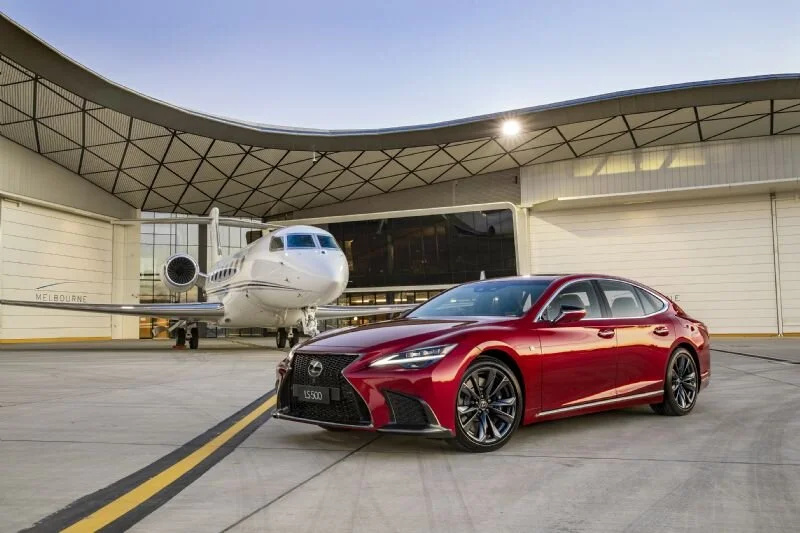
2021_Lexus_LS-500_F-Sport_Atomic_Silver_013-scaled.jpg

KIWI Lexus owners travelling, once conditions allow, into Australia might yet get a sweet deal set to be afforded their Aussie counterparts coming here – free use of a brand-new car from the make during their visit.

The opportunity for Lexus Australia customers subscribed to a generous support package they get (and Kiwis don’t) has elevated to allow them to make use of Lexus NZ cars as a complimentary booking service.

The just-announced opportunity is being spruiked by our neighbour as a way of supporting a travel bubble between our countries.

Lexus in NZ is looking at whether it can arrange a reciprocal arrangement, but it’s early days.

The ‘Lexus on Demand’ car-sharing opportunity is part of a pampering customer support programme called Encore Platinum that Australian owners sign into. 

It’s an extension of another ownership programme, called Lexus Encore, and is offered as standard to Australian buyers of LC, LS, LX, RC F and GS F models.

Lexus New Zealand has no equivalent, general manager Andrew Davis says.

 “NZ customers do not receive the same Encore Platinum benefits that Australian customers do as they receive a four year, unlimited km warranty, full maintenance service and Lexus Plus roadside assistance package.  

19.+Lexus+LS+500+7195lr.jpg

“We always assess the benefits that we provide our customers so are reviewing the Encore Platinum offering against the benefits currently offered but there is no plan to change at this stage.”

The Aussie offer allows owners of Toyota’s flagship models to book, via an app, any vehicle in the Lexus range when travelling. It's been previously limited to interstate travel - NZ is the first international tilt.

It isn’t an open slather deal - users can take no more than four trips – but is generous nonetheless as each of those trips can last up to eight days. The journeys have to be undertaken over the three-year life of the membership programme. 

The NZ aspect means Lexus owners can book and collect a loan car of their choosing from a variety of NZ airports, thereby skipping the typical rental car process.

In explaining the scheme, Lexus Australia boss Scott Thompson says: “Looking forward into 2021, there are some positive signs for the industry and for the economy, and with vaccines arriving now, we also have plans for the two-way travel bubble with New Zealand.

"Hopefully this will happen by the end of next month. We are anticipating that many Australian customers will be keen to experience international travel when the transtasman bubble opens.

“So coming later this year, we've decided to expand Encore Platinum to offer our Australian customers the luxury and convenience that is Lexus on Demand when they fly across the pitch.”

The company is yet to announce the specific airports where the service will be offered, as well as a line-up of specific models owners can access in New Zealand.

In Australia, the Lexus on Demand service typically offers owners access to a spread of multi-purpose vehicles, including the LS large limo for luxury touring, the RX and LX for utility and space and the LC and RC F for sportier drives.

18+2018+Lexus+RX+450hL+Sports+Luxurylr.jpg

The challenge in New Zealand might be having enough of those cars to provision – the LX, LS and LC in particular achieve just a handful of registrations per year.

Davis says: “We are looking to support the Lexus On Demand feature of Encore Platinum for Australian customers who visit NZ. The details are being worked through and timing and locations will be announced once confirmed.


“The offering in NZ will be the same as it is for customers travelling within Australia but we are looking to have a smaller number of practical models (e.g. RX) to better suit usage for those travelling to NZ. Once launched we will monitor usage and demand to assess the programme in NZ.”

“For Lexus NZ the commitment is in having cars available to Australian customers and working with Lexus Australia on managing bookings and the process with the highest levels of Omotenashi (a word that essentially translates to ‘Japanese hospitality’) in mind.”

As for them doing the same for us? Not at the moment.But they’re thinking about it. 

“In regard to NZ offering our customers the same access in Australia? That is under consideration and the success of the Australia to NZ offering will be a guide for demand on this.”

Lexus Australia’s Encore programme also includes loan cars while a owner’s car is being serviced, access to exclusive events and upgrades at partner hotels.


PHEV wars – MG HS coming to rough up Outlander


Brit-by-birthright, Chinese-by-ownership, international-by-intent MG is about to release a competitor for the country’s favourite new plug-in hybrid. 

MG HS PHEV (16).jpg

 MG’s flagship sports utility, the medium-sized HS, will come on sale here in April in a plug-in electric format for $52,990.

The first plug-in hybrid brand model from MG owner SAIC is also the marque’s second electric car here. 

It stands as a big brother to the $4000 cheaper and physically smaller pure electric ZS EV, also a front-drive five seater, whose position as the country’s cheapest fully electric new car has seen it capture strong sales since release four months ago.

MG HS PHEV (1).jpg

The HS will present in a high level specification with a primary target seemingly being a car that has basically had this sub-sector all to itself, the popular choice Mitsubishi Outlander PHEV, though potentially the Toyota RAV4 Prime coming later will also become another rival.

 The face-off between the HS and Outlander in present formats will likely rage for all of 2021, because even though the current Outlander is set to be replaced this year, the version with a PHEV format is not arriving until 2022.

They seem sure to become intriguing rivals – for the past year the Outlander has had a 2.4-litre petrol engine, replacing the original’s 2.0-litre, and updated to a higher capacity battery. It sells for $52,490 in XLS and $58,990 in VRX – the latter having a spec level that the MG is set up to match.

MG’s drivetrain pairs a 119kW 1.5-litre turbocharged petrol engine with a 90kW electric motor for a combined output of 209kW and a 0-100kmh time of 6.9 seconds.

MG HS PHEV (5).jpg

 The MG has a claimed full electric range of 52kms – just 3kms short of the Outlander’s optimal - from its liquid-cooled 16.6kWh battery pack and is claimed to narrowly beat the Japanese offer on overall economy.

Thrift of 1.7 litres per 100km, calculated using the updated WLTP cycle, was quoted at today’s online link to a media conference held in Australia. Mitsubishi reckons Outlander will achieve 1.9L/100km. The HS CO2 count is 39 grams per kilometre.

The HS can be operated in full electric that mode until the battery exhausts; replenishment is by Type 2 plug, with a from-empty recharge on the 7kWh wallbox MG will also sell taking five hours, or fully overnight if plugged into a normal three pin socket.

 Power is sent to the front wheels from both power sources through a newly developed 10-speed gearbox. This involves a six-speed orthodox automatic gearbox while the electric motor uses a four-speed drive unit. Outlander, of course, has a CVT. Unbraked towing is 750kg.

Equipment levels are high. The car takes 18-inch alloy wheels, electrically adjustable heated front seats, a 360-degree camera, keyless entry and climate control, a panoramic sunroof, electric tailgate, leather upholstery, ambient lighting and LED headlights.

MG HS PHEV (3).jpg

Safety features equipped as standard across the range include adaptive cruise control, traffic jam assist, automatic emergency braking, forward collision warning and blind-spot detection. The HS has already achieved a full five-star safety rating from ANCAP. 

The HS PHEV is backed with an 8-year, 160,000-kilometre battery warranty and a 5-year unlimited kilometre vehicle warranty,

Speaking at the launch, Peter Ciao, MG Motor New Zealand’s chief executive said: “The new MG HS Plug-In Hybrid brilliantly showcases the intelligence and innovation we have available within our brand. It offers our customers the opportunity to experience new energy innovation, while remaining in the comfort of a true SUV that is equal parts stylish, sporty and spacious.

“The MG HS Plug-In Hybrid is our first plug-in hybrid, our second new energy vehicle, and one that we’re delighted to bring to our New Zealand customers as part of our commitment to making new energy vehicles mainstream in New Zealand.”

While MG has so far based its market presence around petrol cars, the corporate aim is to go increasingly electric.

Even so, MG also added two other HS editions, the Excite and Essence X, which respectively place at $39,990 and $45,990. These have all-wheel-drive.

MG HS PHEV (19).jpg


First look at new Tucson – smart tech with smart looks

We poke a head over the fence – well, the Tasman Sea, really – to get an early gander at Hyundai’s crucial new model.

Screen Shot 2021-02-28 at 7.50.14 PM.png

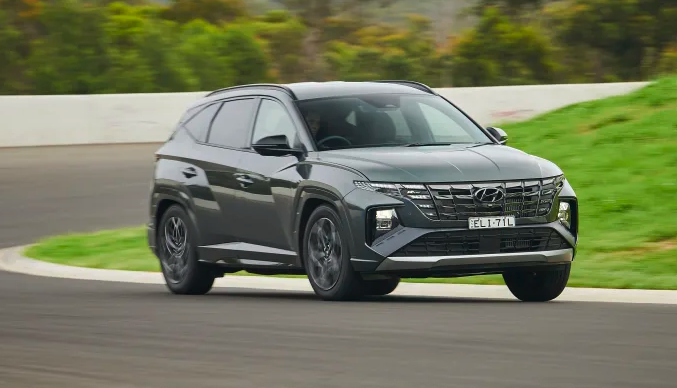
AN early preview of the new sharp-suited Hyundai Tucson heading to New Zealand has conceivably been delivered by our next-door neighbour.

Disclosure of technical and model line information heading into Australia will likely be largely valid for NZ, save for usual detail differences such as an adjustment of the flagship’s name.

Australia can get away with Highlander for the highest spec car there because the Toyota that sells with that name here is a Kluger across the Tasman. Here it’s likely to be a Limited, as per convention expressed on the Santa Fe and Palisade. 

Screen Shot 2021-02-28 at 7.50.00 PM.png

It’s wholly possible we will see a less fulsome line-up to that launching over there between April and June. Yet the look and core elements of what has been unveiled across the Tasman is assuredly heading this way.

There’s a strong spirit of co-operation between the two countries’ distributors that undoubtedly works to NZ advantage. The Auckland-run national operation has relatively modest volume requirements and teaming up with Australia, which is a factory-run outfit with big sales counts, opens doors in Seoul.

So, anyway, Australia is taking three variants – base called Tucson, mid-spec Elite (a name also used here) and a high-end - and three powertrains, all offering the option of an N line package, which doesn’t alter performance but elevates the styling tweaks and features. 

The N Line pack includes a body kit with sportier bumpers and side skirts, a gloss black grille with 'hidden' daytime-running lights, 19-inch alloy wheels (the base car in standard form runs 17s), silver skid plates, and an embossed steering wheel.

The pack also adds LED headlights, LED 'combination' tail-lights, a unique leather/suede trimmed interior and a 10.25-inch digital instrument cluster.

Screen Shot 2021-02-28 at 7.50.33 PM.png

The engines are all four-cylinders, overhauled units now being marketed as members of Hyundai's new 'SmartStream' family.

A 115kW/192Nm 2.0-litre petrol is the base mill, matched to a six-speed auto and driving the front wheels. The more upmarket four-wheel-drive editions arrive with a 132kW/265Nm 1.6-litre turbo petrol mated to a seven-speed dual-clutch auto. The diesel choice is a 137kW/416Nm turbocharged 2.0-litre married to an eight-speed automatic. 

Standard safety features include autonomous emergency braking (with support for intersections), lane-keep assist, blind-spot monitoring, a speed limiter, tyre pressure monitoring, and rear parking sensors. 

Adaptive cruise control with stop-and-go, lane-following assist and rear cross-traffic alert are also expected to be standard across the range.

Driver attention monitoring is standard, while other safety features are expected to include Safe Exit Warning (which reminds passengers to check for oncoming hazards before opening their door) and multi-collision braking (which applies the brakes after a collision to prevent subsequent impacts).

Seven airbags are standard, including a centre airbag between the front seats.

Standard equipment on our neighbour’s entry car includes an 8.0-inch infotainment touchscreen with Apple CarPlay and Android Auto, a 4.2-inch driver's information display, manual air conditioning, cloth seats, a leather-wrapped steering wheel and gear selector, keyless entry (but no push-button start), automatic halogen headlights, LED daytime-running lights, and power-adjustable door mirrors.

Their mid-grade adds a 10.25-inch infotainment touchscreen with smartphone mirroring and satellite navigation, leather seat trim, a power-adjustable driver's seat, front seat heating, dual-zone climate control, 18-inch alloys, rear privacy glass, push-button start, a 'smart' key, rain-sensing wipers, a rear-seat alert (notifying drivers if passengers have been left in the rear seats), front and rear parking sensors, and braking functionality for the blind-spot monitoring system.

Elite variants equipped with either of the turbocharged engines also feature paddle shifters and a shift-by-wire gear selector.

Screen Shot 2021-02-28 at 7.50.44 PM.png

The flagship runs 19-inch rims, has LED headlights and tail-lights, a dark chrome grille. a silver skid plate, chrome trim, a power-operated tailgate and a panoramic sunroof.

The cabin sports a 10.25-inch digital instrument cluster, ambient LED mood lighting, heated and ventilated front seats, heated rear seats, a heated steering wheel, memory for the driver's seat, a power-adjustable passenger seat and a Bose premium sound system.

The top grade also delivers a 360-degree camera, a blind-spot view monitor – which, as per the Santa Fe, projects a rear-facing camera feed from the side mirrors into the instrument cluster when changing lanes - an electrochromatic rear-view mirror and low-speed rear autonomous emergency braking.

Australia’s flagship diesel includes remote smart park assist, allowing the vehicle to be moved backwards and forwards into a tight parking space via the key fob, when standing next to the car. Again, a feature shared with Santa Fe.

When the car unveiled internationally last year, Hyundai talked up how a smartphone app could be used to lock and unlock the car from up to 27 metres away.

What more is there to know? Well, conceivably quite a lot.

For instance, the cars so far discussed are five seaters.

Hyundai NZ stated last year it is keen to also take this fourth-generation car in an alternate and new long-wheelbase format – that avails a third seating row – in addition to continuing with a five-chair layout.

The longer version measures 4630mm in length (so up 150mm on the short wheelbase), 1865mm in width (plus 15mm) and 1665mm in height (up 5mm), riding on a 2755mm (plus 85mm) wheelbase.

In addition to the orthodox powertrains, it’s also previously express interest   in the mild hybrid and plug-in hybrid options that are also coming into production, these based around the 1.6-litre turbo-petrol engine and producing a combined 171kW/350Nm. There’s no mention of those in the Australian media share.

Tucson’s new exterior styling is bound to raise plenty of comment. Hyundai says it expresses an evolving Sensuous Sportiness design identity and embodies what its designers call ‘parametric dynamics’ with “kinetic jewel surface details that emphasises Tucson’s distinctly different identity in a crowded segment.” Translation? There are a lot of sharp edges.

It fronts up boldly, too: The grille is filled with LED lights which only reveal themselves when illuminated. The rear will also make an impressive; it has a connected LED light bar sitting across the beltline and joining two clawed LED taillights.

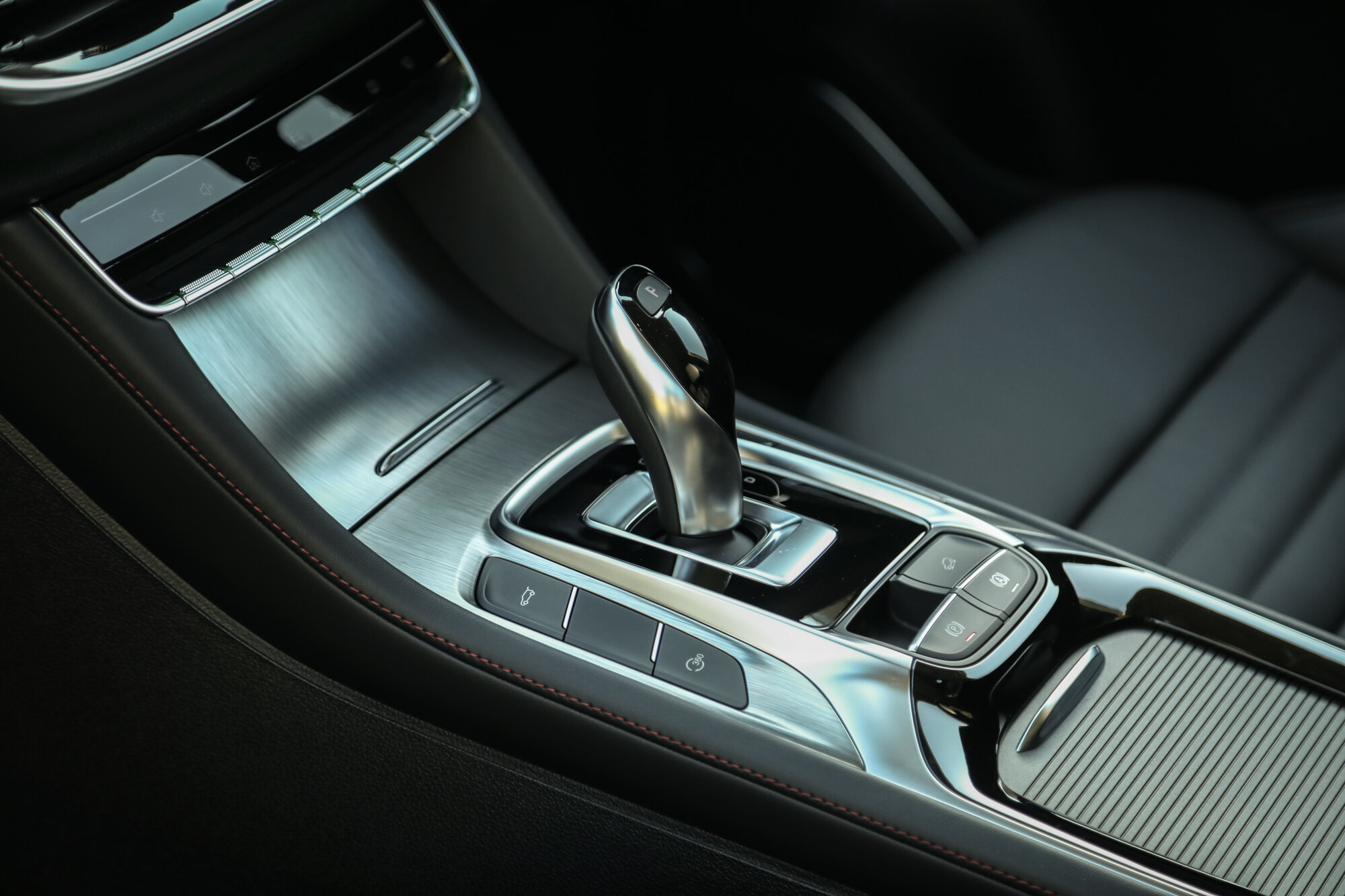
 The interior also seems set to be more plush. Most ‘hard’ controls, such as dials and buttons, are gone. So too the gearstick; with Santa FE-style push buttons instead.


S-Class schmoozes in

Plenty of luxury and tech, lots of extras too – but just one engine choice for now.

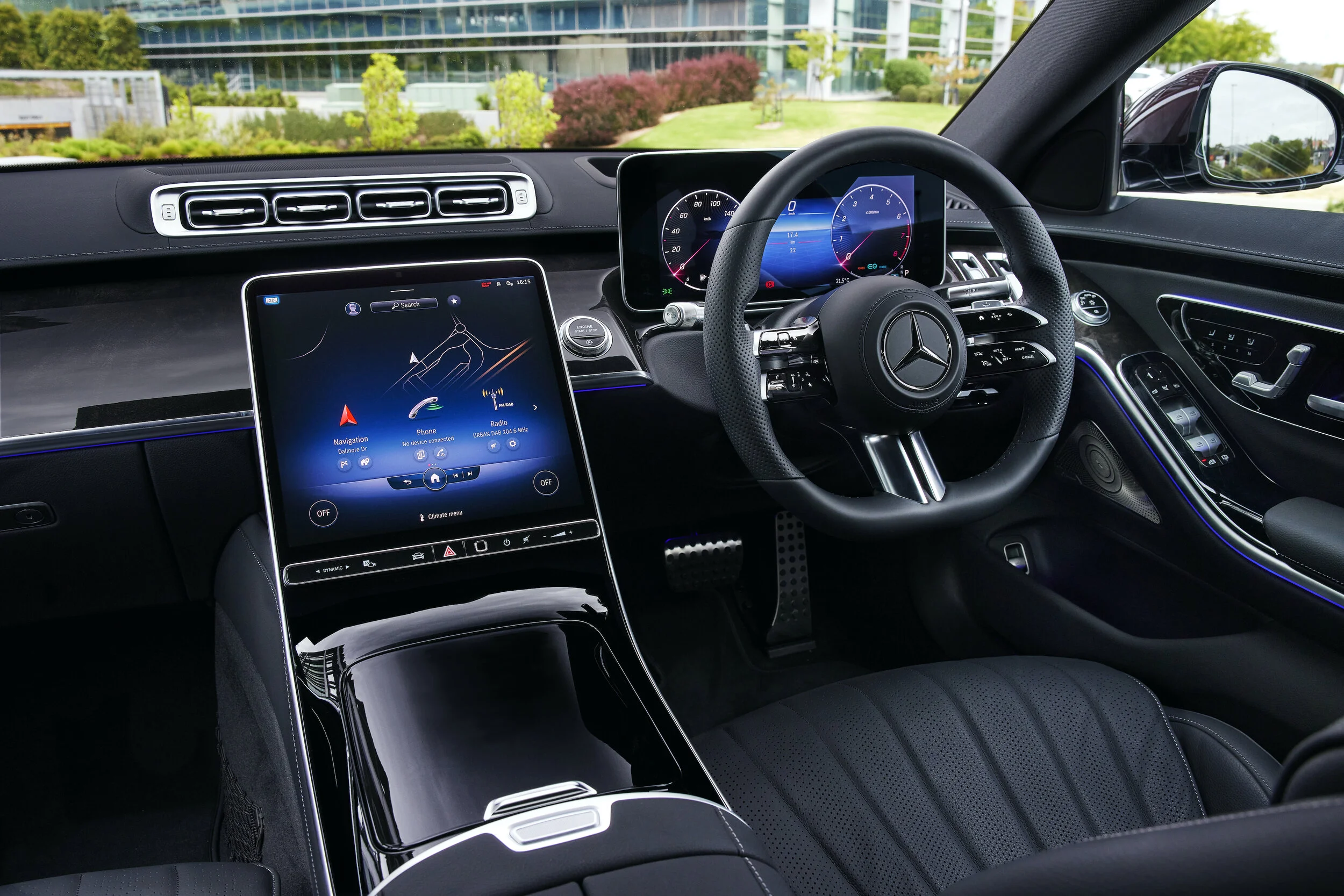
MB_SC_11.jpg

SO much tech and so much additional kit to box tick – but when it comes to powertrains, the decision is dead easy: Though more will turn up in time, there’s just the one at launch.

So it goes with the seventh-generation of the Mercedes-Benz S-Class, available from next week in S450 4MATIC and long-wheelbase S450 L 4MATIC formats, with a common six-cylinder petrol, pricing starting from $215,000.

This is the car touted as the world’s most advanced and, though not every technology developed for it packs into the ‘base’ (yes, wrong word, but …) format – and, indeed, some is not yet available for this part of the world – the car in kick-off form has pretty decent specification.

New Zealand piggy-backing on Australia’s choice has proven a good idea. Our neighbour has gone big on signing up for comforts and assists that have been extras in the European spec.

What we miss out on, though, is the full gambit of semi-autonomous gadgets. While the Australasian-spec cars have adaptive cruise control with stop-and-go, lane centering assist, lane change assist, evasive steering assist, and a traffic-sign assist system that reads speed signs and adjusts the adaptive cruise control system accordingly, the ability - soon to show in the German-market car – to drive itself with the driver's hands off the steering wheels on at up to 60kmh is not featuring. Our laws seem to allow it but Australian legislation does not. And since our neighbour has done the choosing …

MB_SC_02.jpg

Still, plenty of other gee-gaws to impress. Both cars achieve a 12.3-inch 3D digital instrument cluster (with eye tracking) and a 12.8-inch OLED infotainment touchscreen running Mercedes' latest MBUX operating system, the MBUX Interior Assistant and the "Hey Mercedes" voice assistant.

The car’s satellite navigation system is a new step-up; in addition to projecting live traffic it has a predictive functionality. The head-up display with support for an augmented-reality function which can virtually project navigation directions on the road up to 10 metres ahead.

Other standard features include air suspension, power-closing doors, dual-zone automatic climate control, ambient LED interior lighting, puddle light projection, keyless entry and push-button start, flush retractable door handles, a 360-degree camera and semi-autonomous Active Parking Assist.

There's also an electric glass panoramic sunroof (with sliding and tilting functionality), a power-operated rear sunblind, electrically-adjustable front seats with heating and cooling, memory functionality for the steering column, a fingerprint scanner, a hands-free power boot lid, heated power-folding exterior mirrors, rear privacy glass, and insulated acoustic glass for the front side windows.

MB_SC_14.jpg

 It runs a 15-speaker, 710-watt Burmester 3D surround sound system, with Apple CarPlay/Android Auto of course, wireless smartphone charging and support for the Mercedes Me Connect smartphone app.

You want more? Even though it has LED headlights, Benz locally perceives one popular cost-extra enhancement will be a special feature the brand made a big noise about during last year’s international launch: Adaptive Digital Light LED headlights. These are capable of projecting warnings onto the road with a range 150 metres greater than that of the standard LED units, thanks to 2.6 million 'pixels.' Also possibly set to be popular, for those who park in tight places, is the enhanced rear-wheel steering (with an angle of up to 10 degrees). The 'active' ambient interior lighting and the Energising package also tend to get ticked on other high-end products.
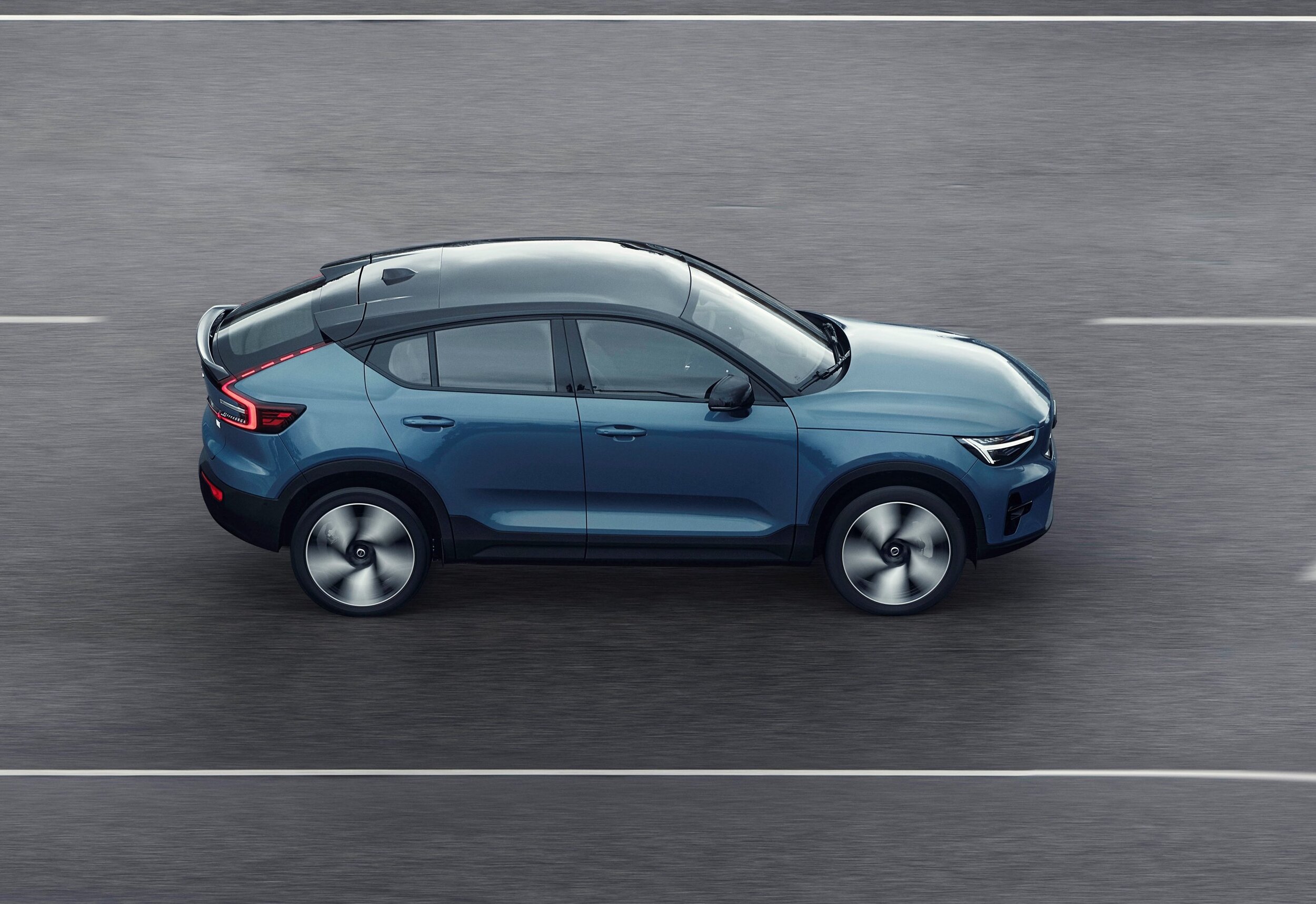
The long-wheelbase model (with 110mm extra length) achieves extras of power-adjustable rear seats with memory, automatic rear climate control and forward-facing airbags in the backs of the front seats but can also be ordered in with a pair of 11.6-inch entertainment touchscreens.

Both models derive power from a turbocharged 3.0-litre inline-six, sending 270kW and 500Nm to the road through a nine-speed automatic transmission and 4Matic all-wheel-drive, for a 5.1-second 0-100kmh sprint time.

MB_SC_15.jpg

The engine is assisted by a 48-volt mild-hybrid electrical system, which can supply an additional 16kW/250Nm boost for short periods under hard acceleration, and enables combined fuel economy ratings of 8.2L/100km and 8.4L/100km for the S450 and S450L respectively.

 A higher-grade S580L variant is expected to be offered later down the road, pairing a 4.0-litre twin-turbo petrol V8 with a 48-volt system for a total of 370kW and 700Nm, and it’s expected head office will hear a New Zealand pitch for the plug-in hybrid edition, with 100kms’ pure electric running.

MB_SC_26.jpg


Peugeot brand on outlets ahead of cars

First NZ-market model with new emblem will be next year’s 308.

PEUGEOT_PR_DEALERDAY.jpg

 DEALERSHIPS will likely have at least a six-month head start on displaying Peugeot’s new logo over the first product to bear the back-to-the-past emblem.

 Arek Zywot, commercial manager for Autodistributors NZ, which holds brand rights here, says national sales outlets are probably going to be refitted with the latest corporate identity by late this year.

The first car to take the emblem, which in displaying the head of a roaring lion in profile within a shield is effectively a modern reboot of the black and white badge worn by the brand in the 1960s, is the next 308 medium hatchback, disguised examples of which have been pictured during trials, as seen below.

That car unveils internationally next month but won’t be in New Zealand until some time after February, 2022.

The rebranding has occurred in the wake of Peugeot’s parent, PSA, merging with Fiat-Chrysler to become a new entity, Stellantis.

new 308.png

Along with a fresh logo comes a new intent for Peugeot, to lift its game as one of the more aspirational and upmarket marques within this new combine entity, which with annual sales of approximately eight million vehicles and 400,000 employees, becomes the fourth-largest global automaker by volume.

Last night’s unveiling of the new brtanding ends a busy week for Autodistributors, as it has just landed supply of three new models about to hit the market – the 3008 mid-size SUV, the 5008 three-row SUV and the 208 hatchback, which avails solely in a GT format. The franchise holder’s hope of keeping these cars out of the spotlight until it had media material prepared was blown by a national motoring news provider. 

The just-added models will likely stand out from the 308 as the latter is the first Peugeot production model expected to move to a new styling language so far only seen on the brand’s concepts. 

Peugeot is targeting a worldwide completion of the rebranding exercise by 2023. The rebrand also coincides with Peugeot’s plan to electrify its entire line-up by 2025. 

“Peugeot is moving upmarket,” claimed new Peugeot boss Linda Jackson. 

“We’ve already spent a lot of time working on the vehicles, and this is the second part of the journey, which is all about the customer experience. The trigger is the fact that we love the way that we are now going with the cars.”

Stellantis comprises of Fiat, Fiat Professional, Abarth, Chrysler, Alfa Romeo, Abarth, Jeep, Dodge, Ram Trucks, Maserati, Lancia, Peugeot, Citroen, DS, Opel and Vauxhall.

At present the French marques are with one distributor in NZ whereas the American and Italian brands that export are with another, Ateco. Opel and Vauxhall have historically been part of the General Motors portfolio, but how stands now that Holden has become defunct is unclear.

There has been no public comment from either about the potential for any changes; it is not known if Stellantis prefers all its brands to be with one distributor.

PEUGEOT_PR_NEWLOGO_BLACK.jpg


Latest Kona EV kerfuffle not the first glitch

Requirement to change the Kona EV’s battery has a familiar ring to some NZ owners.

The Kona EV battery effectively fills out the entire floor area.

The Kona EV battery effectively fills out the entire floor area.

A PROBABLE recall that demands replacing the lithium ion battery that powers in Hyundai’s highest-profile electric car seems set to hit hundreds of Kiwi owners, including a handful for whom this could well seem deja vu.

Comment from electric vehicle owners about yesterday’s MotoringNZ story relating how Hyundai is moving toward recalling its Kona electric car internationally – and potentially also at least some examples of the battery-pure version of the Ioniq – following a spate of fires in South Korea, has drawn attention to the Kona already being subject to a remedial action here that began five months ago, is only now wrapping up and also sometimes demands the same extreme action of a complete battery exchange.

In November, Hyundai New Zealand recalled 724 Kona EVs it had sold, having been advised by the factory that "the lithium-ion battery may have internal damage or the battery management system control software may cause an electrical short circuit after charging" which could result in a fire.

It is unclear if this is the same fault at the centre of the recent fires overseas.

The immediate remedy for this was to change the battery management system and, if that did not work, Hyundai advised the same procedure it proposes for this new recall – pulling out the battery, a hefty and large item which completely fills out under the floor and is all but a structural component, and replacing it.

Hyundai NZ has said it awaiting confirmation that the Kona EV will be recalled again, however reports from overseas say this is a given and from the tenor of comment it has offered, the local distributor also seemed resigned.

This latest action is a whopper. It is expected to cost $US900 million to execute, a sum that makes it the most expensive recall involving an EV so far, and will cover 82,000 vehicles worldwide.

Conceivably, it will draw in the NZ cars involved in last year’s recall. These were built between September 29, 2017, and March, 20, 2020.

It is thought many were put right with an update to the battery management software. However not all these examples were remedied that easily.

the updated Kona, due to come here later this year, has the same battery pack as cars likely to be recalled.

the updated Kona, due to come here later this year, has the same battery pack as cars likely to be recalled.

MotoringNZ has spoken with a North Island Kona owner whose car, bought in 2018, was off the road from early December until mid-February while it awaited a battery replacement. His vehicle has since faulted again. Learning that it might require yet another battery was exasperating news. 

Kimberley Waters, a spokeswoman for Hyundai NZ, explained the original action.

“We updated the BMS software to allow for detection of abnormalities in the high-voltage battery system while parked.

 “If the software detected any early electronics deficiencies a full battery replacement was required.

“We are 96 percent through the initial recall and through the inspection process some Li-ion batteries were identified as needing replacing.”

The latest action has resulted after a Korean government investigation into why Hyundai EVs – which included a bus as well as some cars - were catching fire. That probe revealed the possibility of short circuits in certain defective battery cells produced by the supplier, LG Energy Solution.

According to Reuters news agency, the battery maker and automaker are currently hashing out a deal to split the cost associated with completely replacing batteries for the EVs.

It's not clear if this news will push back the arrival of the updated Kona EV, which has already been revealed globally and was supposed to arrive in New Zealand this year. The refreshed car boasts an updated design, but its electric powertrain continues unchanged.


Hyundai NZ awaiting EV fire risk recall news

Remedial action for Kona and Ioniq EVs has begun in South Korea; battery replacement for Kona has been proposed.

P8080558.JPG

POTENTIAL that two popular Hyundai electric cars might be drawn into a massively expensive recall triggered by a fire danger that has made headlines in South Korea has been acknowledged by the make’s New Zealand distributor.

Hyundai New Zealand says it is aware of the situation in the marque’s home market in respect to a spate of battery fires reported there in the Ioniq and Kona electric models.

No such events have been reported in New Zealand.

The tenor of the reply from the make’s representative, an independent distributor, in respect to questions about this seems to leave impression a recall might not be out of the question, all the same.

This is supported by latest reports from Seoul, in which the brand is on record as saying it intends to replace the batteries in 82,000 electric vehicles, including 75,680 Kona EVs, 5515 Ioniqs and 305 buses at a cost of more than $US900 million, a record amount for an EV recall.

This comes after multiple South Korean news outlets have reported the manufacturer will voluntarily replace batteries, made by another Korean brand, LG Chem, in all local market examples.

While ignored by mainstream news outlets, the issue has nonetheless become a hot topic of discussion in recent weeks for EV owners subscribing to a national Facebook forum.

Hyundai NZ spokeswoman Kimberley Waters said today that “to date, there have been no fires recorded in NZ attributable to this condition.” 

She did not address a question asking if owners have expressed concern to Hyundai NZ. 

In respect to the potential for a recall, she offered: “We are aware of the news that has come out of Korea.

“However, (we) are waiting for official communication from Hyundai Motor Company with regards to this recall and the number of EVs affected here in New Zealand.

“Safety of our customers is paramount, so as soon as we have a list of affected vehicles we will contact those customers to advise next steps.”

A major South Korean news outlet, Business Korea, has reported 15 individual incidents of battery-related fires having been recorded in Kona EVs.

Similar fires have also been reported in Ioniq electric cars. Recently, a Hyundai electric bus caught on fire while operating in Seoul. 

Hyundai has also been caught up in an issue with the Tucson sports utility, citing a potential fire risk deriving from a braking circuit board.

The Kona launched in 2018, a year after the Ioniq released here as Hyundai’s first electric car. A heavily updated Kona EV is set for release in NZ soon and, of course, Hyundai has just revealed its first electric car to be sold under a new sub-brand, called Ioniq, that is intended to go on sale here in the second part of 2021.


Lexus revives V8 IS

There’s a catch to this good news. While the hot rod has returned …. It’s only for the land of the hot dog.

2022_Lexus_IS_500_F_SPORT_Performance_019-scaled.jpg

NO chance: That’s the response in precis from Lexus New Zealand when asked about potential of the just-revealed flagship of its new IS compact luxury sedan line reaching this market. 

The local distributor, operating as an adjunct to Toyota New Zealand, has reiterated a view expressed in other right-hand-drive locales: Namely, that the new car is only for North America. Specifically, the United States.

What Kiwis knew as the IS-F, ultimately in a sizzler Redline edition, until it was curtailed in 2014 is now called the IS500 F Sport Performance.

Power is from the 5.0-litre naturally-aspirated petrol V8 seen under the bonnet of the RC-F and GS F performance cars, but also involved with the IS-F since it was born in 2008.  

In this latest application it develops 352kW of power at 7100rpm and 536Nm of torque, at 4800rpm. That’s a 41kW and 31Nm lift over the outputs cited for the last of the IS-Fs, which in its own right moved with astounding alacrity.  

The extra wallop would certainly enhance the pedigree when measured against two of the best in the business, the BMW M3/M4 and Mercedes Benz C63.

Lexus claims a 4.5 second 0-100kmh time. Kerb weight is rated at 1765kg, up just 65kg over the most exciting model in the current NZ line-up, the rear-wheel-drive IS350 F Sport.

2022_Lexus_IS_500_F_SPORT_Performance_033-scaled.jpg

Under the skin, the 'standard' IS's 'Dynamic Handling Package' has been fitted as standard to the IS500 to help cope with the extra grunt, with additions including adaptive suspension, a Yamaha rear performance damper (designed to reduce body flex and increase rigidity), and a Torsen limited-slip rear differential. 

19-inch Enkei alloy wheels fill the arches – which are said to be 2.7kg lighter in total versus the regular IS F Sport's 19-inch wheels – hiding larger 356mm two-piece front and 323mm rear sports brakes.

Styling upgrades over NZ-familiar IS F Sport models largely comprise a 51mm-taller bonnet to accommodate the V8 engine, "lengthened" front bumper and quarter panels, a new rear diffuser with the brand's signature stacked quad exhaust tips, black window surrounds, black badging and a black lip spoiler.

Inside, the standard model's 10.3-inch infotainment touchscreen and digital instrument cluster are carried over, with changes limited to F Sport Performance badging on the steering wheel, metallic pedals, unique illuminated door sill plates and an IS500-specific start-up animation for the instrument cluster.

 The full Lexus Safety System Plus driver assistance suite carries over to the flagship.

By chance, in an interview given to MotoringNZ.co, just weeks ago – when the IS500 was still under wraps – the potential of there ever being another IS-F was discussed by Lexus NZ boss Andrew Davis.

At that time, he said he did not know of anything on the horizon, but added: “There is speculation on IS-F and I think this speculation just shows there is still market interest in those sorts of cars.”

Lexus has RC-F and has had GS-F, so there’s logic to think there might still be space for another IS-F, he said then. That the old model has established a cult following also weighed into it.


C seen – Mercedes new-gen compact exec unveiled

The make’s smallest rear-drive passenger road car goes big on S-Class tech.

20C0673_002.jpg

WHAT derivatives are coming, when do they arrive and, of course, how much will they cost?

Sorry, it’s premature asking those questions yet in respect to the all-new 'W206' Mercedes-Benz C-Class.

The car’s official international uncovering has only occurred today, so Mercedes’ New Zealand distributor says answers to any questions in respect to the local lineup will have to wait until much closer to the car’s release here. Which will occur late this year.

For now, then, it’s all big picture stuff – and that, alone, is quite a story in itself.

20C0673_130.jpg

Suffice to say, the German company's latest compact executive car, so far revealed in mainstream sedan and wagon formats (as per tradition – the coupe, convertible, crossover and AMG editions of everything will follow in due course) is pukka premium in more than just presentation, pedigree and pricing.

This fifth generation family also channels much of the look and technological content of the make’s flagship S-Class uber-sedan and has an entirely electrified range of drivetrains from the get-go.

Yes, it’s bigger. The wheelbase has gone up 25mm to 2865mm in total on both body styles, resulting in a sedan that is 65mm longer (4751mm) than its four-door forebear and a wagon that's 49mm longer (also 4751mm).

The car’s 10mm wider in the body and 13mm wider across the mirrors, while their track widths have increased, too. Both shapes are slightly lower than the previous versions, with reward in improved drag coefficients (0.24 sedan, 0.27 wagon).

20C0673_012.jpg

The general shape is sort of C-generic but it’s quite different to what we get now, with a swoopy air abetted by short overhangs, a long wheelbase and a cab-rearward design.

All models roll on alloy wheels of between 17 and 19 inches in diameter. The radiator grille design varies depending on the trim grade. Base cars have a large three-pointed star and louvre details, higher-spec editions – including AMG Line models – achieve a star-design chrome pattern. The headlamps are all new as are the tail-lights. Three new colours - Spectral Blue, High-Tech Silver and Opalite White – join the C's colour palette.

The dimensional changes reward occupants. Both seat rows have more headroom, legroom, elbow-room and shoulder-room. The wagon gains 30 litres more luggage space; there’s 490 litres capacity with all seats in play and 1510 litres with everything folded. The sedan’s boot retains the same 455 litres’ capacity as the current car.

But roominess will be less of a focus than the tech. This C-Class enters the heavily digital age with its boots on … there’s a a TFT instrument cluster (minimum 10.25 inches across the diagonal, with the option to upgrade to a 12.3-inch unit) and a large infotainment screen reclining on the centre stack, this being at least 9.5 inches, or 11.9 as an option.

20C0677_040.jpg

The dashboard design lends to an aviation theme; Benz has split it into two tiers for a wing-like formation, and the rounded air vents are said to be reminiscent of jet engines. Various leather, leatherette, wood and metal upholstery/trim choices are available, a colour head-up display is an optional extra and the connectivity of the car is boosted with several software packages plus over-the-air technical updates.

Under the bonnet? As expected, four-cylinder, mild-hybrid turbocharged drivetrains pervade; performance pep is important, but this is Benz driving into an eco future. An integrated starter-generator (ISG), running off a 48-volt electrical system, is a standard ingredient to provide 'gliding' when off the throttle, power-assistance under acceleration and energy recovery too, all to save some fuel. There's also Mercedes' EQ Boost, which adds 15kW power and 200Nm.

NZ will presumably only have eyes for the petrols, which start with a 1.5-litre in the C180, this engine making 126kW and 250Nm from the engine, plus the EQ Boost involvement, which can do 0-100kmh in 8.6 seconds.

The C200 also uses a 1.5-litre engine and it has 152kW/300Nm before EQ Boost, resulting in a 0-100kmh time of 7.3 seconds. The C300 is a 2.0-litre unit with the same EQ Boost function, adding to the engine's 192kW and 400Nm for a six second 0-100kmh run and 250kmh top speed.

21C0053_029.jpg

Fuel economy and emissions counts figures will be shared once the cars’ WLTP homologation is completed.

If mild hybrid doesn’t seem good enough, don’t worry. Mercedes also has a plug-in hybrid model in the pipeline. This pairs a 95kW electric motor to a 152kW 2.0-litre petrol engine for system outputs of 233kW and 550Nm, along with up to 100km of all-electric driving range, courtesy of a 25.4kWh lithium-ion battery pack, at 100kmh, or higher.

The nine-speed automatic gearbox is carried over, but now calibrated to work with the ISG. Everything is rear-drive, of course, but  4Matic all-wheel drive is an option on some models in some markets.

The chassis is a development of the current underpinning, but with a new four-link front axle and a multilink rear end that's mounted to a subframe form a suspension set-up that is said to provide a good blend of agility, comfort and fun. Optional adjustable damping, a Sport specification and even air suspension on the rear axle of the plug-in hybrids will all be offered, as will rear-wheel steering.

There’s a massive array of advanced driver assist safety systems and it achieves the schmanzy digital light headlamp technology from the S-Class, in which the light from three powerful LEDs in each cluster is refracted and directed by 1.3 million micro-mirrors, resulting in a resolution of 2.6 million pixels per vehicle.