Telsa Model Y road test review: Still letter perfect?
/With so many rivals out for this brand’s blood, the update to the cheapest version of the world’s best-selling car is well timed.
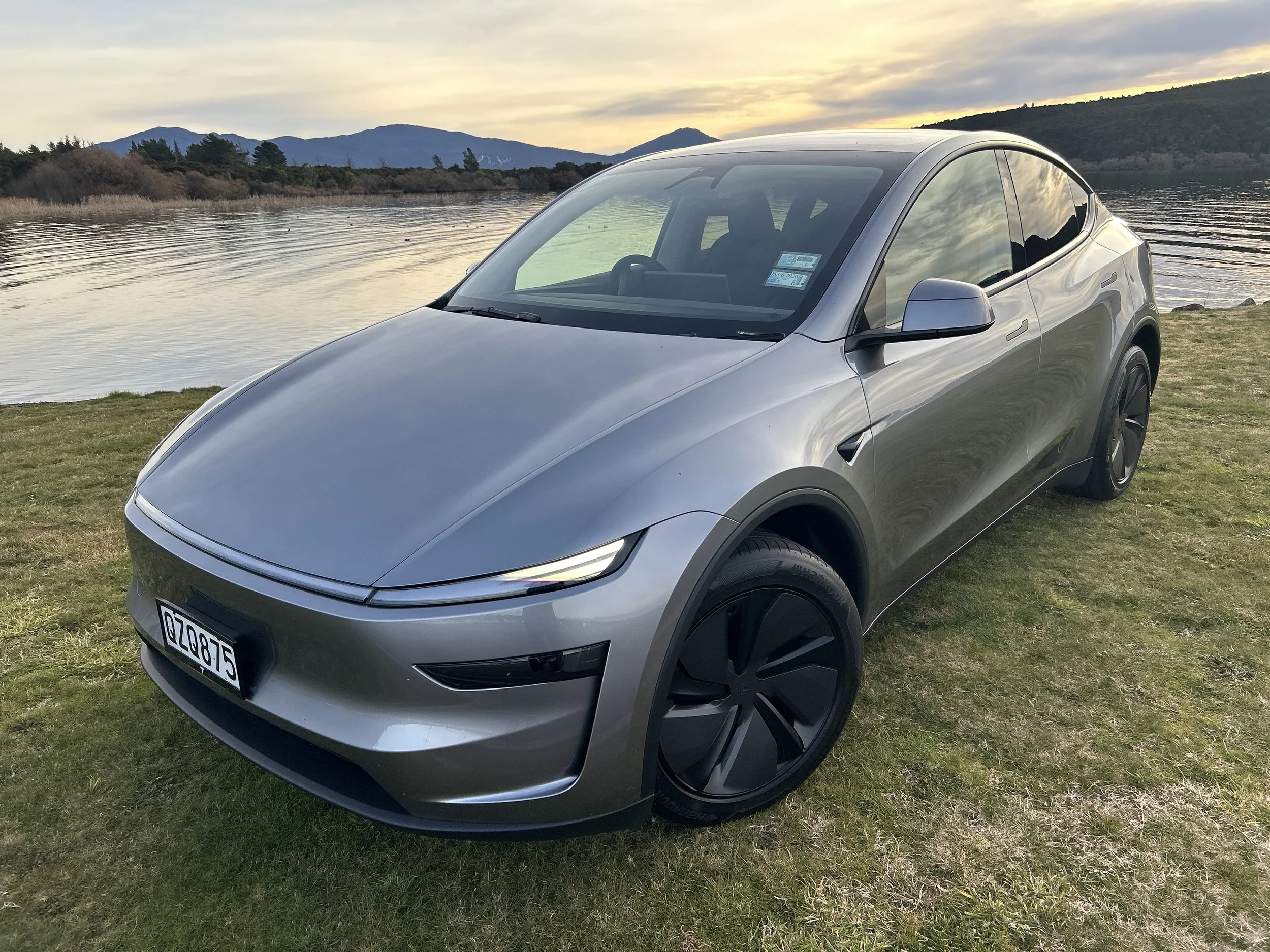
Price: $67,900.
Powertrain: Rear drive, single motor, estimated maximum power 220kW, maximum torque 420Nm; single speed reduction gear gearbox; 60kWh liquid cool lithium ion phosphate battery, set range 466km (WLTP).
How big: Length, 4792mm; width, 2129mm (including mirrors); height, 1624mm.
We like: Easy driving simplicity; good performance, very accurate range prediction; quality infotainment features; new styling.
Not so much: Technology quirks (no radar, just cameras is more limiting than the make will ever admit); Elon’s antics.
LIKE or loathe its central figure, revel in or resist electric driving, but in respect to what Tesla continues to achieve in the automotive realm, massive admiration is due.
What started out two decades ago as a tiny Silicon Valley start-up with big dreams is today the best-selling producer of electric cars, with giant factories around the world. For a long time, if you were a staunch electric car advocate, you drove a Tesla.
But are the good times threatened? Where Tesla goes, others now follow with aspiration to taste blood. So many new EVs aspire to be ‘Tesla beaters’. By my reckoning, the Model Y on test here has at least half a dozen competitors here. Plus, there’s Elon …. sigh.
Gone are the days when this make had a waiting list and every car was accounted for before it landed, if not before it was even built in Shanghai.
Tesla professes to be a technology company that happens to make cars. This conceivably means the Y and its siblings will aim at the head rather than the heart. Given the SUV here was the best-selling car worldwide last year, that’s clearly not a problem.
This test reinforced that efficiency, practicality, performance and value are areas where the Y keeps earning solid As.
Some Musk-ivisims irk, one or two quirks could stand a rethink, but all in all this car evidenced as a smart drive and a sensible choice.
The first and abiding factor, one that stands out from right when you set off, is just how easy it is to drive.
The second impression is that if you don’t care if only one motor involves, the cheapest of the choices is the better choice, because Telsa keeps things totally simple. The most expensive dual motor has larger wheels and nicer interior materials than the base car, it will go faster and further, but in respect to ambience, core ability and and specification, the lesser hardly cries out for more.
In the cheaper choice, the spec is very rich. Heated seats front and rear and now the rear set also electrically fold down and back up again. Remotely, if you set up the car by phone app. Multi-way power-adjustable front seats, dual-zone climate control, Autopilot semi-autonomous driving aids, keyless entry and start, power-folding and heated side mirrors, and plenty more. All are a norm for Tesla.
Tesla keeps outputs to itself, so there’s guesswork going on there. All they say is that AWD will hit 0-100kmh 1.1 seconds faster than the rear motor kind, for which a time of 5.8s is claimed.
As we know, the car retains the same electric motors and power packs from its pre-facelift range. Which means the AWD likely has a 75kWh battery and very probably offers 290kW and 510Nm of torque, whereas the rear drive is commonly held to use a 60kWh (if not slightly smaller) unit generating in the region of 220kW/420Nm.
I know the dual motor is more of a powerhouse because on the media launch, I had no trouble pulling away from a colleague in the single; he really had a hard time keeping me in his sights.
In isolation, though, the single just never felt like a slouch. If anything it being less instantaneously alert was better. Off-line alacrity is okay for a bit of fun, but in daily use it threatens to become annoying over-eagerness. The single motor was nippy, but didn’t shove its zippiness down your throat. On the move, it still had plenty to give.
For long distance driving, the greater factor is available range. The biggest single run was Auckland back to my home in the Manawatu; roughly 530kms from their door to mine.
Even though it is supposed to deliver 600 kilometres’ WLTP, just achieving this as a non-stop run in the AWD would have been a tall order. But very likely I’d have made the 491km to Bulls.
With the rear-drive, no chance. On paper, it lends 466 at very best. That changed the trip planning. The 409kms to Taihape, via National Park, seemed a possibility, but chargers are less plentiful that route. Plus, I really wanted to stick to the Supercharger network. So, really, the recommendation of transitting via Taupo, where (as in Bulls) there is a 250kW Supercharger, made more sense.
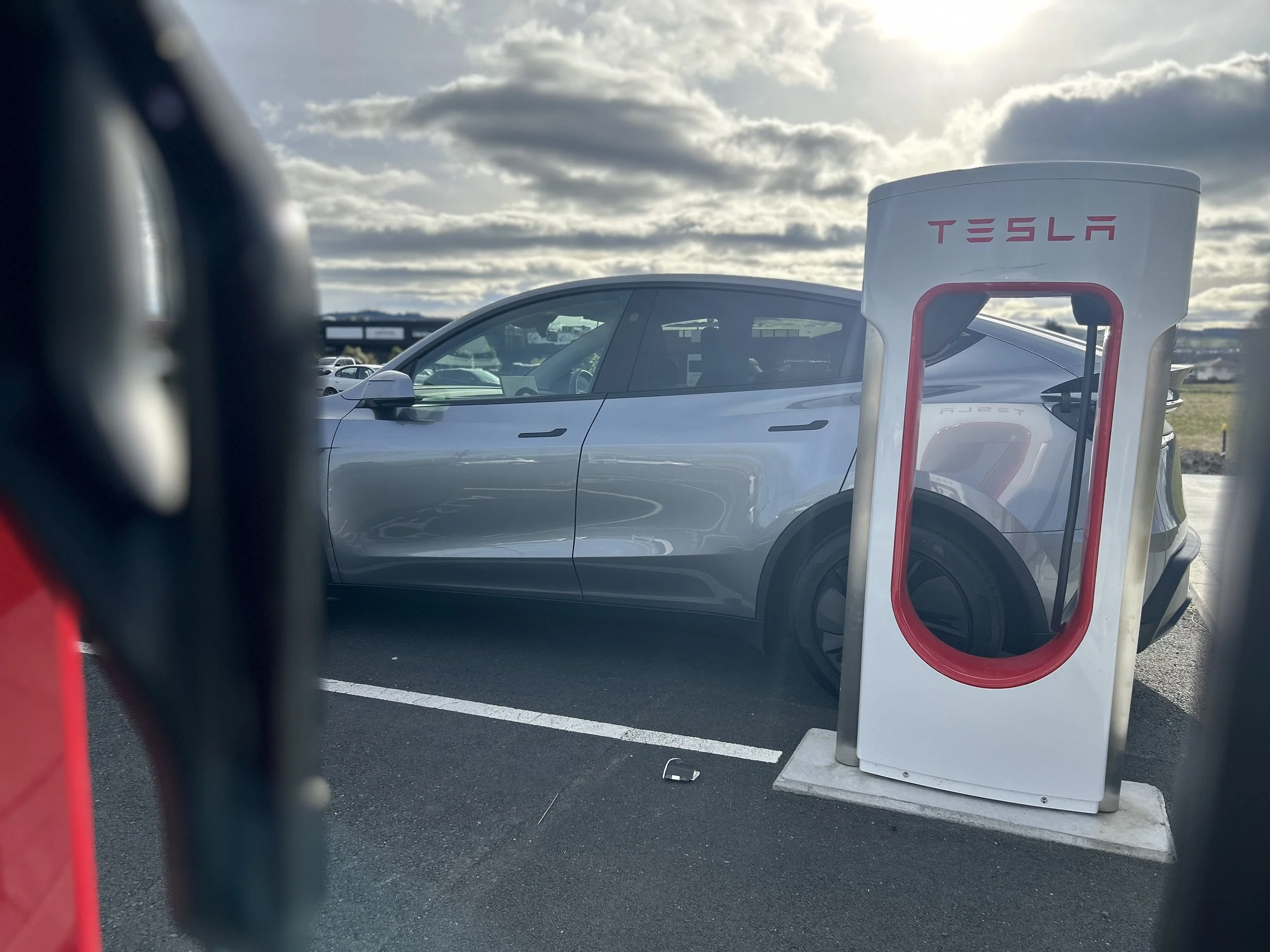
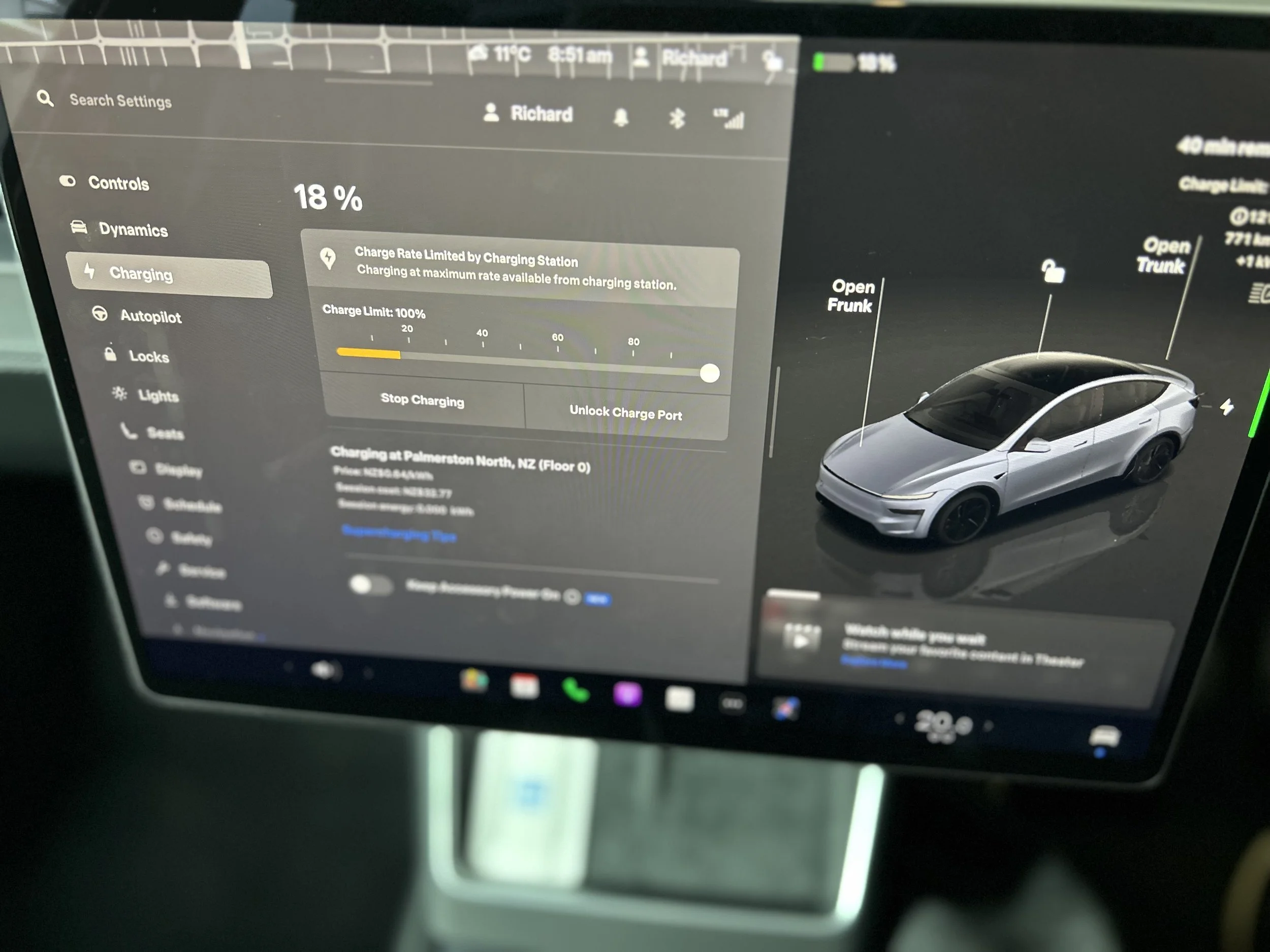
That counsel came from the car itself. When you plan your route using the proprietary charging network, the car’s navigation system automatically tells you when and where to stop, with minimal disruption to your journey, as well as how long you will need to charge for and how much it will cost.
The system was right on the button in calculating it would be down to 20 percent when it got to the Rainbow Point stopover; it also helpfully began prepping the battery from 40 minutes out, to ensure fastest replenishment. Again, that was provisioned. I’d barely had time for a flat white at the centre coffee shop when the app advised the car had enough juice to complete the journey.
In regard to spend, even expensive electricity costs much less than cheapest petrol. In clocking 1715 kilometres over the whole test, I recharged five times, mostly just to 80 percent, and all sessions came to less than $40.
Bearing in mind that the changes now are as much about re-engineering as restyling and refreshing the driver tech is important.
Sure, it’s the restyling that captures first. How could it not? Amendments are all to the areas fore and aft of the main cabin, but happening to have this new alongside an old during a recharging period was highly revealing.
The mid-section is still as inflated as ever, and proportions largely unchanged, but with the front being much sharper, lower and smoother - as much to lend a Cybertruck vibe as to improve the aero - you’re looking at a much more modernised, more visually enticing product that is no longer frumpy and computer mouse-like in silhouette.
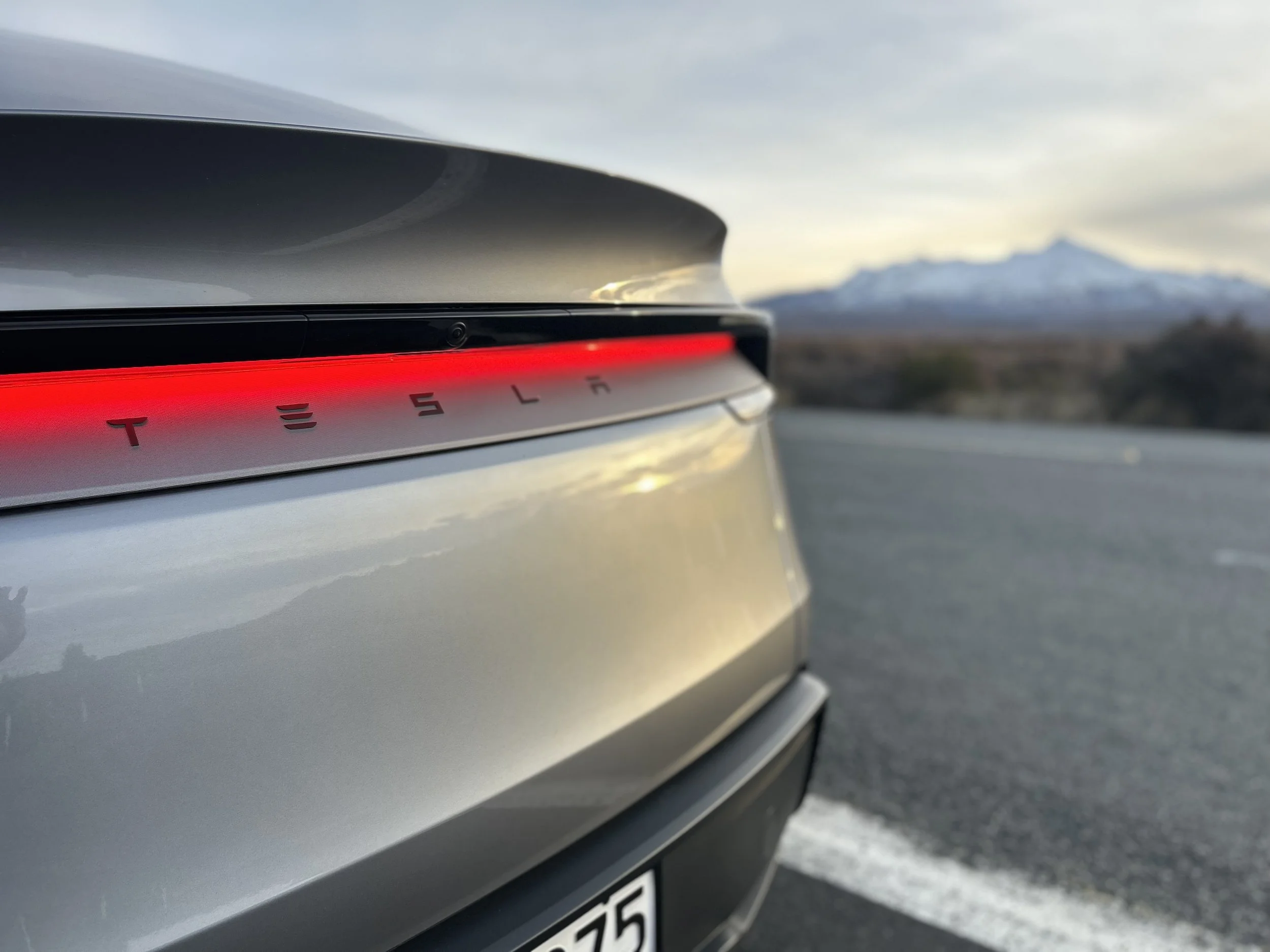
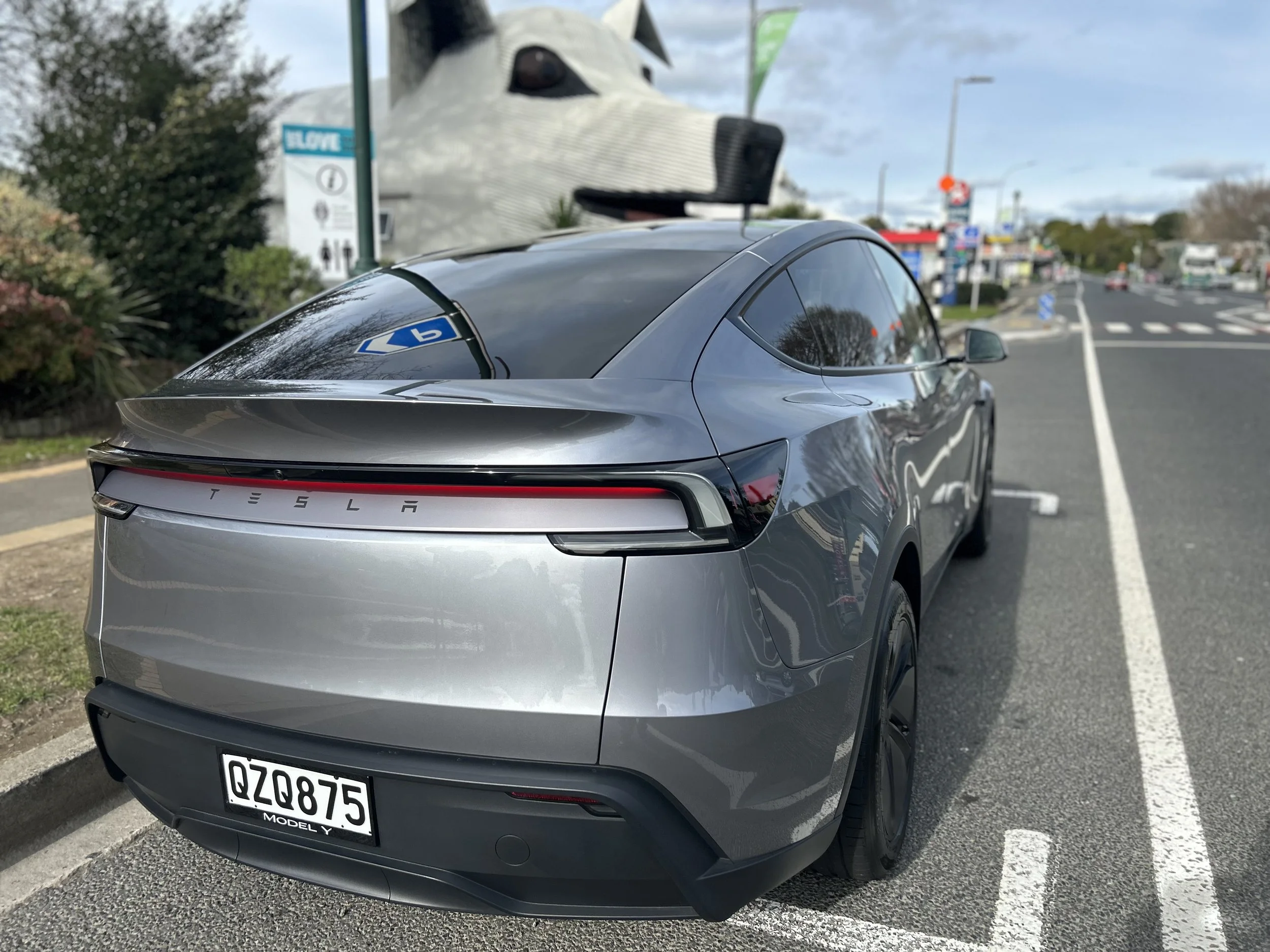
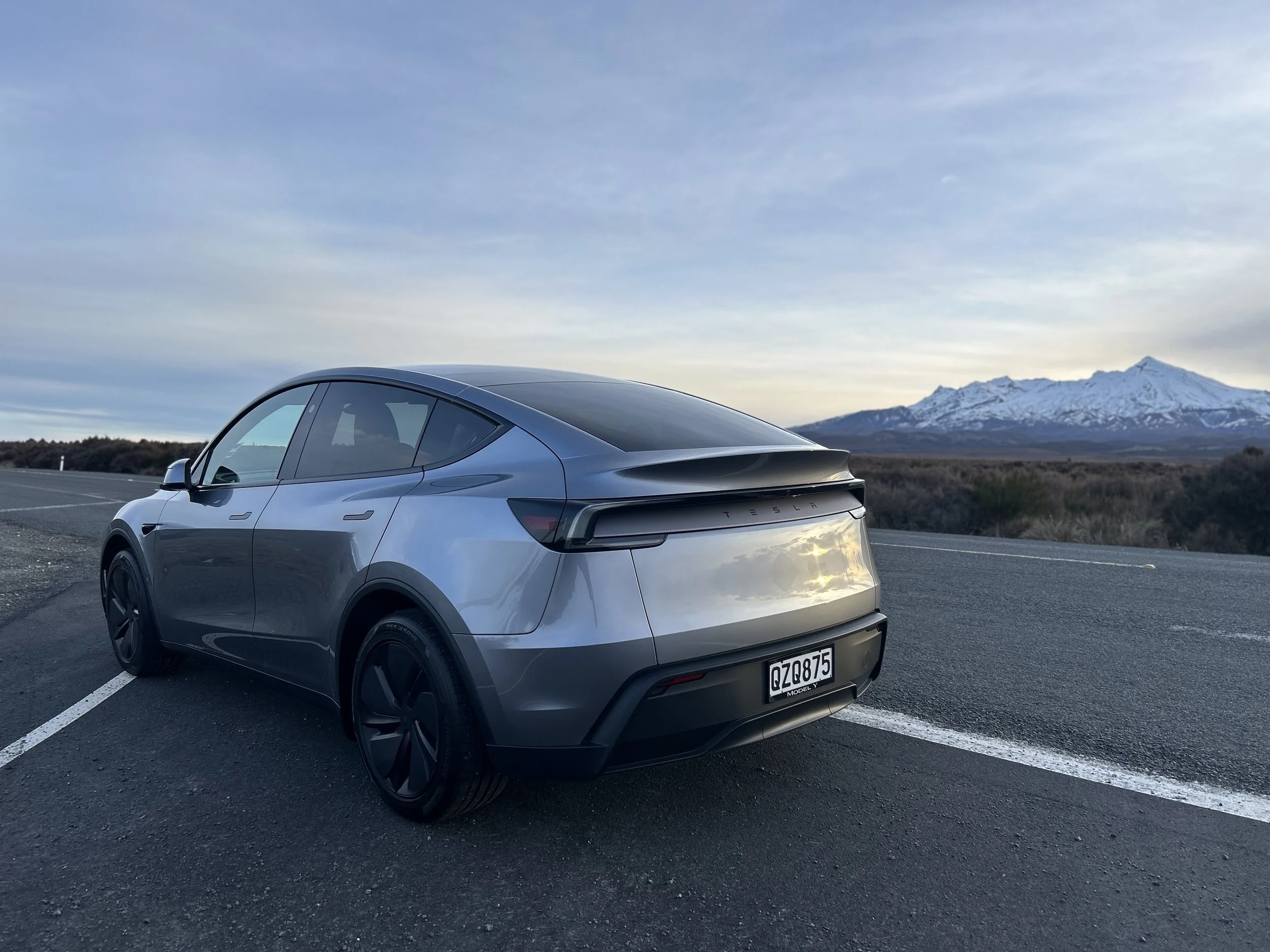
The back end is also reshaped for the better. The fresh rear hatch is a design improvement overall at practical level, but it also shapes up more nicely. And adding a distinctive full-width lightbar is a clever ingredient; the LEDs reflecting off the bodywork rather than being visible as the main light sources gives the back a pleasant red glow that zings. All this will help it stand tall in a sea of China’s near-lookalikes.
What you don’t see is also just as appreciated. A new die-cast rear floor, that culls the component count from 70 to one and entirely altered rear suspension are big, expensive changes.
On the suspension side not only have the springs and dampers been changed, but even the geometry is new, while the whole structure has been stiffened up to allow the suspension to do its job better.
It’s still erring on the firm side, but there’s definitely more compliance to the overall ride. Rear seat passengers will especially appreciate this, because they no longer feel every ripple, as used to be the case. Overall, it’s a far smoother, more comfortable and civilised experience. Kudos to the 255/45 R19 base rubber for some of this; the entry footwear doesn’t fill the wheel arches as well as the 20s, but the taller sidewall has patent cushioning positives.
Tesla delivers acoustic glass and ensures the frameless side windows fit snugly. The sensation of it being library hushed is of course amplified by the lack of drivetrain noise, too. You only get a hint of whine if you hammer the throttle.
How responsive it ultimately is can be tweaked by the driver, selecting the smoother Chill setting or the snappier Sport mode. The car is certainly friskier at the latter level, but actually more pleasant to drive in its more relaxed mode, because as confident as it is at taking corners, there’s not that much charisma from driving fast.
The lack of feel out of the steering no matter which of the three modes are used, the car’s weight … all influence in respect to that. If you want frisky fun, best await the Plaid.
Another plus if you cannot be faffed with overly engaging with a car is how brilliantly attuned to the ‘get in and drive’ concept.
If it’s that degree of functionality you crave, then few cars are surely more amenable than a Tesla. You can debate how engaging the Y is to drive, but no-one can say it isn’t dead easy.
The whole spaceship on wheels ideal starts with the key that is a plastic card and can stay tucked in your wallet. Even left at home once you set up an app on your phone with which the car can do all manner of great things.
One particular welcomed function on a fiendishly cold night was being able to set the cabin to a toasty warmth ahead of heading away.
While Mrs B was lamenting having to leave our cosy fire-warmed lounge, I’d simply opened the app, set the car temp to 21 degrees and, though it had to ramp up from an indicated seven, was all set after just a few minutes, which relates how good the heat pump HVAC system is.
Yet tech advancement in all EVs is astounding these days and arguably there’s nothing much the Y that cannot be found elsewhere. Indeed, you could argue those with useful fundamentals like Apple CarPlay, Android Auto and radar sensors have more to offer.
At a glance, the casual observer may not realise that the minimally styled - to point of being called plain - cabin has been completely overhauled.
It’s a matter of revision and reduction. The cabin as a whole has taken a notable step up in quality and tactility, with more pleasant materials used - including real aluminium trim accents. Customisable ambient lighting also enhances the feel of the interior at night.
Fundamentals are still intact. Buttons, instruments and a display directly ahead of the driver remain foreign to Tesla.
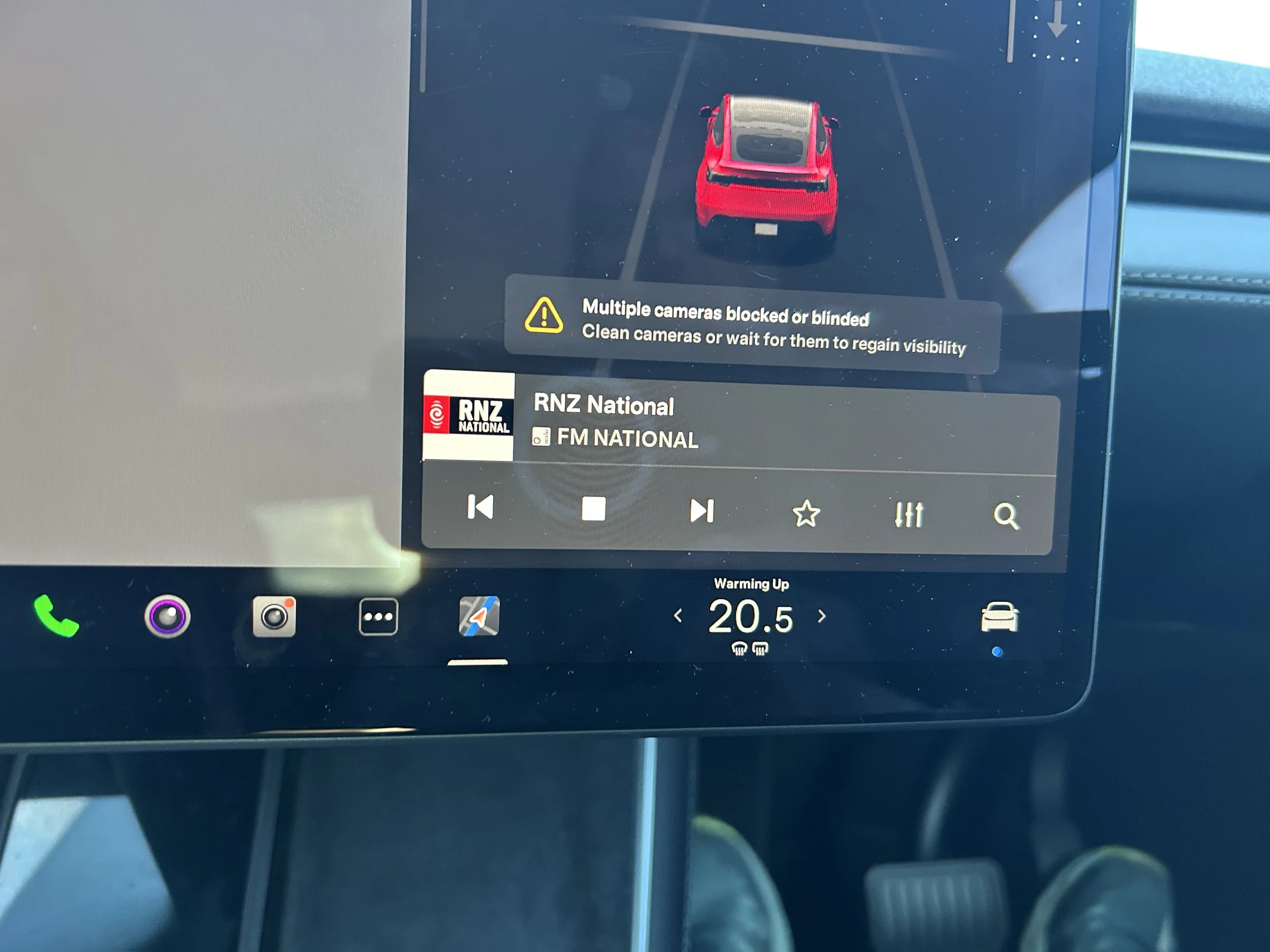
Wing mirror adjustments are still ridiculously over-complicated with no way to adjust them when the car is on the move. The cameras are only brilliant for external views when conditions allow; on every cold morning, condensation alone took them offline.
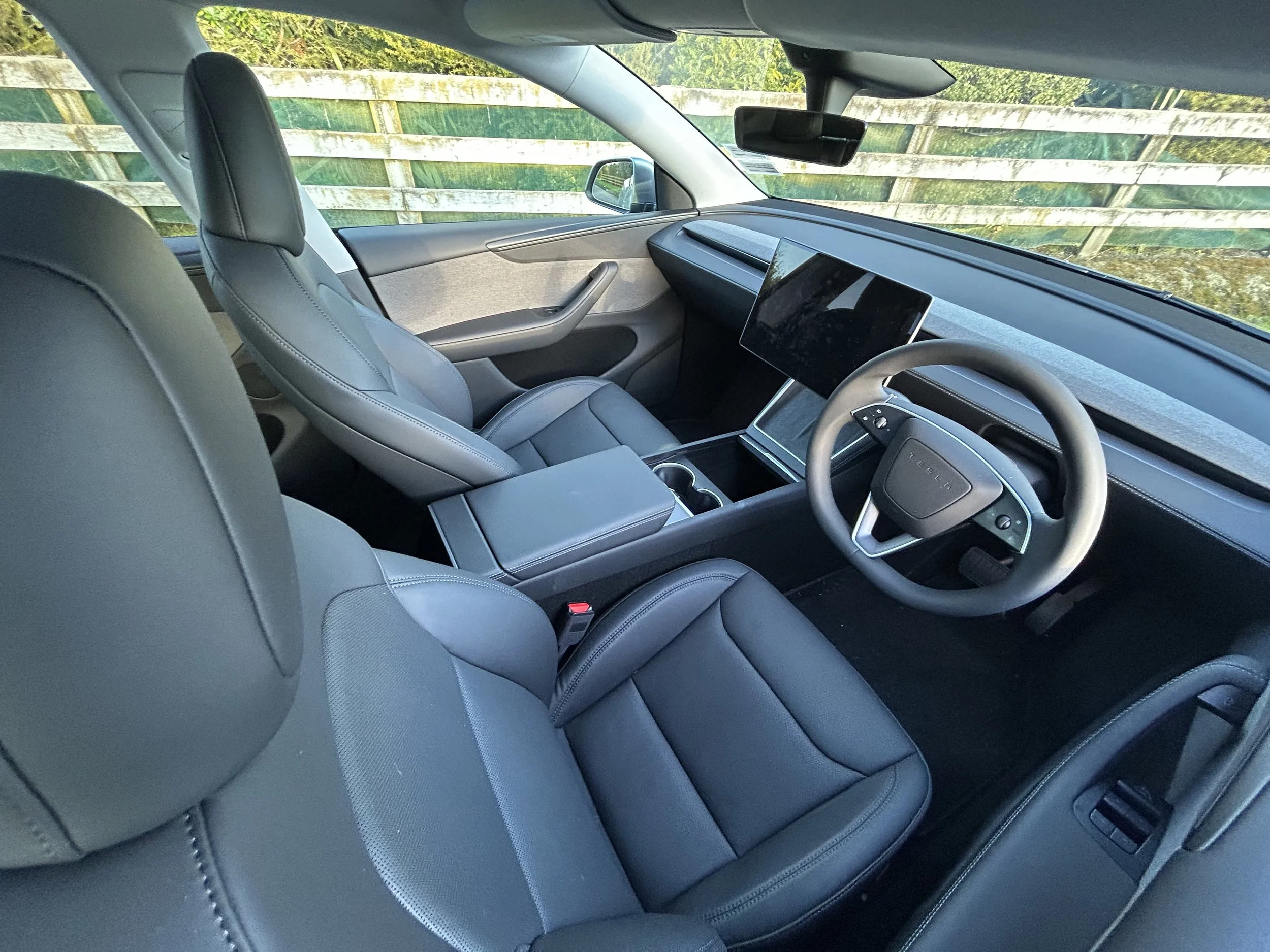
The steering wheel retains scrolling wheels. But now there are wee shortcut touch pads, the most useful to activate the wipers (though settings are still on screen).
But so much else remains operated by and/or viewed on a large, 15.4-inch panel in the middle of the dashboard. If you want to open the glovebox, bonnet or boot, it’s easiest to use the phone app.
Losing the gear selector wand for a touch activation on the top right of the screen is very nouveau, but why not? You swipe up for Drive, down for Reverse, touch the central area between for Park. It doesn’t take long to get used to and the location is logical as it is also the area where the speedo and driving range site.
But if you don’t know, you don’t know. It was fun to challenge newbies to find and work this function. Everyone ultimately got it, but some took a while.
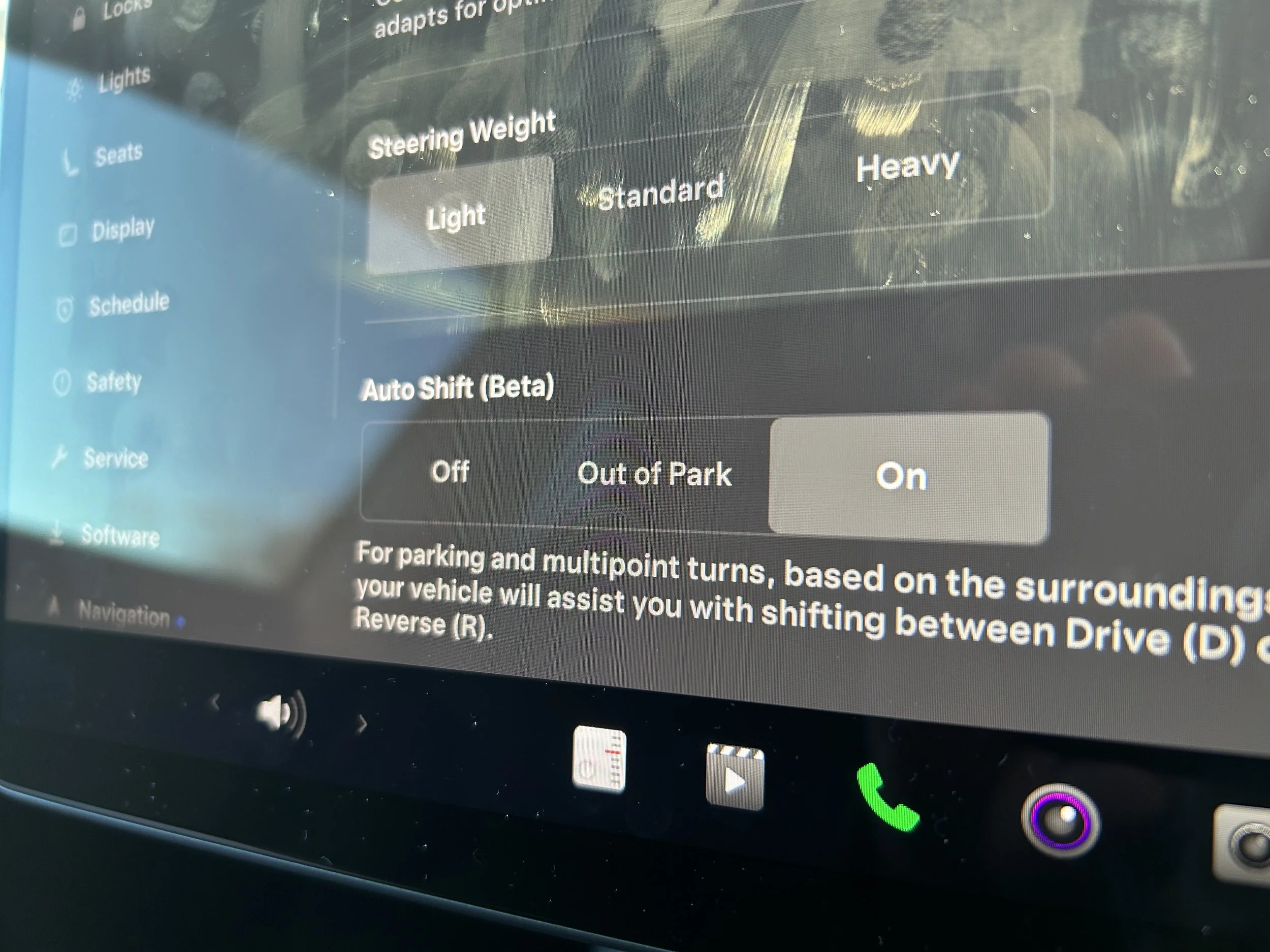
The car was for some days trialled in Auto Shift (beta), so it would auto select Reverse or Drive in certain low speed manoeuvring scenarios. As soon you stop, and there’s only one logical way left to go, it automatically determines to take it; a fantastic ‘look, no hands trick.’. It’s another guarantee of generating WTF surprise from the uninitiated as they try to fathom what’s going on. As it switches from one direction to the other, the views from the multiple cameras instantly change to suit, but it’s a function that is liable to catch you out if you don’t keep up.
As before, there are enough app prompts to fill the screen. Being faced by so many icons continued to be distracting on the move. The radio function, will pull in many stations, but for some reason the icons never seemed to stay in the same order. My favourite could be top left one day, then after a screen refresh, it’d be in the middle, or down the bottom, or ….
EVs being quiet make them great for audio systems, but Tesla has nonetheless upgraded the sound system. It’s now featuring 16 speakers - some of them hidden. It also claims to have improved microphone clarity, the speed of cellular downloads, the on-board wifi and phone key performance. Whatever they’ve done to accentuate radio reception, bravo! The middle of the North Island from south Waikato through to Rangitikei is normally where all stations drop out, but this car retained my favourite all the way down the line.
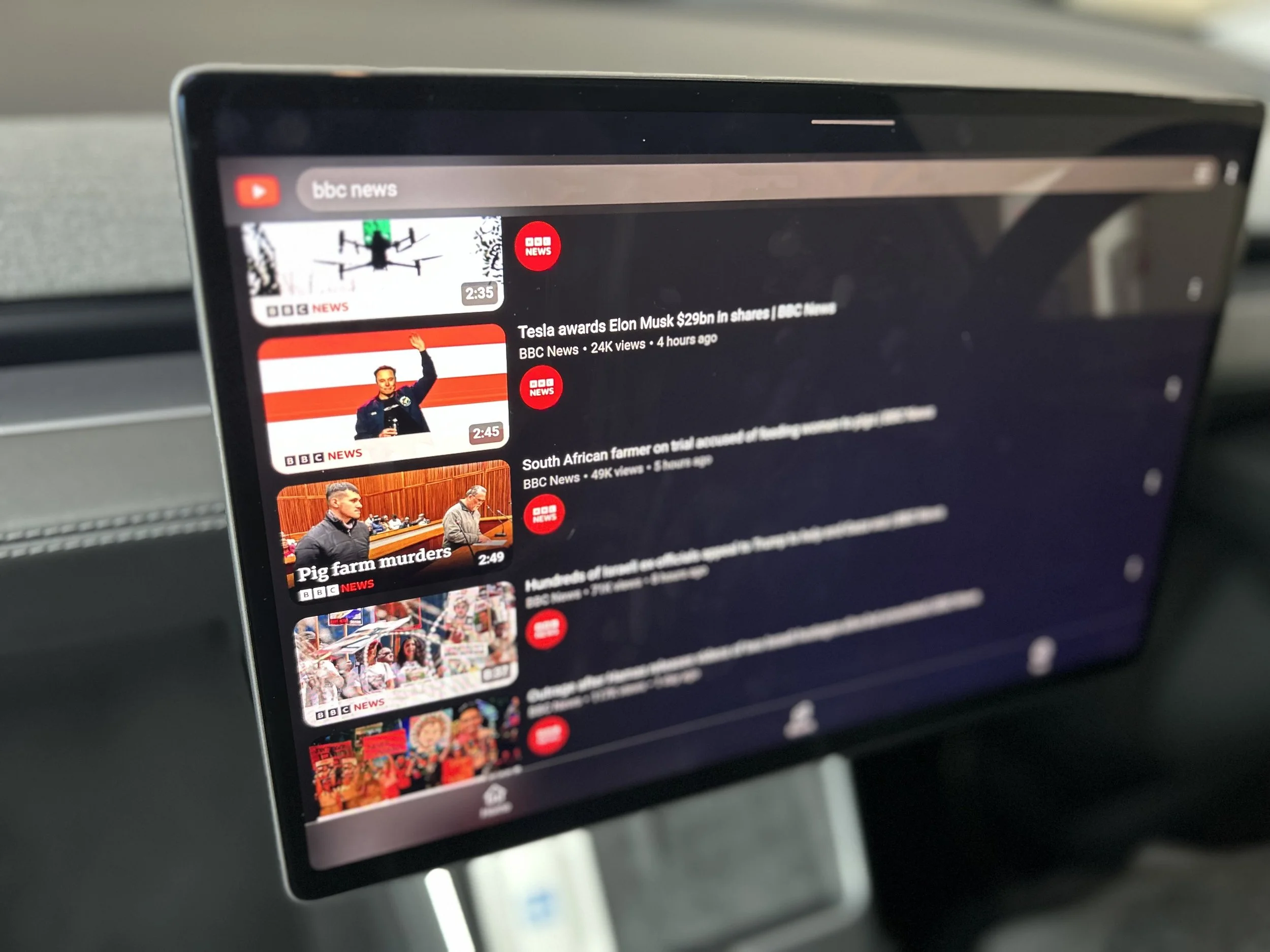
I did take time to listen to podcasts as well, and the regime for that is more circuitous than it surely needs to be; I basically couldn’t directly listen to those on my phone, but instead had to use the car’s Wifi to locate and upload them. Elon, please, just learn to love Apple! He does allow YouTube, Netflix and Spotify. The latter two rely on you having an account, so I didn’t bother. But YouTube was great for watching (while at the Supercharger) latest news of the day. And SVG cleaning up in Nascar.
Continuing Easter Eggs include the Romance mode (which shows a warming fireplace), around half a dozen arcade games - some of which can now be operated by a Bluetooth linker controller - and, of course, that tee-hee trademark, on-demand fart sounds.
The idea of providing stuff that helps you wile away the time when replenishing is pretty universal now, and doubtless many other brands can offer much the same, but Tesla did it first and, to its credit, the operability on a screen this big is really good.
If you want to make a Model 3 feel rueful, show him this Y. In isolation, the sedan is roomy, but against the SUV it seems very second-rate for space. The Y’s boot is more than twice the size, the cabin has noticeably more headroom throughout, and the SUV vibes mean the driving position is higher, so visibility is better.
The update delivers a redesigned centre console whose storage potential simply blew me away. The biggest cubby is amazingly capacious; large enough to stow a day’s groceries, including pair of two litre bottles of milk. My wife, meanwhile, was delighted about the two neat, sloped wireless charging pads, as it meant she could recharge her cellphone alongside mine. There are large door pockets, too.
Tesla listened to criticism of the new Model 3's layout and retained a conventional steering column stalk for indicator function. I’ve recently driven a 3 with the last year’s steering-wheel-mounted buttons and can understand why it’s now being junked for the Y’s approach.
The seats are new and designed for better comfort thanks to longer bases, more bolstering and an electrically adjustable back angle. All the same, the rear seat bases are still planks and while the driver’s chair is a better shape overall now, as a tall and … erm .. larger person, I came out of the longest run wishing for a touch more lower back support.
Rear occupants are now treated to a touchscreen of their own, an eight-inch unit allowing access to the climate control, gaming and streaming. It even supports the connection of two Bluetooth devices, while two high-powered (65W) USB charging ports are also fitted.
In terms of practicalities, Tesla only quotes the boot volume to the roof of the car - when most car manufacturers tell you the figure up to the luggage cover - but it's a massive boot by any standards, and it has a very large hidden area underneath. There’s also a usefully sized frunk extra storage under the bonnet and it’s now insulated, so can hold ice.
What Tesla calls the “seat dance” is nicely executed. As said you can run this from the app or, alternately, press buttons in the boot. Be aware that when the rear seats fold, first of all the fronts will shuffle forward to make room, even if they are occupied. So make sure you aren’t going to get caught. They move back to their previous position when the seat behind is finished folding. It’s a snappy feature if also the car’s noisiest automated function.
Alongside the usual airbags and electronic driving aids, the Model Y has the Autopilot semi-autonomous driving function that Tesla is famous for. This lends ability to steer, accelerate and brake the car automatically to help avoid a collision, while there are also collision warning and blind spot monitoring functions.
This car had the Enhanced Autopilot that allows it to park itself, drive itself on the motorway and effect auto lane changing at the flick of the indicator (after the cameras check the way is clear). It’s a function I dabbled with then disabled, having found it to be prone to false reactions.
The alarm set off. Don’t ask me why. No-one was near the car. I was just glad it happened just the once, and at two in the afternoon, rather than early morning. I managed to to disable using the phone app. Which then signalled requirement to be re-configured.
At end of this test, how did I feel about the Y? It’s fast enough, highly refined, comfortable, effective around town and on the open road and cost-effective. Operating the fundamentals is dead easy.
Like all Teslas, but unlike all EVs, it’s likely to be the car you like for all the reasons that don’t crop up in enthusiast conversations, because it’s not super engaging.
But, in a strange old way, that will make it highly satisfactory to the many who couldn’t care less about cars having to have charisma. They want competence. Tesla delivers. And it goes beyond the call. Though people have qualms about Supercharging pricing, I’d say the supporting infrastructure makes life perfect.
I of course heard all sorts of views when with this car. But of all those, the one that especially stuck was nothing to do with politics or personality.
The idea of keeping an easy car for everyday when they also have access to something spicier for special occasions is one I personally agree with. The particular guy who offered that thought owns two serious sports cars, both used properly, often at track days. He sat in the Y, dabbled with the controls. And then told me “you know, I could be quite happy in one of these.”
Tesla would be relieved. People all around the world are turning off; sales in almost all key places have latterly fallen at the sharpest rate in at least a decade, mostly because the man who is the embodiment of the brand seems hellbent on destroying its credibility.
During this test period, it became abundantly clear even Teslarati now have Elon issues. And those who were never fans can be even more opposed.
Also in the air is rising uncertainty about how invested in the whole car-making adventure Mr Mars Attacks still is. Creepy humanoid robots seem to be more of a preoccupation right now.
Tesla is keen to win approval for its self-driving software this year, but how far will that resonate? What it comes down to is product. The count of cars Tesla has hinted at but never gone through with is almost as great as the line it actually has delivered. The cheap model it says is coming? Forget Model 2. Instead, it’ll be a stripped-down version of the Y. Is that what we want?
As is, the fact that an already five year old car is its best hope is hardly a positive. The once ground-breaking Model S has been on sale since 2012, the Model X since 2015; any other car brand would have replaced them years ago. Any other brand would also be giving serious thought to a replacement for the now seven year-old Model 3. Yet nothing is being talked about.
Yes, yes, I know there’s the Cybertruck … but it’s really niche, totally North America-centric and has been a dud there. Forget it.
All this in an increasingly competitive market. Almost every other EV brand here and incoming will tell you at least one of its cars is a Model Y competitor. How ironic that Tesla’s sourcing point, China, is the biggest threat: Zeekr’s 7X, BYD’s Sealion 7, MG’s impending IM6 have that intent. Nio, Xpeng and GAC will throw in a car or two as well.
Teslas are still everywhere; most are first-get Model Ys. But whether the update will attract the adulation heaped upon the original is a reasonable question.
The Juniper rework makes it a better car than it was. So it’d be a pity if the best days are behind it.