Subaru Forester e-Boxer Touring road test review: Adding shine to a star
/The latest version of electric assistance is what we were always waiting for, but realities also come into play.
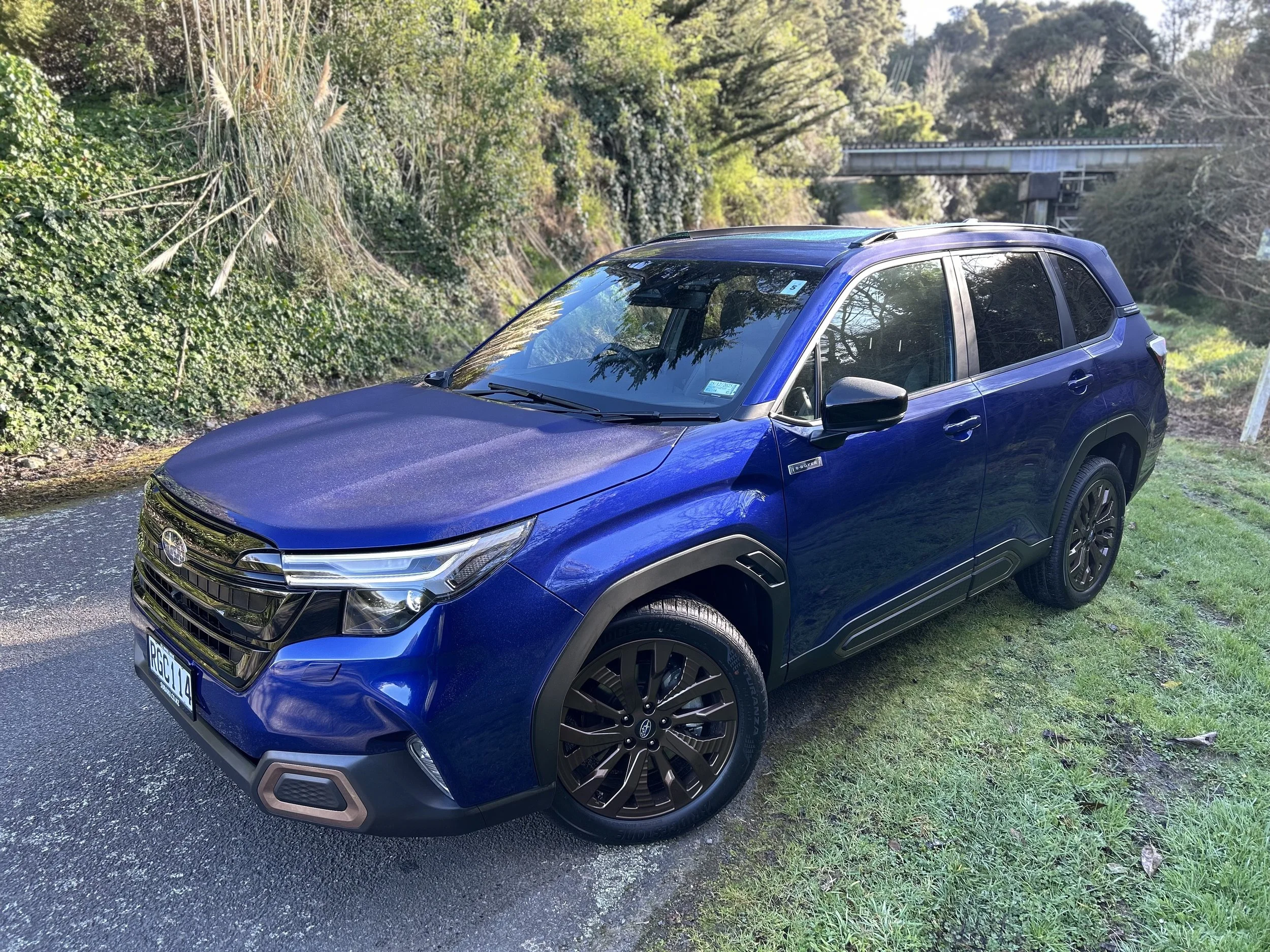
Price: $60,990.
Powertrain: All-wheel-drive petrol hybrid maximum combined power 145kW(121kW engine alone)@5600rpm, maximum combined torque 276Nm (212Nm)@4000-4400rpm.
Transmission: Continuously variable transmission.
Safety rating: Five star ANCAP.
Dimensions: Length, 4655mm; width, 1830mm; height, 1730mm.
We like: Improved ride and bump suppression; comfortable cabin; off-road capability.
Not so much: Fuel savings are there, but it’s not a miracle worker; no spare wheel; transmission flare.
WHEN unable to answer that crucial question, only one thing to do.
Phoning a friend has been Subaru’s habit of late, always to the same number. It did so to create the Solterra, it’s first electric car, and has done so again to improve its only electrified one.
Petrol electric cars are well accepted here - last year, a dismal one for car sales, the sector was the only one to show growth.
But not for Subaru. Being back then still reliant on a previous hybrid drivetrain meant it was stuck in a rut. That old e-Boxer was just a dud; they simply had to do better. Corporate pride was put aside and they dialled up significant shareholder Toyota.
The end result is what is on test here; a Forester whose hybrid drivetrain is a start again.
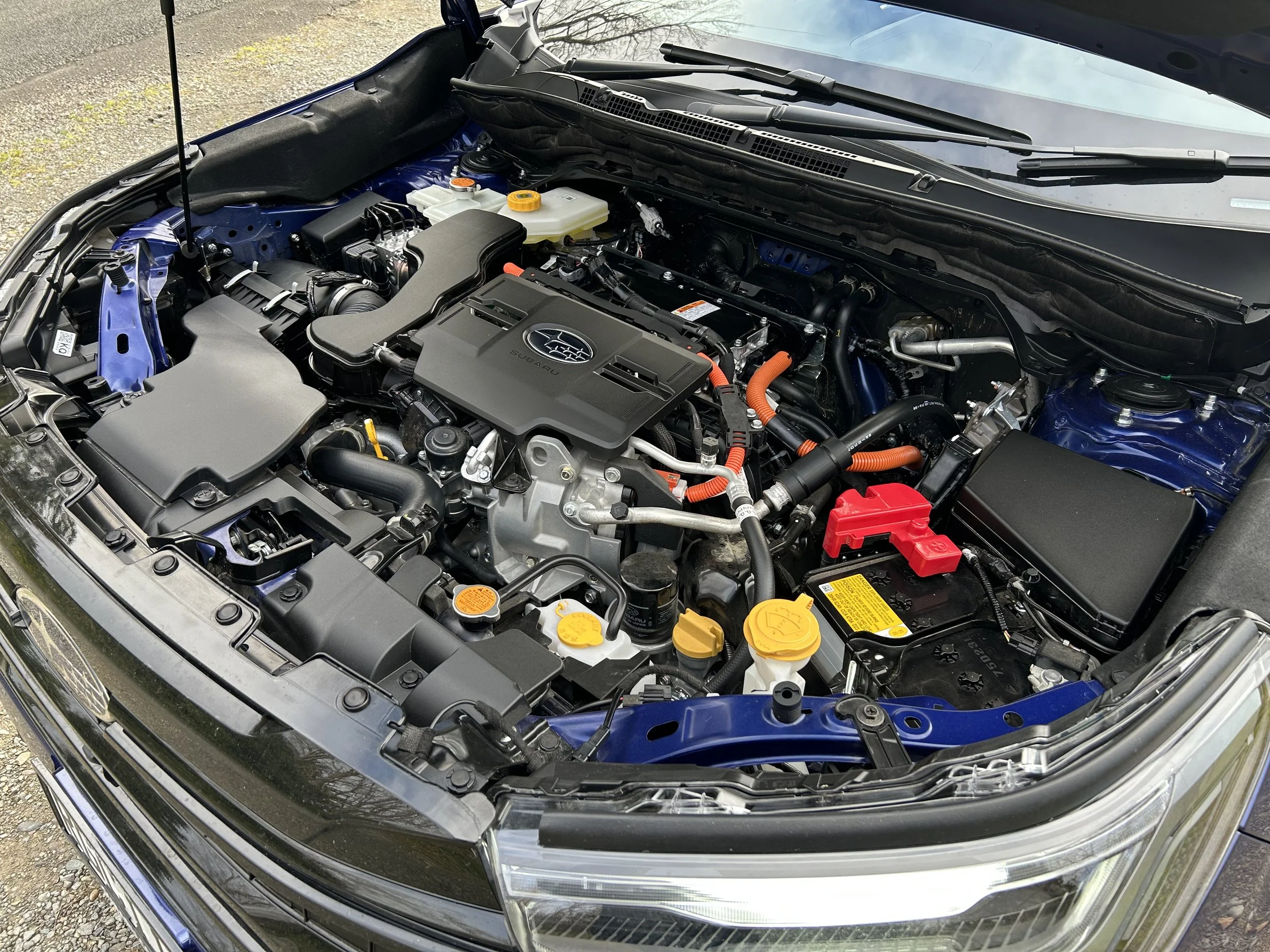
The new mechanicals this time pair Subaru's tried and tested 2.5-litre four-cylinder petrol boxer engine with an 88kW electric motor and 1.1kWh battery pack and, in doing so, divest all the in-house electrical elements previously employed.
As it should. Toyota is a world-class expert in hybrid drivetrains. It changed the world with the first Prius. Subaru had nothing to teach and everything to learn from a shareholder which now places almost every mainstream model it sells has a battery-assisted petrol powertrain.
Subaru hasn’t committed quite as wholly to battery-wed world; you can still buy a Forester without the ‘strong hybrid’ inclusion, also with reliance on the 2.5-litre boxer petrol that has been used for yonks. It’s a cheaper choice but implication is that it will cost more in the long run because it consumes more fuel.
The factory cites 8.8 litres per 100km on the WLTP scale from the pure petrol and 6.9L/100m out of the hybrid. Those counts are respectively 0.5 litres up and 0.5 litres down on the preceding line’s petrol and hybrid choices. CO2 outputs from both engines are identical, at 200 grams per kilometre.
The media launch drive cycle in July facilitated time in two pure petrols and two hybrids, every one for 80-ish kilometres. I saw 7.6 and 8.3 litres per 100km from the hybrids; 8.2 and 9.7 from the petrols.
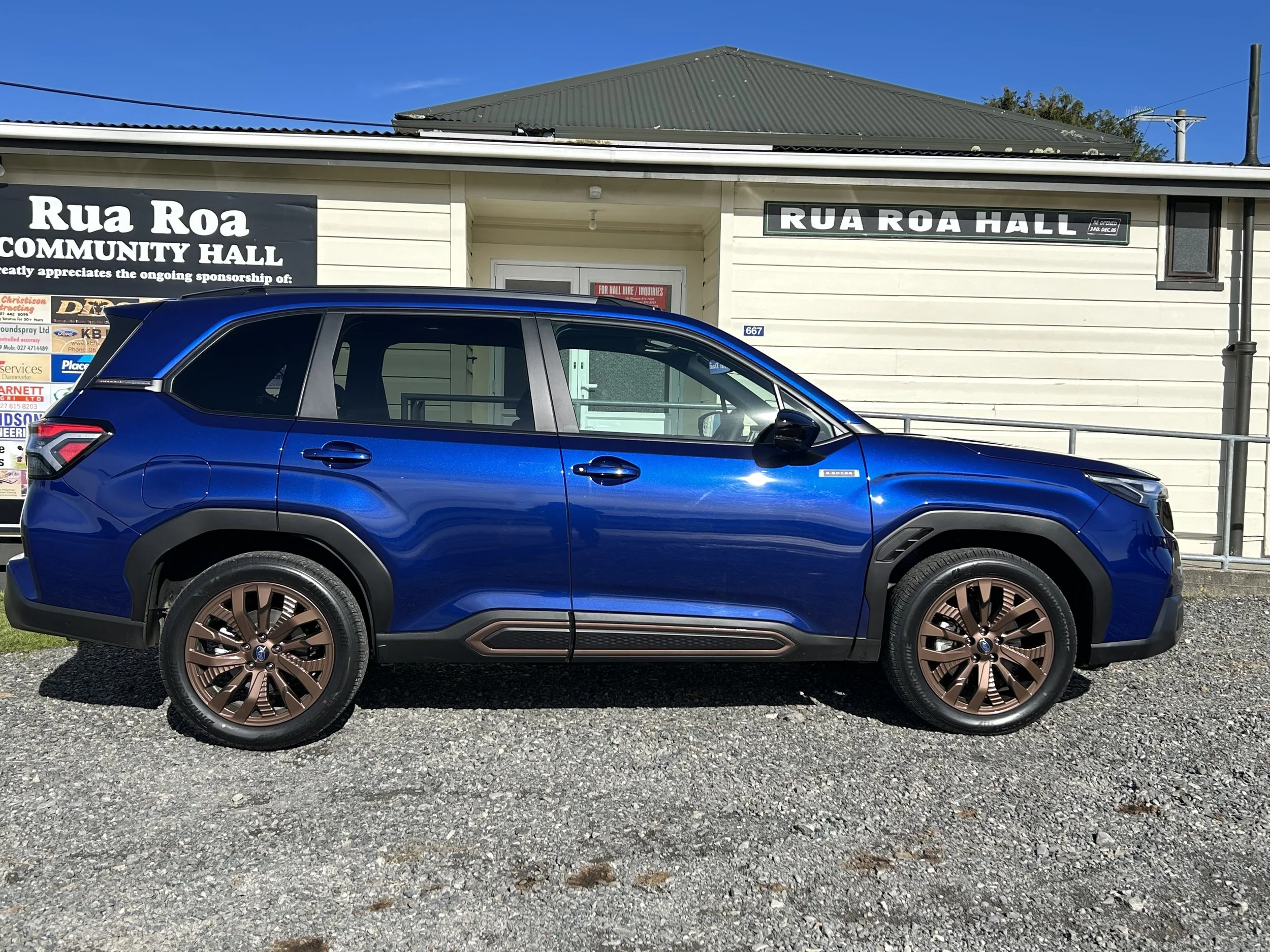
What now from the Touring hybrid that subsequently arrived for a seven-day stay? Economy was gauged on a there-and-back equidistant run over an assortment of main and country roads. The outward was in the car’s Intelligent mode, the return in Sport.
The average of the outward leg was 8.2L/100km; the return at same speeds, same route … 6.6L/100km. Interesting and far more promising. But not to be maintained. Overall economy for the week came back up to 7.4L/100km. So, 0.5L/100m off the manufacturer-cited best.
A good result? You’d like to imagine it’d have to be a big improvement on the original hybrid, which involved a 2.0-litre engine and used a much smaller electric motor and battery. Just to double-check, I went back through the archives for a test of the original drivetrain, written in 2020. And the return then was …. 7.4 litres per 100km. Ah, right.
So as much as times have changed, for me they didn’t. What also muddies the water is that the Forester’s supposed equivalent in Toyota-dom, the RAV4, is still way thriftier, with 5.3L/100km officially cited.
But, then, there are two trademark technology reasons why the Toyota gets more; both are elements you cannot imagine any Subaru SUV doing without.
One: The engine. There are pros and cons to running a boxer, aka horizontally-opposed, powerplant. The layout is great for space efficiency and contributes to any recipient car having a low centre of gravity, which helps with dynamics. Hence why Porsche is a fan.
But even though Subaru has rendered improvements to its design over the years, they are not known for being particularly good on fuel or for emissions. That shows here.
Second? All-paw all the time is a Subaru sales hook that keeps it sweet with adventurers. It’s a real confidence-enhancer when you’re driving on mud, snow and ice. It is why Central Otago has been nick-named Subaru central. Purportedly the region holds the highest count of Fuji cars per kilometre anywhere in the world.
The price for having AWD operating all the time is that it requires more energy from the powertrain, which means more fuel being consumed. Rival systems engineered to switch from two and four-wheel drive, depending on how slippery the roads are, improve fuel burn.
Toyota’s system is the absolute extreme because with it the front wheels are driven by an engine, the rears by an electric motor, the two in complete isolation. It couldn’t be more different to Subaru’s driveshaft-included preference that always rotates all four wheels.
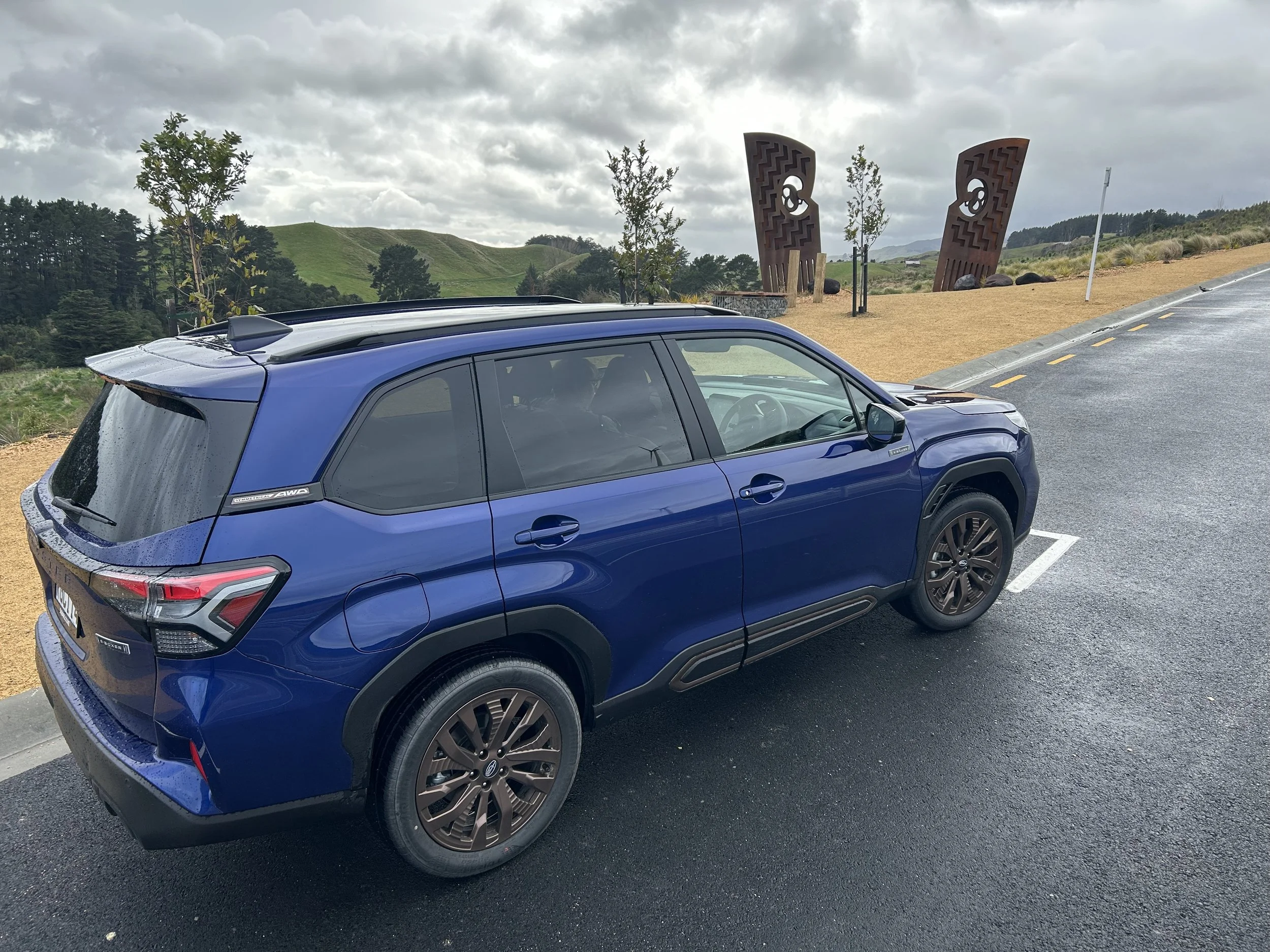
Because of that, it was never going to be accepted by Subaru. Or potentially by Subaru customers, whose primary reason for buying includes knowing they’ve alway bought into a system with genuine and proven off-road aptitude. So you get what you get and simply have to live with the result.
The Forester is not a fuel hog, per se, but the one environment it did seem to seem to most tangibly evidence best economy was when navigating the terrain you’d imagine owners are always dreaming of escaping: The urban jungle.
But around town, certainly, you are most likely to experience the engine cutting in and out most frequently and even then the transition is easily overlooked, as the finessing is seamless and remarkably quiet. So much better than before, when it was often anything but.
In overall involvement, the new e-Boxer also overcomes the old’s issue, of never having enough meat or Greens. Perhaps the reason why what we have now is called the ‘strong hybrid’ is really not so much about economy and more to do with its actions. It is definitely stronger and smoother than the old unit and, in fact, also when measured against the current pure petrol alternate.
With electric assist, step off steps up; it’s as urgent as the Outback XT turbo, which is certainly brisk, though what’s more useful in daily driving is the additional mid-range oomph.
When it comes to establishing equality among the new Forester choices, you can be assured all versions seem pretty equal in the muck and on gravel. The hybrid has the same 220mm ground clearance as the petrols, the same tyres and suspension tune.
Nonetheless, any past owner intending to apply a hybrid for the same practical usages that they expected from the pure petrol needs to understand the battery-included car is again compromised in keys ways.
Braked towing capacity of 1200kg is 600kg shy of what the petrol will manage and puts it in the garden trailer category. The petrol also has a heftier tow ball down weight.
Also, whereas petrol Foresters have a full-size spare wheel, the hybrid makes do with an inflation kit, plus a difference in transmission type also influences.
Ostensibly, all Foresters - in fact, all Subarus save the BRZ - use a constantly variable transmission.
For some time, Subaru has delivered a better CVT drive experience than most, and while I still don't love them in comparison to a high-quality torque converter auto, I’d agree the set-up has improved.
However, now there’s sense the petrol gets a smoother, more agreeable system than the hybrid. The latter has technical difference to enable electric-priority; a planetary setup reliant on the combination of its primary traction motor and a smaller starter/generator (both housed inside the transmission case) is a Toyota tweak.
While characteristics in general mimic the petrol’s, the involvement is quite different. For instance, that secondary unit starts the engine and diverts excess power to generate electricity for the battery. This is crucial to why the car will roam on electric alone at up to 30kmh. Outside of allowing that, the starter/generator is otherwise in support in combination.
That’s where it does well, on the other hand, it is more like the older versions of Lineartronic at highway speed, in sense that it asks for carefully measured throttle application else it will fall into releasing more noise than progress.
Given the hybrid has a meatier mechanical responsiveness, you could argue that it doesn’t need to be hoofed as heavily. Nonetheless, the propensity for flare when kicking out of corners and overtaking left me thinking more refinement and flexibility would be appreciated.
Whatever the powertrain, Forester just maintains a sense of sturdiness that is quite endearing. Subaru is very proud of the car’s hardiness, but doesn’t rest on past laurels. This one has more welds and greater body stiffness.
Suspension tuning is also improved. The Outback has always been the more regal car, but those with experience of the family flagship might also note how Forester, through being more absorbent and settled over ruts and crests than previously, has settled down into adopting the same easy-going loping gait that makes the largest product so likeable.
Sure, the spring and damper choice means it’s not the tightest handler around corners, but high-end dynamic dexterity has never been the car’s forte. What matters more is that the tuning will be appreciated by anyone suffering a corrugated route.
Subaru’s EyeSight hazard detection and driver monitoring system is further refined in Forester, to point of possibly being a bit too zealous. The driver attention and lane departure warnings are definitely more nervous. thankfully, the autonomous emergency braking is sensibly tuned and traffic sign recognition is sharp; on cruise control when entering a fresh zone it’ll automatically adjust to the new limit. Clever.
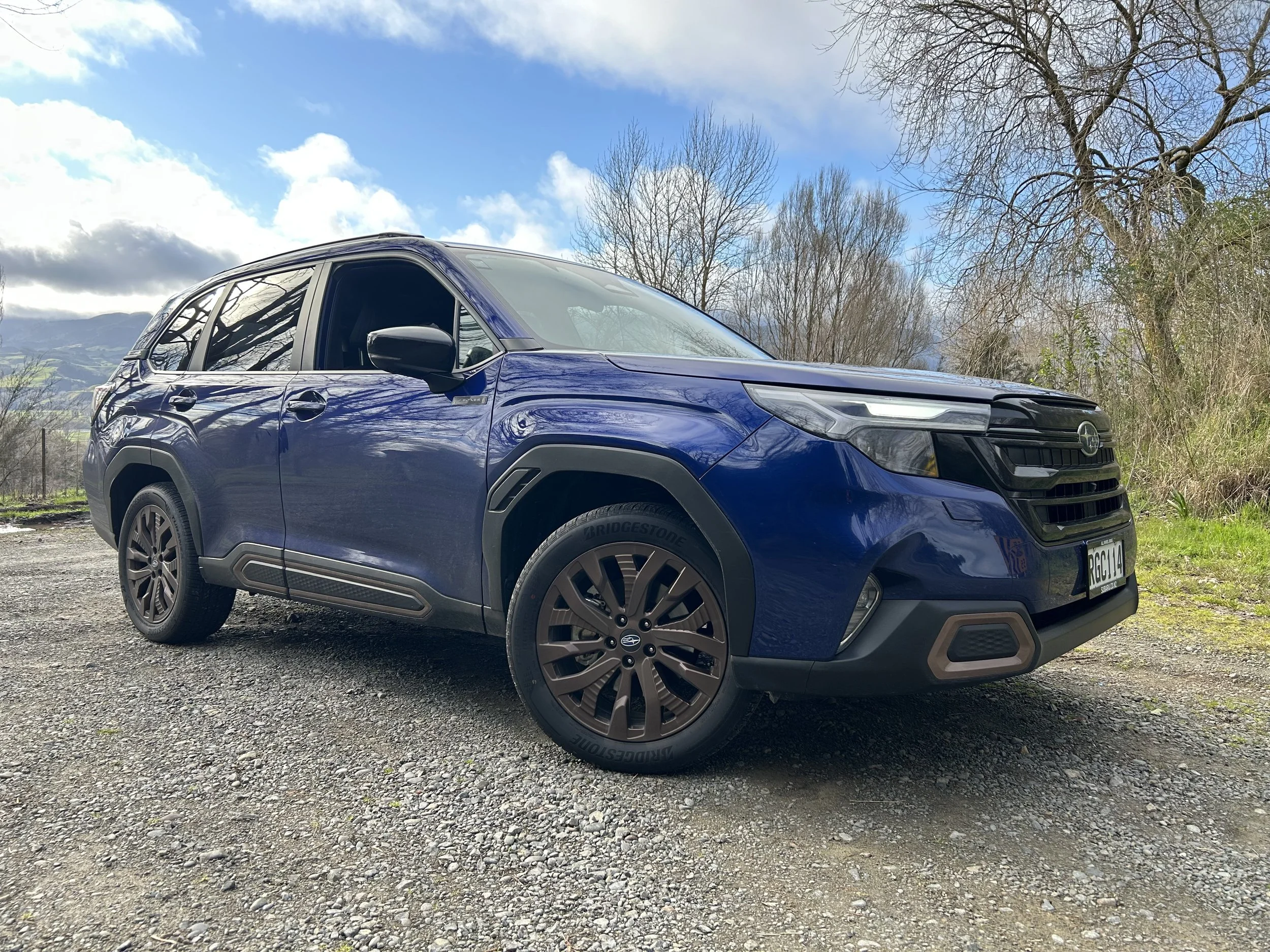
Forester’s essential look bases off drawing two boxes, one big, one small, the first behind the second, butting up on reasonably vertical sides, is smart shaping for pragmatism and practicality, but the sixth generation car is nonetheless more modern than the predecessor it take reference from, if also divorcing all the more from the original’s likeable air of being a life-sized Tonka.
The front end features a large grille that links with the headlights either side of it as one big fascia piece. At the rear, the tail-lights are trapezoidal in shape and are linked by a centre bar of trim.But the core elements of chunky convention carry on, and that’s fine with me. And clearly with Subaru: Just wait until you see the next Outback.
The car having a single tailpipe, when the rear bumper has two exhaust-effect cutouts, was noted by many as being a symmetry that backfires.
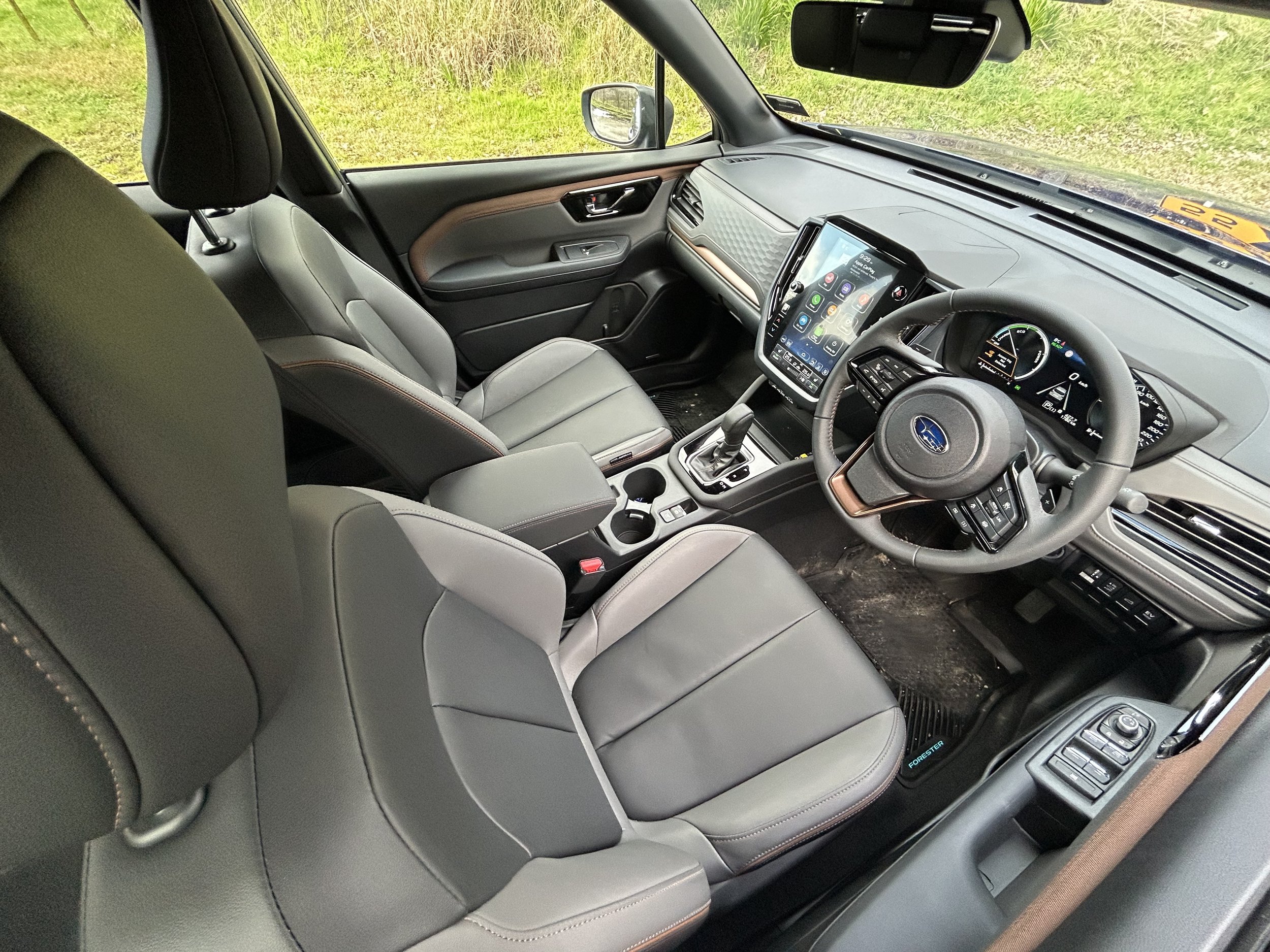
The same restraint guiding the exterior design team seems to have applied in the cabin, along with a sense of ‘waste not’ in respect to the ‘new' touchscreen.
In all likelihood it isn’t exactly that, as it has come from the WRX. It’s an improvement delivering a lot of extra features, but more in Subaru terms than in respect to overall category delivery. Look into other choices and you’ll find sharper screens with faster reactivity and less (if any) pixelation.
Still, it does now run a good reversing camera and the Apple CarPlay and Android Auto smartphone integration is simple and no-nonsense.
Sensibility also shows with the air-conditioning and heating controls being permanently onscreen, so they can be accessed at all times, rather than via a submenu. There’s still a physical volume knob and cabin temperature controls, too, so it’s easier to adjust these on the move.
The steering wheel-mounted controls might at first glance look to be all too much, but you get the hang of them and its great how they can be used to alter the information displayed in front of the driver between the physical dials.
In respect to the cabin decor, even though the Touring is the most lushly outfitted, truly premium-grade plastics are sparse. But I’d argue for it to instead have sturdy, more durable materials including rubber-like plastic trim pieces makes sense, given that the whole ethos is for it to impress as a rugged car.
The driving position maintains as being slightly high-set, with a good chair offering decent support no matter your shape. There’s decent room for those in the front and leg and headroom in the back is perfectly adequate for large adults.
Outfitting for hybrid hits boot capacity; whereas petrols deliver 496 litres with the seats up and 1667L with the second row folded, the hybrids have 484L/1655L. If you have formed a tramping party for a weekend’s excursion, fitting everyone’s packs might be more of a mission.
Forester has come a long way from its original format; what started out a rugged rudimentary car is now far more polished and more premium.
Going hybrid was a matter of necessity; customers now value that ingredient. The second generation is a lot more sophisticated and delivers a better experience than the first, but it’s icing on this cake and, while there is chance for saving, the time period required to offset for the $4000 premium over the standard Touring could be prolonged.
However you decide, it’ll still be traditional flavours that continue to sell this car and, ultimately, perhaps that’s only fitting given its history and traditional points of difference.