GWM Haval H6 hybrid road test review: Staying the course
/An update to this popular model brings useful improvements, but there’s more left to do.
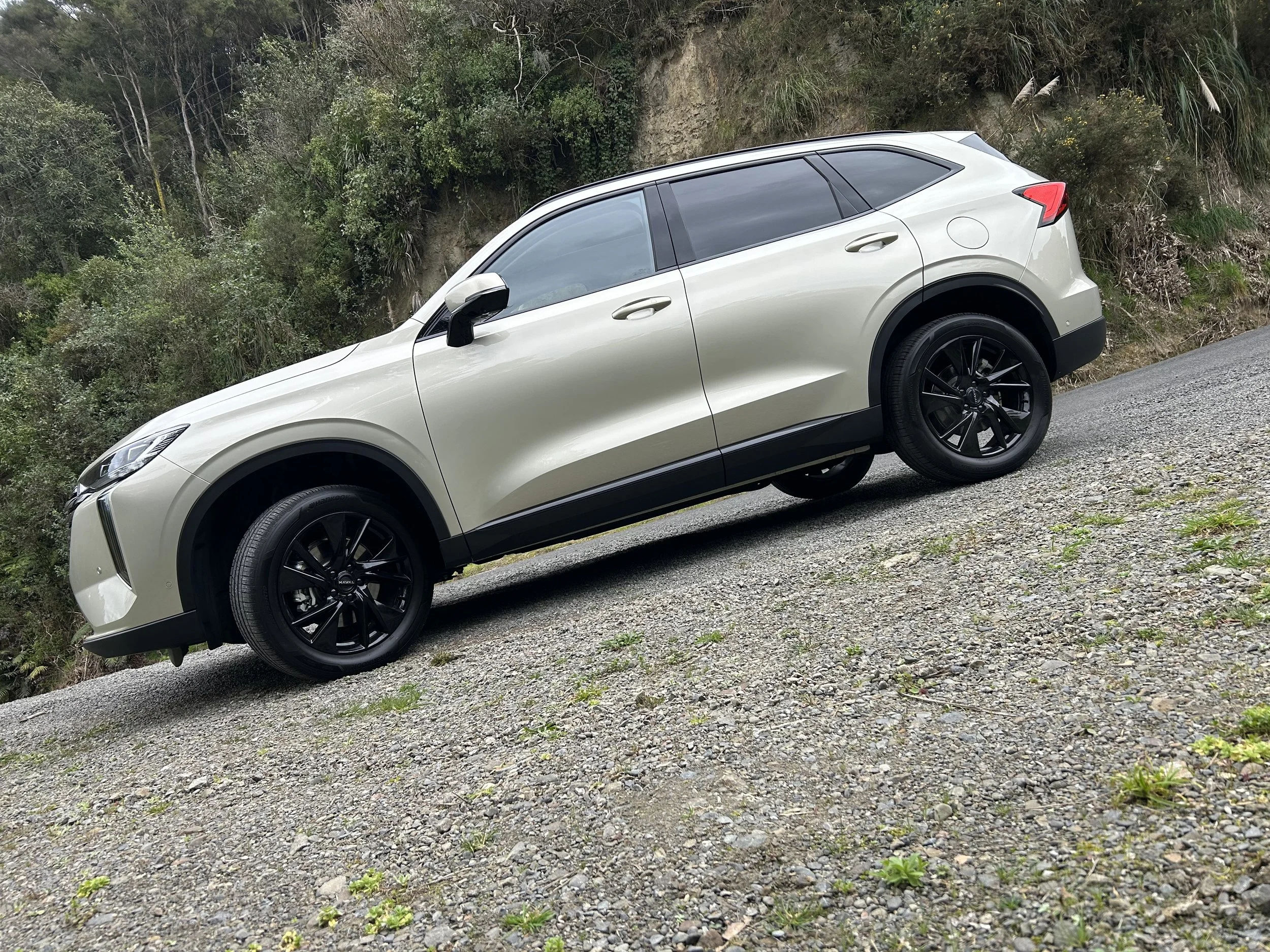
Price: $45,990.
Powertrain: 1499cc four-cylinder petrol engine; 179kW/530Nm combined; front-wheel-drive; nine-speed dual clutch automatic.
How big? Length, 4703mm; width, 1730mm; height, 1886mm.
We like: Roomy; improved ergonomics; efficient drivetrain; big, well-provisioned car at this price.
Not so much: So-so seat comfort; unremarkable driving demeanour.
WONDERING why the brand new car out of China you secured just last year might has already undergone an update or even been entirely usurped?
China’s car makers are out to win sales and in their hurry to do so have shown enthusiasm for slashing vehicle development times.
The typical car development time at a traditional car maker used to be four to five years. In China, an all-new or redesigned model can go from design studio to the road in just 18 months.
On top of that, nothing stays around for long. The big guns see merit in shortening production lifecycles. They see this as being especially important for product aiming at rapidly evolving areas like electrification, connectivity and shared mobility.
The H6 from Haval, a Great Wall Motors brand, seems to present as good as example as any of what’s called the ‘fail fast’ philosophy.
Within the past four years I’ve driven three versions. Were they brought together now, only badging and general size would be common. the car I drove in 2021 is now a museum piece. The shape that replaced it, and brought a completely new drivetrain philosophy, has also been massively updated once, and finessed several times during interim periods. And there have been big changes to market positioning.
The H6 hybrid has become the freshest work; it delivers major design changes over a H6 GT PHEV tested only months ago.
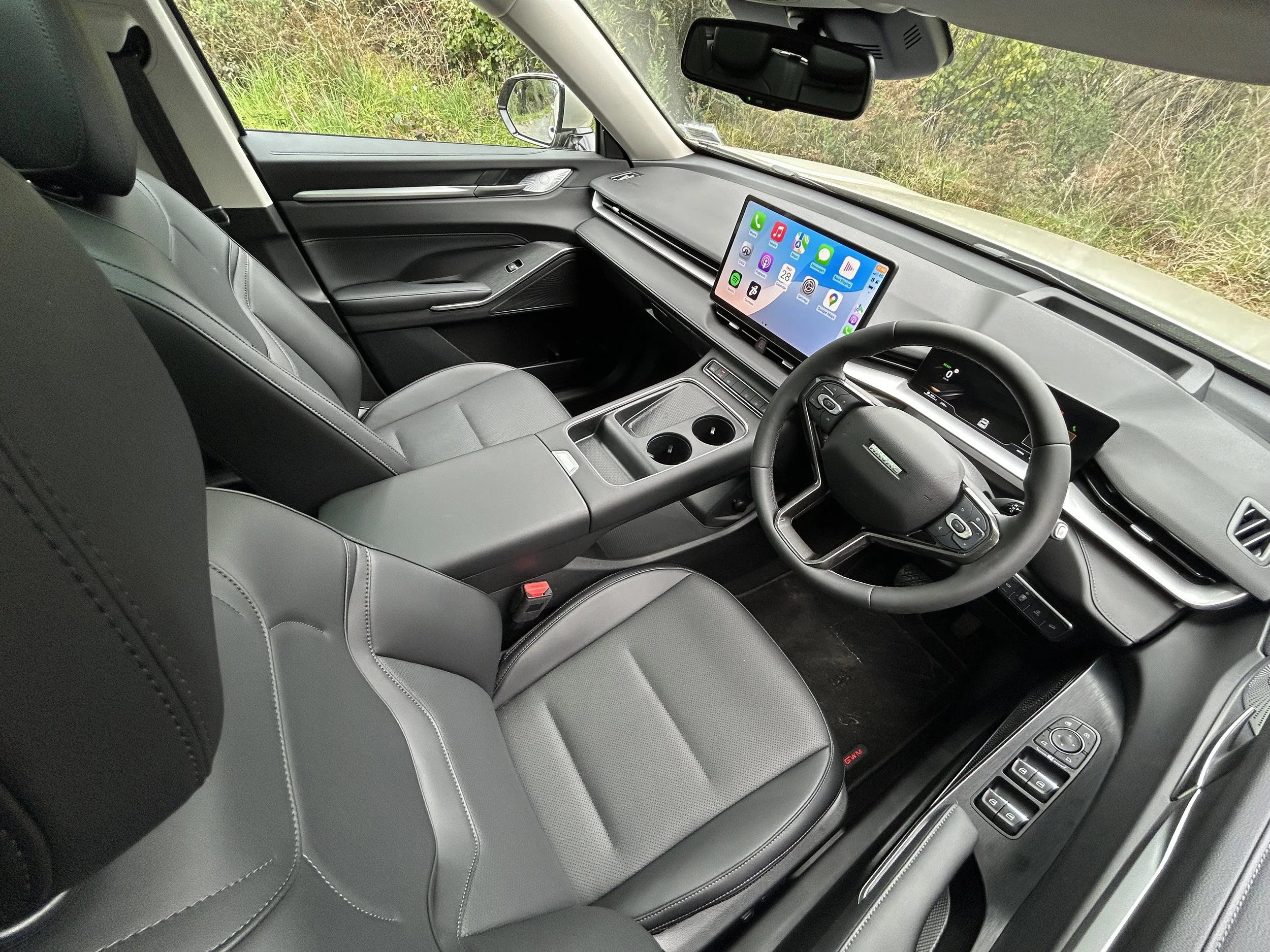
There’s a completely new instrument display and having been a dial sited on the central divide between the front seats, the gear selector is now a wand on the right side of the steering column. Behind a steering wheel that is also all new.
The central infotainment screen has resized and has a faster processor and new software. The graphics are subtly altered. Though again there are too many functions, the set-up has a quicker responses, seamless phone integration and a more logical interface.
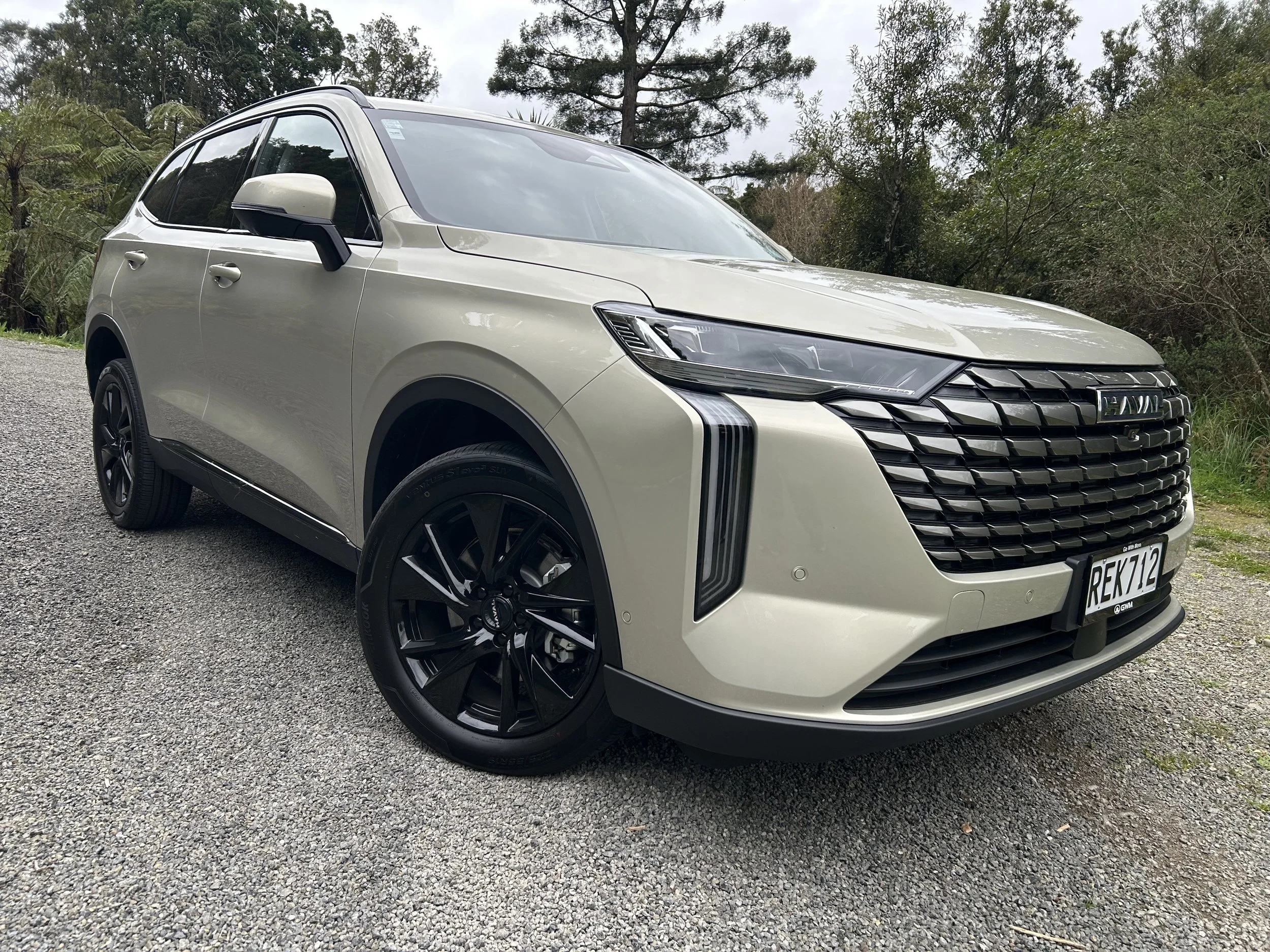
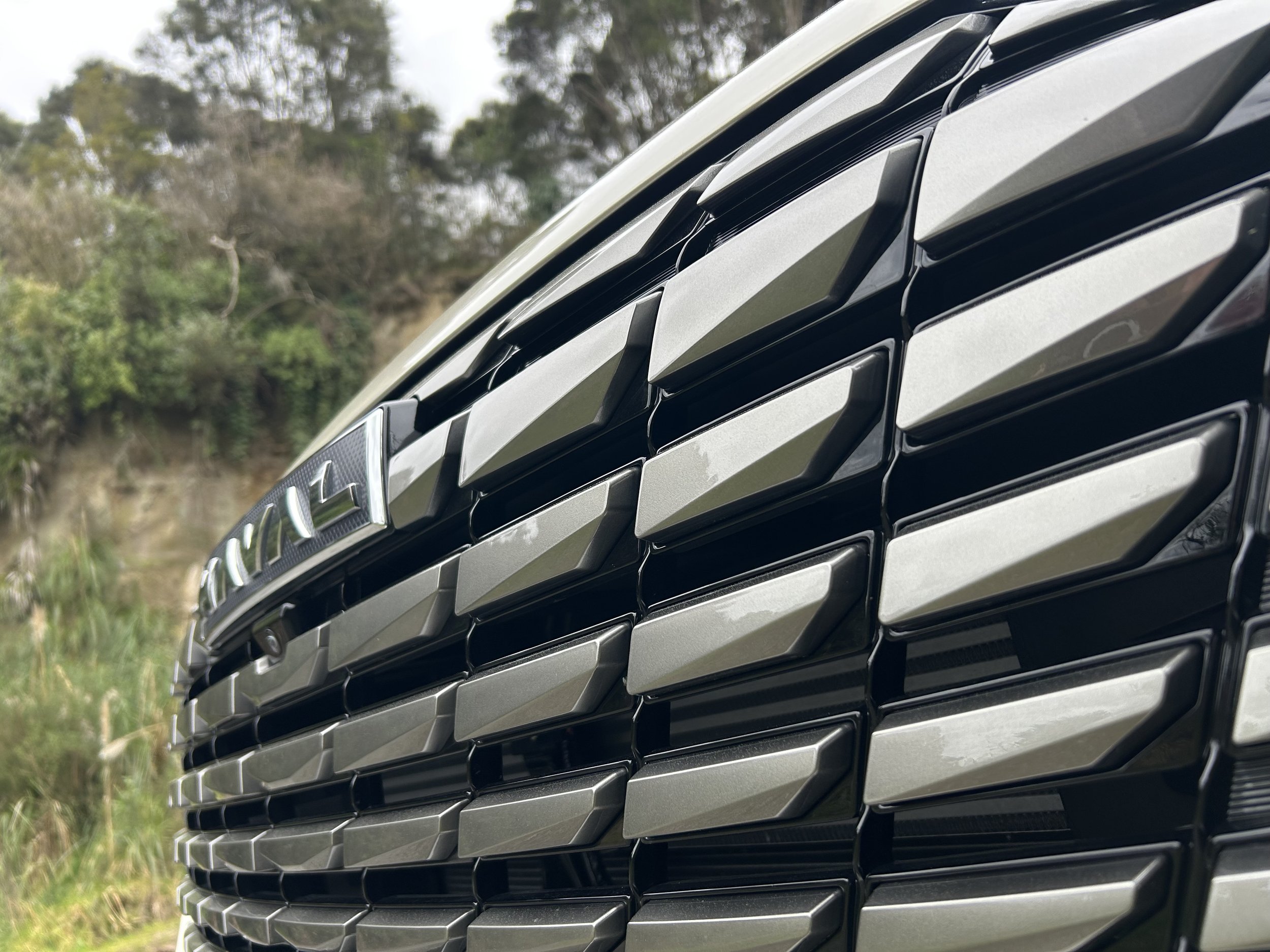
And then there’s a comprehensive exterior restyling that’s easily spotted thanks to the wholly new grille.
All this for a car that really hasn’t been here that long in original format. What must it be like working on the production line? Can you imagine the challenges for any parts department?
GWM is just doing as Chinese brands do. And conceivably it’s revisions are more measured than some. I’ve heard of another make from there that for a while used to change tail light stylings on a popular model from one batch to the next.
H6 hybrid maintains the same drivetrain it launched with about a year ago. Outputs have not altered; emissions and economy remain identical.
Yet the sales staff at the dealership where this example delivered to swore the latest has a perkier step. They also believe the suspension tune has also sharpened, though the maker has not notified this.
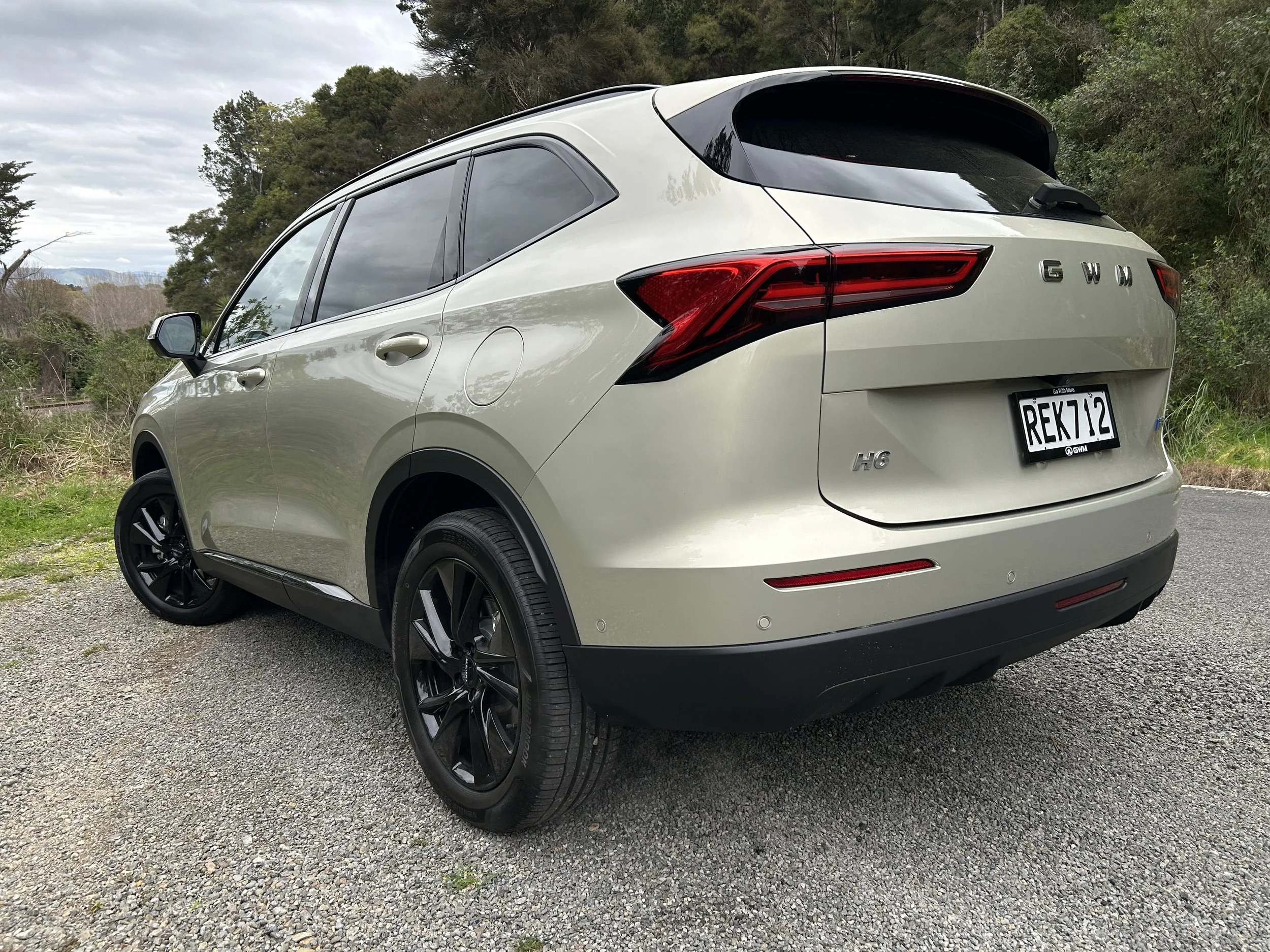
At time of writing, this model and the GT PHEV were the key products. By time of reading, I’d expect the mainstream H6 family would also include a PHEV that is technically similar the flagship’s, but with less grunt.
This provisions purely in Ultra spec, the higher of the two trim levels offered in the hybrid. The Ultra hybrid and Ultra PHEV are identically outfitted in the cabin.
But the one with a CCS port has more horsepower, more pronounced electric-only ability. How Green it is has not fully clarified, as the brand-cited expectations of 1-1.1 litres per 100km economy, 106-100km pure electric driving and range of more than 1000 kilometres is calibrated to the nonsensical NEDC formula rather than the WLTP-3 scale NZ prefers (but GWM nonetheless refuses to work out its figures to).
The drivetrain and it also provisioning in an all-wheel-drive alternate to the hybrid-matching front-drive means a price premium, but the cars are cheaper than the GT.
In respect to technical loading and promised efficiency, the PHEVs will of course be significantly better than the hybrid, from which from a week of driving I saw a 6.4 litres per 100km average.
But as everyone is aware, buying patterns here very clearly favour electric that don’t require plugging in to those that do.
The mild hybrid sector was the only one to show growth in 2023, which the whole market was down and EVs and PHEVs were being smashed.
Conceivably, hybrids might stay sweet until Road User Charges become applicable to purely petrol cars, in 2027. Until then, there is justifiable perception PHEVs are being poorly treated.
GWM Haval does not share volume prediction for the hybrid, but they will have seen how well market leader Toyota does with theirs, and will doubtless be keen for a taste of that success.
As is becoming usual, you look at a car such as this and wonder how it can be so much less expensive than anything else of similar size, aptitude, comfort and specification. But that’s China, right?
The level of quality on show hardly undermines it, either. Yes, the ergonomics are a mixed bag, some plastics are a bit cheap looking, perhaps, the seat trims are very shiny and I was irked that some of the trim elements were a bit chattery. That’s not a common thing any more. But the quality of its overall assembly was great, and everyone not only admired the paint hue but also the execution of finish.
Where you are going to find differences in delivery, it’s on the road. The car certainly cannot be knocked for competence, but for driving feel and performance it doesn’t that stand out as a challenger for category leadership. Nothing’s unacceptable, but little raises beyond unremarkable.
Overall, the dynamic side is still not a highlight, but maybe that’s a work in progress. GWM Australia has began retuning factory settings to be suit regional application and for this has enlisted Rob Trubiani, a former top Holden engineer whose credentials are top-notch. His team sorted the brilliant Commodore SS-V Redline. An H6 under his direction could be a really good thing.
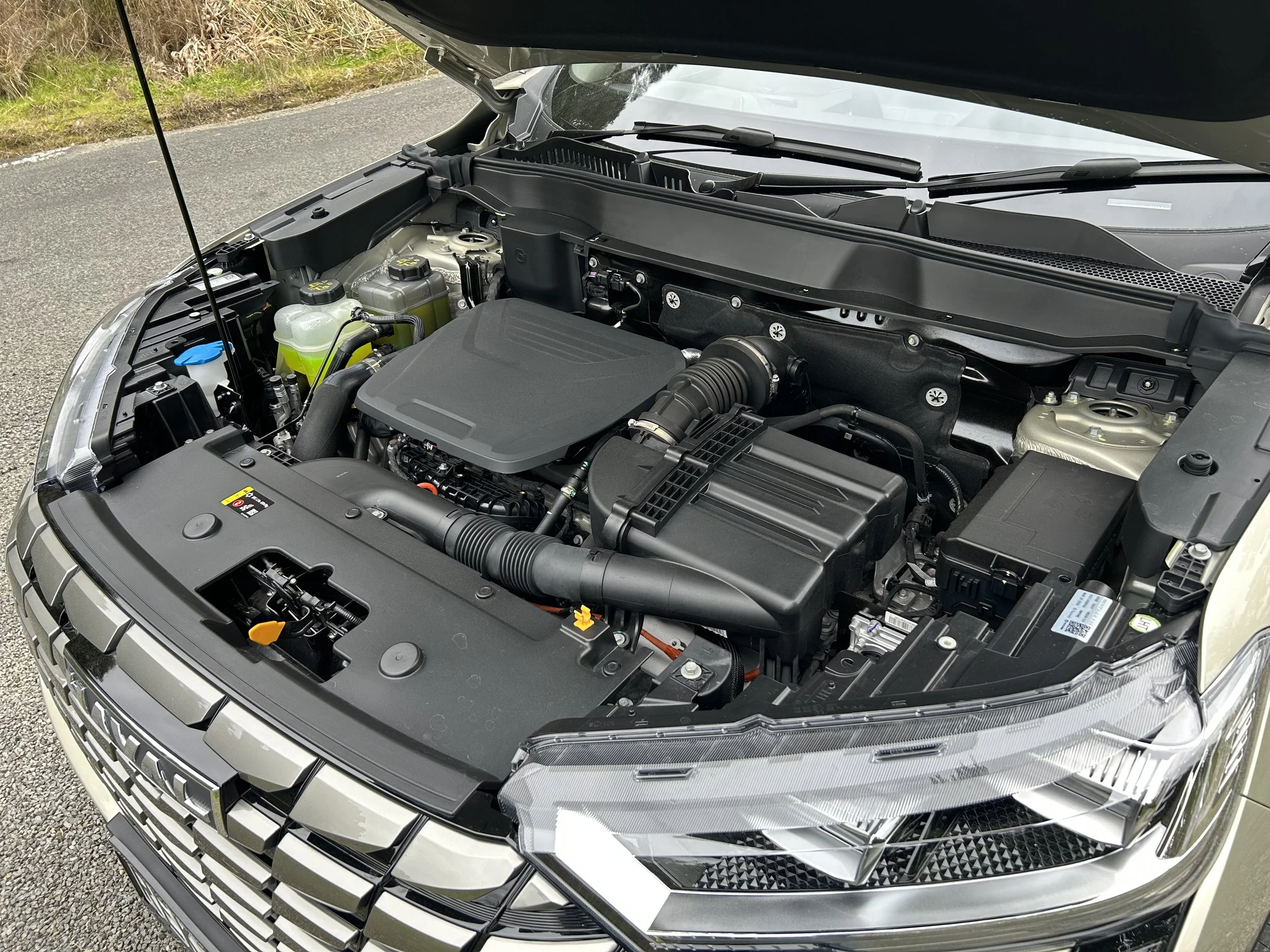
For now, it’s okay but nothing more, with all the usual factors. The steering is pleasantly weighted but numb and though the suspension manages its task reasonably well, away from smooth surfaces it doesn’t ride as subtly as some of its European, Japanese and Korean rivals. Some coarse chip highlights an underlying jiggle that's difficult to ignore once you've noticed it. The brakes are progressive and reassuringly linear.
China’s tyre industry can be relied on to provide an interesting and eclectic selection of fare; it’s fair to suggest sometimes Chinese models are let down by taking poor domestic footwear, hence why an increasing count seemed to be fitted with foreign brand rubber, which generally delivers positives for grip and traction.
Here’s an exception. Hankook is a quality Korean brand. But the compound selected for the H6 isn’t doing quite the job I’d hoped. In terms of traction, the H6 felt more edgy than I would have expected from it and wasn’t as confident grip-wise on wet seal as I’d have thought it should.
In urban use, you’ll find there’s relatively good visibility but also discover the turning circle is large for a vehicle of this size. Seamless u-turning on a city street cannot be guaranteed. Often that exercise becomes a three-pointer.
As you’d hope, the electric flavour is obvious. As long as the battery is in reasonable state of charge, and unless you are heavy on the throttle, the battery-fed motor will take this car from rest up to suburban speeds without bothering the internal combustion element.
There’s noticeable whine during that phase, but when transition to the petrol powertrain is required, it is never uncouth and sometimes so subtle you mightn’t notice it.
Performance-wide, it’s not what you’d call quick, but it never feels notably underpowered. But one curiosity when it’s under ICE operability was sense the accelerator could be more immediately responsive. On this car there was a slight, but discernible lag between throttle input and powertrain reaction, and when it did respond, it was sometimes with more verve than you might have wanted. There was one particular right turn off an intersection that’s part of my daily drive that had to be taken carefully else it’d spin the front right.
There are three modes for the electric motor’s regenerative braking, plus a ‘one-pedal’ mode that can bring it to a full stop without touching the brake pedal.
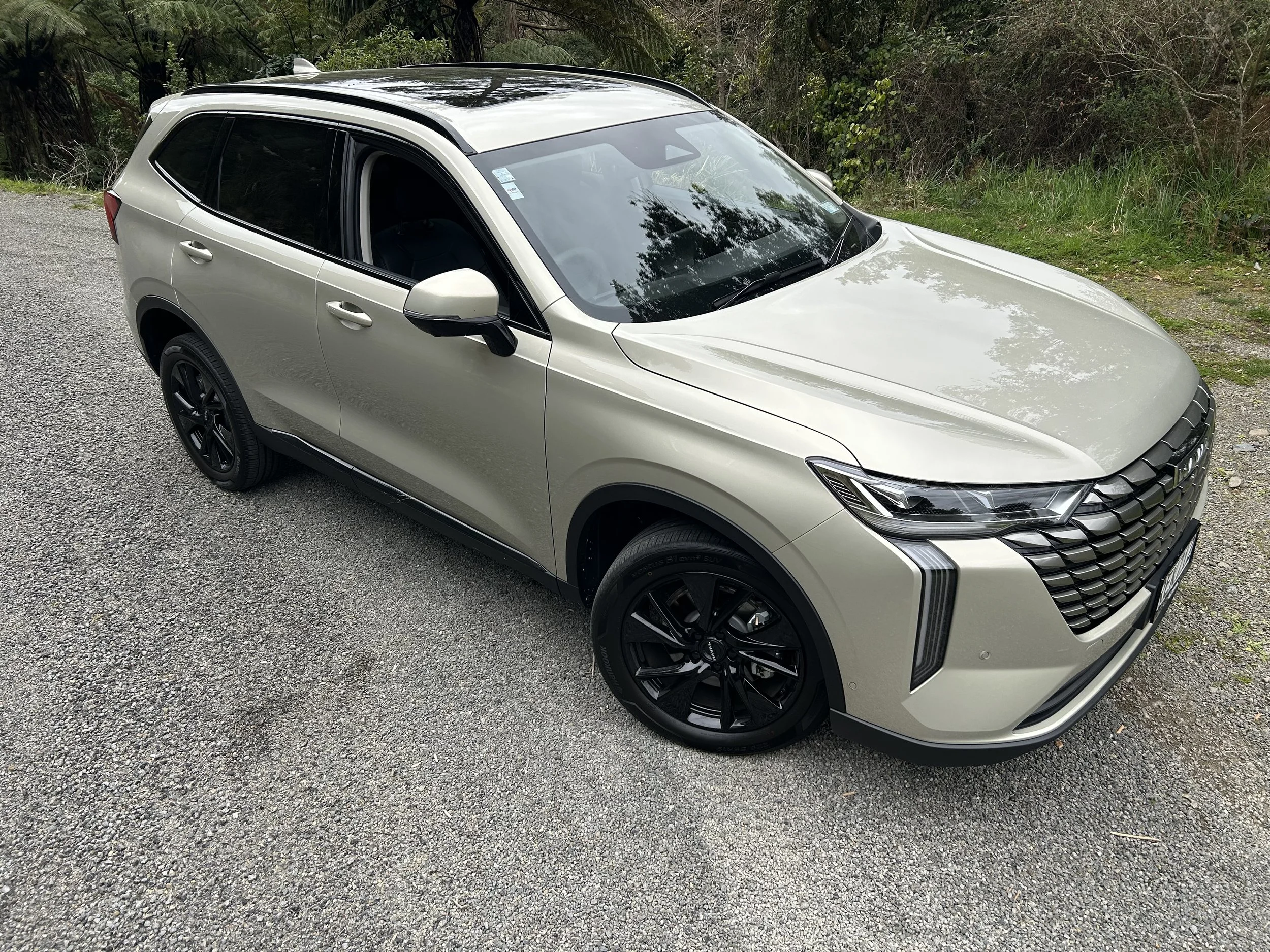
The Ultra on test here carries a $3000 premium over the alternate Lux, but it’s an easily accepted impost given you’re buying a sunroof, a heated steering wheel, heated and ventilated front seats, a four-way power-adjustable front passenger seat, memory and lumbar control for the driver’s seat, a head-up display, front parking sensors and auto parking to a base fit out that has 19-inch black alloy wheels, LED headlights, a 14.6-inch touchscreen with wireless Apple CarPlay/Android Auto, 10.25-inch instrument display, wireless phone charging, a power tailgate, leather-look seat trim, dual-zone climate control, a six-way powered driver’s seat, and a 360-degree camera.
In respect to provisions, it’s all rather grand; but in delivery all is not quite as commensurately plush. Soft-touch and rubberised finishes on the door panels, dashboard and armrests promote perception of premium-ness, but only to a point. Family users will appreciate that it has hard-wearing, potentially easy-clean materials in all the right places.
The latest car picks up a larger infotainment screen (previously 12.3 inches, it’s now 14.6) but a dial for volume control is also missing; you either have to turn it down from the steering whee, or access the screen menu.
It retains buttons for actioning the air condition on/off, the demisters and recirculating air. There’s also one to activate the parking cameras. But it lacks physical controls for altering the temperature and fan speed. Also, you can bring the climate-control menu up by pressing the A/C button … but that also turns the air conditioning off. Huh? You need to click it again to switch it back on.
There is also a voice-control system that allows climate functions to be adjusted by saying ‘Hello GWM’.
As with all wand gear selectors, you might find yourself occasionally mis-using it as an indicator control (sensibly there is a lockout on reverse gear at speeds higher than a slow walking pace to prevent any potential nasties while driving) but it’s an improvement on the old dial controller, and now space where that was is better utilised as a location for the wireless phone charger and reshaped cupholders.
The driving position is improved now the steering column adjusts for reach as well as rake; one irk still be addressed is that the front chairs could still stand a bit more support.
The car’s value as a family choice does represent well in respect to its spaciousness. Even though it is pretty standard inside for a car of this type, there is good room up front and the rear bench will take three people abreast, and the benefit of the taller stance will be beneficial to strapping kids into their seats.
Storage opportunities are plentiful, too, including a generous shelf under the ‘flying bridge’ centre console, a large glovebox, and a decently sized cubby under the front-centre armrest. Amenities include USB-A and USB-C ports, air vents and map pockets, plus door pockets.
The boot has a high-opening power tailgate and the lack of a load lip presents favourably when you’re bunging in a week’s worth of groceries or bulkier items. There is a 12-volt socket in the boot, plus lighting, bag hooks, a retractable - if rather flimsy-looking - cargo cover, and 60:40-split folding for the rear-seat backrest. No spare wheel, only a puncture repair kit.
Driver assistance systems on Chinese makes have reputation for being overly-reactive and poorly calibrated, but GWM vowed some months ago to improve and, on H6, that seems to be the case.
It’s not rid of annoying bings and bongs, but the chance of hearing these alerts is reduced through the speed sign recognition being more accurate and the lane keep more relaxed.
The driver monitoring system monitors steering wheel input and use of the touchscreen, rather than with a camera pointed at your eyes, so as long as you’re not too mannequin-like, it’ll be fine.
The adaptive cruise control still sets a very conservative following distance, leaving such a gap even on its shortest setting that inevitably other motorists will pull in front, which of course cause the H6 to self-slow to re-set that gap … and thus raising potential for this to happen all over again.
Another reason for being sparing with the system is that is remains prone to overly-retarding speed for any kind of curve; it’s so cautious those following will wonder why the driver doesn’t have L plates.
The H6 brings a practical ambience to a category known for diversity of choice; the attraction is primarily the price and how richly it provisions, plus the potential to keep running costs in check of you’re not too eager with the throttle. Which you won’t be, because there just isn’t much benefit from driving it that way.