Toyota out to cuff police contract

Commodore today, Camry tomorrow? Toyota NZ is investigating if it can join the thin blue line.

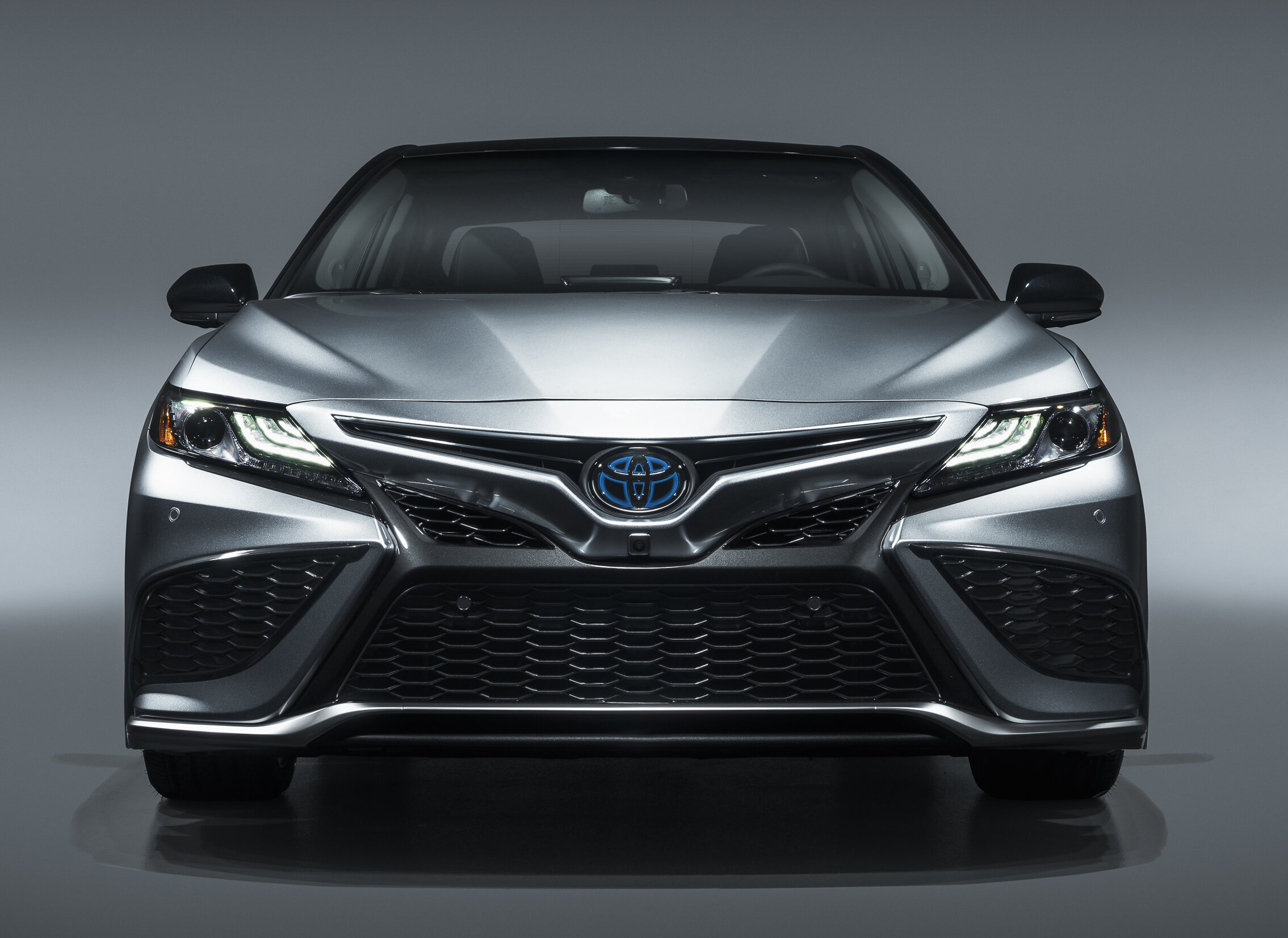
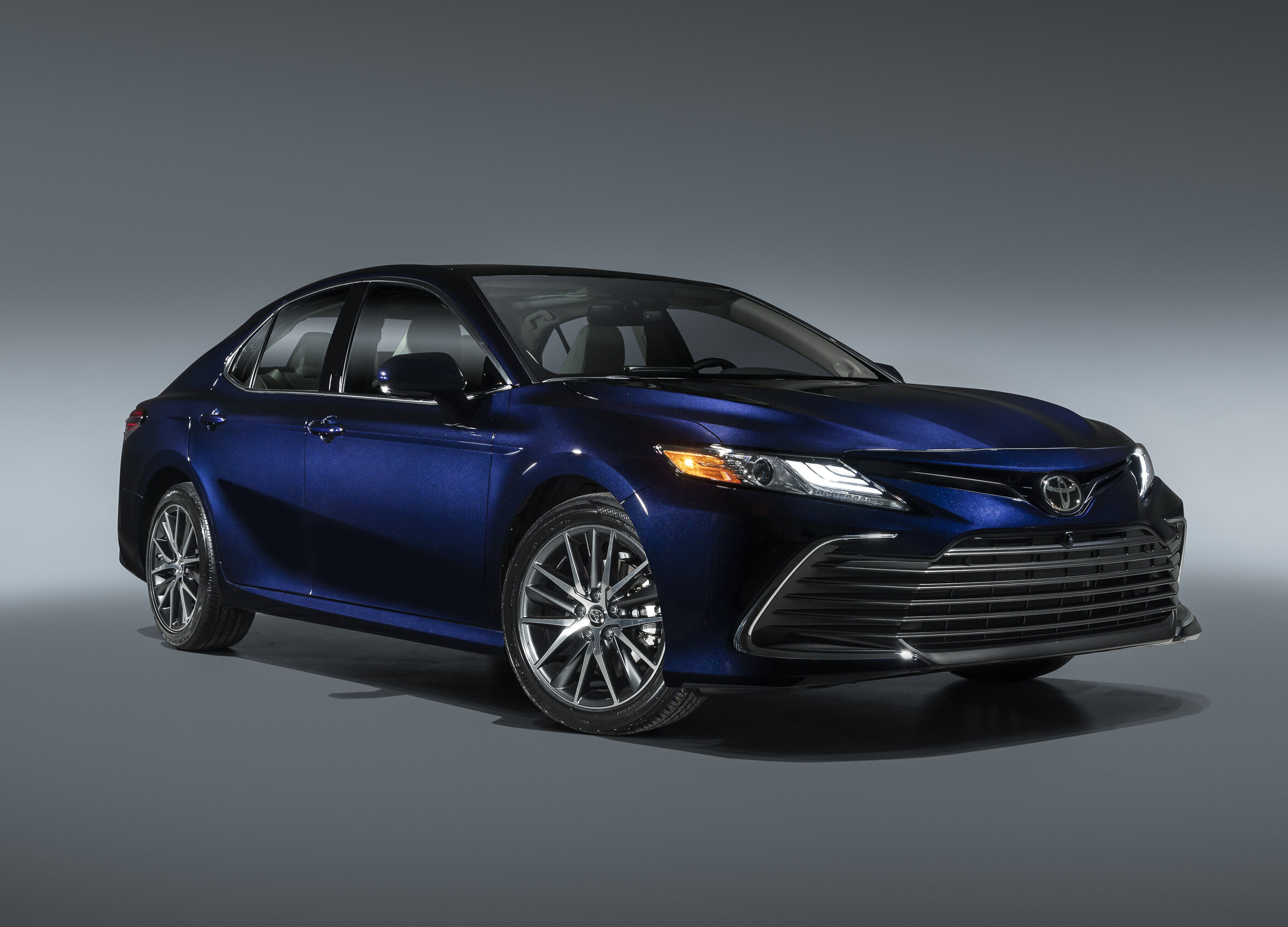
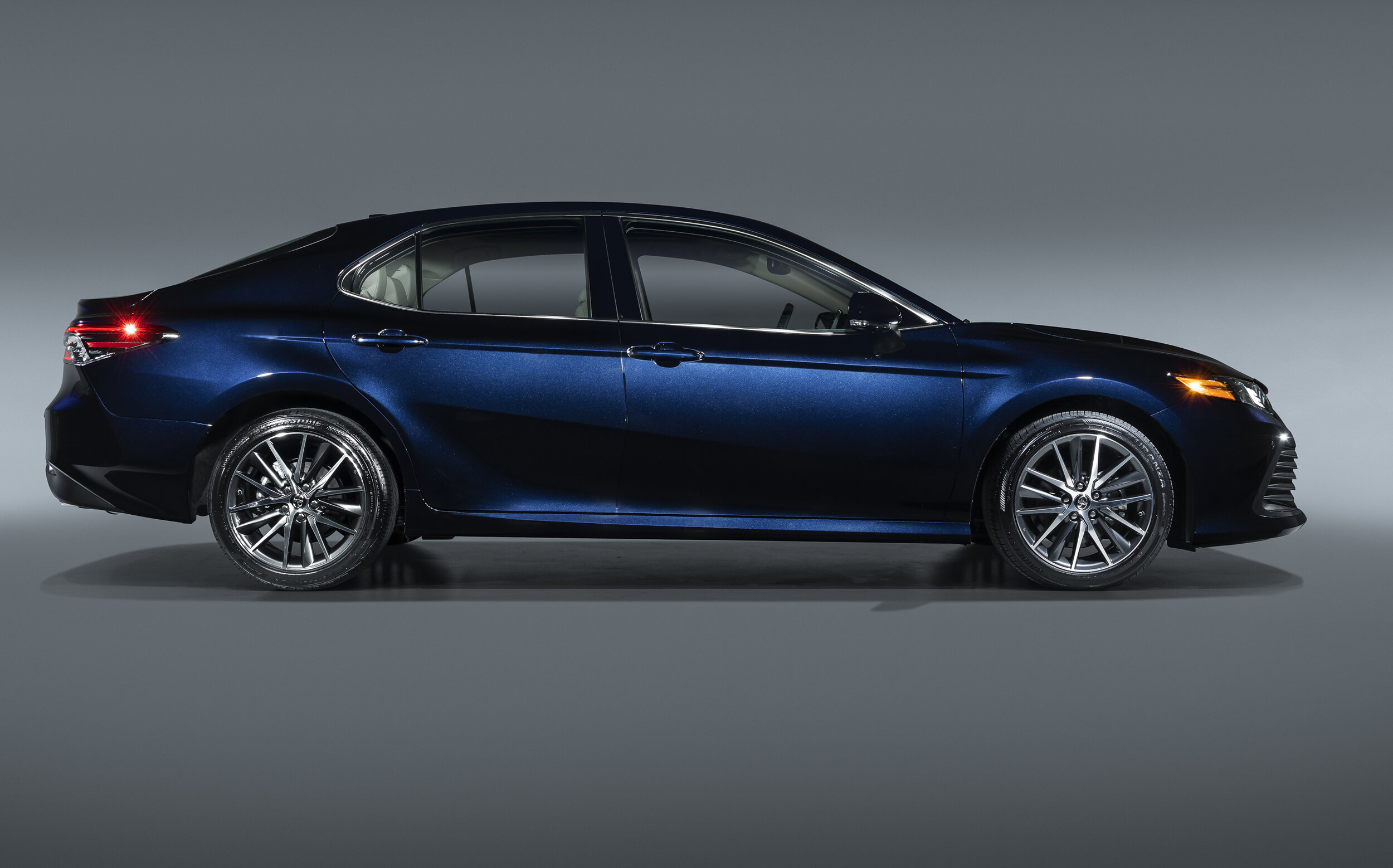
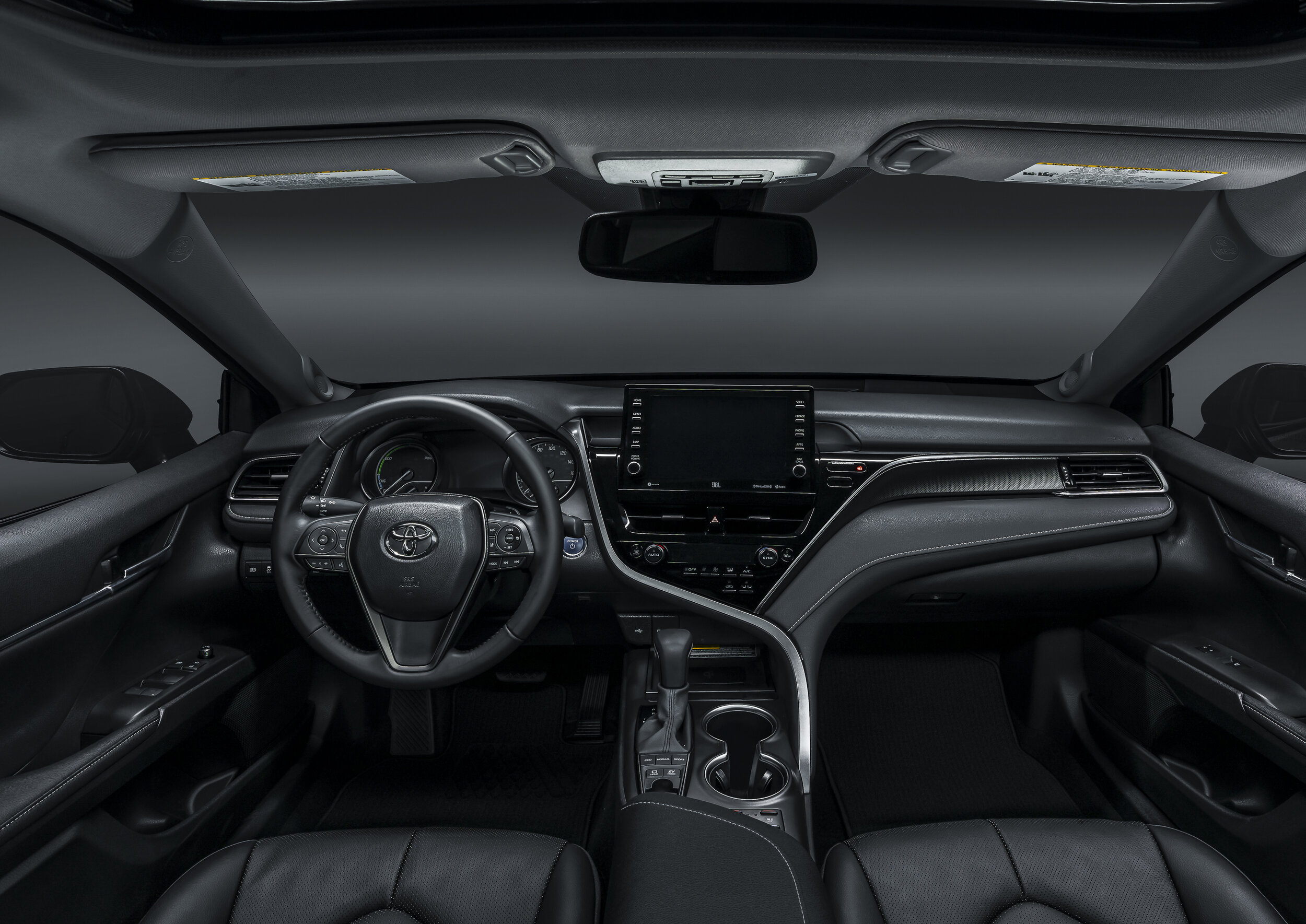
will the 2021 Toyota Camry report for duty as a Commodore replacement?

will the 2021 Toyota Camry report for duty as a Commodore replacement?

PROVISIONING police with a patrol car remains a Toyota New Zealand consideration, particularly in the wake of the collapse of rental car business.

The Palmerston North brand has acknowledged it is on the hunt to snare lucrative Government fleet opportunities including the biggest plum of all – delivering a replacement for the Holden Commodore police car, whose days on the beat are numbered with its production having ended and its maker soon to become extinct.

It is understood police are now trialling potential replacement cars for frontline duty and that they have renewed interest in the Camry sedan, thought to have been the runner-up to ZB Commodore when the tender was last contested, four years ago.

One example configured by the brand for front-line duty as part of the trial still appears to be operational in the Wellington area.

The Camry as tested by the thin blue line previously was a potent six-cylinder but perhaps the determination to use only four-cylinder ZBs is a sign police tastes have changed. TNZ’s certainly have. The distributor signalled some months ago that the V6 won’t feature in an update Camry arriving early next year.

However, it believes its 2.5-litre full petrol four-cylinder engine – which TNZ now suggests might yet provision in the update range, should perceived demand warrant it -and the hybrid would be just as good.

Do police agree? A reluctance to employ anything other than fully fossil-fuelled cars in the line of duty was expressed in the wake of last December’s announcement about Commodore production ending, when a spokesperson said that while they wanted to use as many hybrid and even fully electric cars as they could, it would only be in non-patrol roles.

TNZ chief executive Neeraj Lala isn’t sure that attitude still applies.

“My understanding of that is a little bit different. They have specifications, like a 0-100kmh specification, that they would need for a pursuit car, but currently we have a hybrid that would meet that. 

“The 2.5 also meets the standards they expect of pursuit cars.” Lala acknowledged the wholly petrol engine was initially not expected to be provisioned in the 2021 Camry update but could yet show if there was enough support for it, if just to meet all-of-Government contract requirements. “When we talked about being hybrid-only for Camry from next year it was before we knew about the Holden situation.”

In any event, it wasn’t just about get up and go. There was a host of criteria to meet, including technical standards to ensure nothing in the applicant vehicle conflicted with police equipment, especially the frequencies electronic law enforcement hardware operated at.

“As infotainment gets more complicated, as powertrains become more complicated with sensors, radars, safety equipment, hybrid and EV batteries … testing and compliance tends to become more structured and rigid. And there have been issues in the past,” he said.

TNZ chief executive Neeraj Lala

TNZ chief executive Neeraj Lala

He believes one area Toyota has a lead on is with backup; the national sales network was fully up to pace on  keeping any fleet operational with excellent parts, service and support. 

Police are also building up their fleet of unmarked cars and Toyota has recently provisioned some Highlander SUVs, also currently V6 and set to revert to a hybrid-only format with a new 2021 model. It also provision Land Cruisers for specialist work and some hybrid cars for community constable work.

Lala explained that was not a signal of any favouritism in respect to the patrol car pitch.

“It’s been made clear that it’s certainly not a confirmation that Toyota has won the tender but we certainly have some cars in their fleet and we are working hard to see if Camry can be an alternative.

“I’ve been quite firm that I think the relationship needs to be mutual for us to engage. It’s certainly not something that we are chasing hard, but it certainly something that we would appreciate if it came towards our brand.”

Holden’s contract with police goes back many years – it started with the Kingswood in 1968, but really cemented with Commodore, with VT, VX, VZ, VE and VF lines siting as generic road vehicles of choice, outlasting the Ford Falcon and Nissan Maxima.

Terms of the association are never discussed but the fleet size alone suggest it will be lucrative.

Certainly, it was so highly prized by Holden that police were allowed to trial the ZB in Australia in secrecy more than a year before it became production ready. The current contract was also signed off well ahead of the car’s public release here, in May of 2018.

The car proved controversial – with complaint about the lack of headroom in the rear of the sedan causing a shift to the station wagon edition – yet announcement of Commodore’s demise was a shock to police.

It clearly still held hope of seeing through the latest contract with Holden, which conceivably ran to around 2023, according to past brand acknowledgements, by taking other products in the brand’s portfolio, including the Acadia and Equinox SUVs and Colorado ute. However, that’s now no longer a goer with GM having killed Holden completely, with the retail arm set to cease very soon.

Holden had formed a really strong marriage that in any other circumstance would have been hard to break up, TNZ’s boss suggests.

“We’ve been pitching to police for as long as I’ve been with the company; we’ve put our best foot forward and been unsuccessful because they have had a really good relationship with Holden and they clearly felt no need to move.

“For us in the past it has been about good due diligence – just making sure they were testing other products in the market for when, and if, a change was needed.

“Obviously all this has moved up a gear given Holden’s departure.”

Discussion about this arose from TNZ revealing how hard it has been hit by the virtual wholesale collapse of the rental car sector as result of the coronavirus lockdown kyboshing international tourism.

A sector that took 9619 new Toyotas and accounted for 31 percent of the Palmerston North-domiciled make’s sales last year has this year taken 172 cars for a two percent slice of sales to date.

TNZ’s response has been to divert energy into building up sales to the private sector and to fleet operators, primarily the Government, with positive result. It says it has just won a tender to provision a significant count of vehicles, mainly hybrids, to the Ministries of Justice and Education.

It’s also pumping up private sales, with particular success with the RAV4 hybrid. Fleet sales, either facilitated directly through TNZ or via its dealer network, including those to Government have collectively grown from delivering 41 percent of registrations to 63 percent.

Of course, while the percentages are up, actual sales counts are down. For instance, while private sales now represent a 35 percent share of current trading – so almost double the 2019 imprint – the counts are much lower; 235 units to date in 2020 against 6001 for all of 2019. As of end of June, fleet and Government have accounted for roughly a quarter of the just over 16,000 Toyotas they secured for all of last year.

the zb commodore has transferred police drivetrain allegiances from six-cylinder and rear-drive to four-cylinder and front-drive. However, police have yet to put a hybrid into the front line.

the zb commodore has transferred police drivetrain allegiances from six-cylinder and rear-drive to four-cylinder and front-drive. However, police have yet to put a hybrid into the front line.

How will the rest of the year pan out? Notwithstanding that last month was huge for new car sellers and the Japanese giant had the top-selling car (RAV4), retained comfortably as the passenger sector leader and enjoyed the biggest monthly retail count (1755 units) since the launch of the new Drive Happy business model in April of 2018, its long-term forecast is cautious.

The entire market is down almost 25 percent year-on-year and industry perception that today’s rush is being fuelled by a short-range fuel – people are spending money on cars that they had set aside for overseas travel that cannot be taken – seems to be accepted by the leader, which believes a rocky road is ahead.

Even though TNZ has identified that the loss of the rental car market and a subsequent significant de-fleeting of stock by some operators had synched with a considerable market shift in used car tastes, away from ex-overseas used (which are in short supply) to low-mileage, late model NZ-new, Lala says it’s fair to say this is “experiencing changes like we’ve never seen before.”

An industry that had recorded a decade of quite considerable growth, reaching peak of just over 161,000 units in 2018 before softening slightly last year, was now facing a further 35 percent decline.

Or worse? Lala is confident Toyota is on target in predicting 100,000 registrations this year, even though others have suggested lower returns.

“Some of our competitors are suggesting a reduction more dramatic than 100,000 but I personally cannot see that happening … even if the wheels completely fall off in the fourth quarter, I can’t see the market fall below 95,000, maybe 90,000 as an absolute worst case scenario.”

When and if the rental car market would re-open was a question without any quick resolution, he suggested, and obviously TNZ, as the dominant supplier, was hard hit.

“When you remove 30 percent of our sales overnight … well, it’s never easy losing that volume.

“The pain of that tourism loss in the lockdown has certainly transferred throughout our entire business. It’s probably safe to say that this volume will not return … while the borders remain closed.”

As for the long-term forecast for car distributors? “We are, I think, heading toward a tough time – whether that’s late in the fourth quarter or early first quarter (of 2021) we have to wait and see - but at this stage we will go as hard and as strong as we can.”


At last, a sequel to the McLaren F1

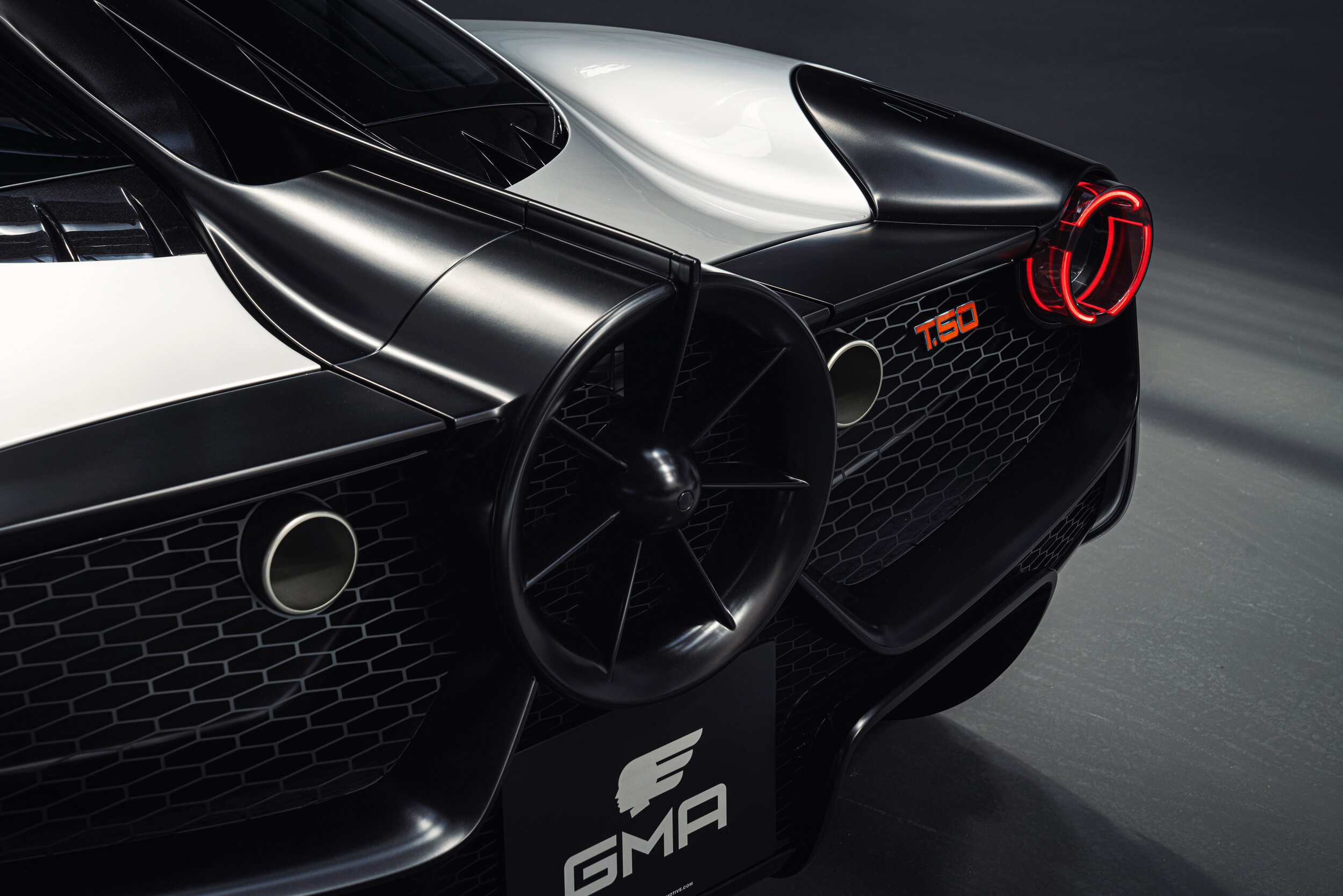
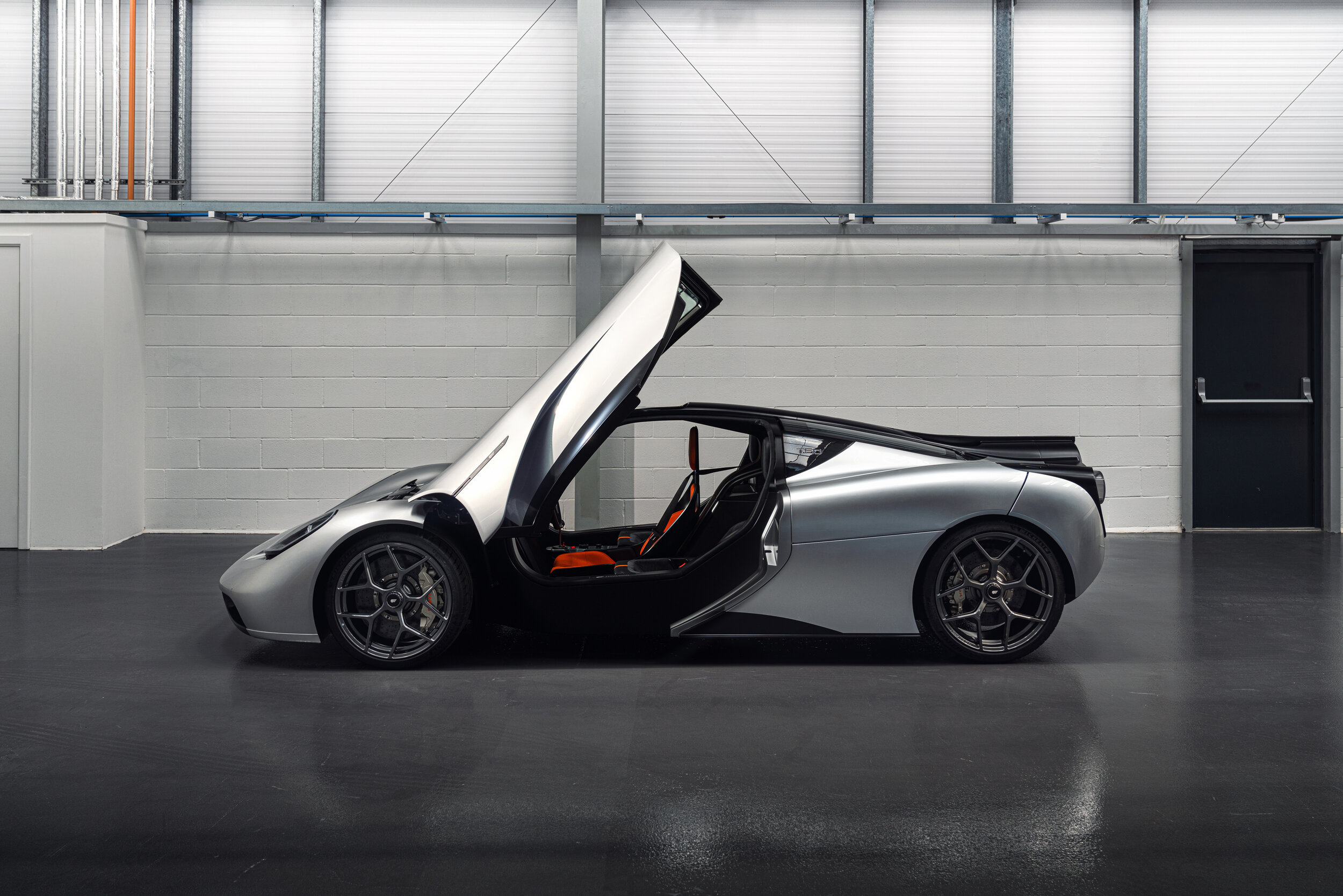
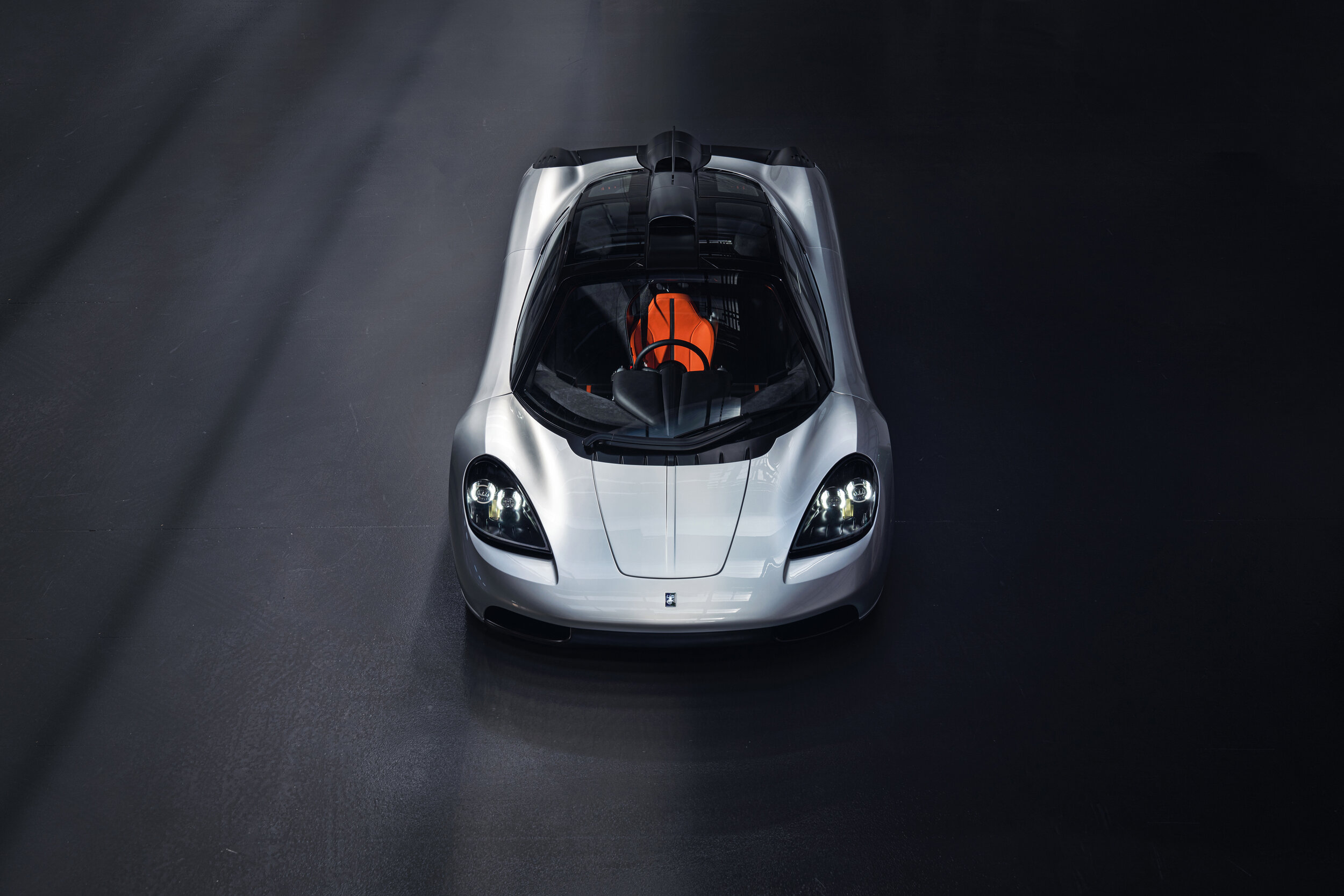
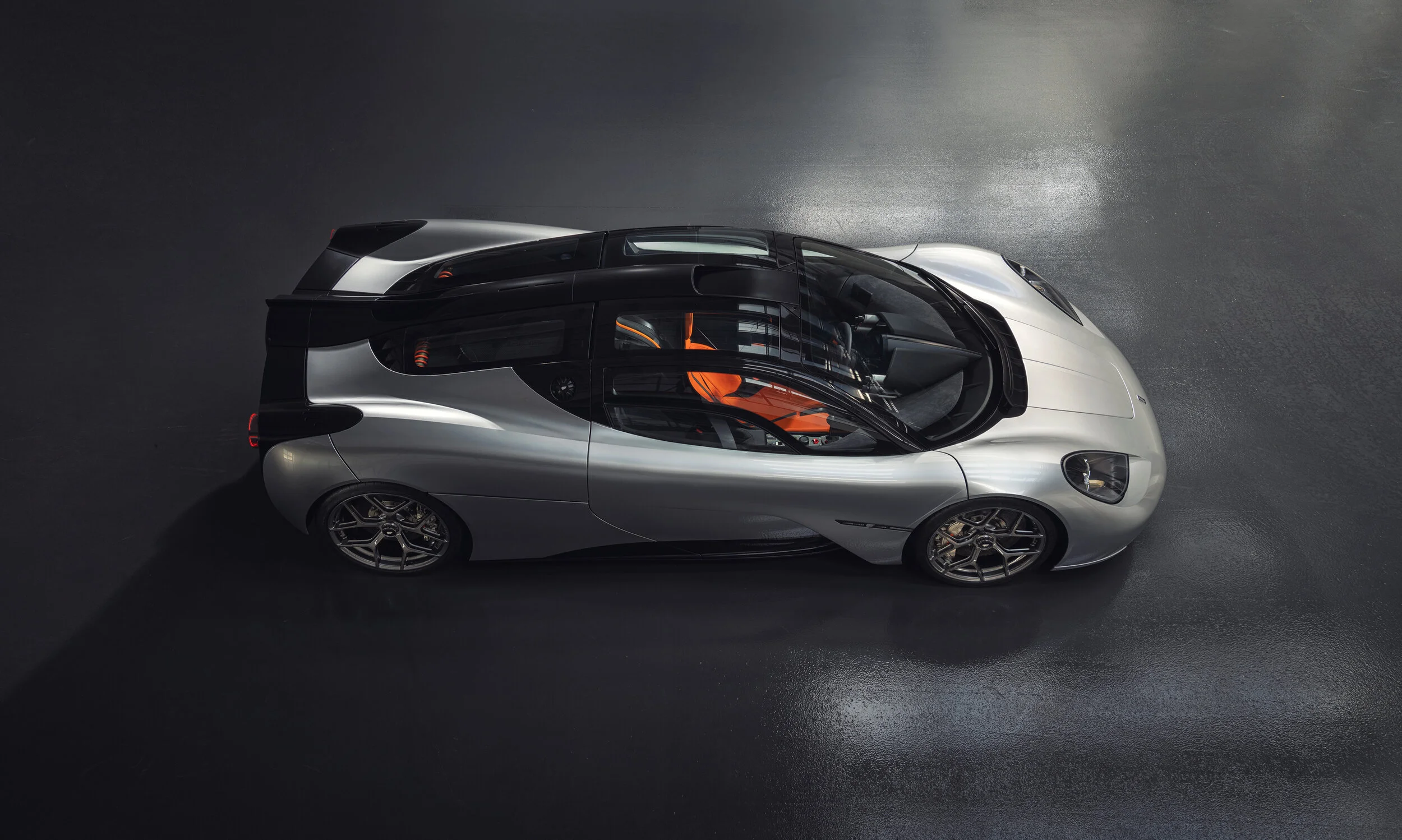
So you’ve won Lotto. How to spend $34 million? Fortuitously, Gordon Murray Automotive has finally pulled the covers off its T.50 hypercar

T.50 - 02.jpg

ONLY 100 in road trim will be built, each will cost around $NZ5 million … and, yeah, it’s understandable if you’re already looking for Gordon Murray’s email and have a hand down the back of the sofa looking for any spare change to go toward his latest car.

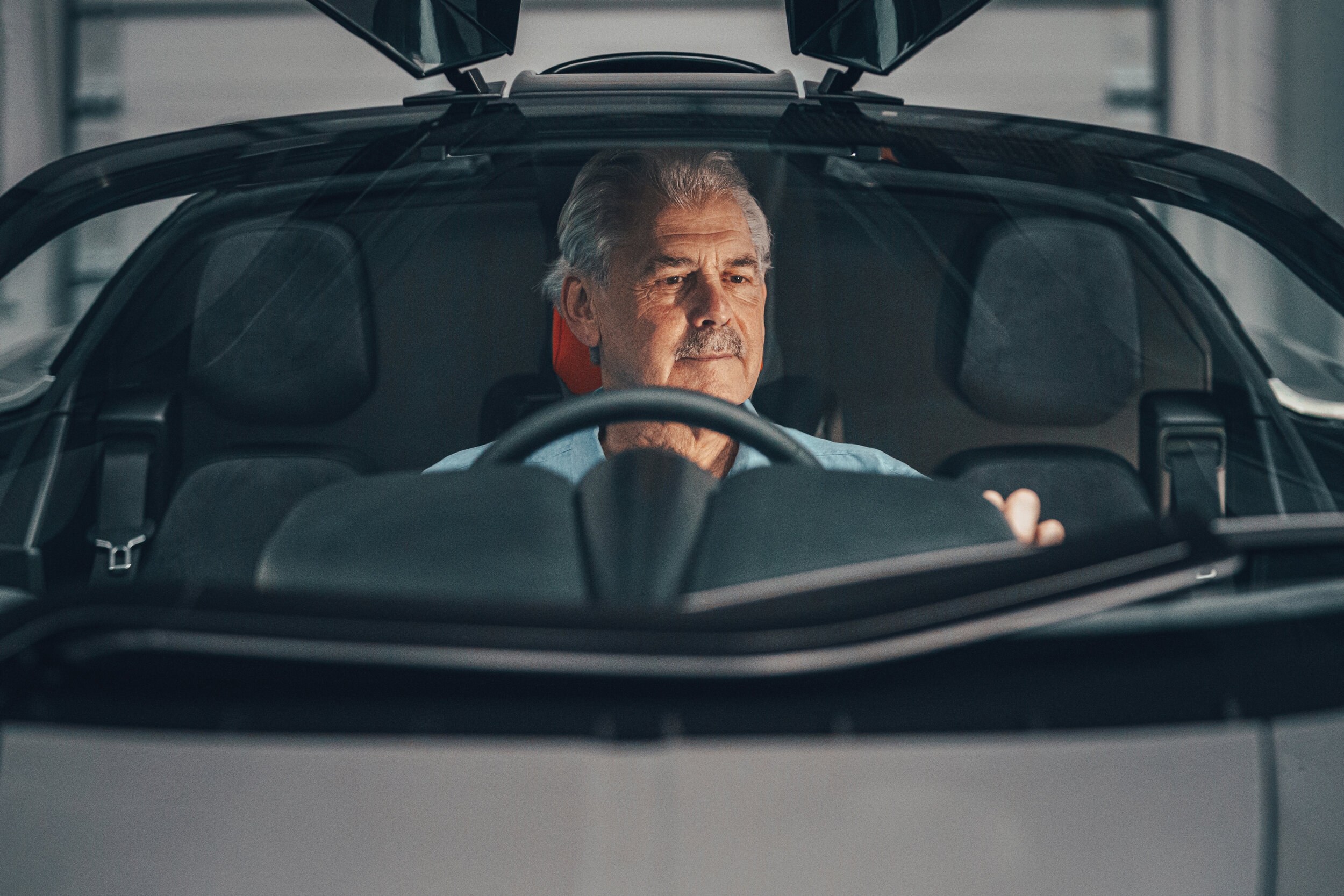
Unveiled overnight, the new Gordon Murray Automotive T.50 is an amazing achievement by any standard, perhaps destined to be the ultimate opus of the man who created the original 1993 McLaren F1 and was behind F1 title-winning racing cars.

The T.50 has been designed as a kind of ultimate evolution of the original F1 concept. It has huge power, but top speed is incidental in a design that's far more focused on driver pleasure. Hence the car is light, just 986kg, and compact, the same physical size as a Porsche Boxster.

It apes the F1 is also having a three-seat cockpit, with the driver in the central seat and passengers set back on either side. The chassis is, of course, carbon-fibre, with an aluminium honeycomb core.

The really clever bit is the aerodynamic package. As with the McLaren F1, and the seminal 1978 Brabham BT46B Formula One car that Murray designed, and which was pulled from entry because it was too fast, the T.50 uses a huge rear fan to aid its aero performance. Primarily it’ll deliver genuine ground effect, by sucking air out from under the car, but there are modes in which it can feed air into the car's wake to reduce drag, cut the braking distance and act as performance booster, by ramming high-speed air into the engine's air intake.

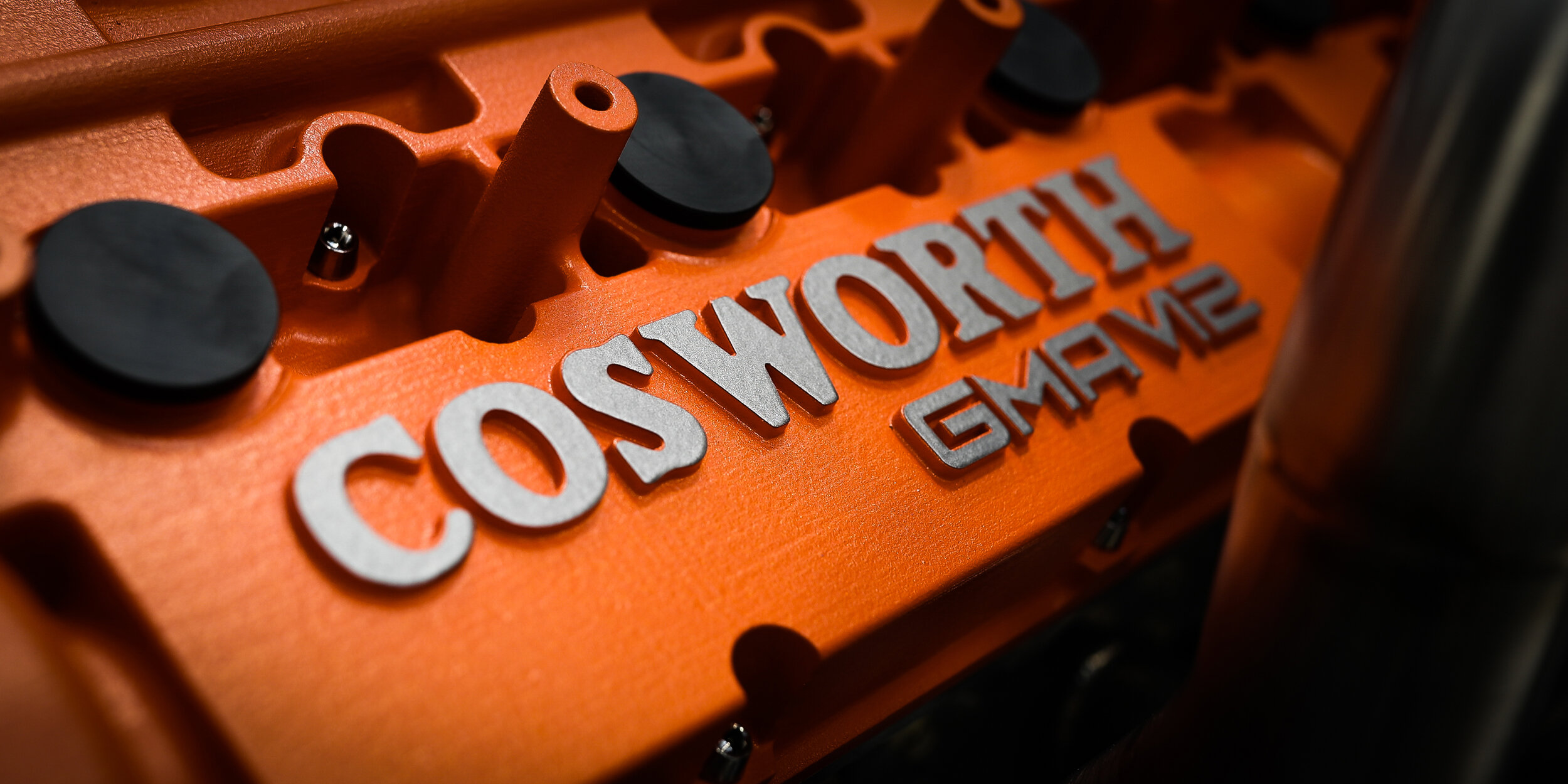
And the engine is? Designed for the car by Cosworth, it's a naturally aspirated four litre V12 (Murray hates turbos), with 494kW – yes, that’s in the top league for power-per-litre for a naturally aspirated engine – and 467Nm of torque. It redlines at 12,100rpm, peak power delivering at 11,500rpm. Power goes to the rear wheels, via a six-speed manual, again bespoke built for the car by XTrac.

Murray hasn't given any specific performance figures for the T.50 yet, but the 0-100kmh time should be pretty special. It's not the point, though - the T.50 has been designed to be fun and rewarding to drive.

Only 100 T.50s will be built as road cars. There’ll also be a small count of track day specials and Murray has talked about taking the car racing. Delivery starts in January of 2022.


Stay at home, buy a car

Latest monthly registration figures have surprised the industry, but it’s not expecting this boom to last.

RAV4 was a sales star for Toyota last month.

RAV4 was a sales star for Toyota last month.

CASHED-up Covid-19 returnees look to be contributing to a spike in national new vehicle sales – with the July count almost at record level.

Motor Industry Association data for last month suggest registrations of 12,263 new vehicles; that’s 3.1 percent and 366 units better than the count for July of 2019 and also the second-strongest July ever recorded by the MIA.

The result was also in stark contrast to June, when sales of 11,514 vehicles were recorded. That count presented as a 17.5 percent on the same month of the previous year.  Yet June was in itself way better than April and May when, in the midst of the Covid-19 lockdown, 1039 and 8313 registrations were respectively recorded.

MIA chief executive David Crawford describes the July result as surprisingly strong, given the current worldwide economic conditions.

“Returning cashed-up Kiwis and alternative spending to international travel are thought to be behind the July result,” he says.

Market leader Toyota New Zealand says no-one could have anticipated the level of sales last month, given that it is usually a cooling off period in the wake of May and June, which have traditionally been big sales months.

Colorado is leading Holden’s sales runout

Colorado is leading Holden’s sales runout

“The level of new orders across our entire range has surpassed our expectations,” says chief executive Neeraj Lala, adding that TNZ’s July result was the biggest retail month since the launch of the brand’s Drive Happy business model in April of 2018.

Crawford warns however that as the year progresses the economic outlook is for a continuing tightening market.

Despite July’s good result, the tough three month during the opening half of 2020 have meant that year to date the new vehicle market is down 24.8 percent or 21,694 vehicles.

July saw 8200 passenger vehicles and SUVs registered which was 3.5 percent up on July last year, while 4063 commercial vehicle registrations were up 2.3 percent.

The top three models for the month were the Toyota RAV4 SUV, followed by two utes, the Ford Ranger and Toyota Hilux.

Toyota remained the overall market leader with an 18 percent share, followed by Ford with 10 percent and Mitsubishi with eight percent.

Toyota also led passenger and SUV sales with a 17 percent share thanks to solid sales of the RAV4, Corolla and C-HR, followed by Kia on nine percent largely due to sales of Sportage and Seltos SUVs, and Mitsubishi with eight percent, thanks to continuing good sales of ASX and Outlander.

Ford regained the market lead in the commercial vehicle sector with a 22 percent share, resting on the imprint of its top-selling Ranger ute but also good sales of Transit van. Toyota was second on 20 percent thanks to Hilux and Hiace van, while soon-to-disappear Holden was third with a 10 percent share via sales of 381 Colorado utes.

Overall the top segments in July were dominated by SUVs. Top spot went to SUV Medium with a 22 percent share, followed by SUV compact on 19 percent. The Pick Up/Chassis 4x4 segment held 16 percent share.

Last month’s top 15

Toyota RAV4                 796 sales
Ford Ranger                  781
Toyota Hilux                 627
Mitsubishi Triton          383
Holden Colorado          381
Kia Sportage                 320
Mitsubishi ASX              265
Suzuki Swift                  251
Toyota Corolla              230
Nissan Navara               229
Mazda BT-50                227
Mazda CX-5                  222
Mitsubishi Outlander    220
Hyundai Tucson            206
Kia Seltos                     184


Paddon on point for Catlins


New Zealand’s most successful rally driver is leading from the front – kind of – as the sport races back into action this weekend.

Hyundai driver Hayden Paddon will make his first appearance at a local rally since winning the South Canterbury event in June 2019.   Photos: Colin Smith

Hyundai driver Hayden Paddon will make his first appearance at a local rally since winning the South Canterbury event in June 2019.

Photos: Colin Smith

HAYDEN Paddon and his NZ title-winning Hyundai i20 AP4 make a return to local rallying this weekend with no chance of winning anything.

Paddon and co-driver Samantha Gray will race ahead of an 83-car field when the South Island’s Mainland Rally Series returns to action in South Otago with the 20th edition of the Catlins Coast Rally.

The former World Rally Championship star is using the event as a test session and rather than enter the rally and be eligible for a result he’ll make pace notes for the six special stages.

“My last blind (non pace-noted) rally was 15 years ago and I’m not quite brave enough to attempt one now in this kind of car,’’ said Paddon. 

“So we will run at the front of the field and on pace notes. The objective is to blow the cobwebs out and test some new development ideas on the car.

“My last rally was WRC Rally GB in September, so it’s almost a year ago. And my last rally in the i20 was South Canterbury just over a year ago.’’

 While New Zealand’s WRC plans and the 2020 National Rally Championship have been victims of the COVID-19 pandemic, grass roots rally sport is making a comeback.

The Catlins Coast Rally entry list is headed by four-time winner Andrew Graves (Gore) in a Mitsubishi Lancer Evo3 who will start ahead of a trio of AP4 cars piloted by Canterbury drivers Matt Summerfield (Mitsubishi Mirage), Josh Marston (Holden Barina) and Robbie Stokes (Ford Fiesta).

Last year’s Catlins winner Garet Thomas (Darfield) is seeded fifth in his Subaru Impreza ahead of Balclutha’s Dean Bond (Mitsubishi Lancer Evo6).

Heading the two-wheel-drive ranks are Marcus van Klink in his tri-rotor Mazda RX-8, Deane Buist (VW Golf GTI) and the Ford Escort of Mike Verdoner.

The rally starts from Owaka at 10am Saturday with the six-stage route totalling 152km of competitive driving. The cars return to Owaka twice for servicing and the 3.40pm finish.

 Meanwhile the northern region rally calendar re-started with the South Auckland Car Club’s Maramarua Forest Rallysprint on Sunday.

The event was the fourth round of the ABC Pipe Fitters Northern Rallysprint Series, one of the few 2020 motorsport series left relatively intact in spite of COVID-19 precautions.

Darfield's Garet Thomas was the Catlins Coast Rally winner last year in his Subaru Impreza.

Darfield's Garet Thomas was the Catlins Coast Rally winner last year in his Subaru Impreza.

The series had completed three rounds prior to the Level Four lockdown and while dates have changed the series is set to complete its scheduled six rounds at the original venues.

Young Aucklander Jack Hawkeswood was quick on the 9km forest stage in Maramarua on Sunday in his Mazda2 AP4 car - improving on each of his five timed runs and setting his quickest time in the final run-off to pip Matt Jensen (Mitsubishi Lancer Evo9) by almost seven seconds.

Former series champion Graeme Featherstone (Te Aroha) was third in his Mitsubishi Lancer Evo7 while Aucklander Haydn MacKenzie – a former BNT V8s Touring Car racer - continued to show promise on his switch to gravel surfaces taking fourth place in his Mitsubishi Lancer Evo9.

The remaining Northern Rallysprint Series rounds are the Hamilton Car Club’s Hoddle Rd event near Otorohanga on August 23 and the Thames Valley Car Club Piakonui Loop Rd event near Matamata on October 4.

Young Auckland driver Jack Hawkeswood won the fourth round of the Northern Rallysprint Series on Sunday in the Maramarua Forest.

Young Auckland driver Jack Hawkeswood won the fourth round of the Northern Rallysprint Series on Sunday in the Maramarua Forest.


New grand plan: 250,000 EVs by 2025

The country’s major electric vehicle supporter has unveiled a new raft of proposals.

IMG_7395.jpeg

NEW Zealand’s grand plan to have 64,000 electric vehicles on the roads by 2021 is proving a failure – so now the sector has hatched an ambitious new plan to have at least 250,000 of the vehicles on our roads by 2025.

Drive Electric, the organisation that wants to make EV ownership mainstream, has announced a new campaign involving five key policy platforms it wants the next Government to adopt to meet that target.

It’s a tough ask, if the poor results of the Government’s Electric Vehicles Programme announced four years ago are any indication.

That plan involved a package of measures with a target of doubling the number of EVs in New Zealand every year to reach 64,000 cars by next year. But the target has nowhere near been reached - by mid-year this year the total had reached just 20,916 – with more than 13,000 of those registrations used cars imported from overseas.

But Drive Electric argues that if New Zealand is going to meet climate change targets set by the Zero Carbon Act, it will need to see at least 250,000 new EVs on the roads by 2025, and for this trend to continue through to 2030. And that number should not include hybrids, it adds, because those non plug-in vehicles are still powered by fossil fuels.

In an interview with MotoringNZ, Drive Electric chair Mark Gilbert, pictured, criticised New Zealand’s lack of action regarding the takeup of EVs.

Mark Gilbert 2020.jpg

“Dear old New Zealand seems to be stuck in a time warp,” he said. “But nothing’s going to change if nothing changes. That’s why we are putting this proposal out there – to point out that you’ve got to actually do stuff to make thing happen.

Drive Electric points out that New Zealand must reduce emissions by around 60 per cent by 2030 to stay within 1.5C of warming, which is the target contained in the Zero Carbon Act.

Road transport is the second-largest source of emissions in New Zealand. Our light vehicle fleet constitutes more than 90 per cent of the travel on New Zealand roads. Therefore, e-mobility is an essential part of our transport future.

Gilbert adds that for the desired level of EV ownership to be achieved, New Zealand needs a bi-partisan target and pathway that will create certainty and guide investment in e-mobility.

“It is fair to New Zealanders to be upfront about the changes that are happening when it comes to cars, which for many if their first or second-biggest asset.

“With emissions targets that need to be met, and automotive technology shifting towards emissions-free, the time is now to plan for a future New Zealand that embraces e-mobility.”

Drive Electric proposes five key actions for the next Government.

It wants development of a bi-partisan pathway for the transport sector to deliver New Zealand’s climate change objectives. This should feature clear targets and a well-defined transition pathway which engages industry and has bi-partisan support. This would create investment certainty for future governments, transport agencies, businesses and individuals.

It wants businesses to be encouraged to purchase EVs for their fleets. Such vehicles are yet to reach price parity with new petrol and diesel vehicles, and corporates may need additional encouragement to invest in them in the short term. Policy initiatives such as changing fringe benefit tax to enable private use of corporate EVs, or increasing the rate of depreciation of such cars, would incentivise their uptake. Other tax and purchase incentives could be explored, based on international experience in markets such as Sweden.

It wants the Government to take leadership in EV use. Currently, less than 1 per cent of the government fleet of 16,000 vehicles are EVs, and yet the New Zealand Government Procurement body has a goal to have the government’s fleet emissions-free by 2025. The Government could take a leadership position by executing on this position and moving the entire fleet to electric.

IMG_7400.jpeg

It wants New Zealand made a globally attractive market for EVs. Without a clear target and pathway to transition, the country risks being overlooked by international car manufacturers as a market for new technology, competitive pricing and ranges in EVs. Worse, without clear government guidance on EV targets and emissions standards, we risk becoming a dumping ground for cheap petrol/diesel and hybrid vehicles from UK and Japan as they move to EVs.

It wants New Zealanders to be encouraged to move to EVs. Setting a bi-partisan target and transition pathway would create future certainty for motorists to consider EVs, especially as the cost of ownership reaches parity.

A discussion document produced by Drive Electric in support of its new campaign says transforming New Zealand’s fleet to EVs would have positive impacts beyond reducing emissions.

The country would be less reliant on foreign oil, which would reduce the balance of payments. Air pollution would reduce. Over time, families would save money on fuel and operating costs, particularly as the total cost of ownership of EVs is set to reach parity with petrol and diesel vehicles before 2025.

“Finally, New Zealand is an ideal market for electrification, because our electricity is renewable,” says the document.

Drive Electric is a not-for-profit organisation with a membership that represents the entire e-mobility ecosystem including electricity companies, car manufacturers, and finance companies. The five key policy platforms were devised by these members, supported by external experts including investment consultant Dr Paul Winton, economist Shamubeel Eaqub, and sustainability consultant James Walker.

Dr Winton, the founder of climate action group the 1Point5 Project, says reaching 250,000 EVs in the national fleet by 2025 is a challenging but realistic target for New Zealand.

“If we were to achieve EV adoption rates similar to what Norway has today for new-to-fleet vehicles by 2025, this would result in 250,000 EV in the light fleet. If we continued at that rate, our light fleet would comprise 30-40 per cent electric or zero emissions vehicles by 2030.

Dr Winton claims New Zealand’s transition would be easier than when Norway began 10 years ago, because EVs are becoming less expensive and more capable.

“By 2025 there will be no clear reason for consumers or businesses not to buy EVs. To buy a petrol or diesel vehicle in 2025 would be to buy a car that is more expensive at the outset, more expensive to run and repair, has a shorter lifespan, performs worse, and with higher emissions.”

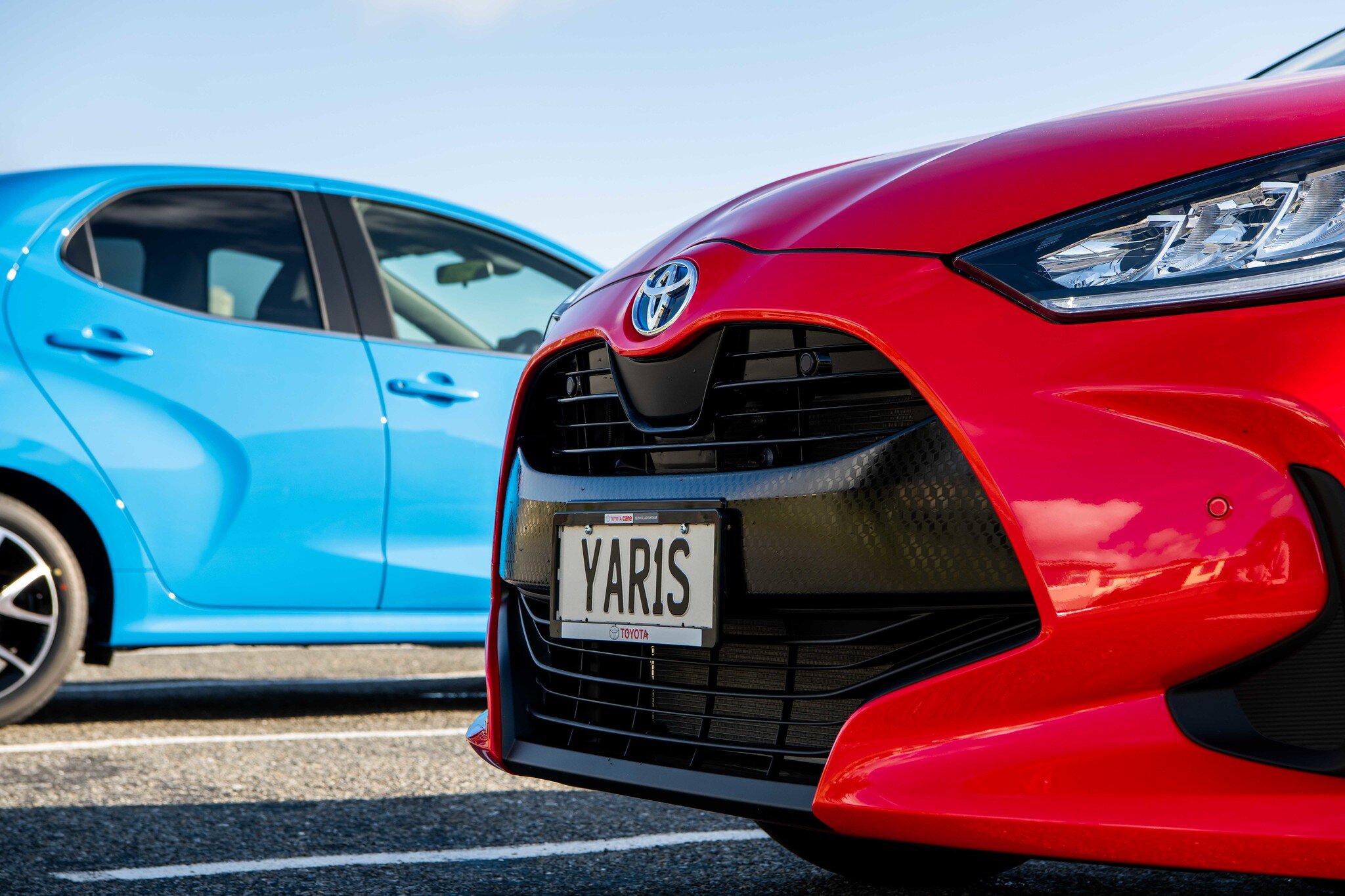
Toyota Yaris: Tapping into heightened buyer awareness

The fourth generation of Toyota’s baby hatch has finally arrived – here’s what we can tell you without having yet had chance to drive it (you’ll find out why in the story).

50170892353_372d1d97d5_k.jpg

MIGHT an incoming high-set crossover version of the new Yaris so overshadow the orthodox models arriving now as to endanger their ongoing showroom presence?

The possibility of this has been acknowledged by the brand’s national boss.

“I believe over the next 12 to 18 months that Yaris Cross will be the Yaris hatch replacement,” says Toyota New Zealand’s newly-installed chief executive, Neeraj Lala, in speaking to changing trends in the light car category. 

“Given the trends in the market and given that this car (the Cross) has such high appeal to a slightly older demographic, I think the Yaris Cross will be the dominant small car for us. 

the yaris cross is about six weeks from release.

the yaris cross is about six weeks from release.

“What that means for Yaris hatchback moving forward we will wait and see.”

Though it has never been able to emulate the volumes achieved by Toyota’s most popular car, the Corolla, Yaris has traded as a solid performer across three preceding generations, though registrations have diminished in the past two years, from 2002 in 2018 to 1802 last year.

The light car sector still achieves around 10,000 to 11,000 units per year for an 11 percent share of new car sales, according to Toyota NZ. Yet the market leader’s optimism about where is going seems greater than general industry sentiment. Many brands have struggled and core historic rival, Ford, has become so disillusioned as to pull mainstream editions of the Fiesta and instead pin all hope on a performance ST.

TNZ’s ongoing positivity seems driven in large part because it is strengthening its private buyer business and now has a hybrid drivetrain.

Yet it is also acknowledging change in consumer taste. Hence why the Yaris Cross is just weeks away from introduction.

50171438031_a00aec2674_k.jpg

TNZ has yet to fully unwrap its plans for this derivative, but as a spin-off design off the same engineering and design base as the pathfinder hatchbacks it could well also fully replicate the hatchback line which comprises four 1.5-litre petrols, all driving through CVTs, two with a hybrid drivetrain, and in GX and ZR specification grades. 

Being taller and with greater ground clearance than the donor – though only for show (no additional off-seal competence is claimed) – the Cross will potentially have a premium over the hatches, which range from $25,990 to $32,990, unless a special paint finish is chosen. That adds $500. 

A crossover is just one new direction for Yaris – it is also set to configure here as a fully hot hatch by year-end.

Inspiration for the wild 192kW/360Nm four-wheel-drive turbocharged GR (for Gazoo Racing) car comes from Toyota’s entry in the wavering World Rally Championship and is also fired by the brand’s determination to rev up its showroom image.

The GR will be the basis for a replacement for the Yaris that currently competes in WRC and would assuredly have been seen in action here in September had not our round been skittled by coronavirus.

Interestingly, the brand has already started the GR push in Japan with a curious concoct called the RS. This delivers the same imposing wide-hipped body, bespoke aero package, twin exhaust outlets and ultra-wide stance of the full-fat GR but runs the mainstream petrol engine. There’s no talk of it coming here.

50171693437_2330fa49d5_k.jpg

TNZ has already taken 20 firm orders for the GR and says this interest has been enough to persuade Japan to provision more than the five units it originally earmarked for NZ for this year.

TNZ’s enthusiasm for the additional family members notwithstanding, it also sees interest in the Yaris as it presents just now being re-energised.

The model going to a fresh platform promising better driving feel, a lift in safety equipment and the hybrid’s efficiency have been cited as factors expected to raise the car’s game and status.

The latter might seem of especial interest, though the tech has taken its sweet time getting here. While this is the first hybrid Yaris available new here, it’s actually the third Toyota has created: The predecessors were based on the gen three car that NZ took from 2011; the first went into production in 2012 then was radically re-engineered four years on. However, it was only ever available in certain markets, none at this end of the world.

This latest one looks a lot more convincing than the predecessors, even though the pure electric operability is as limited as on any other Toyota hybrid – basically, the battery-only impetus avails at start-up, in reverse and at very low speed, for very limited duration, moving forward. In keeping with the Toyota/Lexus hybrid culture, it of course also lacks capability for plug-in replenishment, a feature required to establish connection as an electric car. 

50171693687_38a12c341b_k.jpg

Yaris misses out on claiming as the country’s cheapest battery-assisted new passenger product - that title being recently snared by the Suzuki Swift hybrid.

Yet it certainly stakes a strong claim for market-leading efficiency (76 grams per 100km) and economy, siting as the most fuel efficient car in New Zealand without the ability to run on batteries alone, with the lithium ion battery-fed 85kW drivetrain eking an official combined consumption of 3.3 litres per 100km. 

That figure gives it a narrow lead over other established sippers, nonetheless. For instance, it’s just a 0.1L/100km advantage over the claimed optimal from a full-sized Prius and a 0.6L/100km advantage over a car that would set to now be bumped from the market, as it’s been around for eight years.

That’s the Prius C, which also sits in a lower tech level by having nickel hydride batteries. The closest rival outside Toyota is the Hyundai Ioniq Hybrid, which delivers 3.4L/100km. As always, all this becomes somewhat theoretical in real-world conditions anyway. 

Still, Lala reckons those factors will be acknowledged by the Green-minded, saying: “With the … hybrid, you know you will be reducing your carbon footprint.”

The 1.5-litre engine also does its bit, through applying the Atkinson-cycle principles that have featured in previous fuel-eking Toyota petrol engines, but in a three-cylinder format. Toyota claims the 1.5 has a rated thermal efficiency of 40 percent, which it says is greater than comparable diesel engines. Emissions are higher that the hybrid, at 114g/km, yet the standard engine is more efficient than the outgoing car’s by some margin. 

So how does it go? Erm ….

50171695112_5ec457be0d_k.jpg

Opportunity to independently assess the model’s mettle and verify Lala’s claim of this being “the most premium small car Toyota has built” that “lends a driving experience unrivalled in the segment” and is built to be fun has been left unfulfilled.

 TNZ broke with the convention of a media gathering at a central location with cars on hand to drive, instead favouring a remote internet conference, with 90 minutes of presentations beaming out from TNZ HQ, which last week announced as the first site in Palmerston North to achieve 5G.

 A fallout from Covid-19 concerns? Certainly, several past such national events conducted by other brands have been – but only during lockdown. Now, of course, we are free of restrictions on travel and mingling.

 However, TNZ reckoned it didn’t see potential from a traditional media gathering, on grounds that it couldn’t corral enough cars for a drive programme. (Yes, just to remind, this IS the brand that dominates the market we’re talking about; primarily being serviced by factories in Japan, whose production was largely unscathed by coronavirus). It has promised to stage an orthodox event for the Yaris Cross and GR in October.

 As previously reported, this Yaris runs two kinds of CVT – the pure petrol’s coming, in ZR form, with paddle controls and an astounding, potentially bewildering 10-speeds – and also breaks ground by achieving the latest Toyota Safety Sense package as standard.

 Even the entry-level car gets dynamic radar cruise control and lane-tracing assist. In a Toyota first, front seat centre aisle airbags have been added to reduce the risk of the driver and front passenger colliding during a side-on collision.

50171439126_d4da0f144c_k.jpg
50171692792_9730d4c430_k.jpg

 The pre-collision system has also been updated to use a camera, radar and autonomous emergency braking to avoid or mitigate the effects of a crash and it is the first Toyota to gain two collision avoidance systems, delivering automatic braking and steering intervention, previously restricted to some Lexus product.

 Aside from detecting vehicles and pedestrians both day and night, and cyclists during the day, the full system is also claimed to detect and automatically brake to avoid other vehicles and pedestrians when turning at intersections. The on-board camera can also recognise speed signs and alert drivers if they’re going above the posted limits and also facilitates a lane-keep function.

 The ZR variants also feature blind spot monitor plus front and rear parking sensors that can trigger the brakes to avoid contact.

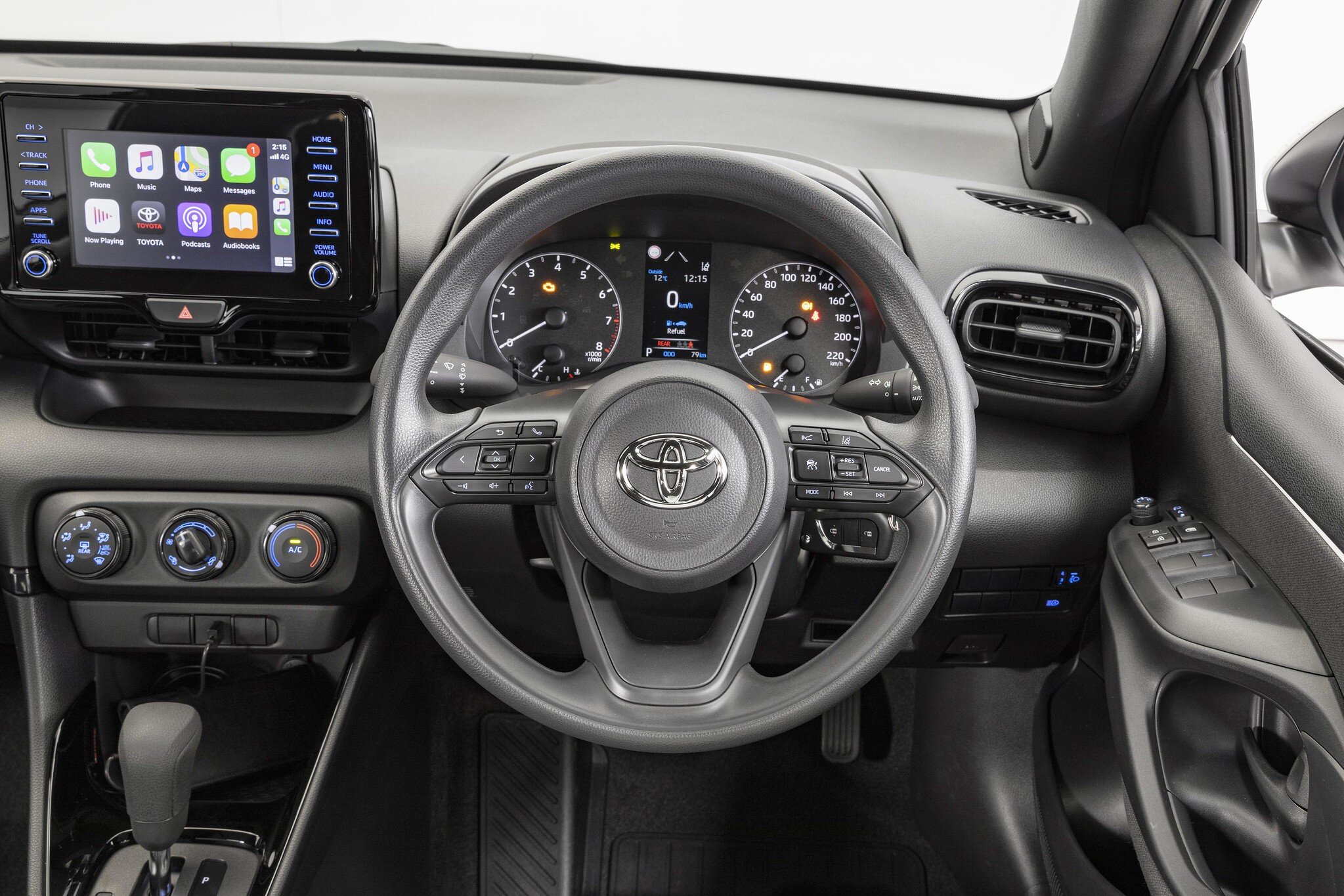
 It is the next Toyota to adopt full smartphone integration including Apple CarPlay and Android Auto. Functionality is via a large, high resolution touchscreen that stands out as one of the high-quality features now in a cabin in which, Toyota says, trims are now more premium.

 The GX has a black interior, while the ZR has a contrasting grey and black interior with red accents, both with cloth trims. The ZR has sports style seats, climate control air conditioning, smart entry with push button start, digital speedometer and a heads-up display.

50171440136_77b8a13d8f_k.jpg

 TNZ is promoting this fourth-generation Yaris as being more spacious than predecessors. The front seats have been moved outwards by 10mm to create more space between the driver and front passenger, while the seats are lower in the vehicle also. More storage space has been added in the front console, under the audio unit and in front of the front passenger.

The Yaris and Yaris Cross have the same 2560mm wheelbase, but the hatch is 240mm shorter overall, the crossover adding 60mm to the front overhang and 180mm to the rear, to ensure more interior space. The ground clearance is 60mm higher with the Cross and, with 1550mm height, the hatch is 90mm lower and 20mm narrower overall.

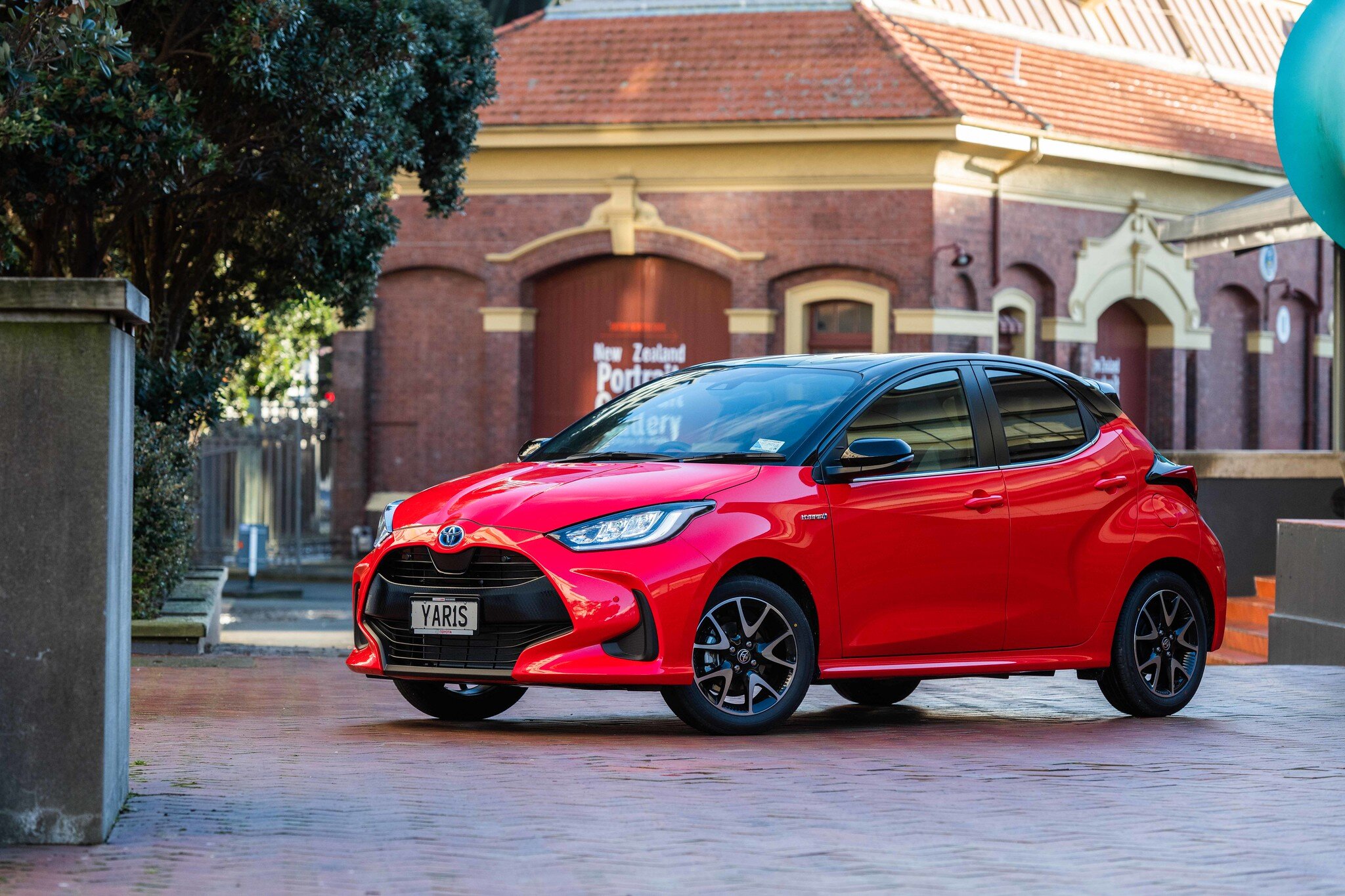
The maker is also asking consumers to take note of the car’s “new energetic and sporty look”. The GX features new 15-inch steel wheels with cover, while the ZR has two-tone machine- finished 16-inch alloys. 

Keeping with that theme, the ZR is available in two two-tone options – an ebony roof coupled with either eclectic blue or coral exterior paint options.

The combined effect of the improvements does hit the bottom line, of course. Take note that the outgoing line priced between $23,290 and $27,490 when it launched back in 2012. However, Lala says the impetus has not been to sell Yaris as the cheapest car but as the best; TNZ research also suggests buyers are increasingly looking for more premium features in the choices, and don’t mind paying a little extra for it.


Defender set to lead from front

The old one spent its last years as a niche choice. The new won’t have that luxury – it’s expected to do a big job for Jaguar Land Rover New Zealand.

Paul Ricketts (left) and Steve Kenchington believe Defender will secure up to 30 percent of Land Rover volume within the next 12 months.

Paul Ricketts (left) and Steve Kenchington believe Defender will secure up to 30 percent of Land Rover volume within the next 12 months.

THINK Vera Lynn and Adele.

Two huge world-renowned, household name stars but each very much of their own respective times. So much so that no-one would ever imagine the passing of the first would trigger an enhanced allegiance to the other.

It’s the same with the Defender. The old one was such an icon – an automotive Vera, you could say. You’ll never hear Land Rover New Zealand ever say anything less. That it has now gone into history does not demean what it is, what it did, how it should be remembered. 

Of course, at same token, the past is the past and the future belongs to a new Defender. Still hugely rugged off-road, yet obviously from another world in respect to its luxuries, look and tech. Especially tech. It’s jammed with up-to-the-minute assists. One example: ClearSight Ground View technology, which utilises small cameras to film the ground in front of the wheels to show you what you’re about to drive into if you’re off-roading. Personally, I couldn’t get enough of this during the car’s first media drive.

So, yeah, it’s amazingly special. So, even those fans who cannot break away from the illustrious past need excuse the Auckland-domiciled brand for putting their effort into getting the successor line established. 

Though, actually, that’s not the right word. Effort, that is. So far, little of this has been required.

In conversation during the model’s media reveal, Steve Kenchington, the general manager of Jaguar Land Rover’s distributor, Motorcorp, and national JLR product manager Paul Ricketts were delighted to admit the car has so far basically sold itself, with almost every unit in the first shipment of 115 units already accounted for. (Don’t worry, more are coming).

It’s a strong start, one befitting a strong product. On that note, Defender is expected to pull itself out of the rut of niche-dom. It’s back to being what it once was, back in the day before its maker had even discovered the Discovery: A mainstream competitor.

MotoringNZ: “Is it fair to call this your most important model of the past five years?” 

Steve Kenchington: “Without a doubt. I’d suggest it’s probably we will ever have in our careers.”

MNZ: Defender is an icon, but had also become remarkable niche in its it final decade – basically, by then it had fallen out of all workplace use. Taking into account that Land Rover has developed Hardtop models that are designed for work, how challenging will it be the re-establish it in that sphere, or have those days gone?

Kenchington: “I don’t think they have gone. We’re still researching and undertaking some analysis about what we might be able to do with the commercial vehicles. I’d just point out that there is a lot of DNA from the old Defender that has gone into the new one. Which is why I think the pursists are going to love the new Defender. 

“We certainly think we are going to capture some of them (the old model’s fanbase). But we also think this new vehicle is going to provide a much bigger audience.”

MNZ: “On that note, it we look forward to this time next year, what percentage of total Land Rover volume should new Defender be achieving? 

Kenchington: “It’s a quite difficult to say … it’s not a Discovery, even though it reaches into the Discovery price area, and it’s not a Range Rover. Even though we expect a lot of early adopters will be buying the very high spec editions to start, we think the main thrust will be from the D240 in the $115,000 price area. 

“Yes, it will cross over into Discovery, but I think they are two very different customer sets.

“In terms of our overall volume? We’re thinking it could achieve 25 to 30 percent. And 90 percent of that we see as being incremental.”

MNZ: “Just getting back to the  ‘purist’ viewpoint of this car – do you really care if some fans of the old one just cannot see anything to like from the new; does it matter?

Kenchington: “It does to me. Old Defender is an icon and certainly during the design, build and testing phases it was always about trying to create another icon. We want the purists to love it … so long as they understand that it has had to evolve into what it has become today. 

“For the survival of a brand you have got to get volume.”

MNZ: “Speaking of that, you seem to have got of to an excellent start, with almost your first shipment already accounted for. A good sign of it being what the market is waiting for?”

Paul Ricketts: “115 have landed in the country and we expected more than 300 over the next year. The supply chain for Defender is solid. Defender has been a key focus for Land Rover and so, where some of the factories were affected more by Covid, Defender production was able to continue on.”
MNZ: As you say, the Defender plant in Slovakia seems to have escaped the coronavirus crisis. But, of course, car plants in the United Kingdom – from where the majority of Jaguar Land Rover product still sources – were hit. Is there concern that some other product lines by be hit by supply shortages?

Kenchington: “We haven’t seen it. Our volumes are extremely strong at the moment and it’s across all the model line ups. Top-end volume has been remarkably strong, but we’ve seen good sales across Discovery, Discover Sport and Range Rover Evoque and Velar.  We’re getting a really good mix of volume.

“From Defender point of view, we always anticipated 300 for the year but we are already realigning that, to 400 unites, based on the initial inquiry levels we’ve had.”
MNZ: “So the commonly-heard viewpoint from thin industry at the moment about how people are buying cars because they cannot take expensive holidays overseas is ringing true?

Kenchington: “Absolutely. It’s very true.”
MNZ: “Your main thrust in the initial period will be with D240 and the P400, but do you imagine these will be the mainstay choices in the long run? 

Ricketts: “Over this year it will be the D240 SE. Going forward we will have the D300 with the in-line six-cylinder Ingenium diesel and we can see that becoming very strong.”

MNZ: “Keeping with engines, it’s all but confirmed that the line will include another petrol V8 – in SVX guise - and that there is also a plug-in hybrid coming; what can you tell us about those and where do they fit in to your planning?

Kenchington: “We’re really excited … we can’t wait! We don’t know too much about SVX but there is a lot of expectation around it. It’s going to be the very extreme off-road vehicle of the same flavour as the very extreme Discovery that got put on ice because they’ve decided to launch it in Defender first.

“We’re very excited for that and see a strong market for it. Land Rover has established a strong SV (special vehicles) credibility.”

 Ricketts: “We’ve already had lots of customers inquire about the plug-in hybrid. It’ll be available next year with the P300 engine and 100PS of battery.”


New Outlander in 2021


Change is coming for Mitsubishi’s core sports utilities.

3_car_trackalt.jpg

CONFIRMATION that an all-new Outlander will be out in 2021 and that the smaller Eclipse Cross will under significant change in the last part of this year has come from Mitsubishi.

However the brand still has no news about another generation of its smallest crossover, the ASX, which has been in production since 2010 and has just undergone four facelifts in a bid to keep it fresh. 

The news was not imparted by the national distributor but its equivalent in Australia.

Mitsubishi Motors New Zealand head of marketing and corporate affairs, Reece Congdon, has been approached for comment.

According to Mitsubishi Australia, the Eclipse Cross will achieve major front and rear design enhancements, “taking cues from Mitsubishi’s next-generation design language”. It will also have a revised interior including a new infotainment system.

As for Outlander? The design is still under wraps, but the brand has confirmed the next car will be larger than the current offer, though not significantly so. It is also confirmed that it will be the first Mitsubishi to fully benefit from the Renault-Nissan-Mitsubishi Alliance in that it will place on the same platform as the next generation Nissan X-Trail. 

Conceivably, then, new drivetrain options will also feature. Mitsubishi is expected to contribute a revised petrol electric powertrain for the plug-in hybrid that is now a mainstay in New Zealand, but the car will also like achieve a 2.0-litre variable compression petrol turbo engine developed by Nissan. 

Timing for the model looks set to be around mid-2021 or soon after, following the timeline set out for the model launch in North America. 

According to Mitsubishi Australia chief executive Shaun Westcott: “The all-new next generation Outlander will be bigger, bolder and better than ever before, and will be the quietest and best-equipped Mitsubishi ever sold. 

“Completely redesigned and reimagined in every way, the new Outlander will incorporate the latest Mitsubishi design language, with a bold, aggressive, and distinctive appearance. Loaded with technology and significant interior refinements, this game-changing vehicle will surprise many.”


Fresh look M5 now in fresh format

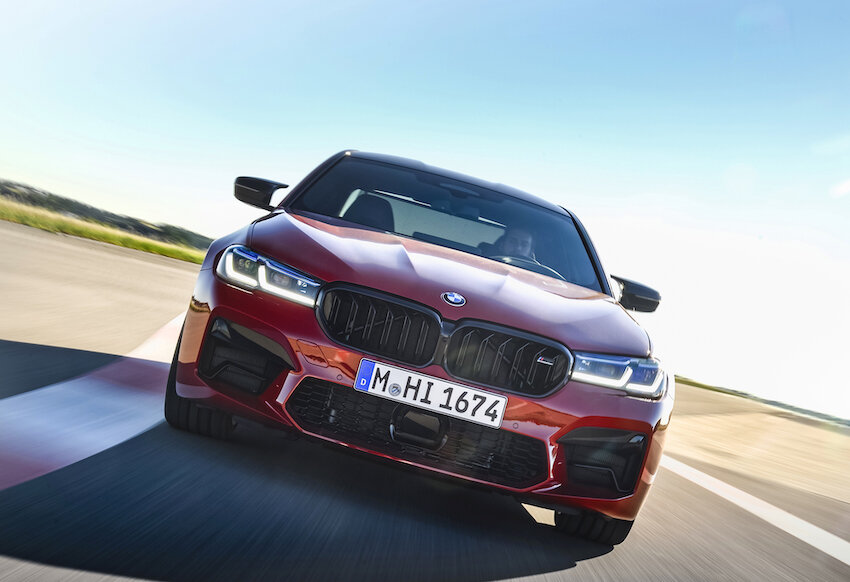
The updated BMW M5 is out … and this time, it’s a double act.

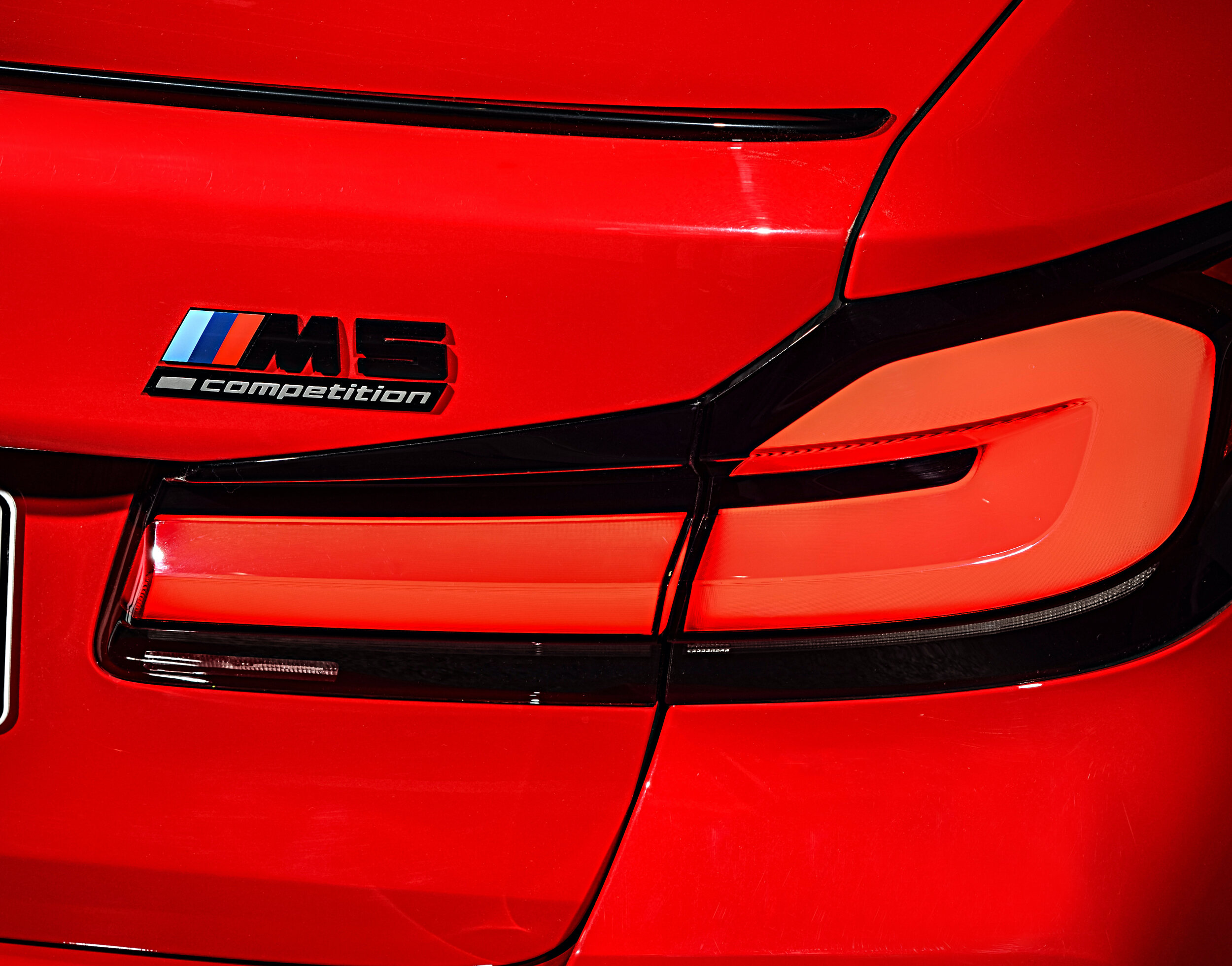
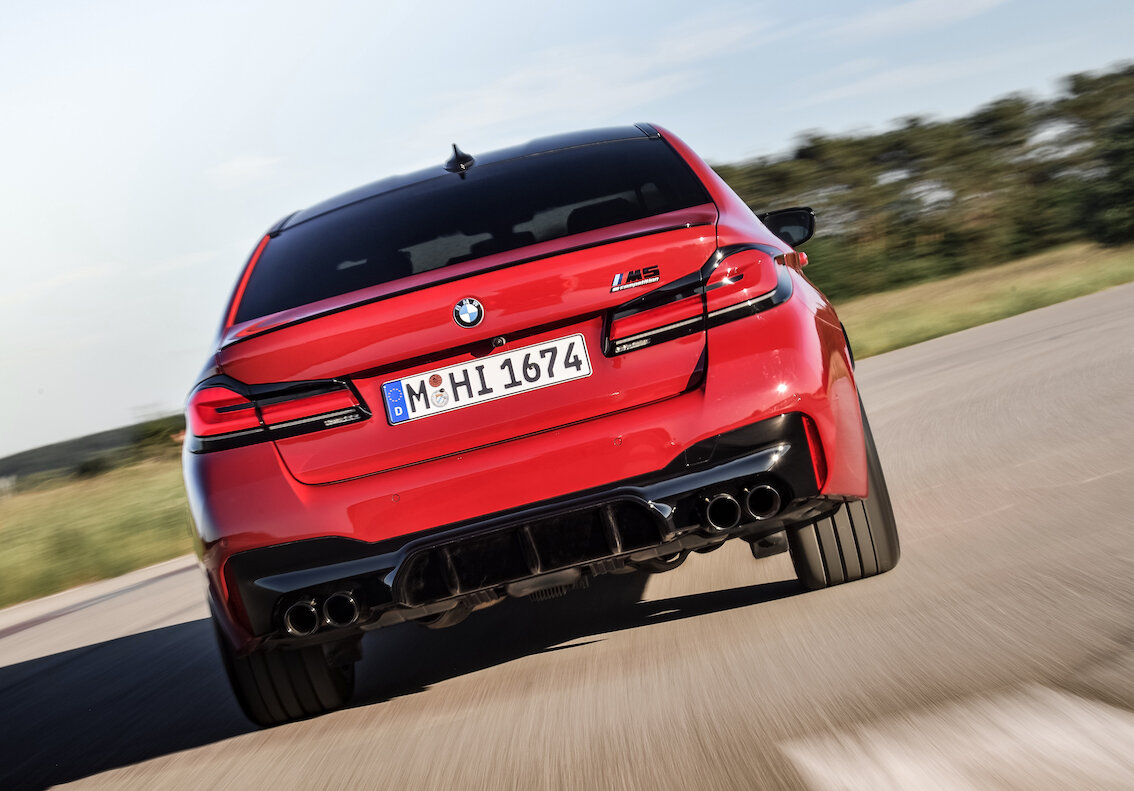
The M5 Competition (above) is subject to a price hike … but now there’s also a dollar-saving Pure.

The M5 Competition (above) is subject to a price hike … but now there’s also a dollar-saving Pure.

THIS time around, it’s no longer a policy of ‘only the best will do’ – now we’re in line to take the second-best, too.

 Admittedly, that shouldn’t be seen as a dismissive, as the car to which this policy applies is one of the very greats.

Still, it’s an interesting development that, for the first time, the BMW M5 on occasion of the release of a mid-life refresh will be made available in not just it’s most hardcore furnishing, again called the Competition, but also in the pared-down format – known as the ‘Pure’ – that has previously been left behind in Europe.

 BMW New Zealand has not offered no explanation for its policy change, but perhaps it comes down to price and positioning opportunity that comes.

 The ‘lesser’ model still has heaps of grunt, strong spec and a big sporting pedigree – and it comes in at $189,900. The Competition, meantime, is a $234,300 ask.

 Which means? Well, buy the lesser and you get an M5 for $10k less than the preceding car cost, or go for the Competition and prepare to be hit with a $35k price jump.

 Outwardly, the extra outlay seems unnecessary. Both editions run a common 4.4-litre V8 massaged with two turbos, relaying via an eight speed Steptronic transmission, and while the Competition has another 19kW power than the Pure, which produces the same 441kW as the pre-facelift car, they both deliver 750Nm and both reach 100kmh from a standing start in the same time: 3.3 seconds. They’ll also strike 200kmh in 10.8s. Top speed remains at 305kmh.

 So where does the M5 Competition deliver an edge? Well, in theory it’ll be under brakes and when charging around corners. The top dog has received chassis revisions and takes new shock absorbers from the M8 Gran Coupe. It sits 7mm lower and the suspension components are tuned to give the car around 10 percent more stiffness.  Engine mounts have a stiffer spring rate and M Compound brakes are upgraded to carbon ceramic units. It also has the same 20-inch wheels used by the M8.

 What to do with all this heft? The Competition having a Track drive mode which turns off all non-essential systems and deactivates most of the safety features to ensure maximum concentration from the driver suggests BMW wants owners to head their local race circuit.

 Overseas the Competition takes alone takes the M Sport exhaust system with flap-controlled tailpipes. In New Zealand it becomes standard to the Pure as well. And, of course, , the now-familiar BMW M xDrive – an intelligent all-wheel drive system that provides drivers with a choice of three drive mode settings, depending on desired driving outcomes – is standard, too.

 The updated model features styling changes, the most obvious being new headlights and taller twin kidney grille design. It also gets a larger front air intake, bolder contouring and a revamped tail-light arrangement.

 The Competition gets black paintwork on the intake and gill mesh, grille surround, wing mirror caps, bootlid spoiler and rear apron inserts, specific black badging and black chrome exhaust tips.

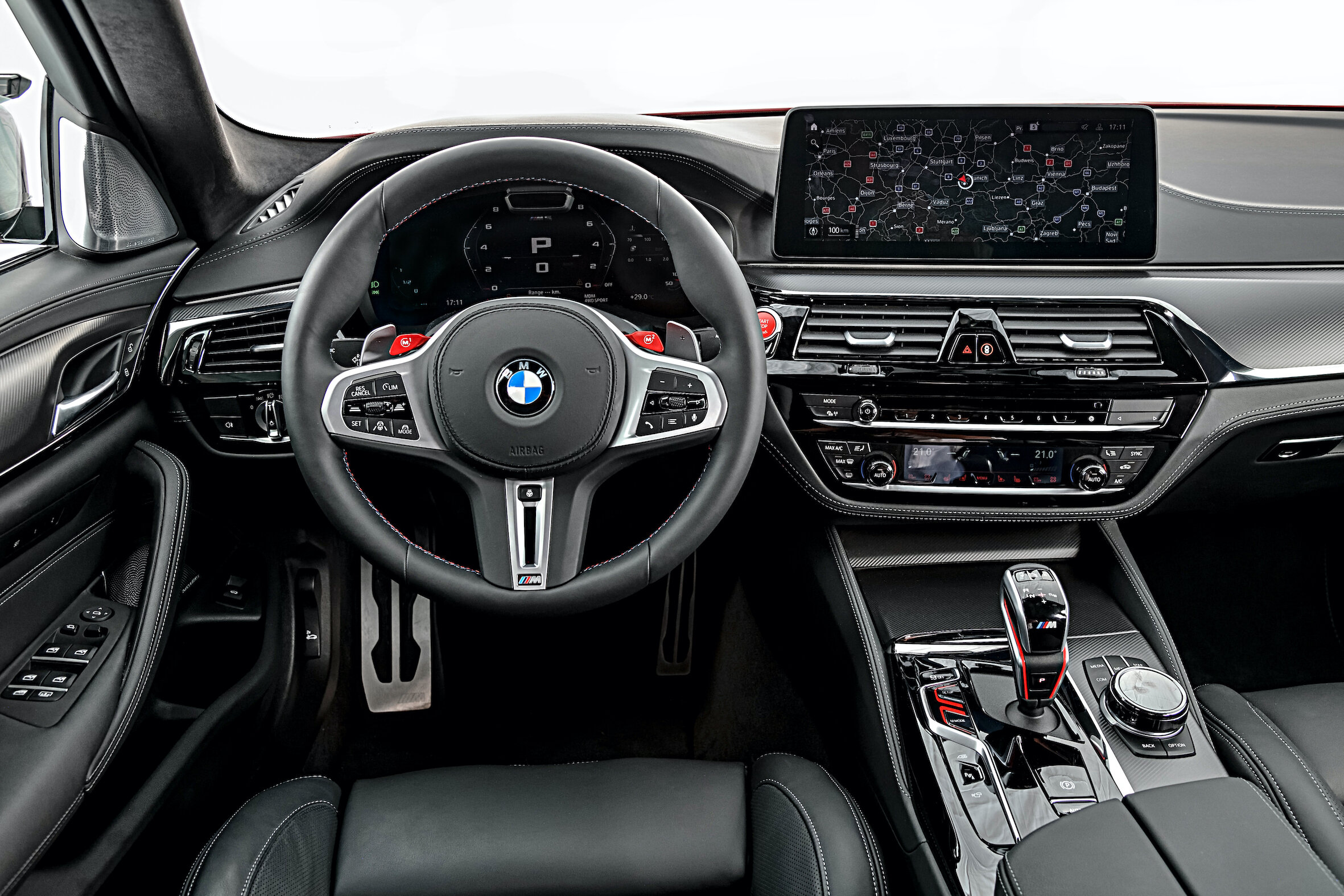
 Changes inside the cabin primarily extend to a new 12.3-inch infotainment touchscreen (up from 10.25”) and two new buttons added to the centre console – M1 and M2.

 These allow drivers to flick between Road and Sport driving modes and provide a shortcut to the configuration menu within the infotainment system to tailor the car’s set-up to their liking.

 Merino leather M seat upholstery, four-zone climate control, Alcantara anthracite BMW Individual headlining, leather-clad instrument panel, roller sunblinds, M seatbelts and soft-close doors are provisioned.

 In terms of technology, BMW Operating System 7.0 powers the infotainment system while audio is played through a 16-speaker Bowers and Wilkins Diamond surround-sound system.

 Other features include BMW Live Cockpit Professional, BMW Connected Package Professional, wireless Apple CarPlay and Android Auto, wireless charging, M head-up display, BMW Drive Recorder, tyre pressure monitoring, Driving Assistant Professional, Parking Assistant Plus and BMW Laser Light.


Audi gets loud with quiet achiever


The car that kicks off a new era for Audi is now available in a cheaper format.

A1910360_medium.jpg

 EFFORT to instil the e-tron as a relevant competitor to fossil-fuelled supports utilities is stepping up with arrival of another variant. 

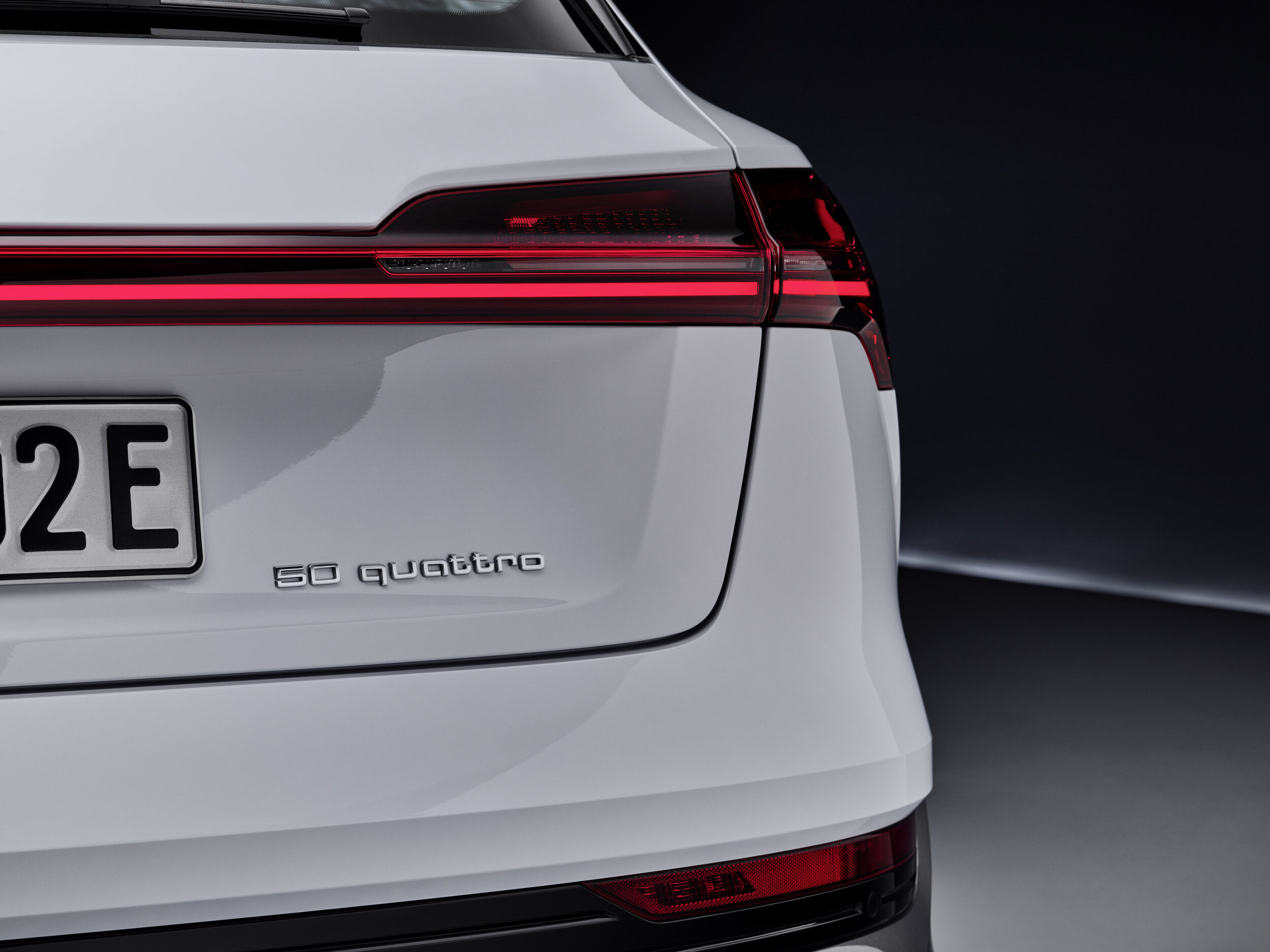
The e-tron ‘50’ quattro going into dealerships now is a lookalike for the ‘55’ model that started Audi’s full-electric charge into the SUV sector a year ago, but has a less powerful quattro drivetrain that offers about 100kms’ less range. 

Those factors, however, don’t inhibit it from being perfect for NZ driving the brand says. They also deliver a positive in the model’s pricing – the launch price is more than $30,000 less than that for the ‘55’. 

In this respect, though, an equally significant contributor to this positioning is Audi itself. 

Audi New Zealand, which is a privately-owned concession held by the Giltrap family, has acknowledged it has received something independent national distributors cannot always rely upon - significant factory support. 

This has allowed the Auckland distributor to launch the model at $119,900.

Brand boss Dean Sheed says that’s around $16k less than the recommended retail the car will ultimately carry once that support ends. By comparison, the ‘55’ comes in for around $150,000 in a base format, with a higher-specced Advanced model costing another $5000. 

Audi NZ intends to leverage the ‘market special’ launch price fully, by also advertising that the ‘50’ will be eligible for an operational lease arrangement for businesses. 

This provisions the car for-$1799 plus GST a month with no deposit and monthly payments all tax deductible as an operating expense. “And you hand the car back in three years’ time.”

Sheed has not disclosed volume expectations for the ‘50’, but says has expressed hope that its positioning will draw a significant interest, not least from purchasers for whom price is more of a priority than any prestige factor. 

“If the buyer is a price shopper then the $119k MSRP puts it smack into high end mid-sized SUVs … if it’s a first time EV buyer its more palatable than its big brother at $155k.”

Audi NZ is set to progressively enlarge the e-tron family over the next year; soon the range will be joined by a lower-roofed Sportback shape and this time next year it is adding performance-themed S model.

All variants are all-wheel drive models, powered by an electric motor for each axle. By default the e-tron drives through the rear motor only, until the driver demands extra performance and traction. 

All variants also have lithium ion batteries, but whereas the ‘55’ has a 95kWh unit and electric motors that generate 300kW and 664Nm, the ‘50’ runs a 71kWh battery and power and torque reduce to 230kW and 540Nm.

This translates to a longer 0-100kmh time, of 6.8 seconds versus 5.7s, and also a lower range, with Audi claiming a maximum 347kms’ from full battery to depleted as established from assessment on the WLTP protocol against 446km. 

A1910355_medium.jpg

How much difference will this make to the buyer profile? Probably.

“The ‘50’ is a trial at the entry point … we will see the public feedback. I believe it will be mainly a city-based car for family’s or a business owner’s car.” 

Sheed says the ‘55’ has proven itself; not least because it’s in a sweet spot for price versus spec. And yet “this smaller battery enables a smaller price point which can be used in other models.”

The variant’s arrival as NZ comes part some degree of post-Covid normality is useful. Sales stopped during lockdown but not consumer interest. 

“Buyers kept doing research, now they are coming back to the market with precise needs and expectations.”

Warranty and roadside assist provisions are as per the ‘55’ and it also runs a comprehensive specification, including the 20-inch rim and 225/50 tyre set that otherwise provides to the ‘55’ Advance. The battery comprises 324 prismatic cells combined in 27 modules.

Recharging times are as per the ‘55’, with Audi NZ reminding that compliance with fast-charging available up to 120kW means that the car is “all set for the next long-distance stretch of a journey in approximately 30 minutes.”

A mobile charging system can be used with a 230-volt household outlet or the recommended, 32 Amp industrial plug via Audi’s home charging installation process. Alternately, the battery can be supplied with alternating current (AC) at a charging capacity up to 11kW, which will take approximately seven hours.

A1910358_medium.jpg


Red blood buys into Green St

Who’d have thought they’d ever see this powerplant behind a trident badge?

Medium-16679-MaseratiGhibliHybrid.jpg

THINK Maserati and what type of engine do you imagine?

Traditionally, something thumping, multi-cylindered, in recent times, touched by Ferrari.

And now …?

A 2.0-litre turbo four-cylinder petrol engine, with 48-volt mild-hybrid assistance, placed in the Ghibli sedan to provide what Maserati claims is the performance of a V6 petrol with the economy of a V6 diesel.

Keen on this formula? It’s an unavoidable acknowledgement of the way the world is heading. Emissions, economy, European Union regs for both. Every brand must comply.

So, for Maserati, the double-header of not only its first hybrid but also it’s first ever four-cylinder try-out.

The whole shebang is at least being kept Italian. The engine is basically the same used by Alfa Romeo in the Stelvio sports utility and Giulia sedan, but has been given a small 'eBooster' electric motor, and a compact battery, that brings power up to 246kW and torque up to 450Nm.

The Ghibli Hybrid's top speed is 255kmh and it'll hit 100kmh in 5.7 seconds. 

Speaking of pace, how long before it hits New Zealand? Interestingly, that information has yet to be shared by the marque’s local market distributor, which operates from Australia. However, production for right hand drive will be under way from early next year, so …

As you might have gathered, this is the mildest form of hybrid system the Fiat-owned luxury sports brand could have conceivably chosen. So why not something a little more advanced or stronger?

Maserati is quite upfront about this. It says adding a full hybrid, or plug-in hybrid, would have made the car too heavy. As is, the Ghibli Hybrid weighes around 80kg less than an equivalent model running the diesel engine which has been at the forefront of the brand’s economy run previously but has now been retired.

 The brand reckons this new approach provisions the "perfect trade-off between performance, efficiency and driving pleasure." Fans will ultimately decide, of course, but at least it does hit the nail for economy, with a claimed 8.5 litres per 100km from the WLTP test.

Large-16664-MaseratiGhibliHybrid.jpg

Style-wise, you'll pick a Ghibli Hybrid from the little flashes of bright blue scattered around. It's on the brake calipers, in the little 'portholes' on the front wings, in the headrests, and in the seat stitching. The trident badge, mounted on the rear pillar, also gets a little blue flash below the fork. There are new tail-lights too, with a 'boomerang' profile said to be inspired by the 3200 GT model of the early 2000s.

To further enhance the appeal, the Ghibli Hybrid also gets to debut a new infotainment system, with a bigger 10.1-inch screen, and some software input from Google's Android Automotive software arm. It gets the new Maserati Connect online connectivity package, and the screen's menus and layout are fully customisable by the driver.

One of the big treats of an encounter with a petrol Maserati is sensory - the exhaust note is awesome. How doe the four-cylinder match up? Well, they’ve done some work there, as well. It won’t roar and burble like a V8, but does get a specially designed exhaust system to try and capture as much as possible of the traditional Maserati aural experience, the brand says.

Large-16668-MaseratiGhibliHybrid.jpg


Trick or treat timing for 4-Series

The model that delivers a new shock look for BMW arrives locally just in time for a fright night festival.

BMW 4 Series Coupé.PNG

CERTAINLY co-incidental, but a quirk bound to raise a wry response from critics nonetheless – that’s the BMW New Zealand’s launch timing for a car debuting the most controversial change to the brand’s styling language in ages.

An October arrival for the 4-SeriesCoupe in $81,900 420i entry guise and more pumped, $129,900 M440i xDrive formats chimes in nicely with an annual celebration of all things frightful.

 It’s highly probable then, that any local styling authorities (ie, anyone with a Facebook or Twitter account) who have already been quick to share their affronted view of the model’s primary street signature – the oversized vertically-emphasised kidney grilles that, according to BMW, “boldly evoke sporting icons of yore” – might yet suggest this is the perfect automotive accompaniment for ferrying those junior ghouls, goblins and Freddy Kruegers to their local Halloween festivities on October 31.

 Ok, black humour maybe, but who can resist commenting? After all, look at what the distributor is saying. Even after the heavy PR sanitisation through which all company comment passes prior to reaching media, Auckland office has not been able to avoid lending a view.

Introducing it as a car for those who “dare to be different”, BMW NZ goes onto to call the car “bold” and suggests it “possesses an even more individual identity” than its Three Series sibling and features “clearer differentiation” not just to the sedan and wagon line but also its predecessor. It’s intriguing that BMW here has chosen to offer, as standard equipment, the M styling packages that certainly take some of the edge off its approach.

P90390188-highRes.jpg

The 135kW 2.0-litre TwinPower Turbo in-line four-cylinder 420i and a 275kW TwinPower Turbo in-line six-cylinder in the M440i xDrive are just the pathfinders for a purely petrol drive that, of course, will ultimately include an M4 still under development.

Both engines are mated to eight-speed Steptronic Sport transmissions that feature closer gear ratio calibration than it would get in the Three Series. This means the M440i xDrive will accomplish 0-100kmh sprint in 4.5 seconds.

Compared to the current G20 3-Series Sedan, the sportier 4 Series Coupé packs additional chassis stiffening elements, a bespoke steering and suspension geometry setup, sits 57mm lower, has a 23mm wider rear track which results in a 21mm overall drop in centre of gravity for even sharper driving characteristics.

The car steps up in cockpit tech, with a 12.3-inch digital instrument cluster standard and a 10.25-inch control display operating with BMW’s latest iDrive 7.0 software. 

Standard sports seats, luxurious upholsteries, trims and materials as well as clean, clear controls feature throughout the range. Both models can be upgraded with options packs, prices for which have not been shared.

P90390178-highRes.jpg


Land Cruiser update - change of face for change of pace

Is this the new look for Toyota’s off-road giant, the so-called 300-Series expected to be here soon?

Screen-Shot-2020-07-17-at-12.57.49-pm.png

IMAGES fully revealing the styling alterations arriving with the 2021 Toyota Land Cruiser support conjecture that the mechanical change coming with the ‘300 Series’ treatment will be more headline-making.

These photos have been unearthed by a specialist Australian off-roading web publication, Unsealed 4x4, and purport to show the updated vehicle awaiting shipment from a port in Japan.

Handily, the vehicle is parked alongside an example of the current 200-Series, which makes identifying the external design changes – to the front, at least - all the easier. If they’re not immediately apparent, the new car has a new grille, updated headlights and new front bumper that’s significantly deeper than the current model. It also scores new alloy wheels.

Exactly when Kiwis will be able to see the refresh in the metal for themselves is not clear. Toyota New Zealand has several product launches to enact this year, but anything for Land Cruiser has not been specifically mentioned. So far, the talk has been all about Yaris and updated Hilux.

However, it’s an open secret that significant change is coming for the long-running wagon and that the big development will be the introduction of a twin turbo V6 petrol mild hybrid powertrain. Whether this unit will sit alongside, or completely replace, the current 4.5 litre V8 turbodiesel is still subject to much discussion. Toyota is remaining quiet.

The model that media imagine will be called ‘300 Series’ has been a long-time coming. It’s strongly claimed Toyota had 300-Series prototypes in Australia being tested as long ago as 2015. The 200 has been around for an astoundingly long period: 2020 is its 13th year of production. The preceding ‘passenger’ Land Cruiser models were in build for eight (80 Series) and nine (100 Series) years respectively.

Why drop the V8? Mainly, it seems, because of a wider brand policy. For sure, the current engine struggles to meet economy and the latest emissions standards enforced in some big passenger markets – but whether that really matters to land Cruiser is moot. The biggest markets for this model are the Middle East, where fuel is cheap and no one gives a jot about exhaust counts, and Australia; another country where the car is comfortably accepted in its current form. To be fair, NZ also doesn’t have any regulations that the vehicle would trip over.

However, Toyota Japan has itself committed to offering a fully electric or electric hybrid version of every model in its range by 2025, so conceivably that in itself is enough to do it for Land Cruiser. Also, the developments it gets are likely to be applied to vehicles like the Prado, the Fortuner and the Hiluix. Indeed, a hybrid Hilux has been mentioned repeatedly as a future product. 

While its specs have remained closely guarded secret, the ‘300’s’ engine is expected to be based on a large-capacity six-cylinder turbocharged petrol engine, potentially a version of the 3.6-litre used by Lexus product, augmented with an electric motor and a battery pack. Outputs estimated in the region of 260kW and 490Nm. When news if this drivetrain first broke – via a Japanese car publication, ‘Best Car’ – it was suggested the engine would drive through a constantly variable transmission.

The Lexus version of this powertrain is not turbocharged and goes into the LS large sedan and LC flagship coupe. In those vehicles it produces 220kW at 6600rpm and 348Nm at 4900rpm, and the electric hybrid system produces 132kW and 300Nm, for a combined power output of 264kW (with an estimated combined torque of 500Nm). In the LS, it makes 310kW and 600Nm, a torque output that is closer to that from the current 200-Series engine, which packs a claimed 650Nm at 1600-2800rpm and 200kW at 3600rpm.

Screen-Shot-2020-07-17-at-12.57.57-pm.png

The powertrain demands a stepped CVT in place of the current edition’s six-speed traditional automatic, to improve fuel consumption to around 9.4 litres per 100km and reduce emissions.

Toyota is the pioneer of hybrids, having launched the first mass-produced production hybrid car, the Prius, back in 1997, and its hybrid integration and much higher now.

The LC200’s stocks have fallen in recent years as the market migrates away from full-sized, old-school ladder frame genuinely tough all-terrain models and toward softer, more street-wise sports utilities.

Even so, there has been enough of a core following to sustain a four variant local lineup, starting with a $115,900 VX and topping with a $129,990 VX Limited, and convincing the traditional buyer set that this is a better alternate to the current offering could be a challenge.

Land Cruiser 200-Series maintains especially high residuals on strength of its toughness and as a good choice for towing super-sized caravans and boats; the fan base will be eager to know if that talent remains intact. It also has a very comprehensive off-roading technology pack. It’s hard to imagine this being eroded though surely having a CVT in the package will raise some interesting challenges.

There has been talk about the vehicle going to a new platform; the vehicle in the images apparently having the same dimension (and, aside from the nose, body shape) as the 200-Series suggests that is not the case. But, for the record, overseas’ chat has been about it taking a body-on-frame version of the TNGA (for Toyota New Global Architecture) underpinning, known as TNGA-CV.

The interior is said to be in for a huge revamp, with leather, comfort and luxury levels that were previously the preserve of a Lexus.

Best Car said it has a larger, up-to-date 8.0-inch infotainment system, with Apple CarPlay and Android Auto, and additions to Toyota Safety Sense, which will come with a full suite of driving assists such as adaptive cruise control, lane-keeping assist, day and night-time pedestrian detection and more.


Camry updates acknowledged

Toyota is putting a more efficient battery into its Camry and bringing a facelifted model.

03.+MY21-Camry-XSE-Hybrid-001hr.jpg

 ADVANCE notice of changes coming to the Camry has been given.

A fresh front end styling sits ahead of some key technology improvements that mean an upgrade to the already comprehensive Toyota Safety Sense suite of assists.

What the maker is calling Safety Sense 2.5 includes upgrades to systems such as the pedestrian-detection and adaptive cruise control functions.

The car also takes a new dash design, the big change there being a different touchscreen infotainment set up – it also now a tablet-style arrangement, meaning it sticks out of the dash. 

Before we see this, the hybrid drivetrain that has become core to the car’s appeal will be given a refresh.

Retirement of the current 245V nickel metal hydride battery for the 2.5-litre petrol electric drivetrain for a more efficient 259V lithium-ion battery is set to happen very soon, well before the new look arrives.

Which is when, exactly? Well, don’t be in a rush to grill your dealer – as said, though released now, this news about the mid-life restyling process is very much ahead of delivery time. The changes will not chime in until early next year, in fact.

However, with first Toyota in America and then the brand’s Australia outpost having notified the update, Toyota New Zealand has been compelled to speak, with chief executive Neeraj Lala offering the following in respect to the updates and the brand’s thinking about the ongoing status of a car that has been pointed more toward private sector and weaned off fleet and taxi stand favouritism.

“While the sedan/passenger car customer interest does continue to decline, we have seen a significant increase in Camry sales since the launch of the new generation model in 2018,” he offered.

“Our market penetration for private Camry sales is sitting at 30 percent year to date. We are increasingly seeing customers move towards hybrid powertrains across all our models and Camry is no different with 85 percent of our sales year to date.

“We have had great customer feedback on how it is a great car to drive, and people quite literally can’t believe it is a Camry they are driving!”


Ford's 'big brother' feature implements

From now on Ford vehicles sold new here will wirelessly bond to the internet.

FordPass_4.jpg

THE BLUE Oval has become the first blue collar car brand in the New Zealand market to achieve a feature until now restricted to high-end marques – an ability to operate key features remotely via your cell phone.

 Ultimately all Ford passenger and light commercial models sold in New Zealand seem set to benefit from the FordPass app, which provides a host of connected services and remote functions, but in today’s announcement the brand says it will only have immediate full benefit for Ranger, Everest and Transit coming into the market now.

It is understood the Focus will be next off the line, probably at year-end, with remaining models coming up to speed by early 2021.

 Ford’s system has similar operability to systems that have been availed on BMW and Mercedes Benz cars for at least a year.

An owner downloads an app which talks to an in-car modem that contains the most crucial element that isn’t implanted into older models - an internet-connected SIM card. This is securely embedded into the vehicle during assembly, as a precaution against theft.

 Though Ford has notified this as a 2020 model year feature, it also impresses that it a running change, so is only fully functional from this period on, so the key is to be aware of the specific designations ‘MY2020.75’ for Ranger and Everest and ‘MY2020.5’ for Transit. Some aspects of the app will operate on earlier vehicles.

At full-strength operability, FordPass allows remote checking of vehicle information such as fuel level, odometer reading, tyre pressures (when fitted with a monitoring system), warranty details and owner’s manual. 

You’ll also be able to start/stop, lock/unlock and pre-heat/cool your vehicle remotely, make/change appointments at your Ford dealer and find fuel stations, car parks and other points of interest then send them to you in-car navigation system.

In addition, FordPass Connect allows owners to call roadside assistance, check their car’s service status and history, and be alerted to maintenance and repair issues such as when the oil needs changing or if a bulb needs replacing.

“FordPass Connect is another way we’re bringing smart, simple-to-use real-world technology into the hands of Ford owners and their families,” says Ford NZ’s managing director, Simon Rutherford. 

The system’s availability here and in Australia comes some months after it’s rollout in most major markets, but there is a literal saving in being well down the line.

Until recently, a charge applied. When it launched in the US, the debut market, the cost was around $30 per month for a 24-month period. 

However, now it is available for download free of charge for Apple and Android devices. It ties in with Google Maps and Wayze, but without using the phone data, so there’s no cost in that respect either.

The system is designed to accept regular software updates, these Ford says being “to guarantee that the vehicle systems and components continue to operate with optimum safety and performance.”

Ford is likely to impress the particular benefit to commercial vehicle operators, in that it can act as a real-time monitoring system to alert whenever there are potential security breaches within vehicles. 

Ford’s embracing of connectivity also reaches into vehicle manufacturing processes.

Two weeks ago the brand announced how it and a consortium of partners, including Vodafone, has received British Government backing to introduce 5G connectivity within its manufacturing to speed up the production of electrical vehicles in the United Kingdom, a process that demands a much higher level of automation than comes with assembly of fossil-fuelled product due to safety elements, mainly in respect to battery build and installation.

The updated capabilities allow Ford to focus on the connectivity of the welding machines when manufacturing EVs. Currently for the batteries and electric motors in an electric vehicle, requires 1000 welds, for a single product, Ford explains that this could generate more than half a million pieces of data every minute.  

Meantime, Ford NZ says customers can access additional information on FordPass Connect at ford.co.nz/fordpass.

Nissan NZ mum on Ariya’s potential

Nissan has unveiled its first electric sports utility

Ariya-JapanesePhilosophies(5).jpg

ENTERING production next year, with no word yet on where New Zealand sits in distribution planning – that’s Japan’s first mass produced fully-electric sports utility, the Nissan Ariya, unveiled online in its production format today.

Retaining the bold Blade Runner-esque styling of the concept unveiled at the 2019 Tokyo Motor Show and the first product to sit atop the Renault-Nissan-Mitsubishi Alliance’s CMF-EV electric architecture that will be used by all partner brands, the Ariya also showcases a new brand identity for Nissan.

However, for electric vehicle buffs, there are more important factors to consider for a vehicle set to sit above the LEAF, which has become a firm New Zealand favourite – this country’s highest volume EV, albeit on the strength of its popularity as a Japanese used import. 

Ariya’s also heading for the big time; crossovers are hot and Nissan plans their car to provision in five variants, topped by a performance model. 

Ariya-JapanesePhilosophies(6).jpg

The lesser models arrive with single motor rear-wheel-drive and the others delivering twin motor four-wheel-drive powertrains, the latter swapping the entry 63kWh lithium ion battery for a 87kWh unit.

The 63kWh single motor model will offer 160kW/300Nm and a range of around 450 kilometres in its most modest format.

The 87kWh edition is enabled for 178kW/300Nm, a range of at least 500kms and – if in rear-drive - 610kms, 0-100kmh in 7.5 seconds and a top speed of 160kmh as standard.

There’s also an e-4orce flagship that packs more punch – 389kW and 600Nm – and extra pep: Zero to 100kmh in 5.1 s and top speed of 200kmh. Range for that one drops to 400kms. All those estimates are from Nissan. The WLTP figures have yet to be provisioned. 

All models have an on-board 130W fast-charging inverter that can top up 375km (80 percent of the smallest battery’s lowest range) in 30 minutes. 

Ariya-JapanesePhilosophies(4).jpg

Ariya adopts standard, sport and eco modes, with e-Force models adding a snow function. It also uses the Leaf’s e-Pedal regeneration set-up, allowing one pedal driving. And some variants will take Nissan’s Pro Pilot 2.0, which allows for hands-free driving in some circumstances. It relies on more than 20 sensors such as cameras, radar and ultrasonic components. 

At 4595mm long, 1850mm wide and 1655mm tall, the Ariya is relatively compact, but it has a 2775mm wheelbase and the absence of a transmission tunnel plus some clever stowage ideas will enhance interior space. The entry rear-drive car’s boot offers 466-litres’ capacity; editions with the 87kWh battery have 58 litres’ less space. Still, what helps is that the battery is a flat pack, which allows the vehicle to have a completely flat floor.

The interior features a high-tech interior, with almost no buttons or knobs, and aims to deliver a premium feel. Many touch controls are neatly integrated into the timber fascia that runs across the dash and are handled through "capacitive haptic touch-sensitive icons that light up on the dashboard.

Nissan has also freed up space by removing the air conditioning equipment from the cabin. It’s located under the bonnet instead because … well, no engine, right? 

Nissan claims Ariya is expected to represent a new electrified brand identity – “blazing a path to an era of advanced electrification, interior layout, and seamless vehicle intelligence.” 

Led by Senior Vice President of Global Design Alfonso Albaisa, Executive Design Director Satoru Tai and Senior Design Director Giovanny Arroba, Nissan’s designers worked from the beginning to lend a Japanese identity.

Ariya-JapanesePhilosophies(9).jpg

“We wanted to ensure that the soul of the vehicle reflect our distinctive Japanese DNA, conveyed in a simple, yet powerfully modern manner,” Albaisa said. “We dubbed this ‘Timeless Japanese Futurism’ and tapped into key Japanese words to inspire our global design team to produce the Ariya’s ultra-sleek, seamless, sharp and powerful form.”

Example? The grille has a large sunken area with a subtle pattern that's supposed to resemble a traditional Japanese kumiko design.


Range Rover Sport engine swap

Going straight takes literal meaning with this model in turbodiesel form.

RRS_21MY_SVR_CARBON_EDITION_150720_01.jpg

A REVISION that hits the Range Rover Sport for six within the engine bay has been announced.

The biggest element of an update for the model is the retirement of its Ford-sourced V6 turbodiesel for an in-line equivalent that’s Land Rover’s own work.

The unit from the make’s Ingenium family is also a mild-hybrid, and provisions in three formats, labelled D250, D300 and D350. Power outputs range between 183kW and 257kW (D250 and D350).

The D350 is the geekiest, as in addition to using a single twin-scroll turbo and continuously variable valve lift to maximise power and efficiency where it can, it also has 48v mild hybrid tech and an electronic supercharger. The cited 0-100kmh time is 6.5 seconds, and it produces a CO2 output of 237g/km. 

The Sport still continues in petrol-powered options, so all in all it produces with nine different drivetrains, including the plug-in hybrid P400 and the V8-powered P525 and P575.

To mark the arrival of these new straight-six diesels, the Sport also gets a number of new special editions - the HSE Silver, HSE Dynamic Black and the model featuring in today’s images, the SVR Carbon Edition, which as you'd expect is dripping with carbon fibre detailing.

Visible carbon fibre elements include the exposed centre section of the carbon fibre bonnet with integrated cooling vents, the front bumper insert surrounds, main grille and vent surrounds, mirror covers and tailgate finisher. There are extended trim finishers on the SVR-branded steering wheel and a Carbon Fibre Engine Cover. In addition, the SVR Carbon Edition features Exclusive Illuminated SVR Carbon Edition treadplates. It runs on 22-inch five split-spoke lightweight alloy wheels finished in Gloss Black. Subtle? Not in the slightest.

The exclusive 423kW/700Nm 5.0-litre V8 supercharged engine delivers 0-100kmh in 4.5s, top speed of 283kmh and, the brand assures, provisions a “distinctive soundtrack.” The model also has SVR Performance seats, Sports Command driving position and a driver-focused cabin.

RRS_21MY_SVR_CARBON_EDITION_150720_03.jpg

Range Rover says this Sport SVR is “the most dynamic Range Rover ever.” Coupled with bespoke enhancements to the chassis, the SVR delivers more dynamic handling without compromising traditional Range Rover comfort or all-terrain capability. The engineers at Land Rover Special Vehicle Operations focused on controlling pitch under heavy acceleration and braking, and the damping hardware is tuned to provide exceptional turn-in, mid-corner grip and body control. 

Other new features across the range for 2021 include an updated infotainment system, with Apple CarPlay and Android Auto as standard across, and in-built 4G wifi with up to eight connections. Spotify is now included. There's a new air purification system, which Land Rover says helps with driver alertness and passenger comfort.

The New Zealand distributor has yet to release detail about what models are coming and when.


iX3 unveiled and confirmed for NZ


BMW’s first battery-pure sports activity vehicle will be here in 2021

P90392995-highRes.jpg

AN edition of the X3 crossover at the forefront of BMW’s electric vehicle push in 2021 has been revealed in full production form and confirmed for New Zealand.

BMW New Zealand has been surprisingly subdued about the iX3, unveiled in Munich by video conference last night (below).

The Auckland-based distributor’s comment has restricted to notification that pricing and specification details relevant to our market will be announced closer to local launch. The exact timing for this has yet to be divulged.

The lack of further comment from the distributor around the car’s announcement is at odds with the noise it was making a week ago, when it offered opinion that it has achieved leadership among German premium brands for electrified vehicle sales.

It claims this is on the back of BMW and MINI having shored up 25.8 percent of the premium segment in the first half of the year with ‘electrified’ vehicles – a descriptive apparently encompassing mild and plug-in hybrids (iPerformance in BMW-speak) which span everything from a hybrid 2-Series to the i8 whose production has been discontinued (though two remain unsold in NZ), as well as the sole pure battery-driven car it has here, the i3.

Claim that these models have been “outselling other German brands in the premium segment by more than 300 percent” seems an especially bold statement given the current car sales climate. And it has become one the brand has not yet been keen to unwrap further.

A request for further elaboration appears to still be churning through the local distributor’s media response process, which has become laborious since it ditched in-house media communications last year and contracted the role to an Auckland PR company, whose general policy is to pass on inquiries to BMW regional office in Australia to achieve a response that is subsequently relayed back to the media organisation. Or not.

P90393411-highRes.jpg

By the time the iX3 lands, BMW will already have another small all-electric in the market, in the form of the MINI Electric hatch, whose first shipment arrives soon. BMW claims the entire 2020 allocation has already been sold out but has not said how many vehicles that comprises.

The iX3 is likely to be pitched as a competitor for three like-sorted models already on sale here - the Mercedes EQC, Audi e-tron and Tesla Model X – though those all offer all-wheel-drive, whereas the Munich model is rear-drive only.

BMW’s car also differs in being more obviously based on an existing model, yet it nonetheless represents an important step. It’s not just BMW’s first electric SUV, but also the first BMW to be available with either pure combustion, plug-in hybrid or pure electric power. 

It’s also the first BMW for global export to be built in China - a plant developed with a partner in that country, Brilliance, will be the sole production point - and is the first to feature the brand’s “fifth-generation” electric drivetrain technology, which will be applied on upcoming EVs like the i4 sedan and the range-topping iNEXT SUV. 

The X3’s platform has been adapted with a new rear sub-frame that can house an electric motor and an 80Wh battery pack that, BMW says, is 20 percent more energy dense than any battery it has used before. 

Combined with a 210kW electric motor driving the rear axle, BMW claims a maximum range of around 460km on a single charge, 0-100kmh in 6.8 seconds, and a top speed of 180kmh. 

Charging can be handled at up to 150kW at a suitable direct-current (DC) rapid charger station, enabling a 0-80 percent replenishment in 34 minutes. Alternating current (AC) single-phase and on-board three-phase charging at 11kW is also standard. 

P90392976-highRes.jpg

BMW is talking up the car’s adaptive energy recuperation system, which it claims automatically enhances efficiency on longer drives. Using location data from BMW’s latest cloud-based navigation system, the iX3 can autonomously change the level of braking recuperation on the move and according to the road ahead. For instance, if the car recognises that a stop sign is ahead, full recuperation will be deployed without any need for the driver to select it. 

Alternately, the driver can take manual control of the regenerative braking, with three levels of resistance availed. A ‘B’ position on the Drive selector enables high enough energy recovery for one-pedal driving around town, a trick the brand appears to have nabbed from Toyota/Lexus. 

The iX3 gets a unique tune for its standard adaptive suspension system with electronically controlled dampers. Alternately, buyers will be able to specify a sportier Adaptive M suspension setup. 

The front grilles are closed off for aerodynamic purposes and the bumpers have been reprofiled and it gets set of aerodynamic wheels styled to reduce the drag coefficient by around five percent compared with regular X3 wheels. 

P90393007-highRes.jpg


Rebirthed RAV4 not for Suzuki NZ

A product share between Toyota and Suzuki might well affect their NZ distributors, but in an indirect way.

Looks familiar? A new nose and a change  of badge turns the RAV4 into a Suzuki Across

Looks familiar? A new nose and a change of badge turns the RAV4 into a Suzuki Across

DEVELOPMENTS within the Suzuki model range triggered by its battle to meet tightened emissions regulations imminent in Europe are good news for the local distributor – and perhaps for a rival, as well.

The Jimny small sports utility that has become so popular here as to be subject to a big waiting list and a Suzuki by arrangement with Toyota, the Across, have become central figures as the brand works to achieve a range-wide Co2 count it must meet in order to keep trading in the European Union after the end of this year. 

It might come as a relief to Toyota New Zealand that the Across is unlikely to avail locally: The last thing it might need is a competitor fronting with a lightly-revised edition of one of its most popular cars.

It’s worse than that, actually. Not only is the Across a RAV4 with nothing more than cosmetic change – it’s a variant TNZ has yet to secure, yet has big hopes for nonetheless.

The longstanding, if relatively low-key product-sharing relationship Suzuki enjoys with Toyota has recently morphed into a deal to collaborate on electrified vehicles.

To meet the demands of the European emissions situation, Suzuki has been allowed access to the RAV4 Prime, which has a plug-in recharging capability that’s far more Green-minded than the mild hybrid RAV4 most-favoured by Kiwis at the moment.

With a 2.5-litre four-cylinder petrol engine, a 18.1kWh lithium-ion battery pack and an electric motor mounted on each axle, the Prime’s drivetrain hits two targets.

First, there’s the optimal 75kms’ all-electric range. That’s significantly superior to that from Toyota’s only PHEV in circulation here at the moment, the Prius Prime, and also trounces that cited for a probable rival, Mitsubishi’s Outlander PHEV.

On top of this, with cited outputs of 134kW and 270Nm, this RAV4 is also said to be far sportier to drive than any current edition offered in our market.

All good portents for TNZ, which has been dropping hints about the potential for the Prime coming into its lineup, probably in 2021.

Suzuki NZ boss Tom Peck is relatively relaxed about there being little likelihood of Across being signed off for this part of the world. And even if that changed, he thinks it would be unlikely the car would become available “at a price the RAV4 sells for.

“Ultimately, Suzuki and Toyota do have a product tie-up that is bigger than the local companies … but there are regional agreements. I don’t think those Toyotas (in addition to RAV4 Prime, there’s a hybrid Corolla wagon) will be offered to NZ (as Suzukis).” 

In addition to what’s going in Europe and the United Kingdom, Toyota is using rebadged Suzukis to gain entry to India, where the small car expert is already a well-established kingpin, with Maruti.

Toyota helping Suzuki achieve CO2 averages with the EU emissions regs can go so far, however, and there’s already been a decision that could become beneficial to Suzuki NZ.

UK dealer supply of the Jimny small SUV will cease in the coming months, as the CO2 counts from its 1.5-litre petrol engine are too problematic to address. 

IMG_2423.jpeg

Bad news for English fans of the baby off-roader will likely be a good turn for Kiwi enthusiasts as almost certainly the big issue of supply – so constrained that at the moment the waiting list for Kiwis stretches almost nine months – could well be alleviated, Peck believes.

“We have been getting better allocations recently but that’s been more to do with Covid-19 than what’s going on in Europe; we’re fortunate in being among the countries that have been able to take and sell the cars. But we still have more than 350 confirmed orders awaiting delivery.” 

The distributor generally receives 40 units per month from the factory – nowhere near enough to satisfy demand. This latest turnup could free up more volume, he hopes.

“If that happens if shouldn’t take us too long to catch up (with the order base).”

Suzuki has also been talking about creating a second production base, also in Japan, to alleviate the current factory which has been operating at maximum capacity since the car’s release, but the coronavirus crisis seems to have sidetracked that development just at the moment, he says.

However, it works out, Peck is utterly confident the car’s inability to sustain in Europe won’t cause Suzuki to rethink having it in their line-up.

“Not at all. There is huge demand for Jimny outside of Europe. It will definitely continue.”


Gigafactory ‘perfect’ for Tiwai


An Auckland visionary believes Southland’s smelter site is a Musk-see.

Tesla’s first gigafactory in Sparks, Utah.

Tesla’s first gigafactory in Sparks, Utah.

AN electric vehicle infrastructure entrepreneur reckons his push to have the Tiwai Point smelter re-energised as a Tesla ‘gigafactory’ is worth taking to Government and the American car brand.

 Nigel Broomhall says the response so far to a Facebook campaign launching immediately after the smelter’s closure was announced has fuelled an ambition initially proposed to spark discussion.

Experience in the electricity and electric vehicle sectors - ventures ChargeSmart and Invisible Urban Charging being undertaken with benefit of 18 years with Meridian Energy – has left Broomhill confident his concept will work.

“It’s the ideal spot for something new. The perfect location.”

A pile of responses to his pitch, not just directly to Facebook but also on a number of prominent EV owner sites has been largely supportive.

New Zealand is well-positioned for being a leader in Green energy creation, the Manapouri hydroelectric infrastructure that primarily feeds the smelter creates more than enough electricity for this new venture and the cost efficiencies are right, he argues.

Plus, while an alternate pitch for Tiwai – to turn it into plant producing hydrogen, another key fuel for future transport needs – also has merit, repurposing it as one of the giant battery-making facilities Tesla is creating around the world makes even better sense. 

It’s big-thinking on a scale beyond anything imagined when the smelter and power scheme were created.

As the name suggests, a gigafactory is massive – the first, in Nevada, the United States, is the biggest building in the world at 1.76 million metres and with an annualised rate of around 20 GWh, claims the highest volume production of lithium ion batteries in the world. (See this tour of the factory produced by CNBC).

Since then Tesla has begun sister plants in Shanghai, China – supporting a factory making Tesla Model 3 cars for that country - and, more recently, in Germany. 

On the outskirts of Berlin, the latter is also set to mirror the operation in Sparks, Utah, in making battery cells and battery packs in association with Panasonic, plus Tesla vehicle drivetrains, and the company’s two storage products, the Powerwall and Powerpack.

It’s this latest undertaking which has also provided the basis for a costings exercise that, Broomhill argues, shows why a NZ factory would be all the more beneficial for the international giant.

The core appeals are that an infrastructure exists and that it would deliver even better employment opportunity in a region set to be hit hard, with 1200 direct - and perhaps 1400 indirect – job losses when NZ Aluminium Smelters (NZAS) closes next August.

The ingredient of a power supply delivering 570 mega Watts and all the electricity transmission hardware, a commercial deep water port designed to manage raw materials and a high-trained manufacturing workforce would be appealing to Tesla, he feels, and very good for our economy.

 “Even though the plant would be in Southland, having a technology leader like Tesla in NZ would have a huge ripple effect across the NZ technology industry. This would attract more technology players and grow our tech industry rapidly,” he argues.

The potential economic value of around $11 billion is estimated on published data for the German factory, which has been a $6.9 billion investment that has delivered 8000 jobs but is also based on Tesla having to wear electricity supply rates seven and a half times those Tiwai enjoys.

“The biggest opportunity we’ve got is price. Germany’s electricity price is horrendous, they are up around 35-37 cents per kilowatt hour whereas in comparison Tiwai is, according to recent articles, down around 5c (as a wholesale rate).”

Pundits have already identified that closing Tiwai will free up a swathe of hydro electricity and potentially lower national prices, but getting what the smelter takes now – and that’s 13 percent of the national grid’s capacity – to the rest of NZ won’t be cheap. It demands a $100 million upgrade (the Clutha Upper Waitaki Lines project), cited to take at least three more years.

Broomhall’s approach really negates the need for any of that, though he suggests Tesla’s operation would likely be more efficient and perhaps only need no more than half the power going into Tiwai now. 

In saying that, he concedes there’s one aspect of the Utah facility that would be challenging to emulate in Southland. The Sparks plant is designed to be a zero-energy facility, consuming no fossil fuels and using electric sources to power the back-up emergency generators. So the entirety of the roof is covered in a solar array and any power not consumed during the day is stored in powerpacks for use when needed.

Nigel Broomhall says his Tiwai Point idea might be a long shot, but he’s used to “throwing things at the wall and seeing what sticks.”

Nigel Broomhall says his Tiwai Point idea might be a long shot, but he’s used to “throwing things at the wall and seeing what sticks.”

Broomhall says that probably wouldn’t be achievable at Tiwai Point. “The solar gain is not huge down there but you wouldn’t need to do it because they have that massive direct feed from Manapouri. So there’s no need for renewables.”

Given a gigafactory’s output is critical to vehicle production, why not push for a Tesla car plant? 

As an ardent EV fan, he’d love to see the make’s vehicles made here, but says that probably would be a leap too far. 

“If they wanted to do cars, that would be fantastic, as it requires a lot more workers.” 

Getting a gigafactory going would depend on how quickly NZAS could scale down and clean up their site, but regardless of that it would be expedient to at least gauge Tesla’s interest.

Tesla’s gigafactory plan is surrounded in conjecture, but in 2018 Elon Musk talked about the need for 10 to 20 such facilities for Tesla to achieve planned products and volume. He also said then that the world would need 100 gigafactories to make enough electric cars and batteries for global demand.

The next step? “If the Facebook page we've created gets to 10,000-plus likes, we'll build a business-funded team and pitch Tesla. We'll co-ordinate across the electricity industry, local and central Government.”

Tesla sees need for numerous gigafactories to feed to emergent demand for electric cars.

Tesla sees need for numerous gigafactories to feed to emergent demand for electric cars.