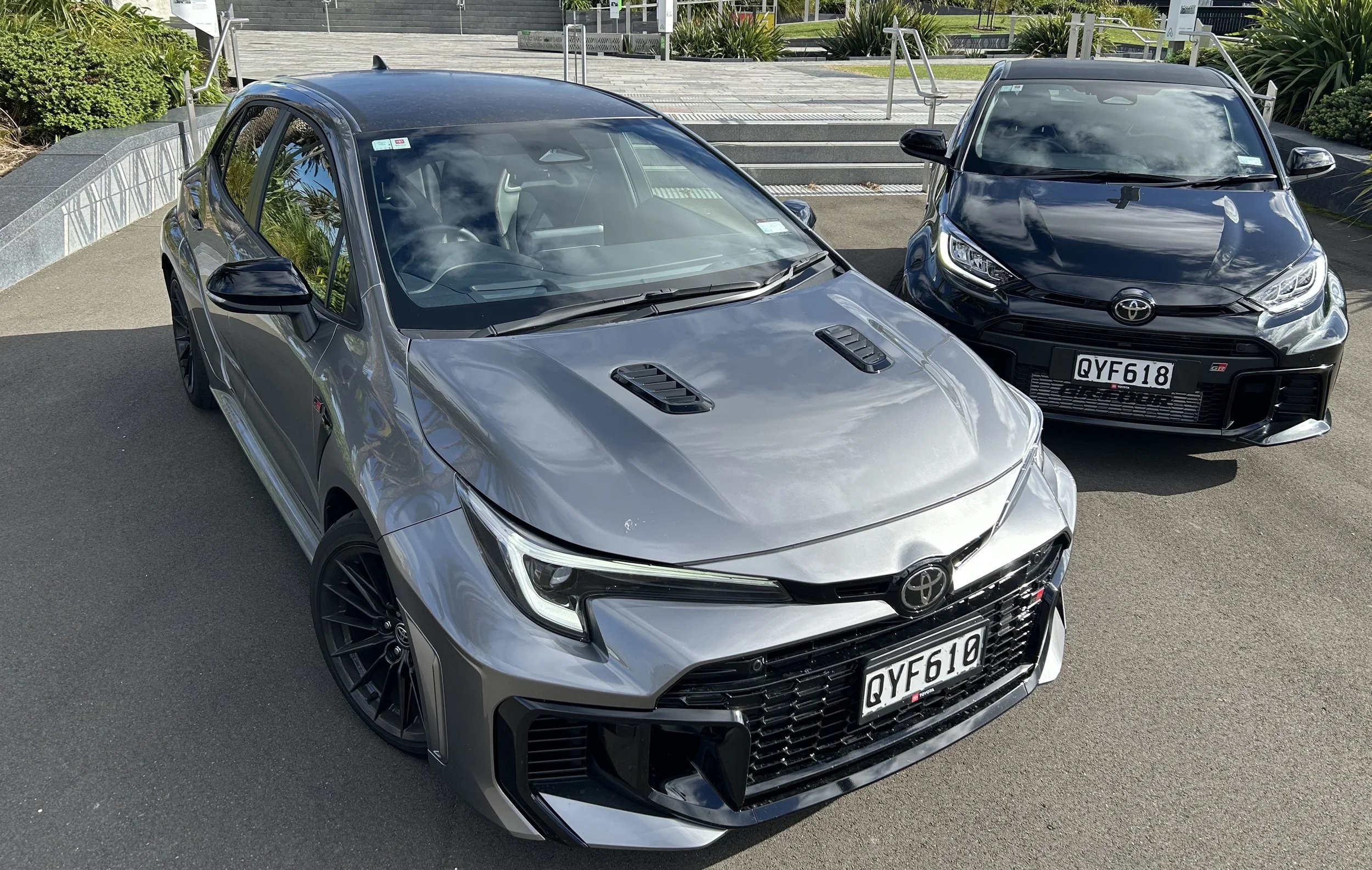
Toyota GR Yaris manual/ GR Corolla auto road test review: Giants of the game
/The best mainstream performance products from Japan’s biggest brand have become even better now (photos: Richard Bosselman/Callum Crawley)
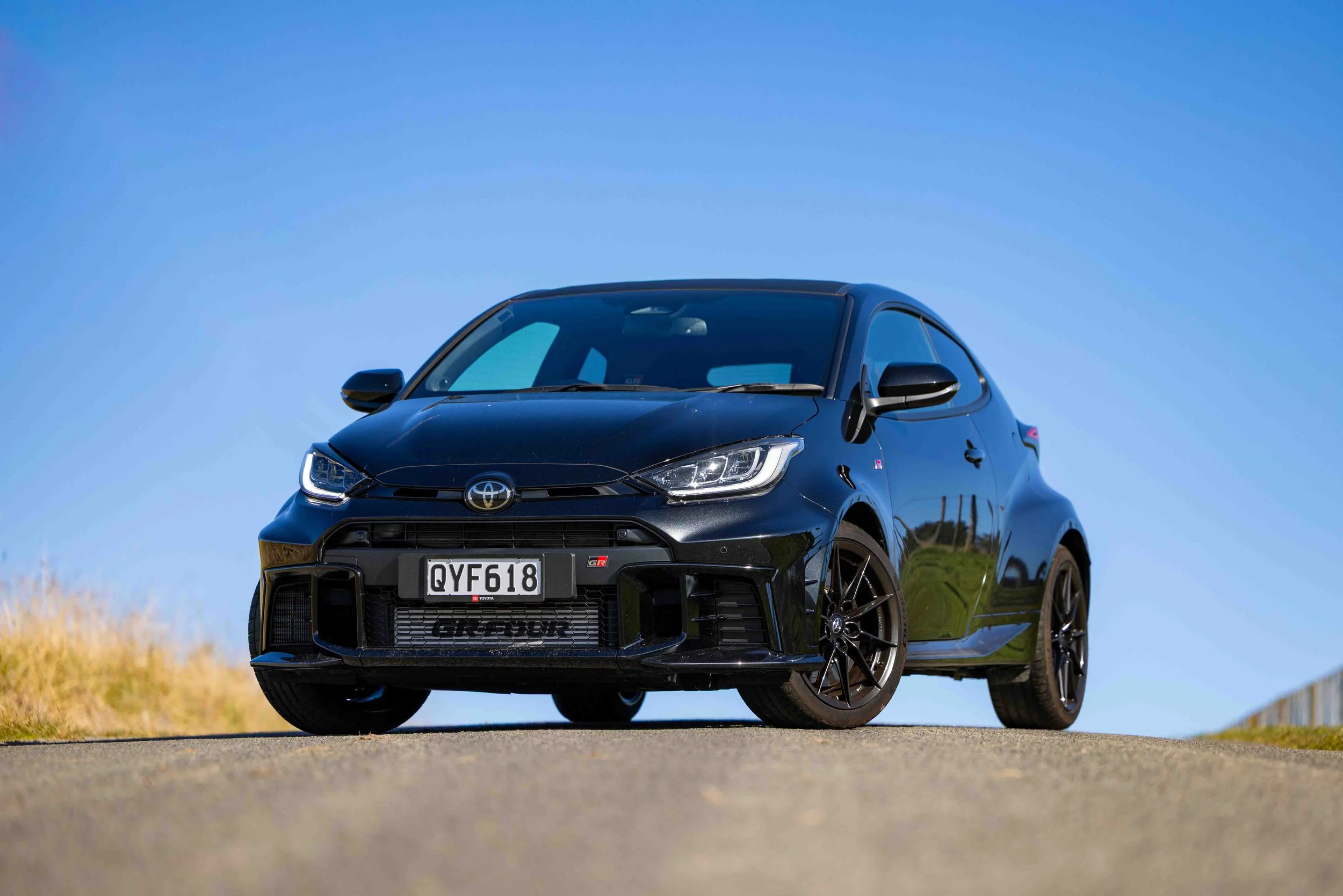
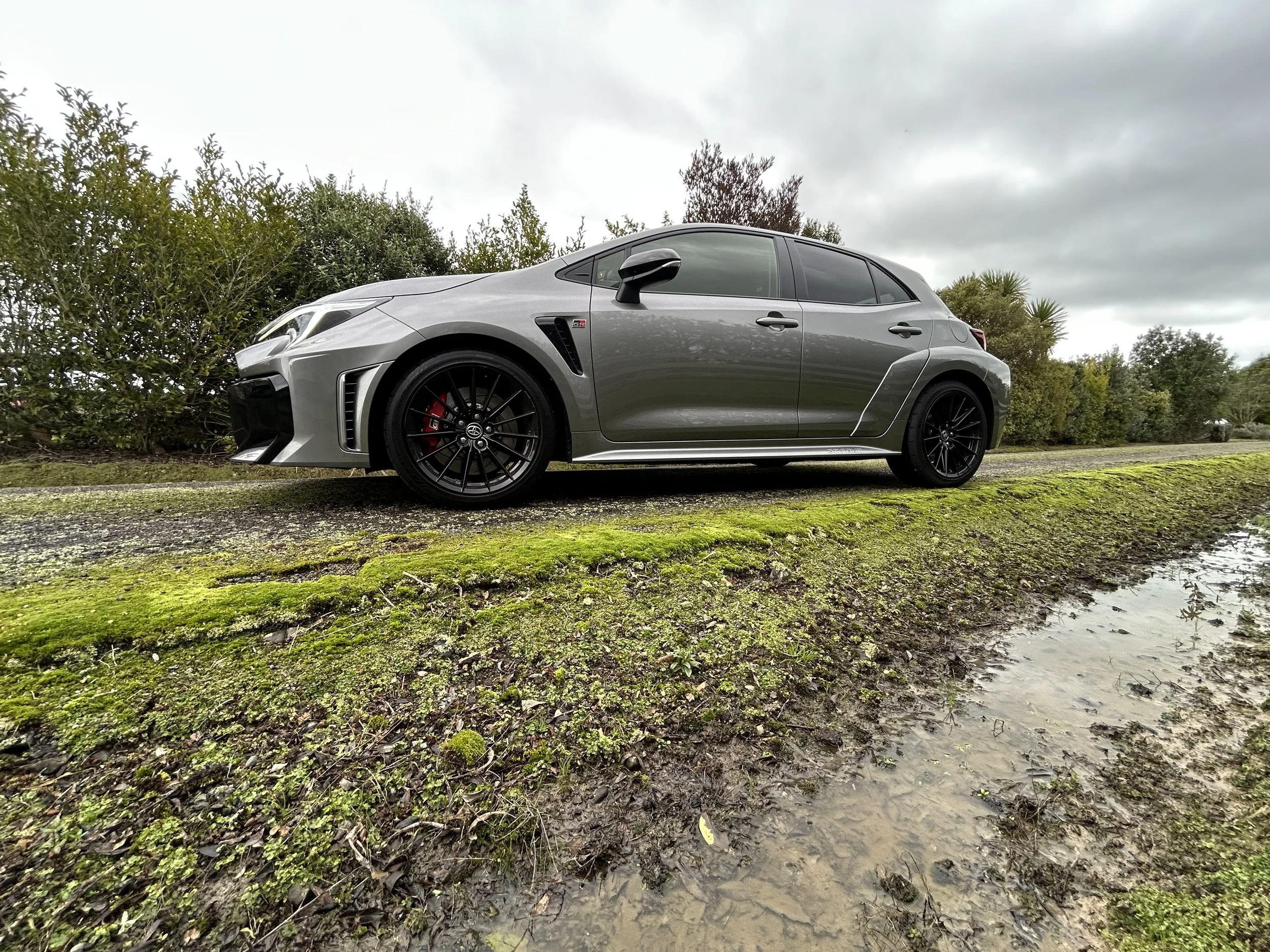
Prices: GR Yaris $61,990; GR Corolla $69,990
Powertrain: 1.6-litre petrol inline three-cylinder petrol turbo with 221kW/400Nm, six-speed manual transmission (GR Yaris), eight-speed automatic (GR Corolla), AWD.
Vital statistics: GR Yaris 3995mm long, 1455mm high, 1805mm wide, 2558mm wheelbase; GR Corolla 4408mm long, 1479mm high, 1851mm wide, 2640mm wheelbase.
We like: GR Yaris, still the five-star car we know and, on this evidence, nothing but enhanced; GR Corolla improves driver engagement with auto.
We don't like: Some cheap plastics; exhaust notes need work; prices have climbed.
THE clues are … intoxicating driver involvement, genuine everyday driver ability, imbued with a special feeling even when at sane road speeds.
And the answer?
Two sister cars for enthusiasts, whose development was directed by an utter car nut whose every word and whim was obeyed.
Former Toyota chief executive Akio Toyoda has copped a lot of stick over recent years, not least for his brand’s supposed tardiness in embracing electric (which turned out to be quite prescient).
But when it comes to his pet project - GR, full name Gazoo Racing, Toyota’s performance and motorsports division - he has consistently aced.
The GR Yaris that has been around here since 2020 and the GR Corolla, which followed two years later, are the best affordable enthusiast cars Toyota has ever made.
A freshen has made them even better. More power and torque, refreshed stylings, interior, revisions and changes under and above the skin to address criticisms of the relatively few niggles blighting the originals.
The primary pull is still that gem of an engine, a ‘G16E-GTS’ 1.6-litre turbocharged three-cylinder.

Beyond that, they continue to express astounding dynamic dexterity and the kind of precision feel that only comes from Toyota having taken two family cars and heavily lavished them, seemingly without regard to development cost, with all sorts of high-quality performance parts.
Plus the finishing touch of hand assembly by the same people who gave the world the astounding Lexus LFA, which in development raced with Gazoo branding.
And now …. a further twist: They’ve done something hardcore enthusiast might think has made it worst.
Frankly, it is nigh on impossible to demonstrate how an orthodox automatic transmission can be better than a manual in this kind of setting.
Yet, from experience of driving a manual GR Yaris and an automatic GR Corolla, I’d say the latter makes that car not only appreciably more satisfying now, but it’s not far off being as good as its smaller sibling.
True, regardless of an artful revision, it ultimately falls into runner-up position. Any auto can only go so far in attempt to mimic a manual transmission. There’s no substitute for the rewarding choreography of clutching and shifting your own gears.
Yet fair dues to the GR engineers. They’ve done a brilliant job in lending a whole new feel to an off-the-shelf eight speeder.
The altertness of the changes signals that traditional advantages of a torque converter – the slushy smoothness – are a low priority. That and ratios being spaced closer together than the six manual gears means it feels a lot more concise than many conventional flappy paddle automatics.
It’s compact and weighs just 20kg more than the manual transmission. There is a launch control system, and Toyota says that not only is it quicker by 0.3s from 0-100kmh, but it’s also faster by more than a second a lap than the manual around Japan’s Fuji Speedway and durable enough for racing, where it will be faster and reduce driver fatigue.
It shifts intelligently in D, but take control yourself and shifts are enjoyably snappy. And because the transmission doesn’t seem inclined to automatically upshift at the engine's redline if you put it in manual mode, it delivers on promise to be a riot for a dawn raid on a favourite road, with a truly high level of driver engagement.
That’s important. Hot hatches aren’t as prolific these days. Survival of the species is challenging, now. For Toyota to have two is remarkable in its own right, but survival required this broadening of spirit, pure and simple.
The GR Corolla would not have come about if not for the GR Yaris, which in turn could have been stopped in its tracks, given the reason for its development were stymied before it even hit the road.
The story is lore, but worth repeating to those who still ask ‘Ga-who?’ Mechanical spec was laid down by Toyota's modern-era World Rally Championship team, which came about due to Akio’s urging. It ran a Yaris, but not like this one. The GR was supposed to be an ultimate, next step; an ace card in a new kind of WRC game .. that was never played.
The pandemic scuppered the moment; rules changed and Toyota was left with a car they ached to race in a world class event but couldn’t.
It could have been scrapped, become a project of myth. But to Toyota’s credit - again, thanks to a certain’s guy’s insistence - and to enthusiast gratitude, it still reached the showroom in rules-required road car form.
Three years on from NZ availability, a car that is amazing in its dedication to competition readiness has become better still.
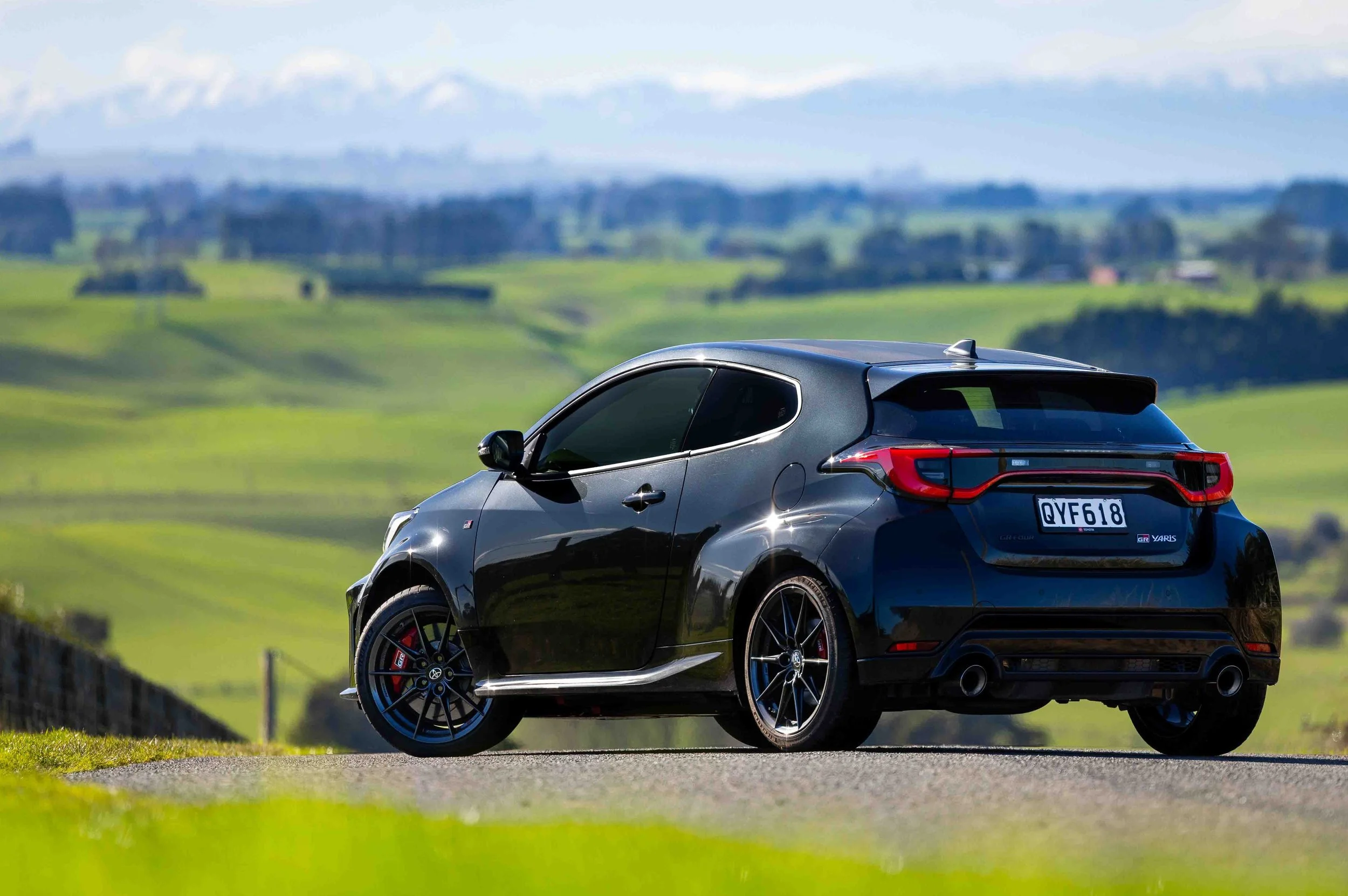
It’s a three-door because that’s the stiffest body shell. It uses aluminium for much of the body and has a genuine carbon-fibre roof because that brings significant weight saving.
Bulging wheel arches, bigger wheels, huge brakes, a gaping front air intake … all are to meet a call of duty it hasn’t had to fully perform.
The best indicator of its pursuit of perfection? It’s not fully a Yaris. Only the front end of that type is used, and then only loosely - if you’re going to be truly picky, the only common exterior parts from your Nan’s Yaris are the headlights, tail-lights, wing mirrors, and shark-fin antenna.. The rear is more closely related to a Corolla, in order to make space for the four-wheel-drive setup.
And the GR Corolla? If Yaris was ‘rally required’, this one was racing inspired.
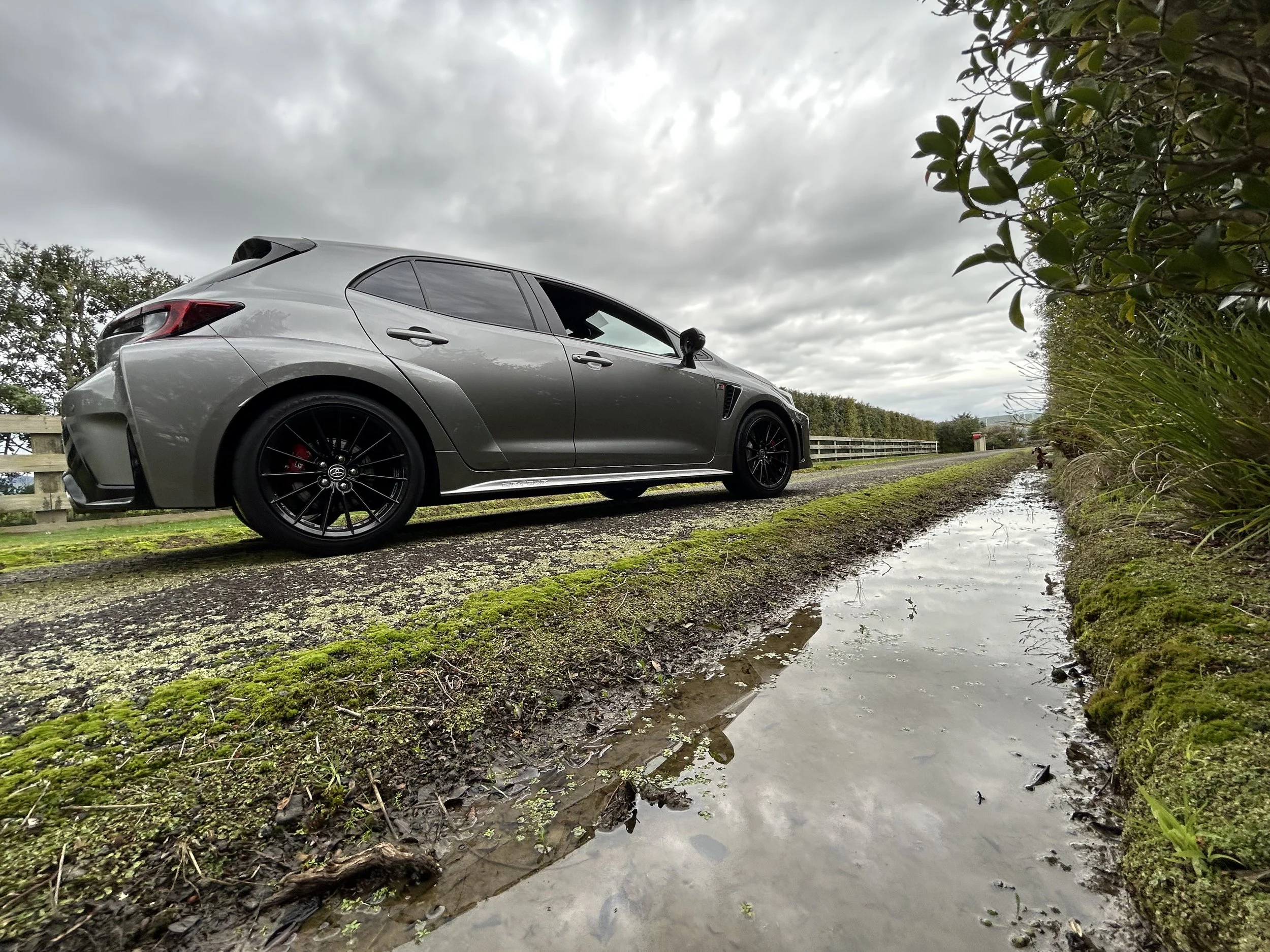
Toyoda competes professionally; if his brand builds it, he’ll rag it. Merit in placing all its goodness into the larger, five-door shell arrives from long-game vision. This car is the template for a hydrogen project. Again, what this guy wants, this guy gets.
From where I stand, the GR Yaris still tops the ‘desirability’ list. If you’re after a scrappy little hatch with a huge fighting spirit, I cannot think of a better choice. Everything they’ve done now makes it even more totemic.
One GR Yaris alteration that outwardly seems very small has massive positive impact.
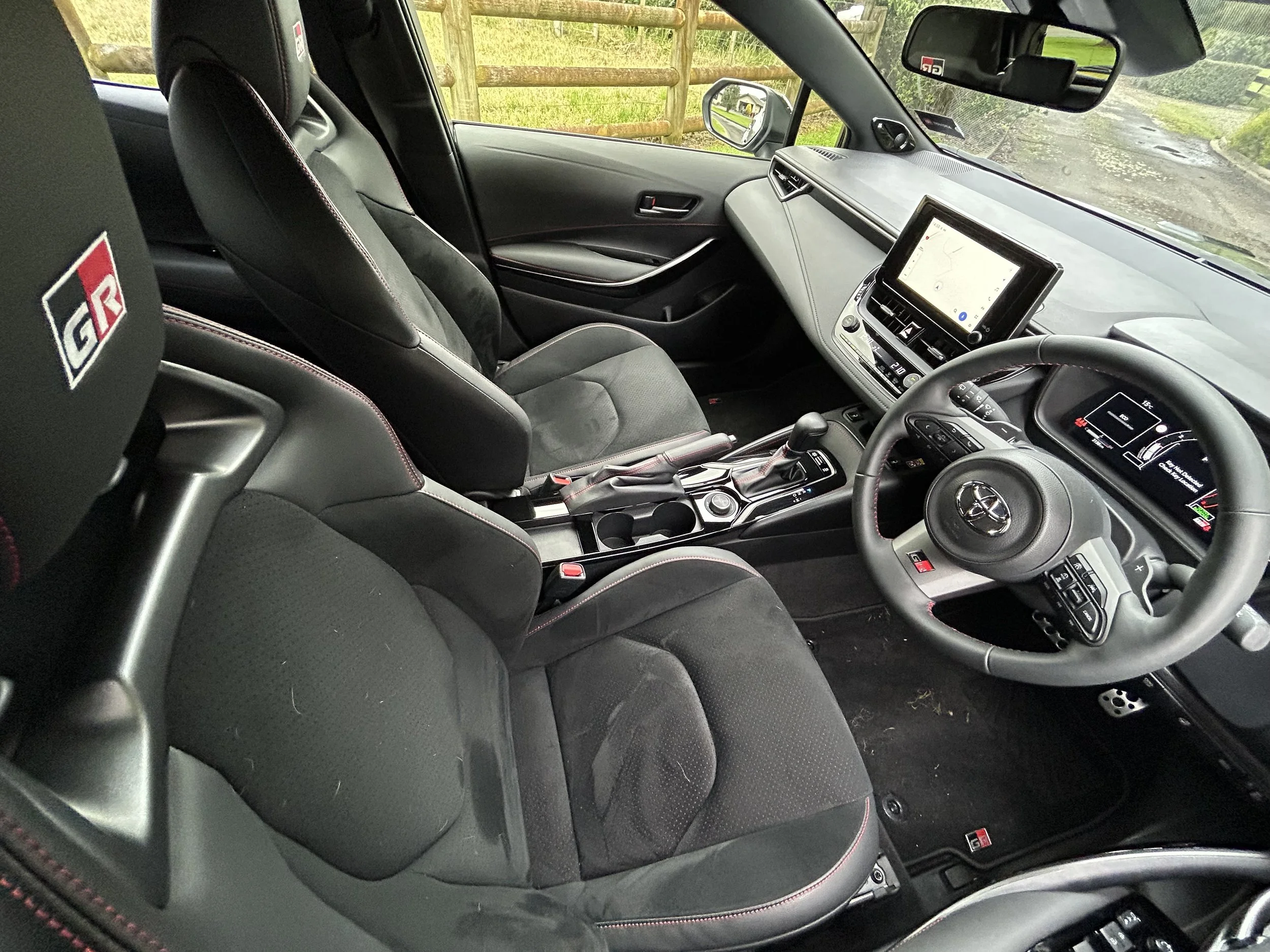
In original format, the driver’s seat was a touch too high. Lowering it 25 millimetres has delivered the perfect driving position.
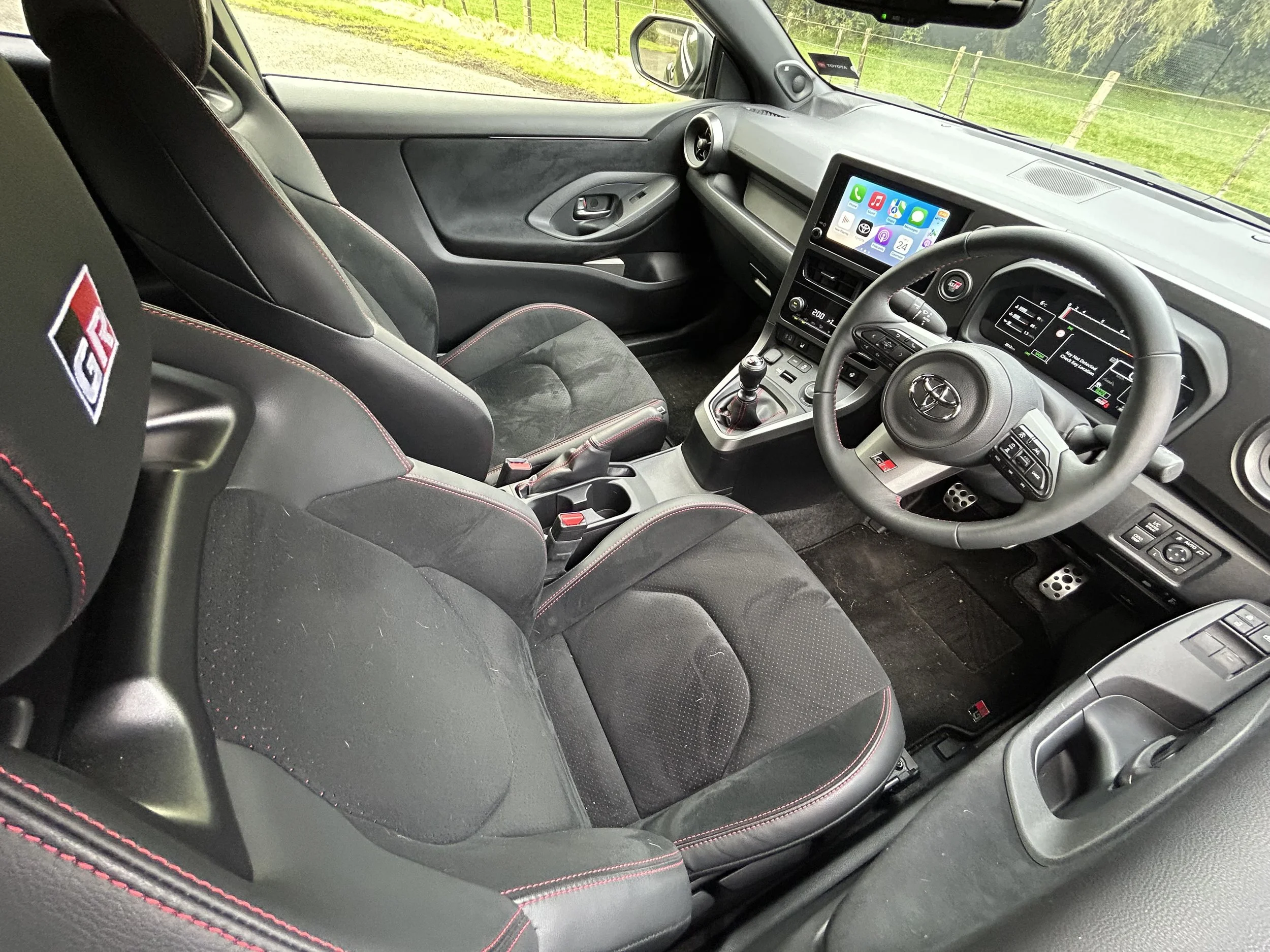
In the old car, the high seat and low rear-view mirror created a letterbox-like view out the windscreen. That’s no longer the case. The rear-view mirror has been raised a touch and the instrument binnacle, now digital, lowered, all to improve forward visibility. Minor switchgear changes put more buttons in range of the driver’s sight and reach if they’re harnessed into competition seats.
That, and other changes, strengthen an already held view that this car is so hot you’d be advised to wear oven gloves while driving.
Still, as surprise packages go, the GR Corolla auto is a deserving headline maker.
The scoville rating is less intense, but, then, it already was. It’s not as fast, not as feisty, but nonetheless feels a far better car with this shifter. Good enough to slip out from the little giant’s shadow.
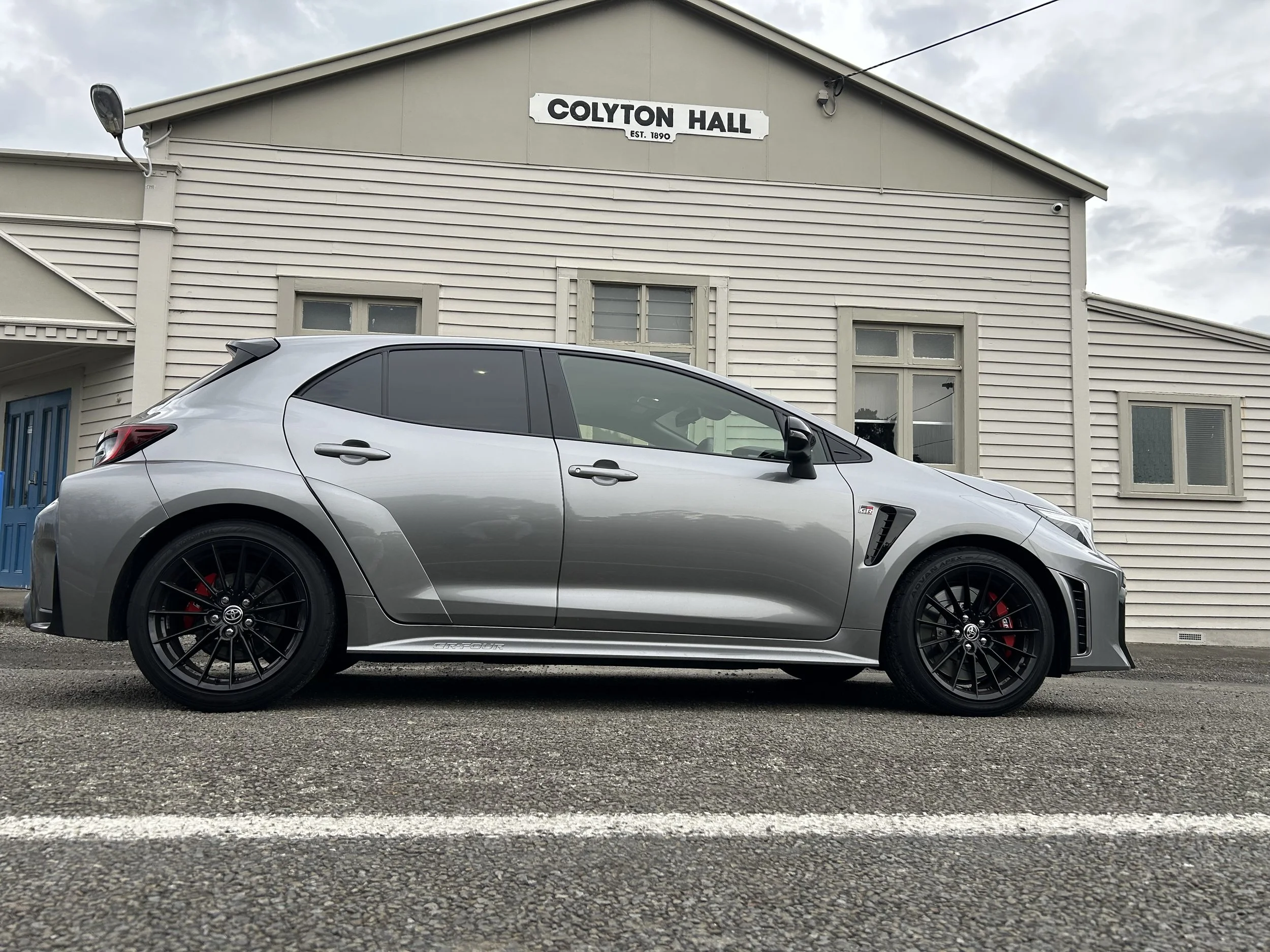
It’s fun, but a different play book. Corolla being heavier and larger, with a wider footprint, already made it different when driving hard; it wasn’t stodgy, but you could tell there was a trade-off for printability and deftness, and it seemed to raise a sweat far more easily.
The auto allows it a bit of a break from working at 11-10ths when pushed. The box lets everything flow more evenly and, as result, it relates more succinctly to the driver. Toyota says it’s AI-infused programming has the gearbox learn your driving behaviours and analyse the road to see what’s coming up. That makes it sound as though it can out-think the driver, which in reality isn’t actually the case.
Within GR-dom, then, it’s better. But of course, unlike GR Yaris, the Corolla has other competitors; in particular the Volkswagen Golf R.
Germany’s prime category weapon is a bit pricier yet clearly needs to be considered, because it has more grunt, a brilliant direct shift gearbox that is arguably even more engaging and also has strong packaging and more proven pedigree. I’d say it’d still put the Toyota under stress.
However, if you like buying from Japan’s No.1, then it’s going to be alluring. Toyota build quality is awesome.
It’s a shame these cars carry plastics that reflect that they also come out in variants aimed the thrift-minded buyer. There are hard plastics on most surfaces – and some ‘soft’ looking materials lack padding.
New equipment across both include larger infotainment touchscreens running new software, wireless Apple CarPlay and Android Auto and some USB-C ports. In both placement of a large handbrake means sacrificing some of the oddment space you get in the donor models; the Corolla at least still has a wireless charger, but not so the Yaris. The smaller car leaves nowhere to put your phone other than in the cupholders.
Rear seat occupancy is provisioned far more coherently in the Corolla; frankly anyone tall seeking to occupy the back seat in the Yaris is asking the impossible; even kids will find it tight for egress and ingress. Boot space is also limited, with just 174 litres on offer. But Corolla is barely any better, to be fair.
But who cares when the driving is so good. The Corolla isn’t as nimble as the Yaris, but its chassis feels planted, the steering is nicely weighted and direct and changes to the suspension tune are welcome.
They seem more noticeable in the GR Yaris, where the springs have gone from 36N/mm all round to 46N/mm at the front and 40N/mm at the rear. The front anti-roll bar is a little stiffer, but the rear is unchanged. It stays on 18inch wheels and retains the excellent 225/40 Michelin Pilot Sport 4S rubber.
In both models, the 60:40 front rear split in normal mode continues, but the previous sport (30:70) mode has been changed to gravel (50:50) and track (previously 50:50) is now a variable set up where between 40 and 70 percent of torque can be sent rearwards at any one time.
That’s the setting you’ll use in either car when taking on a winding secondary road; they feel more than sufficiently rear-biased now and this really helps them rocket out of corners.
With either transmission, peak torque arrives just short of 3500rpm, while the power kicks in at 6500rpm. Zero-100kmh times aren’t shared, but the old GR Yaris was under five seconds and the new feels more potent.
Overseas reports put the auto GR Corolla at 5.2s. Charging hard is great when you know you have the goods to pull up just as alertly. The four-piston front and two-piston rear brakes on these models latch to rotors larger than those on the GR Supra and are impressively strong, even from repeated higher-speed braking.
The manual gearbox continues with an 'iMT' function, which automatically blips the throttle on down changes. It’s good fun, but once you become attuned to the car it’s worth testing your own heel-and-toe skills.
Feeling need to use the GR Yaris in some level of competition? Toyota clearly expects owners to; the car now has an intercooler water spray function. pointless for road work, but perfect for fast competition scenarios. The front bumper is now made in three pieces, rather than one, so that it’s quicker to replace a corner if there’s damage.
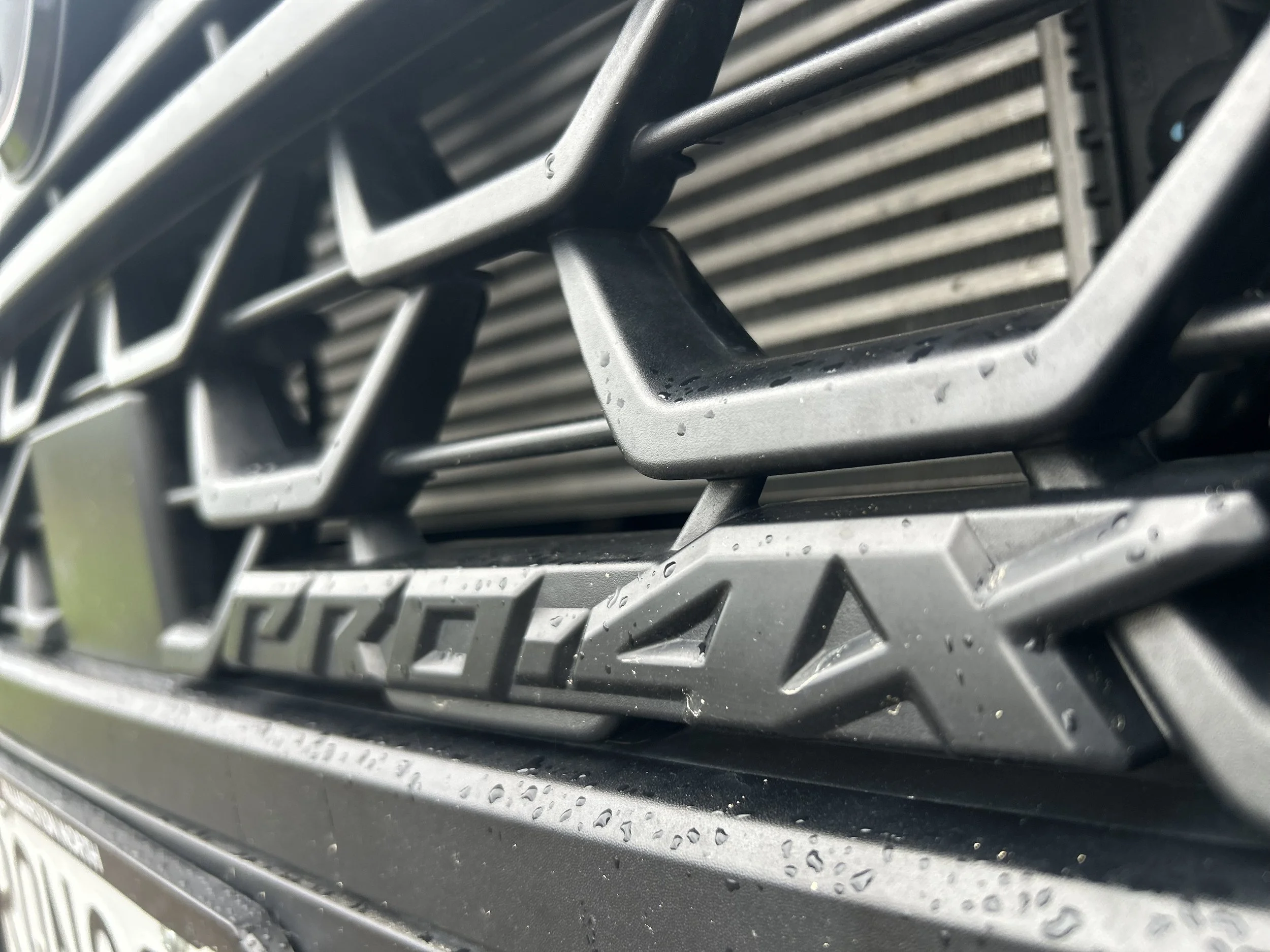
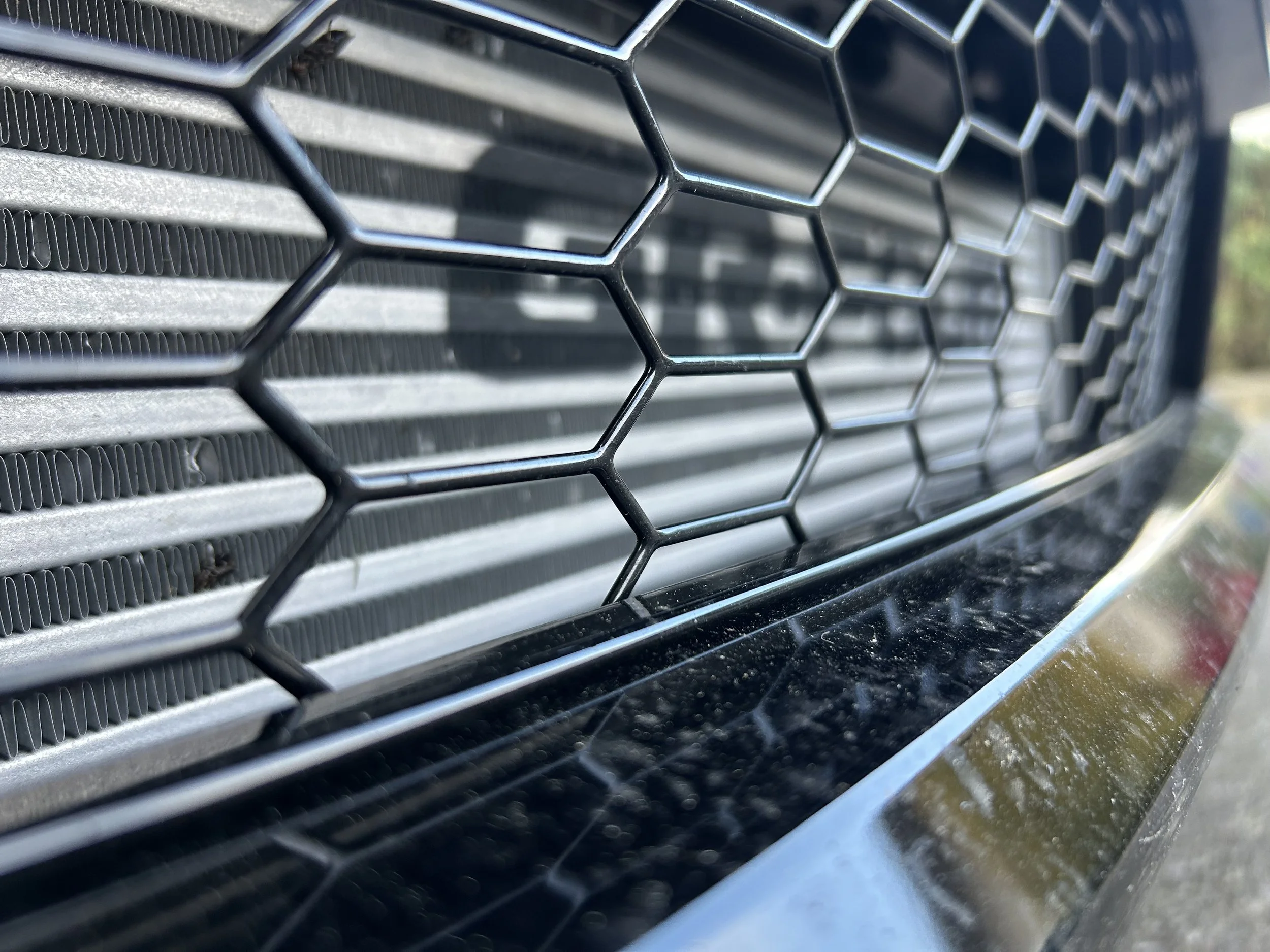
The centre section includes a larger cooling aperture, necessary for engine durability, and the grille is now made of metal, rather than plastic, so that debris doesn’t burst through it.
At the rear, the low-level reversing light has been moved level with the other lights – hot exhausts could and have melted it – and the high-level brake light has been moved from the spoiler to the rear window, because it was upsetting tuners who fitted their own rear wings.
There’s a 15 percent increase in the number of spot welds and a 15 percent increase in the adhesive used, to stiffen the shell. The front struts are now mounted by three bolts, rather than one large one. Weight is unchanged, at 1280kg.
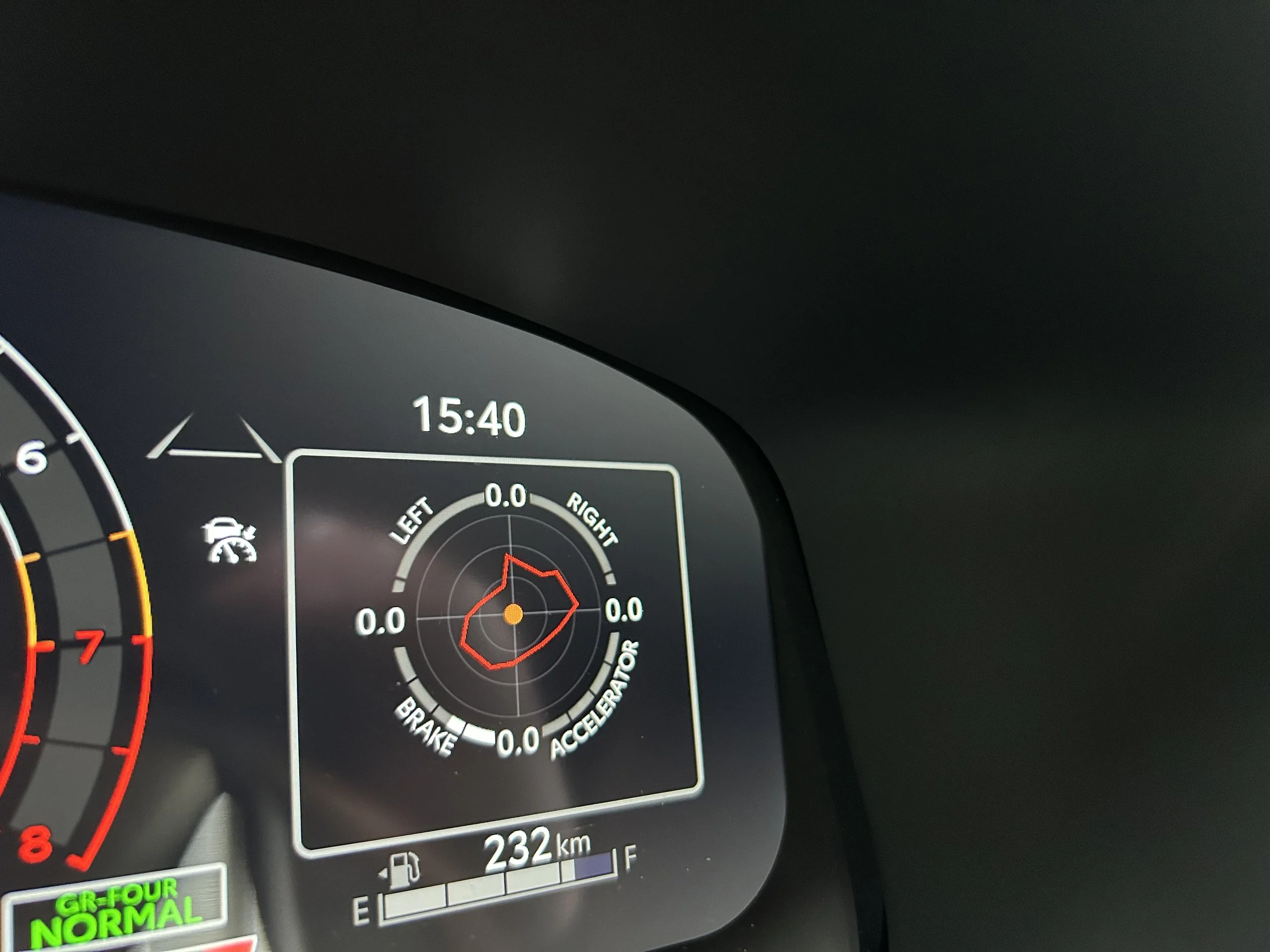
That new 12.3-inch widescreen digital instrument cluster is programmed to show gear position as a huge numerical; just as they deliver in WRC.
The new dashboard integrates the screen, climate controls and other buttons into a binnacle tilted more towards the driver than previously.
The screen looks pretty basic in appearance, but proves highly functional. And that’s really what matters more in a car such as this.
If you don’t like the factory-set home appearance, there’s There’s plenty of customisation; one view has a central tachometer, plus there’s a racetrack setting with a horizontal rpm readout. Both cars have specific views for turbo boost, G-force, power distribution and more.
A full suite of advanced safety technology is offered across both; the systems have ramped up to include rear cross-traffic alert. The lane-keep and lane-centring is a requirement for earning a strong safety score; you won’t like either but at least Toyota’s isn’t too intrusive. The automatic models gain adaptive cruise control that operates at low speeds, not just higher speeds, plus low-speed autonomous emergency braking for car parks.
All that’s icing you might be glad to have. Or not. But either way, the provision is simply not vital to any buying decision. Everything comes down to the GR cars being
What does it still ask for? The mandate for 98-octane premium petrol may prove inconvenient for ownership, not least when both drink heavily: We saw 14 litrres per 100km from the Corolla, a touch less out of the Yaris.
Otherwise you’re just going to hear comment about what a shame it is that an engine this flairful still cries out to be properly heard.
Three pot engines have certain natural thrumminess and, when first driven years ago, we described the engine note as being a blend of raw aggression and cheerful enthusiasm. That’s still the case, but the issue here isn’t tone but volume; it’s simply far from being as barmily vocal as you might hope.
The GR Yaris is the closest thing you can buy to a modern WRC car since Subaru and Mitsubishi left the game. There’s also a nice nod to Toyota rally history with the GT-Four inscriptions. The bloodline demands a far more strident soundtrack.
If these were the work of certain European brands, you just know the GR cars would be barking, popping and banging far more loudly than they do.
Perhaps Toyota fears a petition. They shouldn’t. Not when these cars so easy draw a crowd for every other aspect.
But that’s a niggle surely able to be sorted, somehow at some time, by at least an after-market solution.
Don’t let it stop you from at least having a go. After all, there is no logic for these cars to exist, aside from the brand’s enthusiasm to deliver them.
Toyota’s accountants are surely far from happy. One of many incredible factors relating to these cars is that, regardless that each will be judged as fanboy winners, neither – and this is by Toyota’s own tacit admission – will be anything but huge losers in respect to profit centre performance.