
Blue day for old gold: Ford revives racing tie to never-say-die engine
/It’s a return to the ICE age in every sense with Ford NZ reviving long-dormant backing for a classic racing class.
FEEL good vibe has driven Ford to resume, after decades away, national support of with a core feeder motorsport category using an engine the brand quit last century.
Auckland-based Ford New Zealand says renewing commercial support for Formula Ford, a single seater class famous for being a feeder for champion drivers’ careers and still useful for creating future stars, isn’t really based on the archaic engine the category simply won’t allow to die.
This regardless that the 1950s’ powerpoint is the sole tie and reason why the class exists.
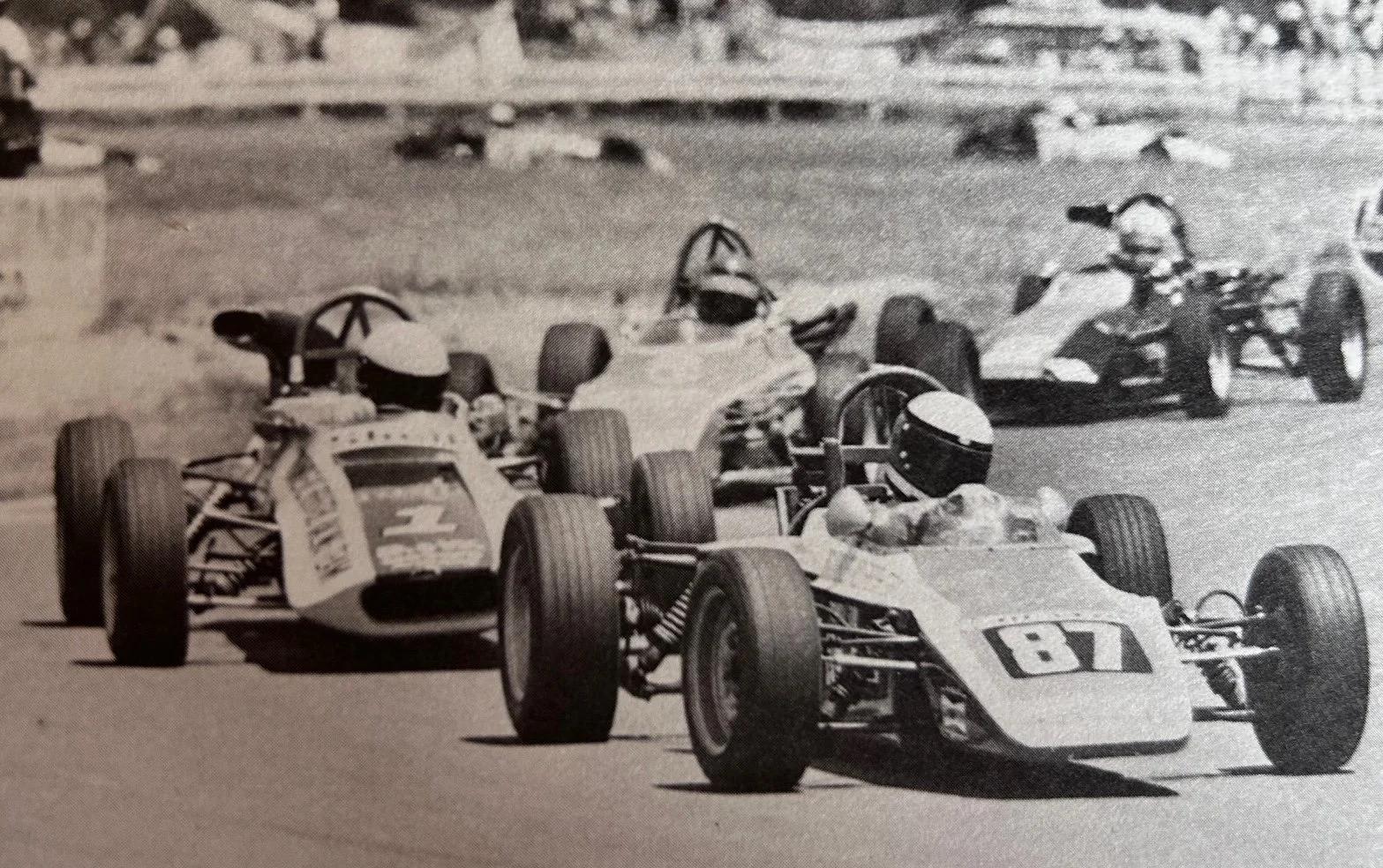
The New Zealand competition stands out for being one of a handful running under the Formula Ford banner internationally to stay true to the 1.6-litre Kent, whose lineage stretches longer than the racing class itself.
When Formula Ford kicked off internationally in the United Kingdom in 1967, the engine had been in production for eight years already.
When NZ adopted the category in 1971, the Kent had already outset its original placements, the Anglia and Consul family cars, and migrated into the Escort and Cortina models Kiwis also loved.
The Kent dropped out of the showroom in the following decade, a victim of Ford having gone to the Mazda-made Laser, Telstar, only to make a brief return in 1998 with its final placement anywhere, the small Ka city car.
The last usage was in itself a step back in time, as it stood out even then as the only Ford engine in the world with a carburettor and no relevant electronic controls.
Ka was short-lived; it crashed in sales and by turn of the century Ford had decided to completely shelve the Kent, though it arranged to produce base components - mainly the block - to support the motorsport side.
By then, Ford NZ had also quietly curtailed its commercial tie to the racing class.
That support at zenith had seen it involve in funding title-winning drivers to compete in the Formula Ford Festival, a race of international champions held annually in the United Kingdom.
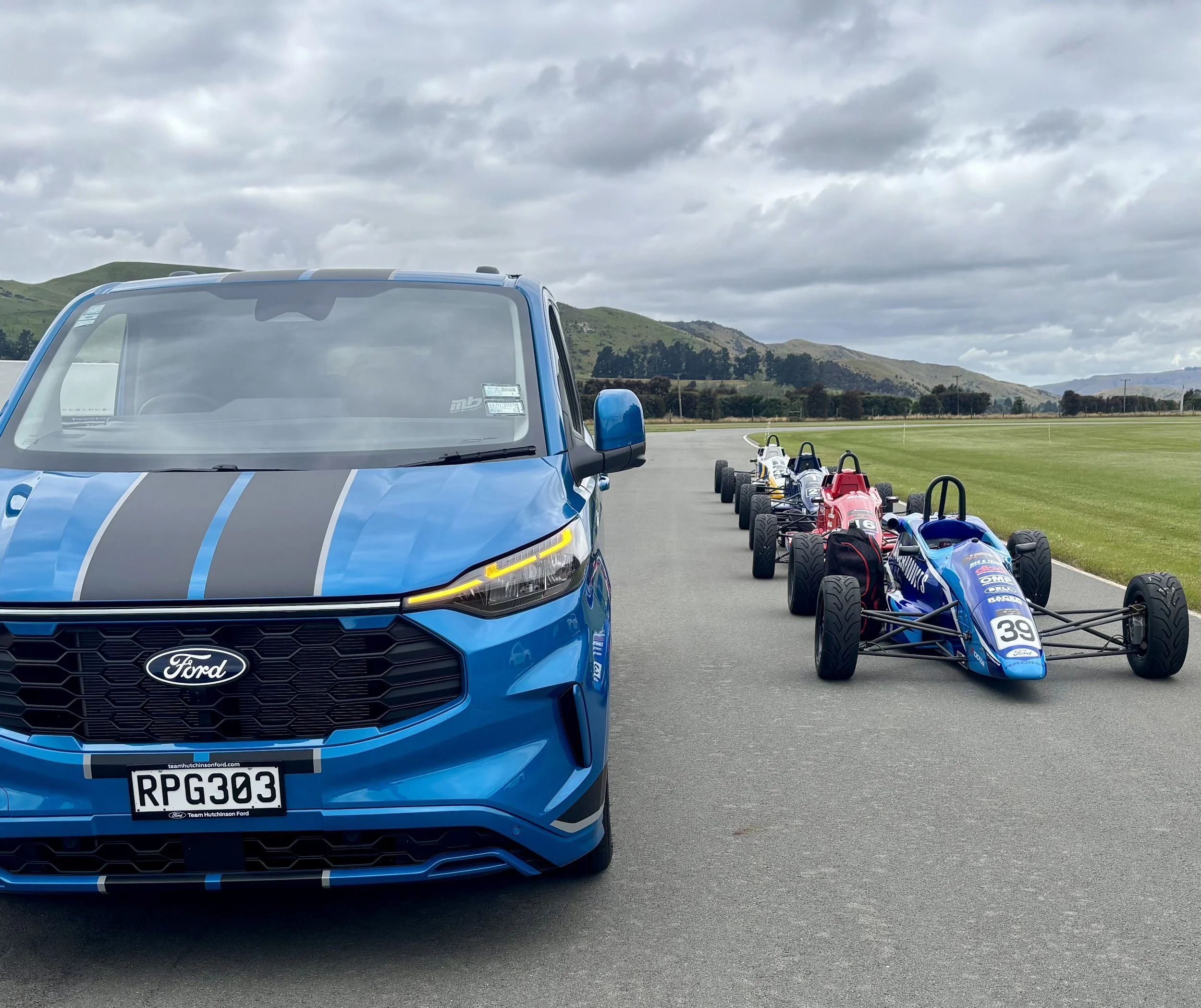
In the comeback, it sees the supply of support vehicles - a Ranger Stormtrak for the North Island and a Transit Sport Kombi for the South Island – as well as financial support.
When Kent finished in road use, Ford’s expectation was for the category to step up to new engines of ongoing commercial relevance.
The modern Zetec and Duratec series’ that back then predominantly featured in its global compact hatch, the Focus, did go into the racing cars in some countries, and were found wanting.
Here in New Zealand the class resolutely refused to move on and still shows no sign of changing that stance.
There’s cost. The engine once chosen because is was cheap and plentiful has become so exotic it now sources from a handful of second-tier specialists and rebuilds purportedly cost north of $40,000.
With no commercial leverage to be gained from any ‘win on Sunday, buy on Monday’ association, what’s the pull for Ford NZ deciding - 30 years since it last involved as a series backer, two decades on from when the engine it created was last seen in a road car and 67 years since that power plant launched - to involve again?
The class itself seems to be going through a resurgence; the pre-season launch with Rodin Cars this week at which Ford’s tie was announced was in itself a big profile lift, being the first organised in 55 years of racing. Rodin founder David Dicker has set his aim on facilitating pathways for young drivers tp reach the top of the sport.
The winner of the NAPA nationsl Formula Ford Championship, along with a potential wild-card, will be invited back for a private test at the end of the season. That evaluation could lead to a further test with Rodin Motorsport in the UK as part of the pathway to Formula 1 programme instigated by MotorSport New Zealand and Rodin Cars.
For Dicker, supporting the category is essential to helping develop young drivers for international competition.
“Formula Ford is the base of open-wheel racing and it's been like that for 50 years or more and our focus is open-wheel racing up to Formula 1. We want to be involved in the base because it's important and it's the right thing to do.”
The big fete at Rodin’s facility inland of Kaikoura had as guests David Oxton, a famous racer who was the first national Formula Ford champion, and international racing teenager Louis Sharp.
Also in attendance was Garry Jackson, a now retired Ford NZ executive and Ford Motor Company director who back in the day put together the original Ford NZ sponsorship agreement.
Rodin has committed to support a driver scholarship and a training programme, with intent to polish talent following in the paths of locally-raised world-class talents.
They include Formula 1 driver Liam Lawson, Indy 500 winner Scott Dixon, Supercars champion and Nascar driver Shane van Gisbergen, and former Formula 1 driver and now World Endurance Championship superstar Brendon Hartley, among many others.
Annaliese Atina, managing director of Ford New Zealand also references the Blue Oval’s motorsport heritage for driving this brand comeback.
“Ford has an unparalleled heritage in motorsport, both globally and here in New Zealand.”
“This category is the proving ground for future champions, and our renewed sponsorship for the 2026 season is a testament to our belief in its importance.
“We are excited to help power the next generation of Kiwi racing stars.”
In subsequent communication, local brand communications manager Tom Clancy, who appeared for Ford at the Rodin event, said: “Our decision to support the NZFF Championship isn’t based on the engine spec.”
Clancy says the Formula Ford national championship, which this year contains to four rounds, and a South Island series that spans more events, is also a good fit because dealers have long involved with the category.
“Our dealers have been supporting various teams.” Team Hutchinson Ford in Christchurch has been supporting the entire South Island series for four years.
“But yes Ford Motor Company NZ is returning after a long absence – since the (19)90s’.”
As much as the Kent is a blast from the past, it is still the second-oldest engine in single seat racing here.
Formula First/Vee, continues with an air-cooled engine whose design signed off in the 1930s and is famous for being the heartbeat of another long-departed model, the Volkswagen Beetle.