Ford's 'big brother' feature implements

From now on Ford vehicles sold new here will wirelessly bond to the internet.

FordPass_4.jpg

THE BLUE Oval has become the first blue collar car brand in the New Zealand market to achieve a feature until now restricted to high-end marques – an ability to operate key features remotely via your cell phone.

 Ultimately all Ford passenger and light commercial models sold in New Zealand seem set to benefit from the FordPass app, which provides a host of connected services and remote functions, but in today’s announcement the brand says it will only have immediate full benefit for Ranger, Everest and Transit coming into the market now.

It is understood the Focus will be next off the line, probably at year-end, with remaining models coming up to speed by early 2021.

 Ford’s system has similar operability to systems that have been availed on BMW and Mercedes Benz cars for at least a year.

An owner downloads an app which talks to an in-car modem that contains the most crucial element that isn’t implanted into older models - an internet-connected SIM card. This is securely embedded into the vehicle during assembly, as a precaution against theft.

 Though Ford has notified this as a 2020 model year feature, it also impresses that it a running change, so is only fully functional from this period on, so the key is to be aware of the specific designations ‘MY2020.75’ for Ranger and Everest and ‘MY2020.5’ for Transit. Some aspects of the app will operate on earlier vehicles.

At full-strength operability, FordPass allows remote checking of vehicle information such as fuel level, odometer reading, tyre pressures (when fitted with a monitoring system), warranty details and owner’s manual. 

You’ll also be able to start/stop, lock/unlock and pre-heat/cool your vehicle remotely, make/change appointments at your Ford dealer and find fuel stations, car parks and other points of interest then send them to you in-car navigation system.

In addition, FordPass Connect allows owners to call roadside assistance, check their car’s service status and history, and be alerted to maintenance and repair issues such as when the oil needs changing or if a bulb needs replacing.

“FordPass Connect is another way we’re bringing smart, simple-to-use real-world technology into the hands of Ford owners and their families,” says Ford NZ’s managing director, Simon Rutherford. 

The system’s availability here and in Australia comes some months after it’s rollout in most major markets, but there is a literal saving in being well down the line.

Until recently, a charge applied. When it launched in the US, the debut market, the cost was around $30 per month for a 24-month period. 

However, now it is available for download free of charge for Apple and Android devices. It ties in with Google Maps and Wayze, but without using the phone data, so there’s no cost in that respect either.

The system is designed to accept regular software updates, these Ford says being “to guarantee that the vehicle systems and components continue to operate with optimum safety and performance.”

Ford is likely to impress the particular benefit to commercial vehicle operators, in that it can act as a real-time monitoring system to alert whenever there are potential security breaches within vehicles. 

Ford’s embracing of connectivity also reaches into vehicle manufacturing processes.

Two weeks ago the brand announced how it and a consortium of partners, including Vodafone, has received British Government backing to introduce 5G connectivity within its manufacturing to speed up the production of electrical vehicles in the United Kingdom, a process that demands a much higher level of automation than comes with assembly of fossil-fuelled product due to safety elements, mainly in respect to battery build and installation.

The updated capabilities allow Ford to focus on the connectivity of the welding machines when manufacturing EVs. Currently for the batteries and electric motors in an electric vehicle, requires 1000 welds, for a single product, Ford explains that this could generate more than half a million pieces of data every minute.  

Meantime, Ford NZ says customers can access additional information on FordPass Connect at ford.co.nz/fordpass.

Nissan NZ mum on Ariya’s potential

Nissan has unveiled its first electric sports utility

Ariya-JapanesePhilosophies(5).jpg

ENTERING production next year, with no word yet on where New Zealand sits in distribution planning – that’s Japan’s first mass produced fully-electric sports utility, the Nissan Ariya, unveiled online in its production format today.

Retaining the bold Blade Runner-esque styling of the concept unveiled at the 2019 Tokyo Motor Show and the first product to sit atop the Renault-Nissan-Mitsubishi Alliance’s CMF-EV electric architecture that will be used by all partner brands, the Ariya also showcases a new brand identity for Nissan.

However, for electric vehicle buffs, there are more important factors to consider for a vehicle set to sit above the LEAF, which has become a firm New Zealand favourite – this country’s highest volume EV, albeit on the strength of its popularity as a Japanese used import. 

Ariya’s also heading for the big time; crossovers are hot and Nissan plans their car to provision in five variants, topped by a performance model. 

Ariya-JapanesePhilosophies(6).jpg

The lesser models arrive with single motor rear-wheel-drive and the others delivering twin motor four-wheel-drive powertrains, the latter swapping the entry 63kWh lithium ion battery for a 87kWh unit.

The 63kWh single motor model will offer 160kW/300Nm and a range of around 450 kilometres in its most modest format.

The 87kWh edition is enabled for 178kW/300Nm, a range of at least 500kms and – if in rear-drive - 610kms, 0-100kmh in 7.5 seconds and a top speed of 160kmh as standard.

There’s also an e-4orce flagship that packs more punch – 389kW and 600Nm – and extra pep: Zero to 100kmh in 5.1 s and top speed of 200kmh. Range for that one drops to 400kms. All those estimates are from Nissan. The WLTP figures have yet to be provisioned. 

All models have an on-board 130W fast-charging inverter that can top up 375km (80 percent of the smallest battery’s lowest range) in 30 minutes. 

Ariya-JapanesePhilosophies(4).jpg

Ariya adopts standard, sport and eco modes, with e-Force models adding a snow function. It also uses the Leaf’s e-Pedal regeneration set-up, allowing one pedal driving. And some variants will take Nissan’s Pro Pilot 2.0, which allows for hands-free driving in some circumstances. It relies on more than 20 sensors such as cameras, radar and ultrasonic components. 

At 4595mm long, 1850mm wide and 1655mm tall, the Ariya is relatively compact, but it has a 2775mm wheelbase and the absence of a transmission tunnel plus some clever stowage ideas will enhance interior space. The entry rear-drive car’s boot offers 466-litres’ capacity; editions with the 87kWh battery have 58 litres’ less space. Still, what helps is that the battery is a flat pack, which allows the vehicle to have a completely flat floor.

The interior features a high-tech interior, with almost no buttons or knobs, and aims to deliver a premium feel. Many touch controls are neatly integrated into the timber fascia that runs across the dash and are handled through "capacitive haptic touch-sensitive icons that light up on the dashboard.

Nissan has also freed up space by removing the air conditioning equipment from the cabin. It’s located under the bonnet instead because … well, no engine, right? 

Nissan claims Ariya is expected to represent a new electrified brand identity – “blazing a path to an era of advanced electrification, interior layout, and seamless vehicle intelligence.” 

Led by Senior Vice President of Global Design Alfonso Albaisa, Executive Design Director Satoru Tai and Senior Design Director Giovanny Arroba, Nissan’s designers worked from the beginning to lend a Japanese identity.

Ariya-JapanesePhilosophies(9).jpg

“We wanted to ensure that the soul of the vehicle reflect our distinctive Japanese DNA, conveyed in a simple, yet powerfully modern manner,” Albaisa said. “We dubbed this ‘Timeless Japanese Futurism’ and tapped into key Japanese words to inspire our global design team to produce the Ariya’s ultra-sleek, seamless, sharp and powerful form.”

Example? The grille has a large sunken area with a subtle pattern that's supposed to resemble a traditional Japanese kumiko design.


Range Rover Sport engine swap

Going straight takes literal meaning with this model in turbodiesel form.

RRS_21MY_SVR_CARBON_EDITION_150720_01.jpg

A REVISION that hits the Range Rover Sport for six within the engine bay has been announced.

The biggest element of an update for the model is the retirement of its Ford-sourced V6 turbodiesel for an in-line equivalent that’s Land Rover’s own work.

The unit from the make’s Ingenium family is also a mild-hybrid, and provisions in three formats, labelled D250, D300 and D350. Power outputs range between 183kW and 257kW (D250 and D350).

The D350 is the geekiest, as in addition to using a single twin-scroll turbo and continuously variable valve lift to maximise power and efficiency where it can, it also has 48v mild hybrid tech and an electronic supercharger. The cited 0-100kmh time is 6.5 seconds, and it produces a CO2 output of 237g/km. 

The Sport still continues in petrol-powered options, so all in all it produces with nine different drivetrains, including the plug-in hybrid P400 and the V8-powered P525 and P575.

To mark the arrival of these new straight-six diesels, the Sport also gets a number of new special editions - the HSE Silver, HSE Dynamic Black and the model featuring in today’s images, the SVR Carbon Edition, which as you'd expect is dripping with carbon fibre detailing.

Visible carbon fibre elements include the exposed centre section of the carbon fibre bonnet with integrated cooling vents, the front bumper insert surrounds, main grille and vent surrounds, mirror covers and tailgate finisher. There are extended trim finishers on the SVR-branded steering wheel and a Carbon Fibre Engine Cover. In addition, the SVR Carbon Edition features Exclusive Illuminated SVR Carbon Edition treadplates. It runs on 22-inch five split-spoke lightweight alloy wheels finished in Gloss Black. Subtle? Not in the slightest.

The exclusive 423kW/700Nm 5.0-litre V8 supercharged engine delivers 0-100kmh in 4.5s, top speed of 283kmh and, the brand assures, provisions a “distinctive soundtrack.” The model also has SVR Performance seats, Sports Command driving position and a driver-focused cabin.

RRS_21MY_SVR_CARBON_EDITION_150720_03.jpg

Range Rover says this Sport SVR is “the most dynamic Range Rover ever.” Coupled with bespoke enhancements to the chassis, the SVR delivers more dynamic handling without compromising traditional Range Rover comfort or all-terrain capability. The engineers at Land Rover Special Vehicle Operations focused on controlling pitch under heavy acceleration and braking, and the damping hardware is tuned to provide exceptional turn-in, mid-corner grip and body control. 

Other new features across the range for 2021 include an updated infotainment system, with Apple CarPlay and Android Auto as standard across, and in-built 4G wifi with up to eight connections. Spotify is now included. There's a new air purification system, which Land Rover says helps with driver alertness and passenger comfort.

The New Zealand distributor has yet to release detail about what models are coming and when.


iX3 unveiled and confirmed for NZ


BMW’s first battery-pure sports activity vehicle will be here in 2021

P90392995-highRes.jpg

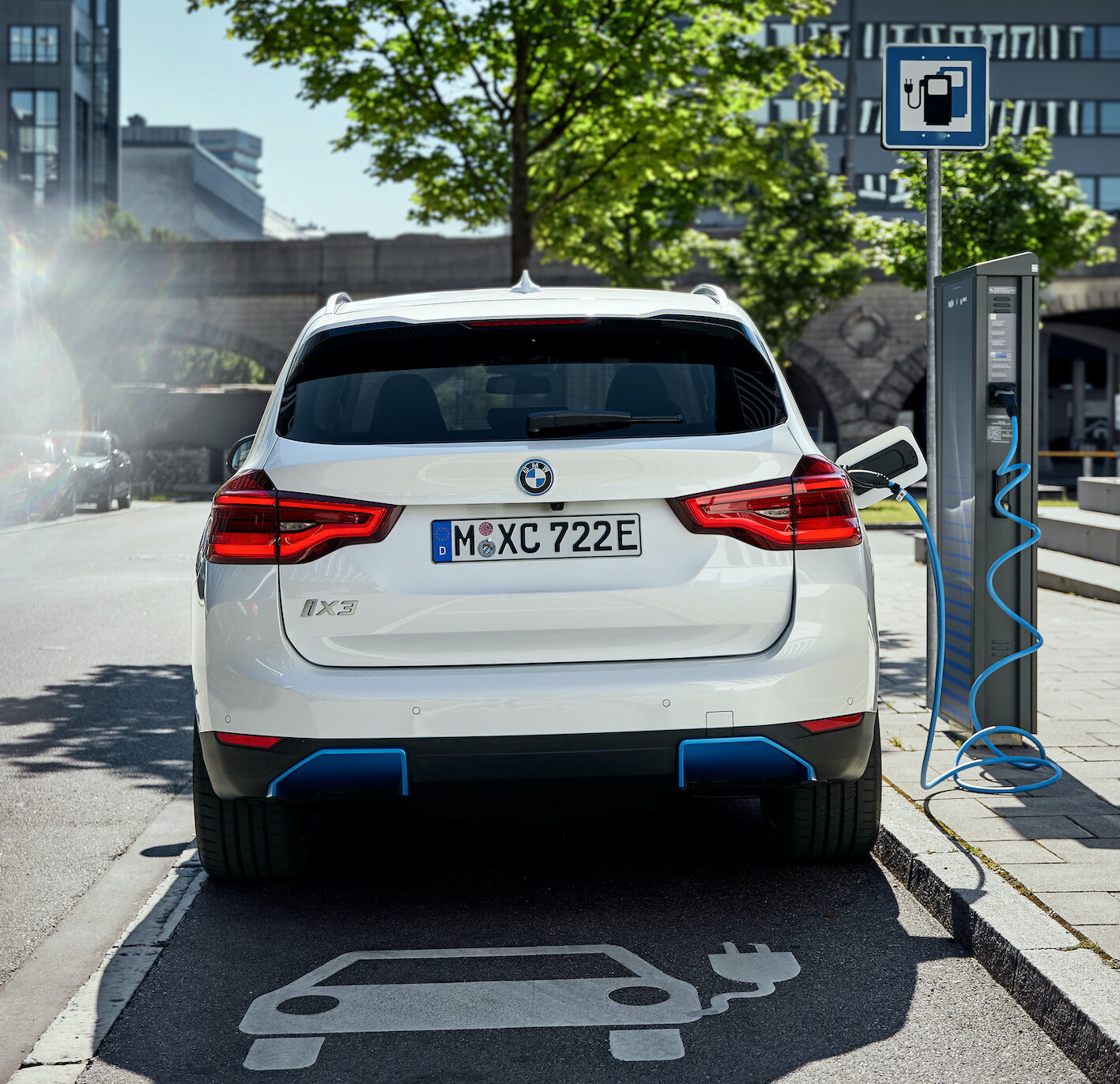
AN edition of the X3 crossover at the forefront of BMW’s electric vehicle push in 2021 has been revealed in full production form and confirmed for New Zealand.

BMW New Zealand has been surprisingly subdued about the iX3, unveiled in Munich by video conference last night (below).

The Auckland-based distributor’s comment has restricted to notification that pricing and specification details relevant to our market will be announced closer to local launch. The exact timing for this has yet to be divulged.

The lack of further comment from the distributor around the car’s announcement is at odds with the noise it was making a week ago, when it offered opinion that it has achieved leadership among German premium brands for electrified vehicle sales.

It claims this is on the back of BMW and MINI having shored up 25.8 percent of the premium segment in the first half of the year with ‘electrified’ vehicles – a descriptive apparently encompassing mild and plug-in hybrids (iPerformance in BMW-speak) which span everything from a hybrid 2-Series to the i8 whose production has been discontinued (though two remain unsold in NZ), as well as the sole pure battery-driven car it has here, the i3.

Claim that these models have been “outselling other German brands in the premium segment by more than 300 percent” seems an especially bold statement given the current car sales climate. And it has become one the brand has not yet been keen to unwrap further.

A request for further elaboration appears to still be churning through the local distributor’s media response process, which has become laborious since it ditched in-house media communications last year and contracted the role to an Auckland PR company, whose general policy is to pass on inquiries to BMW regional office in Australia to achieve a response that is subsequently relayed back to the media organisation. Or not.

P90393411-highRes.jpg

By the time the iX3 lands, BMW will already have another small all-electric in the market, in the form of the MINI Electric hatch, whose first shipment arrives soon. BMW claims the entire 2020 allocation has already been sold out but has not said how many vehicles that comprises.

The iX3 is likely to be pitched as a competitor for three like-sorted models already on sale here - the Mercedes EQC, Audi e-tron and Tesla Model X – though those all offer all-wheel-drive, whereas the Munich model is rear-drive only.

BMW’s car also differs in being more obviously based on an existing model, yet it nonetheless represents an important step. It’s not just BMW’s first electric SUV, but also the first BMW to be available with either pure combustion, plug-in hybrid or pure electric power. 

It’s also the first BMW for global export to be built in China - a plant developed with a partner in that country, Brilliance, will be the sole production point - and is the first to feature the brand’s “fifth-generation” electric drivetrain technology, which will be applied on upcoming EVs like the i4 sedan and the range-topping iNEXT SUV. 

The X3’s platform has been adapted with a new rear sub-frame that can house an electric motor and an 80Wh battery pack that, BMW says, is 20 percent more energy dense than any battery it has used before. 

Combined with a 210kW electric motor driving the rear axle, BMW claims a maximum range of around 460km on a single charge, 0-100kmh in 6.8 seconds, and a top speed of 180kmh. 

Charging can be handled at up to 150kW at a suitable direct-current (DC) rapid charger station, enabling a 0-80 percent replenishment in 34 minutes. Alternating current (AC) single-phase and on-board three-phase charging at 11kW is also standard. 

P90392976-highRes.jpg

BMW is talking up the car’s adaptive energy recuperation system, which it claims automatically enhances efficiency on longer drives. Using location data from BMW’s latest cloud-based navigation system, the iX3 can autonomously change the level of braking recuperation on the move and according to the road ahead. For instance, if the car recognises that a stop sign is ahead, full recuperation will be deployed without any need for the driver to select it. 

Alternately, the driver can take manual control of the regenerative braking, with three levels of resistance availed. A ‘B’ position on the Drive selector enables high enough energy recovery for one-pedal driving around town, a trick the brand appears to have nabbed from Toyota/Lexus. 

The iX3 gets a unique tune for its standard adaptive suspension system with electronically controlled dampers. Alternately, buyers will be able to specify a sportier Adaptive M suspension setup. 

The front grilles are closed off for aerodynamic purposes and the bumpers have been reprofiled and it gets set of aerodynamic wheels styled to reduce the drag coefficient by around five percent compared with regular X3 wheels. 

P90393007-highRes.jpg


Rebirthed RAV4 not for Suzuki NZ

A product share between Toyota and Suzuki might well affect their NZ distributors, but in an indirect way.

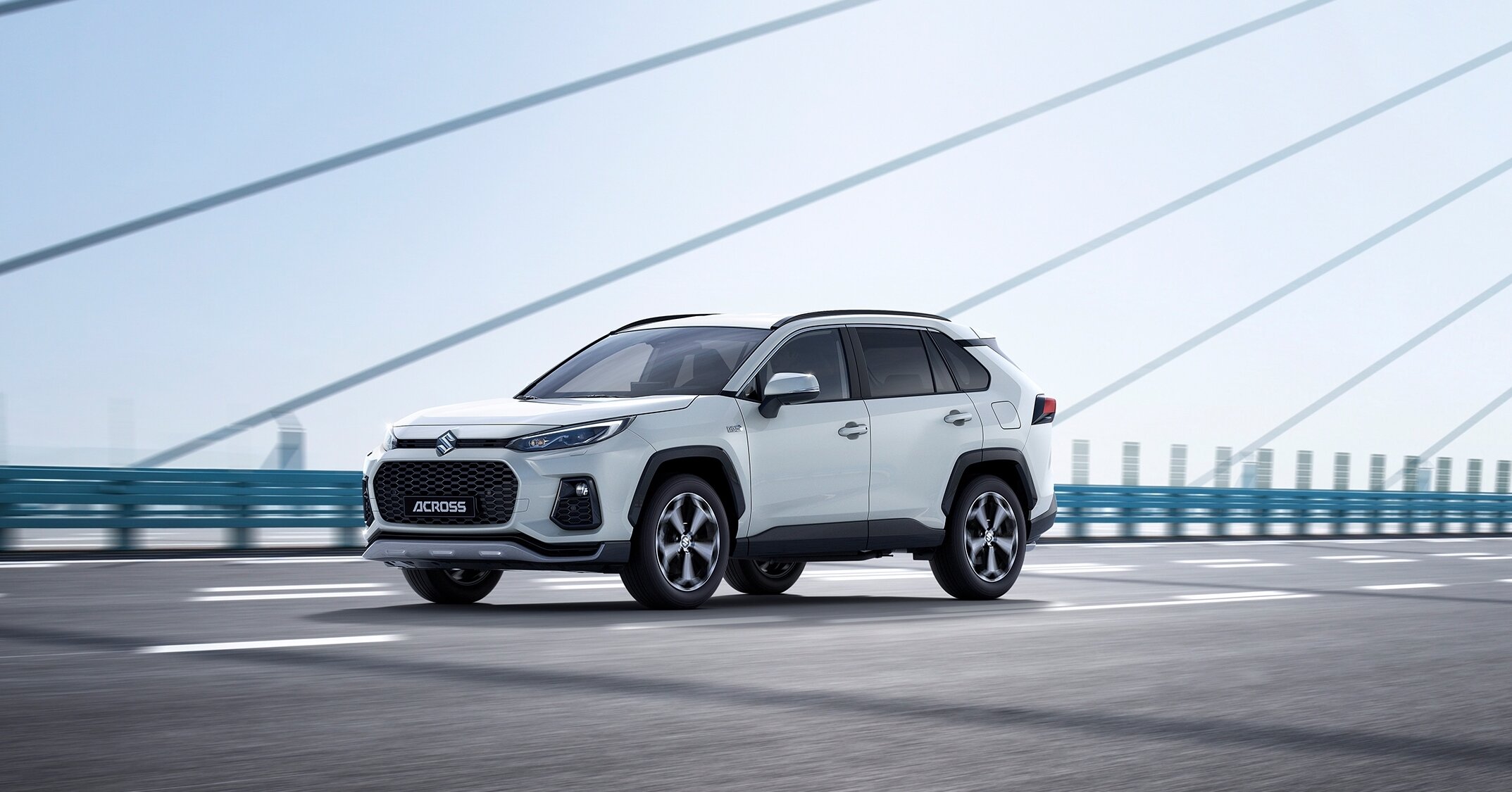
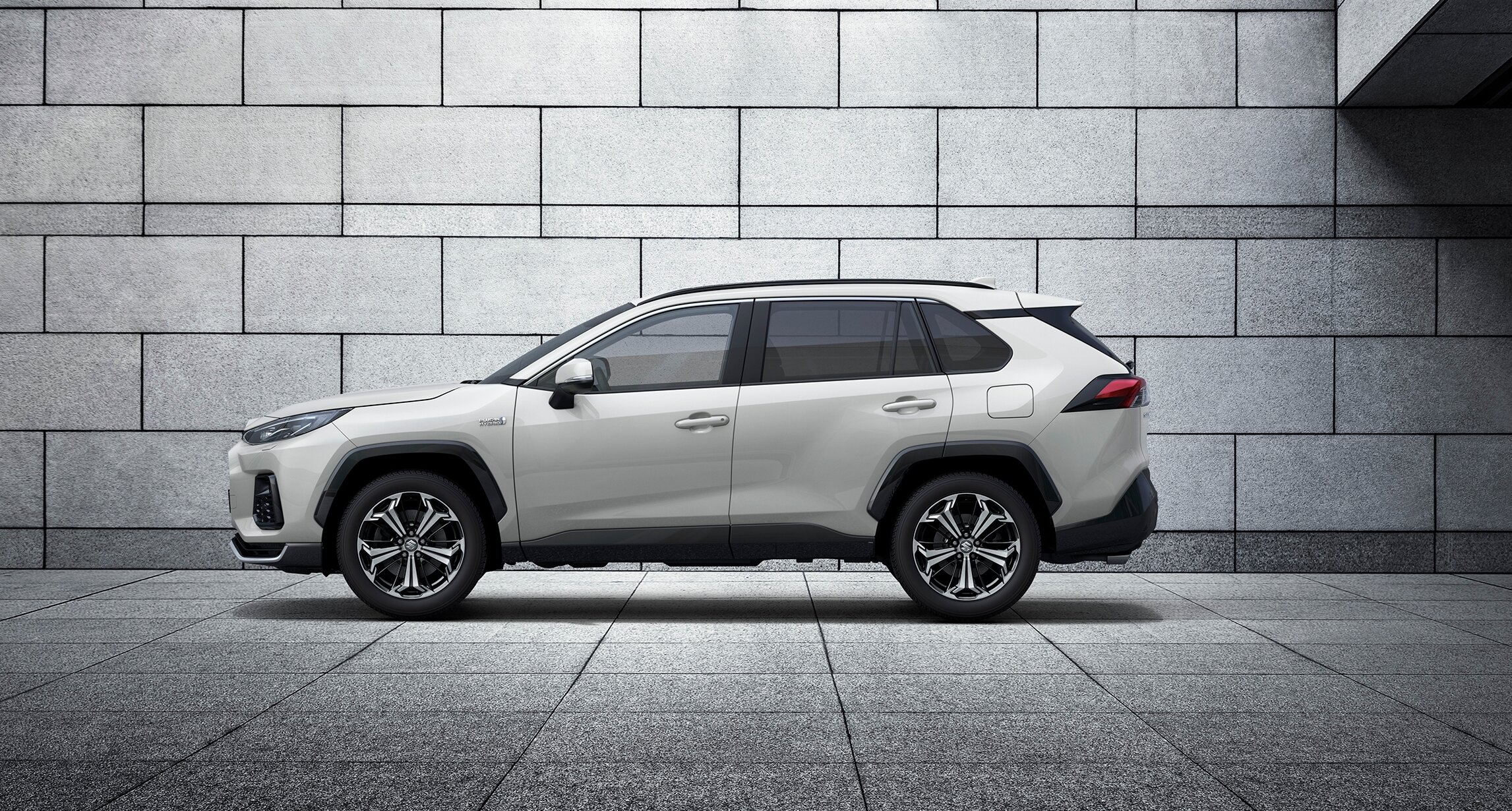
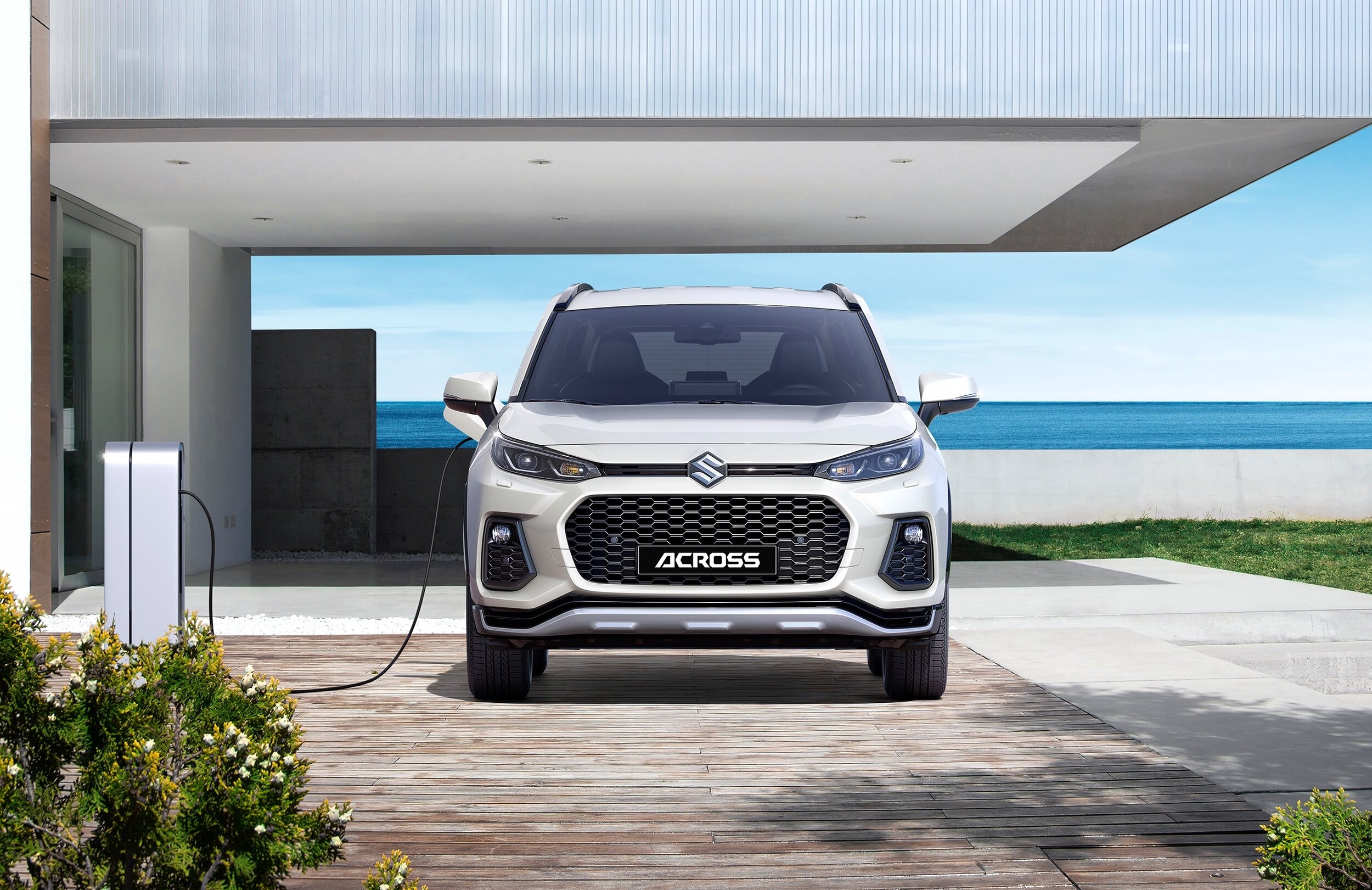
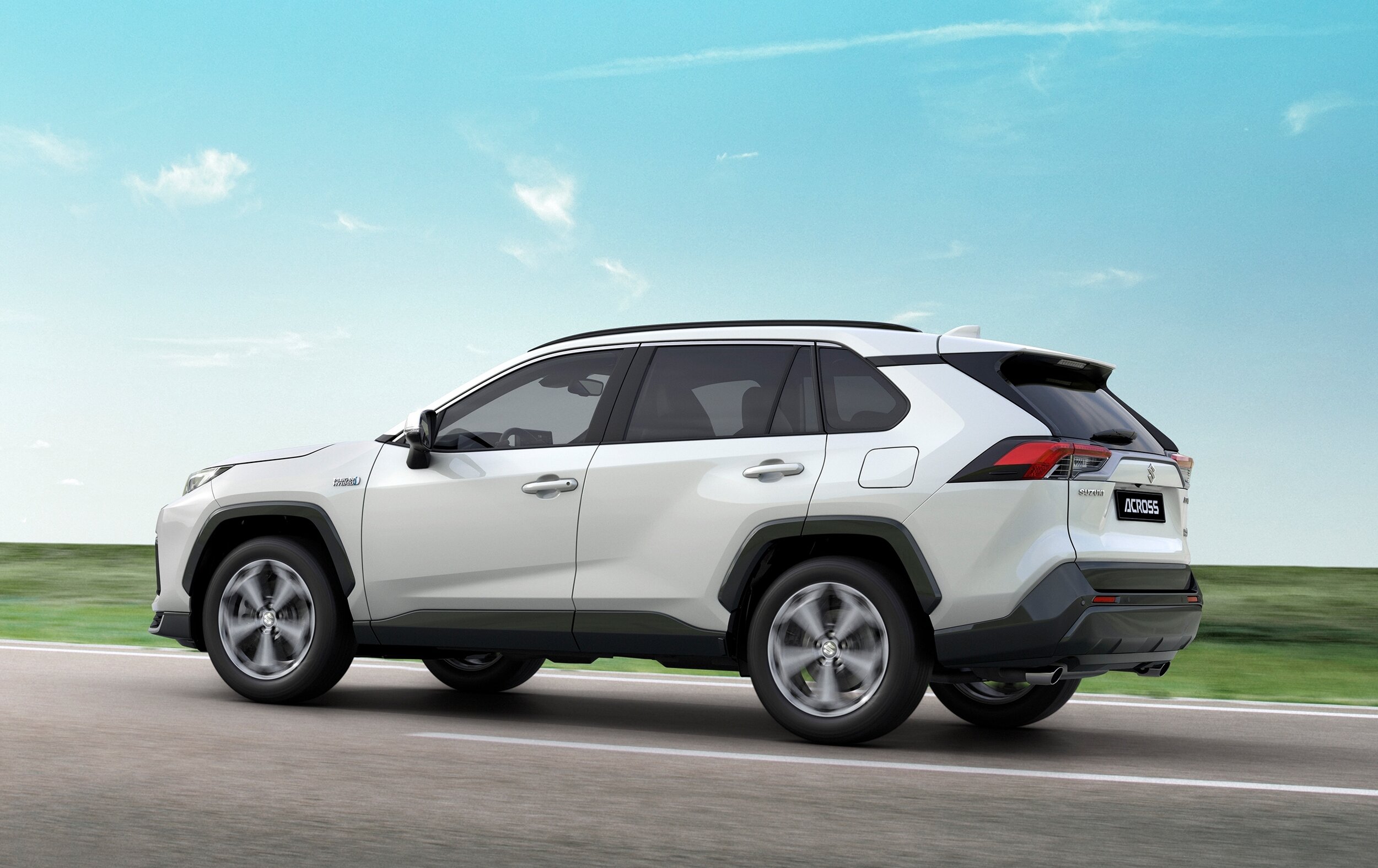
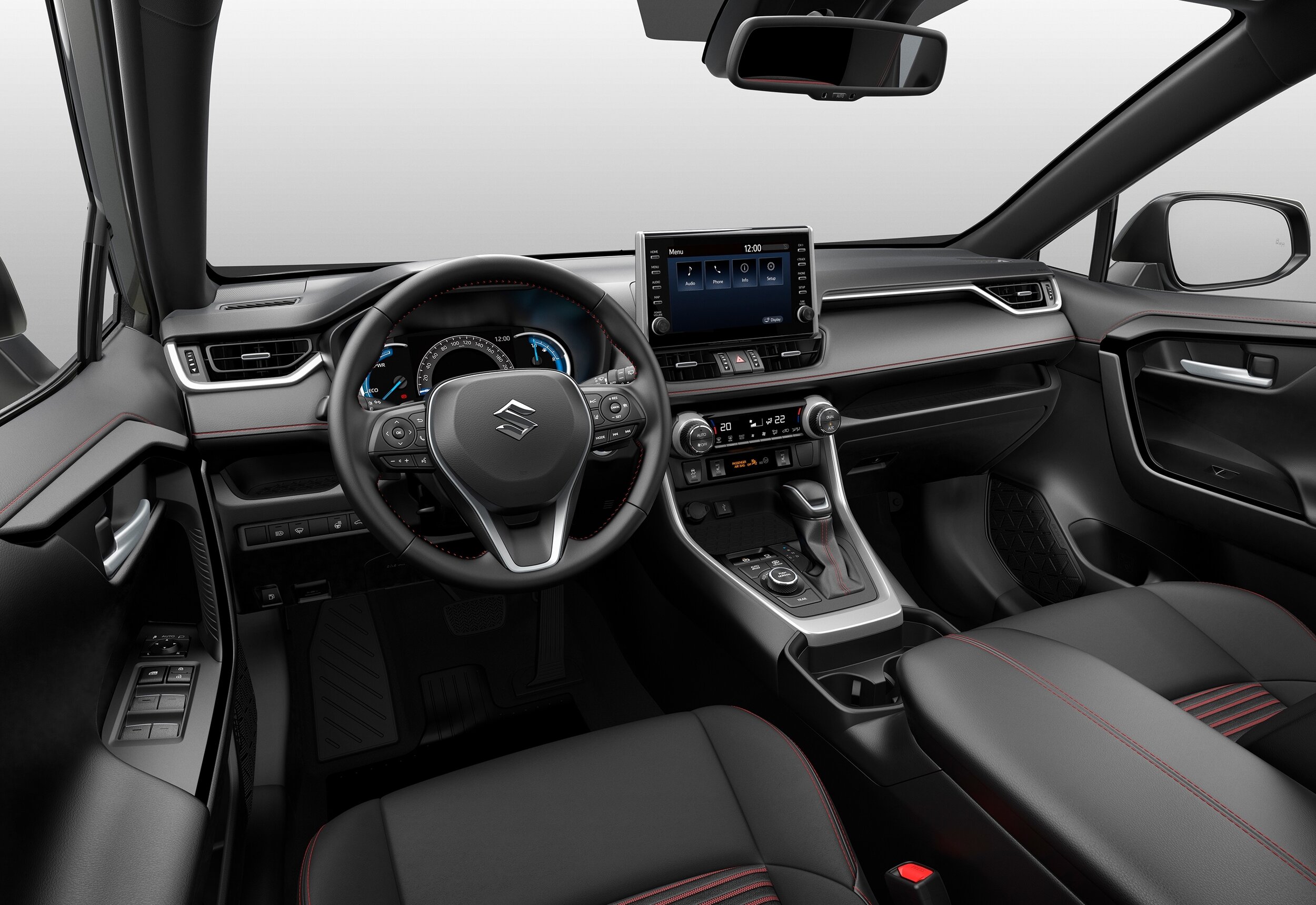
Looks familiar? A new nose and a change  of badge turns the RAV4 into a Suzuki Across

Looks familiar? A new nose and a change of badge turns the RAV4 into a Suzuki Across

DEVELOPMENTS within the Suzuki model range triggered by its battle to meet tightened emissions regulations imminent in Europe are good news for the local distributor – and perhaps for a rival, as well.

The Jimny small sports utility that has become so popular here as to be subject to a big waiting list and a Suzuki by arrangement with Toyota, the Across, have become central figures as the brand works to achieve a range-wide Co2 count it must meet in order to keep trading in the European Union after the end of this year. 

It might come as a relief to Toyota New Zealand that the Across is unlikely to avail locally: The last thing it might need is a competitor fronting with a lightly-revised edition of one of its most popular cars.

It’s worse than that, actually. Not only is the Across a RAV4 with nothing more than cosmetic change – it’s a variant TNZ has yet to secure, yet has big hopes for nonetheless.

The longstanding, if relatively low-key product-sharing relationship Suzuki enjoys with Toyota has recently morphed into a deal to collaborate on electrified vehicles.

To meet the demands of the European emissions situation, Suzuki has been allowed access to the RAV4 Prime, which has a plug-in recharging capability that’s far more Green-minded than the mild hybrid RAV4 most-favoured by Kiwis at the moment.

With a 2.5-litre four-cylinder petrol engine, a 18.1kWh lithium-ion battery pack and an electric motor mounted on each axle, the Prime’s drivetrain hits two targets.

First, there’s the optimal 75kms’ all-electric range. That’s significantly superior to that from Toyota’s only PHEV in circulation here at the moment, the Prius Prime, and also trounces that cited for a probable rival, Mitsubishi’s Outlander PHEV.

On top of this, with cited outputs of 134kW and 270Nm, this RAV4 is also said to be far sportier to drive than any current edition offered in our market.

All good portents for TNZ, which has been dropping hints about the potential for the Prime coming into its lineup, probably in 2021.

Suzuki NZ boss Tom Peck is relatively relaxed about there being little likelihood of Across being signed off for this part of the world. And even if that changed, he thinks it would be unlikely the car would become available “at a price the RAV4 sells for.

“Ultimately, Suzuki and Toyota do have a product tie-up that is bigger than the local companies … but there are regional agreements. I don’t think those Toyotas (in addition to RAV4 Prime, there’s a hybrid Corolla wagon) will be offered to NZ (as Suzukis).” 

In addition to what’s going in Europe and the United Kingdom, Toyota is using rebadged Suzukis to gain entry to India, where the small car expert is already a well-established kingpin, with Maruti.

Toyota helping Suzuki achieve CO2 averages with the EU emissions regs can go so far, however, and there’s already been a decision that could become beneficial to Suzuki NZ.

UK dealer supply of the Jimny small SUV will cease in the coming months, as the CO2 counts from its 1.5-litre petrol engine are too problematic to address. 

IMG_2423.jpeg

Bad news for English fans of the baby off-roader will likely be a good turn for Kiwi enthusiasts as almost certainly the big issue of supply – so constrained that at the moment the waiting list for Kiwis stretches almost nine months – could well be alleviated, Peck believes.

“We have been getting better allocations recently but that’s been more to do with Covid-19 than what’s going on in Europe; we’re fortunate in being among the countries that have been able to take and sell the cars. But we still have more than 350 confirmed orders awaiting delivery.” 

The distributor generally receives 40 units per month from the factory – nowhere near enough to satisfy demand. This latest turnup could free up more volume, he hopes.

“If that happens if shouldn’t take us too long to catch up (with the order base).”

Suzuki has also been talking about creating a second production base, also in Japan, to alleviate the current factory which has been operating at maximum capacity since the car’s release, but the coronavirus crisis seems to have sidetracked that development just at the moment, he says.

However, it works out, Peck is utterly confident the car’s inability to sustain in Europe won’t cause Suzuki to rethink having it in their line-up.

“Not at all. There is huge demand for Jimny outside of Europe. It will definitely continue.”


Gigafactory ‘perfect’ for Tiwai


An Auckland visionary believes Southland’s smelter site is a Musk-see.

Tesla’s first gigafactory in Sparks, Utah.

Tesla’s first gigafactory in Sparks, Utah.

AN electric vehicle infrastructure entrepreneur reckons his push to have the Tiwai Point smelter re-energised as a Tesla ‘gigafactory’ is worth taking to Government and the American car brand.

 Nigel Broomhall says the response so far to a Facebook campaign launching immediately after the smelter’s closure was announced has fuelled an ambition initially proposed to spark discussion.

Experience in the electricity and electric vehicle sectors - ventures ChargeSmart and Invisible Urban Charging being undertaken with benefit of 18 years with Meridian Energy – has left Broomhill confident his concept will work.

“It’s the ideal spot for something new. The perfect location.”

A pile of responses to his pitch, not just directly to Facebook but also on a number of prominent EV owner sites has been largely supportive.

New Zealand is well-positioned for being a leader in Green energy creation, the Manapouri hydroelectric infrastructure that primarily feeds the smelter creates more than enough electricity for this new venture and the cost efficiencies are right, he argues.

Plus, while an alternate pitch for Tiwai – to turn it into plant producing hydrogen, another key fuel for future transport needs – also has merit, repurposing it as one of the giant battery-making facilities Tesla is creating around the world makes even better sense. 

It’s big-thinking on a scale beyond anything imagined when the smelter and power scheme were created.

As the name suggests, a gigafactory is massive – the first, in Nevada, the United States, is the biggest building in the world at 1.76 million metres and with an annualised rate of around 20 GWh, claims the highest volume production of lithium ion batteries in the world. (See this tour of the factory produced by CNBC).

Since then Tesla has begun sister plants in Shanghai, China – supporting a factory making Tesla Model 3 cars for that country - and, more recently, in Germany. 

On the outskirts of Berlin, the latter is also set to mirror the operation in Sparks, Utah, in making battery cells and battery packs in association with Panasonic, plus Tesla vehicle drivetrains, and the company’s two storage products, the Powerwall and Powerpack.

It’s this latest undertaking which has also provided the basis for a costings exercise that, Broomhill argues, shows why a NZ factory would be all the more beneficial for the international giant.

The core appeals are that an infrastructure exists and that it would deliver even better employment opportunity in a region set to be hit hard, with 1200 direct - and perhaps 1400 indirect – job losses when NZ Aluminium Smelters (NZAS) closes next August.

The ingredient of a power supply delivering 570 mega Watts and all the electricity transmission hardware, a commercial deep water port designed to manage raw materials and a high-trained manufacturing workforce would be appealing to Tesla, he feels, and very good for our economy.

 “Even though the plant would be in Southland, having a technology leader like Tesla in NZ would have a huge ripple effect across the NZ technology industry. This would attract more technology players and grow our tech industry rapidly,” he argues.

The potential economic value of around $11 billion is estimated on published data for the German factory, which has been a $6.9 billion investment that has delivered 8000 jobs but is also based on Tesla having to wear electricity supply rates seven and a half times those Tiwai enjoys.

“The biggest opportunity we’ve got is price. Germany’s electricity price is horrendous, they are up around 35-37 cents per kilowatt hour whereas in comparison Tiwai is, according to recent articles, down around 5c (as a wholesale rate).”

Pundits have already identified that closing Tiwai will free up a swathe of hydro electricity and potentially lower national prices, but getting what the smelter takes now – and that’s 13 percent of the national grid’s capacity – to the rest of NZ won’t be cheap. It demands a $100 million upgrade (the Clutha Upper Waitaki Lines project), cited to take at least three more years.

Broomhall’s approach really negates the need for any of that, though he suggests Tesla’s operation would likely be more efficient and perhaps only need no more than half the power going into Tiwai now. 

In saying that, he concedes there’s one aspect of the Utah facility that would be challenging to emulate in Southland. The Sparks plant is designed to be a zero-energy facility, consuming no fossil fuels and using electric sources to power the back-up emergency generators. So the entirety of the roof is covered in a solar array and any power not consumed during the day is stored in powerpacks for use when needed.

Nigel Broomhall says his Tiwai Point idea might be a long shot, but he’s used to “throwing things at the wall and seeing what sticks.”

Nigel Broomhall says his Tiwai Point idea might be a long shot, but he’s used to “throwing things at the wall and seeing what sticks.”

Broomhall says that probably wouldn’t be achievable at Tiwai Point. “The solar gain is not huge down there but you wouldn’t need to do it because they have that massive direct feed from Manapouri. So there’s no need for renewables.”

Given a gigafactory’s output is critical to vehicle production, why not push for a Tesla car plant? 

As an ardent EV fan, he’d love to see the make’s vehicles made here, but says that probably would be a leap too far. 

“If they wanted to do cars, that would be fantastic, as it requires a lot more workers.” 

Getting a gigafactory going would depend on how quickly NZAS could scale down and clean up their site, but regardless of that it would be expedient to at least gauge Tesla’s interest.

Tesla’s gigafactory plan is surrounded in conjecture, but in 2018 Elon Musk talked about the need for 10 to 20 such facilities for Tesla to achieve planned products and volume. He also said then that the world would need 100 gigafactories to make enough electric cars and batteries for global demand.

The next step? “If the Facebook page we've created gets to 10,000-plus likes, we'll build a business-funded team and pitch Tesla. We'll co-ordinate across the electricity industry, local and central Government.”

Tesla sees need for numerous gigafactories to feed to emergent demand for electric cars.

Tesla sees need for numerous gigafactories to feed to emergent demand for electric cars.


Corolla Cross out in 2022 and signed for NZ

An elevated Corolla has been announced and Toyota New Zealand has signed up.

COR-W-2005-1006lr.jpg

A PERENNIAL strong seller for Toyota is set for a rise in stature.

 The Corolla has become the next candidate passenger car for conversion into something it’s never previously been, a crossover.

Announcement of the – you guessed it – Corolla Cross came from today’s global unveiling in Thailand, where it is being built and will be sold first.

Availability in other right-hand-drive markets will commence in 2022. Toyota New Zealand has confirmed itself as a starter.  

“We have secured this product for our line-up and are excited to launch it in due course,” said chief executive Neeraj Lala.

“This addition will continue to add breadth to our overall range, with more SUV options for our customers. We will release more information closer to the time of launch.” 

COR-W-2005-2003lr.jpg

Toyota head office says Corolla Cross benefits from its experience as a pioneer in recreational SUVs, which triggered 25 years ago with the original RAV4 - a vehicle that is now the world's best-selling SUV.

The brand sees this model as delivering a design philosophy of "Corolla meets SUV", blending the best aspects of both worlds. “It balances a dynamic, powerful, sleek and sophisticated design with high levels of SUV practicality,” according to the press information.

Corolla Cross is on the same GA-C platform as the Corolla hatch and sedan, ensuring a high level of body rigidity and a well-balanced chassis for responsive and agile driving, a comfortable ride and outstanding quietness, Toyota believes.

Other features include a spacious cabin, easy entry into and exit from the car and excellent luggage space, as well as a high level of safety equipment inherited from Corolla hatch and sedan.

The brand says Corolla Cross will place between Yaris Cross, releasing in NZ later this year, and RAV4 and be available with either a petrol engine or a petrol-electric hybrid powertrain, but has yet to be more specific.

COR-W-2005-1012lr.jpg


Mazda3 Turbo breaks cover, but …


The much-rumoured hotshot Mazda3 has been revealed. It’s exciting. Don’t let it get to you.

2021-Mazda3-2.5-Turbo-Premium-Plus_01-1024x683.jpg

 RIGHT out of left field … and, unfortunately, at this stage only likely to be built in left-hand drive.

 That’s the news about the much-anticipated Mazda3 Turbo, whose existence was finally properly confirmed today in an announcement that also makes clear just Canada, Mexico and the United States are the only cited markets.

Mazda New Zealand has reinforced this, saying prior to the unveiling (but subsequent to an early sneak peak out of Mexico): “With regards to the Mazda3 Turbo, we currently do not have any information on availability of this vehicle for right-hand drive markets.” Asked, in wake of today’s announcement, if it had anything fresh to say, it said it had not.

What makes that news all the harder to take is that the first Mazda3 hot hatch – and sedan (cos it’s coming in both shapes) – since the MPS seems perfectly baked.

 In addition to releasing the two images here, Mazda USA has also provisioned enough technical info about a product they’ll have on the street within a few months to make it patently obvious it’s even more pumped than was first conjectured. 

Though intrinsically the same unit running in the CX-5, CX-9 and Mazda6, the model’s 2.5-litre turbo four-cylinder petrol engine has been retuned to produce 186kW and 434Nm. As against 140kW/252Nm in the CX-5 and 170kW/420Nm in the larger models.

Regardless of all the extra mumbo, those outputs relate unevenly against obvious rivals already working the scene here – basically, less power than a lot but generally more torque.

The Hyundai i30 N makes 202kW/378Nm, the newly-arrived Ford Focus ST has 207kw/420Nm, the Honda Civic Type-R cracks out 228kW/400Nm and VW’s Golf GTI and Golf R respectively deliver 180kW/370Nm and 213kW/380Nm.

The Mazda is four-wheel-drive and, interestingly, will avail purely with a version of the six-speed automatic that’s staple fare in Mazda product here.

The images don’t give too much away about the appearance pack, but enough is shown to suggest it’s quite subdued, save for the addition of some additional black exterior elements, such as a front splitter and rear spoiler.

2021-Mazda3-2.5-Turbo-Premium-Plus_02-1024x683.jpg


NZ-bound el-Born now a Cupra

Fizzed-up fun is a core element of this incoming Spanish flier, revealed today in its production-bound format.

el-born again … an electric hot hatch

el-born again … an electric hot hatch

SOMETHING you’ve been thinking about has finally been realised – an electric hot hatch.

That, at least, is the premise proposed by Cupra, the performance arm of Volkswagen Group’s Spanish brand element, SEAT, in respect to the el-Born. 

 The base elements of a car that is already booked for New Zealand introduction – with hope of a 2022 introduction - are familiar enough to anyone who understands the grand VW plan.

This car, the Q4 e-tron Audi unveiled yesterday, the Skoda Enyaq and the VW ID – also all confirmed for Kiwi use - are all one and the same in terms of their platforms and all-electric hardware.

However, each brand has allowance to tailor their offers to mirror their own respective temperaments.

That’s an opportunity Cupra has taken full advantage of – to the point where its car has a different badge in the production form it has unveiled overnight that it wore when the preceding concept was unveiled at last year’s Geneva Motor show. Then it was a SEAT.

In joining the Cupra clan, the car is announcing itself as something with more flair and fervour than might be expected to arrive with other family brands. Because Cupra is emphatically all about sportiness. In this instance, they’re talking 0-50kmh in 2.9 seconds. 

el-born is designed for VW Group’s connected car systems.

el-born is designed for VW Group’s connected car systems.

Does that sound positive enough? If the el-Born wins over hot hatch fans, then assuredly VW Group will pump out others of similar flavour. An ID3 GTi, perhaps? 

Whatever the course of action, el-Born is … well … the first born. And, like the other involvers in the VW electric push, it’s expected to resonate strongly in this country.

As things stand, Cupra is already pulling more Kiwi attention than might be imagined. 

Yes, the SEAT/Cupra dealership presence is small, but it’s growing quietly and the models in the performance sub-set are doing so well that the most popular at the moment, the Ateca, has been subject to a waiting list.

This interest has determined a fine-tuning of the brand development strategy created by the Giltrap Group, which holds distribution rights. Cupra will become the lead marque for private buyers while SEAT product will be presented more toward fleet and rental use.

“Cupra really is resonating with New Zealanders,” attests national brand boss James Yates.

“The Cupra brand is certainly one we will be focussing on going forward.” 

“SEAT will not disappear. We’re saying we will focus on slightly different markets for each – there are some models that are quite popular, such as the Arona, which we cannot get in a Cupra version and they will definitely continue on. 

“But from a positioning point of view and an experience point of view, Cupra will become the main focus, but not the sole focus.”

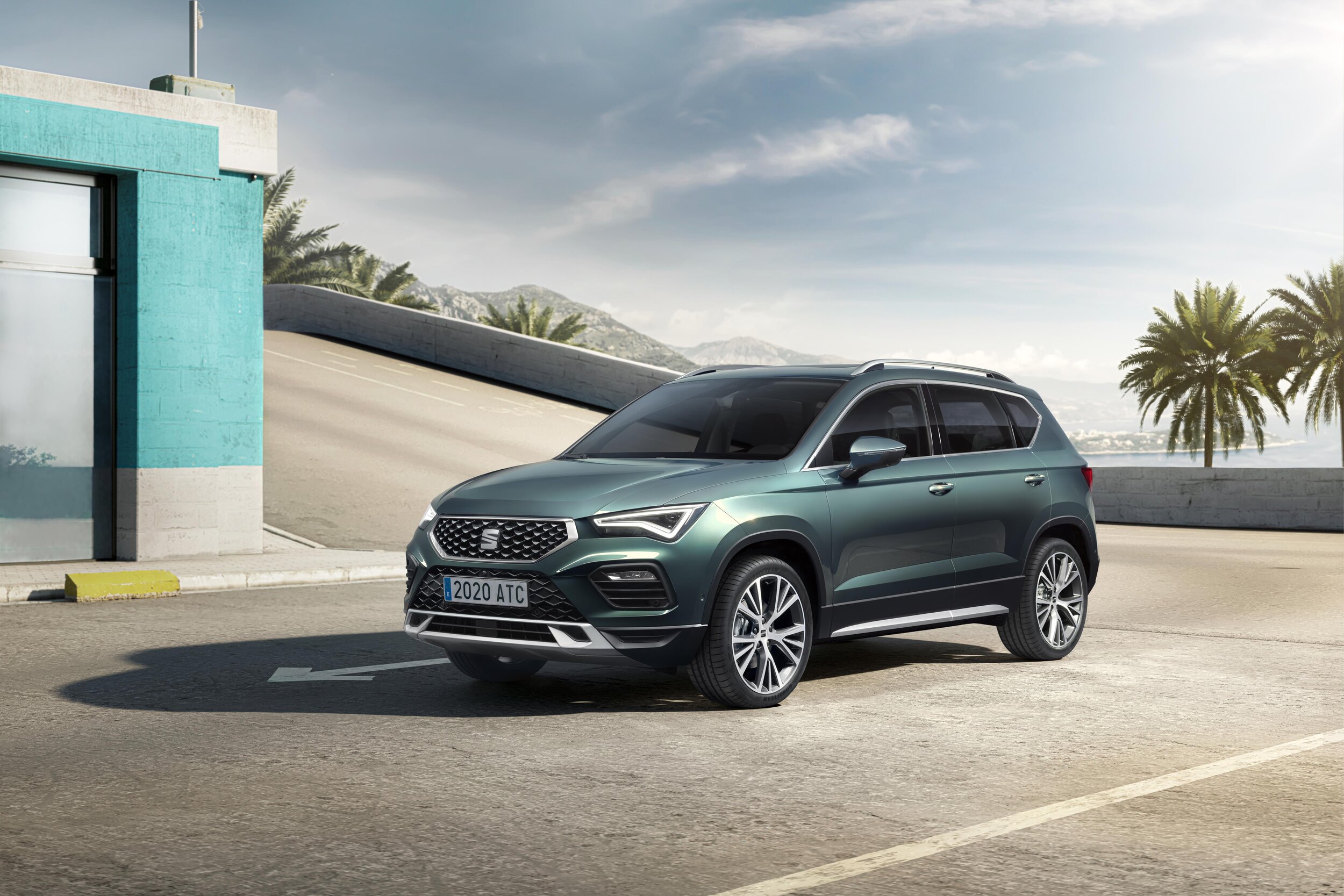
Formentor, above, will be at the forefront of the Cupra product portfolio next year though the updated Ateca, below, also has a key ongoing role.

Formentor, above, will be at the forefront of the Cupra product portfolio next year though the updated Ateca, below, also has a key ongoing role.

SEAT_ATECA_3-4_FrontH.jpg

Cupra’s status will lift all the more when it’s first true standalone model, the striking Formentor sports uility coupe, arrives next year. It will stand to offer a point of difference on more than just the impressive looks: There’s a hybrid version with front-wheel drive that uses a 1.4-litre petrol engine and an electric motor to produce 182kW, or you can go the whole hog and pick a 231kW four-wheel-drive car instead.

Also joining the Cupra stable next year is the new Leon small hatch. And prior to either of those, likely for release around December, is the facelifted Ateca.

As for el-Born? Yates has become all the more fizzed as result of a visit to Barcelona in February, when he was accompanied by Group principal Richard Giltrap. Yates says the impact from that expedition was powerful and reinforced why the investment in having SEAT/Cupra in this market will reap reward. And why el-Born will be so crucial to that.

“We’re very excited about that wee model and having it as a Cupra.”

There’s one hurdle yet to be tackled. VW Group’s intent is to use its EV models as pathfinders for an effort to digitise more of the car-driving experience for its customers by making it easier for them to access online productivity tools, music streaming services, and travel information on the go. 

VW’s cloud environment is built on Microsoft Azure, and also makes use of the software giant’s IoT Edge platform. Its creation is the result of a partnership struck between the two firms in October 2018.

All well and good … save that the rollout has been slower than expected, to the point where the VW ID cars that were supposed to debut the set-up are initially being delivered, for now just in Europe, without the requisite software.

That’s not desirable for NZ; the plan here is for all product to be ‘connected’ from the get-go. The factory is already saying it won’t release product until that is achieved. There’s no target date for that, Yates explains.

But he’s characteristically optimistic that introduction in 2022, roughly a year after it goes in Europe, is still a potential.

The styling remains very close to that of the Geneva design study, with the same short bonnet, fared-in radiator grille, large front quarter light windows and tailgate spoiler. The lowered ride-height, 20-inch alloy wheels, aggressive front and rear bumpers, wider side skirts and a larger rear spoiler are cues to a performance mettle also cemented by it taking the largest battery unit currently available in any of the Volkswagen Group’s electric vehicles.

02_CUPRA_EL_BORN_FRONT-H.jpg

The electric motor feeding from the 82kWh unit drives the rear wheels. The only performance figure Cupra has so far given out is for that 0-50kmh blip, but a year ago SEAT reckoned a 0–100kmh time of 7.5 seconds was the go.

The big battery also enhances range – Cupra is saying their car will achieve the same 500km optimal as the Q4 e-tron. The car will also provision with a 62kWh battery pack, offering a WLTP range of up to 420km. 

The platform offers support for rapid charging, which Cupra says will allow 251km of range to be added in just 30 minutes. Using a 100kW fast charger, the hatchback will also recover an 80 percent charge in as little as 47 minutes.

Cupra’s information pack talks of a modern and functional cabin, with a digital instrument binnacle, a floating 10-inch infotainment screen and touch-sensitive controls for the car’s heating and ventilation system. Buyers will also get a pair of bucket seats and a new sports steering wheel. Features include an Augmented Reality head-up display, smartphone connectivity via the car’s infotainment system and an integrated heat-pump system that does not draw energy from the car’s battery pack to warm the cabin, hence preserving the vehicle’s range.


Hybrid Swift nabs Yaris pitch


And the cheapest new hybrid in the country is ….?

Swift.jpg

TWO small cars popular with Kiwis seem set to go head-to-head in the hybrid sector.

 The baby bash is between market-fresh versions of the Suzuki Swift and Toyota Yaris, the first in updated form and the second as a brand-new car, and effectively pitches the country’s smallest distributor of mainstream Japanese product against the largest.

 It’s a stoush between neighbours, too, as Suzuki New Zealand bases in Whanganui, just 73km and a 57-minute drive from Toyota New Zealand’s headquarters in Palmerston North.

 Suzuki’s announcement today that it intends to add a petrol-electric version of the Swift, in two levels of trim, is not in itself a shock – the distributor has been trying to achieve this edition since it went into production four years ago.

 It knows there is plenty of demand here as hundreds have already been sold here. However, those cars were not represented by the brand; they’re Japanese domestic market fare brought in as used imports. Suzuki NZ’s attempt to convince the factory in Japan to facilitate the model as an export product has always been unsuccessful – until now, of course.

Now that it can be delivered as a brand-new car, Suzuki NZ is wasting no time to achieve maximum potential, by presenting the car as the country’s ‘most affordable’ (meaning cheapest) battery-assisted brand-new choice.

It’s a claim that stands scrutiny yet will cause Toyota marketing execs’ ears to burn nonetheless: They would have confidently expected to reserve the same claim for the Yaris, releasing on August 1. 

However, Suzuki has it gazumped.

The Swift places at $26,500 for the base GLX version and $28,500 for the LTD, whereas Toyota intends the Yaris to achieve a $27,990 buy-in in its entry format and $33,490 in a plusher ZR trim. 

There are still some face-savings for the market leader.

Toyota will still be able to assert its car is the more frugal, at least in factory testing – which often provisions figures that are challenging to achieve in real life.

Suzuki today said the new Swift derivative will achieve 4.1 litres per 100km, a 15 percent improvement over the conventionally-powered edition.  That makes it the most economical Swift model sold here.

Yaris.jpg

Yet it’s still not in the same league as the Yaris, which Toyota asserts has potential for 3.3 litres per 100km optimal – an outcome that presents 0.6L/km and 0.1L/100km improvements over its previous hybrid heroes, the Prius C and the larger Prius hatch. It also presents a 1.6L/100km advantage over the best a pure petrol new-gen Yaris will achieve.

The Toyota also has a performance edge – the Yaris hybrid packs 67kW of power and 120Nm torque against the Swift’s 61kW/107Nm – produces lower emissions, has a slightly more powerful lithium ion battery, have a stronger specification and its hybrids carry a lower premium over the equivalent standard versions. 

In general terms, both operate in the same manner, with a parallel (aka mild hybrid) set-up that favours the electric motor for start offs and very low speed driving, but never driving wholly on battery impetus for a sustained duration as a full electric car does. 

The Suzuki combines a belt-driven integrated starter generator (ISG) and the 10Ah lithium-ion battery with the ISG acting as both a generator and starter motor. It recharges the battery with electricity generated by deceleration, stops unnecessary power generation during cruising and reduces engine load during fuel-consuming standing starts and acceleration by providing motor assist. 

During acceleration the ISG uses stored power to drive the motor and further improves fuel efficiency.  The long-life lithium-ion battery stores electrical energy recovered from deceleration and braking while the integrated starter generator operates the idle stop/stop function. 

The hybrid’s engine has a high compression ratio (13.0 to 1) that asks for 95RON octane petrol or greater.

Suzuki locates the hybrid battery and its control unit under the front passenger’s seat, for better weight distribution. Besides assisting the engine, the battery powers various electric parts, including engine electronics, the speedometer, air conditioning, audio and Bluetooth and smartphone connectivity.

Specific instrument cluster displays allow drivers to observe the changes between electric assistance and petrol operation. These also show the amount of fuel saved, how much idle stop time has amassed, instant and average fuel consumption.

The Swift Hybrid has a bespoke grille pattern to signal its status. Adaptive cruise control, LED projector and auto levelling headlamps, advanced forward detection system, front fog lamps, reverse camera, speed limiter, hill hold control, brake override system, heated mirrors and tyre pressure monitoring are standard and both model grades run on 16-inch wheels.

Whereas the GLX is equipped with Radar Brake Support, the LTD grade adds lane departure warning and prevention, door mirror blind spot monitor indicator, Dual-Sensor Brake Support, rear parking sensors and rear cross traffic alert.

Suzuki expects half of all Swift Hybrid sales will be to fleet and business customers. It also considers it likely that 24 percent of all new Swift sales are likely to be Hybrid models.

 The Hybrids are additional to the full range of Swift variants although the 1.2 GLX petrol model is being phased out.


Q4 e-tron on target for NZ

Here it is, the Audi electric going for mass appeal.

A203306_overfull.jpg

“WE are still discussing the car but our desire is to take it as it will become a volume seller here.

“I have seen the vehicle as a concept and I know it will work and become a mainline seller here.”

So, there you have it. The viewpoint from Audi NZ boss Dean Sheed, in respect to the latest electric from Ingolstadt unveiled to the world today, could surely not be plainer.

 As soon as the Q4 e-tron hits the production line – at the moment, that’s timed for late this year, pesky Covid-19 allowing - he’ll be booking it a ticket to our market and making arrangement for it to achieve permanent residency, with intent to have it fully settled in by early 2022.

And why not? The car’s credentials are really quite impressive, and not just because of the cited potential range of 500km.

In addition to being Audi’s seventh EV it is also the first on the MEB platform, the structure upon which all key VW Group electric vehicles already signed off for NZ introduction are based. VW’s impending ID family, starting with the ID3 hatch and a close-following ID4 crossover, the SEAT El-Born and Skoda Enyaq are all close cousins.

When you think Q4, it’s times two. A more orthodox hatch – subject of a preview last year - and now the car revealed today, a rakish, coupe-style Sportback offshoot, which is the one that especially has Sheed’s attention.

A203302_overfull.jpg

He suggests the cars each “sit nicely between the Q3 and Q5 exterior dimensions (German logic) and the Sportback denotes the coupe style to the body – think the latest Q3 SUV to the Q3 Sportback.”

By the time Q4 arrives, Audi will have already enlarged its electric family beyond the e-tron SUV that has been on sale for almost a year, and a Sportback coming on sale in late September, to include S versions of those cars – coming in the third quarter of next year - plus the e-tron GT. 

The last is basically a sister ship to the Porsche Taycan and potentially the most exclusive Audi EV here until 2025, when the so-called A9, a new flagship model being developed by an in-house working group called Artemis, arrives.

The S variants of e-tron have just been unveiled in Europe and will certainly add fizz to the category. As the first production electric cars to feature three electric motors they pump out around 372kW, which translates to a 0-100kmh time of 4.5 seconds and top speed of 210kmh. It’s the second fastest S model Audi makes, beaten only by the petrol-gulping S8 sedan.

Anyway, Audi’s incoming EV imprint is something of a mass attack, and even though it’s not one specifically aimed at the mass market – that’s a turf VW, Skoda and SEAT will be focussing on – it will be expected to be Ingolstadt’s highest volume EV for the foreseeable future. 

Rivals will be other plush electric SUVs such as the Tesla Model Y and Volvo XC40 Recharge. Undoubtedly the BMW i4 will also be considered a foil.

A203301_overfull.jpg

So, anyway, with the timelines all sorted, potential Kiwi customers have a good year to consider which version they might prefer – one with, as Audi AG puts it, “the versatility and robustness” of the classic SUV or the dynamic elegance of the Coupe variant. 

Either way, the dimensions are almost identical. With an exterior length of 4.6 metres and a height of 1.6m, the Sportback is 1cm longer and flatter than the hatch. They’re identical for width (1.9m) and wheelbase (2.77m).

They also have the same drive technology, comprising two electric motors mobilising 225kW of system output, transferring via quattro all-wheel drive (which, in EV terms, means each wheel set having an electric motor to drive it) or, optionally, via the rear wheels alone, in which case there’s just a single electric motor.

The all-paw edition is designated the performance format, but that’s not going to make it a threat to any of Audi’s petrol-dedicated RS cars. 

Perhaps the inevitable S variants will zap things up all the more, but at present with Q4 e-tron quattro zero to 100kmh occurs in 6.3 seconds and, as on the other MEB cars, top speed is restricted to 180kmh. 

The electric motors are fed by an 82 kiloWatt hour battery that takes up almost the entire space in the underbody area between the axles. A range of “over 450 kilometres” assessed under the worldwide harmonised light vehicle (WLTP) process is claimed for the quattro and just over 500km for the rear-drive. Audi sees this as setting a benchmark in its class.
Even though it’s dual motor, in most cases, the quattro mainly uses its rear electric motor, a permanently excited synchronous motor, in order to achieve the highest efficiency. For reasons of efficiency, the drive torque is generally distributed with a rear-axle bias. 

Audi says if the driver demands more power than the rear electric motor can supply, the electric all-wheel drive uses the front asynchronous motor to redistribute the torque as required to the front axle. “This also happens predictively even before slip occurs in icy conditions or when cornering fast, or if the car understeers or oversteers.”

A203307_overfull.jpg

The electric motor in the rear end has an output of 150 kW and torque of 310Nm. The front motor supplies the front wheels with up to 75kW and 150Nm. The system output is 225kW. The battery is charged with a maximum of 125 kilowatts so therefore takes little more than 30 minutes to reach 80 percent of the total capacity, assuming with direct charge replenishment.

The compact electric product line also features a sophisticated recuperation strategy, “leaving out no possibility for optimising its range” according to the factory bumpf. “The complex thermal management of the drive and battery, which involves a CO2 heat pump, also contributes to this.”

It says a key factor for the car’s sporty character and outstanding transverse dynamics is the low and central position at which the drive components are installed, not least that 510kg battery. 

A203303_overfull.jpg

“The high-voltage battery system is optimally matched to the dimensions of the Audi Q4 Sportback and is located between the axles in the form of a flat, broad block beneath the passenger compartment. The centre of gravity … is therefore at a similar level to that of a sedan with a conventional drive system. 

“Axle load distribution is perfectly balanced at almost 50:50. The front wheels of the Q4 Sportback e-tron concept are guided on a MacPherson axle with adaptive dampers. In the rear, there is a multi-link axle with separate springs and adaptive dampers.” 

Ingolstadt is really chirpy about the Sportback styling, particularly in respect to how the silhouette slopes downward to the back in a subtle and dynamic curve, part of the effort to achieve an impressive aero of just 0.26 Cd. 

“The roof line transitions into the significantly inclined D-pillars and ends in a horizontal spoiler at the level of the lower window edge. As a result, the future Audi Q4 Sportback appears much longer than its sister model, the Q4 e-tron concept.” It’s impossible for Audi not to mention any new design without claiming reference to the legendary original quattro of 1980. With the Q4 e-tron the lineage expresses in those prominently modelled wheel arches.

As much as the Sportback is being pushed as the prettier thing, it is hardly calling the more orthodox alternate a mutt. “The widened features of the Q4 e-tron and Q4 Sportback are designed to be highly organic and flowing, and they add a characteristic touch to the side view.”

 It is confident no-one will be troubled understanding how these two models belong to the same e-tron family. Likewise, neither will there be any misunderstanding to them being battery-fed, claiming “it will take no more than two glances to see that this is an electric Audi.” Oh yes, and you’re correct in assuming these cars run on 22 inch hoops. 

Of course, so slinky is all well and good, but what of interior space? Well, that the cars present in four-seater format suggests compromise has been unavoidable. Yet Audi also proposes that the 2.77m wheelbase and the lack of a transmission tunnel deliver enough pluses for it to offer “unsuspected spaciousness and comfort, especially in terms of legroom at the front and even more in the rear.” They’ve also meted it an interior colour scheme to accentuate impression of it being less than of a cocoon; so, dark hues are restricted to the carpets and upper section is lighter hues, with the headlining, window pillars and the upper section of the door rail and dash panel fitted with white and beige microfiber textiles.

The latter also reflects a sustainability priority: The floor covering is made of recycled materials and, instead of chrome-plated metal decor frames, the surfaces are covered with a high-quality multi-layer paint finish. Seats are upholstered in Alcantara material rather than leather here.

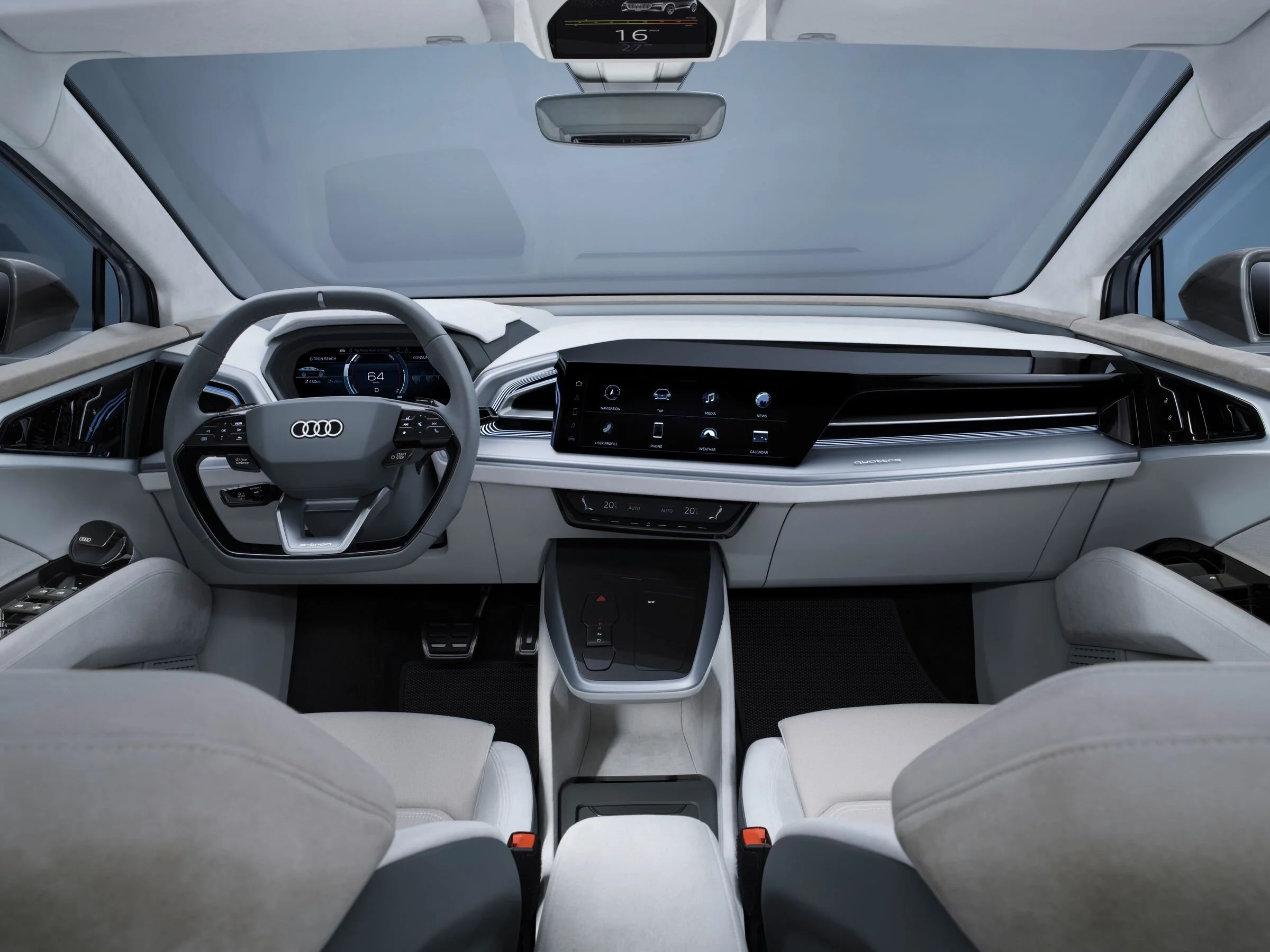
As expected, the Q4 follows in the e-tron SUV’s tyre tracks in making full use of Audi’s virtual cockpit tech; core display elements for speed, charge level, and navigation are located behind the steering wheel but there’s also the new feature of a large-format head-up display with an augmented reality function. It can display important graphical information, such as directional arrows for turning, directly on the course of the road.

Control panels designed as touch elements on the steering wheel spokes can be used to select frequently used functions. In the middle above the centre console, there is a 12.3-inch touchscreen via which the infotainment and vehicle functions are displayed and operated, with ventilation controls below.

As the centre console does not need to account for a gear lever or hand brake, it becomes a stowage compartment that includes a cell phone charging cradle. A horizontal area into which the selector button for the transmission mode is integrated also serves as a cover for the front section of the console.


S editions enhance e-tron spark

Audi’s big electric breakthrough is about to achieve extra sizzle.

The e-tron S is the first three-motor electric car.

The e-tron S is the first three-motor electric car.

TWENTY percent of annual volume, perhaps even more at the start.

That’s the prediction Audi New Zealand boss Dean Sheed has expressed for a pair of more potent editions of the all-electric e-tron sports utility. 

Just unveiled on its home turf and set to come on sale in the third quarter of next year, the e-tron S variants are hotted-up versions of the 55 quattro five-door wagon that has been here since last July plus a more rakish Sportback landing in September.

A thorough rework of the standard cars has been required to earn a performance badge that’s historically been the preserve of fizzed-up petrol product sitting one step below the ultimate RS cars.

To achieve the right performance edge, these are the first production electric cars to feature three electric motors. 

Whereas the current e-tron 55 has an electric motor on each axle, the S versions maintain a single up front and has two on the rear.

The full output is around 372kW – against around 300kW for the e-tron 55 on sale here at the moment - and while the top speed is just 210kmh, the step-off is far more … well, electric.

A cited 0-100kmh time of 4.5 seconds places the e-tron S as the second fastest S model Audi presently makes, beaten only by the petrol-gulping S8 sedan. 

Also, as today’s video shows, that oomph out back allows it to doing something else special: It’s an e-tron that’ll drift. 

The cars’ international unveiling this week has prompted the national distributor to speak about its own plans.

Sheed says it is still too early to discuss price in part because local market content has yet to be decided. In the first right-hand-drive market, the United Kingdom, the models place around $20,000 above NZ specification e-tron 55s.

However, he already has no doubt that the S variants will be well placed to lend significant additional zap to the e-tron 55’s sales impact, which in itself has been satisfactory, with 130 registered to date.

The just-landed entry $119,900 e-tron 50 variant, which reduces from a 91kWh battery to a 71kWh unit and drops in range to 305km, is expected to elevate that count and keep Audi in tune with its forecast. More improvement will come with the Sportback releasing in September.

Even so, it’s the S editions that seem set to be the powerbrokers – they’ll achieve two in every five sales almost off the bat, he says, so keeping step with a ratio that also occurs with the S petrol cars. So, hardly niche.

As for e-tron’s overall status? Well, it’s still something of an outsider in terms of what it achieves for overall Audi volume, though that’s simply down to historic perception about electric cars, Sheed believes. 

the e-tron sportback, landing in september, is also achieving S treatment.

the e-tron sportback, landing in september, is also achieving S treatment.

However, there’s positivity the message is getting through and transition occurring.

“EVs are still an education,” he concedes, but acceptance of the path car makers are taking and the sustainability advantages is increasing.

“There is a strong mental shift in respect to EVs in the market … you will see the mainstreaming of EVs over time with or without Government support.” 

Meantime, the e-tron S is expected to be seen as a more powerful alternate to the Jaguar I-Pace and Tesla Model X Long Range, which it matches for acceleration. 

With the S, only the rear motors are used in normal driving, the front motor being reserved for hard acceleration and if the wheels start to lose traction. 

The two rear motors can send varying amounts of power to each wheel as needed, and Audi says the ‘S’ versions are more rear-biased than regular models. 

orange highlights are not mandatory

orange highlights are not mandatory

The extra performance only slightly affects range. Audi says the e-tron S and e-tron S Sportback manage 358 and 363km respectively on a full charge, whereas the 55 quattro versions offer just over 400kms.

S-specific adaptive suspension is fitted, which can adjust the ride height by up to 76mm to best suit the seven driving modes on offer.

As with other e-trons, the ‘S’ variants can replenish off 150kW fast chargers; that kind of hit will restore the battery to 80 percent in around half an hour. 

Thanks to wheel arch extensions, the e-tron S pair are 5cm wider than standard, while S styling touches like aluminium mirror caps and extra trim are fitted.

Automatically opening grilles and vents, which remain closed until they’re needed to improve efficiency. UK models are fitted with 21-inch alloy wheels as standard; 22s being available as an optional extra. It’s hard to imagine the NZ spec coming with anything less.

The local distributor’s desire to deliver plenty of spec is going to be easily achieved with the S. 

The model takes electrically adjustable sports seats upholstered in upmarket Nappa leather and a brushed aluminium trim finisher, with a carbon-fibre version on the options list. The Virtual Cockpit digital display is standard alongside online navigation, and as with the 55 quattro a head-up display and cameras instead of wing mirrors can be specified.


Celebration cars a Kiwi choice

Mazda Japan has allocated NZ 100 centenary special cars – what form they take is up to Kiwi buyers.

2020_100thSV_BRD02_EU_LHD_Concept_MX-5_R360_S.jpg

 LOCAL market allocation of special editions Mazda has created to celebrate a brand milestone is being decided by novel means. 

Customers have the final say about models dress in celebration of the Hiroshima brand hitting a century of existence, since 1960 as an automobile manufacturer.

Auckland-domiciled Mazda New Zealand has explained this in wake of an earlier announcement about the consignment size. 

The only constraint from Japan is that it can take no more than 100 100th Anniversary Editions and that the trim can apply to the nine passenger models it produces – so, if you want a special BT-50 one-tonne ute, bad luck. 

Beyond that, it’s open slather of what provisions nationally in a colour scheme and with equipment that pays homage to Mazda’s first passenger vehicle, the 1960 R360 coupe.

A process that explains why these are being called ‘special’ rather than ‘limited’ editions is also influenced by the production cycle. Mazda being among makers that simply hasn’t capacity to send all the kinds of cars it creates down the line in any one day, so the order deadlines - in August, October and November - are by car line. It’s also why delivery will span the next five months.

2020_100thSV_BRD07A_EU_LHD_Lineup_All_Master_S.jpg

 However, the national customer response already has been so strong already that it is conceivable the whole process could be wrapped up before the mid-August deadline for the first tranche, brand spokespeople say. 

“We’re limited to 100 units all up,” explained marketing services manager Maria Tsao. “But we haven’t been restricted on which models.”

The Anniversary-trimmed Mazda2, Mazda3, Mazda6, CX-3, CX-30, CX-5, CX-8, CX-9 and MX-5 each carry a $1500 premium over their respective donor variants – which are existing Takami editions except where that trim doesn’t avail (so, for Mazda2 and MX-5, Limiteds appear to be the start point).

Anniversary Editions are Snowflake White Pearl on the outside with special badging and wheel caps, burgundy leather seat trim with headrest logo, red floor carpet and floor mats aluminium branding, Anniversary key fob, special edition lower instrument panel trim and white door trim inserts. 

The order book for MX-5s and Mazda6s closes first, in mid-August. CX-5 and CX-8 decisions have to be made by mid-September. Interest in the remaining candidate cars has to be sorted by mid-October. The last cars will be here by January; the first are expected within two months.

2020_100thSV_BRD09_EU_LHD_MX-5_Hubcap_S.jpg

It’s not as confusing as it might sound, Tsao and product and sales planning manager Tim Nalden assure. The beauty is that customers get a level of involvement makers generally don’t allow. As Nalden puts it – this is less about provisioning 100 cars than satisfying 100 customers. 

Mazda NZ has declined to detail what’s hitting the right buttons but says suggestion some cars – the MX-5 being the obvious primary choice - might lend themselves more to favouritism hasn’t really played out so far.

Yes, there’s been elevated interest in the global category best-seller that holds the best residuals of all current models and achieves 4-5 sales a month, yet the potential we’ll see the equivalent of almost three years’ volume in one hit is already remote. 

On the other hand, there’s potential at least a couple of CX-9s might come this way and the idea of a five-star make-over for the budget-minded, city-suited Mazda2 is also looking pretty agreeable to some.

Regardless of the form they take, the Anniversary models will universally make positive environmental impact. For every sale, Mazda New Zealand has pledged to purchase 50 trees from the Trees That Count programme to plant in the “Mazda Native Forest”.

2020_100thSV_BRD11_EU_LHD_Mazda3_Seat_Emboss_S.jpg


NZ cited for Grenadier

The newest defender of old-school off-roading will be seen on Kiwi soil.

INEOSGrenadierImage7bBackdrop.jpg

 WHO will represent Ineos in New Zealand and when its eerily familiar debut product will become available is yet to be sorted.

 Yet Kiwi fans of a certain flavour of old-school off-roader can be assured: Grenadier IS coming. 

That’s the word from a public relations firm based in Australia that has identified itself as acting on behalf of the British company in this part of the world.

A request to Ineos in the United Kingdom to provision clarity about its intentions in New Zealand resulted in comment coming from DecPR.

 Ruth Fletcher, senior account manager for the Sydney firm, assures NZ is a target market for what is essentially a tribute to the now defunct original Land Rover Defender.

 But crucial details remain unfulfilled.

“It’s too early to confirm distribution and market entry timings. 

“It’s too early to confirm distribution plans.

 “But Ineos is evaluating the opportunities to innovate in this area without the constraints of legacy systems.”

Grenadier’s expected to be available from late-2021 or early 2022, first arriving as the four-wheel-drive wagon seen here with the four-door utility format also shown in the official photos coming close behind.

The price is as much under wraps as the interior’s design, but there have been suggestions in Australian media that the wagon model will cost from $NZ74,000. 

The Ineos car brand was spawned by Sir Jim Ratcliffe, founder of a multi-billion dollar British petrochemical company named Ineos and such an avowed fan of a certain Land Rover that he vowed to resurrect its spirit.

Conjecture that his first born would very much be a successor to that model in size and general shape has proven accurate, yet while there are clear design references to the old Defender and a specification that could easily pass for a modernised version of the 1948 original, it’s not so close as to be considered a clone. It obviously also has more than hint of the Mercedes G-Class about it.

The head of design, Toby Ecuyer, does not have a background with the Green oval brand. Rather, he started his career as an architect, and more recently has been designing super yachts.

Ecuyer says he took inspiration from a host of vehicles known for their uncomplicated and honest design approaches. “From Unimogs to military vehicles to aircraft to lorries and vans. To the Willys jeep, obviously, and Land Rover, the Land Cruiser Nissan Patrol, Bronco … literally everything. 

Ineos cites the Grenadier’s purpose has being “to meet the demands of its future owners for a rugged, capable and comfortable go-anywhere working vehicle.” 

Says chef executive Dirk Heilmann about the decision to unveil the shape now: “Showing the design now allows us to focus on the critical next phase of the vehicle’s development, testing its capability and durability. 

“We have a very challenging programme ahead, as we put prototypes through their paces in all conditions, on the way to accumulating some 1.8 million test kilometres over the coming year.”

INEOSGrenadierImage5b.jpg

He figures taking the covers off and “testing ‘in plain sight’ without the need for camouflage wrapping, foam blocks or fake panels” is an added benefit that’ll keep the model in enthusiasts’ minds until actual release.

The Grenadier will be built in Wales on a ladder-frame chassis designed by Austrian automotive design and manufacturing experts Magna Steyr, the world’s foremost automotive contract constructor. Mercedes G-Class, Toyota Supra and BMW Z4, Jaguar I-Pace and E-Pace and BMW 5-Series models are also presently built by Magna Steyr.

The suspension includes Carraro beam axles front and rear, progressive-rate springs with ZF-sourced dampers, and two Universal Velocity joints in a simple, robust, easy to maintain and repair setup.

The frame is constructed from steel and just about every panel from the doors to the bonnet is produced with aluminium – much like the original Defender.

Ineos has sourced its engines from BMW, settling on petrol or diesel straight-six turbocharged units, ‘based on’ the powerplants employed the X5 SUV.  

The potential power output for the petrol is around 250kW and 500Nm of torque, with the diesel available with four turbos to produce almost 300kW and 760Nm. The engines drive through a ZF eight-speed automatic transmission and permanent all-wheel drive system with a low range transfer case and mechanical locking centre differential.

Ineos is also talking about its homage to the past taking a trip into the future, with possibility of it also using fuel cell technology.

The interior is said to be comfortable yet rugged for the expected off-road duties.


New vehicle sales fall confirms Covid-19 recession

Good news and bad in registrations figures for June.

Toyota’s RAV4 was the month’s most popular model.

Toyota’s RAV4 was the month’s most popular model.

JUNE’S new passenger vehicle registrations count is proof the country is in a Covid-caused recession.

The easing of the coronavirus lockdown saw Kiwis resume buying new vehicles in June – but the rate is much lower than for the same period of last year.

Registration statistics supplied by the Motor Industry Association show 11,514 new vehicles being sold last month. 

That represents a 17.5 percent or 2438 unit decline on June last year, although it’s also an improvement on counts for April and May, when 1039 and 8313 registrations were respectively recorded.

Theyear-to-date rate is down 29.1 percent on 2019, says MIA chief executive officer David Crawford.

“The first six months of the year has been a year of two quarters,” he said. “The first quarter saw sales of 32,833 new vehicles – while the April to June quarter has seen just 20,866 new registrations, a reduction of 11,967 units for the quarter.

Crawford added the month of June reflected a steady but weaker market compared to 2019. Sales of both passenger and commercial vehicles were down, confirmation the market is tightening its belt in a recession.

Of the total number of new vehicle registrations in June, 7411 of them were passenger vehicles and SUVs which was down 15.3 percent on 2019 volumes, while registrations of 5103 commercial vehicles were down 21.2 percent on the same time last year.

But commercial vehicles continued to dominate individual sales, with the top three models all being utes – the Ford Ranger with 641 sales, Toyota Hilux with 595 and the Holden Colorado with 482.

Easily the most popular passenger vehicle was the Toyota RAV4 medium SUV which achieved 403 sales, followed by the Kia Sportage and Toyota Corolla.

But while the top three models for the month were the one-tonne utes, overall the top segments for June were dominated by SUVs.  Top spot went to medium-sized SUVs with a 19 percent share, followed by compact SUVs with 18 per cent.

Toyota remains overall market leader with a 16 percent share via 1874 registrations, followed by Holden with 9 per cent and Ford on 8 per cent.

Top 15 in June

Ford Ranger                  641 registrations
Toyota Hilux                 595
Holden Colorado          482
Toyota RAV4                 403
Mitsubishi Triton          390
Kia Sportage                 287
Toyota Hiace                275
Toyota Corolla              271
Nissan Navara               251
Suzuki Swift                  227
Mazda CX-5                  216
Kia Seltos                     202
Hyundai Tucson            191
Nissan X-Trail                179
Mazda BT-50                170     


Santa Fe for an electric age?

Hyundai’s local distributor is keen on the hybrid petrol drivetrains confirmed for the next-generation edition of its popular sports utility.

TM Santa Fe is earmarked for a last quarter arrival here, but nothing’s concrete yet.

TM Santa Fe is earmarked for a last quarter arrival here, but nothing’s concrete yet.

MILD hybrid and plug-in hybrid petrol powerplants will fuel Hyundai New Zealand’s ambition with the updated Santa Fe coming later this year.

Assuming, at least, that brand boss Andy Sinclair’s wish list to include those 1.6-litre powerplants alongside a new version of the 2.2-litre turbodiesel that’s been the core choice for the past three generations is fulfilled by Seoul head office.

Hyundai New Zealand’s general manager says he definitely can see merit in taking his vehicle in a battery-supported direction, and not just because that’s where a big rival – Toyota Highlander – will wholly commit in a new-generation line coming early next year.

“We’d definitely take hybrid. I think it is very important to give our customers a choice.

the new 1.6-litre is designed to marry with hybrid technology

the new 1.6-litre is designed to marry with hybrid technology

“I think it’s great to offer different drivetrains. And being a market leader with electric models already, anything that is available in that format we’d be keen to look at.

“We’re absolutely keen … if it’s available. There is no confirmation yet. Until we get to the final part of actually having spec and price available to us – which will be quite close to the (new model’s) release.”

The car’s release timing is also fluid, thanks to the impact of Covid-19 on car making in South Korea.

All Sinclair can say at the moment is that he expects to have it here by “quarter four.” All going well.

“With Covid-19 a lot of production schedules have understandably changed and because Covid is still strong overseas it has potential for more change, so we really don’t know.”

One likely outcome from the assembly line holdups created by coronavirus closing the Hyundai Group factories and restricting supply of vital components which they outsource from – would you believe – specialists based around Wuhan, in China, is that the Santa Fe might now beat its Kia equivalent to market.

The original gameplan that gave the Sorento a clear head start – which is why the current edition of Kia’s car is in a runout phase that Santa Fe has yet to enter – is now derailed, according to industry informants. Their understanding is that Hyundai sub-brand’s factory having retuned its production to favour larger more important, left-hand-drive markets has pushed Sorento’s local introduction back significantly.

SantaFe(TM)PE-02.jpg

Sinclair said that development was news to him. “My understanding was that it would be out before the Santa Fe.” Not that was important. “We don’t plan around other brands so it never really came into the discussion.”

Having revealed the next Santa Fe’s new look and something about its specification in February, Hyundai has now chosen to release much more detail about the drivetrains.

News about the four-cylinder 2.2-litre diesel is that it has a new fuel injection system and improved internal components, which help to reduce the engine’s friction and improve fuel economy. It mates to a new eight-speed dual-clutch automatic gearbox.

The 1.6-litre is the smallest-capacity engine yet for into the SUV and might seem a world away from the V6 or even 2.4-litre four-cylinder petrols that have powered this model in the past.

Yet the new until hardly a weakling, being turbocharged and though efficiency data has yet to be released, Hyundai has indicated a huge improvement in respect to economy and emissions.

The unit has been designed expressly to work in a hybrid setting and initially comes in a ‘mild’ format, outputting 169kW. This will be in production from the start but will joined next year by the plug-in rechargeable format, which swaps out the 1.49kWh lithium ion battery for a 13.9kWh unit that can be replenished off household mains or a fast charger. The PHEV model’s electric motor makes 97kW in isolation, but the drivetrain’s combined maximum output is 194kW and 350Nm of torque.

Both hybrid powertrains are hitched to a newly developed six-speed automatic transmission, which Hyundai says is both smoother and more fuel efficient than the previous model’s gearbox.

The two engines also feature a new low-pressure exhaust gas recirculation system and continuously variable valve timing, which Hyundai claims improves fuel efficiency by five percent and decreases emissions by 12 percent in its own right.

SantaFe(TM)PE-03.jpg

The hybrids also have the same four-wheel-drive system as the diesel, but are also being built in front-drive format.

The all-wheel drive now takes a terrain mode selector, which offers specific setups for snow, gravel and mud. The drivetrain also comes with three driving modes – Eco, Comfort and Sport – which can deactivate drive to the rear axle to improve fuel efficiency or distribute the engine’s torque across the SUV’s axles for extra stability, sending either 35 percent or 50 percent of the engine’s power to the rear wheels.

The new model is easily picked in the streetscape. What is not so obvious is that it has switched to a completely different platform to that underpinning today’s car. It is going to a platform developed for a Sonata sedan sold in the United States and China.

Due to the platform switch, the Santa Fe has increased in size. It’s 15mm longer, 10mm wider and 5mm taller than the model it replaces, with dimensions of 4785mm, 1900mm and 1685mm respectively. Hyundai says this has unlocked more space in the cabin for passengers, adding an extra 34mm of legroom for rear-seat occupants.

It would seem improbable that the major changes won’t avoid a price impact, but Sinclair says that the current flagship Limited diesel, a $83,990 proposition, firmly holding as the most popular version sold suggests consumers perceive Hyundai as a premium brand.

Santa Fe’s pricing potentially points to the next-size-up Palisade sports utility, an eight-seater that arrives at year-end, standing good chance of becoming the first Hyundai to price above $100,000.

Sinclair would not be drawn on that, but acknowledged “it will take us into a new pricing territory, there’s no doubt. But just what that will be, I don’t know. We have not got any indication from HMC (Hyundai Motor Company) on price.”

So, is comfortable with the prospect? “Well, our biggest-selling Santa Fe is our most expensive one. That’s a fact. Hyundai is a brand that has a premium over Japanese brands. Our customers can see our quality.”


Palisade confirmed for NZ

You think the Santa Fe is substantial? Wait until you meet its big brother.

Large-36538-2020Palisade.jpg

SIXTEEN cupholders, seven USB ports and up to eight seats – plus a brash styling that simply cannot be ignored and potentially a sticker that takes Hyundai into a pricing zone it has never previously breached.

Those are features of the Hyundai Palisade, an even larger sports utility than the well-received Santa Fe that has been confirmed as an addition to the brand’s local line-up, arriving at year-end. 

Designed and initially only designated for North America, but now being made available through South Korea finally bending to a campaign by Australia to put it into right-hand-drive, Palisade is built in front-drive V6 and also provisions in the same mechanical spec preferred by most Santa Fe buyers – so four-wheel-drive, a 2.2-litre turbodiesel and an eight-speed auto.

Auckland-centred Hyundai New Zealand confirmed some months ago it was mulling adding in the Palisade to become the fifth SUV in its line-up and the first to offer eight seats. 

That process has cemented with last week’s confirmation that it will be going into Australia from year-end, coming off the same production line in South Korea that produces NZ-market Santa Fe.

Today the national distributor said it had still to decide on the exact spec and powertrain choices – but conceivably you need only examine what Australia is getting to see the full selection of choice.

Large-36537-2020Palisade.jpg

 It seems safe to assume NZ will take the 2.2-litre four-cylinder turbodiesel, which is in the same tune as it features in the Santa Fe, so cracks out 147kW and 440Nm.

Our neighbour has decided to take the petrol, a 3.8-litre V6 producing 213kW and 355Nm. Given that Hyundai NZ has discontinued the same layout, albeit with a smaller-capacity six, in the latest Santa Fe, this version of Palisade would seem  less likely.

Timing? Not exact dates are being given, but HNZ general manager Andy Sinclair says it’ll be here in time for summer.

So, we’re picking December. As for price? Well They’ve also indicated – and no surprise with this – it’ll sit above Santa Fe, which tops out at $83,990, so expect to spend at least $85,000, if not more. Could it even become the first Hyundai to sell here for more than $100,000?

Hyundai NZ has expressed confidence it can find a ready market for a model that is much larger than the Santa Fe, measuring around 210mm longer with a 180mm longer wheelbase and boot that offers 311 litres space with all three rows up (so, more than double Santa Fe’s capacity in that configuration), or 704L with two rows of seating in use. It is slightly shorter and narrower than the Mazda CX-9 and longer and wider than the current Toyota Highlander, which is set to go into a new generation in early 2021.

Sinclair is calling the Palisade “the ultimate family vehicle for practical, comfortable daily use and venturing further afield for a family roadie” and says it will provide Kiwis “more choice when it comes to buying a vehicle to meet their lifestyle needs.”

The model also stands out as being one of a relative few Hyundai vehicles unlikely to be troubled by a Kia equivalent here. Yes, there certainly is a twin under the skin. Yet the award-winning Telluride is only made in in North America and has been discounted for reconfirmation in left-hand-drive.

Expectation is that Palisade will add a higher, comfort-oriented specification than Santa Fe as well as an extra seat.

Apart from all those cup holders and USB ports, it delivers roof ventilation for all rows, heating and ventilated front and second-row seats and middle-seat delete for the second-row (as a seven-seater with ‘walkthrough’ aisle).

Large-37498-2020Palisade.jpg

There’s also a digital instrument cluster with blind-spot video streaming and a 10.25-inch infotainment screen with Apple CarPlay and Android Auto connectivity, reversing camera and 360-degree cameras. Also expect a host of safety technology including AEB, adaptive cruise control, lane-keeping assist, passenger detection monitors, and more 

Comfort comes via electrically adjustable seats and plenty of Nappa leather. Both second and third-rows get Isofix anchors for child seats, plus tether points, including for the third row. 

North America’s status as the priority market dictated why it launched at the 2018 Los Angeles Motor Show.

The US market is not wholly pinned to an eight-seater configuration. Over Stateside the car also offers as an opulent six-seater, with power folding captain’s chairs in the second and third rows and a ‘sleep mode’ that can mute the back speakers for snoozing passengers also befit its flagship status.

Like the Santa Fe, it features a rear occupant alert system that will beep the horn if ultrasonic sensors detect movement inside the vehicle once locked, helping look after pets and small children.

Large-36545-2020Palisade.jpg


‘Toyota was always the only company I wanted to work for’

His family came to New Zealand for a new life – as incoming CEO of Toyota New Zealand, Neeraj Lala has a similar mission.

KB1_1277.jpg


FROM JULY 1 Toyota New Zealand has a new chief executive –  Neeraj Lala, promoted from the position of chief operating officer, is just the fifth local at the helm in 50 years.

The only son of parents who emigrated from India to a new life in Wellington, Lala came to the country’s largest new passenger vehicle distributor in 1998, virtually directly from the capital’s Victoria University, where he’d gained a Bachelor of Commerce, taking up a role in the IT department.

Working for the brand, then based in Johnsonville and so an easy commute from the family home, was a dream come true for this lifelong car nut inspired, he acknowledges, by the ‘Welcome to Our World’ ad campaign, he imagined he might be there for a few years and then head overseas. 

It didn’t work out that way. Over the years, he has worked in most areas of the Toyota business including Marketing, New Vehicles, Product Planning, IT and Used Vehicles. In 2014, he completed an Executive Master of Business Administration (MBA), finishing top in his class with Distinction from Massey University.
 
Since returning in 2018 from a three-year Executive Leadership programme with Toyota Motor Sales in the United States, Neeraj has been instrumental in driving transformational change at Toyota. The 45-year-old and his wife, Sandy, have also raised two daughters – now teenagers - and a younger son.

We sat down with the new boss to talk about his life and career path, his thoughts about where the car business is heading … and a little about his cars and his family.

MotoringNZ: What does it personally mean to have achieved the role of chief executive officer of the country’s largest new motor vehicle distributor?

Neeraj Lala: “As something I have worked long and hard for, for a long time, it means a huge amount to me. And to my family. We’ve all made quite big sacrifices. 

“It’s quite a humbling privilege to be given an opportunity to continue a really strong legacy built up by (retiring CEO) Alistair Davis, and Bob Field before him.”

Care to guess what this kid grew up to do?

Care to guess what this kid grew up to do?

MotoringNZ: You arrived at Toyota New Zealand in 1998 pretty much fresh from university and went straight into what was then a relatively fledgling IT department – back when this thing called the internet was still something of a foreign territory for even big brands. Did you see TNZ as the life-long home it’s become or was this supposed to be a transition toward a different kind of career? 

Lala: “I’ve always been a car nut and when I was a university student I wanted to work for Toyota, having been seduced by the ‘Welcome to Our World’ campaign. Toyota was always the only company I wanted to work for.

“I never applied for a job with any other company. I worked for the Radio Network for seven or eight months, but it was just a transition job while I was waiting for Toyota to reply to my application.

 “When I got the job I wasn’t aware the company was transitioning from Wellington.

“It was a bit of a shock when my wife and I moved to Palmerston North … we didn’t see Palmerston North as a long-term residence. We initially had the view we might stay here for maybe two years and join our friends, in the United Kingdom or in Australia. 

“But two years turned into four, into six, into 10 ….”

MotoringNZ: You’re from a humble family background; hardworking parents, brought up in a close-knit, proud community. Life lessons tend to influence; what values instilled from your early life that remain important to you? Also, does your rise give you thought to ponder about diversity in the workplace?

Lala: “Mum and dad, who still live in Wellington, came to New Zealand from India when they were teenagers. They migrated for a lot of reasons, including of course to give their kids a better life.

“My three older sisters – who now live in Auckland - and I were all born in Wellington.

“We were also of course quite heavily involved in the Indian community; it was really important to my parents and all of us. It’s a really tight-knit community and they have exceptionally high standards and work to keep the culture alive, though with every new generation there are always little changes.

“My dad wanted his kids to have their own businesses. He told me before I started at Toyota ‘a Japanese car company will never take an Indian seriously.’ And that was because his generation was exposed to a lot of racism. 

“That of course is a very traditional mindset but it is certainly not anything I have experienced or been exposed to. 

“When I was a kid I never saw my Maori mates, my Samoan mates, my European mates or my Chilean mates as being any different to me. In the playground we were one.

“It’s the same at work. If we had a cultural festival at Toyota New Zealand, I think we would have most cultures featuring.

“Even though diversity in the workplace is topical, I believe our process – not through intention or design – has just naturally attracted the best people, and the best people just happen to have a multitude of cultures and interests in their backgrounds. I think that is what makes this place pretty special.”

MotoringNZ: Toyota in New Zealand is as it is in Japan; a powerhouse. How does this ship sail – is strict adherence to head office corporate responsibilities and ideals expected; what allowance do you have to imprint your own aspirations? 

Lala: “One of the things that excited me about coming back from the US is the autonomy and the flexibility that TMC (Toyota Motor Corporation, Japan) provide TNZ with.

“In the US we had a Japanese co-ordinator in almost every division. But TMC see New Zealand as a dojo – an innovation hub – to trial new business processes and opportunities.

“That’s why we have had really strong interest and support for the ‘Drive Happy’ project. It’s a market where we can test and trail exciting new innovations and business models and then be an innovation hub, via TMC, to other distributors around the world.”

MotoringNZ: This is a carefully planned handover – it was clear more than a year ago that you were to be the next on the throne, as it were. All the same, history seems to conspire to ensure these changeovers occur during periods of challenge: Your predecessor assumed the job at the height of the 2008 global financial crisis, you are taking the reins during Covid-19 – does that add to the weight of responsibility.

Lala: “No …. 

 “ … it doesn’t.

“I have had a mentor (based in the US, Dave Oldfield), for 12 years, who I meet with and engage with, and I’ve had Alistair mentor me himself for more than 15 years.

“I knew before I went to the States that this (CEO role) was a likely opportunity, given that Alistair had a done a similar secondment. He mentioned to me early in my career that, because we’re such a small company, the cost of sending somebody overseas is such that you need to make sure than whoever you send is likely to be a successor. That, and when he asked me to undertake my MBA, were signals.

“So, anyway, it’s been a really long tail. When Covid hit I guess those 10 plus years of planning and preparation … well, I won’t say it was by any stretch of the imagination easy (to operate TNZ during lockdown) but the outputs of the training, the mentoring and the programming  … I’m left feeling we have navigated it extremely well. 

“The culture of our company has gone through the roof. The engagement has been unbelievable. And our start-up has been nothing short of exceptional.”

“So, I certainly don’t feel it as a burden. I feel it as an exciting opportunity.”

MotoringNZ: So come 8am, July 1, you’re in the big chair – what’s Job One and what are the immediate challenges facing Toyota NZ that you feel compelled to address?

 Lala: “I feel as there is an opportunity for us to really strengthen the core of our business, to serve our customers better. I know that may sound like a wishy-washy statement, but actually I think a one or two percent increase in every area of our business will give us a huge advantage, not just over out competition, but also to deliver our customers a far better experience.

“So the first job on day one is strengthening our core in areas of operational efficiency.”

MotoringNZ: It’s often said that when a brand is dominant, the only way to go is down – Toyota market share remains at a record high, but volume has diminished in recent years and Lexus has always been a quiet premium circle achiever. How confident are you that Toyota can remain the country’s most-loved car brand and what will keep it there?

Lala: “Actually, our market share has been as high as 24 percent so the fact that we’re currently at 20 percent tells me it’s low.

“I’m not so concerned about volume, because volume in the past has meant we’ve done things that we probably shouldn’t have. Did we over-invest in some channels over others? Possibly. But of course, it was done for a reason of feeding our value chain. I think there’s opportunities for us to grow our market share quite substantially, particularly with the new products we have coming over the next 18 months.

“What will keep us at number one is probably the experience at our stores around the country.

The Gazoo fan club starts here …

The Gazoo fan club starts here …

MotoringNZ: Your passion is for performance is obvious – your most recent daily drive cars have been a Lexus GS F and a Toyota Supra, you returned from a three-year stint with Toyota US with a Corvette ZO6 and you are a huge Gazoo Racing fan. Meantime, your predecessor, Alistair, is perhaps setting a different kind of standard … he drives a Lexus hybrid. Do you follow in his tyre tracks, keep up with the power play or find a happy medium.

Lala: (Laughing) “The first thing I’d say is Alistair’s a huge car guy and a real motorsport nut. You just look in his office; it’s ful of motorsport stuff. And our motorsport programme would not have got off the ground if it wasn’t for Alistair.

“So, while he is a tree-hugger, he’s a tree-hugger car enthusiast! He’s wanted to create his brand around sustainable and low emissions.

“My twist on that is that I see low emissions sustainable product coming though that also deliver the power and performance that excites me. If you look at the plug-in RAV4, the performance makes it a car I would drive.

“Yes, I’m a car guy. I just love cars.” 

MotoringNZ: You’ve often spoken about how Toyota is in transition from being a traditional automaker to a mobility company focused on future technologies – it’s a simple statement describing a journey of huge, probably complex, change. What are the implications for our country?

Lala: “Toyota is in the strongest position to deliver mobility in New Zealand. I say that with real confidence because I truly believe we have the best selection of sustainable products and, more importantly, I think we have the best coverage through the country in terms of accessibility.

“This is all about transitioning customers from (vehicle) ownership, to (vehicle) usage to (vehicle) access. The implications to our country are going to be immense. For cities like Auckland that struggle with congestion, it’s hopefully going to provide some logistics efficiency.

“I think from a personal consumer perspective, the implications here are going to be around how privacy laws evolve. Because, for effective car share, you need to have a transport system that gives you ‘first kilometre’, ‘last kilometre’ transport, as well as your core journey.

“For that to happen, it needs to be inter-modal. For something to be inter-modal, you need to have some data-sharing across different platforms. That has implications for our country but I think we are evolving and moving toward this.

“Contact tracing and social distancing … this Covid crisis, if anything, has widened out lenses to the fact of the likelihood of being tracked. And people are seeing the benefits from a health perspective.

“From a transport perspective, if a system could tell you how you could get off a bus at this time, and onto a train at that time and then into a taxi at another time … well, then the convenience and ease of mobility is what is going to make people more open to the fact that data is going to be shared.

“What implications will that have for our market? Well, it’s probably going to radically change the structure. We are a market of 30 percent private sales and 70 percent fleet or business. Under an effective car share, there are big question marks of leasing and rental, on structures of our current industry that could dramatically change. Which I think is quite exciting.” 

MotoringNZ: Toyota is dominant in hybrids and the sales imprint here is impressive, yet EVs are rising and we’ve all that Green-generated electricity to feed them. Toyota looks more like a follower than a leader with partial and total plug-in vehicles. How long before it and Lexus here have a full EV 

Lala: We’ll have an EV here within the next 18 to 24 months. Just in time for demand.

MotoringNZ: Also, there are a couple of hydrogen fuel cell Mirais in the company garage, apparently sitting idle. NZ also seems keen to get into the hydrogen game; there’s already talk of Palmerston North, your home city, being a ‘hydrogen hub’ – a fuelling centre for medium to heavy transport using this fuel. Can we see your brand hit that road?

Lala: “The hydrogen discussion in NZ is really exciting at the moment. We’ve already had conversations around promoting the energy as a sustainable and viable alternative. But I don’t believe this is something that can be done by just one brand. I see non-traditional alliances forming, that might not have ever been considered. We’re in conversations with the right people for that to happen.

“Does that mean we would support a hydrogen hub in Palemrston North? Maybe. I thinmk it would be a case of seeing what evolves and how it evolves.

New Mirai is available to New Zealand … all we need is an infrastructure to support Toyota’s hydrogen fuel cell technology.

New Mirai is available to New Zealand … all we need is an infrastructure to support Toyota’s hydrogen fuel cell technology.

“As for Mirai? Well there discussions at the moment about whether we will introduce the new Mirai, which was revealed last year, into New Zealand and how we would do that. It is certainly available to us and we are certainly excited about introducing it. But you cannot do that without infrastructure.

“So we have a few ideas with some strategic partners – other car companies and other organisations – about what would the introduction of hydrogen mobility look like.”

MotoringNZ: The work-life balance at corporate level can be challenging. You’re a family guy, living in a typical Kiwi house in a typical Kiwi suburb – you involve in your childrens’ recreational endeavours (No.1 spanner/supporter on your son’s racing kart) and you’ve found a new hobby in photography. Do you fear any of this having to be shelved going forward?

Lala: “I do love getting out and taking landscape photos but haven’t picked my camera up for a long time because my son’s karting has kept me busy.

“My priority is to Toyota and my family and, of course, it’s been quite tough. My daughters and my wife really enjoyed living in the States … my girls didn’t want to go but they’ve struggled with the transition back, as teenagers sometimes do.

“I’m really grateful I have Sandy holding things together and it’s just a case of holding everything in balance. I’ve empowered my management team and my executive team to lead and drive some of the stuff.

“The reality is that I’ll be away a lot so I’m really lucky to have the support of a good family.”


Regime change at Toyota NZ

Neeraj Lala becomes the market leader’s fifth local chief executive in 50 years.

Alistair Davis, left, and Neeraj Lala.

Alistair Davis, left, and Neeraj Lala.

MARKET-dominant Toyota New Zealand and its prestige Lexus affiliate has a new boss. 

Neeraj Lala, at present the Palmerston North-centred brand’s chief operating officer at present, will start work on July 1 in the next step role, as chief executive officer.

In doing so he replaces Alistair Davis, who held the job for 12 years – assuming responsibility from another New Zealander, Bob Field.

Though ostensibly heading into retirement, Davis will follow the same path taken by his own predecessor by retaining a corporate connection, as non-executive chair of the board reporting to Toyota Motor Corporation (TMC) in Japan. 


A Wellington-born married man and father of three, Lala has expressed excitement to take the helm as Toyota transitions from being a traditional car maker into a mobility company focused on future technologies.
 
“It has been a privilege to serve under Alistair’s leadership … and I appreciate his encouragement of my career development at Toyota. Alistair’s focus on people, culture and sustainability is well-embedded in the company and in the leadership team.
 
“I intend to carry on with that core focus, while advocating for an even better use of data and digital assets to get closer to our customers, particularly in these challenging and competitive times,” he says.
 
Mr Davis has called his successor a qualified leader who thrives on challenges and has the energy and vision to inspire and lead the company forward into a changed world.
 
“In Neeraj, Toyota has a well-prepared leader to take the company forward in the post-Covid 19 economy. He is an advocate for new ideas when it comes to how automakers market and sell their products in the 21st century,” he says.
 
Lala is known for being particularly passionate about performance machines - he drives a 2020 Toyota GR Supra - and technology. These interests mirror those of TMC President Akio Toyoda, who has even raced cars under a pseudonym.
 
Lala joined Toyota New Zealand in 1988 as an internet development co-ordinator and has since ascended via almost all areas of the Toyota business including marketing, new vehicles, product planning and used vehicles.

In 2014, he added to the Bachelor of Commerce from Victoria University held when he began employment by completing an Executive Master of Business Administration (MBA), finishing top in his class with distinction.

Between the end of 2014 to 2018 he undertook an executive leadership programme with Toyota Motor Sales in the United States, basing in California.

Since then he has been instrumental in driving transformational change at Toyota.

Mr Davis declined opportunity to be interviewed about his own period of tenure, citing preference for media attention to go to his replacement.


The Mazdas you’ve never heard of

Naming Hiroshima’s biggest hits is easy. Identifying some of its most unexpected and unusual products … well, that’s a whole different challenge, perhaps. Today’s story is about those ‘Q’ (for quirky) efforts.

Hold on a minute … isn’t that a …? Yup, sure is. the mighty Mazda Road Pacer.

Hold on a minute … isn’t that a …? Yup, sure is. the mighty Mazda Road Pacer.

IN 1930 Mazda produced 30 250cc 4-stroke motorbikes - and the prototype won the first race it entered.

 In 1965, it built a futuristic 26 seat ‘glasshouse’ public bus that was unlike its rivals.

 More recently, it created a suitcase car. Yes, really. Luggage that could be driven.

 In the year that Mazda marks its 100th anniversary and celebrates the people, products and achievements of the last century, today’s contribution from the brand’s public relations department offers insight into some of the most unexpected, unusual and little-known vehicles produced by Hiroshima.

 From curious concepts and long-forgotten prototypes to vehicles that actually made production yet were destined to become rarities, this is an odd bunch whose contribution to Mazda’s history reflects engineering ingenuity and a convention-defying spirit.

 The courage to question common practices and forge new paths in engineering and design that others considered unfeasible has driven the team at Mazda since 1920.

 Along the way Mazda was the first Japanese brand to win the Le Mans 24 Hour race, commercially launched the rotary engine in the iconic Cosmo Sport 110S, created the world’s best-selling two seat roadster - the Mazda MX-5 - and with Skyactiv-X introduced the world’s first production compression ignition petrol engine.

 Yet away from these famous significant moments and the countless coupes, sedans, sports cars, family cars, commercial vehicles and roadsters Mazda has become famous for, there’s a hidden story of the projects forgotten by time, so we dig even deeper into the history file to unearth the Mazdas you’ve never heard of. The first of which is the Mazda motorbike, which for a company that today is famed for creating a range of attractively styled and great to drive SUVs and cars, is a real surprise.

 Having started life as a cork products manufacturing company in 1920 before progressing to engineering when industrialist Jujiro Matsuda took charge of Toyo Cork Kogyo Co Ltd in 1921 and transformed the business first into a machine tool producer.

 The progression from here to cars via three-wheeled trikes like the 1931 Mazda Go is relatively well known, but the fact that before this Mazda produced a prototype motorcycle is a little-known paragraph in the Mazda history book.

Motorcycle racing was popular in Japan in the late 20s with most of the bikes imported or assembled in Japan from imported parts. Toyo Kogyo, as Mazda was then known, wanted to build a domestic Japanese bike and began development of a prototype in 1929. A 250cc 2-stroke prototype motorbike was revealed in October, 1930, and to everyone’s surprise it won its first race beating a British-made Ariel, which were one of the most-popular bike brands in the 30s’ and well-respected in Japan.

Motorrad_193o_hires_hires.jpg

Toyo Kogyo went on to produce 30 more motorcycles in 1930, but commercially Matsuda took the decision to instead focus attention on developing the practical Mazda Go three-wheeler, setting the company on the road to success in automobiles rather than motorbikes, and leaving Mazda’s flirtation with motorbikes as a small snippet in the 100-year story of Mazda.

Mazda’s first car also never made it beyond the gestation period either, in 1940 Mazda built a small two-door prototype car called the PKW prototype (below), but the unset of World War II meant it never reached production and Mazda’s post-war reconstruction focused on the production of the Type GA and Type GB three-wheeled Mazda Go inspired three wheeled trucks and their ever bigger and more sophisticated successors.

Mazda_Pkw_Prototyp_1940_hires.jpg

However, amongst these successful and popular three-wheeled trike trucks Mazda also produced another one of its little-known four-wheeled pioneers – the Type-CA one-ton four-wheeled truck, which was a small open sided canvas roofed, split-screen open-decked truck that bore some resemblance to a Willys Jeep. It predated Mazda’s first production car the R360 Coupe by ten years and wasn’t as famous as Mazda’s three-wheeled trucks.

While the 1960 Mazda R360 was Mazda’s first car and started a lineage that leads all the way to today’s range, Mazda’s history includes commercial vans, pick-ups and light trucks. But while the smaller mini-bus vehicles based on the different generations of Mazda Bongo are relatively well-known, other bus models fall into the ‘Mazdas you’ve never heard of category’.

Mazda sold its first bus in 1960, it was a 13-seater (below) based on the D1500 cab-over compact truck and was sold to the Japanese Defence Agency. The interior was flexible enough that with the seats folded it was designed to transport injured soldiers on stretchers, and the D1500 bus was exported to the Middle East with centre-opening freestyle doors at the back that enhanced its usability as an ambulance.

1960D 1500 Mazdabus.jpg

Mazda’s first bus for general public use was the 1965 25-seater Mazda Light Bus Type-A. Based on a concept shown at the 1964 Tokyo Motor Show, with its huge curved laminated safety glass windscreen and futuristic styling it was a world away from the traditional buses found in Europe in the 60s. Into the 1970s Mazda continued to produce upscale mini-buses using the Parkway model name and in 1974 even introduced the world’s first rotary engine powered bus: the Parkway 26.

Incredibly, as futuristic as the 1965 Light Bus looked and as unique as the 1974 rotary Parkway bus was, both looked positively conventional compared to the 1974 Mazda CVS Personal Car Concept. Mazda’s look into transportation possibilities outside the realm of driver-controlled vehicles, CVS stood for computer-controlled vehicle system, and the CVS was a wheel at each corner box with sliding doors and a spacious interior designed for passenger comfort, including big leather chairs and a telephone.

However, forward-looking computer-controlled transport pods weren’t the only 70s oddities that fall into the Mazdas you’ve never heard of category

MazdaRoadpacer.jpg

Created to meet Mazda’s desire to have a large executive car to be used by Japanese government officials, the little-known Mazda Road Pacer AP was launched in 1975. It used Holden HJ bodies, which were shipped to Japan without engines, whereupon Mazda fitted the 135ps 13B rotary engine. 

Designed to take on the grandly named Toyota Century, Nissan President and Isuzu Statesman De Ville, the Road Pacer AP featured luxuries such as speed related central locking and even an inbuilt dictation machine. Only sold in Japan, just 800 were produced between 1975 and 1977.

MazdaPathfinder.jpg

 Another global anomaly in Mazda’s history is the Mazda Pathfinder (above), a traditional 4X4 exclusively assembled and sold in Burma it was a rugged off-roader popular with the military and police. Powered by a 90ps engine it was offered with either a canvas roof or as enclosed nine-seat version, largely unknown in the rest of the world, a few can still be seen on the roads of Myanmar today.        

suitcasecar(2).jpg

Even stranger than the Burmese built off-roader, futuristic bus or the Australian based limousine is the 1991 Mazda Suitcase Car. The development of a functioning car built into a piece of luggage came about thanks to the 1991 ‘Fantasy yard’ event - an inter-departmental contest to see which group of Mazda employees could come up with the most innovative and creative solution to produce a moving machine.

A select group of seven engineers from Mazda’s manual transmission testing and research group purchased the largest Samsonite suitcase they could find and a quarter size pocket motorbike and set to work on their idea. The 33.6cc two-stroke engine, handlebars from the minibike were fitted into the suitcase, with the rear wheels slotted onto the outside of the case, while the front wheel would pop through a removable hatch in the front. The suitcase car took just minutes to assemble and had a top speed of 30kmh, while the original prototype was accidentally destroyed just a few months after the ‘Fantasy Yard’ event, one Mazda suitcase car still remains in existence.

1993_Mazda_London_Taxi_02.jpg

 The same sense of freedom of thinking for engineers and designers that led to a collaboration with the London Royal College of Art in 1993 to sponsor their design project to design to come up with a taxi concept for a future (above) where space would restrict vehicle size. While not an official Mazda concept, Mazda assisted by building the prototype, which was a futuristic looking narrow-track pod shaped mini-car, that was 20 years ahead of its time.  

Many of these oddities are a distant memory nowadays, but alongside the more famous models, competition success and records they form part of the history of Mazda - an independent car brand that has always pushed the boundaries of design and engineering to create award-winning vehicles and unique products.

Today, Mazda continues to defy convention to make things better, and as the firm enters its second century, the ingenuity and passion for automotive excellence that has flowed through the Mazda company for its first 100 years is still at the heart of everything the company does.