Celebration cars a Kiwi choice

Mazda Japan has allocated NZ 100 centenary special cars – what form they take is up to Kiwi buyers.

2020_100thSV_BRD02_EU_LHD_Concept_MX-5_R360_S.jpg

 LOCAL market allocation of special editions Mazda has created to celebrate a brand milestone is being decided by novel means. 

Customers have the final say about models dress in celebration of the Hiroshima brand hitting a century of existence, since 1960 as an automobile manufacturer.

Auckland-domiciled Mazda New Zealand has explained this in wake of an earlier announcement about the consignment size. 

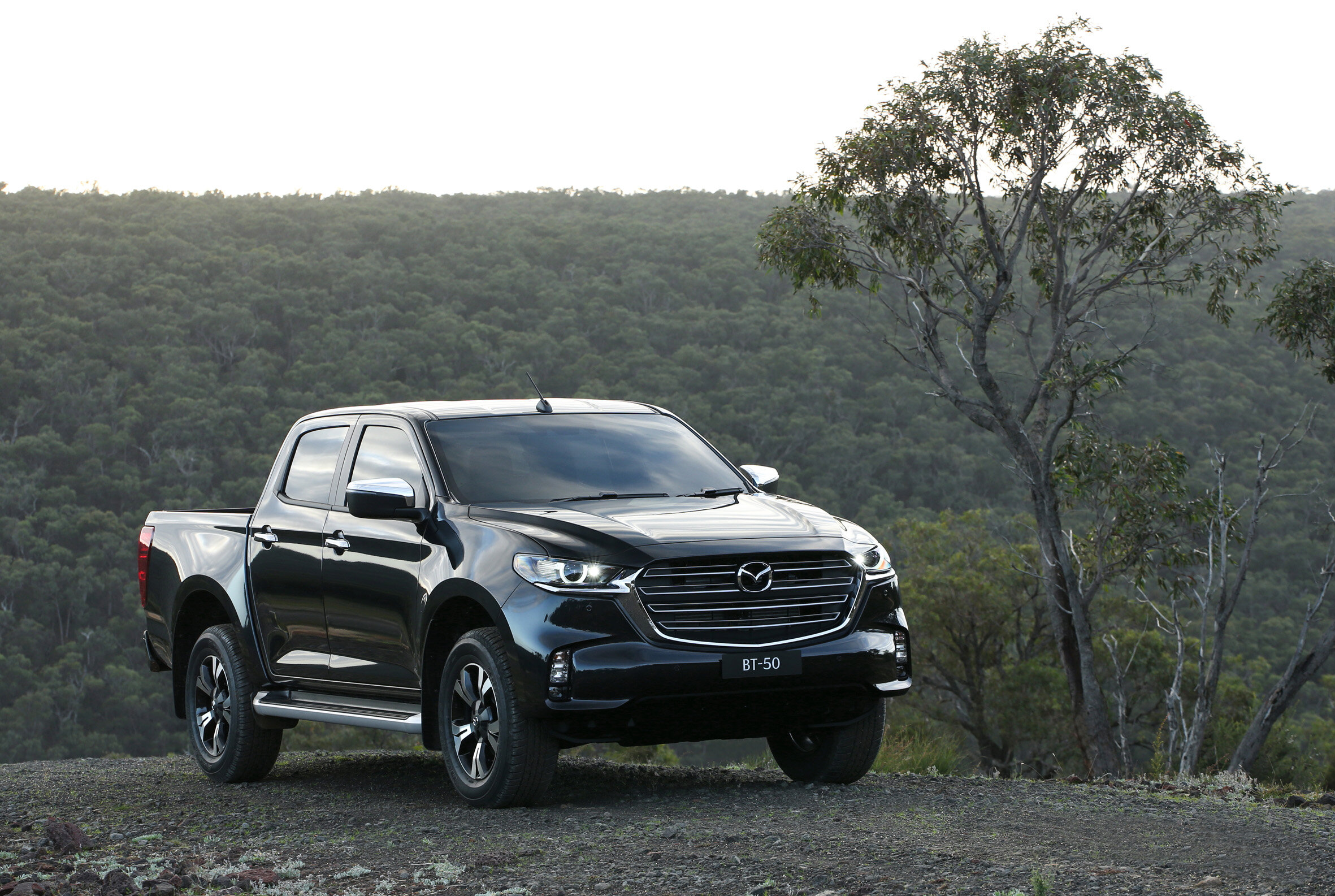
The only constraint from Japan is that it can take no more than 100 100th Anniversary Editions and that the trim can apply to the nine passenger models it produces – so, if you want a special BT-50 one-tonne ute, bad luck. 

Beyond that, it’s open slather of what provisions nationally in a colour scheme and with equipment that pays homage to Mazda’s first passenger vehicle, the 1960 R360 coupe.

A process that explains why these are being called ‘special’ rather than ‘limited’ editions is also influenced by the production cycle. Mazda being among makers that simply hasn’t capacity to send all the kinds of cars it creates down the line in any one day, so the order deadlines - in August, October and November - are by car line. It’s also why delivery will span the next five months.

2020_100thSV_BRD07A_EU_LHD_Lineup_All_Master_S.jpg

 However, the national customer response already has been so strong already that it is conceivable the whole process could be wrapped up before the mid-August deadline for the first tranche, brand spokespeople say. 

“We’re limited to 100 units all up,” explained marketing services manager Maria Tsao. “But we haven’t been restricted on which models.”

The Anniversary-trimmed Mazda2, Mazda3, Mazda6, CX-3, CX-30, CX-5, CX-8, CX-9 and MX-5 each carry a $1500 premium over their respective donor variants – which are existing Takami editions except where that trim doesn’t avail (so, for Mazda2 and MX-5, Limiteds appear to be the start point).

Anniversary Editions are Snowflake White Pearl on the outside with special badging and wheel caps, burgundy leather seat trim with headrest logo, red floor carpet and floor mats aluminium branding, Anniversary key fob, special edition lower instrument panel trim and white door trim inserts. 

The order book for MX-5s and Mazda6s closes first, in mid-August. CX-5 and CX-8 decisions have to be made by mid-September. Interest in the remaining candidate cars has to be sorted by mid-October. The last cars will be here by January; the first are expected within two months.

2020_100thSV_BRD09_EU_LHD_MX-5_Hubcap_S.jpg

It’s not as confusing as it might sound, Tsao and product and sales planning manager Tim Nalden assure. The beauty is that customers get a level of involvement makers generally don’t allow. As Nalden puts it – this is less about provisioning 100 cars than satisfying 100 customers. 

Mazda NZ has declined to detail what’s hitting the right buttons but says suggestion some cars – the MX-5 being the obvious primary choice - might lend themselves more to favouritism hasn’t really played out so far.

Yes, there’s been elevated interest in the global category best-seller that holds the best residuals of all current models and achieves 4-5 sales a month, yet the potential we’ll see the equivalent of almost three years’ volume in one hit is already remote. 

On the other hand, there’s potential at least a couple of CX-9s might come this way and the idea of a five-star make-over for the budget-minded, city-suited Mazda2 is also looking pretty agreeable to some.

Regardless of the form they take, the Anniversary models will universally make positive environmental impact. For every sale, Mazda New Zealand has pledged to purchase 50 trees from the Trees That Count programme to plant in the “Mazda Native Forest”.

2020_100thSV_BRD11_EU_LHD_Mazda3_Seat_Emboss_S.jpg


NZ cited for Grenadier

The newest defender of old-school off-roading will be seen on Kiwi soil.

INEOSGrenadierImage7bBackdrop.jpg

 WHO will represent Ineos in New Zealand and when its eerily familiar debut product will become available is yet to be sorted.

 Yet Kiwi fans of a certain flavour of old-school off-roader can be assured: Grenadier IS coming. 

That’s the word from a public relations firm based in Australia that has identified itself as acting on behalf of the British company in this part of the world.

A request to Ineos in the United Kingdom to provision clarity about its intentions in New Zealand resulted in comment coming from DecPR.

 Ruth Fletcher, senior account manager for the Sydney firm, assures NZ is a target market for what is essentially a tribute to the now defunct original Land Rover Defender.

 But crucial details remain unfulfilled.

“It’s too early to confirm distribution and market entry timings. 

“It’s too early to confirm distribution plans.

 “But Ineos is evaluating the opportunities to innovate in this area without the constraints of legacy systems.”

Grenadier’s expected to be available from late-2021 or early 2022, first arriving as the four-wheel-drive wagon seen here with the four-door utility format also shown in the official photos coming close behind.

The price is as much under wraps as the interior’s design, but there have been suggestions in Australian media that the wagon model will cost from $NZ74,000. 

The Ineos car brand was spawned by Sir Jim Ratcliffe, founder of a multi-billion dollar British petrochemical company named Ineos and such an avowed fan of a certain Land Rover that he vowed to resurrect its spirit.

Conjecture that his first born would very much be a successor to that model in size and general shape has proven accurate, yet while there are clear design references to the old Defender and a specification that could easily pass for a modernised version of the 1948 original, it’s not so close as to be considered a clone. It obviously also has more than hint of the Mercedes G-Class about it.

The head of design, Toby Ecuyer, does not have a background with the Green oval brand. Rather, he started his career as an architect, and more recently has been designing super yachts.

Ecuyer says he took inspiration from a host of vehicles known for their uncomplicated and honest design approaches. “From Unimogs to military vehicles to aircraft to lorries and vans. To the Willys jeep, obviously, and Land Rover, the Land Cruiser Nissan Patrol, Bronco … literally everything. 

Ineos cites the Grenadier’s purpose has being “to meet the demands of its future owners for a rugged, capable and comfortable go-anywhere working vehicle.” 

Says chef executive Dirk Heilmann about the decision to unveil the shape now: “Showing the design now allows us to focus on the critical next phase of the vehicle’s development, testing its capability and durability. 

“We have a very challenging programme ahead, as we put prototypes through their paces in all conditions, on the way to accumulating some 1.8 million test kilometres over the coming year.”

INEOSGrenadierImage5b.jpg

He figures taking the covers off and “testing ‘in plain sight’ without the need for camouflage wrapping, foam blocks or fake panels” is an added benefit that’ll keep the model in enthusiasts’ minds until actual release.

The Grenadier will be built in Wales on a ladder-frame chassis designed by Austrian automotive design and manufacturing experts Magna Steyr, the world’s foremost automotive contract constructor. Mercedes G-Class, Toyota Supra and BMW Z4, Jaguar I-Pace and E-Pace and BMW 5-Series models are also presently built by Magna Steyr.

The suspension includes Carraro beam axles front and rear, progressive-rate springs with ZF-sourced dampers, and two Universal Velocity joints in a simple, robust, easy to maintain and repair setup.

The frame is constructed from steel and just about every panel from the doors to the bonnet is produced with aluminium – much like the original Defender.

Ineos has sourced its engines from BMW, settling on petrol or diesel straight-six turbocharged units, ‘based on’ the powerplants employed the X5 SUV.  

The potential power output for the petrol is around 250kW and 500Nm of torque, with the diesel available with four turbos to produce almost 300kW and 760Nm. The engines drive through a ZF eight-speed automatic transmission and permanent all-wheel drive system with a low range transfer case and mechanical locking centre differential.

Ineos is also talking about its homage to the past taking a trip into the future, with possibility of it also using fuel cell technology.

The interior is said to be comfortable yet rugged for the expected off-road duties.


New vehicle sales fall confirms Covid-19 recession

Good news and bad in registrations figures for June.

Toyota’s RAV4 was the month’s most popular model.

Toyota’s RAV4 was the month’s most popular model.

JUNE’S new passenger vehicle registrations count is proof the country is in a Covid-caused recession.

The easing of the coronavirus lockdown saw Kiwis resume buying new vehicles in June – but the rate is much lower than for the same period of last year.

Registration statistics supplied by the Motor Industry Association show 11,514 new vehicles being sold last month. 

That represents a 17.5 percent or 2438 unit decline on June last year, although it’s also an improvement on counts for April and May, when 1039 and 8313 registrations were respectively recorded.

Theyear-to-date rate is down 29.1 percent on 2019, says MIA chief executive officer David Crawford.

“The first six months of the year has been a year of two quarters,” he said. “The first quarter saw sales of 32,833 new vehicles – while the April to June quarter has seen just 20,866 new registrations, a reduction of 11,967 units for the quarter.

Crawford added the month of June reflected a steady but weaker market compared to 2019. Sales of both passenger and commercial vehicles were down, confirmation the market is tightening its belt in a recession.

Of the total number of new vehicle registrations in June, 7411 of them were passenger vehicles and SUVs which was down 15.3 percent on 2019 volumes, while registrations of 5103 commercial vehicles were down 21.2 percent on the same time last year.

But commercial vehicles continued to dominate individual sales, with the top three models all being utes – the Ford Ranger with 641 sales, Toyota Hilux with 595 and the Holden Colorado with 482.

Easily the most popular passenger vehicle was the Toyota RAV4 medium SUV which achieved 403 sales, followed by the Kia Sportage and Toyota Corolla.

But while the top three models for the month were the one-tonne utes, overall the top segments for June were dominated by SUVs.  Top spot went to medium-sized SUVs with a 19 percent share, followed by compact SUVs with 18 per cent.

Toyota remains overall market leader with a 16 percent share via 1874 registrations, followed by Holden with 9 per cent and Ford on 8 per cent.

Top 15 in June

Ford Ranger                  641 registrations
Toyota Hilux                 595
Holden Colorado          482
Toyota RAV4                 403
Mitsubishi Triton          390
Kia Sportage                 287
Toyota Hiace                275
Toyota Corolla              271
Nissan Navara               251
Suzuki Swift                  227
Mazda CX-5                  216
Kia Seltos                     202
Hyundai Tucson            191
Nissan X-Trail                179
Mazda BT-50                170     


Santa Fe for an electric age?

Hyundai’s local distributor is keen on the hybrid petrol drivetrains confirmed for the next-generation edition of its popular sports utility.

TM Santa Fe is earmarked for a last quarter arrival here, but nothing’s concrete yet.

TM Santa Fe is earmarked for a last quarter arrival here, but nothing’s concrete yet.

MILD hybrid and plug-in hybrid petrol powerplants will fuel Hyundai New Zealand’s ambition with the updated Santa Fe coming later this year.

Assuming, at least, that brand boss Andy Sinclair’s wish list to include those 1.6-litre powerplants alongside a new version of the 2.2-litre turbodiesel that’s been the core choice for the past three generations is fulfilled by Seoul head office.

Hyundai New Zealand’s general manager says he definitely can see merit in taking his vehicle in a battery-supported direction, and not just because that’s where a big rival – Toyota Highlander – will wholly commit in a new-generation line coming early next year.

“We’d definitely take hybrid. I think it is very important to give our customers a choice.

the new 1.6-litre is designed to marry with hybrid technology

the new 1.6-litre is designed to marry with hybrid technology

“I think it’s great to offer different drivetrains. And being a market leader with electric models already, anything that is available in that format we’d be keen to look at.

“We’re absolutely keen … if it’s available. There is no confirmation yet. Until we get to the final part of actually having spec and price available to us – which will be quite close to the (new model’s) release.”

The car’s release timing is also fluid, thanks to the impact of Covid-19 on car making in South Korea.

All Sinclair can say at the moment is that he expects to have it here by “quarter four.” All going well.

“With Covid-19 a lot of production schedules have understandably changed and because Covid is still strong overseas it has potential for more change, so we really don’t know.”

One likely outcome from the assembly line holdups created by coronavirus closing the Hyundai Group factories and restricting supply of vital components which they outsource from – would you believe – specialists based around Wuhan, in China, is that the Santa Fe might now beat its Kia equivalent to market.

The original gameplan that gave the Sorento a clear head start – which is why the current edition of Kia’s car is in a runout phase that Santa Fe has yet to enter – is now derailed, according to industry informants. Their understanding is that Hyundai sub-brand’s factory having retuned its production to favour larger more important, left-hand-drive markets has pushed Sorento’s local introduction back significantly.

SantaFe(TM)PE-02.jpg

Sinclair said that development was news to him. “My understanding was that it would be out before the Santa Fe.” Not that was important. “We don’t plan around other brands so it never really came into the discussion.”

Having revealed the next Santa Fe’s new look and something about its specification in February, Hyundai has now chosen to release much more detail about the drivetrains.

News about the four-cylinder 2.2-litre diesel is that it has a new fuel injection system and improved internal components, which help to reduce the engine’s friction and improve fuel economy. It mates to a new eight-speed dual-clutch automatic gearbox.

The 1.6-litre is the smallest-capacity engine yet for into the SUV and might seem a world away from the V6 or even 2.4-litre four-cylinder petrols that have powered this model in the past.

Yet the new until hardly a weakling, being turbocharged and though efficiency data has yet to be released, Hyundai has indicated a huge improvement in respect to economy and emissions.

The unit has been designed expressly to work in a hybrid setting and initially comes in a ‘mild’ format, outputting 169kW. This will be in production from the start but will joined next year by the plug-in rechargeable format, which swaps out the 1.49kWh lithium ion battery for a 13.9kWh unit that can be replenished off household mains or a fast charger. The PHEV model’s electric motor makes 97kW in isolation, but the drivetrain’s combined maximum output is 194kW and 350Nm of torque.

Both hybrid powertrains are hitched to a newly developed six-speed automatic transmission, which Hyundai says is both smoother and more fuel efficient than the previous model’s gearbox.

The two engines also feature a new low-pressure exhaust gas recirculation system and continuously variable valve timing, which Hyundai claims improves fuel efficiency by five percent and decreases emissions by 12 percent in its own right.

SantaFe(TM)PE-03.jpg

The hybrids also have the same four-wheel-drive system as the diesel, but are also being built in front-drive format.

The all-wheel drive now takes a terrain mode selector, which offers specific setups for snow, gravel and mud. The drivetrain also comes with three driving modes – Eco, Comfort and Sport – which can deactivate drive to the rear axle to improve fuel efficiency or distribute the engine’s torque across the SUV’s axles for extra stability, sending either 35 percent or 50 percent of the engine’s power to the rear wheels.

The new model is easily picked in the streetscape. What is not so obvious is that it has switched to a completely different platform to that underpinning today’s car. It is going to a platform developed for a Sonata sedan sold in the United States and China.

Due to the platform switch, the Santa Fe has increased in size. It’s 15mm longer, 10mm wider and 5mm taller than the model it replaces, with dimensions of 4785mm, 1900mm and 1685mm respectively. Hyundai says this has unlocked more space in the cabin for passengers, adding an extra 34mm of legroom for rear-seat occupants.

It would seem improbable that the major changes won’t avoid a price impact, but Sinclair says that the current flagship Limited diesel, a $83,990 proposition, firmly holding as the most popular version sold suggests consumers perceive Hyundai as a premium brand.

Santa Fe’s pricing potentially points to the next-size-up Palisade sports utility, an eight-seater that arrives at year-end, standing good chance of becoming the first Hyundai to price above $100,000.

Sinclair would not be drawn on that, but acknowledged “it will take us into a new pricing territory, there’s no doubt. But just what that will be, I don’t know. We have not got any indication from HMC (Hyundai Motor Company) on price.”

So, is comfortable with the prospect? “Well, our biggest-selling Santa Fe is our most expensive one. That’s a fact. Hyundai is a brand that has a premium over Japanese brands. Our customers can see our quality.”


Palisade confirmed for NZ

You think the Santa Fe is substantial? Wait until you meet its big brother.

Large-36538-2020Palisade.jpg

SIXTEEN cupholders, seven USB ports and up to eight seats – plus a brash styling that simply cannot be ignored and potentially a sticker that takes Hyundai into a pricing zone it has never previously breached.

Those are features of the Hyundai Palisade, an even larger sports utility than the well-received Santa Fe that has been confirmed as an addition to the brand’s local line-up, arriving at year-end. 

Designed and initially only designated for North America, but now being made available through South Korea finally bending to a campaign by Australia to put it into right-hand-drive, Palisade is built in front-drive V6 and also provisions in the same mechanical spec preferred by most Santa Fe buyers – so four-wheel-drive, a 2.2-litre turbodiesel and an eight-speed auto.

Auckland-centred Hyundai New Zealand confirmed some months ago it was mulling adding in the Palisade to become the fifth SUV in its line-up and the first to offer eight seats. 

That process has cemented with last week’s confirmation that it will be going into Australia from year-end, coming off the same production line in South Korea that produces NZ-market Santa Fe.

Today the national distributor said it had still to decide on the exact spec and powertrain choices – but conceivably you need only examine what Australia is getting to see the full selection of choice.

Large-36537-2020Palisade.jpg

 It seems safe to assume NZ will take the 2.2-litre four-cylinder turbodiesel, which is in the same tune as it features in the Santa Fe, so cracks out 147kW and 440Nm.

Our neighbour has decided to take the petrol, a 3.8-litre V6 producing 213kW and 355Nm. Given that Hyundai NZ has discontinued the same layout, albeit with a smaller-capacity six, in the latest Santa Fe, this version of Palisade would seem  less likely.

Timing? Not exact dates are being given, but HNZ general manager Andy Sinclair says it’ll be here in time for summer.

So, we’re picking December. As for price? Well They’ve also indicated – and no surprise with this – it’ll sit above Santa Fe, which tops out at $83,990, so expect to spend at least $85,000, if not more. Could it even become the first Hyundai to sell here for more than $100,000?

Hyundai NZ has expressed confidence it can find a ready market for a model that is much larger than the Santa Fe, measuring around 210mm longer with a 180mm longer wheelbase and boot that offers 311 litres space with all three rows up (so, more than double Santa Fe’s capacity in that configuration), or 704L with two rows of seating in use. It is slightly shorter and narrower than the Mazda CX-9 and longer and wider than the current Toyota Highlander, which is set to go into a new generation in early 2021.

Sinclair is calling the Palisade “the ultimate family vehicle for practical, comfortable daily use and venturing further afield for a family roadie” and says it will provide Kiwis “more choice when it comes to buying a vehicle to meet their lifestyle needs.”

The model also stands out as being one of a relative few Hyundai vehicles unlikely to be troubled by a Kia equivalent here. Yes, there certainly is a twin under the skin. Yet the award-winning Telluride is only made in in North America and has been discounted for reconfirmation in left-hand-drive.

Expectation is that Palisade will add a higher, comfort-oriented specification than Santa Fe as well as an extra seat.

Apart from all those cup holders and USB ports, it delivers roof ventilation for all rows, heating and ventilated front and second-row seats and middle-seat delete for the second-row (as a seven-seater with ‘walkthrough’ aisle).

Large-37498-2020Palisade.jpg

There’s also a digital instrument cluster with blind-spot video streaming and a 10.25-inch infotainment screen with Apple CarPlay and Android Auto connectivity, reversing camera and 360-degree cameras. Also expect a host of safety technology including AEB, adaptive cruise control, lane-keeping assist, passenger detection monitors, and more 

Comfort comes via electrically adjustable seats and plenty of Nappa leather. Both second and third-rows get Isofix anchors for child seats, plus tether points, including for the third row. 

North America’s status as the priority market dictated why it launched at the 2018 Los Angeles Motor Show.

The US market is not wholly pinned to an eight-seater configuration. Over Stateside the car also offers as an opulent six-seater, with power folding captain’s chairs in the second and third rows and a ‘sleep mode’ that can mute the back speakers for snoozing passengers also befit its flagship status.

Like the Santa Fe, it features a rear occupant alert system that will beep the horn if ultrasonic sensors detect movement inside the vehicle once locked, helping look after pets and small children.

Large-36545-2020Palisade.jpg


‘Toyota was always the only company I wanted to work for’

His family came to New Zealand for a new life – as incoming CEO of Toyota New Zealand, Neeraj Lala has a similar mission.

KB1_1277.jpg


FROM JULY 1 Toyota New Zealand has a new chief executive –  Neeraj Lala, promoted from the position of chief operating officer, is just the fifth local at the helm in 50 years.

The only son of parents who emigrated from India to a new life in Wellington, Lala came to the country’s largest new passenger vehicle distributor in 1998, virtually directly from the capital’s Victoria University, where he’d gained a Bachelor of Commerce, taking up a role in the IT department.

Working for the brand, then based in Johnsonville and so an easy commute from the family home, was a dream come true for this lifelong car nut inspired, he acknowledges, by the ‘Welcome to Our World’ ad campaign, he imagined he might be there for a few years and then head overseas. 

It didn’t work out that way. Over the years, he has worked in most areas of the Toyota business including Marketing, New Vehicles, Product Planning, IT and Used Vehicles. In 2014, he completed an Executive Master of Business Administration (MBA), finishing top in his class with Distinction from Massey University.
 
Since returning in 2018 from a three-year Executive Leadership programme with Toyota Motor Sales in the United States, Neeraj has been instrumental in driving transformational change at Toyota. The 45-year-old and his wife, Sandy, have also raised two daughters – now teenagers - and a younger son.

We sat down with the new boss to talk about his life and career path, his thoughts about where the car business is heading … and a little about his cars and his family.

MotoringNZ: What does it personally mean to have achieved the role of chief executive officer of the country’s largest new motor vehicle distributor?

Neeraj Lala: “As something I have worked long and hard for, for a long time, it means a huge amount to me. And to my family. We’ve all made quite big sacrifices. 

“It’s quite a humbling privilege to be given an opportunity to continue a really strong legacy built up by (retiring CEO) Alistair Davis, and Bob Field before him.”

Care to guess what this kid grew up to do?

Care to guess what this kid grew up to do?

MotoringNZ: You arrived at Toyota New Zealand in 1998 pretty much fresh from university and went straight into what was then a relatively fledgling IT department – back when this thing called the internet was still something of a foreign territory for even big brands. Did you see TNZ as the life-long home it’s become or was this supposed to be a transition toward a different kind of career? 

Lala: “I’ve always been a car nut and when I was a university student I wanted to work for Toyota, having been seduced by the ‘Welcome to Our World’ campaign. Toyota was always the only company I wanted to work for.

“I never applied for a job with any other company. I worked for the Radio Network for seven or eight months, but it was just a transition job while I was waiting for Toyota to reply to my application.

 “When I got the job I wasn’t aware the company was transitioning from Wellington.

“It was a bit of a shock when my wife and I moved to Palmerston North … we didn’t see Palmerston North as a long-term residence. We initially had the view we might stay here for maybe two years and join our friends, in the United Kingdom or in Australia. 

“But two years turned into four, into six, into 10 ….”

MotoringNZ: You’re from a humble family background; hardworking parents, brought up in a close-knit, proud community. Life lessons tend to influence; what values instilled from your early life that remain important to you? Also, does your rise give you thought to ponder about diversity in the workplace?

Lala: “Mum and dad, who still live in Wellington, came to New Zealand from India when they were teenagers. They migrated for a lot of reasons, including of course to give their kids a better life.

“My three older sisters – who now live in Auckland - and I were all born in Wellington.

“We were also of course quite heavily involved in the Indian community; it was really important to my parents and all of us. It’s a really tight-knit community and they have exceptionally high standards and work to keep the culture alive, though with every new generation there are always little changes.

“My dad wanted his kids to have their own businesses. He told me before I started at Toyota ‘a Japanese car company will never take an Indian seriously.’ And that was because his generation was exposed to a lot of racism. 

“That of course is a very traditional mindset but it is certainly not anything I have experienced or been exposed to. 

“When I was a kid I never saw my Maori mates, my Samoan mates, my European mates or my Chilean mates as being any different to me. In the playground we were one.

“It’s the same at work. If we had a cultural festival at Toyota New Zealand, I think we would have most cultures featuring.

“Even though diversity in the workplace is topical, I believe our process – not through intention or design – has just naturally attracted the best people, and the best people just happen to have a multitude of cultures and interests in their backgrounds. I think that is what makes this place pretty special.”

MotoringNZ: Toyota in New Zealand is as it is in Japan; a powerhouse. How does this ship sail – is strict adherence to head office corporate responsibilities and ideals expected; what allowance do you have to imprint your own aspirations? 

Lala: “One of the things that excited me about coming back from the US is the autonomy and the flexibility that TMC (Toyota Motor Corporation, Japan) provide TNZ with.

“In the US we had a Japanese co-ordinator in almost every division. But TMC see New Zealand as a dojo – an innovation hub – to trial new business processes and opportunities.

“That’s why we have had really strong interest and support for the ‘Drive Happy’ project. It’s a market where we can test and trail exciting new innovations and business models and then be an innovation hub, via TMC, to other distributors around the world.”

MotoringNZ: This is a carefully planned handover – it was clear more than a year ago that you were to be the next on the throne, as it were. All the same, history seems to conspire to ensure these changeovers occur during periods of challenge: Your predecessor assumed the job at the height of the 2008 global financial crisis, you are taking the reins during Covid-19 – does that add to the weight of responsibility.

Lala: “No …. 

 “ … it doesn’t.

“I have had a mentor (based in the US, Dave Oldfield), for 12 years, who I meet with and engage with, and I’ve had Alistair mentor me himself for more than 15 years.

“I knew before I went to the States that this (CEO role) was a likely opportunity, given that Alistair had a done a similar secondment. He mentioned to me early in my career that, because we’re such a small company, the cost of sending somebody overseas is such that you need to make sure than whoever you send is likely to be a successor. That, and when he asked me to undertake my MBA, were signals.

“So, anyway, it’s been a really long tail. When Covid hit I guess those 10 plus years of planning and preparation … well, I won’t say it was by any stretch of the imagination easy (to operate TNZ during lockdown) but the outputs of the training, the mentoring and the programming  … I’m left feeling we have navigated it extremely well. 

“The culture of our company has gone through the roof. The engagement has been unbelievable. And our start-up has been nothing short of exceptional.”

“So, I certainly don’t feel it as a burden. I feel it as an exciting opportunity.”

MotoringNZ: So come 8am, July 1, you’re in the big chair – what’s Job One and what are the immediate challenges facing Toyota NZ that you feel compelled to address?

 Lala: “I feel as there is an opportunity for us to really strengthen the core of our business, to serve our customers better. I know that may sound like a wishy-washy statement, but actually I think a one or two percent increase in every area of our business will give us a huge advantage, not just over out competition, but also to deliver our customers a far better experience.

“So the first job on day one is strengthening our core in areas of operational efficiency.”

MotoringNZ: It’s often said that when a brand is dominant, the only way to go is down – Toyota market share remains at a record high, but volume has diminished in recent years and Lexus has always been a quiet premium circle achiever. How confident are you that Toyota can remain the country’s most-loved car brand and what will keep it there?

Lala: “Actually, our market share has been as high as 24 percent so the fact that we’re currently at 20 percent tells me it’s low.

“I’m not so concerned about volume, because volume in the past has meant we’ve done things that we probably shouldn’t have. Did we over-invest in some channels over others? Possibly. But of course, it was done for a reason of feeding our value chain. I think there’s opportunities for us to grow our market share quite substantially, particularly with the new products we have coming over the next 18 months.

“What will keep us at number one is probably the experience at our stores around the country.

The Gazoo fan club starts here …

The Gazoo fan club starts here …

MotoringNZ: Your passion is for performance is obvious – your most recent daily drive cars have been a Lexus GS F and a Toyota Supra, you returned from a three-year stint with Toyota US with a Corvette ZO6 and you are a huge Gazoo Racing fan. Meantime, your predecessor, Alistair, is perhaps setting a different kind of standard … he drives a Lexus hybrid. Do you follow in his tyre tracks, keep up with the power play or find a happy medium.

Lala: (Laughing) “The first thing I’d say is Alistair’s a huge car guy and a real motorsport nut. You just look in his office; it’s ful of motorsport stuff. And our motorsport programme would not have got off the ground if it wasn’t for Alistair.

“So, while he is a tree-hugger, he’s a tree-hugger car enthusiast! He’s wanted to create his brand around sustainable and low emissions.

“My twist on that is that I see low emissions sustainable product coming though that also deliver the power and performance that excites me. If you look at the plug-in RAV4, the performance makes it a car I would drive.

“Yes, I’m a car guy. I just love cars.” 

MotoringNZ: You’ve often spoken about how Toyota is in transition from being a traditional automaker to a mobility company focused on future technologies – it’s a simple statement describing a journey of huge, probably complex, change. What are the implications for our country?

Lala: “Toyota is in the strongest position to deliver mobility in New Zealand. I say that with real confidence because I truly believe we have the best selection of sustainable products and, more importantly, I think we have the best coverage through the country in terms of accessibility.

“This is all about transitioning customers from (vehicle) ownership, to (vehicle) usage to (vehicle) access. The implications to our country are going to be immense. For cities like Auckland that struggle with congestion, it’s hopefully going to provide some logistics efficiency.

“I think from a personal consumer perspective, the implications here are going to be around how privacy laws evolve. Because, for effective car share, you need to have a transport system that gives you ‘first kilometre’, ‘last kilometre’ transport, as well as your core journey.

“For that to happen, it needs to be inter-modal. For something to be inter-modal, you need to have some data-sharing across different platforms. That has implications for our country but I think we are evolving and moving toward this.

“Contact tracing and social distancing … this Covid crisis, if anything, has widened out lenses to the fact of the likelihood of being tracked. And people are seeing the benefits from a health perspective.

“From a transport perspective, if a system could tell you how you could get off a bus at this time, and onto a train at that time and then into a taxi at another time … well, then the convenience and ease of mobility is what is going to make people more open to the fact that data is going to be shared.

“What implications will that have for our market? Well, it’s probably going to radically change the structure. We are a market of 30 percent private sales and 70 percent fleet or business. Under an effective car share, there are big question marks of leasing and rental, on structures of our current industry that could dramatically change. Which I think is quite exciting.” 

MotoringNZ: Toyota is dominant in hybrids and the sales imprint here is impressive, yet EVs are rising and we’ve all that Green-generated electricity to feed them. Toyota looks more like a follower than a leader with partial and total plug-in vehicles. How long before it and Lexus here have a full EV 

Lala: We’ll have an EV here within the next 18 to 24 months. Just in time for demand.

MotoringNZ: Also, there are a couple of hydrogen fuel cell Mirais in the company garage, apparently sitting idle. NZ also seems keen to get into the hydrogen game; there’s already talk of Palmerston North, your home city, being a ‘hydrogen hub’ – a fuelling centre for medium to heavy transport using this fuel. Can we see your brand hit that road?

Lala: “The hydrogen discussion in NZ is really exciting at the moment. We’ve already had conversations around promoting the energy as a sustainable and viable alternative. But I don’t believe this is something that can be done by just one brand. I see non-traditional alliances forming, that might not have ever been considered. We’re in conversations with the right people for that to happen.

“Does that mean we would support a hydrogen hub in Palemrston North? Maybe. I thinmk it would be a case of seeing what evolves and how it evolves.

New Mirai is available to New Zealand … all we need is an infrastructure to support Toyota’s hydrogen fuel cell technology.

New Mirai is available to New Zealand … all we need is an infrastructure to support Toyota’s hydrogen fuel cell technology.

“As for Mirai? Well there discussions at the moment about whether we will introduce the new Mirai, which was revealed last year, into New Zealand and how we would do that. It is certainly available to us and we are certainly excited about introducing it. But you cannot do that without infrastructure.

“So we have a few ideas with some strategic partners – other car companies and other organisations – about what would the introduction of hydrogen mobility look like.”

MotoringNZ: The work-life balance at corporate level can be challenging. You’re a family guy, living in a typical Kiwi house in a typical Kiwi suburb – you involve in your childrens’ recreational endeavours (No.1 spanner/supporter on your son’s racing kart) and you’ve found a new hobby in photography. Do you fear any of this having to be shelved going forward?

Lala: “I do love getting out and taking landscape photos but haven’t picked my camera up for a long time because my son’s karting has kept me busy.

“My priority is to Toyota and my family and, of course, it’s been quite tough. My daughters and my wife really enjoyed living in the States … my girls didn’t want to go but they’ve struggled with the transition back, as teenagers sometimes do.

“I’m really grateful I have Sandy holding things together and it’s just a case of holding everything in balance. I’ve empowered my management team and my executive team to lead and drive some of the stuff.

“The reality is that I’ll be away a lot so I’m really lucky to have the support of a good family.”


Regime change at Toyota NZ

Neeraj Lala becomes the market leader’s fifth local chief executive in 50 years.

Alistair Davis, left, and Neeraj Lala.

Alistair Davis, left, and Neeraj Lala.

MARKET-dominant Toyota New Zealand and its prestige Lexus affiliate has a new boss. 

Neeraj Lala, at present the Palmerston North-centred brand’s chief operating officer at present, will start work on July 1 in the next step role, as chief executive officer.

In doing so he replaces Alistair Davis, who held the job for 12 years – assuming responsibility from another New Zealander, Bob Field.

Though ostensibly heading into retirement, Davis will follow the same path taken by his own predecessor by retaining a corporate connection, as non-executive chair of the board reporting to Toyota Motor Corporation (TMC) in Japan. 


A Wellington-born married man and father of three, Lala has expressed excitement to take the helm as Toyota transitions from being a traditional car maker into a mobility company focused on future technologies.
 
“It has been a privilege to serve under Alistair’s leadership … and I appreciate his encouragement of my career development at Toyota. Alistair’s focus on people, culture and sustainability is well-embedded in the company and in the leadership team.
 
“I intend to carry on with that core focus, while advocating for an even better use of data and digital assets to get closer to our customers, particularly in these challenging and competitive times,” he says.
 
Mr Davis has called his successor a qualified leader who thrives on challenges and has the energy and vision to inspire and lead the company forward into a changed world.
 
“In Neeraj, Toyota has a well-prepared leader to take the company forward in the post-Covid 19 economy. He is an advocate for new ideas when it comes to how automakers market and sell their products in the 21st century,” he says.
 
Lala is known for being particularly passionate about performance machines - he drives a 2020 Toyota GR Supra - and technology. These interests mirror those of TMC President Akio Toyoda, who has even raced cars under a pseudonym.
 
Lala joined Toyota New Zealand in 1988 as an internet development co-ordinator and has since ascended via almost all areas of the Toyota business including marketing, new vehicles, product planning and used vehicles.

In 2014, he added to the Bachelor of Commerce from Victoria University held when he began employment by completing an Executive Master of Business Administration (MBA), finishing top in his class with distinction.

Between the end of 2014 to 2018 he undertook an executive leadership programme with Toyota Motor Sales in the United States, basing in California.

Since then he has been instrumental in driving transformational change at Toyota.

Mr Davis declined opportunity to be interviewed about his own period of tenure, citing preference for media attention to go to his replacement.


The Mazdas you’ve never heard of

Naming Hiroshima’s biggest hits is easy. Identifying some of its most unexpected and unusual products … well, that’s a whole different challenge, perhaps. Today’s story is about those ‘Q’ (for quirky) efforts.

Hold on a minute … isn’t that a …? Yup, sure is. the mighty Mazda Road Pacer.

Hold on a minute … isn’t that a …? Yup, sure is. the mighty Mazda Road Pacer.

IN 1930 Mazda produced 30 250cc 4-stroke motorbikes - and the prototype won the first race it entered.

 In 1965, it built a futuristic 26 seat ‘glasshouse’ public bus that was unlike its rivals.

 More recently, it created a suitcase car. Yes, really. Luggage that could be driven.

 In the year that Mazda marks its 100th anniversary and celebrates the people, products and achievements of the last century, today’s contribution from the brand’s public relations department offers insight into some of the most unexpected, unusual and little-known vehicles produced by Hiroshima.

 From curious concepts and long-forgotten prototypes to vehicles that actually made production yet were destined to become rarities, this is an odd bunch whose contribution to Mazda’s history reflects engineering ingenuity and a convention-defying spirit.

 The courage to question common practices and forge new paths in engineering and design that others considered unfeasible has driven the team at Mazda since 1920.

 Along the way Mazda was the first Japanese brand to win the Le Mans 24 Hour race, commercially launched the rotary engine in the iconic Cosmo Sport 110S, created the world’s best-selling two seat roadster - the Mazda MX-5 - and with Skyactiv-X introduced the world’s first production compression ignition petrol engine.

 Yet away from these famous significant moments and the countless coupes, sedans, sports cars, family cars, commercial vehicles and roadsters Mazda has become famous for, there’s a hidden story of the projects forgotten by time, so we dig even deeper into the history file to unearth the Mazdas you’ve never heard of. The first of which is the Mazda motorbike, which for a company that today is famed for creating a range of attractively styled and great to drive SUVs and cars, is a real surprise.

 Having started life as a cork products manufacturing company in 1920 before progressing to engineering when industrialist Jujiro Matsuda took charge of Toyo Cork Kogyo Co Ltd in 1921 and transformed the business first into a machine tool producer.

 The progression from here to cars via three-wheeled trikes like the 1931 Mazda Go is relatively well known, but the fact that before this Mazda produced a prototype motorcycle is a little-known paragraph in the Mazda history book.

Motorcycle racing was popular in Japan in the late 20s with most of the bikes imported or assembled in Japan from imported parts. Toyo Kogyo, as Mazda was then known, wanted to build a domestic Japanese bike and began development of a prototype in 1929. A 250cc 2-stroke prototype motorbike was revealed in October, 1930, and to everyone’s surprise it won its first race beating a British-made Ariel, which were one of the most-popular bike brands in the 30s’ and well-respected in Japan.

Motorrad_193o_hires_hires.jpg

Toyo Kogyo went on to produce 30 more motorcycles in 1930, but commercially Matsuda took the decision to instead focus attention on developing the practical Mazda Go three-wheeler, setting the company on the road to success in automobiles rather than motorbikes, and leaving Mazda’s flirtation with motorbikes as a small snippet in the 100-year story of Mazda.

Mazda’s first car also never made it beyond the gestation period either, in 1940 Mazda built a small two-door prototype car called the PKW prototype (below), but the unset of World War II meant it never reached production and Mazda’s post-war reconstruction focused on the production of the Type GA and Type GB three-wheeled Mazda Go inspired three wheeled trucks and their ever bigger and more sophisticated successors.

Mazda_Pkw_Prototyp_1940_hires.jpg

However, amongst these successful and popular three-wheeled trike trucks Mazda also produced another one of its little-known four-wheeled pioneers – the Type-CA one-ton four-wheeled truck, which was a small open sided canvas roofed, split-screen open-decked truck that bore some resemblance to a Willys Jeep. It predated Mazda’s first production car the R360 Coupe by ten years and wasn’t as famous as Mazda’s three-wheeled trucks.

While the 1960 Mazda R360 was Mazda’s first car and started a lineage that leads all the way to today’s range, Mazda’s history includes commercial vans, pick-ups and light trucks. But while the smaller mini-bus vehicles based on the different generations of Mazda Bongo are relatively well-known, other bus models fall into the ‘Mazdas you’ve never heard of category’.

Mazda sold its first bus in 1960, it was a 13-seater (below) based on the D1500 cab-over compact truck and was sold to the Japanese Defence Agency. The interior was flexible enough that with the seats folded it was designed to transport injured soldiers on stretchers, and the D1500 bus was exported to the Middle East with centre-opening freestyle doors at the back that enhanced its usability as an ambulance.

1960D 1500 Mazdabus.jpg

Mazda’s first bus for general public use was the 1965 25-seater Mazda Light Bus Type-A. Based on a concept shown at the 1964 Tokyo Motor Show, with its huge curved laminated safety glass windscreen and futuristic styling it was a world away from the traditional buses found in Europe in the 60s. Into the 1970s Mazda continued to produce upscale mini-buses using the Parkway model name and in 1974 even introduced the world’s first rotary engine powered bus: the Parkway 26.

Incredibly, as futuristic as the 1965 Light Bus looked and as unique as the 1974 rotary Parkway bus was, both looked positively conventional compared to the 1974 Mazda CVS Personal Car Concept. Mazda’s look into transportation possibilities outside the realm of driver-controlled vehicles, CVS stood for computer-controlled vehicle system, and the CVS was a wheel at each corner box with sliding doors and a spacious interior designed for passenger comfort, including big leather chairs and a telephone.

However, forward-looking computer-controlled transport pods weren’t the only 70s oddities that fall into the Mazdas you’ve never heard of category

MazdaRoadpacer.jpg

Created to meet Mazda’s desire to have a large executive car to be used by Japanese government officials, the little-known Mazda Road Pacer AP was launched in 1975. It used Holden HJ bodies, which were shipped to Japan without engines, whereupon Mazda fitted the 135ps 13B rotary engine. 

Designed to take on the grandly named Toyota Century, Nissan President and Isuzu Statesman De Ville, the Road Pacer AP featured luxuries such as speed related central locking and even an inbuilt dictation machine. Only sold in Japan, just 800 were produced between 1975 and 1977.

MazdaPathfinder.jpg

 Another global anomaly in Mazda’s history is the Mazda Pathfinder (above), a traditional 4X4 exclusively assembled and sold in Burma it was a rugged off-roader popular with the military and police. Powered by a 90ps engine it was offered with either a canvas roof or as enclosed nine-seat version, largely unknown in the rest of the world, a few can still be seen on the roads of Myanmar today.        

suitcasecar(2).jpg

Even stranger than the Burmese built off-roader, futuristic bus or the Australian based limousine is the 1991 Mazda Suitcase Car. The development of a functioning car built into a piece of luggage came about thanks to the 1991 ‘Fantasy yard’ event - an inter-departmental contest to see which group of Mazda employees could come up with the most innovative and creative solution to produce a moving machine.

A select group of seven engineers from Mazda’s manual transmission testing and research group purchased the largest Samsonite suitcase they could find and a quarter size pocket motorbike and set to work on their idea. The 33.6cc two-stroke engine, handlebars from the minibike were fitted into the suitcase, with the rear wheels slotted onto the outside of the case, while the front wheel would pop through a removable hatch in the front. The suitcase car took just minutes to assemble and had a top speed of 30kmh, while the original prototype was accidentally destroyed just a few months after the ‘Fantasy Yard’ event, one Mazda suitcase car still remains in existence.

1993_Mazda_London_Taxi_02.jpg

 The same sense of freedom of thinking for engineers and designers that led to a collaboration with the London Royal College of Art in 1993 to sponsor their design project to design to come up with a taxi concept for a future (above) where space would restrict vehicle size. While not an official Mazda concept, Mazda assisted by building the prototype, which was a futuristic looking narrow-track pod shaped mini-car, that was 20 years ahead of its time.  

Many of these oddities are a distant memory nowadays, but alongside the more famous models, competition success and records they form part of the history of Mazda - an independent car brand that has always pushed the boundaries of design and engineering to create award-winning vehicles and unique products.

Today, Mazda continues to defy convention to make things better, and as the firm enters its second century, the ingenuity and passion for automotive excellence that has flowed through the Mazda company for its first 100 years is still at the heart of everything the company does.  


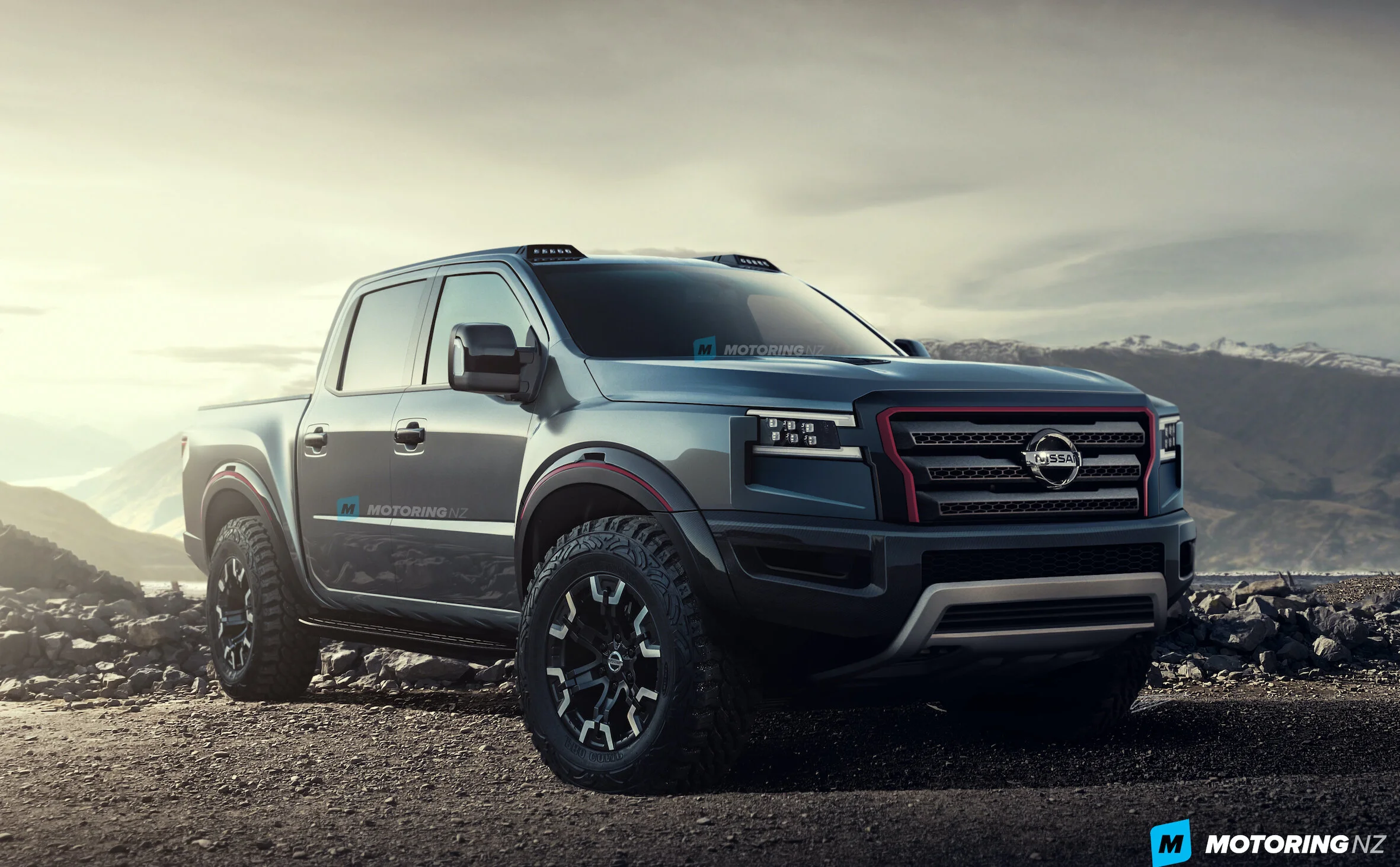
Next-gen Navara by Nismo?

Resident artist Josh Byrnes imagines Nissan’s next one-tonner as a hybridised Ranger Raptor rival … would the Renault-Nissan-Mitsubishi alliance allow it to happen?

Nissan Navara Nismo.jpg

EXTRAORDINARY times require unprecedented measures.

Covid-19 has thrown the world into economic turmoil affecting just about every sector you could think of - the automotive industry included.

The downturn in new vehicle sales here and abroad has seen a tightening of the purse strings disrupting many new vehicle programmes, from delays to the complete axing of planned vehicle redesigns.

In Nissan’s case, the Corona curse appears to have poured more salt onto a pre-existing wound. The Japanese carmaker was struggling before the pandemic, and further rationing of their product portfolio was announced on May 4.

The Nissan-Renault-Mitsubishi ambition now is to leverage each member's strength (for instance, Nissan will take the lead in autonomous driving, while Renault will do so for connected-car technologies).

Also, each alliance member will be the reference for particular regions where it has particular status. So, Nissan will lead the China, North America and Japan regions. Renault will be the reference for Europe, Russia, South America and North Africa. Mitsubishi, meantime, will be the reference for the Asean and Oceania regions.

So, there’s that. Then there’s the bit that we’re a little nervous about. Cost-cutting is coming. Big cost-cutting. To achieve new targets, the companies say close to 50 percent of their models will be developed and produced under a so-called leader-follower arrangement by 2025.

The implication for the one-tonne ute sector could be massive. It seems to means the upcoming Navara replacement could well be based off Mitsubishi’s next Triton, to the point of becoming an exercise in badge-engineering.

That is, a common vehicle with lightly-altered front and rear ends. Everything else will mostly be the same as its Mitsubishi donor vehicle …even the often criticised Nissan-based Mercedes-Benz X-Class programme had more creative freedom.

However, what if Nissan had the complete free rein over the design and development - what could the Navara look like, and what else could we expect?

Our in-house illustrated study envisions the next Navara in Ranger Raptor-fighting ‘Nismo’ specification. So, cue all the necessary off-road bits; raised ground clearance? Check. Pumped wheel arch flares? That too. Giant wheels, likewise. And to top it all off …an in-your-face front-end that wouldn’t look out of place amongst a fleet of military vehicles.

Unlike Nissan’s recently-added Navara N-Trek Warrior variant, upgrades would go beyond just simple suspension tuning and visual add-ons. Here the frame would be strengthened, aided by off-road shock absorbers helping it to endure any punishment thrown its way.

While its Ranger Raptor rival is a tad underdone in the engine compartment; this study ditches diesel and puts aside any powertrain mediocrity by utilising a plug-in hybrid (PHEV) shared with Mitsubishi’s next-generation Outlander SUV. 

This setup employs a new 2.4-litre four-cylinder engine with 94 kW coupled to dual electric motors (one on each axle) producing 69 kW. In this application, the improved range comes from a larger 13.8-kilowatt-hour battery pack. In the Navara, this would be ideal for low-speed off-roading with prodigious amounts of low-down torque.

Diesel power will still feature for core volume-selling models and a myriad of variants in single, king and dual cab configurations will be available in both rear-drive and four-wheel-drive formats.

A full redesign of Nissan New Zealand’s most popular model is tipped to land sometime within the next 24 months as an MY2022 model.

Will it look anything like this rendering?

here’s one they do now … the Navara N-trek

here’s one they do now … the Navara N-trek


New Yaris prices, spec revealed

Toyota New Zealand has begun the launch campaign for the new Yaris, on sale from August.

01.+Toyota-G1-Hero-2-RGBlr.jpg

 PRICING of the new Yaris that bumps the Prius as Toyota’s most fuel-efficient car has been posted ahead of its availability. 

Toyota New Zealand will avail the 1.5-litre car in four hatchback variants from August 1. These span two levels of trim, GX and ZR, starting at $25,990 and topping at $33,490, with the versions in each grade that add hybrid support to the constantly variable transmission petrol drivetrain carrying a $2000 premium.

On top of this, there’s the option of a two-tone paintwork for the ZR that adds $500.

The hybrid models, which use a lithium ion battery and make 85kW of combined power (67kW purely out of the engine, peaking at 5500rpm) and 120Nm at 3800-4800rpm (against 88kW at 6600rpm and 1450Nm at 4800-5200rpm from the pure petrol Yaris), are set to attract star status for their frugality.

Toyota is asserting potential for 3.3 litres per 100km optimal, which when achieved presents a 0.6L/km improvement over the best from the like-sized Prius C, which has a nickel hydride battery pack, and 0.1L/100km better than a full-sized Prius hatch. It also presents a 1.6L/100km advantage over the best a pure petrol new-gen Yaris will achieve, the brand says. 

02.+Toyota-G1-Hero-3-RGBlr.jpg
YarisBEP-CarPlay-YAR-TEC-010-B26-WIP3.pnglr.jpg

The new Yaris also stands out for having more safety features and driver assists than many offers in the small car category.

It is the first Yaris with the Toyota Safety Sense active safety systems and advanced driver assistance functions, that includes a range of driver information, early warnings and, when necessary, automatic braking and steering intervention.

All versions also debuts comfort technologies, including voice recognition and Apple Car Play/Android Auto running through a touch screen that also displays the view behind the car when it is being reversed and have adaptive cruise control. 

The additional technology is a big leap for Yaris, and though it lifts this fourth incarnation of the car into a higher price zone than that occupied by the outgoing line, which cost between $23,290 and $27,490 when it launched back in 2012, the value of the additional content should certainly be considered.

20191220-01-59lr.jpg
TOYOTA_NEW_YARIS_CROSS_FRONT-LEFT.jpg

The versions that are now being advertised are ultimately set to be joined later in the year by the Yaris Cross (above) – basically the same car in an elevated format with slightly more rugged styling enhancements but identical drivetrains – and then the Yaris GR, the long-awaited bonkers 192kW/360Nm hot hatch inspired by Toyota’s rally exploits which despite strong styling resemblance is so altered to effectively become less a sister ship than a distant relative. 

The engine used by the Yaris and Yaris Cross takes the marque in a new direction, applying the Atkinson-cycle principles that have featured in previous fuel-eking Toyota petrol engines, but in a three-cylinder format. Toyota claims the 1.5 has a rated thermal efficiency of 40 percent, which it says is greater than comparable diesel engines. 

In addition to ensuring good fuel economy, it also promises low CO2 emissions – just 76 grams per kilometre from the hybrid against 114g/km from the pure petrol Yaris shows what a difference the battery assist delivers.

Toyota says this hybrid version has been developed directly from the 2.0 and 2.5-litre hybrid powertrain used in the Corolla, C-HR, RAV4 and Camry.

Underpinning the nameplate is the Toyota new Global Architecture (TNGA), which also enables the implementation of hybrid drivelines easily and represents a leap in technology and driveability, with Toyota promising a substantially more engaging drive, improved comfort and refinement.

The Yaris and Yaris Cross have the same 2560mm wheelbase, but the hatch is 240mm shorter overall, the crossover adding 60mm to the front overhang and 180mm to the rear, to ensure more interior space. The ground clearance is 60mm higher with the Cross and, with 1550mm height, the hatch is 90mm lower and 20mm narrower overall.

Even though the GR was developed alongside the standard model, and shares the same wheelbase and platform, it is effectively a distinct car. The GR body takes Yaris styling cues, yet is so different no panels apparently interchange.

The performance model's emphasis on weight-saving means it incorporates more exotic materials – the payoff is in it being 38kg lighter than the standard car. It’s also a lot faster. 

The GR's roofline is 95mm lower than the standard car, it has a substantially wider rear track and entirely new double wishbone rear suspension, features three doors - whereas a standard Yaris is a five-door – and the sole transmission feeding the engine – still three-cylinder, but a 1.6 - is a six-speed manual. The video below shows the effort Toyota puts into its GR.

The Yaris hatch model line and pricing: GX, $25,990; GX hybrid, $27,990; ZR, $29,990 ($30,490 with two tone paint); ZR hybrid $32,990 ($33,490 with two-tone).


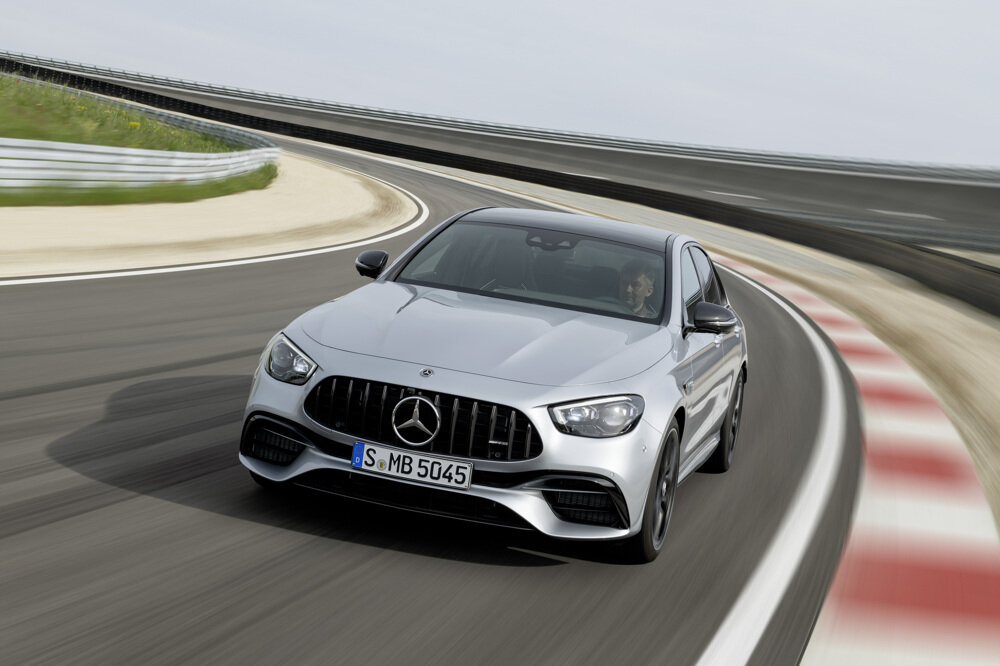
German super-sedans pack performance, styling tweaks

Updated BMW M5 and Mercedes-AMG E63 maintain their parity in powerhaus pedigree.

20C0257_010.jpg
P90390769-highRes.jpg

FOUR Twenty, 441, 450, 460 – pick a number, right?

Always with awareness that where you land on the kiloWatt chart also dictates one of two badge preferences when selecting a German premium all-paw performance sedan that’s not an Audi.

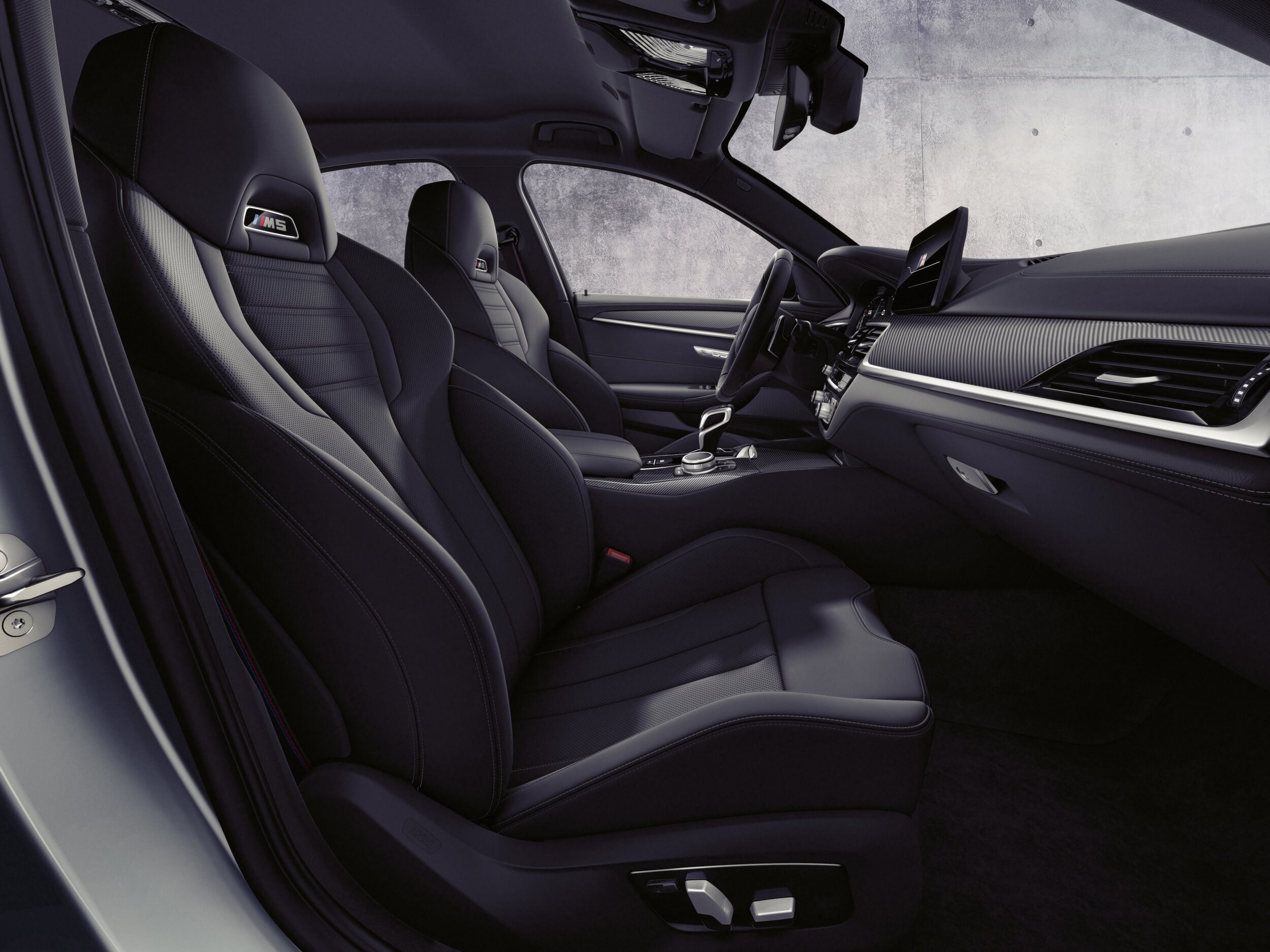
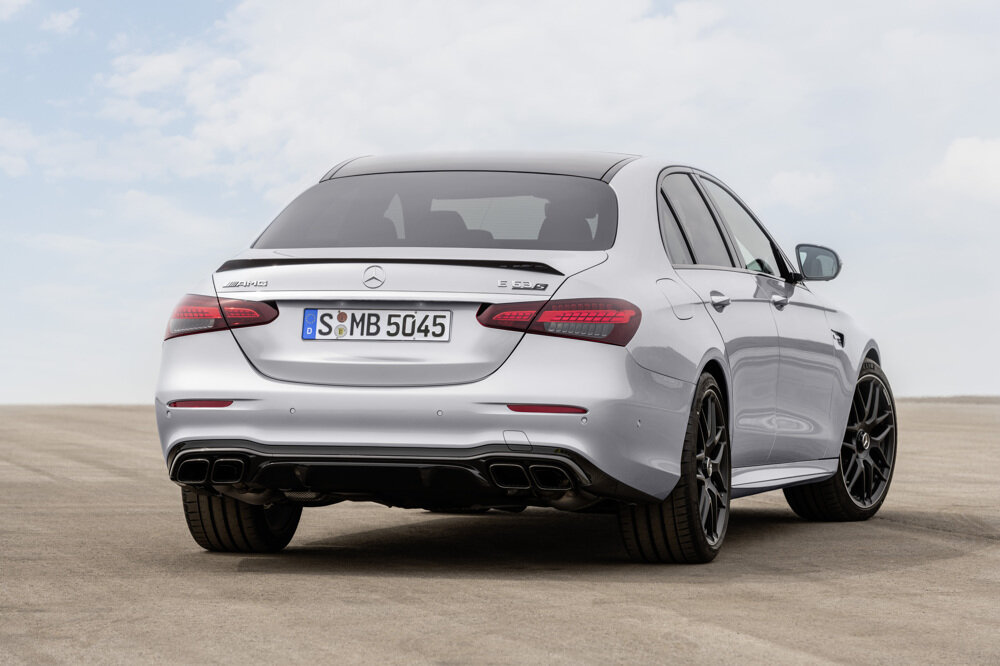
The first and third counts put you with Mercedes AMG, and behind the wheel of an E63 AMG in standard and S formats. The remainder with a Five Series fettled by BMW’s M Division, primarily as the ‘starter’ edition, ultimately in Competition mode.

Yup, it’s mid-life upgrade time for two supercar-slaying sedans and, as always, where one goes, the other is quick to follow, with both laying down big numbers.

Which also relate to? Well, torque, which optimally hits 750Nm behind the blue and white roundel and 800Nm behind the star, top speeds - 300kmh optimally from the E63 S, another 5kmh more with the Competition (with the optional M Driver’s package fitted) – and, of course, those all-important 0-100kmh times: just 3.3 seconds for the M5 in hottest fettle, which makes it 0.1 faster to the legal highway limit from a standing start than the most potent E 63. There are economy figures too but … not of any particular interest, right?

So, which to chose? It might all come down to price, which is still a mystery for our market, though potentially the current stickers won’t be too far shy of the new prices, and availability … which means quarter three for the Munich monster, some time prior to Christmas for Affalterbach’s.

The other important thing to recognise is that, while both makes are talking of these incoming missiles as being ‘new’ models, they really mean ‘massaged.’ Quite subtly, for the most part.

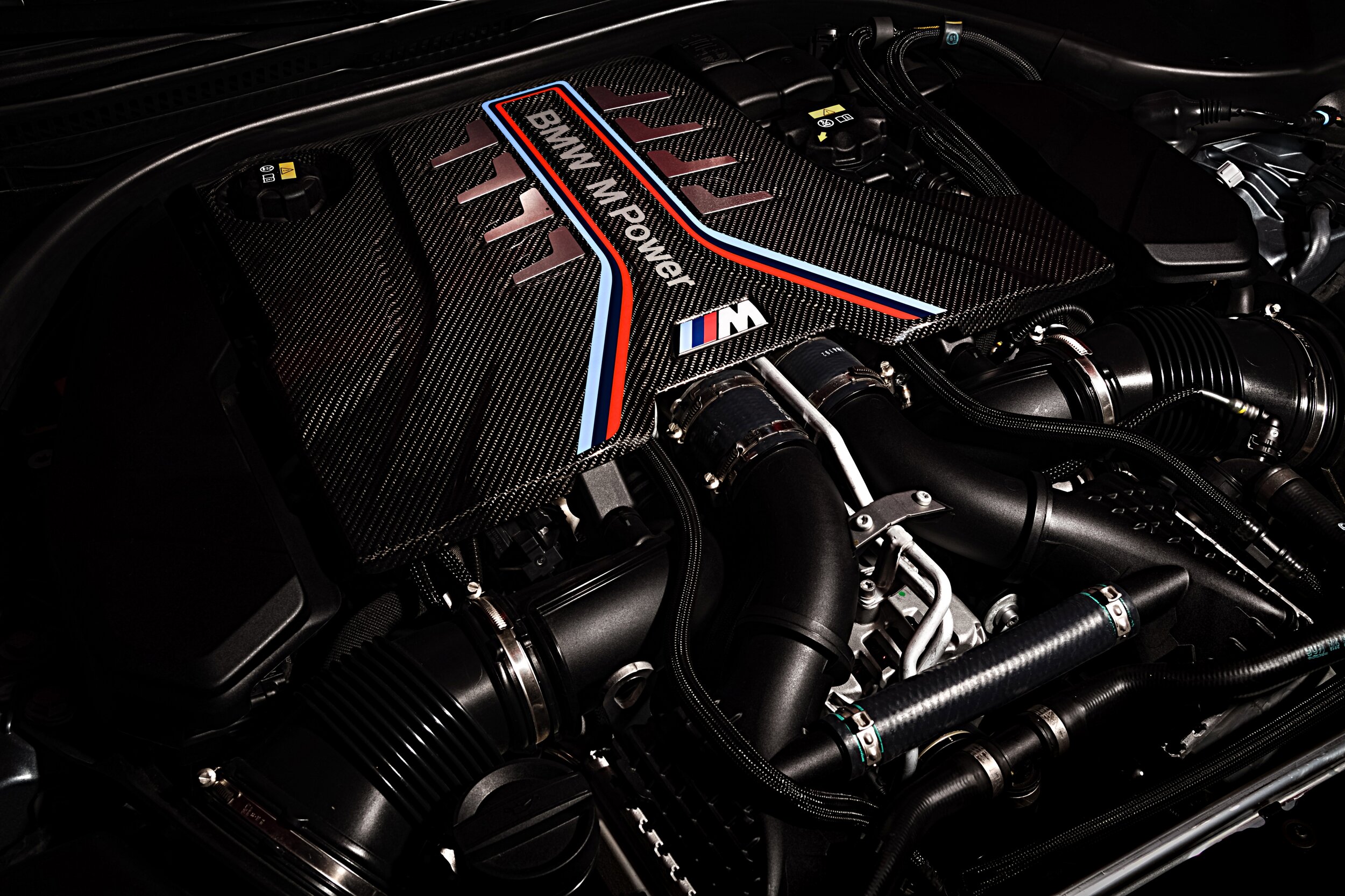
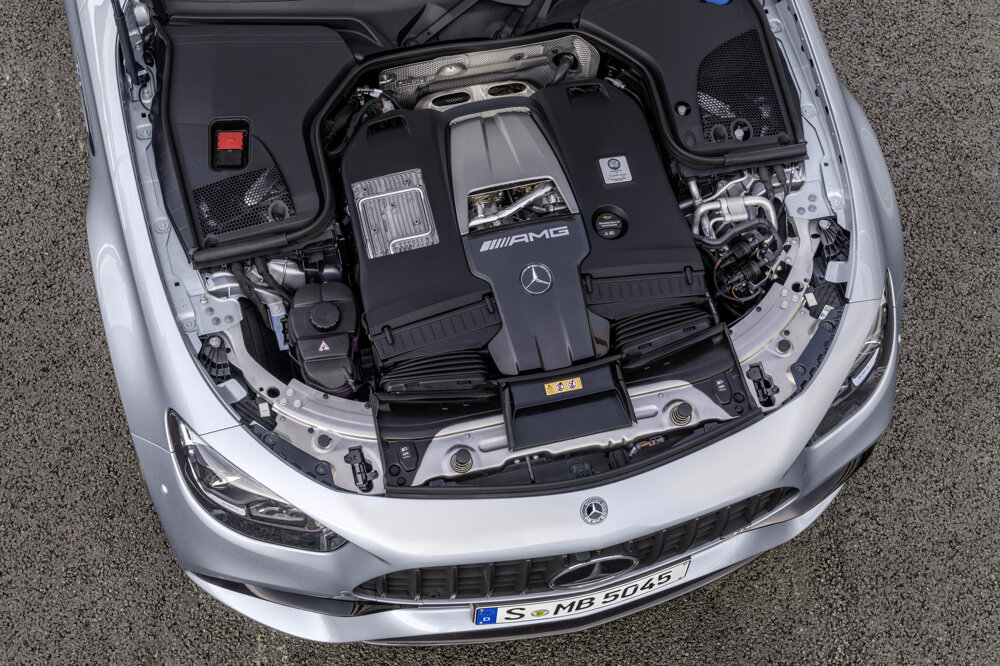
Those twin turbo V8 engines – a 4.4‑litre from Beamer, a 4.0-litre out of the other crowd – gearboxes (eight‑speed auto with BMW, nine-speed AMG), and the fancy all-wheel-drive - that can be configured in a special rear-drive mode with the M5 - are all as before.

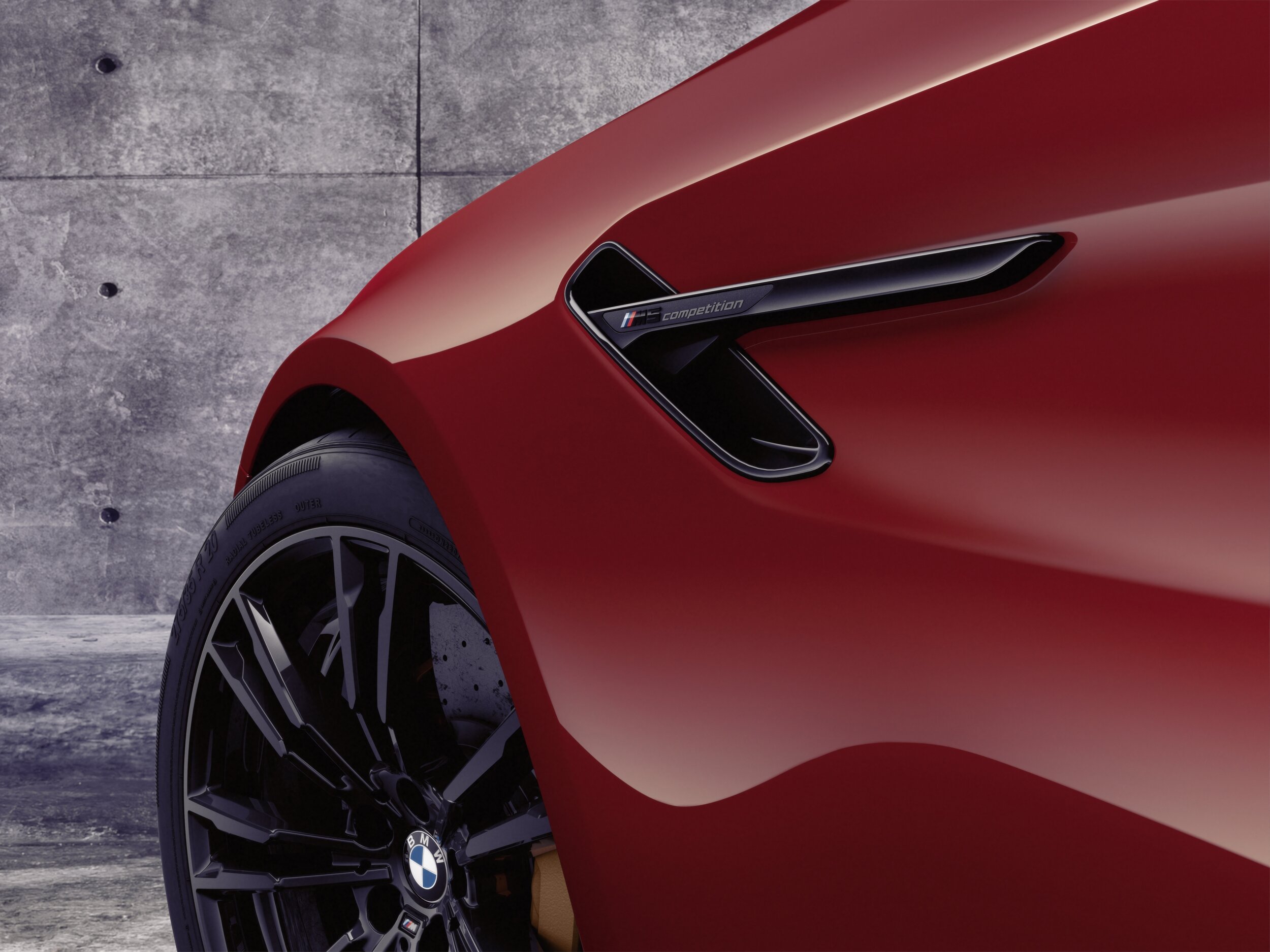
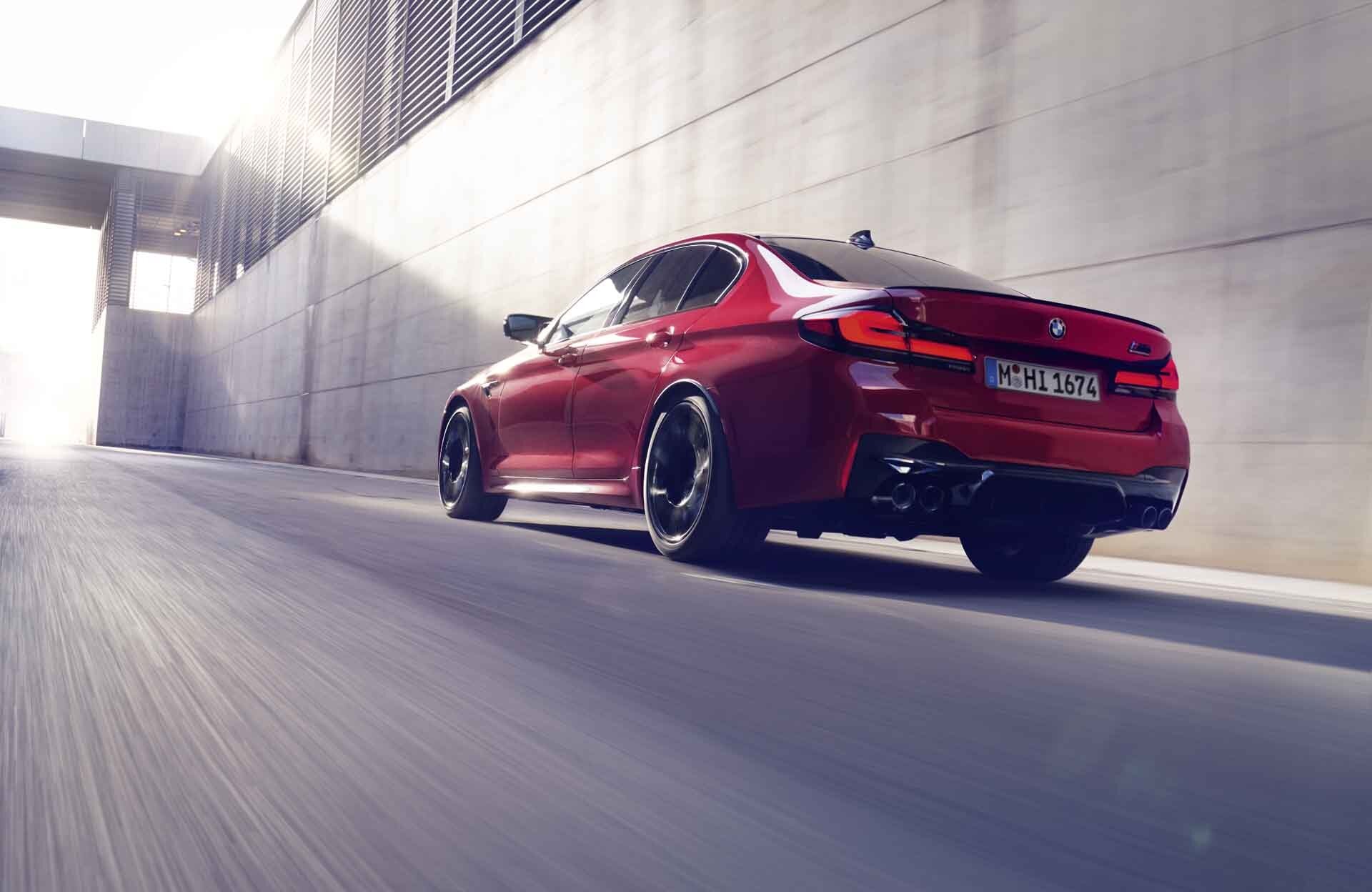
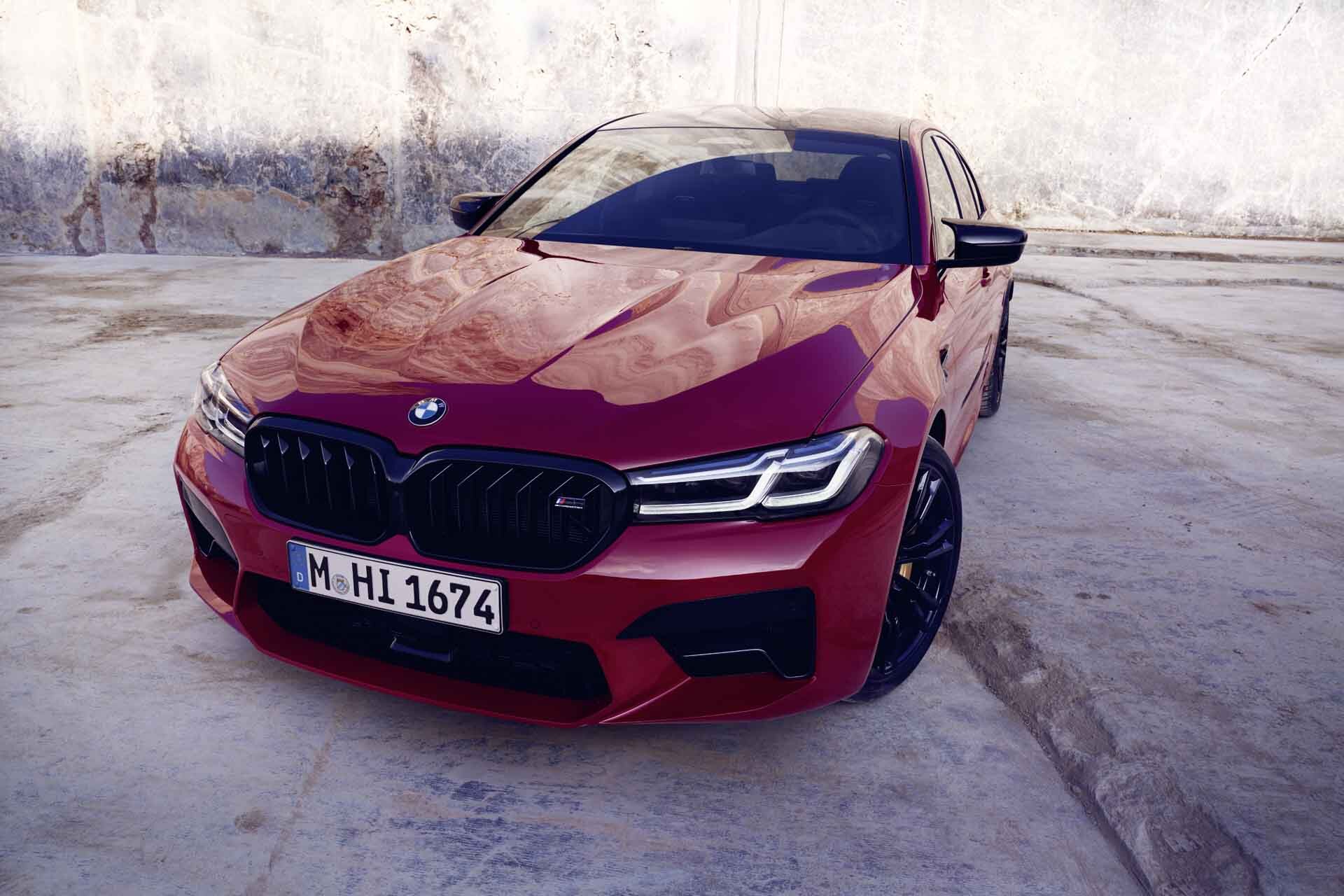
What’s incoming is the same range of minor cosmetic updates found on the recently revised 5 Series So the M5 now sports the updated kidney grille which extends a little further down into the bumper and has a one-piece chrome surround. The new front end gains larger air intakes at the sides while the main aperture is now hexagonal. The LED lights front and rear are new, as is the rear bumper.

Interior revisions also mirror those on the standard 5 Series, with buyers getting a new 12.3-inch digital instrument cluster and a larger infotainment screen. Electrically adjustable sports seats and sun protective glass come as standard, while a Harmon/Kardon stereo, head-up display and an Alcantara headlining can be specced as optional extras, as can a Technology Plus pack that adds front and rear seat heating, a heated steering wheel, soft close doors and a seat massage function. The M5’s Ultimate Pack builds on this specification with a carbon fibre engine cover and Bowers and Wilkins surround sound system. A lot of comforts for a performance car? That’s your modern M5 customer.

There is a new 20-inch wheel design while the brake calipers can be finished in black or red as an alternate to the usual blue. The Competition’s are gold, as before.

Chassis upgrades over the standard BMW 5 Series include uprated dampers, stiffer engine mounts and larger disc brakes, with fixed six-piston calipers up front and single piston calipers at the rear. Buyers can also opt for a range of M Performance extras, such as coilover suspension and carbon fibre aero components. The Competition model sits seven millimetres lower. 

There’s a broader range of standard driver assistance technology, too. Buyers get lane- keeping assist, lane-change assist, a 360-degree parking camera, and BMW’s Parking Assistant Plus, which can take control of the car’s steering when reversing into spaces. BMW also now offers a Drive Recorder function, which uses the car’s built-in cameras to record footage from around the vehicle.

So how does the AMG respond? Basically, by following the same plot. 

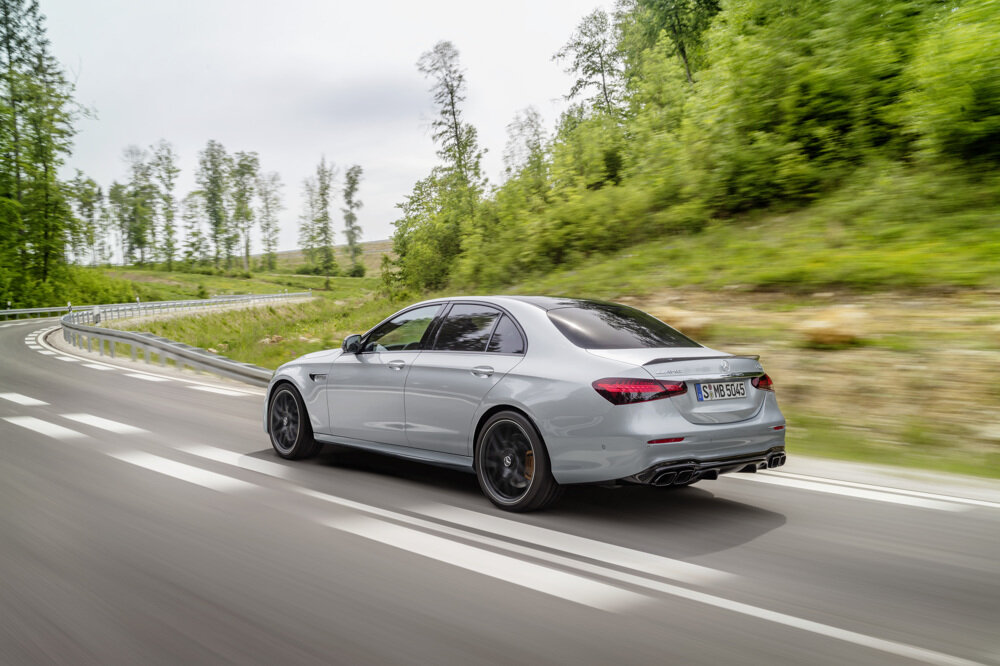
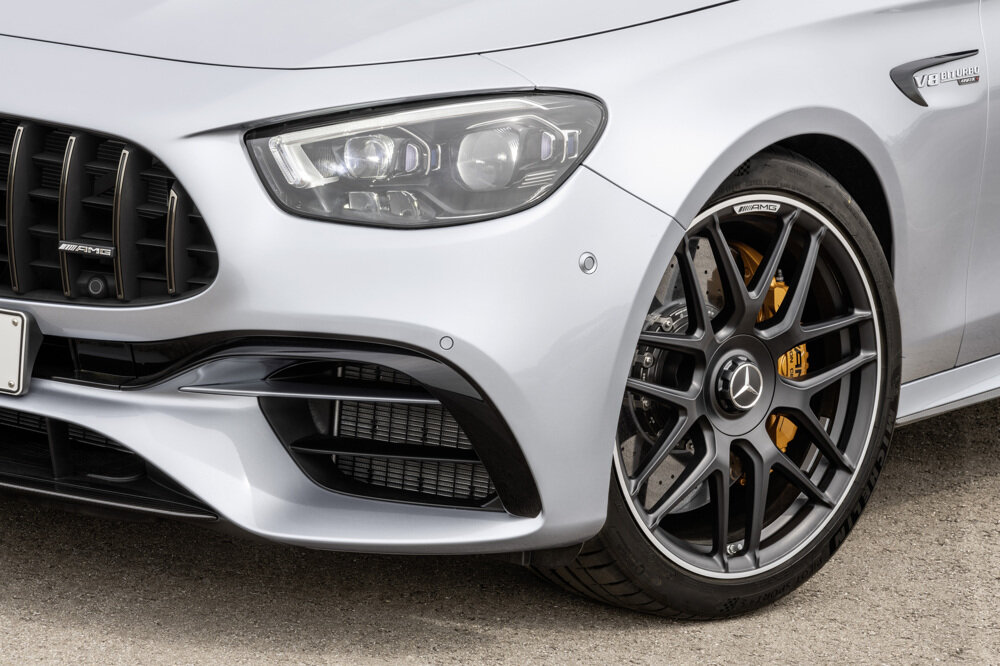
The revamped styling also includes a larger grille created in an effort to differentiate it more from the wider E-Class range and aerodynamic tweaks to optimise both grip and airflow to the engine.

Although the powertrains’ outputs are unchanged, Mercedes-AMG says considerable tuning has been carried out to widen the E63’s performance window. Work has also been done to refine the dampers and chassis, while the dynamic engine mounts on the E63 S have been tweaked so they adapt more quickly to driving conditions.

 Further development has been carried out on the AMG Dynamic Select software, which adjusts systems such as the drive programmes, all-wheel drive systems and ESP stability control. The AMG Dynamics Plus package, which includes a Race drive mode and Drift function, is standard on the E63 S and is offered as an option for the base model for the first time.

The front bodywork of the machine has been honed for aerodynamic balance, with AMG engineers and aerodynamicists focused on reducing wind resistance and increasing high-speed stability. The wheel arches have been enlarged by 22mm to accommodate a wider track

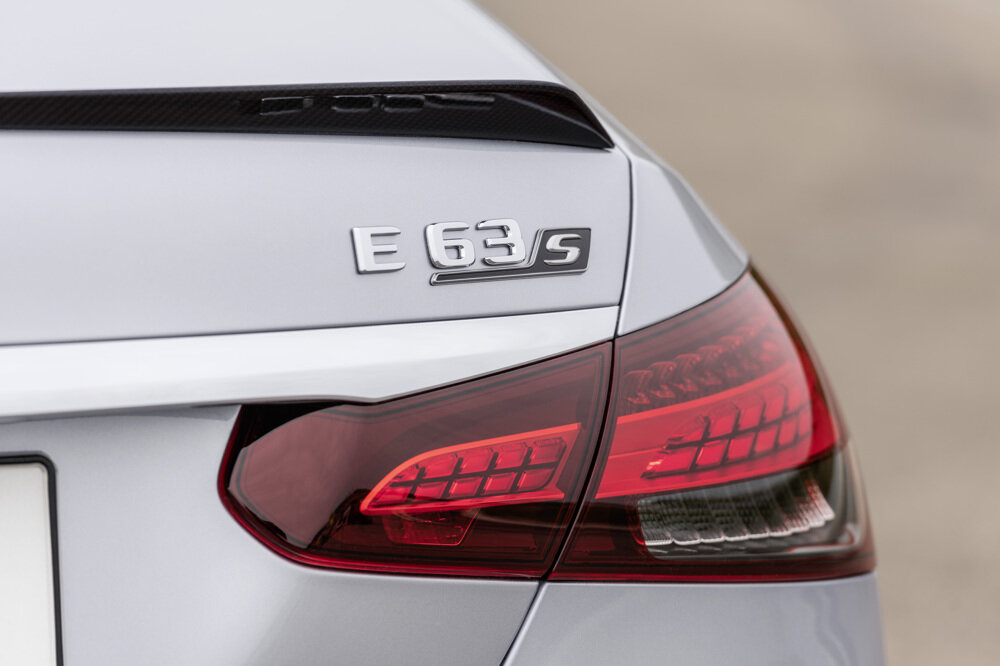
At the rear, there are flatter brake lights, a reshaped apron, which has also been aerodynamically optimised and a new diffuser.

The standard E63 has new 19in alloy wheel options, while the S version that’s always been favoured for NZ gains new 20 inch aerodynamically optimised five-spoke alloy designs. 

There are new paint colour options previously offered on the Mercedes-AMG GT range only and the usual optional AMG Night Package adds extra styling tweaks, including a gloss black finish for the mirrors, window frame and exhaust pipes. 

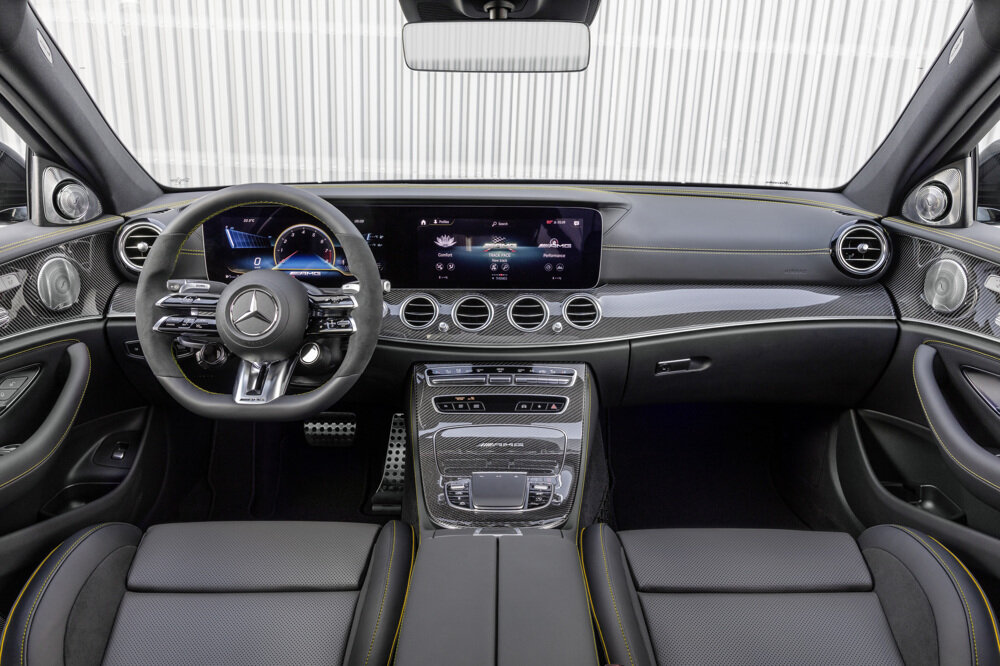
Inside, the E63 feature similar tweaks to the rest of the facelifted E-Class range, including the latest version of the MBUX infotainment system and digital instrument display, both of which offer bespoke AMG display options. 

There is also a new twin-spoke AMG Performance steering wheel with haptic feedback controls and offered with Dinamica microfibre or leather, or combination finish. The wheel includes a ‘hands on’ sensor that will trigger warnings and, eventually, activate emergency brake assist if it detects the driver does not have their hands on the wheel for an extended period. Mated to the new wheel are larger aluminium paddle shifters that can operate the nine-speed transmission.


Double chevron brand plugs into EV drive

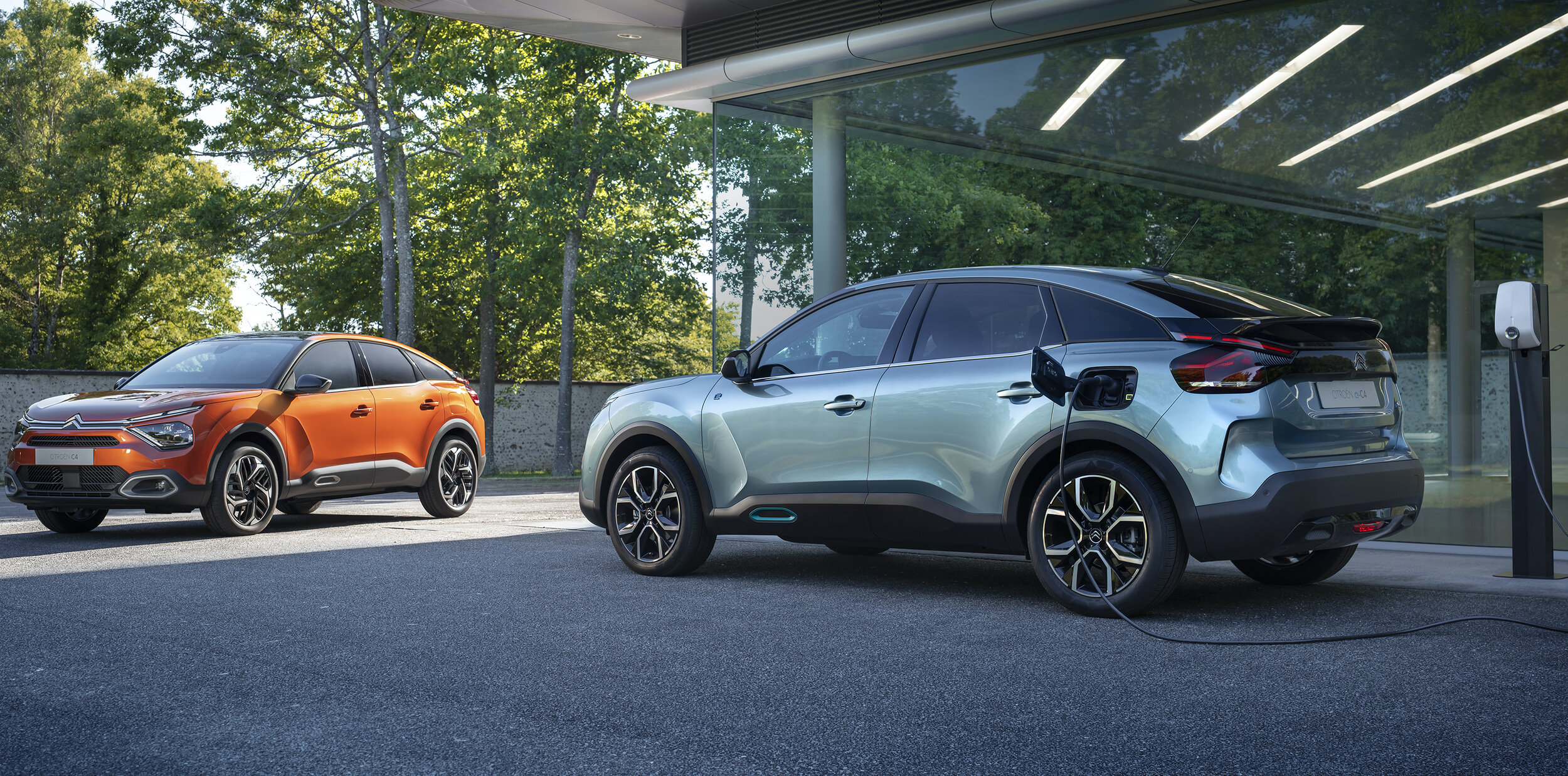
A fully electric Citroen will be here in 2021.

CL 20.019.004.jpg

TOTALLY electric and a petrol powertrain for those who aren’t ready to plunge into a fully battery-propelled motoring future. 

That’s the proposed strategy Citroen’s New Zealand importer, Auto Distributors, hopes to realise with the new-generation C4, revealed internationally this week. 

The national potential for a model that has now fully released from a hatchback styling to embrace a crossover look previously limited to the offshoot C4 Cactus is for it to primarily deliver as Citroen’s breakthrough into the electric vehicle sphere, following a similar model from sister brand Peugeot, also with the same national distributor.

“One of the strengths of new C4 is choice of powertrain and we would like to provide options to Citroen customers, rather than limit them,” explains Auto Distributors’ commercial manager, Arek Zywot in explaining interest in the new e-C4.

“We do not know specific launch date as yet, although we are aiming to have it here by the end of quarter two (of) 2021.

“We are looking at two possible drivetrains: EV and petrol automatic.”

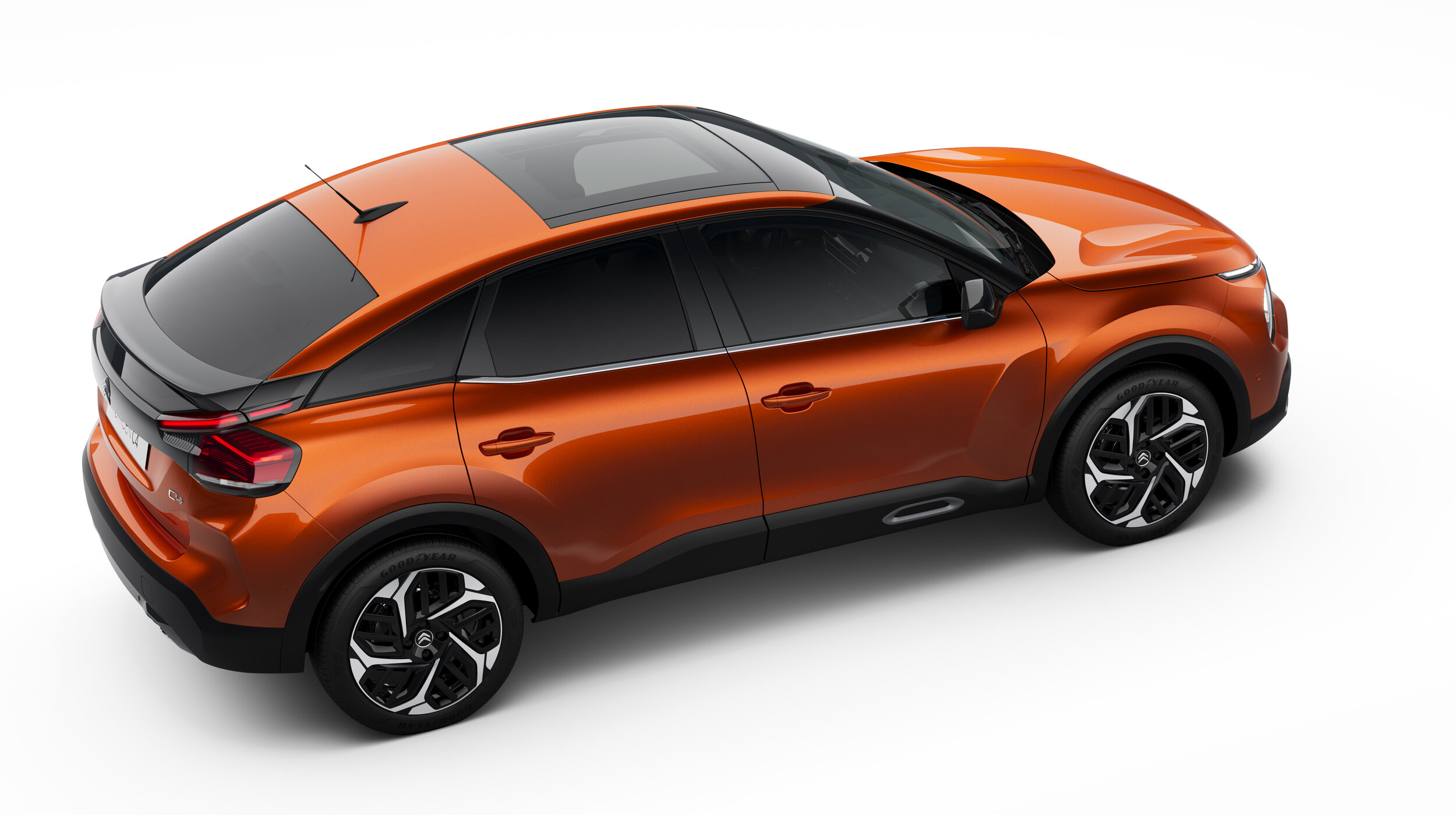
He’s comfortable with the styling direction cementing with a crossover aspect that, though more rakish and less ‘other worldly’ than the C4 Cactus look thanks to Citroen adopting a fastback roofline, nonetheless stays true to existing fundamentals.

“C4 is a continuation of a model that is replacing C4 Cactus and many of the design elements have transferred to the new model.”

CL 20.019.001.jpg

C4 is, of course, based on the same underpinnings as the latest Peugeot 208 and 2008, also earmarked for NZ introduction and the drivetrains are identical. Just one petrol engine is expected, a 1.2-litre in three stages of tune: 74kW, 95kW and 114kW, operating through an eight-speed automatic gearbox and driving the front wheels. The e-C4 is expected to make use of a 50kWh lithium battery that will power an electric motor, developing around 100kW, on the front axle. The same powertrain in the e-2008 delivers a range of 320km, albeit when measured on the fabulously optimistic Worldwide Harmonised Light Vehicles Test Procedure.

All models will have the firm’s new progressive hydraulic suspension set-up, according to overseas’ reports. The car’s springs and shock absorbers work with hydraulic compression and rebound stops, which are designed to gradually slow body movement over bumps and potholes.

The progression to a crossover look is in response to hatch desirability having been undermined by the sports utility boom, Citroen acknowledges.

Citroen’s CEO Vincent Cobee says it’s all about finding the “proper balance between affordability, versatility and comfort, better access, and better visibility, as there’s probably also a need for more spice in the style.”

The electric and orthodox cars are identical in overall look and styling cues from the larger C5 Aircross are evident, but it also plucks from past Citroens. The shape of the third side window links to some of Citroen's earlier family cars, such as the GS, introduced in 1970.

CL 20.024.0140.jpg

The one detail to differentiate an e-C4 from the oil-reliant type is that the former has blue-lit badge surrounds.

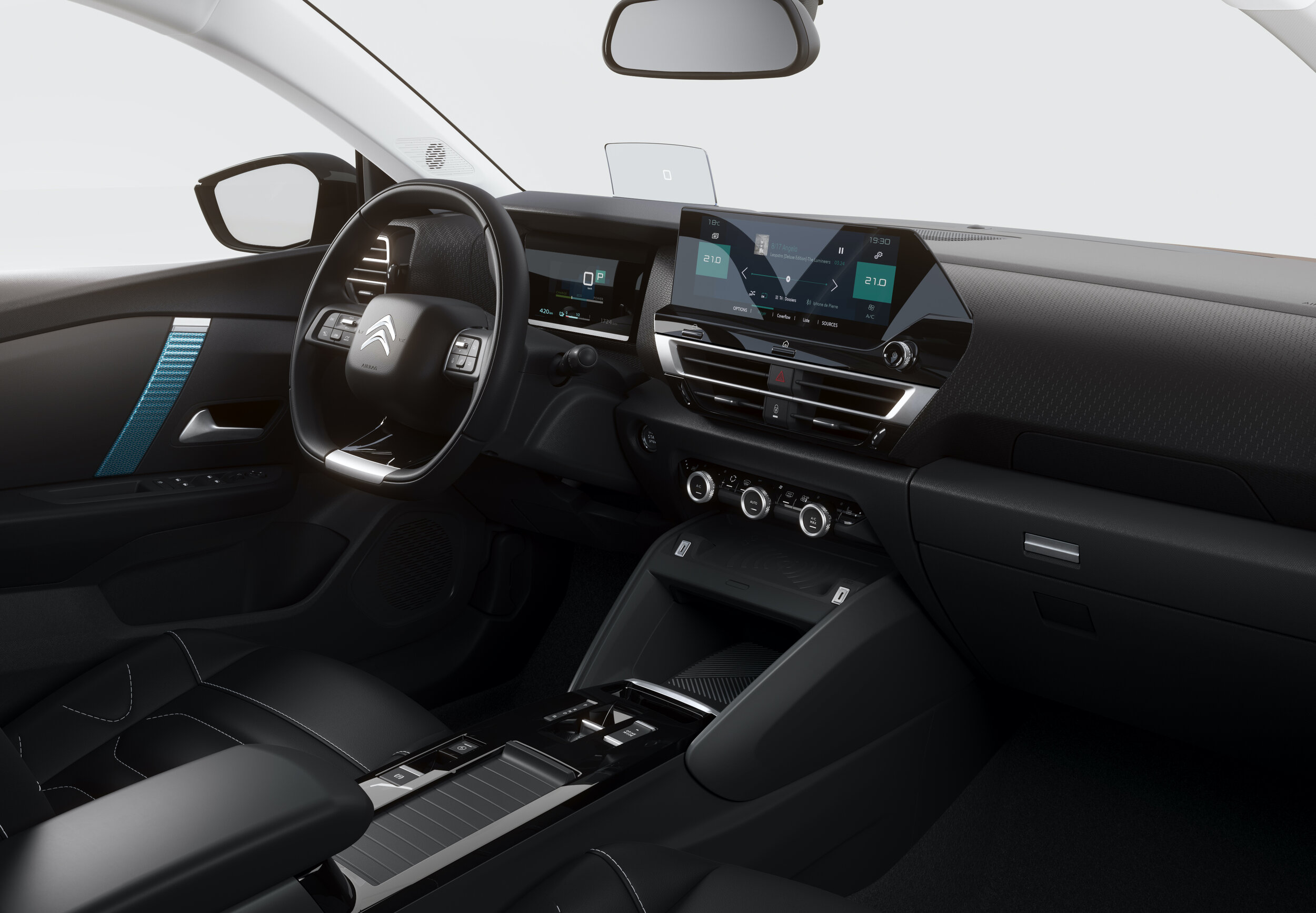
The cabin is seen as a gentle redesign of what we can see in the current C4 Cactus, but with a new digital dashboard and instrument binnacle and a redesigned centre console.

Citroen says its has put a major focus on comfort when designing every part of the cabin, including the seats and the dashboard.

The electric-read CMP platform has become a vital attraction to Fiat Chrysler Automobiles, which is in the process of merging with Peugeot-Citroen parent PSA. It's one of two architectures that will underpin over two thirds of the merged group's combined annual production. It’s thought the Alfa Romeo Tonale crossover will be built on this underpinning.

CL 20.024.0121.jpg


Lexus IS: Niche is still necessary

The significantly refreshed compact sedan arrives later this year.

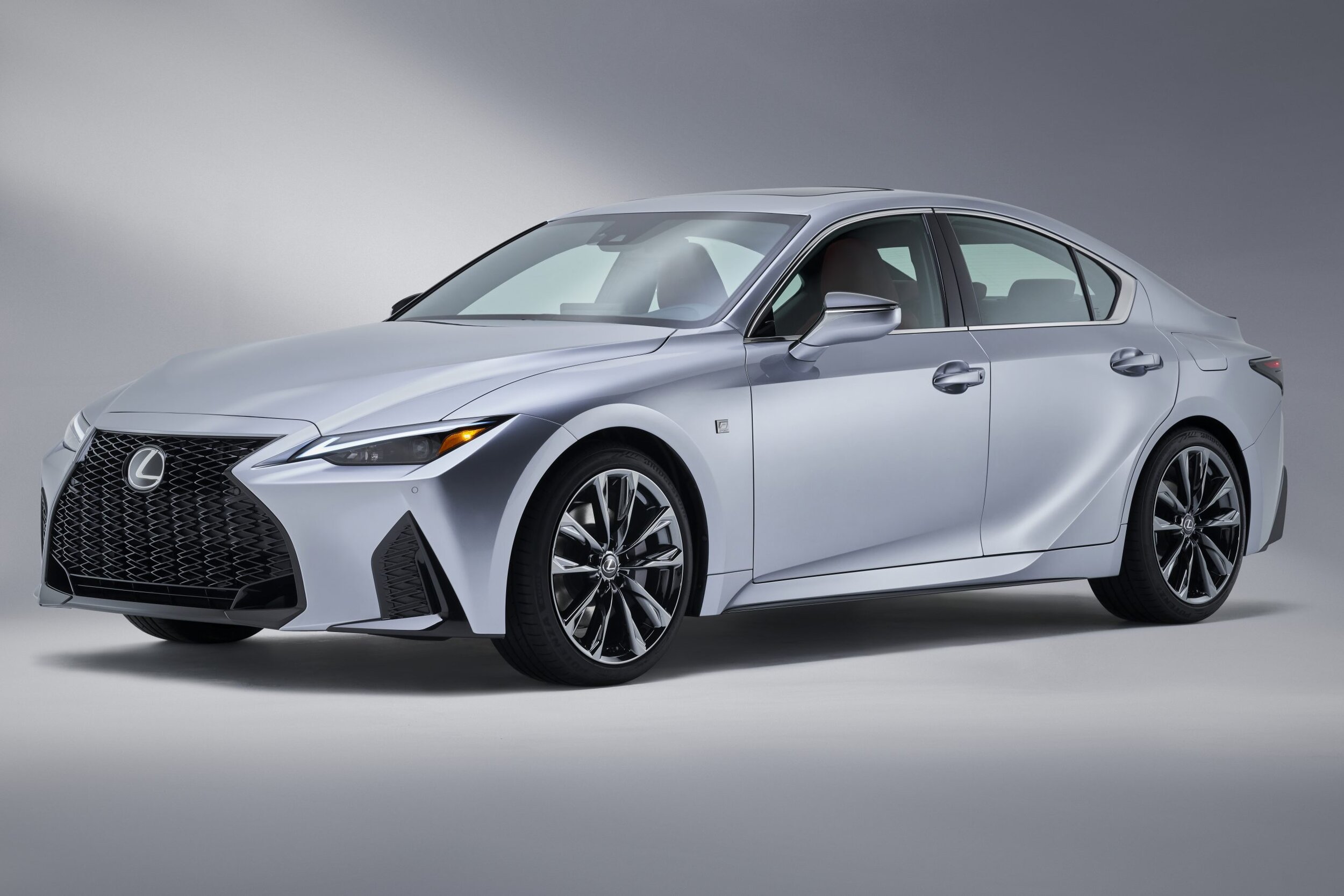
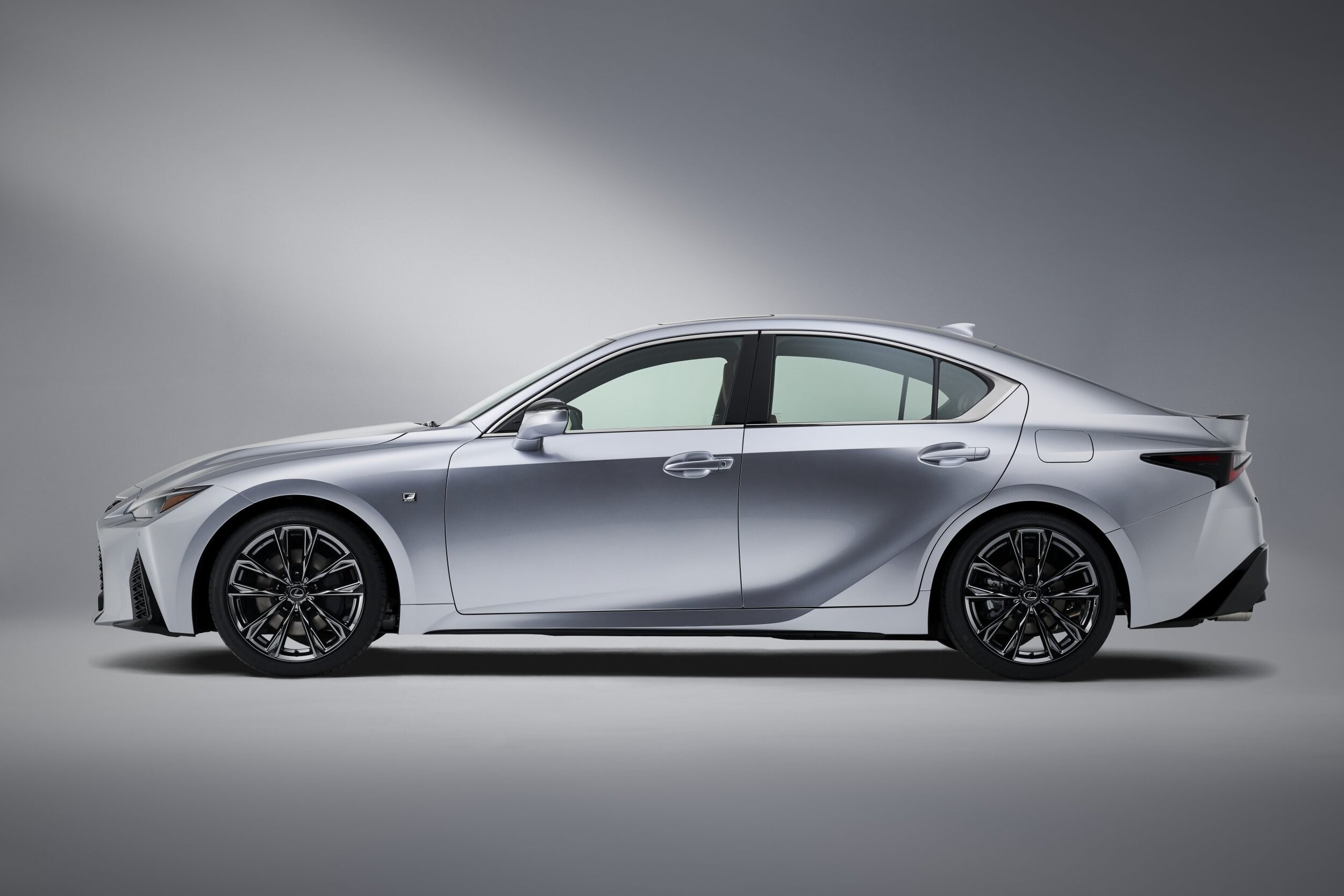
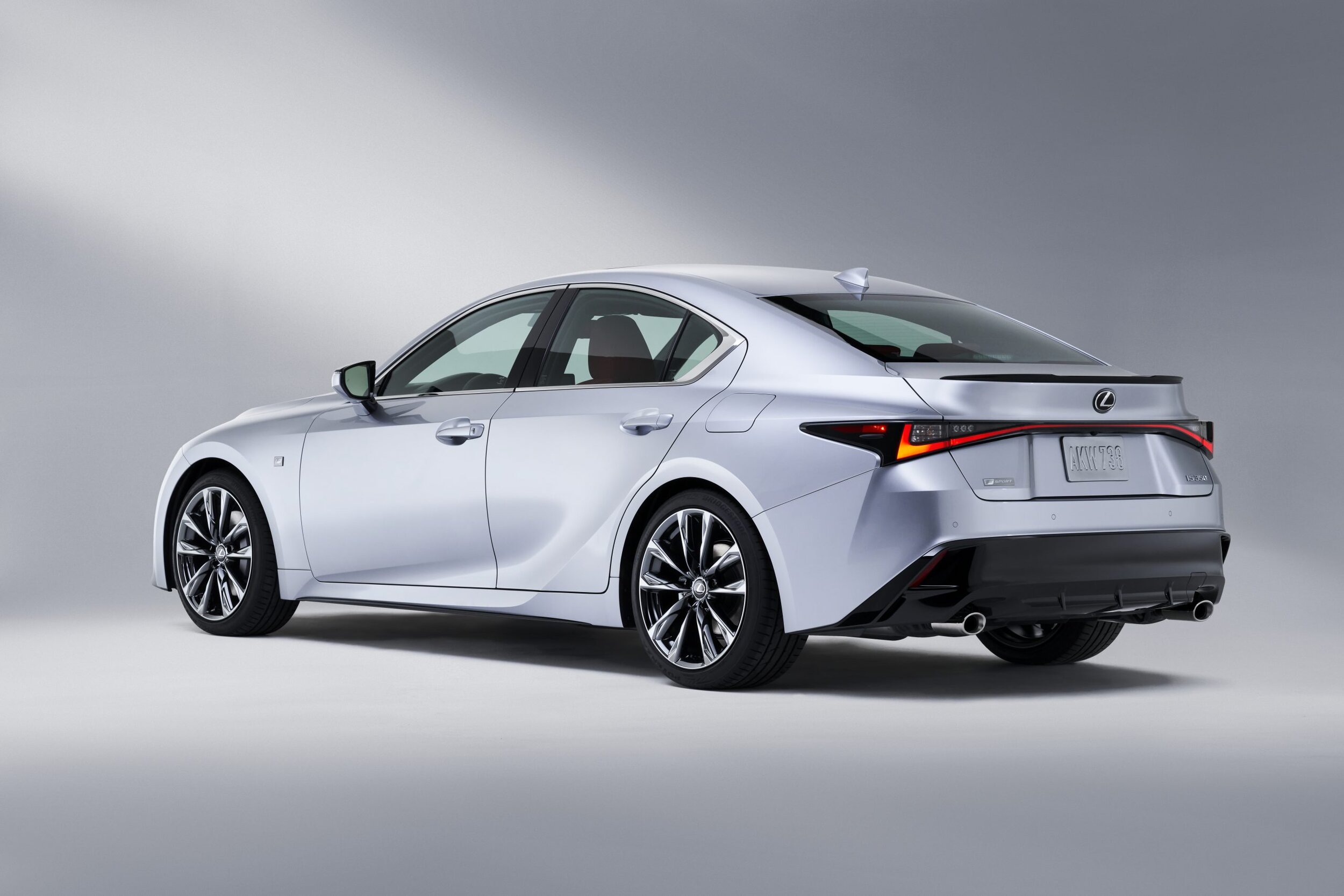
2021_Lexus_IS_F-SPORT_027-scaled.jpg

WITH only 63 registered in 2019 and just another 16 to date this year, the Lexus IS surely stands as a classic example of how interest in even sports sedans is waning.

 That diminished support has already been the death of its big brother; Lexus signalled earlier this year that production of the next-size-up GS for NZ ends in August. And that car achieved much the same penetration as the IS.

 Accordingly, it wouldn’t have been too much of a surprise, perhaps, had this week’s announcement of a big update for the IS been tagged with local market notice of a change of heart. Indeed, had NZ abdicated the IS it would be following the United Kingdom, which has determined not to continue with the car.

 Yet clearly there’s an optimism here that compels Lexus New Zealand to keep the white flag stowed.

In a statement timed to synch with the update’s global unveiling from the United States, it has sworn not only ongoing allegiance to the brand’s smallest rear-drive product but also continued enthusiasm.

Says Lexus New Zealand General Manager, Neeraj Lala: “With its Lexus driving signature, and performance enhancements, it is a true enthusiast’s car.”

So, what be expected of the latest edition when it arrives toward the end of the year? Basically, a lot of new, but also not a complete change.

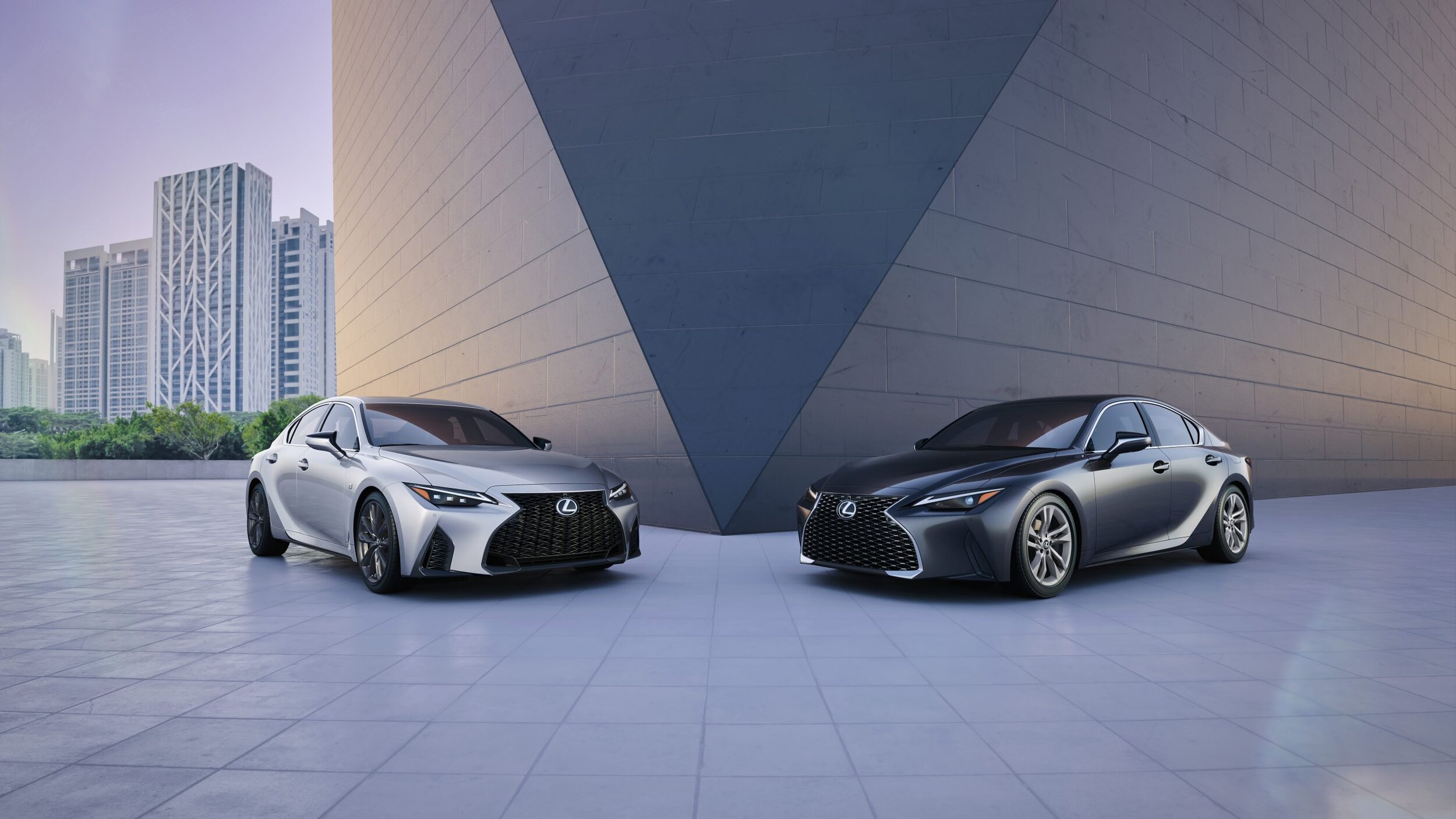
What’s being described as the fourth-generation model is, in reality, a big makeover. A number of fresh technologies, improved dynamics and a complete overhaul of its dramatic styling place atop the same platform as the existing model and existing powertrains continue.

As is appropriate, the front end is still marked out by a large ‘spindle’ style grille, but the headlight units are more compact than before and feature a strong LED running signature slashing from corner to corner. 

The rear end is a complete revision: A new L-shaped tail light is joined by a full-width LED lighting bar, while Lexus talks of the car being more a ‘four-door coupe’ in profile than what we see now. Stronger rear shoulders are emphasised by the pronounced boot lid, too, while the whole car is 30mm longer. 

F-Sport versions receive a different mesh pattern on the front grille, and additional front air intake, exclusive 19-inch wheels, a bootlid spoiler and can be had in the Radiant Red paint colour used on the LC coupe.

These in particular sit lower and wider and look more ‘pumped’ than the current F-Sports. 

The interior is a mix of old and new. The central vents, gear selector, centre console and steering wheel appear to have been broadly carried over with minimal changes. The floating touchscreen infotainment system, 8.0 inches standard or 10.3 inches optionally, is new, replacing the sunken screen in the old car

Lexus says this IS is stiffer than the present offer thanks wider tracks, an increased number of front side-member weld points and a process of “optimising structures from the rear-quarter pillars to the sides of the roof, among other areas”. This, combined with a lower centre of gravity, boosts the model’s agility and lends a particular emphasis on steering response and feel.
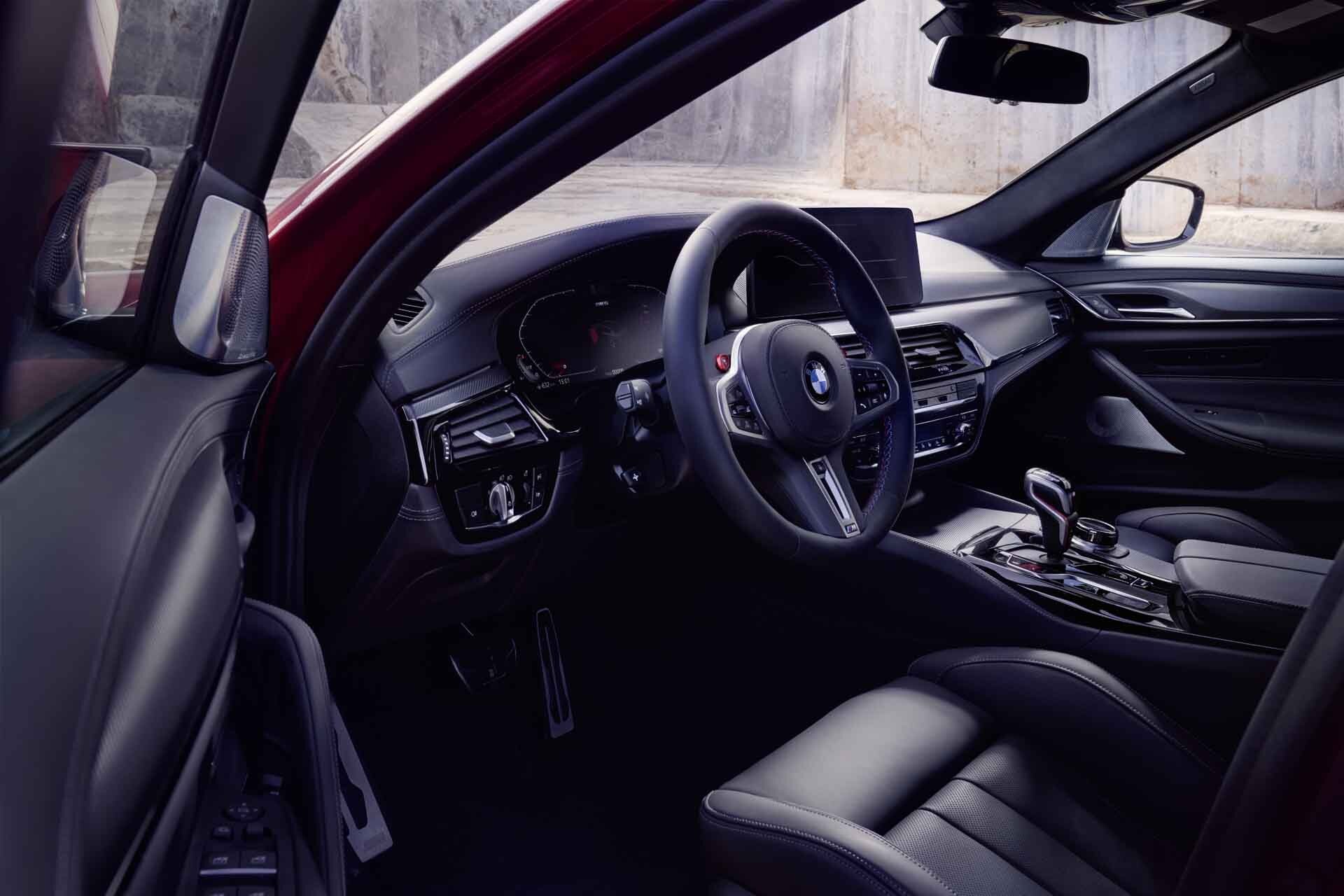
Engineers have given the suspension a rework, too, with the new generation featuring new swing-valve shock absorbers to enhance the ride quality.

Powertrain options include the familiar 2.0-litre four-cylinder turbocharged petrol engine, 2.5-litre petrol-electric hybrid and 3.5-litre V6, all carried over from the current series with a few unique mapping tweaks to increase responsiveness.

The 2.0-litre turbo now features “enhanced adaptive control”, resulting in quicker and more decisive gear selection through the carryover eight-speed automatic transmission.

The hybrid has been treated to increased throttle response, while the V6 appears to be little changed. Lexus says full details will be confirmed closer to launch.

For reference, the current 2.0-litre produces 180kW/350Nm, the hybrid makes 164kW – Lexus does not quote a combined torque figure for the hybrid – while the V6 churns out 233kW/376Nm.

Full equipment levels have yet to be confirmed, although Lexus has made a point if referencing standard fitment of Apple CarPlay and Android Auto.

The Lexus’ Safety System Plus suite has also been upgraded.


Express RRPs fuel price intrigue

 Might the recommended retail prices for Mitsubishi’s returnee to the commercial van sector simply be conversation-starters?

Mitsubishi Express delivery van (2).jpg


 INTENT to uphold status as a value brand has influenced Mitsubishi here to mull a pricing strategy for the Express van that is potentially more aggressive than the stated stickers suggest.

This allowance comes from the brand in signalling the prospect of recommended retails announced for this version of the Renault Trafic will likely allow enough flexibility to present potential for a significant price advantage over the donor that doesn’t show in the cited RRP.

As reported last week, conjecture of Mitsubishi’s first offer in van-dom since it lost the ancient L300 in 2015 being a Trafic clone in all but name and badging doesn’t quite bear out.

The models head in different directions in terms of variant count and Renault also offers a lengthened wheelbase alternate to the standard 3098mm wheelbase format it and Mitsubishi offer.

Yet when wheelbase commonality is considered, the models are close enough in core attribute, have identical drivetrains - with identical outputs, economies and performances - and payloads, are sister ships in styling and sourcing, to the point of being built on a common line in France.

The two versions of Express coming on sale in September are a manual 103kW/340Nm 1.6-litre and a 125kW/380Nm 2.0-litre dual clutch automatic, both on a standard (so, 3098mm) wheelbase.

The respective recommended retail pricing for these, announced today by Mitsubishi Motors New Zealand, is $47,990 and $52,990.

However, in discussing those, the distributor has offered concession that the models seem set to be subject to ‘transaction pricing’ – a practice that allows for more favourable stickers when deemed appropriate. Thought that, it might, in this instance, allow for a reduction of up to $7000 has not been denied. 

MMNZ has historically had enthusiasm for special pricing programmes to invigorate consumer interest. The ‘transaction pricing’ model is an alternate to the more open practice of advertising special limited-time prices that attach to specific models. Most recently, for instance, the Pajero Sport sports utility has been selling for $10,000 less than the RRP in its highest specification.

When asked about reports that his brand has just advised dealers that the vans could be sold for as little as $40,000 in 1.6 form and $45,000 in the 2.0-litre guised, MMNZ marketing and communications manager, Reece Congdon, said he could not “comment on that at this point.”

When asked to give insight into what factors weigh into his brand’s pricing strategies, he said the Mitsubishi brand was known for having a focus “on delivering the best value possible for our customers.”

As to any disparity that might arise in respect to Trafic and Express stickers. 

He offered this: “We have no knowledge of how an independent importer (presumably, that’s Renault NZ) chooses to price their product in New Zealand.”

MMNZ makes no bones that it wants to act swiftly and decisively to imprint itself as a serious volume player in the commercial van sector, where it was previously a kingpin during the L300 period.

Says Congdon: “We are thrilled to be adding the Express to our line up and be able to provide a compelling new option for light commercial operators.

““This highly specced van is a different proposition and a worthy successor to our popular L300 model, which sold 38,806 units from 1980 to 2015. We strongly believe that operators looking for function and flexibility, at exceptional value, will welcome the opportunity to get the Express van working for their bottom line.”

“Backed by our 50-strong dealer network and factory-trained technicians, we expect interest to be high.”

If the full transaction opportunities do exist – and there’s no absolute deniability on that from MMNZ - then the entry Express would potentially achieve a $1990 positioning below its only direct equivalent in the Trafic lineup, a version on the 3098mm wheelbase and with the 1.6 turbodiesel and six-speed manual.

The brands’ 2.0-litre models cannot fairly be considered equals. Renault doesn’t provision that drivetrain in the standard wheelbase, whereas Mitsubishi does. Trafic 2.0-litres are a LWB (3498mm) wheelbase that Mitsubishi could yet offer, but presently chooses not to.

The cheapest LWB Trafic is the Trader, which has the manual and 1.6-litre powertrain. That costs $43,990.

Otherwise Renault foots a more fulsomely furnished 1.6 LWB for $50,990 and a pair of 2.0-litre ‘Auto’ variants, in the same specification level, at $53,990 and $55,990.

Other factors? The Trafic and Express don’t wholly replicate for features, and it appears MMNZ’s warranty equals Renault’s in being for a three-year term, the mileage allowance for Express is less fulsome.

Express has halogen headlights rather than the Renault’s LED units and its digital radio, Bluetooth phone (and the same fancy dash-mounted cell phone holder as Trafic) and audio streaming is through a less upmarket display than the Renault gets. Absent in Express is the Renault 7.0-inch touchscreen that allows Apple CarPlay and Android Auto operability and delivers sat nav functionality. 

The automatics in either guise add a rear-view camera with in-mirror display, rain sensing wipers, front fog lights, self-dimming interior mirror and auto headlights, but the Renault steering wheel is a bit fancier, being leather-wrapped.

With six airbags, roll over mitigation, stability and traction control, anti-lock braking system and electronic brakeforce distribution (EBD) Express and Trafic are ticking boxes positively, but they fall behind some category players in lacking automated emergency braking. Blind spot detection and driver fatigue monitoring are also absent.


Mustang: Black Shadow yes, Mach 1 ... maybe not

Good news and bad seems set to arrive in respect to Fords’ latest Mustang ‘special edition’ news.

Latest talk from Detroit has downplayed NZ opportunity for the MACH 1 (above), but we do get the GT in a Black Shadow edition (below)

Latest talk from Detroit has downplayed NZ opportunity for the MACH 1 (above), but we do get the GT in a Black Shadow edition (below)

Mustang_Shadow_SVP_GrabberLime.jpg

PREPARE to meet the Black Shadow … but perhaps don’t get your hopes up about the Mach 1.

 That seems to be the situation in respect to two special edition Mustangs, both of which pay homage – albeit to differing degree - to range-topping Mustangs from the late 19670s’ to early 70s’ muscle car era, whose announcements have synched.

In the same period Ford New Zealand chose to divulge information about a cosmetic package for the GT, called the Black Shadow, the parent in Detroit has finally fully unveiled a far more macho rendition of the V8 coupe, the new-era Mach 1 set to go into production soon for sale in 2021.

Like the original, the new-gen Mach 1 bridges the gap between the a standard GT and the Shelby Mustang, so packs visual upgrades alongside chassis and performance revisions, all intended to enhance its track feel.

A new intake manifold, oil filter adapter and a reflashed engine management system enhance power and torque to 352kW and 569Nm. Like the standard car, the engine sends its power to the rear wheels via a six-speed manual gearbox, although a ten-speed automatic is offered as an optional extra.

Ford has also fitted a few extra mechanical upgrades that are designed to keep the car’s drivetrain cool on the track. There’s a pair of new heat exchangers – one for the engine oil and one for the gearbox oil – along with a cooling system for the differential.

As with the original Mach 1, Ford has worked on the Mustang’s handling, adding stiffer anti-roll bars, front springs and subframe bushes, as well as a set of tweaked adaptive dampers, a sharper steering rack and an improved brake servo. Buyers also get a new set of 19-inch alloy wheels, which are styled to look like the original Mach 1’s.

So exciting, right?

And now the bad news. In pulling the covers off the latter, Detroit has dampened hope about export potentials or even right-hand-drive development, having immediately indicated to media in the United Kingdom – a key RHD Mustang market - that it won’t be available there.

wdmp_200510_00116.jpg

So, perhaps, the Ford NZ hope of seeing the Mach 1 is also ruined; though it says it will continue to hold out hope until being absolutely told otherwise by head office.

Meantime, the Auckland-centred operation is spruiking the Black Shadow, which is an interesting format on two counts.

First, the car is a reprisal of one of several specials first developed in celebration of Mustang’s 55th year of production, a milestone that was reached in 2019. Secondly, it is a variant Mustang’s home audience doesn’t experience.

Black Shadows are for export only and, from the information available, only New Zealand – which is taking 30 initially though more can be ordered if need-be - Australia and Brazil achieve this dress-up at the moment.

Based on the $82,990 5.0-litre V8 GT fastback, but with a $5000 premium (so, the same price as a GT convertible) the … erm …. ‘BS’ is all about kerbside attitude.

A Black Shadow is best identified by its boot mount spoiler and a set of unique alloy wheels, but the package also includes a lot of black accents, including on the roof, bonnet and side stripes, there’s a grille-mounted pony badge and some 5.0 wheel arch badges.

The body colour choices are limited to blue, a metallic grey, red and ‘Grabber Lime’, which is from Ford’s heritage palette – so-called because it’s inspired by a hue offered in North America on early 1970s’ Mustangs, including the Mach 1. Grabber Blue and Dark Highland Green, previously offered in NZ, are also from that collection.

The interior features various unique goodies and picks up the as standard the Recaro seat that is a cost-extra option for the standard GT.


Mazda BT-50 goes Kodo … and less kooky

Ready to fall in love with your ute? The new BT-50 is all about forming strong bonds, Mazda says.

BT-50-04.JPG

NOT just begat with Isuzu but set to be built by it as well.

That’s one of the interesting factoids emerging from today’s international unveiling the new Mazda BT-50 one-tonne ute, which is set to go on sale in New Zealand before the end of the year. Potentially following very closely in the tyre tracks of its new twin, the Isuzu D-Max.

A media release discussing the model makes clear that this fresh and design, a total divorce from the Ford Ranger-derived current model that has been here for nine years, appears set to roll off the same assembly line in Thailand that has been producing the latest D-Max since late last year, albeit only for sale to Thai buyers.

The process appears identified by Mazda commenting that “the all-new BT-50 is supplied by Isuzu Motor Limited on an OEM basis.” OEM, of course, is shorthand for ‘original equipment manufacturer.’

That gives it a subtly different status to the current model, which came out a joint venture plant. However, Mazda’ determination to separate from Ford made that relationship impossible; all the moreso now that the Blue Oval has shacked up with a new partner, Volkswagen, and will have the lead role in producing the next Ranger and its Amarok equivalent.

Isuzu having lead development of the ladder-frame chassis and the drivetrain for both, with Mazda focusing on its specific requirements and design, with both being all but identical under their skins is reinforced by the images and technical detail released today.

The 3.0-litre turbodiesel engine makes the same 140kW and 450Nm in either application. Likewise, both brands’ offers have a 1065kg payload and are rated to haul 3.5 tonnes.

here’s the twin … the new Isuzu d-max.

here’s the twin … the new Isuzu d-max.

Unsurprisingly the doublecab formats that are arriving first have the same 3125mm wheelbase, but Mazda’s body is slightly longer – at 5280mm versus 5265mm – though both are equal in width, at 1870mm, and height (1790mm).

The Mazda and Isuzu cabin shapes are shared yet the nose and tail stylings are patently different. While Mazda has again incorporated a visual identity that relates to its cars’ ‘Kodo’ design ethos, the impact of that appears set to far less controversial; mainly because the sharp nosed look that arguably blighted the second-gen model has been retired. Now BT-50 is back to where it began, conforming to class norms with a bluff frontage.

Mazda NZ managing director Dave Hodge is satisfied with the look, saying it obviously makes it immediately recognisable as part of the Mazda range of vehicles.

He also believes the new model will stand tall for its driving performance, functionality and safety. These factors will ensure the vehicle “will meet the needs of the wide range of situations where our New Zealand customers will be using the ute.”

Mazda says special care went into the vehicle’s design, ease of use and into creating peace of mind for the occupants. It also has enforced an aim to become a brand that can “create strong bonds with customers by focusing on the pure essence of cars — the joy of driving — and committing ourselves to preserve our beautiful earth, enrich people’s lives and make a bountiful society that lifts everybody’s spirits.”


New X-Trail revealed Stateside

Fresh styling, more kit … potentially only the current drivetrain carries over.

2021 Rogue-4-1200x800.jpg

SWAP the badge, potentially tweak some of the tech and, of course, shift the steering wheel across the cabin.

 Then pick a date in 2021, probably in the first half of the year. 

That’s the recipe for the new X-Trail, which has just been revealed in its American market format, where it continues to be called the Rogue.

Taking a new styling direction that’s been described by one commentator as being a blocky version of the new-generation Juke that’s about to go on sale here, the new model also has a completely fresh interior. And, of course, there’s an abundance of smarts that aren’t on the current car.

 Is there anything that’s not new? Potentially, that’ll be the powertrain. Commentators suggest the 2.5-litre naturally-aspirated four-cylinder and continuously variable transmission that features in the current car is set to keep doing the busy in the new generation, but with outputs improved to 135kW and 245Nm, from 126kW and 226Nm presently, but with slightly better economy. As before, both front- and all-wheel-drive versions will be available.

2021 Rogue-40-1200x800.jpg

Anything missing? Well, that could be the seven seat format; it seems the current editions that identify with an ‘L’ badge won’t be continued.

The new model is certainly out to make a bold impact, with its big and upright chrome "V" grille blending into upper daytime running lights, and below those are large LED headlights. Nissan has gone funky with roofs that come in contrasting colours to the bodywork’s. Speaking of: Nissan has increased use of high-strength steel but the doors, wheels arches and bonnet are rendered from aluminium, for a 45kg weight loss over the current car. 

The interior is considered one of the most impressive aspects of the new reveal. Today’s event highlighted the high-end finish, which delivers a new dash design, centre console and a nine inch infotainment screen, plus a full digital display cluster and a head-up display.

America’s flagship edition, called Platinum, has leather upholstery with fancy stitching, and some kind of stitched leatherette adorning most of the dashboard. There are even splashes of natural-finish wood. The US’s lower SV trim gets leatherette upholstery, and the base S trim gets cloth.

2021 Rogue-23-1200x654.jpg

 At present you need buy a BMW to enjoy wireless Apple CarPlay and Android Auto with wireless charging. From next year, it’ll likely be in this Nissan as well, given that it’s now in the Rogue. 

The level of standard safety equipment seems very comprehensive, with automatic emergency braking with pedestrian detection, rear automatic emergency braking, blind-spot monitoring, lane-departure warning, rear cross-traffic warning and automatic high-beam headlights.

US coustomers achieve Nissan ProPilot autonomous driving assistance technology as an option. With this stop and go active cruise control and lane-keep assist can reference the navigation system to provide subtle driving inputs.


'Rangerok’ - making the best even better

The VW-Ford ute twinning programme will be a win-win for Kiwis.

Ranger, above, and Amarok coming off a common platform will be a win for both, their distributors suggest.

Ranger, above, and Amarok coming off a common platform will be a win for both, their distributors suggest.

3FB61427-6075-4C41-A872-ABD0263B3644.JPG

SLEEPING with the enemy will deliver exciting potentials and no obvious problems.

 That’s mutually-held thought from Ford and Volkswagen’s national distributors in response to additional information about the parent brands’ commercial vehicle marriage of convenience that has particular repercussion for the country’s favourite one-tonne traydeck.

Probable release next year of a new Ranger, followed from the start of 2022 by a new Amarok heavily based on the new Ford, is just the opening shot in the makers’ agreement. 

Volkswagen will also lend Ford its MEB electric vehicle and Caddy van architectures in exchange for a foot in the door with US automated drive pioneer Argo A1 (in which Ford has a stake) and the brands will share a one-ton commercial van platform in a deal that will deliver up to eight million vehicles.

The probability of all these undertakings creating impact on the Kiwi scene seems high.

However, in the here and now, focus is on the utes and, given their huge popularity here – not least for Ranger, the Kiwi choice for five years – it’s the new ‘Rangerok’ that is making headlines.

Ford New Zealand communications manager Tom Clancy and Volkswagen New Zealand Commercials boss Kevin Richards are optimistic about how this wll play out.

As much as brand pride demands that each proclaims their current offers to be the best in this hard-fought business, both have enough admiration for each other’s products to agree that a combined effort can only deliver an even better result.

“It’s definitely very promising,” says Clancy. “Whatever we can leverage from VW will be fantastic; they build nice vehicles.” 

He’s driven the current Amarok, which the present Ranger outsells by a factor of more than five-to-one, and likes it.

“It’s very good … it has lots of good points but perhaps delivers to a slightly different market.”

 He foresees the new association producing even more positive potentials than the now-ended relationship with Mazda that spawned the current BT-50 did, simply because the German maker is so much larger and more powerful. 

Richards has the same mindset about the brands being powerhouses. Also, there was no doubting current Ranger’s success was based on it being a well-considered and properly-developed product.

“If you have to partner with anyone in a JV (joint venture) then you partner with the market leader. And that’s what we have chosen to do.

“I legitimately think we have the best ute in the present market because it has been engineered and built 100 percent in Germany.”

Notwithstanding that, Ford clearly has costing advantage from making Ranger in Thailand.

Those plants might well continue to be the source point for next-gen Ranger, but not the new Amarok – latest detail about how the deal works pinpoints a Ford plant in South Africa as having the job of building new Amarok.

That bodes well, Richards says. German-built means good quality but at enough cost to “have given us a ute that is in the upper echelons of pricing.

DB2020AL00725_medium.jpg

“What the new deal does is give us a little bit more competitiveness in a segment which is ultra-competitive. It levels the playing field from that regard.

“Also, being from South Africa could mean that we will be right at the top of the queue for supply, as they are a right-hand drive market.”

Clancy says it was heartening the team in Melbourne that had driven the current T6 design were again running the new programme. 

“I cannot go into the likely specific vehicle benefits because we just don’t know about those yet, but the team over in Australia has obviously proven their capabilities, they’re really good at what they do.

“It’s pure speculation about what we will pull out of their vehicles of terms of engineering and design but, overall, it’s definitely very promising.”

Notwithstanding that VW has made clear that the terms of the alliance allow it to achieve “a medium pickup truck engineered and built by Ford”, this still allows the Germans to tune their own product to meet their own demands.

Richards says Wolfsburg headquarters have made clear that VW engineers are working alongside the Ford team and dedicating to tuning the Amarok so that it retains crucial VW DNA, as much in its driving feel and look. This will not be badge-engineering by any means, he says.

“This doesn’t feel as though it will be allowed to get to that level. There’s a way of making joint ventures work and the greater disparity you can have between the two products inevitably leads to the greater success.”

He is certain Ford and VW will have carefully analysed this in light of the poor experience Mercedes Benz had from trying to develop the X-Class from the current Nissan Navara. 

“I’m sure that, if nothing else, that exercise has given them a real set of key learnings and I’d be very surprised if we (VW) didn’t take something away from that.”

So he simply cannot see Amarok entering as “a VW badge on a Ford Ranger”.
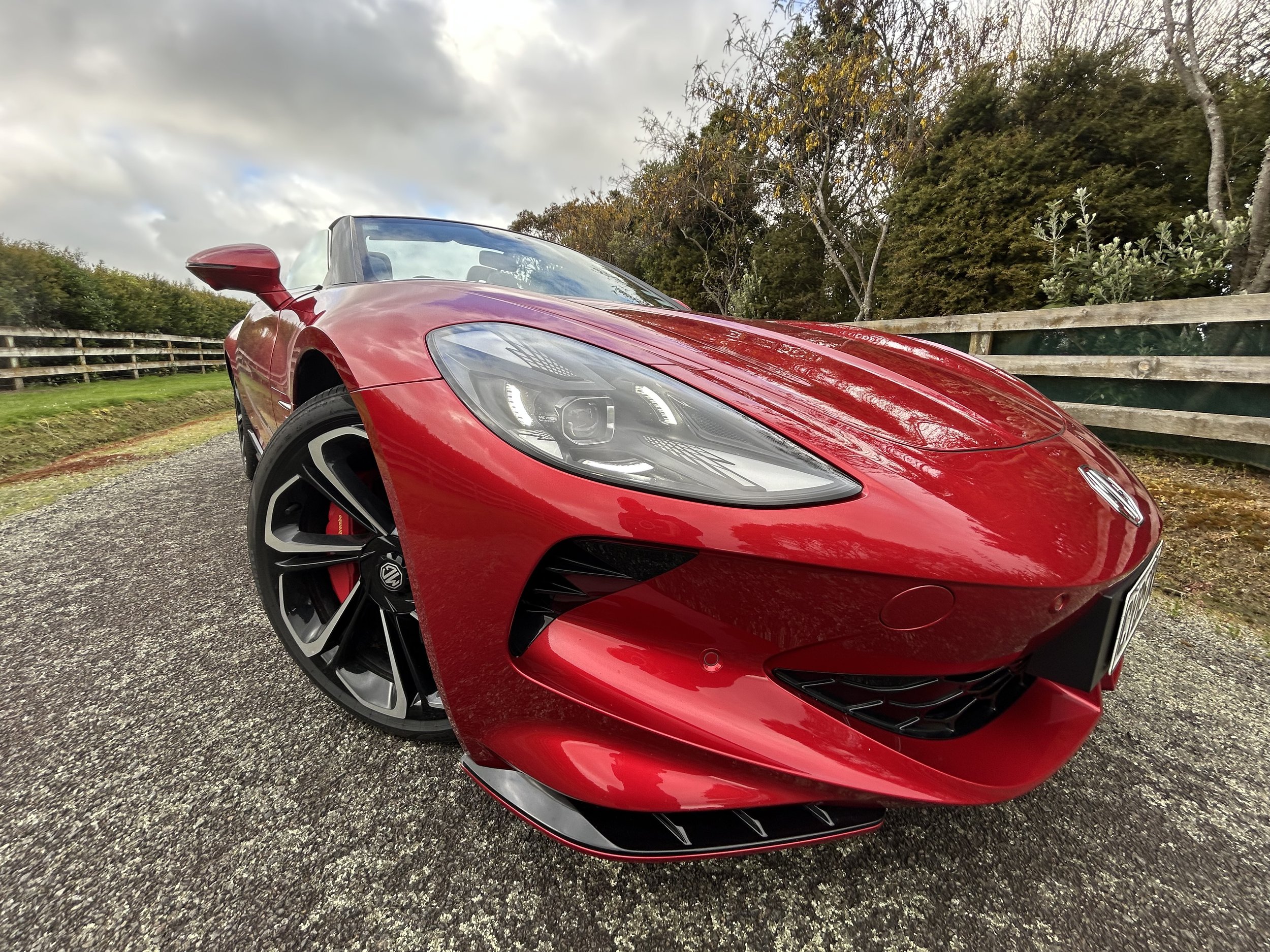
“They need to have their own identity and from the feedback I’m getting from Germany, we can expect to see some significant VW design cues integrated. I imagine Ford will want to retain their own identity, and understandably so, and we will retain ours.

“One of the good things about Amarok that has influenced its desirability and maintained its customer base is that it is quite sophisticated in terms of how it drives. I feel that is something we will want to maintain. We might maintain that sophistication and allow Ford to take theirs into a more rough and rugged territory.”

What’s also heartening is expectation that another V6 will be in the mix, though this time it will be from Ford.

Suggestion is that current Amarok’s six-cylinder, which now puts 190kW in all current versions sold here, is to be dropped for a newly-developed Ford Power Stroke 3.0-litre V6 turbo diesel, recently bolted into Ford F150 pick-ups, where it produces 186kW and 596Nm. This will also replace the Ranger’s 3.2-litre five-cylinder. The models seem also set to continue with a four-cylinder turbodiesel.

DB2020AL00721_medium.jpg

Continuing in V6 will be great for Amarok, given the current edition now primarily sells in that format, Richards acknowledges. 

However, keeping a smaller engine in the mix as well is also important. He says it is interesting that Ranger is doing so well, now, with its 2.0-litre biturbo – basically, it’s a proof of VW being on the right track – if perhaps a little prematurely - when it released Amarok a decade ago in the same format.

“Since we brought the V6 in for Amarok in 2016 it has made up a huge proportion of our sales over the 2.-litre. Ford having gone the other way, from starting with the 3.2 and now offering the 2.0-litre is really interesting.

“I think we have established the V6 in the market as the product to have and I we would like to keep it.  My git feel is that we will get another V6 and it will continue to achieve the lion’s share of sales volume.”

Notwithstanding, indication from within the partner brands is that the new platform is designed to accommodate something new to both models - a high-performance plug-in hybrid (PHEV) drive – also excites Richards.

“I think a plug-in hybrid … gives a ‘best of both worlds.’ It would be something we would be exceptionally interested and I think we have a lot of customers who drive our product currently who would be interested, because it would suit their lifestyle.

“We have a strong Auckland customer base and the ability to drive all week on electric when you might have a 12km route that takes 90 minutes to accomplish … well, it’s perfect. You could save the conventional power for the weekend driving. That rings a lot of bells.”

That a PHEV would also likely introduce petrol power to Amarok holds no problems. It’s a recognised application and also might give the model a chance of competing in North America.

“I don’t think it would hinder the Kiwi appetite to try it (PHEV).”

Release timings? Nothing exact, but it’s thought Ford as programme lead gets dibs, akin to the Isuzu/Mazda arrangement which gives the D-Max a market introduction advantage of some months over the BT-50.

Clancy declined to add fuel to thought about this leaving Ford with an expected ETA of late-2021. “We have no information about launch timings.”

He says Ford NZ remains delighted by current Ranger’s massive imprint on the NZ scene and expects it to continue being a strong seller for the remainder of its production cycle.

Richards also confirms current Amarok’s availability will continue right up until the new one arrives.

Meantime, the EV sharing programme has fuelled conjecture that Ford could deliver 600,000 electric vehicles atop the MEB architecture, which is the basis of VW’s ID programme. 

Ford’s vehicle will be designed and engineered by Ford in Cologne, Germany, and is expected to become a smaller sister ship to its own all-electric Mustang Mach-E, which will be introduced in 2021.

Additionally, the companies will both work with Argo AI to form distinct, highly capable autonomous-vehicle businesses based on Argo AI’s self-driving technology, a pitch which will create the world’s largest geographic deployment potential of any autonomous driving technology to date.


Gladiator expected to lift Jeep sales


More than a ute … and more than a Wrangler with a tray on the back.

Gladiator_NZ_77.JPG

ANTICIPATION of the new Gladiator pulling Jeep out of a sales boghole has been expressed by the distributor. 

Ateco Group New Zealand says the $89,990 Overland and more rugged $92,990 Rubicon editions landing in August have raised plenty of excitement among Jeep supporters.

All the same, optimism for what is effectively a Wrangler with a tray and extra length only seems to go so far, all the same.

There’s no talk of it having ability to blow the doors off from marketing manager Sarah Williams. What percentage of overall Jeep sales it might achieve, might it become the best-selling member of the Wrangler family … sorry, not going there?

There is concession that her reluctance comes back to this being a model taking this brand into a previously unexplored territory.

“It’s quite hard to lock that in … yes, we’re expecting it to be very popular based on the high level of requests we’ve had for information.” 

As for its status within Wrangler-dom; could it be king? Maybe yes, perhaps no.

“I think it would be appealing to those who are looking at Wrangler and want to pack their mountain bikes in the back … but it might yet be that some buyers might want a Wrangler AND a Gladiator.” 

Gladiator_NZ_55.JPG

One firm factor affecting Ateco’s thinking is an insistence that just because it looks like a ute doesn’t mean it has to be considered one. 

Well, logically it struggles to fit the billing as America’s answer to the traditional one-tonners that have dominated new vehicle sales, on several counts.

For one, Gladiator’s deck is rated for lighter loads. And until a heavy duty towing set-up offered in America is signed off for export, it won’t get access to the 3.5 tonne club, with both models rated for just 2721kg braked. Another factor against is that it bucks the trend for diesel, delivering instead only with the long-lived 3.6-litre Pentastar V6 petrol.

Aside from all that, there’s the envisaged role. In Jeep’s eyes, this is much more of “a lifestyle pick up truck” than your Ranger, Hilux, Colorado and Triton. Mainly on grounds of it having the goods to prove itself tougher in the environment in which the brand sees itself as being an especially adept conquerer. The rough. 

The ‘truck’ parlance isn’t just American slang: Underpinning this model is a heavily re-engineered chassis including multi-link suspension geometry borrowed from the RAM 1500.

“Globally we agree it is a lifestyle vehicle … one that epitomises the brand pillars while allowing people to go out and do more things, I guess. 

That ability to reach and survive in truly wild spots is a Jeep 101 exploited by the Gladiator not only being brawnier in design but also look, with ability to be stripped down into an open-top, doorless four-wheel drive.

The machismo is particularly pushed in Rubicon format that achieves its premium over the Overland by being stacked with steroidal extras - a far more capable drivetrain and tyres, adding Rock-Trac (over the standard Command-Trac), full-time 4×4, Dana 44 axles, bigger all-terrain tyres, front and rear diff lock, a 77.2:1 crawl ratio and an electronic sway bar disconnect among other tweaks.

She bases that thought on what has happened with the Wrangler Unlimited, which also has a four-door cabin but puts a closed compartment behind the back seats, in the year since it came on sale.

“The Rubicon always goes pretty well (for us), being top of the line and having such a massive four-wheel-drive ability. Overland has a more refined approach … it’s a super-comfortable drive.”

In any event, the ‘not-a-ute’ proposal means thinking, as expressed by some commentators, that Jeep has purpose-priced to meet as the flagship Raptor version of the country’s best-selling traydecks, the Ford Ranger, is simply wrong. Indeed, no top-level trad utes were barometers in this exercise.

MY20CompassLimited_2.jpg

“There definitely has been some speculation about the Ranger Raptor being used, but that didn’t happen. We are definitely pushing this as one-of-a-kind.”

“It (the pricing exercise) was more based on what we were looking at across the range and where we saw opportunities; and we did look at what Gladiator would add over and above Wrangler.” (So why there’s just $5000 between the Gladiator and Unlimited in Rubicon format and $10k between the Overlands is not made clear).

Gladiator will be welcomed and not just because Jeep’s last new model rollout was the Wrangler, which came into showrooms in 2018. The brand seems to have lost traction in recent years, with declining sales.

Last year Jeep achieved just 885 registrations and this year’s performance hasn’t lifted, with 290 vehicles sold – 70 fewer than in the same period of 2019.

Brand activity has been carried by the Grand Cherokee, an impressive feat given it is the oldest model Jeep has. The current edition is the fourth generation, which was released in 2011, and has received modest updates through its lifespan in an effort to keep it looking relevant against more modern fare. 

Gladiator has every potential to “add registrations that we wouldn’t have had before.”

Jeep will have more product news this year, and conceivably the next headline-maker is the facelifted Compass (above) as updates to that model just been announced for Australia, which historically by and large makes the same product choices as NZ. However, Williams says she cannot confirm or deny, though she is firm that Compass has a future here. (So, will we see the new evocatively-named Night Eagle special edition and S-Limited models, in Limited and Trailhawk variants, still maintaining the current car’s styling and 2.4-litre petrol?)

The V6 in both Gladiator models produces 209kW of power and 347Nm of torque through a ZF eight-speed automatic transmission.

Equipment available includes leather seats, 8.4-inch infotainment system with Apple CarPlay and Android Auto, the latest USB-C charging and connectivity ports, keyless entry and push to start ignition, forward-facing camera and reversing camera, removable doors and roof, folding windshield, wireless and waterproof Bluetooth speaker, plenty of rail and storage options in the tray, alloy wheels, heated seats and steering wheel, dual-zone climate control, electric adjustment on the front pews and a big safety kit including AEB, blind-spot monitoring, rear cross-path detection, front and side airbags, electronic roll mitigation, adaptive cruise control and speed limiter.

The Rubicon uses Tru-Lok front & rear locking differentials, front sway-bar disconnect, Fox aluminum-bodied 2-inch diameter shocks front and rear, forward-facing TrailCam for off-roading, selectable tyre-fill alert and 17-inch alloys with 32-inch 255/75 R17 BFGoodrich tyres.

Options on both include a heavy duty electrical group for $1000, a cargo management setup with ‘trai lrail’ system for $2000, a roll-up tonneau and spray-in bedliner (both $1000) and a wireless Bluetooth speaker for $1000. Rubicon-specific extras include leather-trimmed bucket seats for $2500, with heating adding $500, a steel front bumper for $1500 and 17x7.5 Polished Black Aluminium Wheels for $1000.

Gladiator_NZ_130.JPG


Dare to go 'Pro'?


Want a road car capable of being a track-driving ‘pro’? AMG has just the product.

19C0234_006.jpg

IN track-racing, two cars makes a team, right?

 So it kinda makes sense that New Zealand has been allocated just a pair of examples of the closest thing you can get to an AMG GT3 racing car – the Mercedes-AMG GT R Pro.

While our allocation is quite potentially the smallest for any recipient country – Australia, for instance, gets 15 – just being on the list is something of an achievement, as AMG is only building 750 examples of this road-legal, but utterly track-prepped weapon.

Price? Well, of course, it’s expensive. At $420,000, the GTR PRO carries a $85k premium over the GT R Performance, which might seem a touch steep as the 4.0-litre twin-turbo V8 has been carried over from the standard GT R, so it still produces 430kW and 700Nm of torque.

But it takes a whole heap of special stuff not seen on the regular model, starting with $25k worth of carbon fibre bits hanging off the body. Plus a whole heap of race-level underskin enhancements.

As you’d expect from a car that has been designed to provision the ‘ultimate’ track experience… well, ultimately, only until the far more honed, properly bespoke AMG Project One comes along. That thing will be far more exotic and far more expensive than any current performance AMG.

And speaking of that, as much as the GT R Pro has ‘unbeatability’ about its look, it’s not actually the fastest or most powerful GT in the current NZ stockpile. That’s still the four-door, which makes another 40kW and has a faster overall top speed. It’s also all-wheel-drive, to better cope with all that animal.

Still, so much about the Pro suggests it would in no way be a disappointment. AMG’s proposition that it can still be driven to and from the circuit (unlike the AMG GT4), and takes lessons the company has acquired racing the coupe in the GT3 and GT4 categories around the world seems to resonate fairly.

As today’s mandatory Nurburgring Nordschleife video explains, the difference between a GT R Performance and the Pro comes down to improvements to the handling. Plus soe weight reduction.

There’s a new AMG coil-over suspension system that allows the driver to tailor the set-up, with adjustments to the spring pre-load as well as the compression and rebound of the dampers, based on their preference and the track they’re on.

There’s also adjustable front and rear torsion bars, with the former made from lightweight carbon fibre. The same material is used extensively across the car, with everything from a rear-end underbody panel to the front splitter, diffuser and even the seats made from carbon fibre in a bid to cut kilos.

Mercedes has upgraded the brakes, with carbon ceramics fitted as standard, behind 20-inch forged alloy wheels; finished in titanium grey exclusively for the GT R Pro.

The aerodynamic package reshapes, with a pair of aero flics added for great stability, vented front wheel arches, rear wheel arch extensions while keeping the GT R’s fixed rear wing. If you want to go further, it’s possible, but only with an after-market tuner. The video here shows the car after it has been with one such specialist.

More power, more aero still makes it more … well, as the film shows, ‘enthralling’ seems the right word.

But even as it comes from AMG, the GT R Pro is no wuss. They claim it can lap the 20km Nordschleife in seven minutes and four seconds, which is 6s quicker than the AMG GT R.

19C0234_008.jpg

It’s enough of a race car to take a Track Package that delivers a partial steel roll cage and a pair of four-point racing harnesses (as well as regular lap sash belts), but not so much as to lose its luxuries. The racing-style seats – as well as the rest of the cabin – are trimmed in a combination of Nappa leather and Dinamica upholstery.

The daily drive seatbelts are finished in designo silver and there’s a retractable cargo area cover to keep your valuables out of sight. Mercedes will also throw in an AMG car cover.

The GT R Pro stands out for one other reason – it’s the final product overseen by the legendary Tobias Moers, who for some daft reason (and surely it can be nothing less than a pay offer by Lawrence Stroll?) has departed as chief of Mercedes’ AMG division to become CEO of beleaguered maker Aston Martin.

Moers has bumped Andy Palmer, with immediate effect. The Briton launched some great new cars but the past year has been one of terrible losses, a steady and catastrophic share price fall, and a descent into near-bankruptcy.

What can the German do to turn things around? Aston is a tough gig. But Moers has talent.

Aside from a successful record in building up AMG as Mercedes’ in-house tuner, he developed the stand-alone Mercedes AMG SLS supercar and was in charge of AMG by the time the GT launched. He’s also overseen the AMG One.

So is this the German brand protecting its investment in Aston and building for a take-over? Well, apparently not. Daimler, Mercedes’ parent, is adamant that Moers has left their employ.

Still, the links between the brands are close, now. As you surely know, Aston uses AMG V8 engines in the Vantage and DB11 V8, and Mercedes electronics in all its cars. The AMG nameplate is also on the powertrains of the Racing Point Formula One outfit that will from next year become Aston Martin Formula One. 

Daimler has a five percent stake in Aston Martin and the team principal of Mercedes Formula One, Toto Wolff, recently personally invested more than $100 million into Aston Martin.

 Meantime, if you’re up to Pro standard, the cars will be available exclusively from the country’s two AMG Performance Centres, in Auckland and Christchurch.

19C0234_014.jpg